

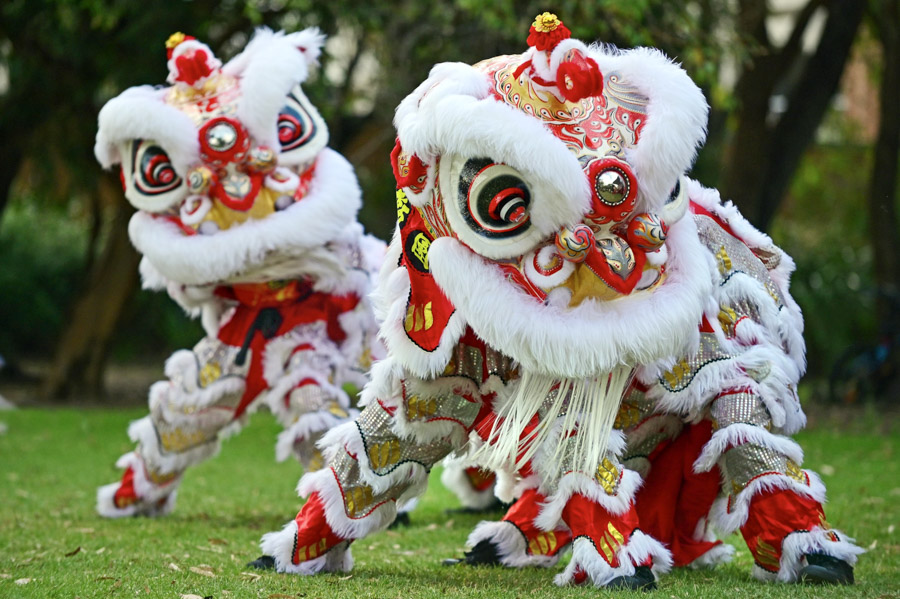
Amid the clash of cymbals and the ripple of silken sleeves, a lion leaps across a festival square, its eyes wide with mischief, its every move echoing centuries of tradition. Chinese dance begins not on a stage but in the heart of a celebration – in temples, in courtyards, and across time.
This vast and evolving art form blends the refined gestures of imperial court performances with the raw energy of folk celebrations. Each movement carries symbolic meaning – a prayer for abundance, a tribute to victory, an expression of ancestral reverence, or a whisper of romantic longing. Earthly and spiritual elements are interwoven, forming a unique visual language that reflects the soul of Chinese culture.
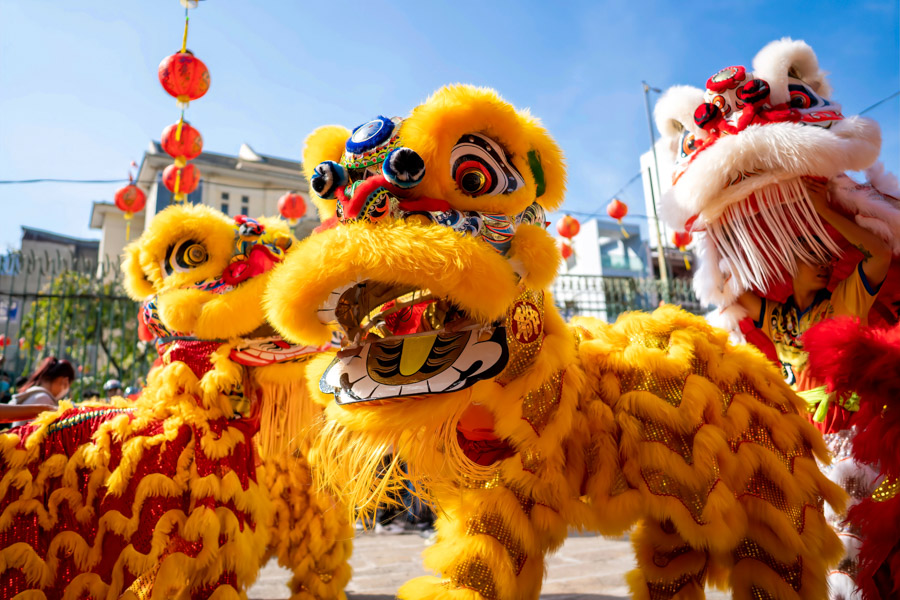
Whether it’s the Lion Dance shaking the ground during the Chinese New Year festivities or the graceful arc of a fan dance drifting through air like brushstrokes on silk, Chinese dance is more than performance – it is a living mosaic of history, artistry, and identity, inviting you to step into its rhythm.
The History of Chinese Dance: Origins, Spiritual Meaning, and Cultural Evolution
The history of Chinese dance spans several millennia, with its earliest roots in ritual practices. From ancient times, it played a key role in state ceremonies, evolving according to the preferences of successive dynasties. The earliest Chinese character for "dance" (舞), written in the oracle bones, represents a dancer holding oxtails in each hand. Some forms of Chinese dance, such as dancing with long sleeves, have been recorded since the very early periods, dating back to at least the Zhou Dynasty (1046 BC to 256 BC).
During the Han dynasty (206 BC–220 AD), dance had a solemn character and reflected the grandeur of imperial authority. At the time, there was no strict division between music, poetic song, and dance – they were often performed as a unified art form.
The imperial court from the Qin Dynasty (221–206 BC) onwards established various departments responsible for the collection of music and dances, training performers, and overseeing performances at the court, such as the Music Bureau and Royal Academy.
In the Tang dynasty (618–907 AD), dance became one of the most refined expressions of court culture, blending local traditions enriched by influences from Central Asia via the Silk Road.
Under the Song dynasty (960–1279), urban districts saw the emergence of large performance spaces known as goulan (勾欄), which could hold thousands of spectators. The elaborate performances staged there gradually evolved into Chinese opera, with dance becoming a central element. Characteristic props such as swords, flags, and fans became part of the visual vocabulary of the stage.
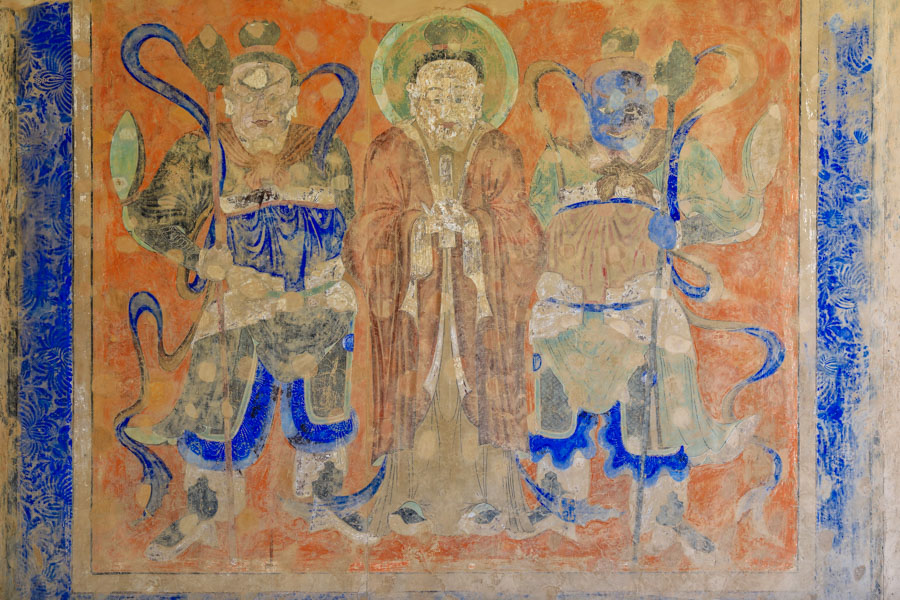
Philosophical schools also shaped the understanding of dance. In Confucianism, it was viewed as a form of ritual that promoted moral values and social harmony, as recorded in The Book of Rites (礼记). Daoist thought associated movement with the natural rhythms of the universe and the cultivation of internal balance, reflected in ritual practices like the Steps of Yu (禹步). Buddhism, introduced from India, brought new dance elements into temple rituals – clearly seen in the mural paintings of the Dunhuang cave complex. Throughout Chinese history, dance has accompanied seasonal rituals, weddings, agricultural festivals, and folk celebrations, serving as a vital expression of community life. In recent decades, it has experienced a revival, with both traditional forms and contemporary innovations contributing to the ongoing evolution of this multifaceted art.
Traditional Chinese Dance: A Cultural Heritage
Traditional Chinese dance encompasses a wide range of forms, each reflecting a distinct facet of the country's cultural legacy. Some dances emphasise fluidity and grace, others capture the spirit of folk celebration, while many preserve the unique identity of China's diverse ethnic groups.
One of the most visually striking genres is Classical Chinese Dance (中国古典舞), characterised by flowing movements, supple gestures, and an elaborate system of expressive postures. Precision in torso and arm motion is essential, as is the use of fans, sleeves, and costume elements that enhance the dancer's elegance. Despite its name, Chinese classical dance took shape only in the 1950s. Drawing on techniques from traditional opera and martial arts, its creators aimed to embody the essence of classical aesthetics associated with imperial China. Rather than replicating ancient practices, the style offers a modern reinterpretation of cultural tradition.
Folk Dances
In contrast, Chinese Folk Dance (中国民间舞) emerged organically from daily life and seasonal celebrations. Agricultural rituals, lunar calendar festivals, and family ceremonies all featured improvised dances that reflected community values. At village fairs and urban festivals, dance became part of vibrant street scenes, performed in colourful costumes amid music and laughter.
Cultural Dances of Chinese Festivals
Particularly iconic are the Lion Dance and Dragon Dance, both essential to major Chinese festivals. The lion costume, operated by two performers, comes alive with acrobatic leaps and spinning turns that amuse and impress. The dragon, carried by teams of dancers holding poles beneath its long body, weaves through the streets in a dynamic, serpentine rhythm that captivates onlookers.
Dances of Ethnic Minorities
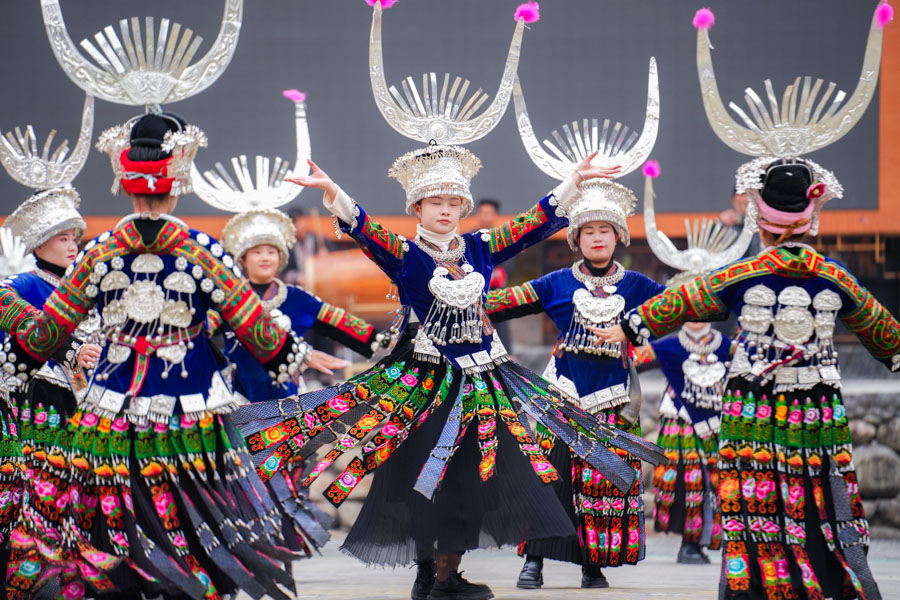
Beyond these well-known forms, dozens of regional Ethnic Minority Dances (中国少数民族) continue to thrive across China's provinces, rooted in the histories and customs of smaller ethnic communities. Among Tibetans, dances feature rhythmic hand gestures and circular steps symbolising spiritual unity and harmony. Mongol dances are vigorous, evoking horse riding and vast grasslands through sweeping arm movements. In southwestern China, ethnic groups such as the Miao, Yao, and Dai perform vibrant ritual dances adorned with silver ornaments, fans, and umbrellas during weddings, harvest festivals, and springtime rites. These traditions remain alive in rural celebrations and are also presented at cultural festivals and on ethnographic tours.
The work of Yang Liping holds a special place in this movement. Her signature performance, The Spirit of Peacock, has become an icon of Chinese contemporary dance, blending folk motifs from the southwestern provinces with lyrical movement and layered symbolism.
Dances in Theatre
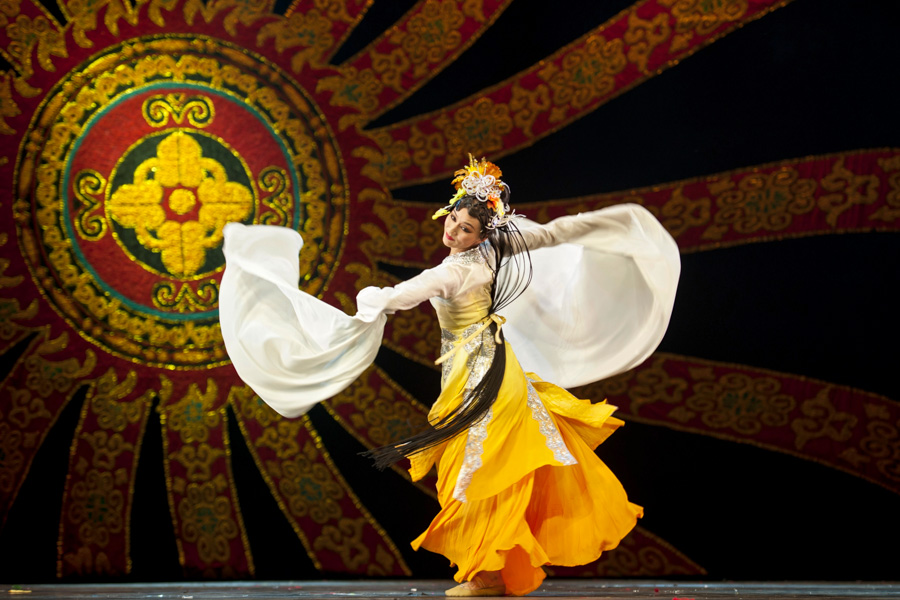
Dance in Chinese theatre is most commonly associated with opera, where ancient legends, heroic characters, and codified gestures serve as its foundation. Yet in the mid-20th century, a new genre emerged: Wuju (舞剧), or dance drama, which elevated movement into an art form in its own right. Blending the elegance of ballet with the emotive power of traditional Chinese dance, Wuju brought to the stage vibrant costumes, intricate choreography, and the dynamic sound of a live orchestra. It quickly gained popularity, becoming one of the most striking developments in the evolution of Chinese theatre.
Ritual Dances
In the Middle Kingdom, dance once served as a conduit between the human and spirit worlds, rooted in early sacrificial ritual traditions. One of the most striking examples is Nuo dance (傩舞), among the most expressive forms of Chinese folk theatre. Performers don vividly carved masks believed to ward off evil spirits and exorcise ghosts, while their movements turn the performance into a ritual of protection against illness and misfortune. Each gesture is charged with symbolic meaning and intensity, evoking the spiritual force of this ancient tradition.
During major festivals, some villages in the Pearl River Delta host Yakou Piao-se parades, featuring masquerade dances and theatrical displays. Alongside the well-known Lion and Dragon dances, audiences are treated to the dynamic Kylin dance (麒麟舞) – a ritual portrayal of a mythical creature believed to bring good fortune – prevalent in Cantonese and Hakka cultures.
Exercise Dances
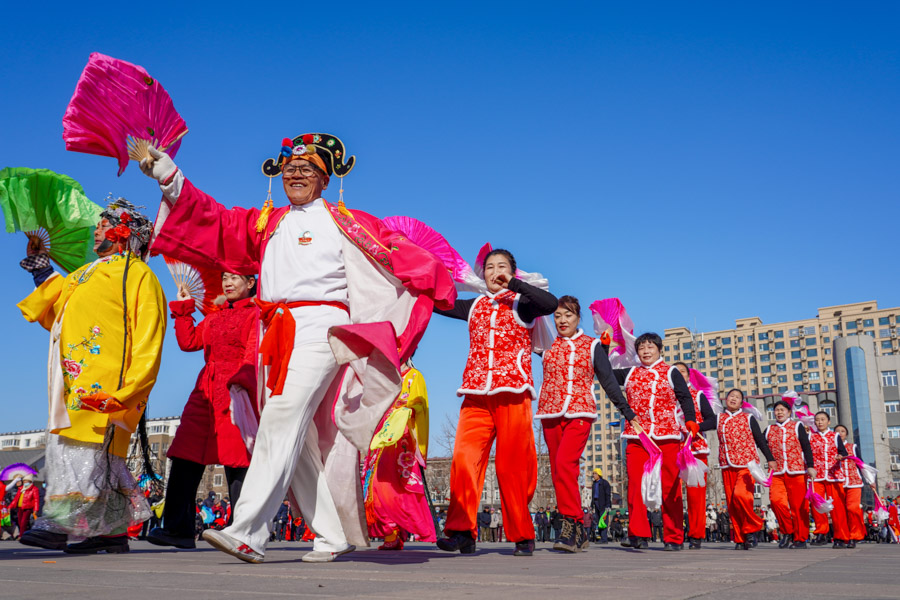
Dance also plays a role in promoting physical well-being. Each morning, city squares and parks come alive with square dances – energetic group routines performed to music and choreographed with rhythmic precision. At the same time, the flowing sequences of Tai Chi Chuan and the meditative cycles of Qigong fill these public spaces. Blending exercise with cultural heritage, these practices transform everyday movement into a shared expression of balance, vitality, and tradition.
Dance's Influence on Chinese Opera Performance
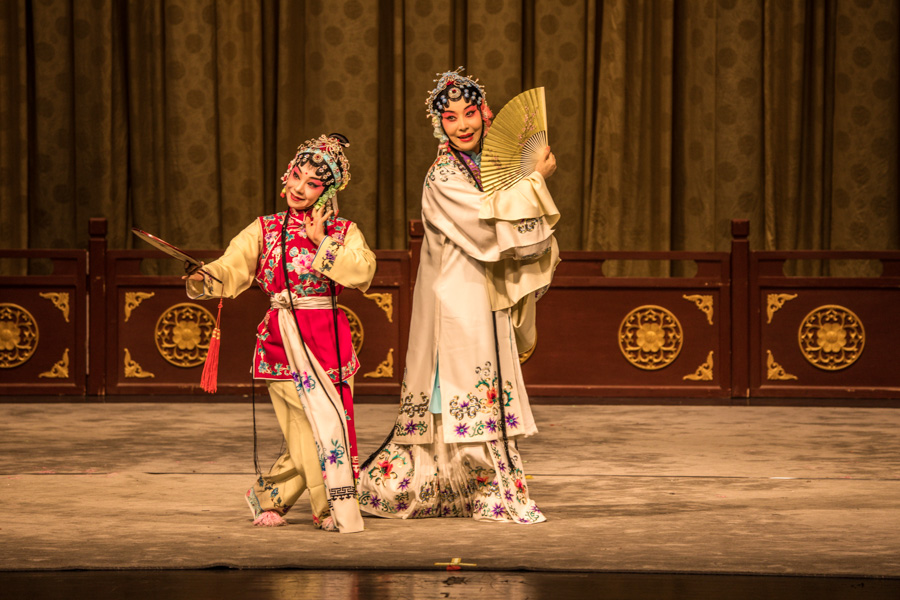
Dance plays a central role in Chinese opera, where it is inseparable from the dramatic narrative, musical composition, and acrobatic performance. Every movement on stage carries meaning – a flowing sweep of the sleeve may express sorrow or contemplation, while a sudden lunge suggests resolve and courage. This expressive vocabulary is especially evident in Peking Opera (京剧) – included in the UNESCO Representative List of the Intangible Cultural Heritage of Humanity – where stylised gestures and rhythmic motion create a unique theatrical language through which audiences can follow both the storyline and the emotional depth of the characters.
Several key styles of dance are featured in Chinese opera, including the Emperor's Dance (皇帝舞), Flower Drum Dance (花鼓舞), Lianpu (脸谱) or Face-Changing Dance, Water Sleeve Dance (水袖舞), Wudan (武旦) or Martial Female Roles, Xiqu Dance (戏曲舞蹈), and Yueju Dance (越剧舞蹈).
Stage props are equally significant. A single fan or spear in the actor’s hands can evoke an entire scene – a fierce battle, a long journey, or a ceremonial encounter. Richly embroidered costumes and elaborate facial makeup enhance the visual impact. Colours and patterns do more than decorate – they immediately signal the character’s identity, whether warrior, scholar, noblewoman, or official.
One of the most striking roles is that of Mu Guiying (穆桂英), a legendary female commander from the Song dynasty. A key figure in the heroic tales of the Yang family, Mu Guiying represents both loyalty and bravery, combining feminine grace with martial prowess. On stage, she appears in an ornate battle costume, and the choreography of her part blends vigorous movements with refined gestures, transforming her story into a vivid and memorable performance.
The Future of Contemporary Dance in China
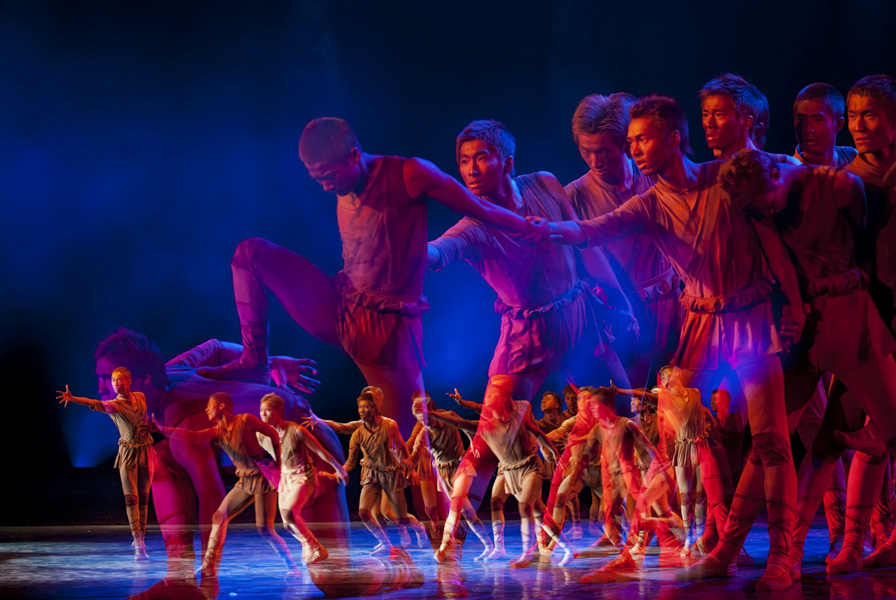
Today, Chinese dance takes many forms – from stage performances and studio workshops to spontaneous open-air improvisations. It blends the refinement of classical theatre, the vibrancy of folk traditions, and the rhythms of contemporary urban life.
Guangzhou has become a key hub for the modern dance movement and is home to the Guangdong Modern Dance Company (广东现代舞团), one of China’s leading troupes shaping the evolution of contemporary dance. Their performances are marked by bold expression, physical dynamism, and a fusion of Eastern aesthetics with the tempo of modern city life.
The contemporary Chinese dance scene is driven by choreographers whose visions redefine its creative language. Willy Tsao, founder of several acclaimed companies, is known for fusing philosophical depth with precisely sculpted movement. Gu Jiani creates intimate works where the body becomes a vehicle for personal narrative. Tao Ye explores the boundaries of form and space through exceptional flexibility and physical control, turning each performance into a meditation on the body's potential.
New productions are increasingly embracing technology, transforming the stage into a space of interaction between human and machine. Some choreographers experiment with AI-controlled robots, crafting performances where algorithms respond to dancers’ movements and generate rhythms of their own. These works merge digital precision with human expression, opening a new chapter in the relationship between art and technology.
Chinese hip-hop dance has emerged as a dynamic strand of street culture, channelling contemporary energy through ancient traditions. Dancers often integrate kung fu and tai chi chuan into their routines, transforming improvisational dance battles into theatrical showcases. This interplay of strength and control creates a distinctive style where the rawness of the street meets the discipline of martial arts.
Contemporary Chinese dance is unbound by convention – experimental, open-ended, and constantly evolving. Whether on stage or in public spaces, it pulses with creativity, imagination, and the search for new forms of expression.
Engage Your Body and Mind in Chinese Dance
Exploring Chinese dance offers a unique perspective on the country’s legends, traditions, and modern creativity. You might consider a tailor-made tour designed specifically to uncover this fascinating aspect of Chinese culture.
There are numerous ways to engage with and experience this art form across a variety of formats.
Live Dance Performances in China
China presents world-class dance performances year-round, offering audiences a wide spectrum of styles from traditional to contemporary. In summer, the Beijing Open Dance Festival brings together leading choreographers from China and abroad, sharing the stage with emerging talents in a dynamic showcase of modern expression. In Hong Kong, the Chinese Culture Festival features choreographed productions alongside theatre performances, exhibitions, lectures, masterclasses, and film screenings, offering a multidimensional view of Chinese performing arts.
In Shanghai, the Shanghai International Dance Center Theater (SIDCT) stages performances renowned for their refined choreography and expressive theatricality. Guangzhou also hosts the annual Guangdong Dance Festival, featuring vibrant performances in theatres and open-air venues, along with public master classes open to all.
National holidays offer a unique chance to experience Chinese dance in its full richness and scale. During celebrations such as Chinese New Year, the Dragon Boat Festival, and the Mid-Autumn Festival, city streets and squares are transformed into festive stages filled with colourful costumes, traditional music, and dynamic dance performances.
Online Dance Shows from China
Digital platforms provide broad access to contemporary Chinese dance. One of the most-watched programmes is the reality competition Street Dance of China (這就是街舞), a series focused on urban dance styles such as breakdance, hip-hop, and contemporary. Celebrity mentors lead competing teams, and the show’s broadcasts on the Youku TV channel attract millions of viewers each season.
Dance Schools in China
For those who wish to move from watching to participating, dance studios across major Chinese cities offer open classes in contemporary, modern, and improvisational styles. In Beijing, studios such as BeijingDance/LDTX and Beijing Ballet Angel Studio regularly accept new students. In Shanghai, numerous schools provide training in both contemporary and classical dance, offering options for beginners as well as advanced students in group or one-on-one formats.
Learn the Lion Dance at the Yuntai Shan International Culture and Martial Arts School, which is located in the breathtaking Yuntai Mountains.
Chinese Dance in Books and Films
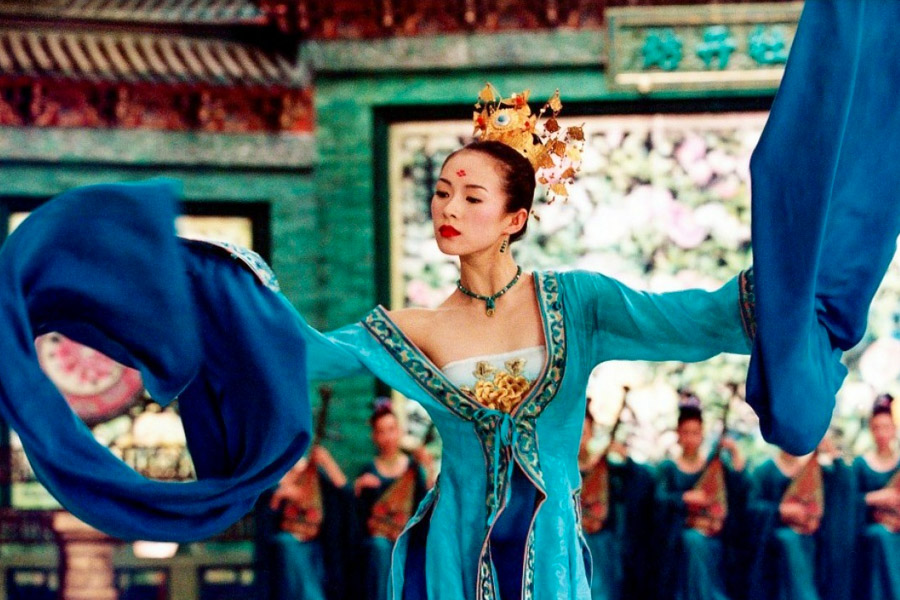
Chinese dance can also be explored through books and films that trace its history, aesthetics, and cultural context. One of the most comprehensive resources is An Illustrated History of Chinese Dance by Feng Shuangbai, Wang Ningning, and Liu Xiaozhen, which uses visual materials to document 5,000 years of development. Professor Yuan He’s Chinese Dance offers a detailed study of how dance evolved through the lens of successive dynasties. Another valuable work is Chinese Dance: In the Vast Land and Beyond by Shih-Ming Li Chang and Lynn E. Frederiksen, which examines the transmission of Chinese dance both within China and across global diasporas.
Cinema also offers vivid portrayals of Chinese dance traditions and modern interpretations. The 2023 feature film One and Only (热烈) highlights hip-hop and breakdance culture with polished choreography and dynamic staging. The 2004 film House of Flying Daggers (十面埋伏) is a landmark in Chinese cinema, noted for its visual beauty and the iconic “Echo Dance” performed by a supposedly blind protagonist embodied by the internationally renowned Chinese actress, Zhang Ziyi.
Chinese dance is no less striking or evocative than the visual elegance of calligraphy or the architectural landmarks of China’s great cities. It can be encountered in many settings – from historic theatres and open-air festivals to modern studios where young performers explore new forms of movement. This art form extends far beyond the stage, becoming part of everyday cultural life and reflecting itself in diverse aspects of contemporary expression. As both a living tradition and a medium for innovation, Chinese dance continues to reveal the rhythm and spirit of a changing society, awaiting your exploration.