

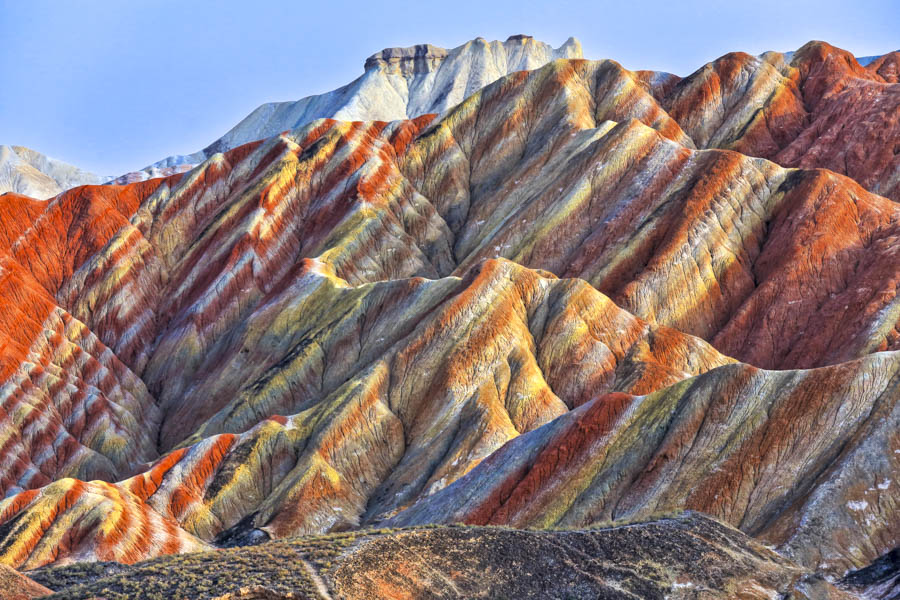
The Hexi Corridor (河西走廊, Héxī Zǒuláng), located in Gansu Province, stretches for 1,200 kilometres (746 miles) from east to west across northwest China. For millennia, this narrow strip of fertile land between mountains and deserts served as a natural bridge between China and Central Asia, becoming one of the most important sections of the Silk Road. Here, merchants and pilgrims, armies and ambassadors crossed paths, while religions, knowledge and artistic traditions travelled with them.
The character of the Hexi Corridor comes from the close proximity of rugged landscapes and centuries of cultural exchange. Golden deserts and snow-capped mountains frame green oases where thriving settlements arose over the centuries. Traces of the Great Wall's frontier fortifications recall the region's military history, while monuments of Buddhist art speak of the spiritual and cultural ties that formed here under the influence of various civilisations.
Travelling west from Lanzhou through Zhangye and Jiayuguan to Dunhuang makes these layers of history tangible, as river valleys and oasis cities gradually give way to the drier landscapes of western Gansu.
Hexi Corridor Tours
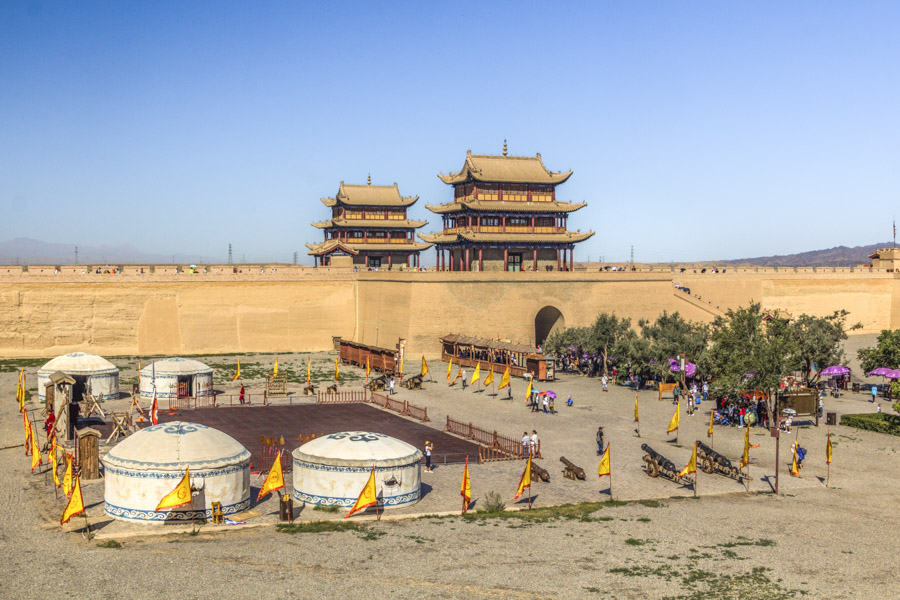
Tours through the Hexi Corridor usually follow the historic route west across Gansu, linking oasis cities, Buddhist sites, Great Wall fortifications and desert landscapes.
The seven-day tour of western China passes through Zhangye, Jiayuguan and Dunhuang, introducing travellers to the province's landscapes, historic monuments and cultural heritage. The programme also includes sites associated with the Great Wall of China.
The ten-day itinerary continues beyond Gansu. Along with Zhangye, Jiayuguan and Dunhuang, it visits Kashgar and Turpan, giving travellers a broader view of western China and the different cultures that developed along its historic trade routes. This format is perfect for those who want to combine several regions and see a broader picture of western China.
Other itineraries cover different parts of Gansu and can be combined with the main Hexi Corridor route, depending on the time available and the places you want to prioritise.
Best Time to Visit the Hexi Corridor
Visiting by Season
Spring (March–May) becomes progressively warmer, with average daytime temperatures rising from around 10–15°C (50–59°F) in March to 20–25°C (68–77°F) in May. April and May are particularly well suited to sightseeing and longer journeys between cities. Dust storms are possible in early spring.
Summer (June–August) is a hot period, especially in July and August. During the day, temperatures in some areas can rise above 35°C (95°F), so it is more comfortable to plan outdoor excursions for the morning and later in the day.
Autumn (September–November) is considered one of the best periods for travelling through the Hexi Corridor. In September and October, daytime temperatures are often around 15–25°C (59–77°F), with generally clear skies and good visibility. When planning a trip for early October, it is worth considering the increased tourist numbers during National Day (Golden Week).
Winter (December–February) is the coldest and least crowded period. Daytime temperatures are typically around -5–5°C (23–41°F), while at night in certain areas it can drop to -15°C (5°F) and below. Strong winds can make outdoor sightseeing feel considerably colder, although visitor numbers are much lower at this time of year.
Festivals and Cultural Events
Local festivals add another dimension to a journey through the Hexi Corridor, bringing folk performances, craft displays, theatrical shows and food fairs to towns along the route.
The Yanzhi Mountain Folk Culture and Tourism Festival in Shandan brings together folk performances, traditional crafts and local food. It is held on the sixth day of the sixth month of the lunar calendar.
The Silk Road (Dunhuang) International Cultural Expo brings performances, exhibitions and contemporary interpretations of Silk Road heritage to Dunhuang. The event is held in September.
History of Hexi Corridor
Early Settlements
People had settled between the mountains and deserts several millennia before China became a unified state, using the oases for farming and permanent settlement. Archaeological evidence indicates that millet-growing communities were established here about 4,800 years ago. Over time, these oases developed into permanent settlements, while the corridor became a natural route between east and west. However, a decisive turning point in its history occurred at the end of the 2nd century BC, when Hexi entered the orbit of the Han dynasty.
The Han Gateway to the West
In 138 BC, Emperor Wu of Han sent the diplomat Zhang Qian to the west. His journey brought the Chinese court new information about Central Asia and became an important step towards establishing regular connections between China and the western regions.
Just a few decades later, Han secured its presence in the corridor itself. In 121 BC, troops under the command of General Huo Qubing defeated the nomadic Xiongnu people, after which the empire established permanent control here.
To administer the new territory, the Han established four commanderies in the Hexi Corridor: Wuwei, Zhangye, Jiuquan, and Dunhuang. Garrisons and agricultural settlements appeared around them, roads were laid, and fortifications were built. Hexi became increasingly organised and developed, and its importance grew: control over the corridor ensured safe communication with the western territories and turned it into a vital section of the trade route network.
Crossroads of Cultures
After the fall of Han in 220, unified control over Hexi vanished, and the region entered a period of political fragmentation. However, the cities of the corridor continued to develop, remaining important points on the routes between China and Central Asia.
In the 5th–6th centuries, Jiuquan and Dunhuang became important centres for the spread of Buddhist art and cultural influences from different parts of Eurasia. Traditions and ideas met here, moving along with merchants, travellers, and religious figures.
Under Sui (581–618), control over the corridor strengthened once again. In 609, Emperor Yangdi personally visited Zhangye, where he met with the rulers and envoys of western states. The visit reflected Hexi's continuing importance in China's contacts with the western regions.
An Era of Changing Powers
Under Tang dynasty (618–907), Hexi experienced a new golden age. Trade and cultural exchange intensified, and the corridor's cities became important centres of international relations. However, stability proved short-lived. Following the rebellion of General An Lushan in 755, Tang weakened its control over the region. In 781, part of Hexi, including Dunhuang, came under the Tibetan control. In the following centuries, the corridor repeatedly changed rulers, including the Western Xia (1038–1227) and Yuan (1271–1368) dynasties.
The Ming Frontier
Under Ming dynasty (1368–1644), the corridor regained its strategic importance. In 1372, construction began on Jiayuguan Fortress, which became a vital defence point on the empire's western border and one of the symbols of control over the Hexi Corridor.
A Living Heritage
Today, the Hexi Corridor is both a historic route and a living region of cities, agricultural oases and major transport links. Preserved monuments and archaeological finds make it possible to trace how, over millennia, trade routes converged here, peoples moved, political interests clashed, and cultural traditions spread.
Things to Do in Hexi Corridor
The best way to experience the Hexi Corridor is to follow it from city to city, using the historic route itself to connect its monuments, landscapes, and surviving Silk Road heritage.
Places to Visit on the Hexi Corridor
Begin your journey in the city of Lanzhou, a key point on the eastern approach to the Hexi Corridor, where in ancient times the route from China's central regions to the western lands began. Stroll along the Yellow River (Huanghe) and cross Zhongshan Bridge, built on the site of an ancient ferry where merchants, monks, and diplomats once crossed the river. Then stop at the Gansu Provincial Museum, home to the Flying Horse of Gansu, a celebrated Eastern Han bronze that later became the basis for China's national tourism symbol.
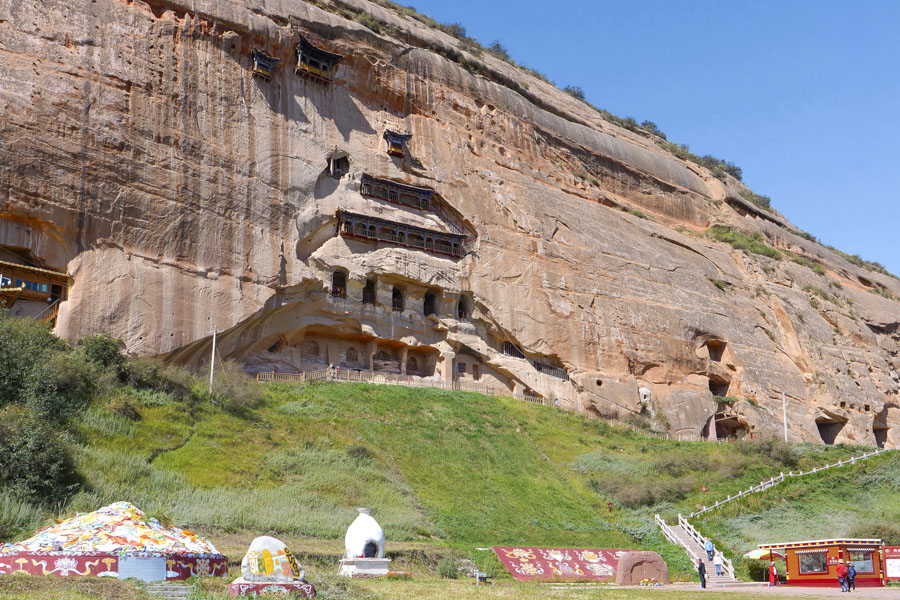
Continue your journey to Zhangye – an ancient oasis in the heart of the Hexi Corridor. Visit Dafo Temple, Shanxi Guild Hall, Wooden Pagoda Temple, and the Drum Tower, and then head outside the city to the Matisi Grottoes (马蹄寺石窟群) – a Buddhist cave complex founded in the 4th century.
Explore the westernmost outpost of the Great Wall of China by visiting Jiayuguan – a vital defence point on the ancient trade routes. See Jiayuguan Fortress, the Overhanging Great Wall, and the First Beacon Tower of the Great Wall to witness how the system of frontier fortifications protected the empire's western borders.
Visit Dunhuang, where the Mogao Caves (莫高窟) preserve centuries of Buddhist art against a backdrop of desert landscapes. Then head to Mingsha Mountain & Crescent Moon Lake and the ancient frontier fortifications of Yumenguan Pass and Yang Pass, once key points on the caravan routes west.
Make a stop in Wuwei, one of the oldest cities in the Hexi Corridor, to explore its Han-period heritage. Visit the roughly 2,000-year-old Leitai Han Tomb (雷台汉墓), followed by the Tiantishan Grottoes (天梯山石窟), a Buddhist cave complex in the foothills of the Qilian Mountains.
Discover Jiuquan, another historical oasis along the route. Stop by Jiuquan Park of West Han Dynasty to see one of the best-preserved gardens in the region. Afterwards, visit Jiuquan Museum (酒泉市博物馆), where ancient frescoes, statues, and other finds provide a closer look at the area's history.
Desert Activities
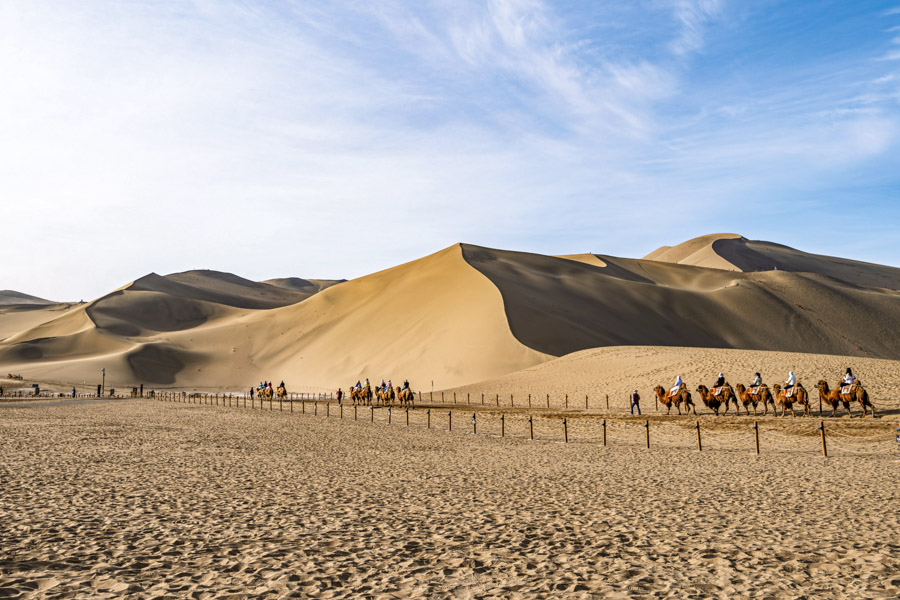
The desert landscapes of the Hexi Corridor are well-suited for various outdoor activities. Camel rides allow you to cross the dunes, while sandboarding offers a chance to slide down the sandy slopes. Climbing to the ridges reveals broad vistas of the surrounding Gobi. The desert scenery becomes especially expressive at sunset, when the soft light highlights the contours of the sand and creates excellent conditions for photography.
Entertainment, Parks, and Shopping in Hexi Corridor
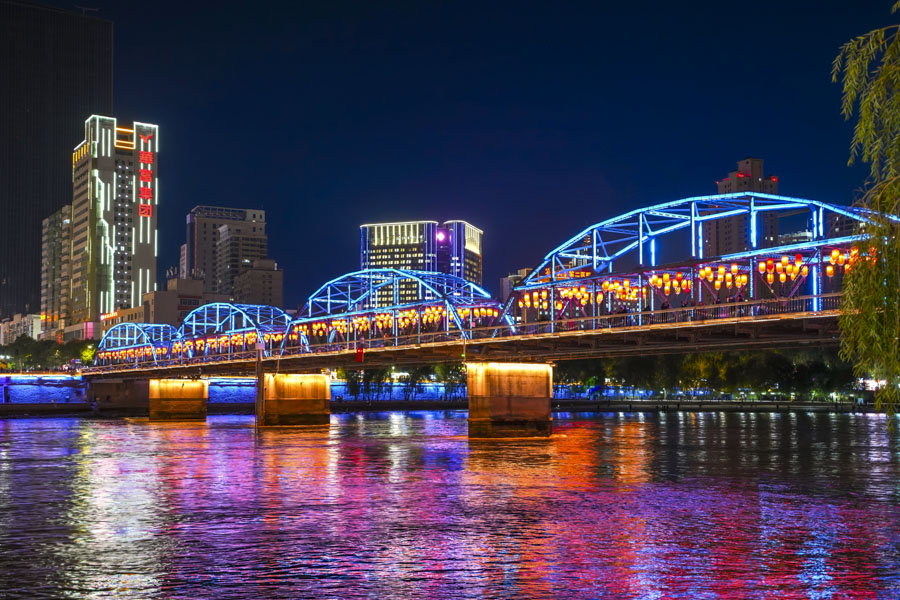
Entertainment
Beyond the main historic sites, cities along the Hexi Corridor have their own forms of local entertainment, from public performances and music to large-scale evening shows.
In Lanzhou, stop by Waterwheel Garden, where huge traditional waterwheels recall ancient irrigation methods. Here, you can also take a traditional sheepskin-raft trip on the Yellow River, a form of river transport with a long history in the region.
Visit the central squares of Zhangye in the evening to see concerts, performances by local musical groups, and communal square dancing that regularly take place in the city. If your trip coincides with a major holiday or cultural event, you can also catch folk costume performances.
In Jiayuguan, head for the evening programme at Jiayuguan Fortress, where after dark the historical walls become part of a light and multimedia show. Launched in 2024, the night programme uses digital technologies to tell stories of people and events associated with the Silk Road and the city's frontier history.
Dunhuang has several large-scale evening productions drawing on the city's Silk Road history and the art of the Mogao Caves. Encore Dunhuang follows stories of caravans, travellers and Buddhist pilgrims, while Ancient Sound of Dunhuang combines dance, music and stage imagery inspired by the cave murals.
Parks in the Hexi Corridor
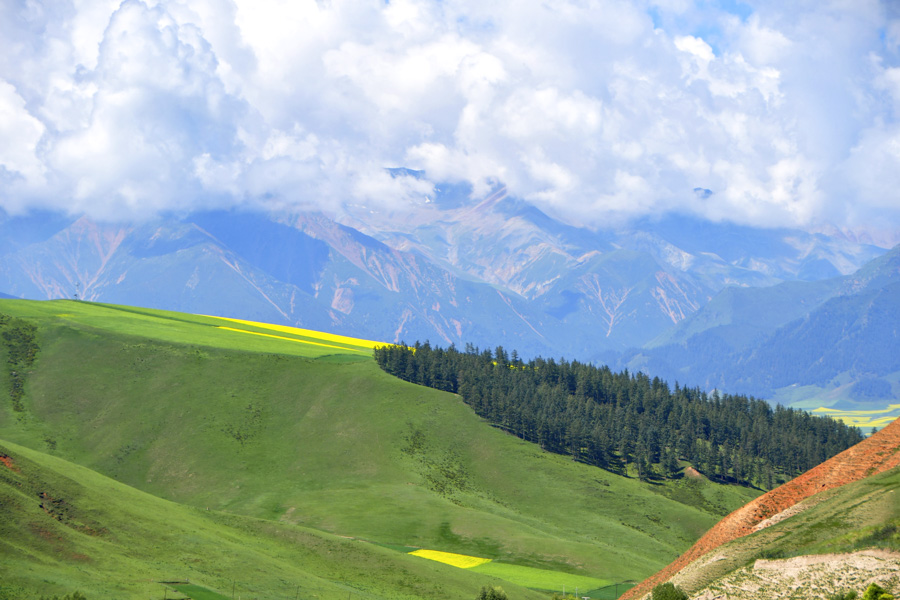
The Hexi Corridor is a land of remarkable natural diversity, where arid deserts sit alongside multicoloured mountains, alpine landscapes, oases, and wetlands.
Head to the Qilian Mountains (祁连山), which form the southern border of the Hexi Corridor. Mountain valleys, meadows, forests, and gorges here create a green belt that stands in sharp contrast to the dry plains and deserts at the foothills.
Visit Zhangye UNESCO Global Geopark (张掖世界地质公园), located in the central part of the Hexi Corridor. Its territory includes the Colourful Hills (彩色丘陵), the Binggou Danxia (冰沟丹霞) stone formations, as well as gorges and other geological features.
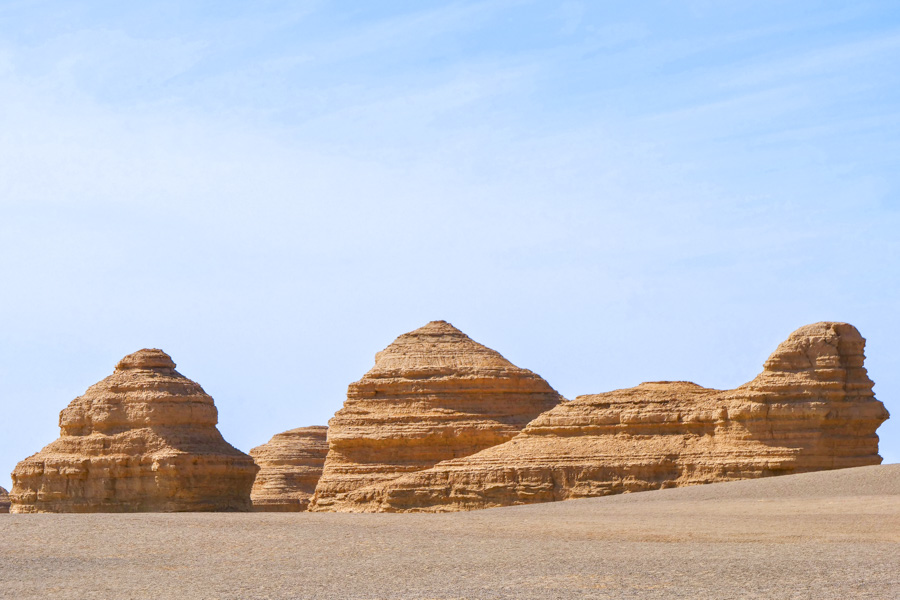
Discover Dunhuang UNESCO Global Geopark (敦煌世界地质公园), the largest natural complex in the western part of the Hexi Corridor. Its main geological attractions are the Yardang landforms shaped by wind erosion.
Shopping in the Hexi Corridor
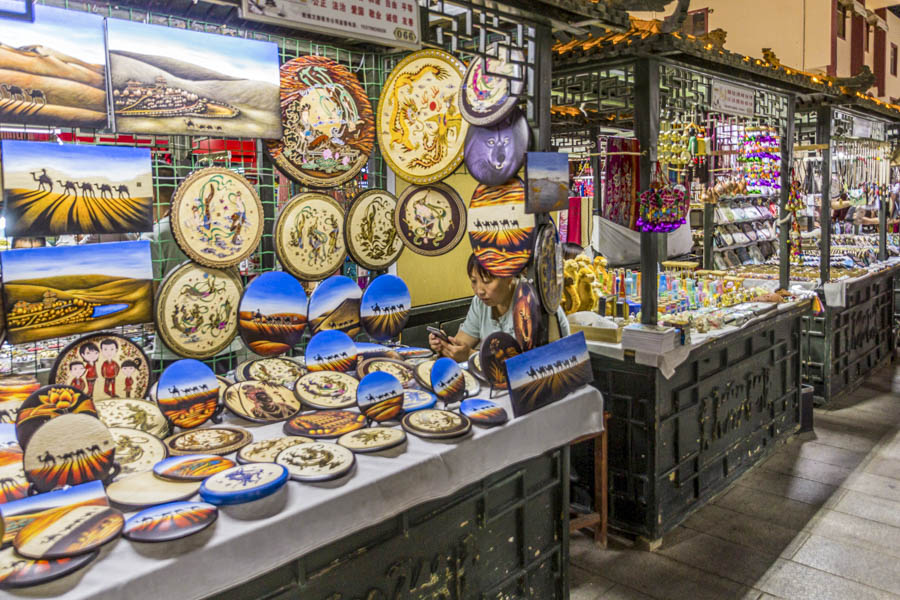
Shopping in the Hexi Corridor is an opportunity to get to know the traditional crafts and local products of the region. Cities along the route sell stone and wood carvings, traditional textiles, decorative items, locally produced foods, and souvenirs dedicated to the history of the Silk Road.
In Zhangye, look for paper cuttings, embroidery and crafts associated with the local Yugur community. Jiayuguan is known for reproductions of historic frescoes and decorative pieces made from Gobi stones. Dunhuang shops sell carved ke hulu (刻葫芦) gourds, woodblock prints, silk scarves and bottles filled with coloured sand.
Pay attention to products made from local stone and jade, especially the famous Luminous Jade Cups. Also notable are souvenirs with motifs of Jiayuguan Pass, the Great Wall of China, and ancient caravan routes.
Food markets and shops also sell regional produce, including dried fruit, dates, garlic, rice, goji berries and dried mushrooms. Jiayuguan also has a local wine industry, and bottles from nearby wineries are widely sold in the area.
Food in Hexi Corridor
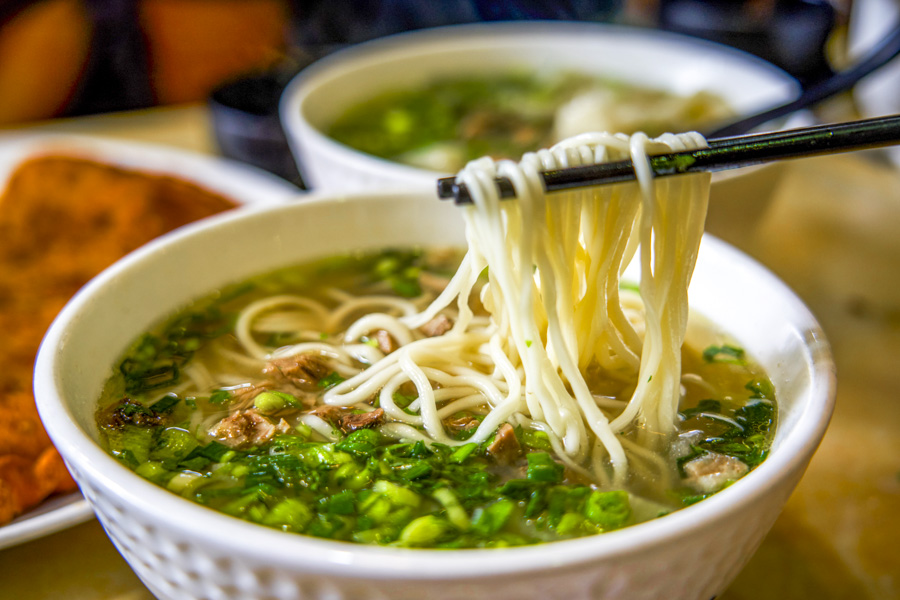
Food along the Hexi Corridor reflects the cooking traditions of north-western Gansu. Beef and mutton appear grilled, roasted and stewed, while wheat is the basis for many of the region's noodles and other staples. These range from thin hand-pulled noodles served in meat broth to denser pieces of dough stir-fried with herbs, radish, vegetables and spicy seasonings.
To experience the flavour of this region, it is worth trying Lanzhou Beef Noodles (兰州牛肉面) in a rich soup with juicy pieces of meat, tender Shou Zhua Yangrou (手抓羊肉), which is traditionally eaten with your hands, and Liangpi (凉皮) – a cold wheat-based appetiser with a spicy, tangy sauce. Together, these iconic specialities perfectly convey the authentic gastronomic character of the Hexi Corridor.
How to Get to the Hexi Corridor
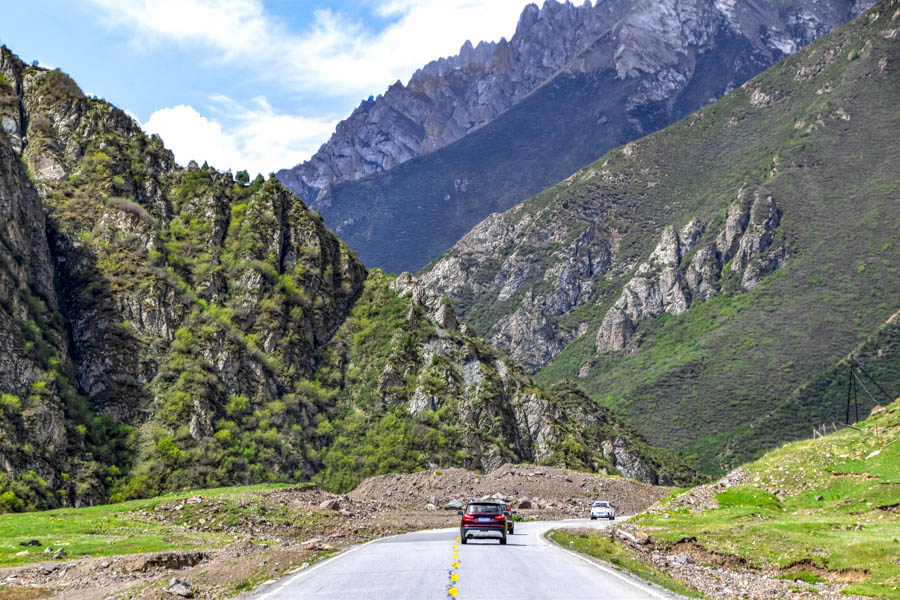
You can reach the Hexi Corridor by plane, train, or bus. Lanzhou serves as the main eastern gateway to the Hexi Corridor. A typical route runs east to west: Lanzhou → Zhangye → Jiayuguan → Dunhuang. Allow a reasonable buffer between arriving in one city and making your onward train or bus connection.
By Air
Lanzhou Zhongchuan International Airport (LHW) is the most convenient airport for starting a journey through the Hexi Corridor. It is connected by regular flights to major Chinese cities, including Beijing, Shanghai, Guangzhou, Chengdu, and Xi'an.
If you want to start your journey closer to the central or western part of the corridor, you can fly into Zhangye Ganzhou Airport (YZY), Jiayuguan Airport (JGN), or Dunhuang Mogao International Airport (DNH).
By Train
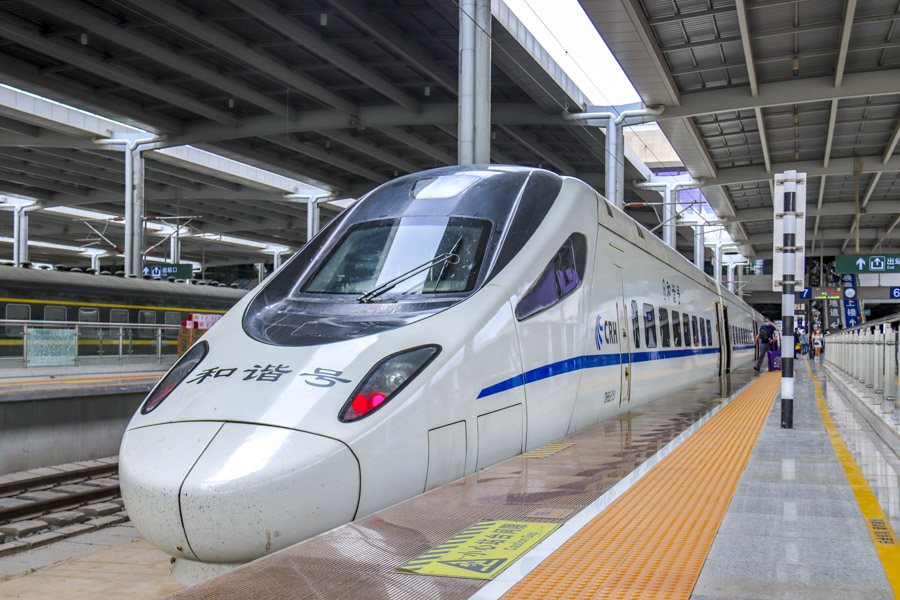
Trains are one of the easiest ways to travel between the main cities of the Hexi Corridor. Both regular and high-speed trains are available for passengers.
| City | Regular Trains | High-Speed Trains |
| Lanzhou | Lanzhou Railway Station (兰州站) |
Lanzhou West Railway Station (兰州西站) |
| Zhangye |
Zhangye Railway Station (张掖火车站) |
Zhangye West Railway Station (张掖西站) |
| Jiayuguan |
Jiayuguan Railway Station (嘉峪关站) |
Jiayuguan South Railway Station (嘉峪关南站) |
| Dunhuang | Dunhuang Railway Station (敦煌站) | – |
By Bus
Intercity buses can also be used for travel between cities. The main departure points are Zhangye Bus Station (张掖汽车站), Jiayuguan Bus Station (嘉峪关汽车站), and Dunhuang Bus Station (敦煌汽车站). Lanzhou has several major long-distance bus stations.
Languages Spoken in the Hexi Corridor
Standard Mandarin Chinese (Putonghua, 普通话) is spoken throughout the Hexi Corridor. In western Gansu, Lan–Yin Mandarin (兰银官话) is also widely spoken. Its Hexi branch covers much of the corridor, including Wuwei, Zhangye, Jiayuguan, Jiuquan and Dunhuang.
Minority languages are also spoken in parts of the region. For example, the local Yugur ethnic group mainly lives in Sunan Yugur Autonomous County near Zhangye, with a smaller community in Huangnibao near Jiuquan. In Sunan, Western Yugur is spoken in the western part of the county, while Eastern Yugur is used in the east. Mandarin remains the main shared language.
Security in the Hexi Corridor
The main practical risks along the Hexi Corridor come from heat, dry conditions, strong winds and the remoteness of some desert and mountain sites. Plan longer excursions in advance and take the terrain and weather into account.
Bring enough water. The dry climate and high summer temperatures make dehydration a risk, particularly during long walks outdoors.
Plan your walks for cooler times of the day. Early morning and late afternoon are more comfortable for long excursions than the hours of peak heat. Use sunscreen, wear a hat, and choose lightweight clothing that covers the skin.
Check the weather forecast. Wind, heat, and precipitation can quickly alter conditions in desert and mountainous areas. Before setting off, check the latest alerts and adjust your itinerary if necessary.
Verify the opening hours of attractions. Weather, seasonal conditions, maintenance, and special events can temporarily affect access to specific sites.
Do not stray from designated routes. For remote desert or mountain areas, travelling with a guide is the safer option.
Keep your phone charged. Having a power bank is particularly useful on long journeys.
Know where to get medical help. Large hospitals operate in the main cities of the Hexi Corridor:
- Zhangye People's Hospital Affiliated to Hexi University (河西学院附属张掖人民医院) in Zhangye,
- Jiayuguan No. 1 People's Hospital (嘉峪关市第一人民医院) in Jiayuguan,
- Dunhuang People's Hospital (敦煌市人民医院) and Dunhuang Hospital of Traditional Chinese Medicine (敦煌市中医院) in Dunhuang.
Remember the medical emergency number – 120, which operates 24 hours a day.