

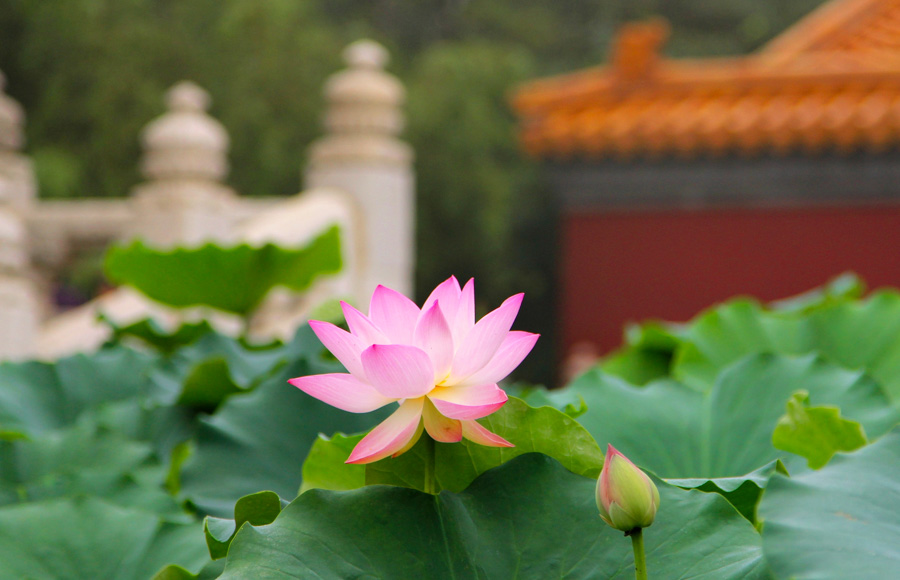
Chinese gardens have grown over three thousand years into the evocative expressions of the bond between nature and human life. These orchards in China, from large imperial parks to small scholarly ones, represent self-contained worlds. Chinese people use elements like water, rocks, and pavilions to create a miniature version of the natural landscape. Philosophy, the movement of QI, poetry, and the art of seeing define the traditional Chinese gardens.
A typical Chinese garden has walls around it with ponds, shaped rocks, old trees, and seasonal flowers. As an essential attraction on China tours, there you'll also find halls, pavilions, moon gates, and covered walkways. The dialogue between architecture and nature is the heart of Chinese garden design. This remains one of the great achievements of Chinese horticulture.
The importance of these spaces deserved global recognition. UNESCO lists nine masterpieces of Chinese gardens, including the Summer Palace in Beijing and the Chengde Mountain Resort. The refined oriental design of the Classical Gardens of Suzhou is the purest expression of the genre. These sites bring together Chinese flower culture and plant symbolism embedded in daily life.
In Chinese gardens, rock stands for mountains, water for rivers, bamboo for resilience, and lotus for purity. Centuries of Chinese floral traditions and symbolic interpretations shaped these layers of meaning.
Origins and Evolution of Chinese Gardens
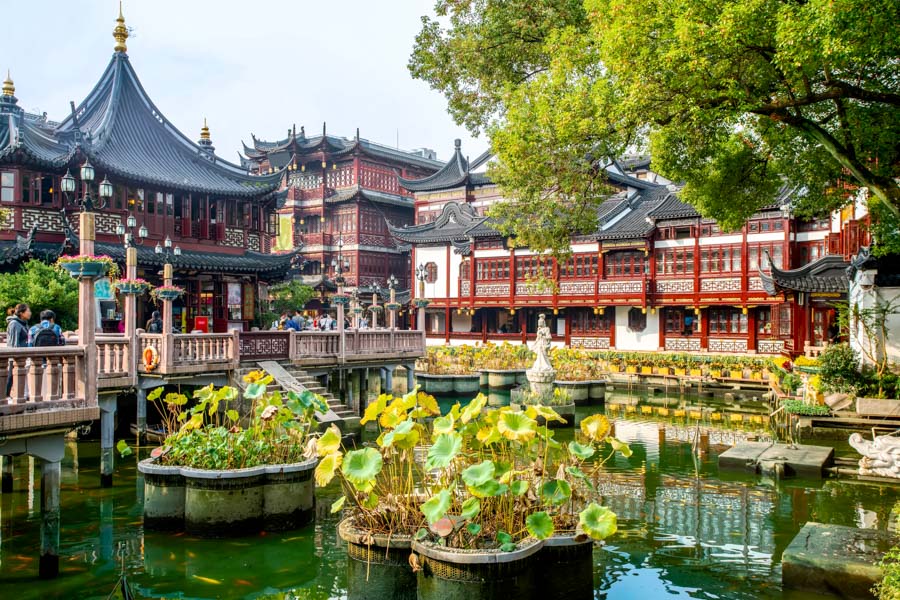
Classical Chinese gardens can be classified into four categories: imperial gardens, private residential gardens, temple gardens, and public gardens.
Imperial gardens
Imperial gardens were built for emperors and their courts, shaped around grand lakes, artificial mountains and vast ceremonial spaces. They were designed to show power and harmony at the same time, blending nature with architecture on an impressive scale.
Private residential gardens
Private gardens belonged to scholars and wealthy families and felt more intimate and poetic. They focused on quiet corners, small ponds, framed views and symbolic plants that reflected personal taste and inner life.
Temple gardens
Temple gardens grew around monasteries and acted as spiritual landscapes. Their layout encouraged meditation, stillness and a slow rhythm of movement, using simple plants and rocks to guide the mind toward calm.
Public gardens
Public gardens became shared spaces for citizens to walk, read and enjoy seasonal flowers. They combined classical design with more open paths, creating places where nature and daily life meet without strict formality.
History
Chinese gardens have a history that goes back to the earliest dynasties. The first recorded classical gardens appeared in the Yellow River valley during the Shang dynasty (1600–1046 BC), when rulers kept hunting parks, fruit orchards, and collections of birds and animals.
Over time, these early royal parks evolved into carefully designed landscapes filled with symbolism, poetry, and philosophy. By the Qin (221 to 206 BC) and Han (202 BC to 220 AD) dynasties, emperors were already shaping lakes, islands, and artificial mountains to recreate mythical places. Such an example is Mount Penglai (蓬萊仙島), the legendary home of the Eight Immortals, mythical beings. This idea became the blueprint for oriental garden design for centuries.
As dynasties shifted, gardens slowly turned from grand hunting grounds into symbolic landscapes for scholars, poets, and artists. By the Tang dynasty (618 and 907 AD), gardens became cultural hubs and the first “golden age” of classical aesthetics. The tradition continued into the Song dynasty (960 to 1279 AD), when cities like Suzhou and Hangzhou produced refined private gardens. These oriental landscape designs are the ones we often think of today when imagining classical Chinese landscapes.
Cultural Evolution
Chinese gardens were never just about plants and pavilions. They grew out of three major philosophies that shaped Chinese culture:
Confucianism
Confucian ideals encouraged order, harmony, reflection, and proper behaviour. This is why many traditional gardens include balanced layouts, cultured pavilions, and quiet reading halls.
Taoism
Taoist influence brought in the love of natural forms, mystical mountains, winding streams, and a sense of effortless flow. This is where the fascination with rocks started. Oddly shaped stones represented mountains, immortality, and nature untouched by humans.
Buddhism
From the Han dynasty onwards, Buddhist temples filled China, each with its own small garden. These spaces encouraged meditation, silence, and withdrawal from chaos. Later imperial gardens borrowed these elements by including meandering paths, small islands, and carefully placed “retreat” pavilions.
Together, these philosophies shifted the garden from a physical space into a mental one. Chinese gardens eventually became a place to think, write, and reconnect with nature.
Unique Features
Chinese gardens are full of elements loaded with meaning, and one of the most recognisable is the fish pond. Goldfish and koi - bright, elegant, and always in motion - symbolise prosperity and abundance. Watching fish also became part of the garden experience. Even early Song-dynasty gardens had special pavilions built just for observing them.
Other signature features include:
- Artificial mountains (jiashan) inspired by the Isles of the Eight Immortals
- Winding streams designed for floating wine cups - a custom made famous at the Orchid Pavilion
- Scholars’ rocks, valued for their strange shapes and texture
- Poetry pavilions, viewing terraces, and small bridges
- Courtyard layouts that turn even tiny spaces into layered landscapes
Everything was designed to feel like natural elements but actually followed a deep cultural logic combining myth, art, and philosophy.
Regional Variations
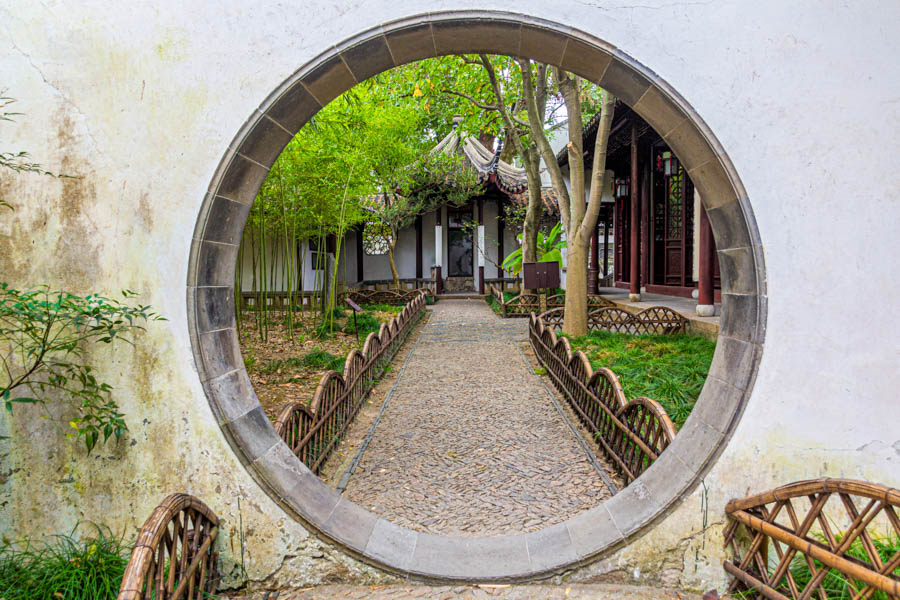
Even though classical gardens share the same roots, there are many regional variations, due to a variety of factors including climate, cultural influences and purposes. Northern and Southern China developed two major distinct styles:
Northern China
- Gardens were larger, bolder, and mostly imperial.
- Heavy use of grand terraces, artificial lakes, and large-scale mountains.
- Influenced strongly by early hunting parks and political power.
- More exposed to the steppe climate, resulting in spacious layouts and hardy vegetation.
- Examples: the massive Tang and Song imperial gardens and early Qin-Han landscapes.
Southern China
- More refined, intimate, scholar-orientated, private and belonging to wealthy families.
- Famous for delicate pavilions, private courtyards, winding corridors, and sophisticated rockeries.
- Used local stones from Lake Tai, which became iconic in Suzhou designs.
- Cities like Suzhou and Hangzhou became the heart of the classical garden tradition.
- Examples: the Master of the Nets Garden, Blue Wave Pavilion, and dozens of surviving Suzhou gardens.
Where the north aimed for imperial scale, the south perfected elegance and detail. Together, the two regions shaped globally acclaimed garden tradition.
Architecture and Shapes in Traditional Chinese Gardens

Common Structures
Traditional Chinese gardens are built as a sequence of scenes rather than a single panorama. A visitor moves through pavilions, paths, bridges, and courtyards, encountering framed views that reveal the garden piece by piece.
Ji Cheng, the 16th-century garden designer, wrote that one must
"Hide the vulgar and the common as far as the eye can see.
Include the excellent and the splendid".
This principle explains why nothing is shown all at once. Buildings curve around corners and galleries twist, while rockeries obstruct direct views.
Water
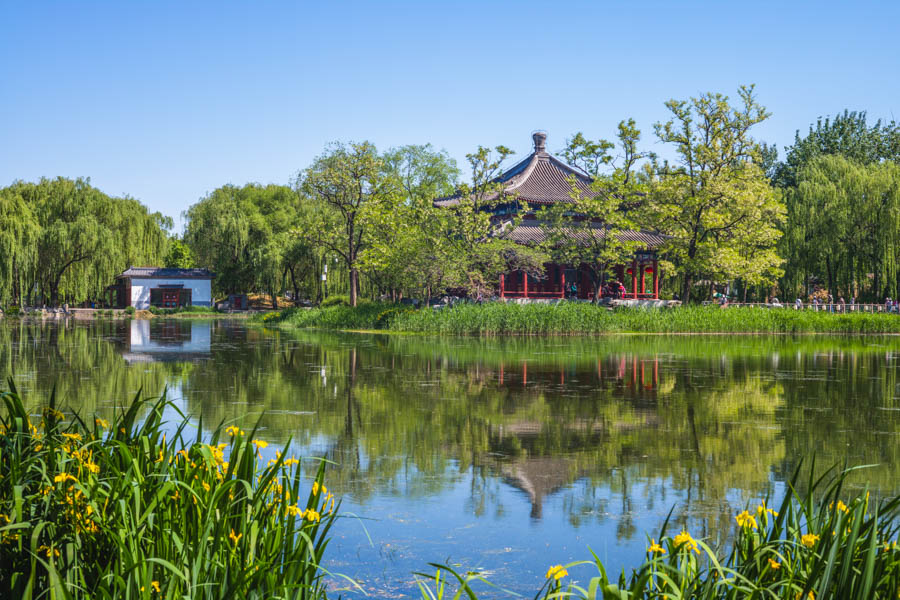
A pond and lake reflect their surroundings, create openness, and soften the rocks. Vegetation or twisting banks often hide the edges, making the water, the soul of the garden, appear to stretch beyond its actual borders. Lotus ponds are key elements, usually accompanied by pavilions for viewing the lotuses. Goldfish swim beneath verandas that dip toward the water.
Pavilions (亭 ting)
Pavilions are the signature structures of Chinese gardens. They sit at turning points, on the water’s edge, above rockeries, or beside bamboo groves. Each pavilion serves for a specific moment: to watch dawn on the pond, to rest, or to see autumn foliage mirrored in water. Their names reflect their purpose, such as the Listening to the Rain Pavilion or the Pavilion of the Moon and Wind.
Larger halls provide spaces for community events and peaceful contemplation. These include the ceremony hall (ting), principal pavilion (da ting), and flower pavilion (hua ting). They often include rear courtyards filled with small rocks and Chinese plants for gardens.
Bridges
Bridges rarely follow straight lines. Instead they zigzag, arch, or turn unexpectedly, echoing rural footpaths and creating shifting viewpoints over the water. The famous nine-turn bridge appears in many classical gardens and turns each step into a small change of perspective. Some bridges are rough slabs of stone; others are brightly lacquered, adding a playful note against white walls and quiet ponds.
Galleries (廊lang)
Covered galleries link the halls and pavilions and let the garden unfold scene by scene. They follow ponds and rocky slopes, each turn shifting your view. The ornamental windows act as tiny frames highlighting a plum blossom (梅花), a pine branch, a stone or a ripple on the water. They slow you down just enough to notice the beauty in these small moments and protect you on rainy days.
Moon Gates and Windows
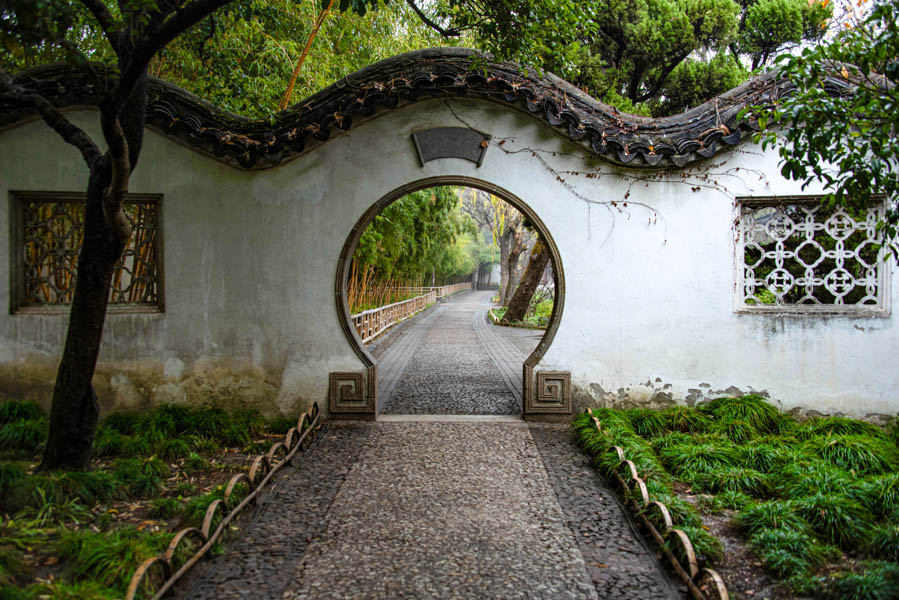
Circular moon gates and sculptural windows act like frames. Passing through a moon gate feels like entering a painting and carries profound spiritual symbolism, representing harmony and wholeness. Looking through a carved window focuses on one detail, like a branch, a stone, or a ripple on the pond. This forms a small landscape within the larger one.
Towers and Boats
Two-storey towers (樓 lou / 閣 ge) rise above the garden walls to open distant views. Some gardens include stone “boat pavilions” moored on ponds. These structures, often with winged gables and layered halls, offer cool breezes in summer and calm reflections in winter.
Courtyards (院 yuan)
Small enclosed courtyards provide quiet places for reading, tea, or painting. They also let designers shift the mood in the garden. You move from open water scenes to close, cosy compositions.
Artificial Mountains, Scholar Rocks and Carved Stones
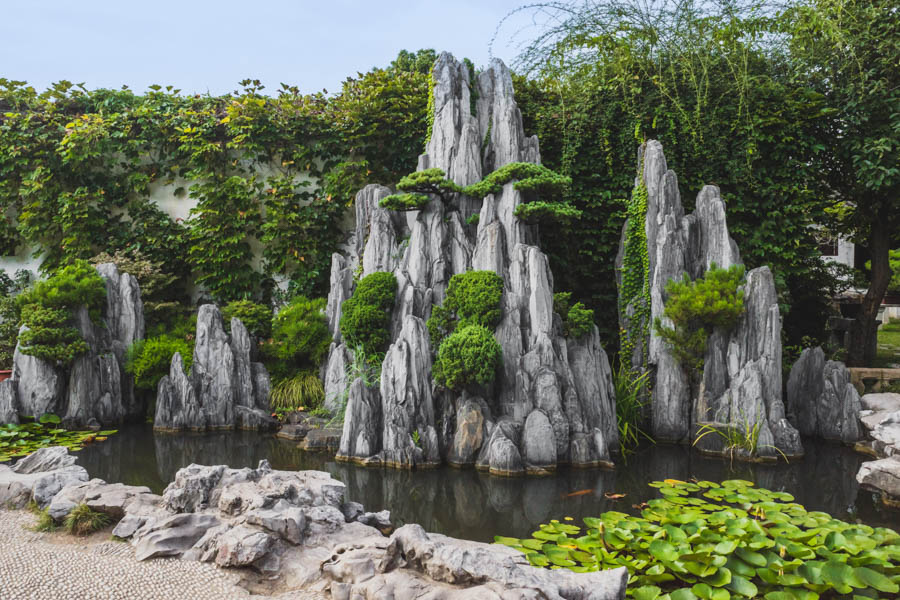
Rockeries play a central role in many Chinese gardens. Since the Han dynasty, stones from Lake Tai have been prized for their unusual shapes. One striking stone can stand in for a whole mountain, and larger rockery can create peaks, valleys and little grottoes. Mountains carry meaning in both Confucian and Taoist thought, so these rocks are never just decoration. Some strategically positioned carved and sculpted stones convey a secret message.
Feng Shui Principles in Garden Design
Feng shui (風水), also known historically as Kanyu, is the foundation of traditional garden planning. Its influence appears in site selection, orientation, water placement, and the overall balance of shapes.
1. Yin-Yang Balance
Gardens are built to harmonise opposites. Mountains (rockeries) embody yin - stillness, solidity, and depth. Water represents yang - movement, clarity, and openness. Together they create a landscape that feels alive yet grounded.
2. Borrowed Scenery (借景 jiejing)
Borrowing distant mountains, pagodas, or treetops aligns with feng shui’s emphasis on extending energy beyond the enclosed site. Openings in walls or carefully positioned windows let outside views come into the garden. This connection makes the entire world feel linked to space.
3. Water Placement
Feng shui regards water as a carrier of qi. Ponds perch in front of main halls or at the garden’s centre to gather and reflect energy. Their curves slow movement of qi and prevent stagnation. Bridges, islands, and pavilions placed on or over water help circulate energy throughout the garden.
4. Rockery and Mountain Positioning
Artificial mountains sit behind main structures as a “protective back”, a classic feng shui garden principle. Stones arranged in layers, peaks, or small ranges anchor the garden and give it stability.
5. Pathways and Flow
Straight paths allow qi to rush too quickly; therefore, garden paths bend, narrow, widen, or zigzag. This keeps movement gentle and allows each turn to reveal a new scene.
6. Planting Design
Trees and plants are not just decorative. Pines provide strength, bamboo represents flexibility, and plum blossoms signal renewal. Their placement follows feng shui rules of contrast, balance, and seasonal harmony.
7. Water Gap Technique
Some gardens use the “water-gap” method. This approach has gaps between structures or rockeries. The gaps direct wind and water energy into or out of specific areas. It helps keep the circulation flowing throughout the garden.
8. Wuxing (Five Elements) and Shape Significance
The Wuxing theory uses five elements in design: Wood, Fire, Earth, Metal and Water. In a garden, each one adds balance. Wood appears in trees and symbolises growth. Fire comes through bright flowers. Earth shows up in rocks and soil. Metal can be sculptures. Water is expressed with ponds or streams. Each element links to a shape as well. Wood is rectangular, Fire is triangular, Earth is square, Metal is round and Water is wavy.
9. Colour Significance
Colour is important in feng shui because it shapes mood and energy. Red brings happiness and prosperity. Green stands for growth and harmony. Blue creates calm, and yellow adds warmth and positivity. Choosing the right colours for plants, structures and decorations strengthens the garden’s energy and its spiritual feel. White also helps by adding space and tranquility. Using white flowers or features can cleanse and refresh the atmosphere.
Flowers, Fruits, and Plants Revered in Chinese Gardens
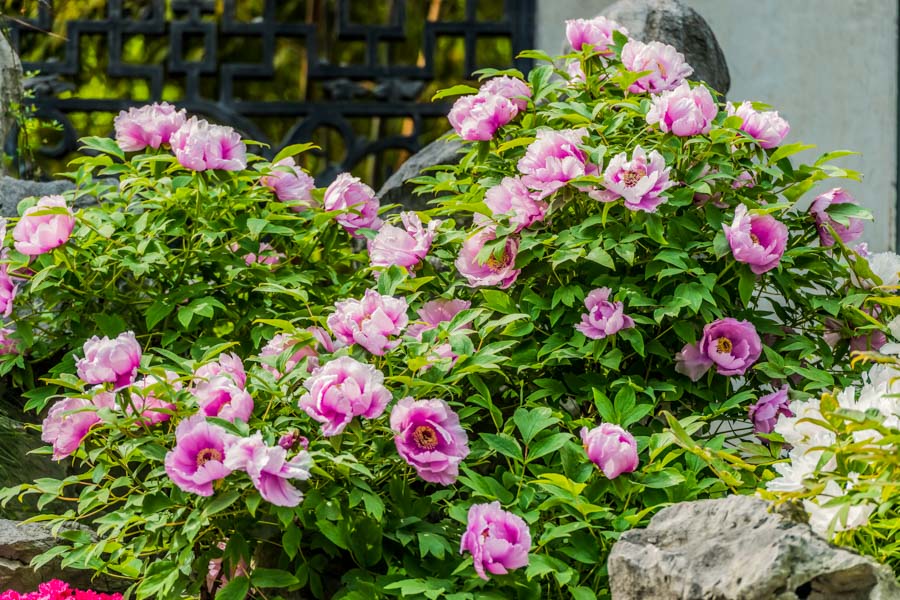
A wide range of Chinese flowers, fruits, and plant species shape the entire mood of these classical gardens. They are not only decorative elements but also cultural symbols, emotional carriers, and sometimes even medicinal resources. A basket of flowers is the symbol of Lan Caihe (蓝采和), one of the Eight Taoist Immortals, who is regarded as the patron of florists and gardeners. The four friends of the flowers are the swallow, oriole, bee, and butterfly. In this chapter we focus on the cultural significance of flowers in China.
These plants are highly affiliated with good fortune and traditional Chinese medicine. They show how beauty, symbolism, and healing come together in flowers and Chinese culture.
Flower Symbolism in China
Meaning of Peonies in Chinese Culture
Often called the flower of wealth, the peony represents honour, prosperity, and success. Also called the king of flowers, they appear in classical garden art as a promise of flourishing life. For this reason it became one of the most celebrated garden plants during the Tang and Song periods.
Chinese people frequently pair peonies with rocks or pavilions to signal stability, grace, and rising fortune.
Chinese Rose
Known as the queen of flowers, the Chinese rose blossoms almost throughout the entire year. Among the popular Chinese flowers, it stays in bloom so often, it stands for lasting youth and enduring beauty. In garden design they use it to soften courtyards or to bring colour to the edges of walkways. A Chinese rose placed in a vase also carries the meaning of peaceful seasons, which appears often in auspicious motifs.
Water Lily
Water lilies remain important in many southern gardens. They spread across ponds and mirror the sky on still water, creating a calm atmosphere. In art and poetry, the water lily represents clarity and tranquillity.
Camellia
Camellias bloom in the cooler seasons, which makes them signs of elegance and inner strength. Their smooth petals and deep colours appear in literati gardens with refinement and quiet beauty. Camellias also symbolise admiration and devotion, appearing frequently in Chinese flower paintings and decorative screens.
Medicinal Uses and Imperial Cultivation
Many Chinese gardens were once living pharmacies. Imperial estates and private gardens grew medicinal herbs for traditional Chinese medicine. People admired flowers in Chinese history for their beauty, and also appreciated them for their healing properties.
They used peonies for calming the body and improving circulation.
Camellias appeared in remedies that supported digestion and skin health.
In classical gardens, people grew hostas, sweetshrubs, and other leafy plants for their fragrance, shade, or therapeutic properties.
Other Plants and Fruits in Chinese Gardens
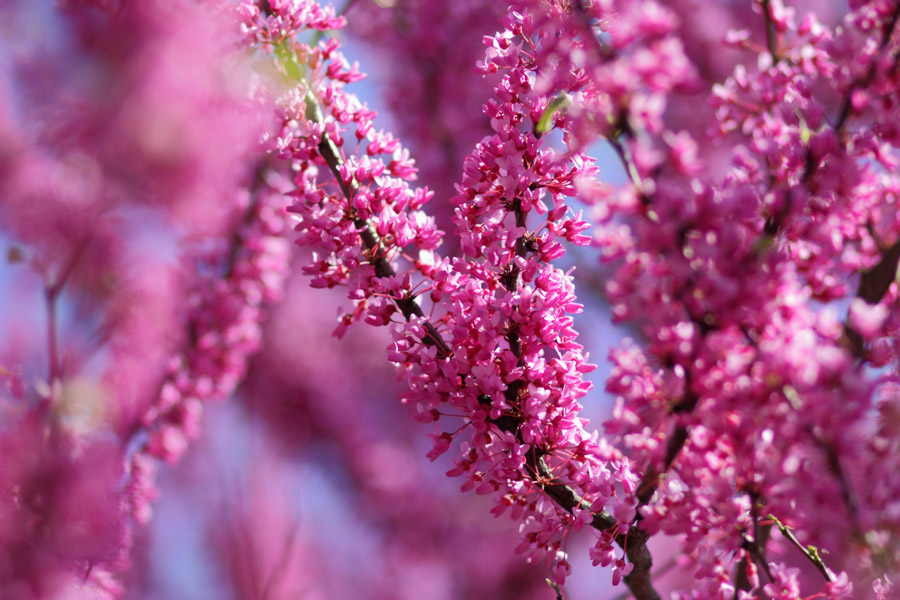
Beyond the historical flowers of China, many gardens include plants and fruits that are native to the country or were introduced thousands of years ago. They add seasonal colour, fragrance, and unique shapes to garden landscapes.
| Plant and Fruit Name | Botanical Name/Type | Seasonal Characteristics | Significance | Symbolism in Chinese Culture |
| Chinese redbud | Cercis chinensis / Tree | Spring: Profuse pink-purple flowers on bare branches. | A classic flowering tree providing early seasonal colour. | Symbol of love and beauty |
| Seven-on flower | Heptacodium miconioides / Shrub/Tree | Late Summer/Fall: Fragrant white flowers, then pink-red calyces | Valued for its rare late-season bloom and multi-season interest. | Possesses mystical powers and brings good luck and prosperity |
| August lily | Hosta plantagiena/ Perennial | Summer: Large, fragrant white flowers, broad foliage | Frequently featured in religious and spiritual events. | Often symbolises tranquility, humility and devotion. |
| Bishop's Hat | Epimedium / Groundcover | Spring: Delicate, spurred flowers; heart-shaped leaves. | Provides texture and colour in shaded garden spaces. | Used in traditional Chinese weddings as a symbol of fertility |
| Chinese sweetshrub | Calycanthus chinensis / Shrub | Spring/Summer: Magnolia-like, fragrant burgundy flowers. | A rare and ornamental shrub with a unique floral structure. | Symbolises harmony and peace, safe boundaries and personal reclamation |
| Chinese Wisteria | Wisteria sinensis / Climber | Spring: Long, drooping clusters of purple flowers. | A quintessential plant for pergolas and arches in classical gardens. | Represents scholarly pursuits, Wisdom,Longevity, Immortality, Harmony and Peace |
| Apricot | Prunus / Prunus armeniaca / | Spring: Abundant blossom Summer: Bountiful harvest |
Graces gardens with its vibrant pink or white blossoms | Represents female elegance, good fortune and prosperity |
| Pomegranate | Punica granatum | Spring: Dark orange flowers Late Summer/Fall: Harvest |
Thrive in warm climates. | A symbol of fertility, prosperity, and abundance |
| Pear | Pyrus / Pear trees | Spring: Blooms Late Summer/Fall: Juicy, sweet fruit harvest |
Resilient and have a long lifespan. | Symbolises justice and wisdom. Represents unity, friendship or romance and is often associated with longevity and health. |
Most Famous Chinese Gardens to Visit in China
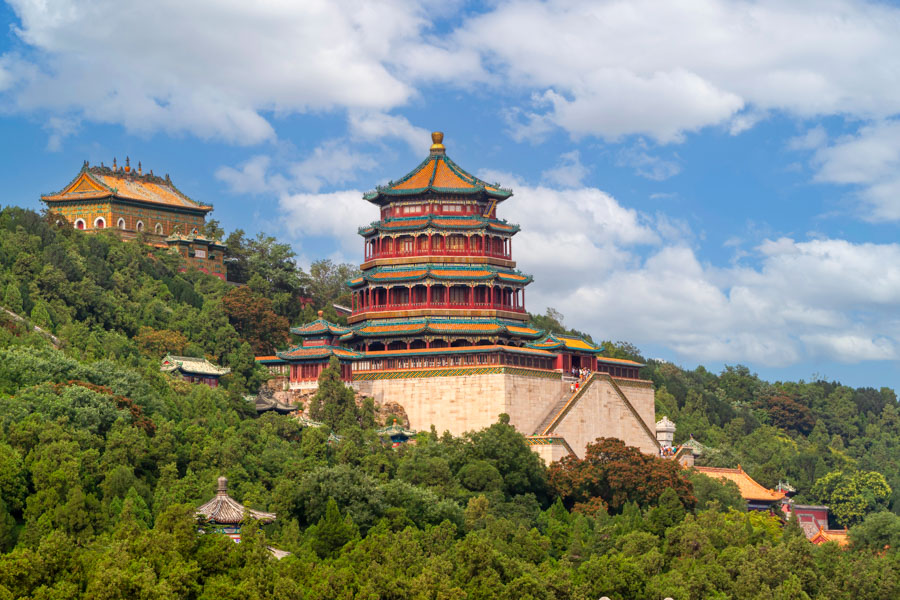
1. Summer Palace (颐和园), Beijing
China’s largest and best-preserved imperial garden, with an area of 290 hectares (716 acres), centred around Kunming Lake and Longevity Hill. A UNESCO World Heritage Site and the ultimate masterpiece of imperial landscape design, built from 1153. One of the most visited heritage sites in the country.
2. Humble Administrator’s Garden (拙政园), Suzhou
The finest example of classical Suzhou-style private gardens, from 1513, with an area of 5.195 hectares (12.84 acres). Known for its poetic water features, they additionally feature refined pavilions and lush scenery. UNESCO-listed and widely considered the archetype of Chinese garden aesthetics.
3. Lingering Garden (留园), Suzhou
A UNESCO World Heritage Site and one of the Four Great Classical Gardens of China. Celebrated for its exquisite layout, corridors, rockeries, and the harmonious balance of architecture and nature. This 2.331-hectare (5.76-acre) garden was built in 1593.

4. Chengde Mountain Resort (Chengde Summer Resort, 承德避暑山庄), Hebei
An enormous imperial complex of 560 hectares (1,384 acres), built between 1703 and 1792, used by Qing emperors. UNESCO-listed and one of the grandest examples of royal landscape architecture, blending vast lakes, temples, palaces, and meadows.
5. Yuyuan Garden (豫园), Shanghai
Shanghai’s most famous classical garden and the only fully restored Ming-era (1577) garden in the city. It covers a compact area of 2 hectares (0.02 km²) or 4.9 acres, featuring an intricate world of pavilions, courtyards, rockeries such as the Exquisite Jade Rock (玉玲珑), and ponds in the heart of the old town, located about 7 kilometres from the New Pudong Area.
Other Important Classical Gardens
| Garden Name | Location | Historical Period and Year of Origin | Surface Area |
| Master of the Nets Garden (网师园) | Suzhou, Jiangsu | Southern Song Dynasty (established in 1140) | 0.54 hectares (1.3 acres) |
| Qinghui Garden (清晖园) | Foshan | Ming Dynasty (established in 1526) | 2.2 hectares (5.43 acres) |
| Jichang Garden (寄畅园) | Wuxi, Jiangsu | Ming Dynasty (built around 1520) | 1.01 hectares (2.5 acres) |
| Qiyuan Garden (启园) | Zhejiang | Republic of China era (built in 1933) | 20.23 hectares (50 acres) |
| Old Summer Palace, Yuanmingyuan (圓明園) | Beijing | Qing Dynasty (established in 1707 - largely destroyed between 1956 and 1860) | 350 hectares (865 acres) originally |
Chinese Gardens in Daily Life Art and Festivals
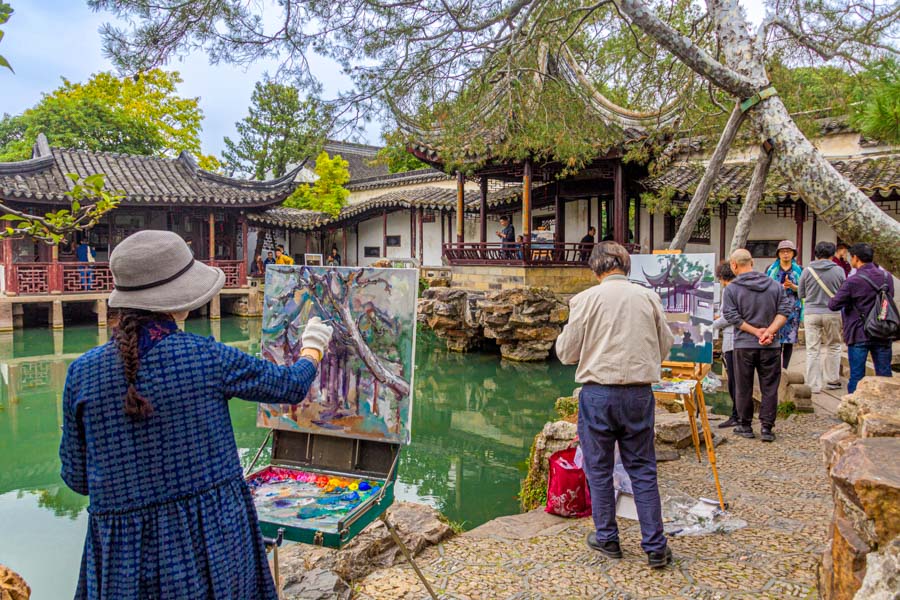
Chinese gardens and flowers circulate through every major art form, creating a shared visual and poetic language.
Artistic Representations of Chinese Gardens and Flowers
In poetry and literature, blossoms have long acted as emotional codes. Plum, chrysanthemum, lotus and orchid denote resilience, reclusion, purity and refinement, allowing a single bloom to carry moral meaning. Garden scenes in novels and drama serve as moral stages where character and fate unfold against the rhythm of the seasons.
In painting and calligraphy, the garden becomes both model and metaphor. Literati brushwork reflects the composition of rocks, water and pathways. Chinese floral art motifs in gongbi (realistic technic) and xieyi (free hand brush work) styles, act as portraits of ideas. Calligraphic panels inside gardens introduce a human voice to the view.
Ceramics and decorative arts translate garden symbolism into portable objects. Jingdezhen porcelain, cloisonné, lacquer, and metalwork are full of lotus medallions, peony scrolls, and plum branches. These designs represent status and the changing seasons.
In textiles and embroidery, silk becomes a tactile garden. Suzhou embroidery renders flowers and miniature landscapes with painterly depth. Court robes and household fabrics embed floral motifs that communicate virtues, wishes and social roles. Seasonal cycles such as spring peonies and autumn chrysanthemums turn cloth into a living calendar.

Penjing (bonsai in Japanese culture) and the horticultural arts compress garden cosmology into miniature landscapes. A single wind-shaped pine or sculpted rock suggests entire mountains and philosophical ideas about age, struggle and harmony.
The same traditions continue in modern Chinese flower art classes, where students learn classical brushwork and floral symbolism.
Finally, theatre, opera and cinema animate garden imagery through sound, costume and movement. Blossoms, courtyards and patterned fabrics signal emotion, memory and social meaning, carrying classical floral symbolism into modern visual culture. Filmmakers compose images where a single blooming branch or a courtyard’s seasonal turn may carry subtext.
Cultural Festivals Related to Gardens
Beyond the revered Peach Festival taking place each spring in Hangzhou, Suzhou, Chengdu, Xianju, and Ningbo, many of the most cherished celebrations in China revolve around flowers, bloom cycles, and the symbolism associated with plants.
The Peony Festival in Luoyang has been celebrated since the Tang period. Every April, the festival treats the peony as the flower of prosperity and beauty. Visitors move through themed gardens, poetry recitals and traditional performances.
The Lotus Festival in Hangzhou focuses on the lotus as a symbol of purity and inner cultivation, as well as enlightenment and rebirth. Local craftsmen present ceramics inspired by lotus flowers, embroidery and seasonal dishes.
The Plum Blossom Festivals in Nanjing, Wuhan, and Wuxi mark the earliest bloom of the year, often in late winter. Calligraphy exhibitions, incense rituals, and poetry readings bring the festival back to its classical roots. The plum has always been a quiet companion during tough times.
During early spring, many regions still hold Flower fairs, known as huashi or huahui. These Chinese flower festivals bring together gardeners, penjing masters, herbalists and folk musicians.
Another important event is the Chongming Hydrangea and Azalea Festivals near Shanghai. Large parks transform into immersive garden spaces. These festivals highlight modern approaches to garden culture while keeping classical symbolism alive through guided walks, storytelling and community planting activities.
Poetry of Nature
Chinese gardens belong equally to art and philosophy, to daily life and eternal imagination. Over centuries, scholars, monks and emperors shaped these spaces to refine their own inner landscapes. Rocks turned into mountains of intention. Water became moving poetry and flowers represented living metaphors, with every path transformed into a thoughtful journey.
The Chinese proverb tells us that cultivating people takes a hundred years. Gardens follow a similar rhythm of patience, care and quiet transformation. What survives is a worldview in which nature and humanity are partners in creating meaning. Chinese gardens endure as architectures of mood and as theatres for changing seasons.