

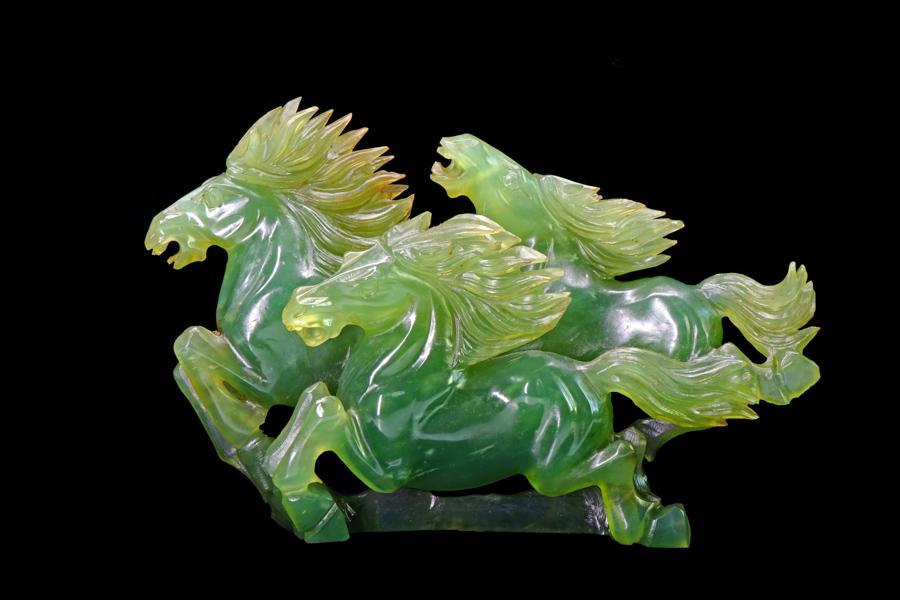
Jade has long been regarded in China as a talismanic gemstone – a material expression of harmony, protection, and well-being. Traditional belief holds that it can ward off harmful forces, foster balance within the home, and support personal vitality. For centuries, this noble mineral symbolised wealth, authority, longevity, purity, and inner steadiness, becoming one of the most enduring markers of status and moral refinement. Today, the images shaped in jade’s resilient surface continue to resonate: they live on in museum galleries, family heirlooms, market stalls, and the workshops of artisans who still carve it by hand. Exploring jade in China offers a glimpse into a cultural world where ancient meanings remain close to the surface, waiting to be rediscovered by those who appreciate its quiet, enduring beauty.
Understanding Jade and Its Value
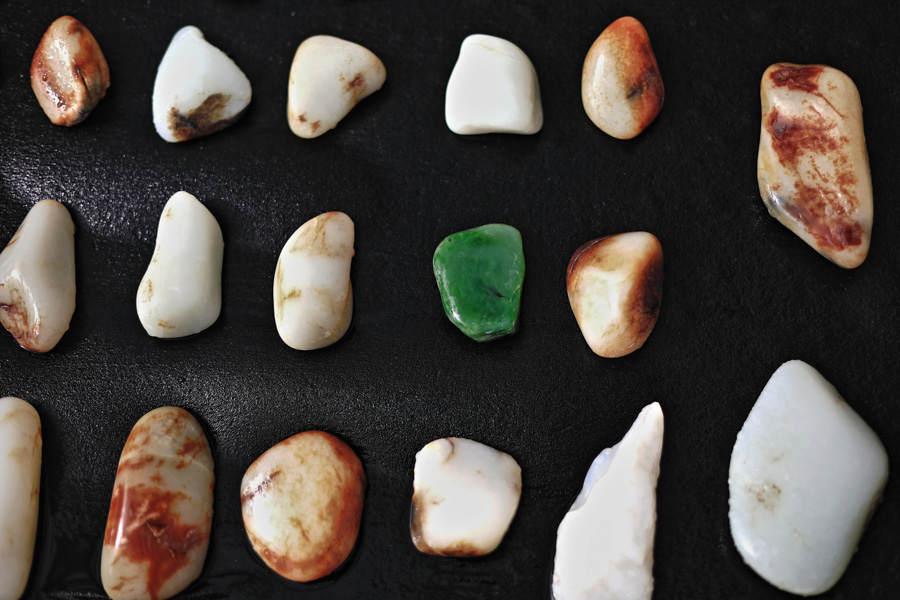
Two distinct minerals with different structures and chemical compositions are referred to as jade, which is a generic classification.
Types of Jade and What Defines Their Quality
Different regions produce unique types of jade, each characterised by distinct qualities, and the most renowned are the four great jades.
Hotan (Hetian) Jade (和田玉), originating from Xinjiang province, is prized for its flawlessness, density and soft, milky glow; its white and pale green varieties have long been considered the standard of quality. It has been used for religious rituals due to its symbolism of Five Virtues which are benevolence, righteousness, wisdom, bravery, and purity.
Xiuyan Jade (岫岩玉), from Liaoning province, is celebrated for its smooth texture that allows artisans to carve exceptionally fine details and subtle colours. It lives a cultural revival, sought after by jewel designers.
Lantian Jade (蓝田玉), from Shaanxi Province, carries multiple colours, warm cream-green and yellow tones marked by gentle natural patterns. The light pink tinge and ice-like patterns of Lotus symbolise pure love, according to Emperor Xuanzong of Tang (712 to 756 AD), who referred to it as Concubine Jade.
Dushan or Nanyang Jade (独山玉/南阳玉), originating from Henan Province, tends to be darker, with deep greens and greyish shades valued for their richness and expressive colour. These regional traits, alongside the stone’s aesthetic qualities, play a direct role in how craftsmen choose the right material for their work.
Its transparency, structural density, and the character of its fibrous pattern are also key factors in evaluating jade. Purity ranges from nearly opaque stones to pieces with a light internal haze – the latter typically commanding higher appreciation. Density and uniformity influence both durability and carving potential: the more tightly packed the fibres, the more delicate the work an artisan can achieve. Natural inclusions – spots, veins, or soft shifts in colour – matter as well. They can enhance the artistic value with their unique natural markings or lower it if they disrupt the composition. Taken together, these qualities help determine the grade of jade and reveal which purposes each stone is best suited for.
Nephrite vs. Jadeite: What Makes Them Different
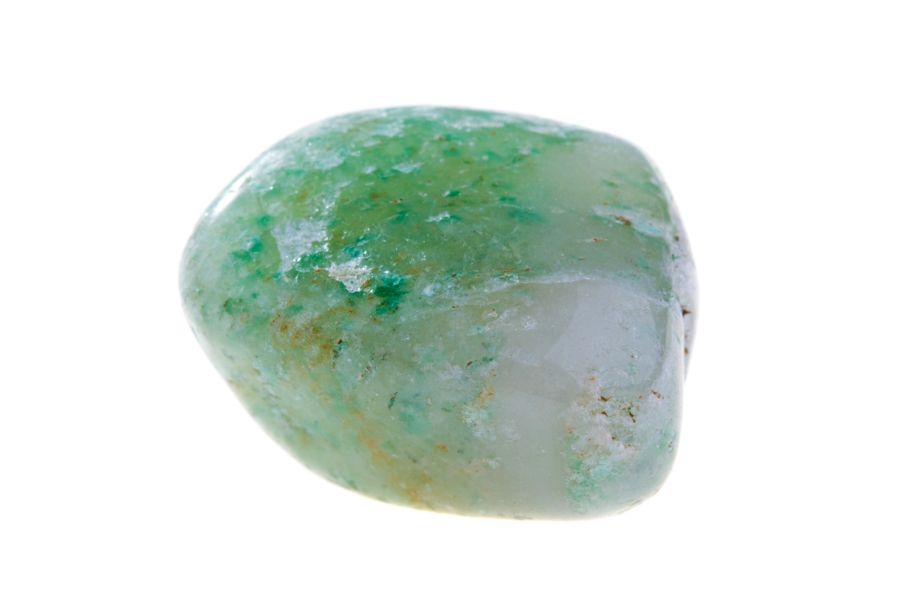
Nephrite has a counterpart that often confuses even experienced buyers – jadeite, a mineral whose luminous colours and polished, glassy surface can easily be mistaken for traditional nephrite. At first glance the two stones seem alike, especially when cut into smooth cabochons or pendants. Yet geologically, they belong to entirely different families: nephrite, the stone historically revered in China as “true jade”, is a calcium magnesium iron silicate (amphibole group mineral, Ca (Mg Fe)5 Si8O22(OH)2); and jadeite, a much rarer and more valuable mineral that arrived from Burma centuries later, is a sodium aluminium silicate (pyroxene group mineral, NaAl(SiO3)2).
Jadeite is the harder of the two, ranking 6.5–7 on the Mohs scale, while nephrite usually falls between 6 and 6.5. Their surfaces reveal even more: jadeite tends to shine with a clear, almost glasslike lustre, whereas nephrite has a softer, waxy glow, reminiscent of polished beeswax. Colour deepens the contrast. Jadeite can appear in bright, saturated hues–emerald greens, lavender, pink, even icy blues–while nephrite most often carries muted tones: creamy white, celadon, grey-green, or the soft “mutton-fat” translucence prized in China since antiquity.
A closer look under a magnifying glass makes the difference unmistakable. Jadeite shows a grainy crystalline structure, composed of tiny interlocking mineral grains. Nephrite, on the other hand, is built from long, interwoven fibres, giving the stone its legendary toughness and slight silky texture. These fibres may shift gently in colour, and darker inclusions sometimes appear inside the stone – features that help specialists determine its authenticity and quality.
Understanding these subtleties not only helps distinguish one stone from another; it reveals why nephrite and jadeite hold such different places in history and craftsmanship. One is the ancient, time-polished mineral woven into China’s cultural memory; the other, a brilliant newcomer whose vivid palette transformed jewellery traditions across Asia.
Jade Colour Varieties Explained
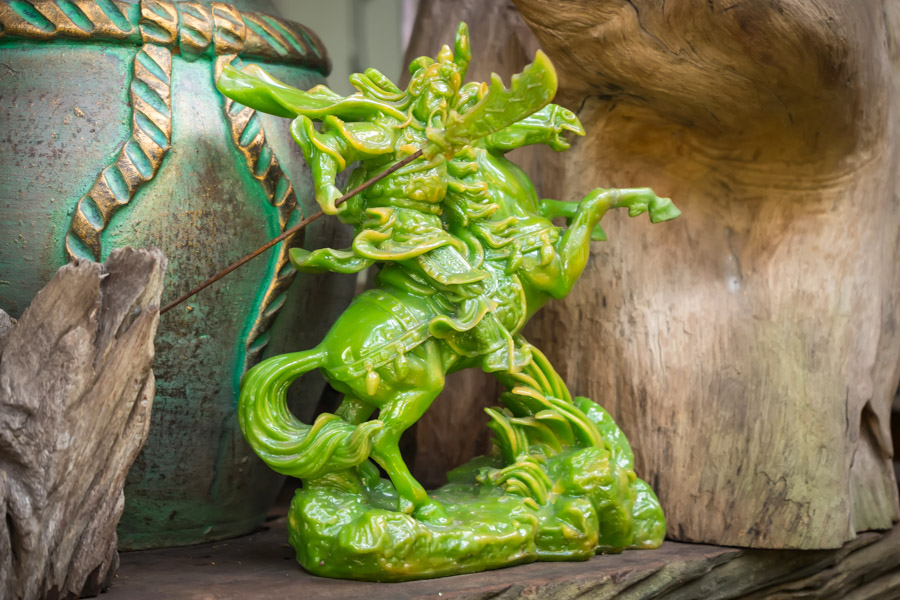
The colours of jade are diverse, encompassing a wide spectrum from soft whites and warm creams to rich greens, yellows, greys, browns, and even near-black. Among these varieties, mutton-fat jade, known for its milky white and gentle translucence, is the most revered in Chinese tradition, symbolising purity, moral clarity, and inner depth. Meanwhile, different green shades carry unique meanings: olive and grass hues signify vitality and renewal, while deeper “spinach” greens are admired for their richness and are often linked to status and steadiness.
Yellow jade, a comparatively rare variety, is traditionally connected with prosperity and joy. Shades of grey and brown evoke the grounded calm of the earth, symbols of stability and quiet strength. At the darker end of the palette, almost black jades convey a sense of depth and resilience – stones prized for their understated power and their hint of something hidden beneath the surface.
How Much Does Jade cost?
The value of jade is usually determined by weight, measured per gram. As of 2025, Hetian mutton-fat white jade averaged over 10,000 yuan per gram. By comparison, Xiuyan jade remains far more accessible, costing around one-tenth of that price. Yet growing fascination with these precious stones continues to push the market upward.
At the highest level, fine jade rivals even rare coloured diamonds in price per carat. Exceptional pieces with distinguished provenance have reached remarkable sums at auction – among them, the white jade Ji’entang seal from the Qianlong period, which sold for HK$145,691,000 (approximately US$18.77 million / £14.39 million / €16.62 million) in spring 2021. Another record was set by the Hutton-Mdivani imperial green jadeite necklace, crafted by Cartier in 1933, which achieved HK$214,000,000 (about US$27.44 million / £18.34 million / €23.31 million) at Sotheby’s Hong Kong in 2014.
Appreciation and Market Trends in Modern Times
At the present time, jade attracts far more than seasoned collectors. Many travellers and buyers drawn to Chinese culture seek it out, whether in the form of traditional carved figures or modern jewellery that lets the stone’s natural beauty speak for itself. Origin and craftsmanship remain central: pieces from renowned regional workshops quickly find admirers, and the market shows a growing fascination with uncommon hues and distinctive textures.
Despite shifting trends, jade continues to bridge aesthetic appeal with deep historical resonance. Its value still rests on the finesse of the carving and the artisan’s ability to read the stone – to let its patterns, fibres, and quiet glimmer shape the final work.
The Story of Jade in China
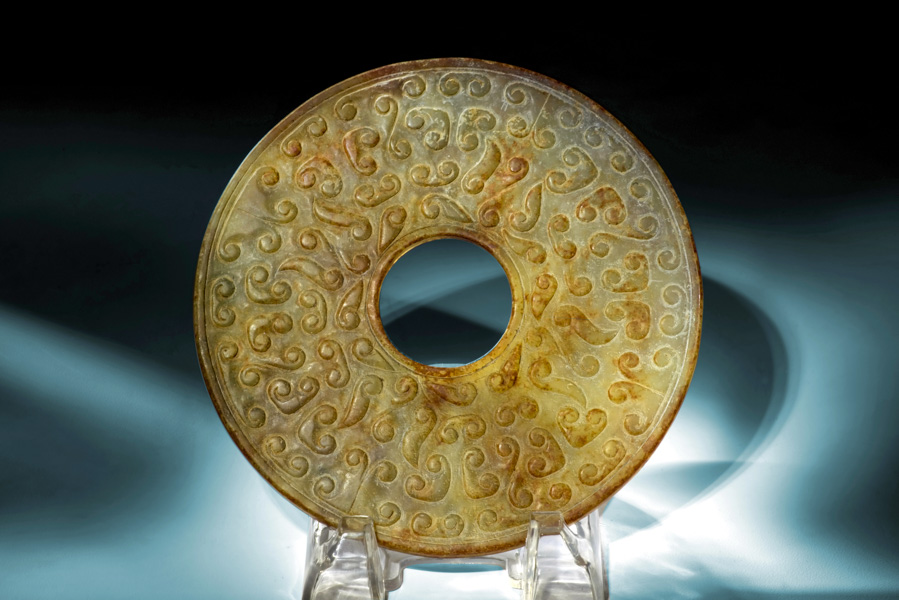
In traditional Chinese culture, jade has always occupied a space where use and meaning overlap. Long before the appearance of writing, as early as the Neolithic period around 7000 BC, artisans shaped this stone prized for its durability and magical qualities into ritual objects made of nephrite – bi discs and cong cylinders – placed beside the bodies of rulers and nobles. These pieces were thought to ease the soul’s passage from the mortal world, guiding it safely toward the spirits of the ancestors.
By the Shang dynasty (1600–1046 BC) and the early Zhou period (1046–771 BC), jade carvings became more varied: pendants, often in the shape of animals, circulated among the elite as signs of rank and refinement. Men wore jade belt hooks as a marker of status, while women used jade primarily in practical ornaments – pins, combs, and other accessories that accompanied them in daily life. Ceremonial weapons and components for bronze weapons were sculpted from jade.
During the Tang (618–907 AD)and Song (960–1279 AD) dynasties, jade entered a new phase of visibility. It appeared in vases, incense burners, tableware, and small statuettes, reflecting a growing appreciation for its tactile softness and symbolic resonance. Its true golden age, however, arrived during the Ming dynasty (1368–1644 AD), when court artisans reached extraordinary levels of technical mastery. Openwork carving, high relief, and increasingly intricate designs took centre stage, expanding the familiar repertoire of animals, birds, and flowers to include coiling dragons and other motifs drawn from mythology.
The Qing dynasty (1644–1911 AD) broadened jade’s reach even further, bringing carved ornaments into homes far beyond the imperial court. Only jadeite from Burma (now Myanmar) remained an exception: its import was tightly controlled and reserved for the emperor. This translucent, multicoloured mineral – highly prized by the upper elite – eventually came to stand alongside jade itself.
By the 20th century, attitudes shifted once again. Jade stepped out of the world of ritual and ceremony and entered everyday life, becoming a material for personal jewellery shaped not only by tradition but also by the changing rhythms of fashion. Even so, the stone retained its cultural gravity–an enduring link between ancient belief, craftsmanship, and the aesthetics of the modern era.
Jade in Chinese Beliefs and Philosophy
In the Chinese spiritual worldview, jade stands at the threshold between earth and sky. It was believed to carry a purity capable of bridging worlds, embodying the nobility and moral clarity that connected human life with the realm of the divine.
Jade in Chinese Legends
Not by chance did the supreme deity of the traditional pantheon come to be known as the Jade Emperor – a title meant to evoke the ideal of perfect virtue. In myths and temple lore, he presides over the celestial court as the keeper of cosmic balance, watching over the affairs of both mortals and spirits. His role mirrors the ancient belief that jade itself could mediate between the human realm and the world of the gods.
One of the most enduring legends linked to the Jade Emperor is the tale of the twelve animals of the Chinese Zodiac. The Jade Emperor summoned the creatures of the earth for a great race to determine the order of the zodiac. The Rat, aided by the Ox, arrived first, followed by the Tiger, Rabbit, and others. This contest established the zodiac system still used in China today, illustrating the connection between cosmology, storytelling, and jade symbolism in the Chinese culture.
Importance of Jade in Confucianism, Taoism, and Buddhism
In Chinese thought, jade has long been seen as a material where outward beauty reflects inward virtue. In Confucian writings, its strength, gentle lustre, and smooth, even texture became metaphors for the cultivated self–honesty, restraint, moral clarity, and the ability to preserve harmony in one’s conduct. Taoist philosophers viewed jade differently yet no less reverently: as a stone infused with pure life energy, a quiet emblem of longevity, capable of protecting the body and helping the flow of Qi remain balanced and aligned with the natural order.
Buddhist tradition, in turn, entrusted jade with a calming presence. Carved into statues or ritual implements, it was believed to steady the mind and soften the heart’s anxieties. Layered across these three traditions – Confucian, Taoist, and Buddhist – jade came to symbolise an inner path shaped by discipline, clarity, vitality, and spiritual ease.
Jade in Contemporary China
In Chinese culture, jade has long been tied to the ideas of wealth and well-being. Jade is priceless, and it was once esteemed even more highly than gold. Its smooth surface and enduring strength were thought to embody harmony, stability, and material fortune. To wear jade – or to display carved objects in one’s home – signalled social standing, and members of the elite often used the stone to express authority and cultivated taste.
Cultural Beliefs: Jade as a Symbol of Wealth and Prosperity
That belief in jade’s ability to “gather good luck” endures today. The stone is still given to young families as a wish for prosperity and protection, and small figurines or pendants are placed in homes to create an auspicious atmosphere. Over the years, these objects often take on the weight of memory, becoming family heirlooms passed from one generation to the next – quiet emblems of continuity, security, and hope for a flourishing future.
Role in Chinese Weddings and Funerals
In traditional weddings, jade carries the weight of blessing and protection. A bride might receive bracelets or pendants during the engagement, gifts meant to steady the union and bring harmony and prosperity into the new household. Such pieces are understood as promises – tokens of loyalty, respect, and the hope that the marriage would endure. When a child enters the family, jade appears again: small ornaments are given to the newborn as a wish for a long, fortunate life.
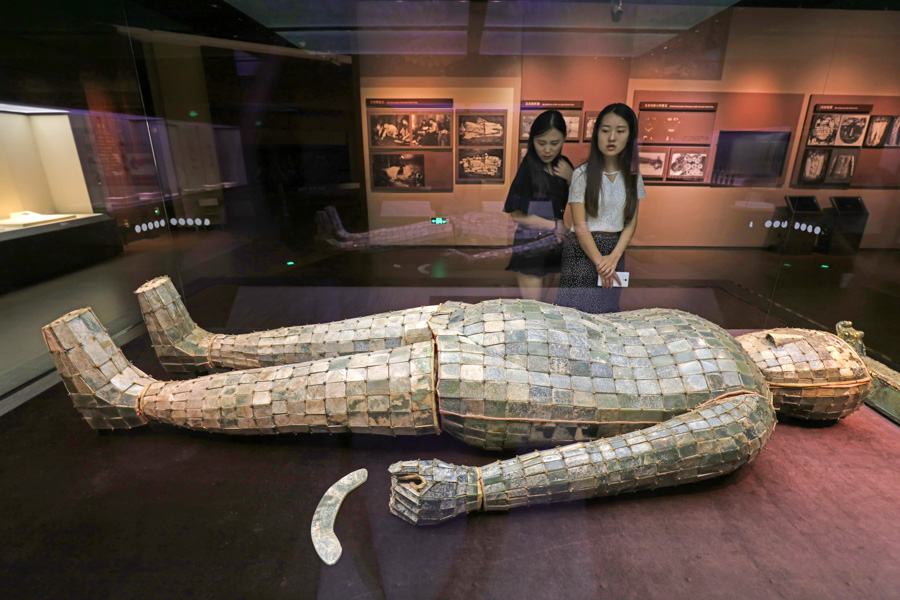
Jade holds equal significance in the rituals surrounding death. The stone is believed to safeguard the body and guide the soul toward higher realms. Among rulers and nobles, this belief took its most striking form in the jade burial suit, sewn from hundreds of small plates and meant to symbolise immortality and the preservation of spiritual purity.
As cremation has become more common, jade urns (玉骨灰盒) have appeared on the market, placed on family altars as expressions of honour and continuity. In both celebration and mourning, the stone continues to serve as a bridge across generations, carrying wishes, memories, and the enduring promise of protection.
Lunar New Year Celebrations
During Chinese New Year, jade becomes part of the season’s rituals of renewal – objects that help clear the way for fresh energy and good fortune in the year ahead. Families exchange pendants and small carved figures, often shaped as the animal of the new zodiac cycle, offering them as wishes for prosperity, health, and peace of mind. Many people choose to wear jade during the Spring Festival, trusting its ability to ward off harmful influences and steady the spirit.
In this context, jade is far more than a decorative token. It marks the beginning of the year with a sense of harmony and protection, carrying forward the hope that the months to come will unfold with balance and abundance.
Healing Properties of Jade in Traditional Chinese Medicine
Since ancient times, Chinese tradition has attributed healing qualities to jade, especially its ability to support the health of the kidneys. This belief has been leading practitioners of traditional medicine to place jade plates on the lower back, trusting the stone to strengthen the body’s vital foundation. In more contemporary forms, polished jade stones are used in massage and wellness treatments, where they are thought to help distribute Qi smoothly and ease areas of stagnation. Used in Gua Shua, a scraping therapy for body and face, it helps with lymphatic drainage and face sculpting. Each colour has a specific property.
In this setting, jade is not just a beautiful mineral but a vessel for long-standing cultural understandings of balance, vitality, and the subtle workings of the body.
The Art of Chinese Jade Carving
The art of jade carving is a contemplative process in which the craftsman needs time to sense the stone’s character and allow its inner depth to emerge. Over the centuries, Chinese carvers developed techniques that helped this hard mineral respond to their intention: artisans ground it with mineral abrasives, polished it with leather and bamboo, and spent countless hours refining each movement with unwavering precision. Even today, with modern tools at hand, the essence remains the same: a steady rhythm of the hands and an attentive dialogue with the material.
You can learn more about these techniques, the masters who shaped the craft, and some of the most remarkable jade creations in our The Art of Jade Carving Guide.
Shopping: Where to Buy Authentic Jade in China

China is full of places where jade appears in all its forms–from bustling markets to quiet ateliers where traditional carving skills are still practised by hand.
Northern China
You may request an extension to our tour in Urumqi, in Xinjiang province, to visit the Urumqi Geology and Mining Bureau. It serves as a key hub for jade in the region, offering various opportunities to shop for the coveted Hetian jade.
Central China
In Henan Province, the town of Shifosi – often called China’s jade capital – is known for its extraordinary variety. Here stands Zhenping International Jade City, the largest wholesale and retail centre for carved jade in the world. Two areas deserve special attention: Jade Carving Bay (石佛寺玉雕湾), with more than 500 shops showcasing finely detailed pieces, and Zhenping Jade Carving World (镇平玉雕大世界), home to around 200 retailers presenting everything from small ornaments to monumental sculptures.
In Xi’an, the Tian Yi Jade Factory (天益工艺品厂) offers a closer look at craftsmanship itself. Local artisans carve intricate forms with remarkable precision, and visitors are welcome to watch the process and learn about the traditional techniques behind each finished piece.
Southern China
For travellers heading south, the Hong Kong Jade Market (香港玉器市场) remains an essential stop. Among its dense rows of stalls and long-established family shops, you can browse everything from zodiac pendants to large carved vases–thousands of figurines and objects reflecting the city’s long-standing jade-trading culture.
Farther south in Foshan, Pingzhou Jade Article Street (平洲玉器街景区) attracts buyers looking for locally made bracelets prized for their delicate workmanship. Most pieces come in soft green or milky white tones–colours that highlight the refined aesthetics associated with South China’s jade traditions.
Wherever you choose to shop, one rule remains the same: authentic jade should always come with a certificate of authenticity issued by an authorised appraisal centre. This document confirms quality and ensures that the stone you take home is genuine–an important detail for any meaningful purchase.
Jade Destinations and Festivals in China
Museums Housing Jade Exhibits
China’s major museums and former imperial palaces safeguard remarkable collections of jade, reflecting both the material’s long history and the artistry of generations of craftsmen. Several institutions stand out for the quality and range of their collections.
In Beijing’s Forbidden City, the Palace Museum presents an extensive selection of jade in its Treasure Gallery (珍宝馆). The pieces displayed here – brooches, amulets, vases, boxes, lamps, plates, and intricately carved figurines – offer a glimpse into the refined aesthetic of the Qing dynasty court and the craftsmanship that flourished under imperial patronage.
The National Museum of China (中国国家博物馆), also in Beijing, holds one of the country’s most significant assemblages of ancient jade. Its galleries include important finds associated with the tomb of the Shang dynasty military leader Fu Hao (妇好), together with rare objects unearthed across China from the Neolithic period through the Ming and Qing eras.
Travellers interested in observing contemporary carving techniques may visit the Beijing Bona Jade Museum (北京博纳玉器博物馆) in Changping District, not far from the Badaling section of the Great Wall. Hundreds of carved sculptures, pieces of jewellery, and decorative objects are displayed here, and visitors can watch artisans at work before exploring a shop supplied directly by the museum’s own workshop.
For those interested in exploring the exquisite world of jade, a visit to the National Jade Impression Hetian Jade Museum (国玉印象和田玉博物馆) in Hotan is essential, as it showcases the rich heritage and craftsmanship of the highly prized Hetian jade.
Cultural Festivals and Events Celebrating Jade
Across China, a number of festivals highlight the artistic and cultural significance of jade, each shaped by the traditions of its region. In Suzhou, Jiangsu Province, the Suzhou Jade Cultural Festival (苏州玉石文化节) brings together local artists whose finely carved works demonstrate the city’s long-standing appreciation for craftsmanship.
Far to the west, the Hotan Jade Culture and Tourism Festival (和田玉石文化旅游节) reflects the region’s deep connection with its celebrated stone. During the event, Hotan becomes a lively meeting place for carvers, traders, and visitors, with displays that range from traditional forms to contemporary interpretations.
In Henan Province, the Nanyang Jade Carving Festival (南阳玉雕节) offers a chance to observe skilled artisans at close range. Demonstrations, informal conversations with carvers, and exhibitions of regional styles create a welcoming setting for anyone interested in the craft.
Those travelling through Guangdong may encounter the Jieyang Jade Culture Festival (广东揭阳玉文化节), where jade pieces are presented alongside local cultural performances. Jewellery, figurines, and decorative objects appear here in great variety, reflecting the area’s long-established tradition of jade artistry.
Our guide draws to a close, yet the world of Chinese jade remains wide open to further discovery. Its forms and colours continue to reveal themselves in museums, artisan workshops, and lively craft districts, offering many ways to encounter this remarkable stone. As you travel through China in search of a piece that speaks to you, remember that the value of jade lies both in its craftsmanship and in the moment when you recognise a connection with it.