

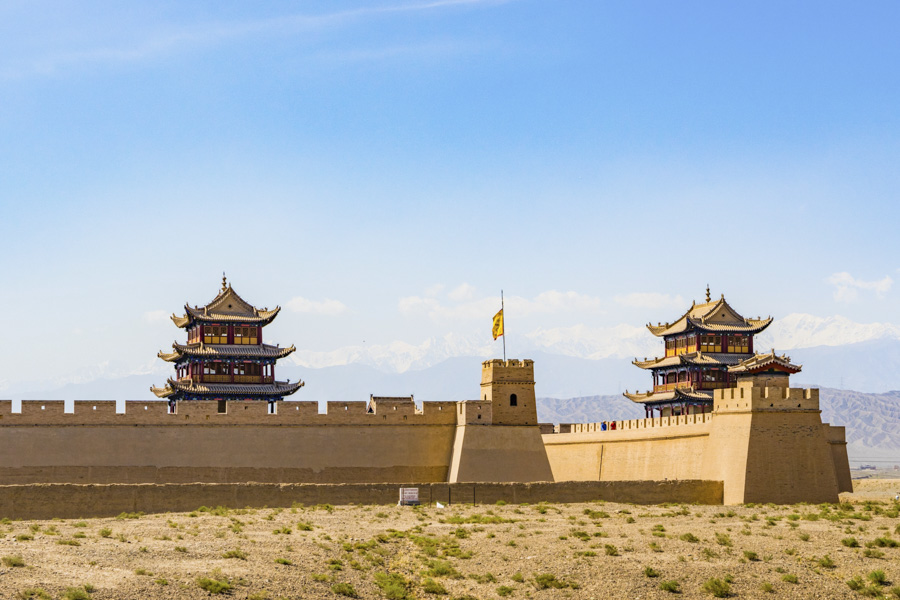
Located in Gansu Province, at the western end of the Hexi Corridor, Jiayuguan (嘉峪关市, Jiāyùguān shì) remained a vital frontier outpost on the Silk Road for centuries. Trading caravans once traversed this narrow corridor between mountain ranges, connecting China with Central Asia, while Jiayuguan itself played a crucial role in defending the empire's western borders.
Today, Jiayuguan combines its frontier heritage with the character of a modern industrial city. Beyond Jiayu Pass and the surviving sections of the Great Wall, travellers will find local museums, markets, green parks and the hearty cuisine of north-western China, all set against the open landscapes of the Hexi Corridor.
The areas surrounding Jiayuguan offer access to even more diverse scenery: mountain ranges, sand dunes, river valleys, and areas included in the UNESCO Global Geoparks network. Thanks to its position between Zhangye and Dunhuang, the city is also easy to include in an itinerary covering the historic sites of Western China.
Jiayuguan Tours
Where the ancient trade routes headed west, Jiayuguan was an important stop along their way. The city offers a glimpse into one of China's most striking frontier landscapes, allowing you to feel just how far the Chinese empire once extended.
Embark on a journey through Western China that begins in ancient Xi'an. After exploring the multi-coloured landscapes of the Zhangye Danxia National Geopark near Zhangye, the route leads to Jiayuguan, before continuing to the Mogao Caves and the desert vistas of Dunhuang. On this trip, Jiayuguan serves as a vital link between the natural wonders of the Hexi Corridor and the cultural heritage of the ancient oasis to the west.
For a more extensive journey, a ten-day tour combining Xi'an, Zhangye, Jiayuguan, Dunhuang, Turpan, and Kashgar is ideal. After exploring the historic monuments of China's ancient capital, travellers continue their journey through outposts and ruined fortresses, before venturing even further west to Buddhist caves, the Flaming Mountains, and vibrant bazaars.
Other tours of China allow you to discover Jiayuguan in a new context, combining it with ancient cities, natural attractions, and cultural monuments of neighbouring regions.
Best time to visit Jiayuguan
The best time to visit Jiayuguan is from May to June or from September to October, when daytime temperatures are generally comfortable for walking around the fortress and other outdoor sites. Spring (March–May) brings a rapid rise in temperatures, from around +9 °C (48 °F) by day in March to about +22 °C (72 °F) in May. Nights remain considerably colder, especially early in the season. The weather is generally dry and sunny, but spring is also one of the windiest periods, when strong gusts can lift dust and sand across the open landscape.
Summer (June–August) is a time when the average daytime temperature ranges from +26 to +28 °C (79–82 °F), while at night it usually stays around +14–17 °C (57–63 °F). July is the hottest month of the year: the average maximum temperature reaches approximately +28–30 °C (82–86 °F), and on certain days temperatures can rise above +30 °C (86 °F). The climate remains dry, humidity is low, and precipitation is rare and typically short-lived. At the same time, intense sunlight and strong winds can make staying outdoors less comfortable.
Autumn (September–November) is another particularly comfortable season for visiting Jiayuguan. In September, the average daytime temperature is around +21–24 °C (70–75 °F), in October it is +15–17 °C (59–63 °F), and in November it is just +5–7 °C (41–45 °F). At night, the air becomes significantly colder, especially in the second half of the season. In October, the weather is usually dry, sunny, and warm enough for long walks.
Winter (December–February) is cold, dry, and windy. The average daytime temperature ranges from −4 °C to +1 °C (25–34 °F), while at night it can drop to between −16 °C and −9 °C (3–16 °F). January is the coldest month of the year. Due to the arid climate, there is little snowfall, but strong winds can make it feel considerably colder.
History of Jiayuguan
Strategic Location and Early History
The history of Jiayuguan is closely linked to the city's geographical location in the western part of the Hexi Corridor. For centuries, this route was of great importance for trade, military campaigns, and cultural exchange. An important route of the ancient Silk Road passed through here, and a major defensive complex was later constructed, becoming a symbol of the western frontier of imperial China.
The Ming Dynasty
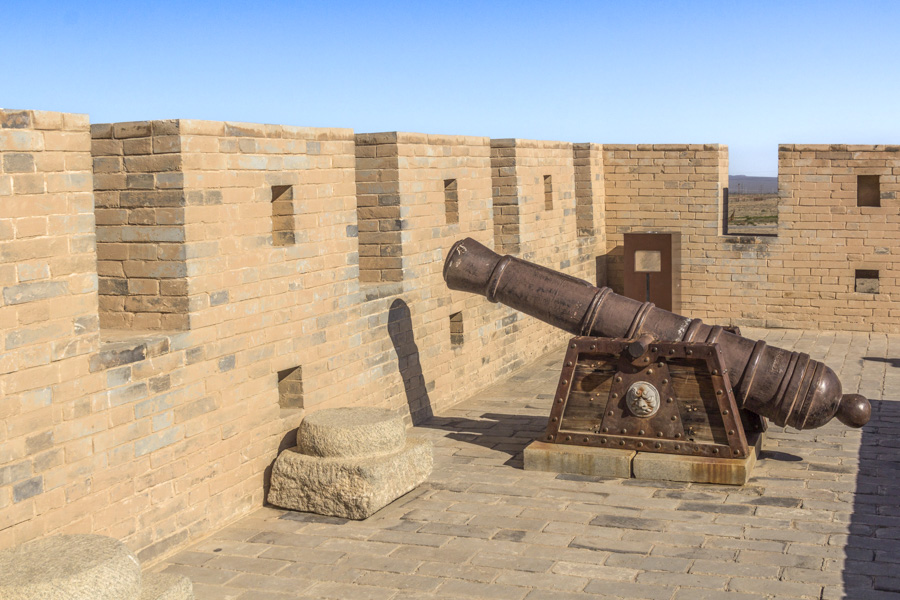
Modern Jiayuguan takes its name from the Jiayu Pass (嘉峪关), a fortified pass established in 1372, during the opening decades of the Ming dynasty (1368–1644). Over the following century and a half, the fortress was gradually expanded and strengthened. By the mid-16th century, Jiayu Pass had evolved into an extensive defensive complex that included inner and outer cities, gates, walls, a moat, and additional fortifications. It became the key military stronghold of the western section of the Great Wall of China, enabling control of passage through the Hexi Corridor.
From Fortress to Industrial City
Over time, the military significance of Jiayu Pass waned, but the fortification itself survived as an important historical monument. In the 20th century, the region's fortunes changed: in the mid-1950s, substantial iron ore deposits were discovered nearby, and in 1958, construction of the Jiuquan Iron and Steel Company (JISCO) began. It became Gansu's leading company and the largest steelmaking base in Western China. A new industrial city rapidly began to take shape around the plant.
Modern Jiayuguan
The modern city of Jiayuguan is much younger than the fortress from which it takes its name. In 1965, the settlement was granted city status. Throughout the second half of the 20th century, its development was closely linked to the metallurgical industry, helping to transform Jiayuguan from a desert settlement into a modern city.
The historical significance of Jiayuguan gained international recognition in 1987, when the Great Wall of China, including its section in the Jiayuguan area, was inscribed on the UNESCO World Heritage list.
Today, Jiayuguan's frontier heritage exists alongside the industrial city that developed in the 20th century. Jiayu Pass, the Great Wall of China, ancient defensive structures, and monuments of the Silk Road serve as reminders of the region's centuries-old history, while the cityscape and industrial infrastructure reflect the rapid development of Jiayuguan in recent decades.
Things to Do in Jiayuguan
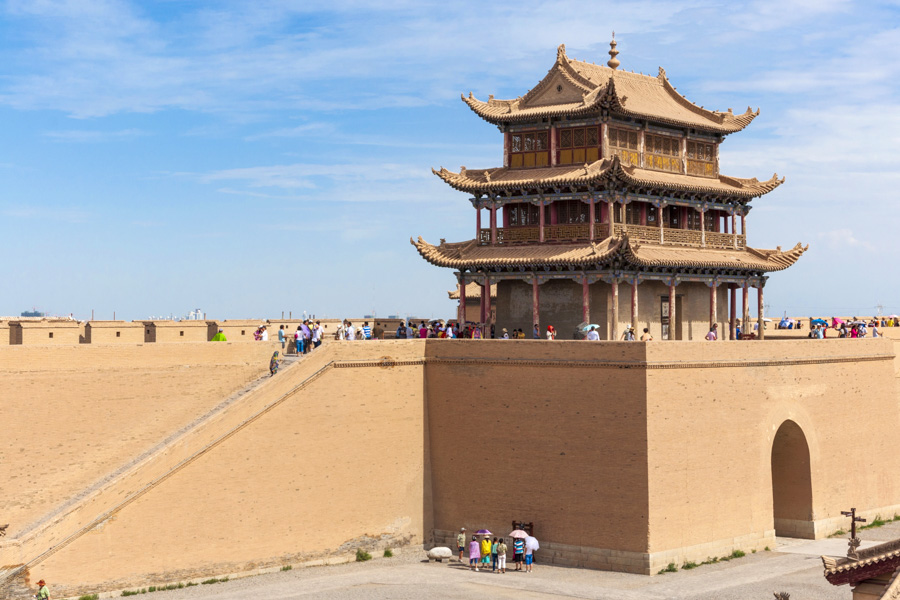
Places to Visit in Jiayuguan
Jiayuguan's principal historical sites lie on and beyond the outskirts of the modern city, where fortress walls, beacon towers and surviving Great Wall sections still trace the region's former defensive frontier.
Visit Jiayuguan Fortress (嘉峪关关城, Jiāyùguān Guānchéng), the city's main historical attraction and one of the best-preserved fortified complexes from the Ming era. Here, 5 kilometres (3.1 miles) south-west of the city, stands Jiayu Pass, one of the key strongholds guarding the western end of the Ming Great Wall. Explore the massive walls, gates, and towers, stroll through the inner courtyards, and climb the ramparts to see the snow-capped peaks of the Qilian Mountains rising nearby.
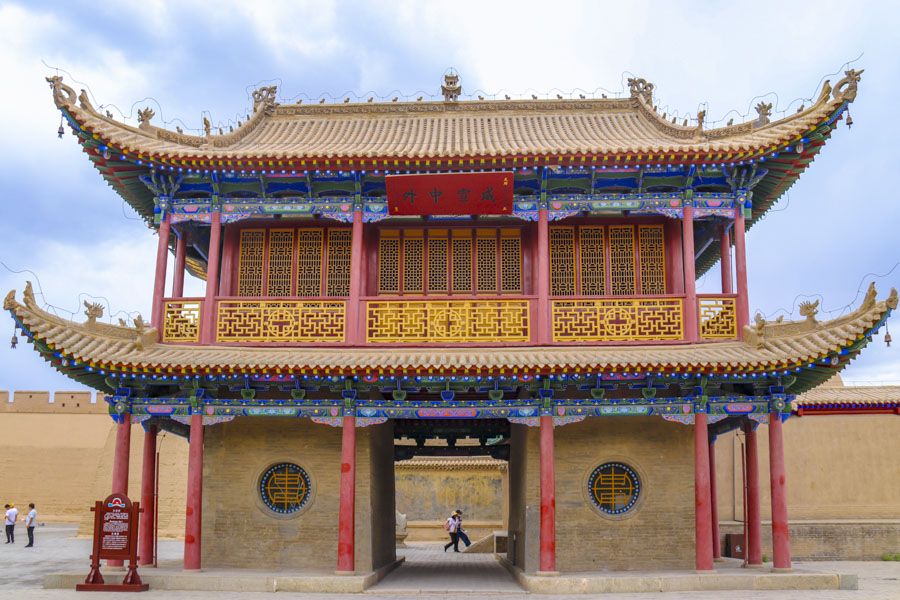
Explore the Inner City (嘉峪关内城, Jiāyùguān Nèichéng), the heart of Jiayuguan Fortress. Pass through the eastern Guanghua Gate or the western Rouyuan Gate, topped by majestic watchtowers, and examine the surviving historic structures. Visit the General’s Mansion, and view the Ancient Well and Guandi Temple, all associated with the military and daily life of the Ming dynasty garrison.
Continue your walk through the Outer City (嘉峪关外城, Jiāyùguān Wàichéng), the outer defensive ring of Jiayuguan Fortress. Walk along its walls, cross the moat, and examine the barbican, an additional fortification in front of the gates. Its design allowed defenders to strike at an enemy trapped within the enclosed space from multiple positions at once. The Outer City also contains surviving structures that provided the garrison with everything it needed: the drill ground, stables, and granaries. Together, they formed a well-designed system for the defence and supply of the fortress.
Jiayuguan Surroundings
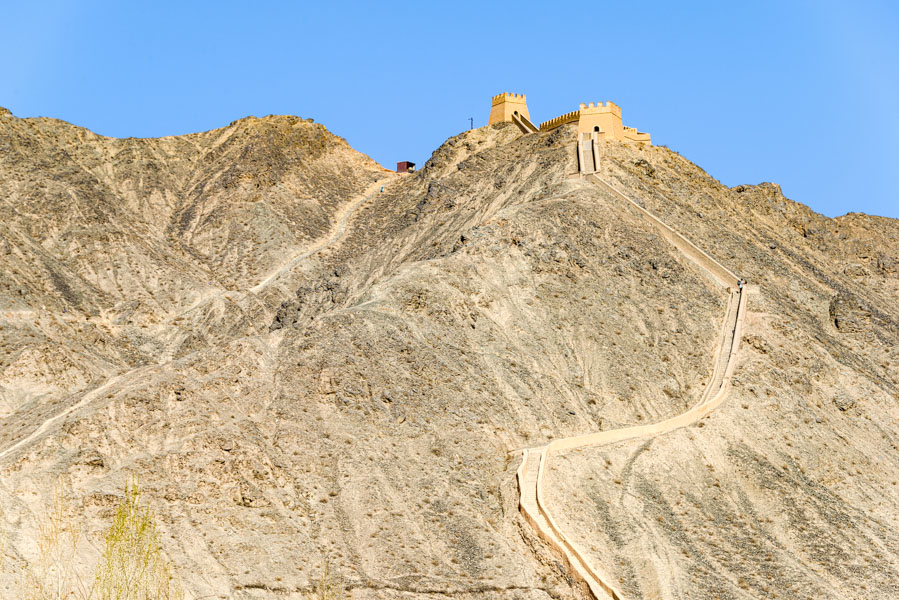
Historical monuments around Jiayuguan allow you to continue exploring the defensive system. Head outside the city to see the surviving sections of the Great Wall and the ruins of fortresses scattered amidst the rugged landscapes of the Gobi.
Approximately 7.5 kilometres (4.7 miles) south of Jiayuguan Fortress, atop a 56-metre cliff overlooking the Taolai River canyon, stands the First Beacon Tower of the Great Wall (长城第一墩). Examine the structure built in 1539 and learn how signal posts transmitted messages about the approach of an enemy using smoke and fire.
Step inside the underground Museum of the First Beacon Tower (长城第一墩历史文化体验馆), located at the same site, to learn more about the history of the military fortifications and the life of the garrison. View the historical exhibits and military maps, and then step out onto the glass-bottomed observation deck, which overlooks the Taolai River canyon, where sheer rock faces and the open desert stretch below.
Visit the Overhanging Great Wall (悬壁长城), located approximately 6.5 kilometres (4 miles) north-west of Jiayuguan Fortress. This section climbs steeply along the mountainside, with stone steps leading towards watchtowers and wide views across the Gobi Desert and scattered oases below.
Museums in Jiayuguan
Complete your exploration of Jiayuguan by visiting the museums dedicated to the history of the Great Wall and the development of the city itself.
Drop by the Jiayuguan Great Wall Museum (嘉峪关长城博物馆), located right next to the fortress. Here, history unfolds not only through documents and artefacts but also through large-scale visual reconstructions. The Soul of China exhibition features models of various types of fortifications, ancient weapons, and battle scenes, allowing you to imagine how frontier defence was organised and how warfare evolved over the centuries. Among the most impressive displays is the massive panoramic painting Ten Thousand Li Great Wall, covering an area of 220.5 square metres, alongside realistic sculptural compositions that recreate scenes of frontier life.
Continue your journey to the Jiayuguan City Museum (嘉峪关城市博物馆), where the focus shifts to the city itself. It is particularly fascinating to trace how a small settlement grew into a developed industrial hub. Old photographs and historical objects showcase the early stages of development, while modern multimedia materials and VR technologies allow you to see Jiayuguan as it is today. The exhibition clearly illustrates the contrast between the rugged desert landscape of the past and the green, thriving, present-day city.
Jiayuguan Theatres
To get a glimpse of the city's cultural life, look out for the Jiayuguan Grand Theatre (嘉峪关大剧院). As the region’s premier cultural hub, this modern venue regularly welcomes acclaimed touring troupes for grand ballets, concerts, and theatrical productions. Timing your visit with one of these special seasonal events or national tours is a spectacular way to see Silk Road heritage brought to life.
Entertainment, Parks, and Shopping in Jiayuguan
Discover the different facets of city life in Jiayuguan and find ideas for relaxing, leisurely walks, and enjoyable shopping.
Entertainment
Immerse yourself in an atmosphere of spectacular shows and historical-themed entertainment that comes alive throughout the day. Visit the high-tech attractions at Jiayuguan Fantawild Silk Road Dreamland (嘉峪关方特丝路神画) theme park to witness grand multimedia shows. Experience large-scale performances featuring 4D effects, stunts, and laser displays that transport spectators back to the era of trading caravans.
Drop by the historic Jiayuguan Fortress Stage (嘉峪关戏台), located inside the fortress itself. Here, you can watch daytime military-themed shows by the walls of Jiayuguan Fortress, where actors in armour demonstrate equestrian skills and archery. Linger by the painted wooden stage dating from the 18th century to catch a colourful Chinese opera or a traditional shadow puppet show, which for centuries served as the main entertainment for the outpost's garrison.
As evening falls, the night programme begins. It opens with views of the sunset over the Gobi Desert, followed by a light show and a theatrical performance about the history of the fortress. Colourful projections bring its ancient walls to life, while historical characters tell stories of the past, seemingly transporting the audience to another era.
Parks in Jjiayuguan
Jiayuguan also has several landscaped parks built around lakes, including Donghu Eco-Tourism Scenic Area (東湖生態旅遊景區), Jiayuguan Yingbin Lake Tourism Zone (嘉峪关迎宾湖旅游园区) and Nanhu Cultural and Ecological Park (南湖文化生态园). Their lakes, walking paths and planted green spaces provide a striking contrast to the dry landscapes surrounding the city.
Shopping in Jiayuguan
Xinhua Road in the centre of Jiayuguan is one of the city's main shopping districts, home to the Jiayuguan Department Store, Renmin Shopping Mall, and Xiongguan Plaza. Here, you can find jewellery, ceramics, locally carved stonework, and the traditional Four Treasures of the Study — brush, ink, paper and inkstone.
If you are looking for authentic souvenirs, look out for items linked to the history and culture of Jiayuguan. Choose a Luminous Cup (夜光杯) crafted from Qilian jade or an unusual Camel Hair Painting (驼绒画). Also consider modern cultural and creative products featuring images of Jiayuguan Pass and the Great Wall of China, ranging from small decorative items to souvenir accessories.
Do not forget to drop by the sections selling local products. Bring home dried apricots and other dried fruits, black goji berries, dried mushrooms, and products made from Cynomorium (Suoyang, 锁阳), a medicinal plant used in traditional Chinese medicine to support vitality and strengthen the body. For a special gift, pick up a bottle of local wine by visiting the Zixuan Wine Estate (紫轩葡萄酒庄园), where the wine is aged in massive oak barrels.
Food in Jiayuguan
Chinese Cuisine
Jiayuguan's cuisine reflects the hearty cooking traditions of north-western China. Fuqiang Market (富强市场) and Datang Food Street (嘉峪關大唐美食街) are two places where travellers can try local dishes and snacks, particularly lamb, noodles, grilled breads and sweet drinks.
For a substantial meal, order lamb noodle soup with baked flatbread, served with a rich meat broth, noodles and a golden flatbread on the side. Non-spicy braised lamb ribs are cooked until tender with spices, while the lighter clear lamb noodle soup combines an aromatic broth, soft noodles and pieces of mutton. Other local choices include scrambled eggs with the herbal flavour of sand chives and native chicken slow-cooked in broth. Sweet corn, crisp grilled bread and honey-glazed chicken wings add sweeter or lighter flavours to the table.
Finish with Jiayuguan barbecue: meat skewers cooked over the grill until the edges char and take on a smoky aroma.
Vegetarian Restaurants
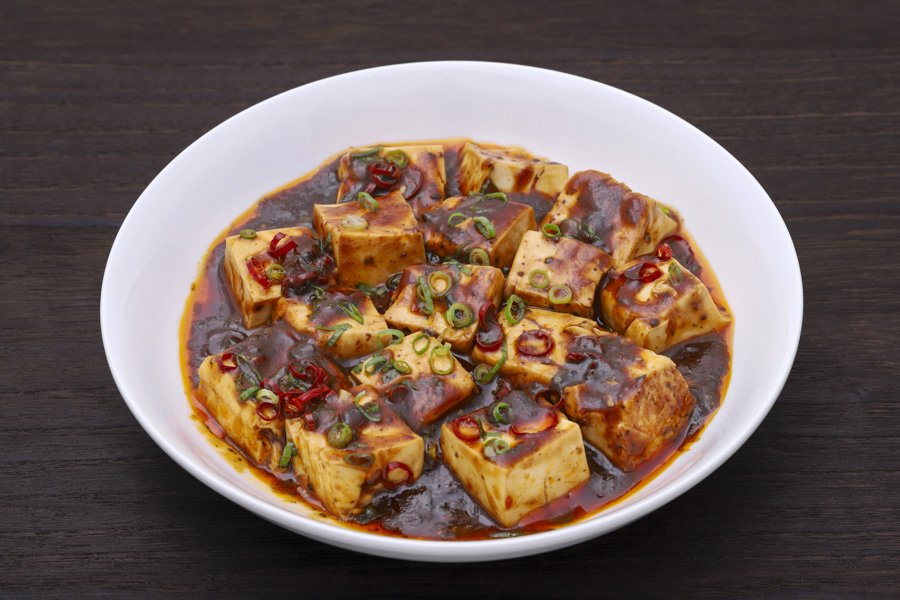
There are no specialised vegetarian restaurants in Jiayuguan, but finding meat-free dishes in regular Chinese eateries is quite easy. Look for dishes made with tofu, mushrooms, and aubergines. It is especially worth trying Mapo Tofu (麻婆豆腐), soft tofu in a spicy chilli sauce, as well as home-style tofu (家常豆腐) with a rich sauce and spring onions. For a light addition, order stir-fried seasonal vegetables and rice. If you follow a strict vegetarian or vegan diet, double-check the ingredients and ask for the dish to be prepared without meat, meat broth, or fish sauce.
Tea Houses, Bakeries, and Patisseries
Visit local teahouses and bakeries to take a short break and discover the sweeter side of Jiayuguan. It is well worth trying the soft pastries, unusual local desserts, and traditional drinks with fruity and milky notes.
Enjoy milky jujube buns, soft, fluffy buns with a delicate creamy flavour and dates inside. Try a sweet apricot peel drink, a light local beverage with a pleasant apricot aroma and mild sweetness. Try the milk fermented rice wine, a delicate traditional drink with a slight tartness and a subtle milky undertone. Sample the soft yellow rice jelly, a rice dessert with mild sweetness and a pleasant jelly-like texture, particularly suited to those who prefer subtle flavours.
City Transport in Jiayuguan
Getting around Jiayuguan is straightforward, as the city is quite compact. The main transport options for travellers are buses and taxis. There is no metro system in the city, so choose city buses for travelling around the centre, or take a taxi if speed and convenience are important.
Buses are the most budget-friendly way to get around. Fares typically cost CNY/RMB 1–2, and routes connect the centre with major districts and several tourist sites. Bus 1 runs from the city centre to Jiayuguan Railway Station, while Bus 4 allows you to travel from this station to Jiayuguan Fortress.
Taxis are particularly convenient for trips to attractions outside the city centre. Jiayu Pass can be reached from the city in about 30 minutes, and for visiting multiple remote sites, including the Overhanging Great Wall and First Beacon Tower, it is convenient to book a car with a driver for a full day in advance.
Bicycles can be suitable for short rides through quiet areas of the city, but they are less practical for exploring distant attractions. If you are planning independent travel, keep in mind the arid climate and the long distances between different tourist sites.
How to Get to Jiayuguan
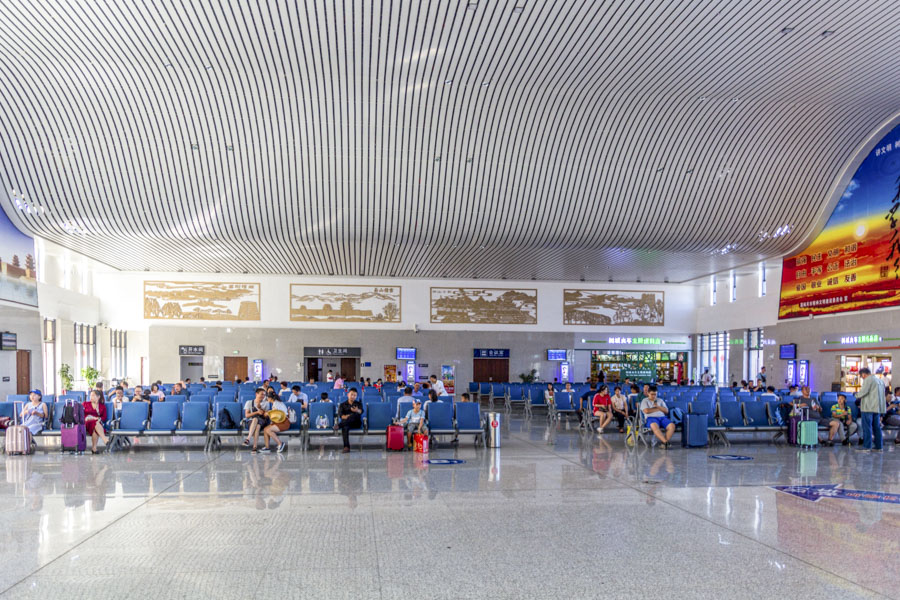
You can reach Jiayuguan by plane, train, or long-distance bus. Its railway connections make the city easy to include in an itinerary covering the cities of the Hexi Corridor.
By Air
Jiayuguan Airport (JGN) is located 14 kilometres (8.7 miles) from the city centre. It operates domestic flights, notably to Lanzhou and Xi’an, while seasonal routes can include Beijing, Shanghai, Chengdu, and Chongqing. There are no international flights. The drive from the airport to the centre of Jiayuguan takes about 25 minutes.
By Train
Railway services connect Jiayuguan with major cities across north-western and central China. High-speed trains arrive at Jiayuguan South Railway Station, located approximately 10 kilometres (6 miles) from the city centre. The station connects to Lanzhou, Xi’an, Xining, Urumqi and other cities. For instance, the journey from Lanzhou takes about 4–5 hours, while the journey from Xining takes around 3–3.5 hours.
Regular trains arrive at Jiayuguan Railway Station, located approximately 5 kilometres (3 miles) from the city centre. Direct trains run to Lanzhou, Xi’an, Dunhuang, Urumqi, Beijing, Shanghai, Chengdu and other cities across China.
By Bus
Intercity buses also connect Jiayuguan with other cities in the region. Buses depart from Jiayuguan Long-distance Bus Station to Lanzhou, Dunhuang, Zhangye, Jiuquan, Hami, Urumqi and other destinations. Taking a bus can be a convenient alternative to travelling by train, especially if there are no suitable train connections on your chosen date.
Languages Spoken in Jiayuguan
The official language of Jiayuguan, as in the rest of China, is Standard Mandarin (Putonghua). In daily communication, locals also use Lan–Yin Mandarin (兰银官话), a regional variety of Chinese spoken in Gansu and other parts of north-western China. The name of this dialect group comes from Lanzhou and Yinchuan, the two major hubs of the region.
Security in Jiayuguan
Take the usual precautions. Jiayuguan is generally considered a safe city for travellers; however, keep an eye on your personal belongings and do not leave valuables unattended in crowded places, railway stations, markets or tourist areas.
Be especially careful outside the city. When visiting the Jiayuguan Pass, the Overhanging Great Wall and the First Beacon Tower, keep in mind the dry climate, intense sun and sharp temperature changes between day and night. Pack an adequate supply of water, use sunscreen and wear comfortable footwear; non-slip soles are particularly important on the steep sections of the Overhanging Great Wall.
Avoid walking alone in remote areas. If you nevertheless plan an independent hike near an isolated Great Wall section, share the route and expected return time with someone beforehand.
Follow the rules at historical sites. Do not enter closed areas, do not damage ancient structures, and follow the instructions of the site staff.
If you require medical assistance, head to one of the city hospitals. For example, Jiayuguan No. 1 People's Hospital (嘉峪关市第一人民医院) provides specialist medical services and emergency hospitalisation. Hospital address: 26 Xinhua Middle Road, Jiayuguan, Gansu Province, China (甘肃省嘉峪关市新华中路26号).
Before travelling, arrange insurance that covers medical treatment, emergency transport and the activities planned for the trip.