

Things to Do and Sightseeing Tours in Beijing
International readers may instinctively think of Beijing as a city or a capital. Yet in China’s current administrative reality, it is more than that.
Beijing is one of four municipalities (直辖市, zhíxiáshì) under the direct administration of China’s central authorities, alongside Tianjin, Shanghai, and Chongqing. This status, equivalent to that of a whole province, grants the capital broad powers and responsibilities.
Beyond its administrative stature and the pace of a global city, Beijing proudly traces its history back more than three millennia while remaining closely engaged with its own civic affairs and the care of its cultural heritage.
Beijing Tours

Exploring Beijing with a guided tour helps make sense of the capital’s vast scale, encompassing the symmetry of the Forbidden City and the quiet rhythm of its hutong neighbourhoods. With local insight, each landmark falls naturally into place within the broader story of how imperial legacies meet modern life at China’s heart.
If you prefer a tighter, city-focused itinerary, the 7-day Beijing and Shanghai Highlights Tour includes high-speed train travel and covers core landmarks, with a day trip to the Badaling section of the Great Wall.
For a wider introduction to China’s cultural heritage, the Central China Highlights Tour links Shanghai, Xi’an, and three days in Beijing, taking in the Forbidden City, the Temple of Heaven, the Summer Palace, and a day trip to the Badaling section of the Great Wall.
For a more immersive journey, the 12-day Central China Classic Tour and 13-day China Food Tour both begin in Beijing before continuing to Xi’an, Guilin, and other regions, combining cultural depth, regional variety, and a close look at local culinary traditions.
Best Time to Visit Beijing
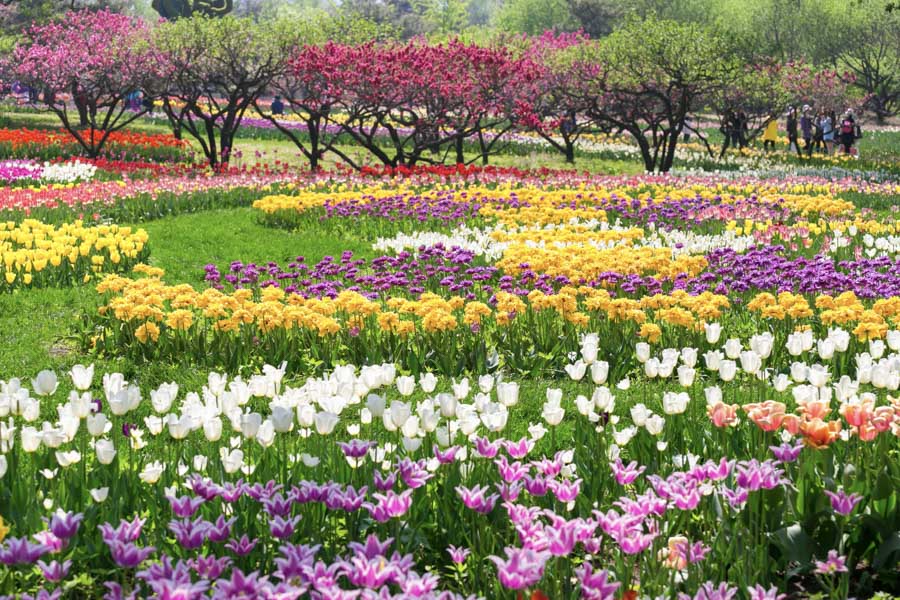
Generally, the best time to visit Beijing is in spring and autumn, when temperatures are mild, skies are often clear, and the city feels balanced between activity and calm.
Take a look at this quick seasonal guide for typical temperature ranges and some comfort tips:
Spring (April–May): Temperatures typically rise from around 10 °C (50 °F) at night to about 25 °C (77 °F) by day. The air is generally dry and pleasant, and parks burst into bloom – an excellent time for garden walks and temple visits. Occasionally, dust or sandstorms from the Gobi or Loess regions reduce visibility, so eye protection and a mask or scarf may come in handy.
Summer (June–August): Daytime highs often reach 25–33 °C (77–91 °F), and humidity rises sharply during this hottest period. Most of the annual rainfall occurs with the East Asian monsoon from June to September, with July typically the wettest month. Bring an umbrella rather than a coat, plan indoor visits around midday, and keep well hydrated.
Autumn (September–October): Daytime temperatures typically reach about 26 °C (78 °F) in September and 19 °C (66 °F) in October, while night-time lows fall to around 16 °C (60 °F) in September and 8 °C (47 °F) in October. Clear skies, mild air, and golden foliage make this one of Beijing’s best outdoor seasons. Parks glow with ginkgo trees, and the scent of osmanthus fills the air. The Mid-Autumn Festival, with its mooncakes and lanterns, lends the city an added touch of warmth and charm.
Winter (November–March): Cold and dry weather is the norm. January is the coldest month, with average daytime highs around 1–2 °C (34–36 °F) and overnight lows near –8 °C (18 °F). The air is crisp, snow is infrequent, and the city’s quieter streets and museums reward unhurried exploration. To warm up, try shuàn yángròu (涮羊肉) – thin slices of mutton cooked in a copper hotpot, a beloved Beijing winter comfort.
History of Beijing
Beijing’s past is long and layered. Over the centuries, the site north of today’s city evolved from a frontier trading and military post – the ancient city of Ji (or Jicheng) – into one of China’s principal capitals.
Beijing has served as a capital on multiple occasions: first as the seat of the State of Yan in pre-imperial times; later as the capital of the Mongol-led Yuan dynasty in the late thirteenth century, known as Dadu (大都, “Great Capital”) or Khanbaliq; then as the Ming dynasty capital after the city was renamed Beijing in 1403 and the imperial court relocated there in 1421; subsequently as the imperial capital from 1644; and as the national seat of government during the early Republic of China in the 1910s–20s (de jure until the government relocated to Nanjing in March 1927), during which it was known as Beiping.
Finally, it became the capital of the People’s Republic of China from 1949 to the present – a grand total of six times.
The older romanisation Peking survives in several institutions and codes, for example, Peking University and the airport code PEK.
Things To Do in Beijing

Beijing’s historic core presents a distinctive mix of imperial architecture, religious sites, traditional neighbourhoods, museums, and contemporary design, with each district revealing a different facet of the city’s long history and cultural course.
Several sites in and around Beijing are inscribed on the UNESCO World Heritage List. Notable examples include the Beijing Central Axis, the Forbidden City, the Temple of Heaven, the Summer Palace, the Peking Man Site at Zhoukoudian, and nearby sections of the Great Wall.
The outline below highlights some of the most characteristic places to visit.
Places to Visit in Beijing
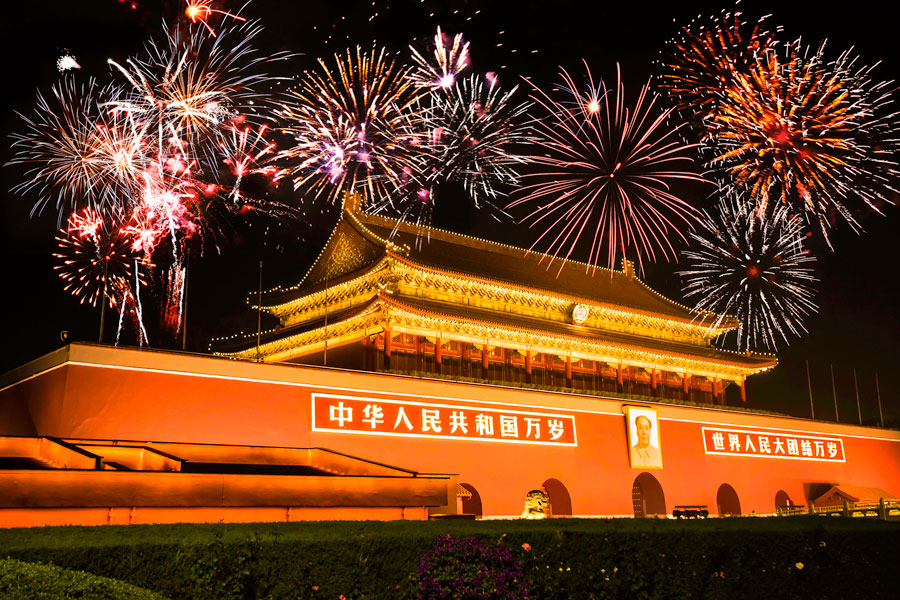
Begin at Tiananmen Square (天安门广场, the square of the “Gate of Heavenly Peace"), the vast civic heart of Beijing, where parades and public life converge. It is one of the world’s largest public squares and is flanked by the Great Hall of the People and the Monument to the People’s Heroes.
Tiananmen Gate (天安门) stands at the northern edge of Tiananmen Square and forms the ceremonial approach to the imperial precinct, leading directly to the Forbidden City’s main entrance, the Meridian Gate (午门).
Stroll north to the Forbidden City (故宫), now the site of the Palace Museum, the imperial centre of the Ming and Qing dynasties. Home to 24 emperors, the complex was vacated by its final resident, the last emperor Puyi, in 1924; the Palace Museum opened here the following year.
Built largely with traditional timber joinery, its wooden structures have been carefully conserved and restored.
You will see pairs of guardian lions at many gates; the Gate of Divine Prowess (Shenwumen) at the north now serves as the main exit.
For more on tour options and practical considerations, please refer to our dedicated Forbidden City guide.
Nearby, the Temple of Heaven (天坛) is where emperors once prayed for good harvests, while the quieter Temple of Earth (地坛) held complementary rituals. Lama Temple (雍和宫, Yonghegong) combines Han and Tibetan architectural styles, and the Confucius Temple (北京孔庙) and Imperial College (北京国子监, Guozijian) recall Beijing’s deep scholarly traditions. At the Drum Tower (北京鼓楼和钟楼, Gulou), a drumming troupe performs on the hour to commemorate the tower’s historical role in marking time. Surrounding the tower, narrow hutong alleyways and courtyard homes offer excellent peoplewatching opportunities and glimpses of traditional ways of living.
For a modern contrast, visit Olympic Park, repurposed after the 2008 Olympic Games. The Beijing National Stadium (Bird’s Nest) is now a multi-purpose event venue and features a rooftop walkway, which opened in 2017.
Nearby, the Water Cube, with its distinctive bubble-like façade, houses a large indoor aquapark while continuing to function as an events space – a striking example of adaptive reuse.
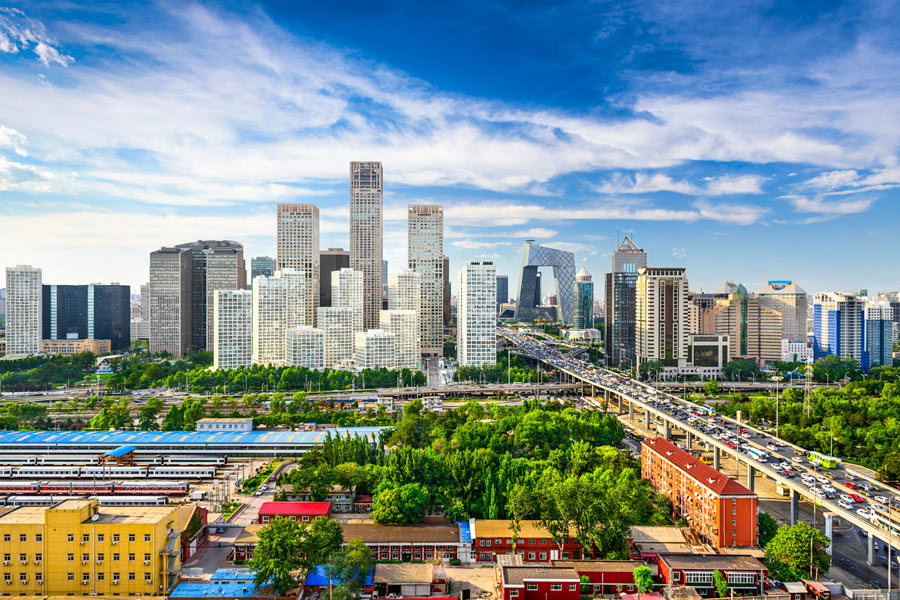
In the Central Business District, soaring towers and daring architecture highlights boast the CCTV Headquarters (nicknamed “the Pants”), designed by Dutch architect Rem Koolhaas, with a striking looped structure that challenges conventional skyscraper forms. Another notable example is Galaxy SOHO, a flowing, futuristic complex of interconnected domes designed by Iraqi-British architect Dame Zaha Hadid. In unison, they showcase Beijing’s contemporary skyline and design energy.
Consider adding an out-of-city excursion to your Beijing visit: the restored, visitor-friendly sections at Mutianyu (about 70–80 kilometres / 43.5–49.7 miles, roughly 1 hour and 30 minutes to 2 hours by car from central Beijing) and Badaling (about 60–70 kilometres / 37.3–43.5 miles, roughly 1 hour to 1 hour and 30 minutes by car from central Beijing) make excellent day trips for those travelling the Beijing city to Great Wall of China route.
Museums in Beijing

Museums of Tiananmen Square and the Imperial Core
Continue your journey of discovery at the Palace Museum (故宫博物院), housed in the Forbidden City, where centuries of dynastic splendour are showcased through exquisite ceramics, calligraphy, and jade treasures.
On the east side of Tiananmen Square, the National Museum of China (中国国家博物馆), formed from the merger of the former Museum of Chinese History and the Museum of the Chinese Revolution, traces the vast sweep of China’s civilisation through rich archaeological and art collections, while the Chairman Mao Memorial Hall (毛主席纪念堂), at the square’s centre, affords a solemn reflection on the nation’s modern era.
Intellectual and Aristocratic Heritage
Beijing honours both scholar and noble. At the Imperial College (Guozijian), the rigours of the imperial examinations reflect the city’s intellectual tradition, while Prince Gong’s Mansion (恭王府), once the residence of a Qing prince, preserves the elegance and social rituals of the aristocracy. Complementing these, the Capital Museum (首都博物馆) in Beijing explores local traditions and ancient roots.
Art Museums
The capital’s artistic energy is equally compelling. The National Art Museum of China (中国美术馆) presents an expansive range of works, encompassing traditional ink paintings and sculpture, alongside cutting-edge contemporary pieces.
Meanwhile, the Beijing Art Museum, housed in Wanshou Temple, bridges historical craftsmanship (jade, bronze, lacquer) with modern artistic expression. At the same time, the 798 Art District, built from repurposed industrial factories, thrives with avant-garde creativity, its galleries, studios, and cafés enlivening the modernist industrial halls.
For those passionate about literature, the National Museum of Modern Chinese Literature (中国现代文学馆) memorialises the written word, its extensive archives highlighting how modern Chinese writers shaped cultural and social identity.
Other museums to consider visiting:
- About 40 minutes’ drive from Tiananmen Square, the China National Film Museum (中国国家电影博物馆) celebrates the artistry and innovation of Chinese cinema. Housed in a modern complex, it includes exhibition halls, screening theatres, and interactive galleries.
- Beyond the city centre (about 1 hour driving from Tiananmen Square), the Zhoukoudian Site Museum (周口店遗址), home to the ‘Peking Man’, an archaic Homo erectus who lived during the Middle Pleistocene (approximately 750,000 to 200,000 years ago), reveals the prehistoric origins of humanity in northern China.
Beijing Theatres
Traditional Chinese Opera Theatres
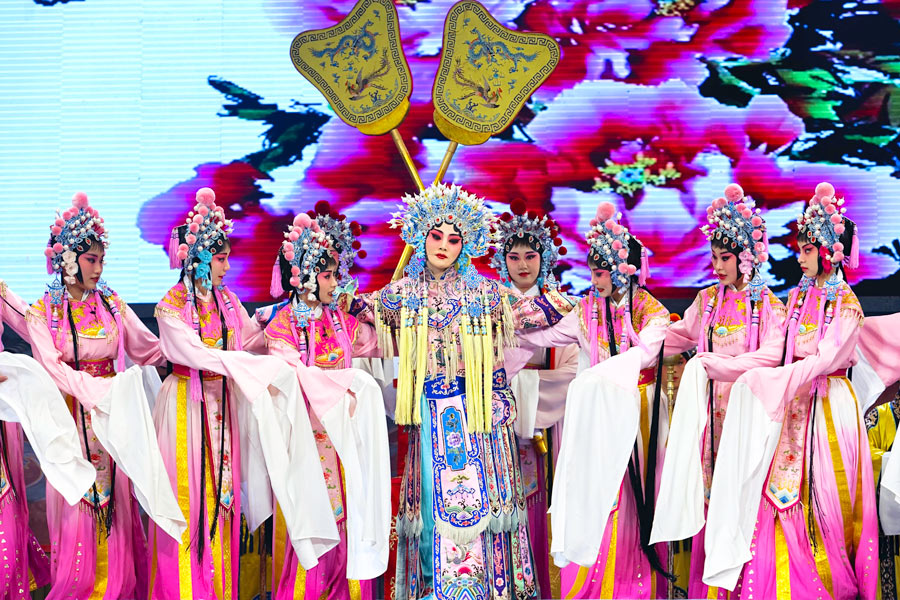
For those seeking the vivid staging, music, and artistry of Peking Opera, the China National Peking Opera Company (CNPOC, 中國國家京劇院) represents the highest level of performance in this centuries-old art form. Founded in 1955, the national company preserves classic works while also presenting new adaptations, upholding China’s premier Peking-opera tradition.
The Zhengyici Peking Opera Theatre (正乙祠), built in 1688 during the Qing Kangxi era, is one of China’s oldest surviving wooden theatres. It offers visitors a rare glimpse into historic performance spaces and the city’s rich operatic heritage.
For a more accessible introduction, the Liyuan Theatre in the Qianmen area stages nightly highlights of traditional Peking Opera, often with English subtitles, making it ideal for first-time visitors seeking a concise yet authentic experience.
Modern Performing Arts Venues
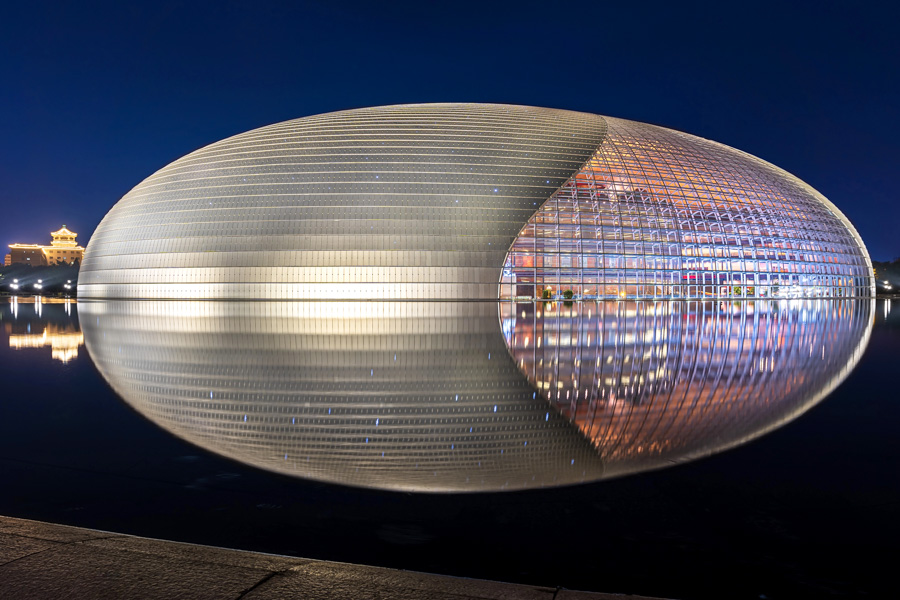
The National Centre for the Performing Arts (NCPA, 国家大剧院), known as “The Egg”, is Beijing’s expansive performing-arts complex, comprising an opera house, concert hall, and theatre. Its world-class productions of Western opera, ballet, and symphonic concerts showcase both international and Chinese talent, while the building itself features a striking ellipsoidal shell of titanium and glass set within an artificial lake.
The Poly Theatre, in central Beijing, presents large-scale international productions, including touring ballet companies, operas, and musicals, and is regarded as one of the city’s leading venues for grand, commercially produced performances.
The China National Opera House (CNOH, 中央歌剧院) regularly stages Western repertory and has produced works such as Carmen, Turandot, and La Traviata, alongside symphonic and choral concerts.
Drama and Contemporary Theatre
The Capital Theatre (首都剧场), near Wangfujing, is the longtime home of the esteemed Beijing People’s Art Theatre (BPAT, 北京人民艺术剧院). Founded in 1952, BPAT is one of China’s most respected modern spoken-drama companies, known for performing works by Lao She, Cao Yu, Guo Moruo, and others. Its landmark production, Lao She’s Teahouse, premiered in 1958 and remains a central work in its repertory.
Over the decades, BPAT has both revived its classic plays and commissioned new works, helping to keep Beijing’s spoken-theatre tradition vibrant and relevant.
Dance and Movement Arts
The Beijing Dance Academy Theatre (北京舞蹈学院), China’s premier dance conservatory, stages public performances in its on-campus venues, including a Dance Theatre, Black Box Theatre, and Concert Hall. Its seasons feature classical ballet, Chinese classical and folk dance, modern choreography, and dance dramas performed by students, faculty, and affiliated companies.
Acrobatics and Martial Arts Performance
At the Red Theatre, the long-running Legend of Kung Fu show combines traditional Chinese martial arts choreography, acrobatics, and dramatic staging. Performed regularly, it is a high-energy, family-friendly spectacle, often featuring English narration or subtitles to help audiences follow the story.
Entertainment, Parks, and Shopping in Beijing
Mornings among pavilions and Tai Chi groups, afternoons taking in carefully staged performances, and evenings wandering markets where artisan craft meets contemporary design trends – all give a sense of the activities Beijing has to share.
For a relaxed daytime discovery or a busier evening schedule, the city’s parks, performance venues, and shopping districts provide a range of local experiences that complement the major sights.
Entertainment in Beijing
Evenings in Beijing reveal a city that pulses with energy. As the sun sets, the capital transforms: modern skyscrapers glow, historic landmarks are bathed in light, and the rhythms of the city shift to a more leisurely, social pace.
Beijing night tours in the Sanlitun entertainment district let visitors experience this transformation up close, taking them through some of the capital’s most photogenic evening scenes. Along the way, there are usually pauses for drinks, street snacks, or a lakeside walk, giving travellers time to take in the atmosphere.
For pure spectacle, the Golden Mask Dynasty Show dazzles audiences with lavish choreography, acrobatics, and stage effects in a mythical tale of love and legend, a visually stunning choice for first-time visitors. Also consider the Chaoyang Theatre Flying Acrobatics, a long-time favourite celebrated for breathtaking balance and strength. Meanwhile, Qinle Palace, variously rendered in English as Qin Le Gong, Qinlegong or Qin Yue Gong, presents a contemporary multimedia acrobatic performance that brings a modern flair to this classic art form.
Whether you choose a private night tour, an acrobatic show, or both, Beijing after dark is a feast for the senses, served with a side of astonishment.
Parks of Beijing

Beijing’s parks blend tranquil greenery, centuries of history, and the rhythms of everyday city life, some just a short stroll from the city centre.
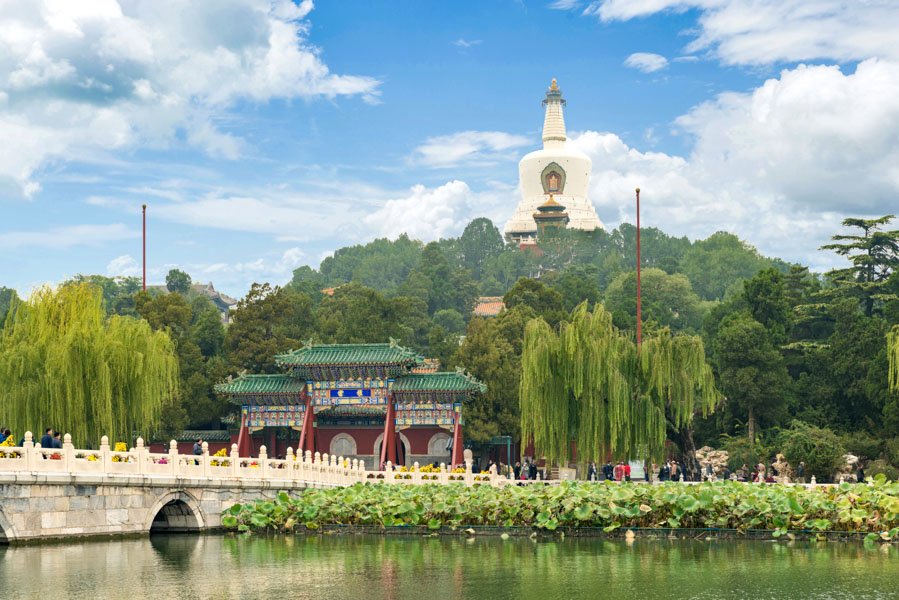
Beihai Park (北海公园) is a surviving imperial garden on a large lake. Its White Dagoba (白塔), built in 1651 in Tibetan style on the central Jade Islet, rises above classical pavilions and willow-lined shores.
Jingshan Park (景山公园), just north of the Forbidden City, features an artificial hill (also known as Coal Hill) that rewards visitors with one of Beijing’s finest panoramic views, overlooking the Forbidden City’s palace roofs and central axis.
Ritan Park (日坛公园), near the embassy district, provides for a quieter, more local experience. Its landscaped gardens, small lake, and early-morning Tai Chi Chuan sessions paint dynamic scenes of everyday life in Beijing.
The Shichahai historic scenic area and its three linked lakes – Qianhai, Houhai, and Xihai – form one of Beijing’s most charming waterside quarters. Here, “Houhai” often refers both to the central lake and to the surrounding neighbourhood, which is not a formal park but is perfect for summer strolls, boat rides, and lively evenings at waterside bars and courtyard cafés.
Olympic Green (奥林匹克公园), with broad promenades and the Olympic Forest Park to the north, is ideal for cycling and longer walks.
Purple Bamboo Park (紫竹院公园), located about 11–12 kilometres (7 miles) northwest of central Beijing, is a verdant retreat celebrated for its bamboo groves, three interconnected lakes, and graceful waterside pavilions. It’s perfect for photography, a leisurely stroll, or a peaceful afternoon surrounded by nature.
Finally, the China National Botanical Garden (国家植物园), in Haidian District, features extensive living plant collections, themed display gardens, and glasshouse conservatories showcasing flora from across China and beyond. Located around 24 kilometres (15 miles) from central Beijing, it offers a tranquil retreat for plant enthusiasts and a peaceful contrast to the city’s historic attractions.
Shopping in Beijing
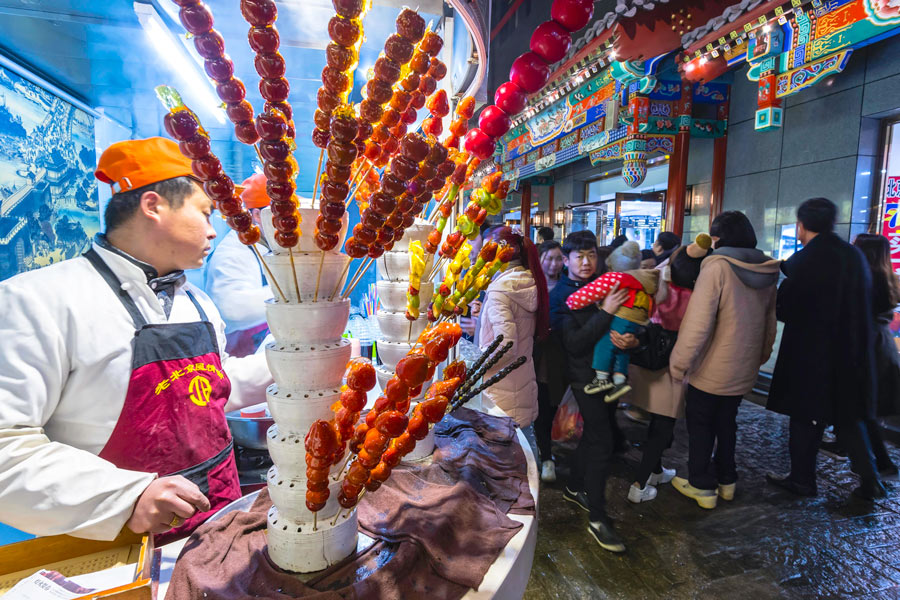
Whether you are seeking one-of-a-kind hand-embroidered silk, a quirky antique, fine tea to take home, or the latest fashion, Beijing’s shopping districts will not disappoint.
Consider these three styles of shopping destinations:
First style: Traditional and Historic Streets
Qianmen Street (前门大街), a fully pedestrian, tree-lined thoroughfare and the oldest in the city – marking the start of Beijing’s main north-south axis – combines history and retail charm, with restored Qing-era façades housing classic Chinese brands and teahouses. The street stretches for about 840 metres (2,756 feet).
Wangfujing Street (王府井大街), more modern in character, is Beijing’s best-known shopping boulevard – a roughly 1.6-kilometre (about 1-mile) north–south thoroughfare, of which the main pedestrianised shopping promenade measures approximately 800–900 metres (0.5–0.55 miles). Lined with elegant department stores and long-established speciality shops, it includes the Foreign Languages Bookstore, which stocks a wide range of English-language books, travel guides, and Chinese classics in translation.
Both streets are especially popular in the evening, when their illuminations create an even more lively and inviting atmosphere.
For a cosier experience, Nanluoguxiang’s narrow hutong lanes host independent boutiques, cafés, and creative studios within beautifully preserved courtyard homes. Visitors can browse for Beijing Opera facial masks and many other traditional souvenirs.
Liulichang Cultural Street carries varieties of traditional art supplies, including brushes and ink stones, while Maliandao Tea Street invites visitors to sample and purchase from hundreds of tea sellers – look out for shops specialising in a single type of tea from one farm, or the smaller, tea-enthusiast shops, where the sellers exude a quiet confidence.
Second Style: Markets and Specialist Finds
Panjiayuan Antique Market is ideal for vintage enthusiasts looking for handicrafts and cultural curiosities – a great place to shop for traditional applied arts and crafts souvenirs such as calligraphy, ceramics, and other artisanal treasures.
Yashow Market has transformed from a bargain-hunting bazaar into a modernised indoor clothing fashion centre, bridging Beijing’s traditional markets and contemporary retail.
For fine jewellery and pearls, Hongqiao (Pearl) Market, near the Temple of Heaven, spans multiple floors of reputable vendors alongside souvenir stalls.
Third style: Modern Malls and Lifestyle Districts
The Place, in the central business district, is known for its enormous overhead LED “sky screen” (approximately 250 by 30 metres / 820 by 98 feet) and a mix of international luxury brands and restaurants.
Taikoo Li Sanlitun, near the embassy area, is an upmarket, open-air district of pedestrianised lanes and contemporary architecture. Divided into North and South zones, it hosts international designer brands, high-end Chinese labels, and a wide selection of restaurants and teahouses. The South zone includes a cinema and dining destinations, while the North zone emphasises luxury shopping and boutique retail, making it a lively destination by day and evening.
Food in Beijing
Chinese Cuisine
Beijing’s dining culture blends old-world refinement with bold, contemporary zest. For the ultimate experience, book a table at one of the city’s Michelin-starred Chinese restaurants: three-star establishments such as Chao Shang Chao, known for its refined seafood, or Xin Rong Ji, with its elegantly minimalist interiors; and two-star standouts like Jingji, which reimagines imperial and Beijing cuisine.
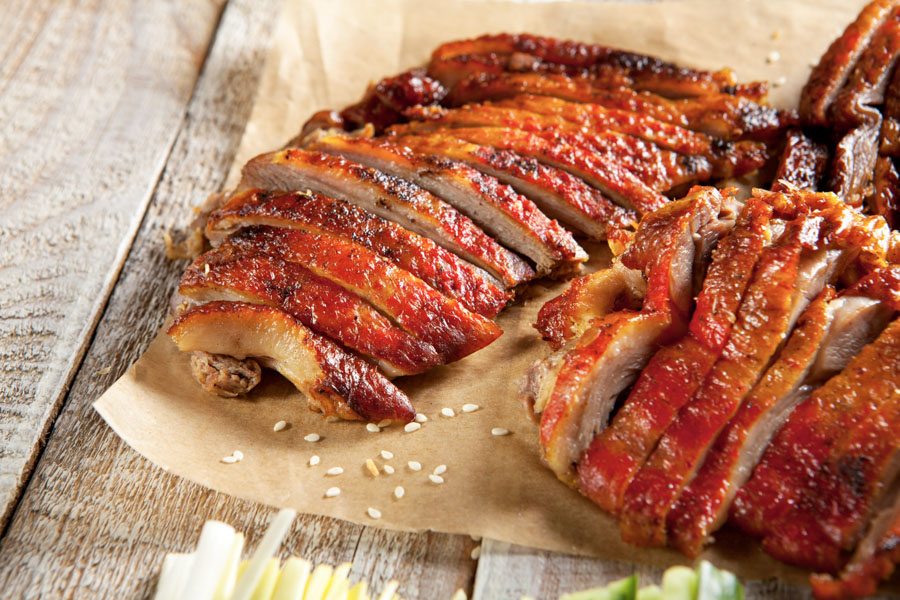
For classic Beijing flavours, don’t miss Peking duck – try Siji Minfu for a reliably excellent roast, or the stylish Dadong for a contemporary interpretation.
Beyond that, sample Beijing-style hotpot served in traditional copper pots, and explore the city’s snack streets for its playful side: skewered scorpions, silkworm pupae, and other daring bites and local curiosities, best enjoyed with an open mind.
Vegetarian Restaurants
Beijing presents a wide range of vegetarian options. Thanks to Buddhist culinary traditions and several temple-adjacent eateries, you can find buffet-style Buddhist vegetarian meals close to historic temples, as well as dedicated vegetarian restaurants across the city.
King’s Joy is Beijing’s flagship vegetarian fine-dining destination, celebrated for its seasonal, farm-sourced menus, Zen-like presentation, and a tasting-menu experience, which has earned it two Michelin stars and a Michelin Green Star for sustainability.
It is renowned for elevating plant-based Chinese cuisine into haute dining and for its serene courtyard setting near Yonghe Temple.
For more vegetarian options, try Tianchu Miaoxiang (Tianchumiaoxiang), a Michelin-rated Bib Gourmand restaurant praised for its value, authentic Chinese vegetarian dishes, and consistent positive reviews from both locals and travellers.
L. Bodhi on Guanghua Road is a respected vegetarian and vegan restaurant brand with Michelin Guide listings in Beijing. It serves multi-course vegetarian and vegan sets in a polished dining room – an excellent choice for a refined, meat-free meal.
Tea Houses, Bakeries, and Patisseries
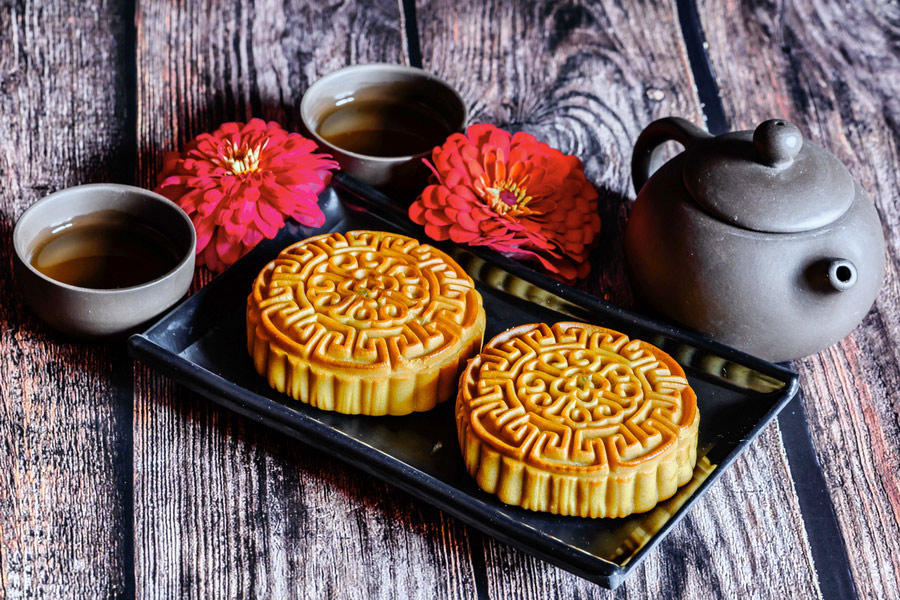
Beijing’s teahouses celebrate centuries of Chinese tea culture, while the city’s bakeries and patisseries preserve, and occasionally reinterpret, ancient recipes for all kinds of sweets and baked goods.
Among them are:
- Lao She Teahouse (老舍茶馆), Qianmen: Named for writer Lao She, this venue is famous for staged Beijing folk-arts performances and a traditional, theatrical tea service that introduces visitors to the city’s culture. See location.
- Wuyutai (吴裕泰), Wangfujing flagship teahouse: Founded in 1887, Wuyutai is one of Beijing’s oldest, most trusted tea brands. Here, guests can sample high-grade jasmine, Longjing, and other classic teas while learning traditional brewing and scenting methods. See location.
- Zhang Yiyuan (张一元) tea shop, Dashilan Street store: Now operating as Beijing Zhang Yiyuan Tea Co., Ltd., this historic Beijing tea brand, established around 1900, proffers a wide variety of teas for sale.
In 2006, the company opened the Zhang Yiyuan Tianqiao Teahouse in the historic Tianqiao area, providing visitors with the opportunity to enjoy tea tasting. See the teahouse location here. - Baoshifu (鲍师傅): A home-grown pastry chain famed for its pork-floss buns (小贝), egg tarts, and other popular pastries. It expanded rapidly after 2017 and now has multiple outlets across the city.
- Daoxiangcun (稻香村): Established in 1895, this time-honoured Beijing brand specialises in traditional pastries, including rose, sesame, and date cakes, as well as mooncakes. It maintains an extensive network of shops in Beijing and beyond.
- Fuhuazhai pastry shop (富华斋饽饽铺) on Huguosi Street: A small, old-Beijing pastry shop preserving traditional – even Qing-court – recipes. It is especially prized for its classic sweet breads and remarkable summer desserts, such as watermelon “cheese” (西瓜酪), a refreshing fruit jelly.
City Transport in Beijing
Buying the Beijing Pass
Visitors can purchase the multipurpose Beijing Pass at international arrival terminals in airports for 1,000 CNY/RMB (approximately $141 / £108 / €123). The pass provides access to public transport, taxis, and selected attractions not only in Beijing but also in major tourist destinations such as Shanghai, Guangzhou, Shenzhen, and Nanjing. It is rechargeable in increments of 10 CNY/RMB (approximately $1.41 / £1.08 / €1.23) up to a maximum balance of 1,000 CNY/RMB.
Public Transport
Buses and Shuttles
Beijing operates an extensive bus network with over 1,500 routes covering urban and suburban areas. Most daytime routes run from approximately 05:00 a.m. to 11:00 p.m., with night lines operating along key corridors. Fares are generally around 2 CNY/RMB (approximately $0.27 / £0.20 / €0.23) per person, payable via Yikatong card (which offers a 50% discount) or QR code (Alipay, WeChat Pay).
Airport and tourist shuttle buses connect terminals and major attractions, including sections of the Great Wall. Fares depend on your final destination, with prices ranging from 20 CNY/RMB to 50 CNY/RMB (approximately £2.14 to £5.37 / €2.44 to €6.11 / $2.80 to $7.00).
Buses can be slower during peak traffic hours but are often the most direct option for certain neighbourhoods or outlying sites.
Metro
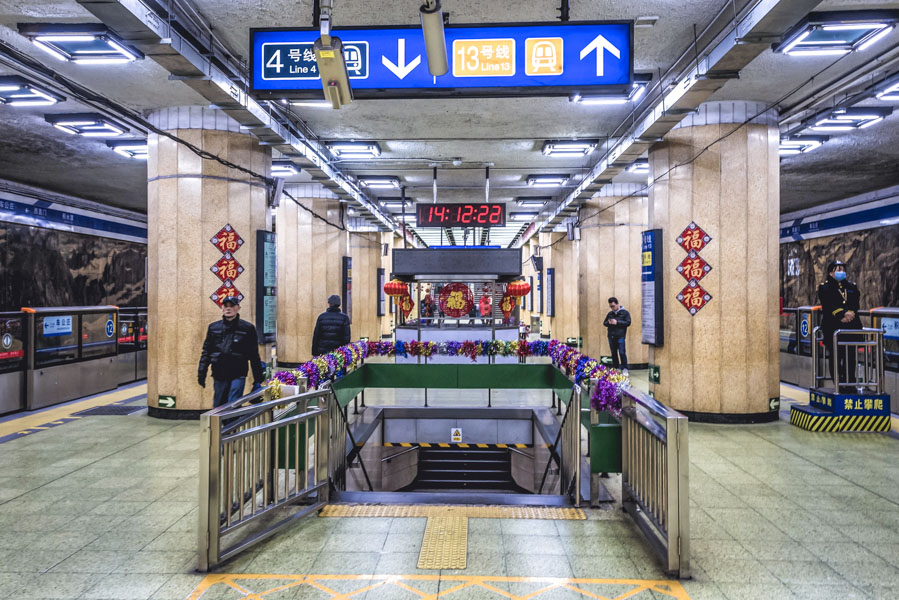
The Beijing Subway is fast, frequent, and remarkably comprehensive, spanning the city and its surrounding suburbs. It ranks among the world’s largest and longest urban metro networks.
Altogether, this network consists of numbered lines, suburban or branch routes, airport express services, the maglev line (S1), and light-rail trams (e.g., Xijiao and Yizhuang T1 lines).
Looking ahead, the Beijing Rail Transit Plan (2020–2035) envisions an even larger network by 2035, with further extensions and new routes already under construction.
Please note: For interactive maps, real-time updates, and route planning tools, visit the official Beijing Subway website before you travel.
Fares
Beijing’s metro uses a distance-based fare system:
- 3 CNY/RMB (approximately $0.40 / £0.30 / €0.35) for up to 6 kilometres;
- rising gradually to 6 CNY/RMB (approximately $0.80 / £0.60 / €0.70) for distances between 22 and 32 kilometres (13.6 and 19.88 miles);
- then an extra 1 CNY/RMB (approximately $0.13 / £0.10 / €0.12) for each additional 20 kilometres (12.42 miles) is applied with no maximum fare cap.
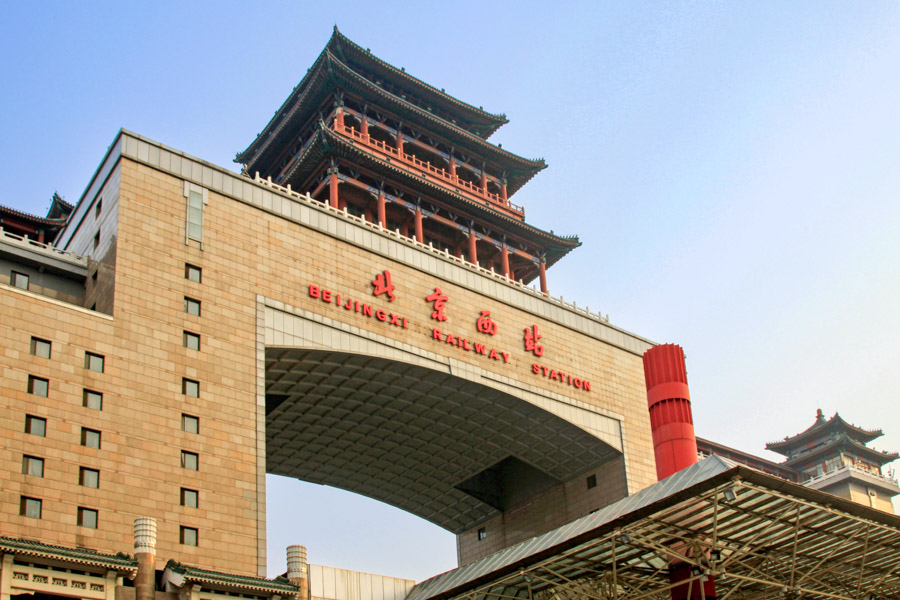
For example, a 40-kilometre (24.85-mile) trip typically costs about 7 CNY/RMB (approximately $0.95 / £0.75 / €0.80), roughly the distance from Beijing West Railway Station to Beijing Universal Resort (Universal Resort Station).
Same-station transfers are included, but the Capital and Daxing airport lines are charged separately, and some tram or light-rail tram routes may require a new ticket – check signage before travelling.
Tickets
Tickets are available as single-ride tokens, rechargeable Yikatong stored-value contactless smart cards, or mobile QR payments via apps such as Alipay and WeChat Pay.
International passengers can take advantage of the "Tap to Ride" service, available on all subway lines (including airport lines), which accepts China UnionPay, Mastercard, Visa, JCB, and American Express cards.
Navigation and Operations
Once inside, the metro is regarded as easy to navigate by most travellers.
Lines are clearly numbered and colour-coded, with bilingual Mandarin-and-English signage throughout.
Most stations operate from about 5:00 a.m. to 11:30 p.m., though first and last trains vary slightly by line and direction. During peak periods, trains run every two to six minutes, and it is wise to allow a few extra minutes for routine security checks at busier stations.
Other Transport Options
Taxis

Metered taxis operate 24/7, with flag-down fares starting at around 13 CNY/RMB (about $1.80 / £1.50 / €1.65) for the first 3 kilometres (2 miles). Daytime rates then run at roughly 2.30 CNY/RMB per kilometre (approximately $0.32 / £0.24 / €0.28), with surcharges applied at night or when travelling to and from the airport.
The DiDi app is convenient for booking taxis, private cars, car-pools, and chauffeur services. Traffic congestion can lengthen journeys, especially during rush hours (around 7:00–9:30 a.m. and 5:00–7:30 p.m.), so allow extra time accordingly.
Car Rental
Major national car rental firms, such as CAR Inc. (神州租车), and platforms like eHi Auto Services Limited (一嗨租车), izu, Wukong, and zuzuche operate online and/or at Beijing airports and city outlets and can assist with paperwork.
International brands, such as Avis (which provides customer service in English, French, and Spanish), Hertz, and Enterprise, also serve Beijing’s airport terminals through local Chinese partner agencies. Many visitors opt for chauffeur services when renting cars.
Bikes and E-Bikes
Bikes and E-Bikes: app-based shared bikes and e-bikes from Meituan (yellow), HelloBike (blue), and DiDi Qingju (green) are convenient for short trips. QR code payment is standard, and users must follow local parking rules and use designated parking zones (the apps display no-parking areas) to ensure compliance is explicit.
How to Get to Beijing?

Beijing is one of China’s main international gateways, with two major airports, extensive rail links, and high-speed connections from across the country.
By Plane
Beijing Capital International Airport (PEK) lies about 32 km (20 miles) northeast of the city centre, while Beijing Daxing International Airport (PKX) – also known as Beijing New Airport – is around 46 km (29 miles) to the south. Both handle extensive domestic and international services.
From Capital Airport (PEK) to central Beijing:
- The Capital Airport Express (part of the Beijing Subway network) provides a fast rail link to the city. It serves Terminals 2 and 3 and gets to Dongzhimen metro station, the route’s second stop. Dongzhimen was once the site of a gate in Beijing’s old city walls and is now a major commercial and transport hub. The journey to Dongzhimen metro station takes around 20–30 minutes (depending on the terminal), with a single fare of 25 CNY/RMB (approximately $3.50 / £2.70 / €3).
- The Capital Airport Shuttle Buses link Beijing Capital Airport (Terminals 2 and 3) with major city districts such as Wangfujing, Xidan, and the main railway stations. Journeys take around 60–80 minutes in normal traffic. Fares range from 20–50 CNY/RMB (approximately $2.70–7.00 / £2.1–5.37 / €2.50–6.11), depending on the route and distance. Tickets are sold at the airport bus counters outside Arrivals (T2: Exit Gate 11 / T3: Exit Gate 7).
- The Capital Airport Taxis (metered and licensed) queue outside Arrivals. Journeys typically take 30–60 minutes in normal traffic (allow considerably longer at peak times) and usually cost around 100–180 CNY/RMB (approximately $14–25 / £10–18 / €12–22), depending on the route, traffic, highway tolls, and any night or airport surcharges. Please refer to the Taxis section above for the fares.
From Daxing Airport (PKX) to central Beijing:
- Daxing Airport Express is the dedicated subway link to Beijing Daxing International Airport, running between Caoqiao, Daxing Xincheng and Daxing Airport. Caoqiao provides a connection with Line 10. The journey from the airport to Caoqiao takes about 19–22 minutes, with services running roughly every 8–10 minutes. A standard one-way ticket costs 35 CNY/RMB (≈$4.90 / £4.00 / €4.50), while a business-class seat is 50 CNY/RMB (≈$7.00 / £5.70 / €6.50).
- Electric shuttles and buses connect the airport with various parts of the city, taking about 80 minutes under normal traffic conditions. Fares range from 35–60 CNY/RMB (approximately $4.80–8.20 / £3.70–6.40 / €4.50–7.70), depending on the destination.
- Taxis usually take 60-90 minutes and generally cost around 220 CNY/RMB (approximately $31 / £26 / €29), depending on traffic and route.
Both airports also link to suburban and intercity rail services, including high-speed connections into Beijing West Railway Station.
Tip: Purchase a Yikatong card at airport metro stations or use mobile QR payments (Alipay or WeChat Pay) for seamless travel on the metro, buses, and airport lines.
Please note: Beijing Daxing’s terminal features five themed gardens located at the end of each departure corridor. These peaceful spaces are designed for passengers to relax between flights. The gardens are accessible to departing and transit passengers who remain beyond security.
By Train
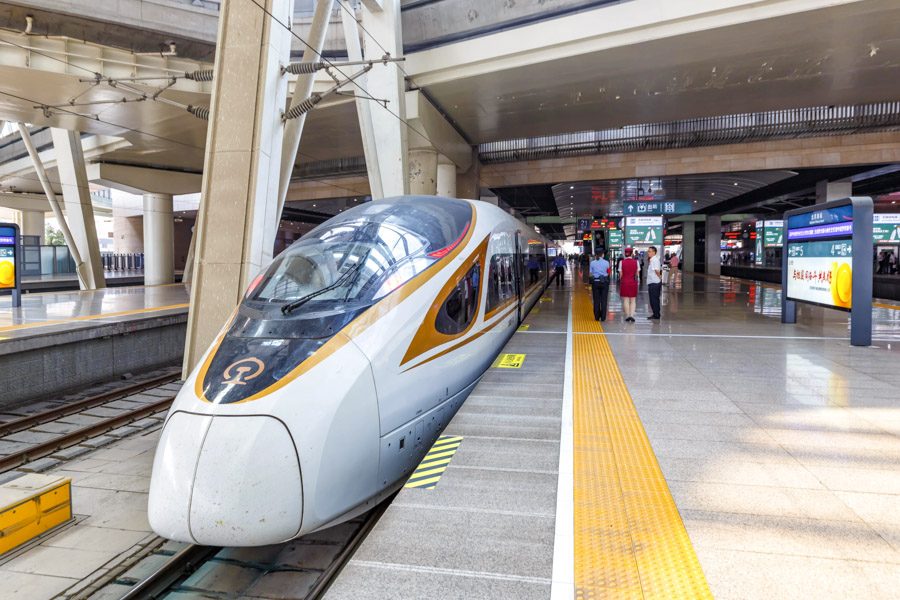
Beijing is one of China’s main railway hubs, with high-speed services linking the capital to nearly every major city.
- Beijing Railway Station, near the city centre, serves regular and some long-distance trains.
- Beijing South Railway Station is the hub for high-speed trains to Shanghai, Tianjin, and points south.
- Beijing West Railway Station handles services to Xi’an, Chengdu, and southwestern China.
- Beijing North and Qinghe stations serve the Great Wall and regional destinations, including high-speed services to Zhangjiakou and beyond.
High-speed services (G and faster D trains) connect Beijing with Shanghai in about 4 to 6 hours (the fastest services take approximately 4 to 4 hours and 30 minutes); services to Xi’an typically take about 4 to 6 hours depending on the train and stops.
Tickets can be bought on the China Railway 12306 website or app (and via reputable agents); China’s real-name system requires passengers to register and travel with their passport (foreigners) or ID.
Languages Spoken in Beijing
People in Beijing speak the local Beijing dialect (北京话, Běijīnghuà), notable for its distinctive words, tones, and local expressions. In the 20th century, when China established Standard Mandarin (Putonghua) as the national language, its pronunciation was largely modelled on Beijing speech.
Although most residents are Han Chinese, Beijing is home to diverse communities, including Manchu, Hui, Mongol, and Korean minorities, as well as a large population of internal migrants. This diversity contributes to a lively chorus of regional Mandarin accents, with words of Mongolian or Manchu origin occasionally appearing in local conversation.
English and other languages are spoken in tourist areas, hotels, embassies, and major museums. Signage in English, Japanese, and Korean is common in international districts.
Please note: Listen for erhua (儿化), the “-r” added to many words – a subtle hallmark of Beijing speech that often signals you are in the city’s authentic neighbourhoods.
Security in Beijing
Beijing is widely regarded as a safe destination for visitors, but practising everyday caution can ensure a smooth and enjoyable travel experience.
Below is a list of some useful safety measures to keep in mind:
- Know emergency numbers: Familiarise yourself with important contact numbers: Police 110, Ambulance 120, Fire 119, and the city’s 12345 citizen hotline for non-urgent assistance.
- Use official transportation: Always opt for licensed taxis queuing outside airport arrivals and major stations (look for English signs). You can also book rides through reputable apps such as DiDi. Avoid unmarked or unofficial vehicles. It is wise to print or type your destination in Chinese before you travel, as not all drivers speak English.
- Be mindful of petty theft: Although uncommon, it can occur in busy tourist areas such as markets, metro interchanges, and temple precincts. Keep bags zipped and wallets concealed, and store valuables securely in your hotel safe.
- Prepare for emergencies: Carry copies of your passport and the contact information for your embassy. It is advisable to purchase comprehensive travel insurance and consider registering your stay with your embassy, as consular services can provide assistance if any issues arise.
- Blend common sense with local courtesy: Greet people politely, follow local customs, and ask hotel staff or guides for on-the-spot advice. For more insights, you may refer to our Etiquette Guide.
This approach will help you enjoy a confident, relaxed visit. Wishing you an amazing and fulfilling journey in Beijing!