

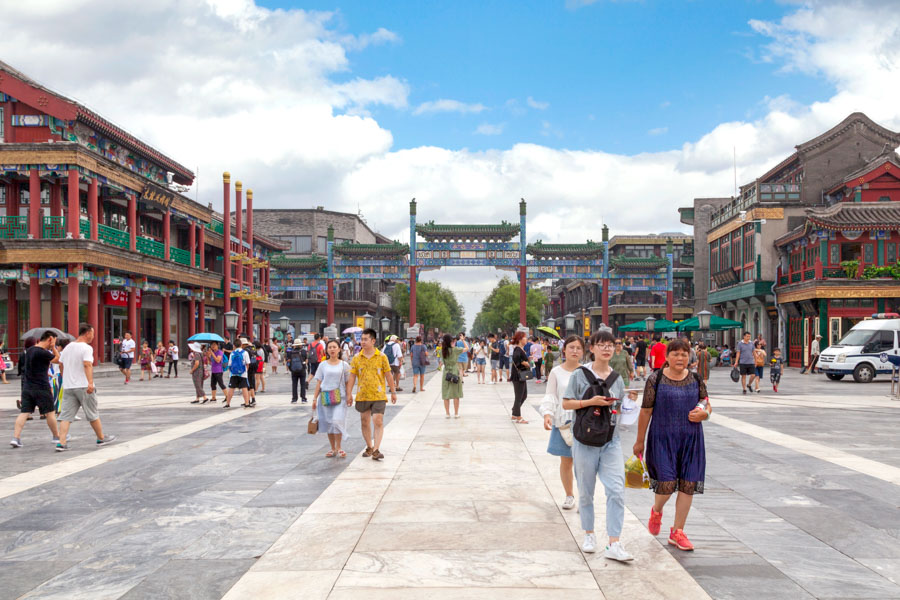
Qianmen Street (前门大街, Qiánmén dàjiē) in Dongcheng District is a pedestrianised commercial street, redeveloped in the 2000s to evoke the atmosphere of late-imperial and early-20th-century Beijing, often referred to as Lǎo Běijīng (老北京, “Old Beijing”).
The name Qianmen Street is standard in English usage, although the Chinese term dàjiē, a historic pre-renovation designation, literally means “main street” or “avenue”.
Located just south of Tiananmen Square, Qianmen Street forms part of the historic southern approach to the Forbidden City and is close to major landmarks. The street runs roughly north–south, closely following Beijing’s Central Axis, the city’s historic spine that structures its imperial layout and links key ceremonial and governmental sites.
Qianmen Street is 845 metres (approximately 0.53 miles) to travel from end to end. Some sources cite a longer figure of around 1.6 kilometres, equivalent to a mile. This typically reflects broader definitions that include adjacent streets, the Dashilan residential area, or historically related commercial stretches rather than the core “pedestrianised mall”, should you encounter such numbers.
This eye-candy thoroughfare and its surrounding neighbourhood are popular subjects for photography. Extensive visual documentation is shared by visitors, capturing impressions of the street’s animated atmosphere and distinctive visual character. Even so, these images can only hint at the experience of being on the street itself.
Qianmen Street Tours
For those wishing to explore Beijing, several of our guided tours include Qianmen Street as a highlight.
Think of Qianmen as synonymous with both culture and shopping in the same visit. Along the street, shops galore, from souvenir stores and bookshops to clothing outlets, cosmetics, jewellery, and gifts to take home.
Private guides often combine Qianmen Street with nearby landmarks such as Tiananmen Square, the Forbidden City, and the Temple of Heaven. These tours provide historical context, share anecdotes, suggest recommended routes, and offer insider tips.
Best Time to Visit Qianmen Street
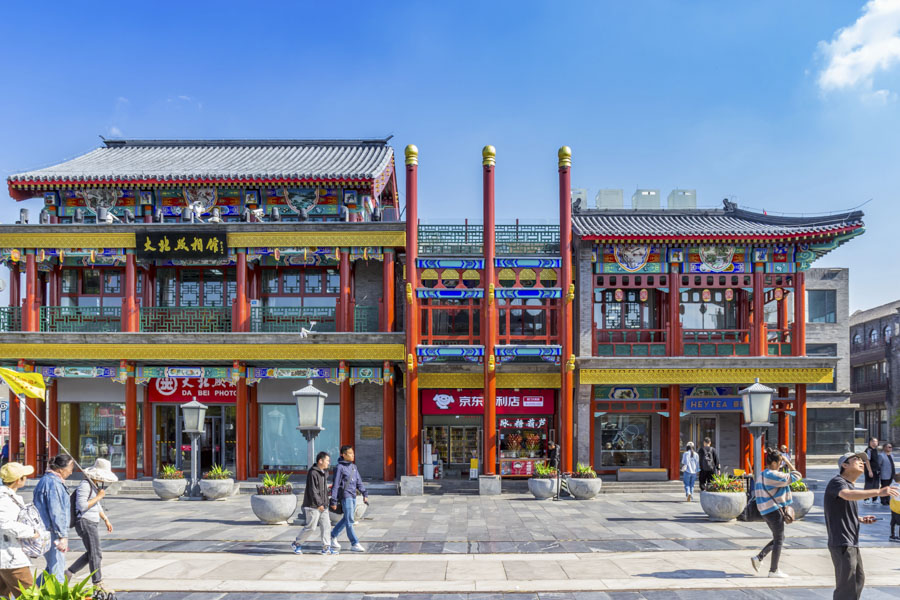
Qianmen Street visits are rewarding year-round, but spring and autumn are generally considered the most pleasant seasons, as mild temperatures and relatively low precipitation make sightseeing comfortable, while summer can be hot and rainy and winter is cold and dry.
Visit during daylight hours to take in the lively shops behind historic façades and the enthusiastic crowds on hunts for hauls. The street is pedestrianised and largely free of private motor traffic; the only regular vehicles are a restored heritage tram and authorised service, emergency, or delivery vehicles when required. After dawn, the mood shifts noticeably. Lanterns spread their warm glow, and architectural uplighting transforms Qianmen Street at night into one of Beijing’s most photogenic routes, lending it a distinctly dreamy atmosphere.
Try to plan your visit around major holidays if you wish to avoid peak crowds, as these attract particularly large numbers. Consider visiting in the late afternoon to early evening to enjoy both daytime activity and the illuminated streetscape.
History of Qianmen Street
Qianmen Street in Beijing occupies one of the capital’s oldest trading corridors. The surrounding area served for centuries as an imperial approach and dynamic marketplace and has been described as a centre of commerce for more than 500 years.
The street takes its everyday name, Qianmen (“Front Gate”), from the adjacent Zhengyangmen Gate complex (正阳门, “Gate of the Zenith Sun”). First built in the early 15th century (commonly dated to 1419), Zhengyangmen served as the principal southern gate of Beijing’s Inner City during the Ming (1368–1644) and Qing (1644–1912) dynasties.
Much of the Inner City wall and its barbicans were removed in the 1950s–1960s, leaving the two towers as visually striking remnants of the former fortifications. With the surrounding walls no longer standing, it is possible to imagine the complex as it once was: a commanding tower on the city wall, accompanied by a southern archery pavilion and joined by defensive structures to form a secured entrance.
Renewal and conservation have continued into the 21st century. Following recent restoration, the Zhengyangmen Archery Tower is open to the public, welcoming modern visitors, who may have originally come for shopping, to enjoy both retail and history in a single outing.
Things to Do on Qianmen Street
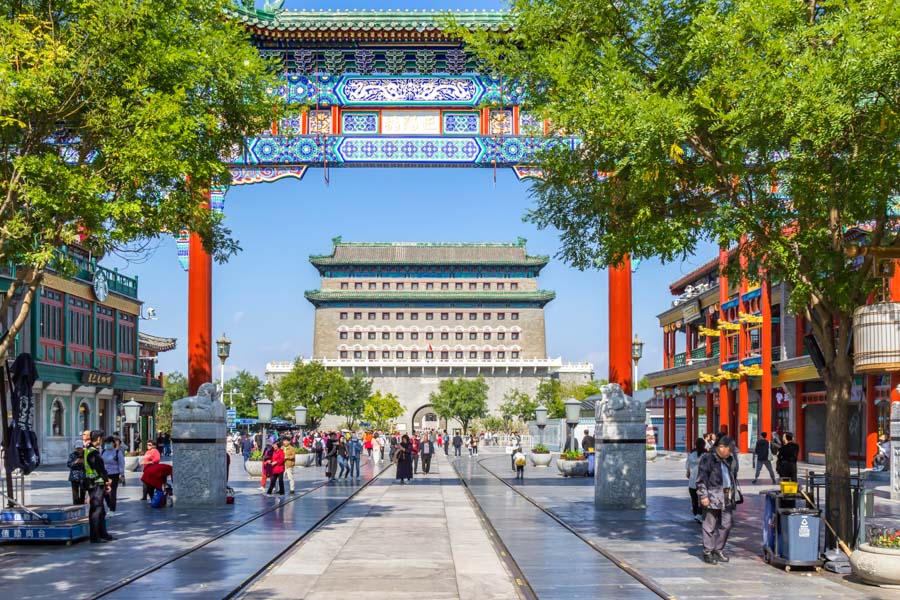
Qianmen Street effortlessly blends landmark architecture, restored dynastic heritage, plenty of unique shopping stops, and lively urban scenes, making it an engaging destination for exploring China’s culture.
Important Landmarks on Qianmen Street:
- Zhengyangmen Archery Tower Visit
Visitors can reserve entry to the carefully restored Archery Tower, which reopened in December 2024. Access is by advance booking, Tuesday to Sunday, 09:00 to 17:00, with the last entry typically around 16:30. Visits are arranged in time slots. You may wish to allow 30–60 minutes to explore the exhibitions and step onto the upper levels for sweeping views over Qianmen Street and the southern Central Axis.
- Paifang Traditional Gateways
Traditional paifang (牌坊), ceremonial archways or memorial arches, stand along the main approaches to Qianmen Street. Colourful, richly ornamented, and highly symbolic, these gateways help establish the Qianmen Street’s character and visually reinforce its alignment with Beijing’s historic Central Axis, the north–south line that runs through the heart of the capital. Freely visible within the pedestrian zone, they are especially atmospheric after dusk, when evening illumination accentuates their intricate detailing.
- Small Local Stop: China Post’s Qianmen Branch
Located toward the southern end of Qianmen Street (98 Qianmen Street), this working China Post office invites visitors to enjoy a quietly nostalgic way to communicate. Many stop by to purchase stamps, send postcards to family and friends directly from the historic district, and pause beside the traditional green postal box nearby, a small ritual connecting the present moment with the timeless pleasure of handwritten travel memories.
Points of Attraction Beyond Qianmen Street
With even more sights to take in and things to do, the nearby hutongs and neighbouring streets continue the story of Beijing’s living retail history.
Dashilan (大栅栏), also known as Dazhalan Walking Business Street, is an extensive historic shopping quarter immediately to the west of Qianmen Street. Dating back to the Ming and Qing dynasties, it has been carefully restored and continues to thrive as a vibrant craft and retail district, home to long-established shops as well as speciality boutiques. Well worth lingering over, Dashilan complements a visit to the Qianmen area with its lively atmosphere and traditional retail charm.
Peek inside Neiliansheng (内联升), handcrafting traditional cloth shoes since 1853, or explore Ruifuxiang (瑞蚨祥绸布店), a silk and fabric emporium that evokes the elegance of late Qing Beijing. Beyond the street itself, traditional crafts such as those of Shengxifu (盛錫福), known for handmade hats and headwear, add texture to the wider Qianmen–Dashilan area, illustrating how Beijing’s historic retail culture unfolds across an interconnected district.
Entertainment and Shopping on Qianmen Street
Qianmen Street reveals a form of pastime deeply rooted in the spirit of Beijing from another era, a world long vanished yet quietly kept alive through careful restoration and re-enactment. For a moment, you might close your eyes and imagine it as it once was: the sounds of vendors and neighbours chatting catch your ear, while soft cloth shoes carry you along on a leisurely journey, moving wherever curiosity leads and inviting moments of delight around every corner.
Entertainment
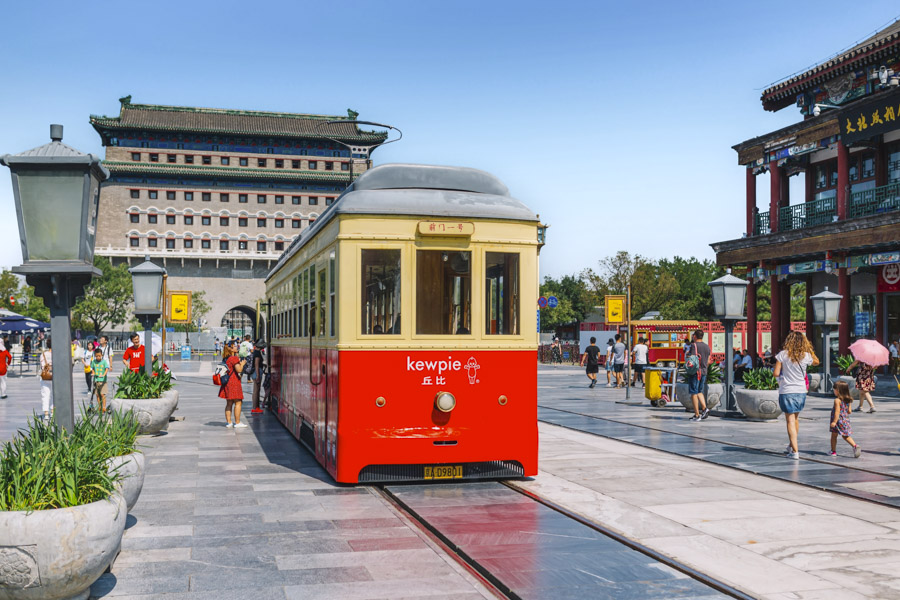
Today, Qianmen Street remains as full of wonder as it ever was – and we hope always will be. Below are a few signature highlights not to miss when visiting this remarkable street and its surrounding neighbourhood, organised by location.
1) Location: Qianmen Street (axial)
What to expect: lively promenade, browsing, atmosphere.
- Dangdang Tram (当当车, Dāngdāng chē): a heritage-style sightseeing tram running the length of the street, its unhurried pace adding a touch of urban theatre as it glides past restored façades, and known locally for its ringing bell.
Please note: while enjoying the area, remain aware of the sightseeing tram and other pedestrians.
- Street performances and seasonal events: informal demonstrations, lantern displays, themed stalls, and free outdoor performances bring the street to life at peak times, especially during the Spring Festival and other national holidays. Pause, and let the rhythm and colour of the street in the moment envelop you.
2) Location: Off Qianmen streets (near Zhengyangmen)
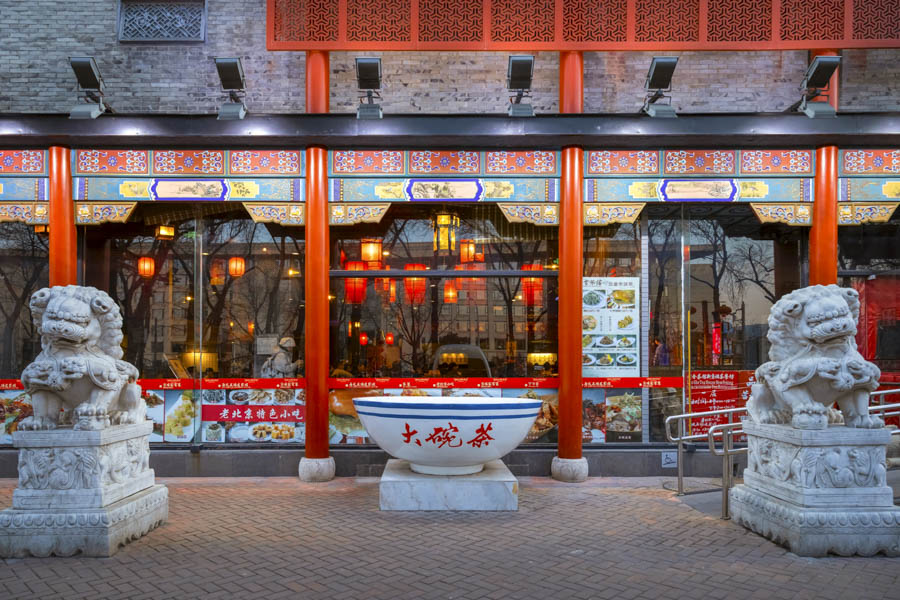
What to expect: concentrated cultural venues for seated performances.
- Lao She Teahouse (老舍茶馆): one of Beijing’s most iconic cultural venues, named after the celebrated writer Lao She and inspired by his classic drama Teahouse. Opened in 1988, this three-storey teahouse combines Beijing tea culture, traditional performing arts, and local cuisine in a charming, atmospheric setting. Visitors can enjoy tea and snacks while watching a lively programme of Peking opera, crosstalk comedy, acrobatics, shadow puppetry, and candle-in-mouth performances. Shows are often held nightly, and advance booking is recommended to secure a seat.
Address: Building 3, Zhengyang Market, Qianmen West (Xidajie) Street, Xicheng District, Dongcheng, Beijing.
- Zhengyici Peking Opera Theatre (正乙祠戏楼): an atmospheric wooden playhouse, located a short distance west of the Zhengyangmen Gate. It specialises in full traditional Peking Opera productions and presents an authentic, almost museum-like experience, with a low stage, lantern lighting, and an intimate audience-performer setting. Check schedules in advance and reserve seats; it is an ideal choice for anyone seeking a deeper encounter with Beijing’s operatic heritage.
Address: 220 Qianmenxiheyan Street, Xicheng District, Beijing.
3) Location: Wider surrounding district
What to expect: modern opera performances.
- National Centre for the Performing Arts (国家大剧院, NCPA): Beijing’s premier modern opera and performing-arts complex. The striking, futuristic “pearl in the water” building hosts a broad spectrum of full-scale productions, including grand opera, ballet, symphony, and classical concerts, as well as international touring performances. Seasonal calendars and tickets are available on the NCPA website.
Address: 2 West Chang'an Street, Xicheng District, Beijing.
Shopping
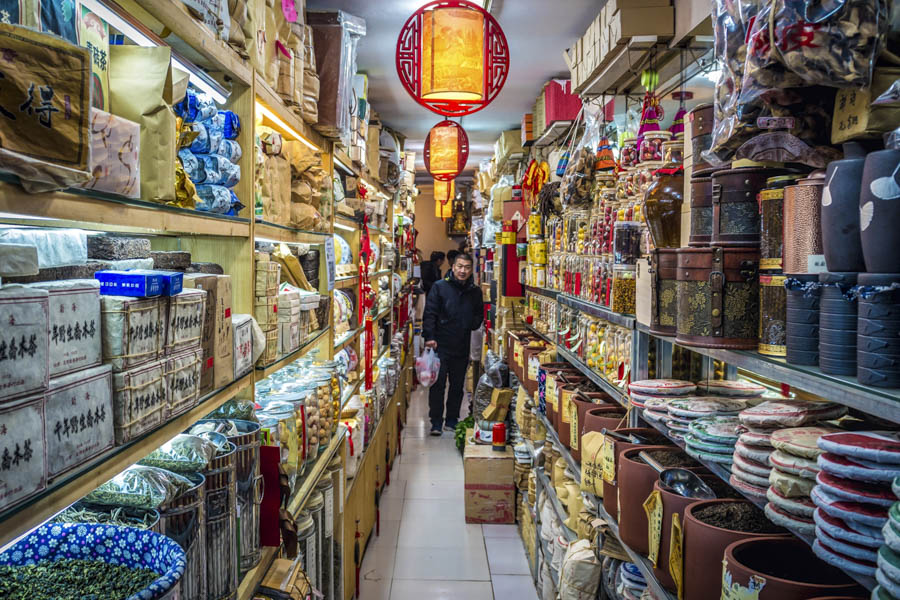
Qianmen Street shopping combines gift shops, bookshops, clothing boutiques, and jewellery counters. Modern retail brings convenience, yet it is the historic workshops that give the area its enduring charm.
This character is most clearly expressed in the concentration of time-honoured brands (老字号), businesses recognised for their long histories and high-quality traditional craftsmanship. Across the wider Qianmen–Dashilan neighbourhood, many of those trace their origins to the Qing dynasty, preserving interiors of wooden cabinets, glass display cases, and attentive, old-style service. Stepping inside often feels like entering a working heritage space.
Historic Chinese medicine establishments such as Tong Ren Tang (同仁堂, founded in 1669) and long-running herbal shops like Changchuntang (长春堂, founded in 1795) reveal drawers filled with medicinal ingredients, handwritten labels, and the warm, earthy scent of dried roots and herbs, all used in Traditional Chinese Medicine (TCM). Nearby, Zhangyiyuan (张一元茶庄前门大街分店) tea shop, founded in 1900 and renowned for its jasmine tea, invites travellers to sample traditional blends while observing an everyday ritual deeply embedded in Beijing life.
Even without making a purchase, browsing these establishments creates a sensory link to the capital’s commercial past.
Typical purchases range from loose-leaf teas and herbal products to silk accessories, small handicrafts, and traditional gifts. Mornings have a calmer feel, while evenings bring brighter lights and a livelier atmosphere, as shopping blends with dining and evening visits along the street.
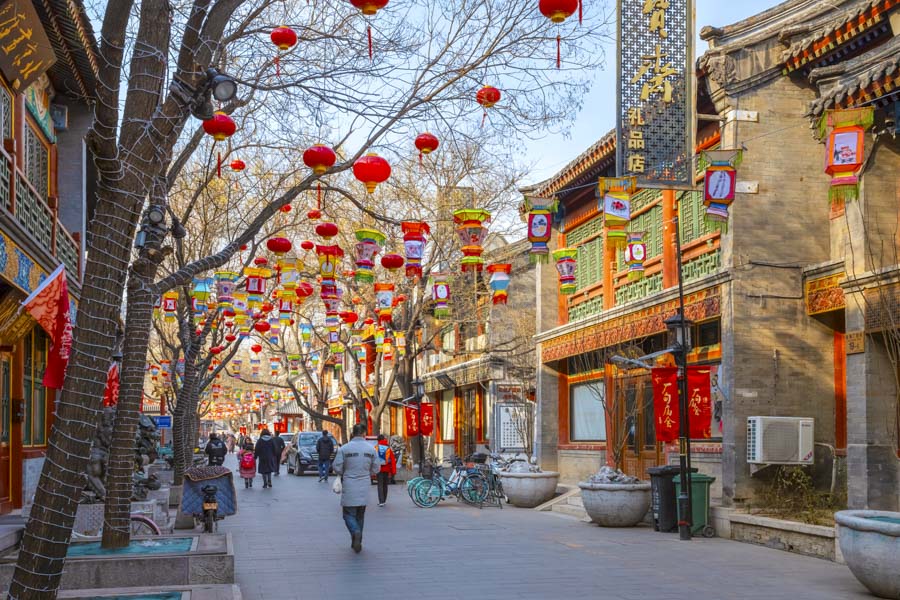
For a different strand of heritage shopping centred on calligraphy, paintings, and antiques, travellers can continue to Liulichang Cultural Street (琉璃厂), where Beijing’s scholarly and artistic traditions create a distinctly cultural adventure.
Food on Qianmen Street
Qianmen Street restaurants showcase Beijing flavours, with each venue opening a window into the city’s culinary culture, where traditional techniques meet contemporary ones. The result is a living culinary neighbourhood, one that invites both deliberate dining and impromptu tasting.
Signature Chinese Restaurants on Qianmen Street
Du Yichu Shaomai Restaurant (都一處 烧麦馆), established in 1738.
Celebrated for 烧麦 (shaomai, also spelt shumai, siu mai, or shao mai), delicate, thin-skinned steamed dumplings shaped like small coin purses with finely gathered tops formed using a traditional hand-pleating technique. The dumplings’ distinctive ruffled edges are a hallmark of the house style. The historic dining room centres on the craft of dumpling-making, where chefs can often be seen preparing them by hand and sharing stories of their origin and meaning. This renowned establishment has been on the National Intangible Cultural Heritage List of the People's Republic of China since 2008.
Address: 38 Qianmen Street, Dongcheng District
Yitiaolong Restaurant (壹条龙饭庄), established in 1785.
One of Beijing’s oldest mutton houses, serving Muslim-style cuisine and renowned for its northern-style instant-boiled mutton and robust, generous dipping sauces. Traditionally Halal, it remains a stalwart of the Qianmen dining scene.
Address: 27 Qianmen Street, Xicheng District.
Quanjude Roast Duck Restaurant (全聚德烤鸭店), established in 1864.
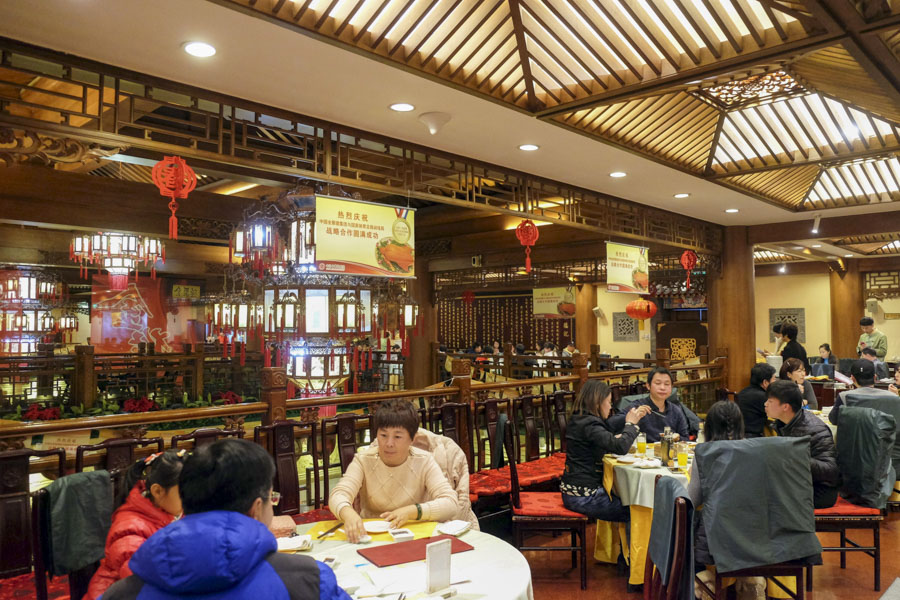
The canonical Beijing roast-duck house. Ducks are hung and roasted in a traditional oven, then carved tableside, accompanied by the full ritual of pancakes, condiments, and duck-bone soup to finish. This restaurant is very popular with travellers from across China and around the world.
Address: 30 Qianmen Street, Dongcheng District.
Dong Lai Shun (东来顺), established in 1903.
A century-old Halal hot-pot specialist, famed for instant-boiled mutton – thin, hand-sliced lamb cooked briefly in simmering broth and eaten with distinctive dipping sauces. Ideal in cold weather, the meal is convivial and designed for sharing. This establishment is officially designated as a China Time-Honoured Brand.
Address: 143 Qianmen Street, Dongcheng District.
Experiential Dining on Qianmen Street
Beijing Palace Banquet (北京宫宴)
A contemporary immersive palace-style restaurant combining multi-course cuisine with staged music, dance, and ceremonial performance. Inspired by the Yanxiang Shili (燕享食礼), a Zhou dynasty (c.1046–256 BC) system of formal banquet etiquette, the programme interprets the rituals and symbolism of court dining, presenting elements of China’s long imperial culinary tradition in a theatrical setting, with each course paired with short performance interludes. Lunch and dinner sittings last around 90–120 minutes.
Dressing up: Guests may choose to wear traditional costume, with optional hair and make-up styling. These can be arranged in advance for an additional charge.
Prices: VIP set menus at the first row usually range from 598 CNY/RMB for lunch to 698 CNY/RMB for dinner (approximately $87–$101 / £65–£76 / €74–€87) per person, with Hanfu costume and make-up add-ons around 100 CNY/RMB (approximately $14 / £11 / €12) each*.
Prices vary by session and season; advance booking is recommended through the official channel or reputable platforms.
Address: 50 Qianmen Street, Dongcheng District.
* Please note: Prices may change without prior notice, and currency conversions are approximate and provided for reference only.
Vegetarian Restaurants Close to Qianmen Street
Gong De Lin (功德林)
Gong De Lin is a celebrated vegetarian brand, founded in 1922 in Shanghai. The Beijing Qianmen branch, opened later as part of the brand’s expansion, serves traditional Buddhist vegetarian cuisine and carefully crafted “mock-meat” dishes in a historic style, making it a highlight for plant-based diners seeking both flavour and heritage.
Address: 2 Qianmen East Street, Dongcheng District.
Vegetarian Tiger (素虎素食), also known as Suhu Vegetarian Restaurant
An all-you-can-eat vegetarian buffet with modern, creative interpretations of traditional Chinese vegetarian cuisine. Conveniently located near Lao She Teahouse, it is ideal for casual dining or sampling a variety of dishes in a single visit.
Address: Building 3, Zhengyang Market, Qianmen West Street.
Places to Eat Off Qianmen Street
Just beyond the main thoroughfare, the surrounding lanes add further depth to the area’s food scene. The westward hutongs of Dashilan are home to historic restaurants and specialist food shops, where traditional recipes have been carefully preserved for generations.
Another notable destination is Xianyukou Delicacy Street, a pedestrianised enclave renowned for its concentration of time-honoured eateries and snack stalls. Highlights include Bianyifang (便宜坊), a historic roast-duck restaurant, alongside smaller specialist outlets serving Beijing favourites such as stuffed pancakes and wontons. The street is prized for bringing several long-established brands together along a compact, easily explored route.
Chinese Tea Houses on and Nearby Qianmen Street
Wuyutai Tea Shop (吴裕泰茶庄), Qianmen branch, century-old.
One of China’s most recognised tea brands, the Qianmen outlet offers retail tea sales, tastings, and cultural demonstrations. Renowned for jasmine, green, and scented teas, it allows visitors to take part in appreciating traditional tea culture and to purchase premium teas or souvenirs directly on Qianmen Street.
Address: 42 Qianmen Street, Dongcheng District.
Guang Yu Yuan Traditional Chinese Medicine Tea House (广誉远中医茶馆), the modern flagship of the historic pharmacy brand.
A cultural and Traditional Chinese Medicine (TCM) centre featuring herbal and health teas, exhibitions, and retail. Visitors can explore the intersection of traditional medicine and tea culture in China, sampling drinks that reflect centuries of herbal expertise in a contemporary, visitor-friendly setting.
Address: 96 Qianmen Street, Dongcheng District.
Traditional Snacks and On-the-Go Bites
Along Qianmen Street, emphasis is also placed on small, well-crafted bites designed to be enjoyed while exploring the street. Expect a mix of savoury, bready and sweet treats, each with its own distinct texture and flavour. Four classics commonly found in Beijing and around the Qianmen area include:
| Shaobing 烧饼 |
A traditional northern Chinese baked bread, typically round or oval and often sprinkled with sesame seeds. Some varieties are plain and eaten alongside savoury dishes, while others are filled with minced meat or sweet bean paste. Its crisp exterior and layered interior make it a familiar companion to breakfast favourites such as soy milk. |
| Nai You Zha Gao 奶油炸糕 |
A well-known traditional Beijing snack, often counted among the city’s classic speciality foods. The round cake is deep-fried until golden, creating a fragrant exterior and a soft, slightly chewy interior. |
| Tanghulu 糖葫芦 |
Traditionally prepared from hawthorn berries threaded onto bamboo sticks and coated in molten sugar that sets into a glossy, glass-like shell. The pleasure comes from the contrast between crisp sweetness and the fruit’s refreshing tartness. |
| Yuanxiao 元宵/汤圆 |
These delicacies embody the essence of Qianmen street food. The dumplings, crafted from glutinous rice flour, are filled with either sesame or peanut powder blended with sugar, or sweet red bean paste, and are served in a light syrupy soup. |
These snacks are typically prepared and sold from small stalls and long-established shops scattered throughout the neighbourhood. Simply follow your eyes and nose, and you are sure to discover something delightful.
Local Street Curiosity
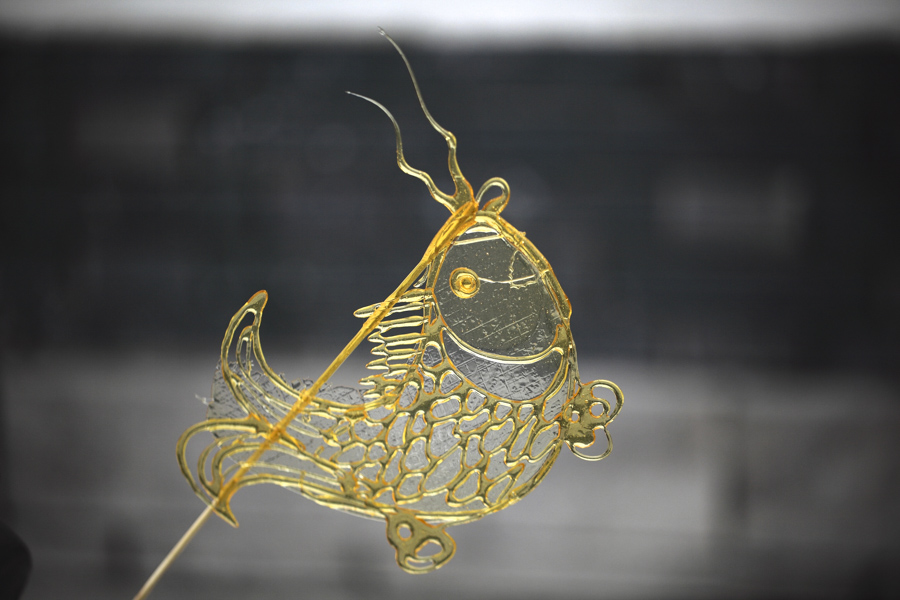
A particularly charming sight on Beijing’s pedestrian streets is the live creation of sugar people (糖人, Táng rén) and sugar paintings (糖画, Táng huà). Skilled artisans work molten sugar to draw intricate figures and scenes on a cool surface or to shape small animals and zodiac forms by hand. This folk craft, with roots often traced to the Ming dynasty, endures today as both culinary art and street performance. The finished pieces, amber-hued and finely detailed, are as photogenic as they are edible.
How to Get to Qianmen Street?
Metro
The easiest way to reach Qianmen Street is via Qianmen Station on Beijing Subway Line 2 or Line 8, which drops you right into the heart of the district. From there, the street is immediately accessible, making it simple to explore its bustling lanes and traditional shopfronts.
Buses
For those travelling by bus, multiple routes terminate at Qianmen, including 8, 17, 48, 66, 67, 69, 71, 82, 93, 126, and 623, as well as the BRT1 (快速公交1), Tourist Route 2 (观光2), and Special Routes 4 and 7 (特4, 特7).
Taxis
It may be handy to have the address written down or saved as a screenshot when asking for directions or sharing it with a taxi driver:
| Qianmen Street in Chinese | 前门大街 | Approximate pronunciation: chee-en-men dah-jyeh |
Travel Tips: Notes for the Curious Traveller
Qianmen Street reveals even more beyond shopping and sightseeing. Look closely, and you’ll discover subtle details that add to the enduring sparkle of the city’s history and traditional life.
Beneath Your Steps
One striking feature is the restored “imperial path” (白石御道) running down the centre of Qianmen: a white-stone strip, laid to its historic width, flanked by blue-grey flagstones. Re-paved during the 2000s restoration with locally quarried stone from Fangshan’s Dàshíwō (大石窝) area – a traditional source for Beijing’s imperial constructions – the path covers roughly 2,000–2,400 square metres (approximately 21,530–25,830 square feet), with about 18,000 square metres (193,750 square feet) of bluestone on either side.
Hidden Courtyards and Hutong Character
Between the main shops, subtle alley entrances hint at traditional hutongs, the narrow lanes formed by siheyuan (四合院), the classic courtyard homes of historic Beijing, which give these neighbourhoods their distinctive character. From the street, visitors can glimpse architectural details, patterns of roof tiles, and courtyard walls, revealing a sense of the city’s historic urban fabric.
Qianmen Street is a living showcase of Beijing’s history and traditions. Time-honoured shops and courtyard houses, vibrant markets, and atmospheric eateries stand proudly. Whether lingering over a traditional snack, admiring architectural details, taking in the sounds, or exploring curiosities found nowhere else, visitors leave with both souvenirs and memories of Beijing’s enduring spirit.