

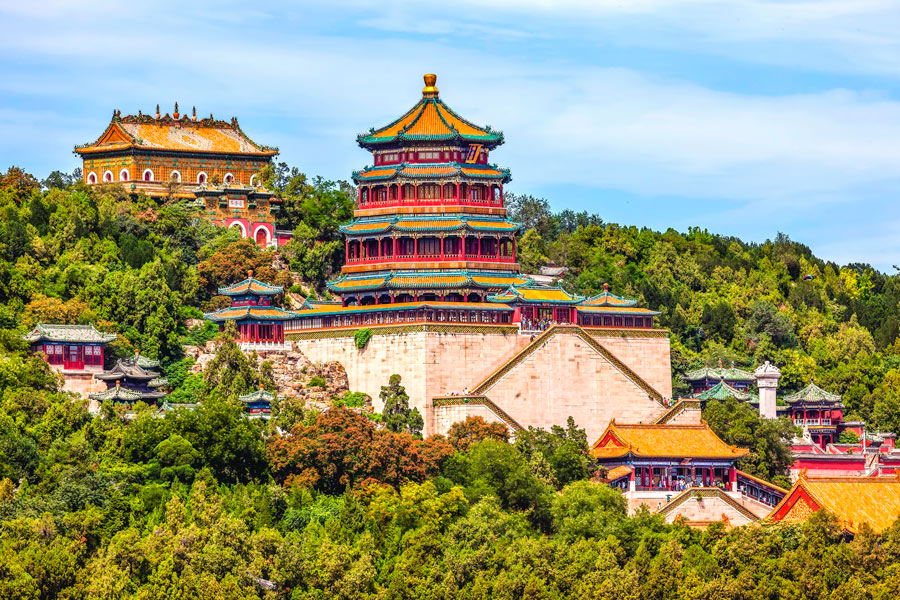
The Summer Palace (颐和园, Yíhé Yuán) is Beijing’s imperial garden and royal residence complex. A masterpiece of elaborate Chinese landscape design, it blends lakes, hills, and opulent architecture into a spectacular setting.
The present Chinese name was adopted following the reconstruction of the 1880s and can be translated as the “Garden of Nurturing Harmony”, drawing on Confucian ideas of care, balance, and moral order. The English name “Summer Palace” provides a descriptive label, reflecting its role as a serene imperial retreat during the warmer months.
The Summer Palace covers 297 hectares (approximately 1.15 square miles) within the officially defined UNESCO World Heritage property boundary – roughly equivalent to 416 international-standard football pitches placed side by side. Slight variations in figures found in other sources usually reflect rounding differences or the use of broader administrative delineations.
With about three-quarters of its area occupied by Kunming Lake (昆明湖, Kūnmíng Hú), largely an artificial reservoir shaped from pre-existing waters, the complex is best understood as a predominantly lakeside landscape.
Summer Palace Tours
Many travellers choose to visit the Summer Palace as part of a broader itinerary that brings together several of Beijing’s major highlights.
The 4-Day Best of Beijing Tour is a compact introduction to the capital’s heritage and includes a visit to the Summer Palace alongside Tiananmen Square, the Forbidden City, and the Temple of Heaven. It also offers the opportunity to explore the Mutianyu Great Wall section.
The 7-Day Beijing and Shanghai Highlights Tour follows a more leisurely pace, allowing time to explore the Summer Palace in greater detail during the Beijing portion, as well as the Badaling Great Wall section, before travelling on to Shanghai to experience the city’s distinctive modern features.
These guided programmes include entrance tickets and an expert local guide, letting you focus on the meticulous gardens, refreshing lake views, architectural details, cultural symbolism, and stories of imperial grandeur. Many programmes also include optional activities such as a Kunming Lake boat ride – a special moment of any Summer Palace tour that frames the palace landscape from the water.
Best Time to Visit the Summer Palace
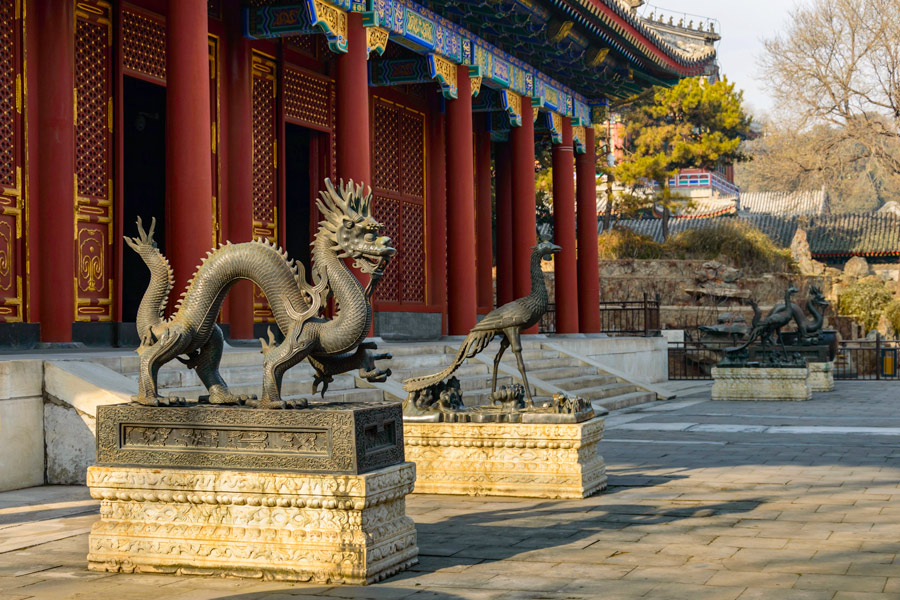
Knowing the best time to visit the Summer Palace will help make your trip more comfortable and rewarding. Each season brings its own charm: spring with gentle blossoms, autumn with crisp, invigorating air, and winter with playful ice activities.
Spring
Spring is one of the most rewarding times to visit the Summer Palace, when magnolias, peaches, lilacs, plums, and crabapple flowers bring colour and fragrance to Longevity Hill and the lakeside paths. Flowering usually unfolds in gentle succession from later March through May, accompanied by fresh greenery around the lake and the melodies of songbirds. The season creates a quietly elegant atmosphere, well suited to unhurried walks, thoughtful exploration, lingering pauses, and photography.
Summer
Hot, humid weather and lush greenery characterise this season, with lotus and other aquatic plants flourishing on Kunming Lake. Many visitors find early-morning or late-afternoon visits most comfortable when both heat and crowds are lighter. A boat ride on Kunming Lake is a popular seasonal activity, cooling breezes and scenic views across the water included. July and August bring peak temperatures and thunderstorms, so planning midday breaks is advisable for a more comfortable visit.
Autumn
Autumn is a favourite season for many visitors to the Summer Palace. The gardens are transformed by golden autumnal hues, which contrast strikingly with stone bridges and the waters of Kunming Lake. With crisp, cool air and generally clear skies in late October and early November, it is the season many find especially comfortable for walking.
Beijing’s autumn foliage typically peaks from late October to early or mid-November, although colour intensity and weather conditions can vary from year to year depending on temperature and rainfall.
Winter
Winter brings a special kind of charm to the Summer Palace, with the frozen expanse of Kunming Lake providing opportunities for outdoor activities such as ice skating and ice-biking. During the coldest months – usually late December to early February – parts of the lake are transformed into a supervised ice rink, open daily from around 8:30 in the morning to 16:30–17:00 (4:30–5:00 p.m.), with ticket sales closing about an hour before the rink itself. The rink operates only when the ice reaches the required safety thickness of at least 15 centimetres (approximately 6 inches), with staff checking conditions at multiple points each day and posting up-to-date notices to help visitors enjoy the ice safely.
Opening Hours
Planning ahead? Check the Summer Palace opening hours, as individual halls and services follow specific schedules, which differ from the open grounds.
Operating Hours
The palace’s open landscape – including Kunming Lake and Longevity Hill – is accessible year-round, with closures only in exceptional circumstances.
| Kunming Lake, Longevity Hill | ||||
| Dates | Opens at | Last entry at | Closes at | |
| Peak season | April 1 – October 31 | 6:00 (a.m.) | 19:00 (7 p.m.) | 20:00 (8 p.m.) |
| Off-season | November 1 – March 31 | 6:30 (a.m.) | 18:00 (6 p.m.) | 19:00 (7 p.m.) |
| “Garden-within-the-Garden” areas: Tower of Buddhist Incense, Garden of Virtue and Harmony, The Summer Palace Museum, Suzhou Street. * | ||||
| Dates | Opens at | Last entry at | Closes at | |
| Peak season | April 1 – October 31 | 6:00 (a.m.) | 17:30 (5:30 p.m.) | 18:00 (6 p.m.) |
| Off-season | November 1 – March 31 | 8:30 (a.m.) | 16:30 (4:30 p.m.) | 17:00 (5 p.m.) |
| Notable components: Pavilion of Nurturing Clouds, Chamber of Clearness, Hall of Increasing Longevity, The Farming and Weaving Scenic Area, Naval Training School, and South Lake Island. * | ||||
| Dates | Opens at | Closes at | ||
| Peak season | April 1 – October 31 | 8:00 (a.m.) | 18:00 (6 p.m.) | |
| Off-season | November 1 – March 31 | 8:30 (a.m.) | 17:00 (5 p.m.) | |
* These attractions are open all year round and closed on Mondays, except for national public holidays.
Please note: exceptional circumstances, such as extreme weather or major public events, may lead to temporary closures of the entire site for safety reasons.
Summer Palace, Beijing – Tickets
If you are wondering how to buy tickets to Summer Palace attractions, you can purchase them in person at the ticket office or reserve online in advance through the park’s official WeChat mini-programme.
Tickets can be reserved 1–7 days in advance, and it is especially advisable during national holidays, summer weekends, and other peak periods, as quotas and combined tickets for inner sites can sometimes sell out.
| Ticket Type / Attraction | Price November 1 - March 31 |
Price April 1 - October 31 |
| Standard Admission Ticket | 20 CNY/RMB ($2.75 / £2.15 / €2.55) |
30 CNY/RMB ($4.15 / £3.25 / €3.80) |
| Combined Ticket (includes major paid sites) | 50 CNY/RMB ($6.90 / £5.40 / €6.35) |
60 CNY/RMB ($8.30 / £6.50 / €7.60) |
| Garden of Virtue and Harmony | 5 CNY/RMB ($0.70 / £0.55 / €0.63) |
|
| Tower of Buddhist Incense | 10 CNY/RMB ($1.38 / £1.08 / €1.27) |
|
| Suzhou Street | 10 CNY/RMB ($1.38 / £1.08 / €1.27) |
|
| Summer Palace Museum | 20 CNY/RMB ($2.75 / £2.15 / €2.55) |
|
Please note: Currency conversions are approximate and provided for reference only.
Summer Palace Discount and Exemption Policies
- Children aged 6 and under (or under 1.2 m / 4 feet in height) enter free of charge.
- Discounted tickets are available for minors aged 7–18.
- Seniors aged 60 and above enter free of charge with valid identification or passport; this also applies to foreign visitors presenting a passport or foreign resident ID.
- Visitors with special needs, as well as active or retired military personnel and first responders, may enter free of charge with valid identification.
- Certain public holidays and special dates (such as Children’s Day and International Women’s Day) offer additional discounts.
- All ticket types (standard, combined, and garden tickets) are eligible for a 50% discount.
Practical Additional Information
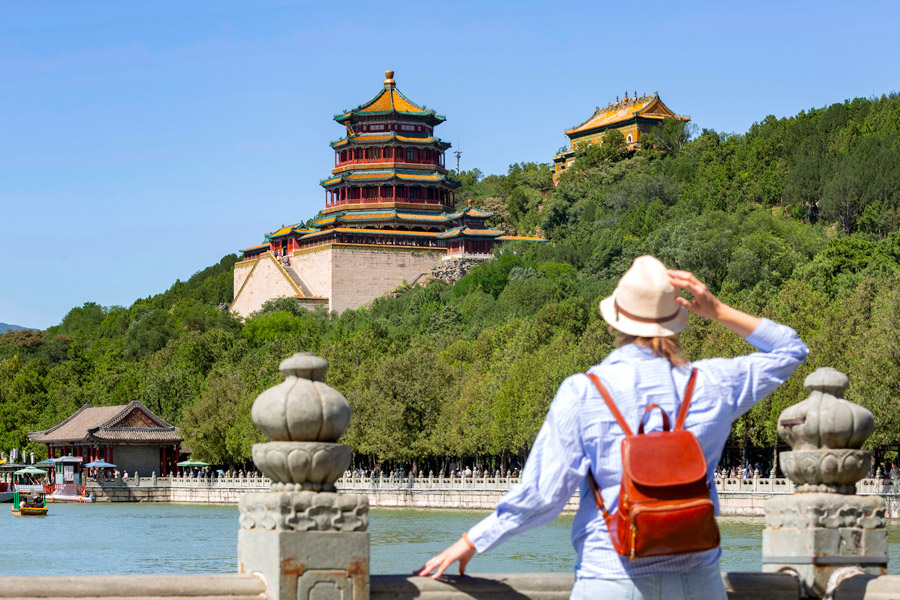
Summer Palace Average Time of Visit: Some visitors spend around 4–5 hours exploring the highlights, while a more relaxed, in-depth visit can easily take half a day or longer.
Best Way to Visit Summer Palace: If possible, begin with the key ascent to Longevity Hill and the Tower of Buddhist Incense for the grand panoramic view, then stroll along the Long Corridor, and finish with a lakeside walk towards Suzhou Street. Routes include various options based on the entry gate accessed and individual interests.
Gate Options: Among the park’s six gates, the East Palace Gate (东宫门, Dōng Gōng Mén) and North Palace Gate (北宫门, Běi Gōng Mén) are the most popular entry points. The best choice also depends on your route and transport access.
Location: About 20 kilometres (approximately 12.4 miles) by car from central Beijing and the Forbidden City.
Facilities: Toilets and rest areas are available throughout the park.
Food and Drinks: There are a few options inside the Summer Palace:
1) Listening to Orioles Pavilion (听鹂馆, Tīnglǐ Guǎn) – historically an opera house, now a restaurant serving imperial court–style cuisine.
2) Zhichun Pavilion Tea House, near the historic Zhichun Pavilion (知春亭) – a lakeside shop and teahouse loved for drinks and light snacks, popular as a peaceful place to rest.
3) On-site kiosks – small kiosks near major scenic nodes sell bottled water and simple snacks. Many experienced travellers still recommend bringing your preferred drinks and light refreshments, especially if you plan a longer walk through the grounds.
Visitor guidelines: Guests are encouraged to respect the cultural setting. Standard etiquette applies, as at all UNESCO World Heritage sites.
History of the Summer Palace
The Summer Palace has ancient origins, dating back to the Jin dynasty (1115-1234), when the area served as a system of water reservoirs supplying Beijing. Its later design draws on principles of feng shui as well as traditional Chinese myth describing three sacred mountains in the East Sea: Penglai, Fangzhang (方丈), and Yingzhou (瀛洲). The three islands set within Kunming Lake – Nanhu Island (南湖岛), Tuancheng Island (团城岛), and Zaojiantang Island (藻鉴堂岛) – symbolically represent these mountains, while the lake itself is modelled on West Lake in Hangzhou.
Many architectural elements throughout the palace complex also echo various celebrated attractions from across China.
Over the following centuries, numerous halls, gardens, and residences were constructed here. The story of the Summer Palace, however, is best understood within the broader development of Beijing as an imperial capital. When the Yongle Emperor initiated the rebuilding of the city in the early fifteenth century, including the construction of the Forbidden City beginning in 1406, the north-western outskirts gradually evolved into a landscape of engineered reservoirs, artificial hills, canals, enclosed gardens, and seasonal imperial retreats.
Two Summer Palaces
Two distinct but closely situated complexes came to define this area. The Old Summer Palace (圆明园, Yuánmíngyuán) was first built in the early eighteenth century, with initial construction commonly dated to 1707. It expanded under the Yongzheng and Qianlong emperors into a vast ensemble of gardens and pavilions.
The site famously known today as the Summer Palace developed from a neighbouring system of lakes and hills. Between 1749 and 1764, Emperor Qianlong enlarged and unified existing waterworks by dredging and extending Kunming Lake, using the excavated soil to form Longevity Hill (萬壽山, Wànshòu Shān), and creating the Gardens of Clear Ripples (清漪園, Qīngyīyuán).
Both the Old Summer Palace and the neighbouring gardens were looted during the Second Opium War. In the years that followed, late Qing investment focused on restoring and expanding the Gardens of Clear Ripples. Under Empress Dowager Cixi (慈禧太后) in the late 1880s, the site was officially renamed Yíhé Yuán – the Summer Palace – forming the imperial summer retreat that survives today.
During the Boxer Rebellion (1899–1901), the palace was looted for a second time but was soon restored and opened to the public in 1914. In 1998, UNESCO inscribed the Summer Palace on the World Heritage List, recognising its outstanding historical, cultural, and architectural significance.
Major Landmarks at the Summer Palace not to Miss
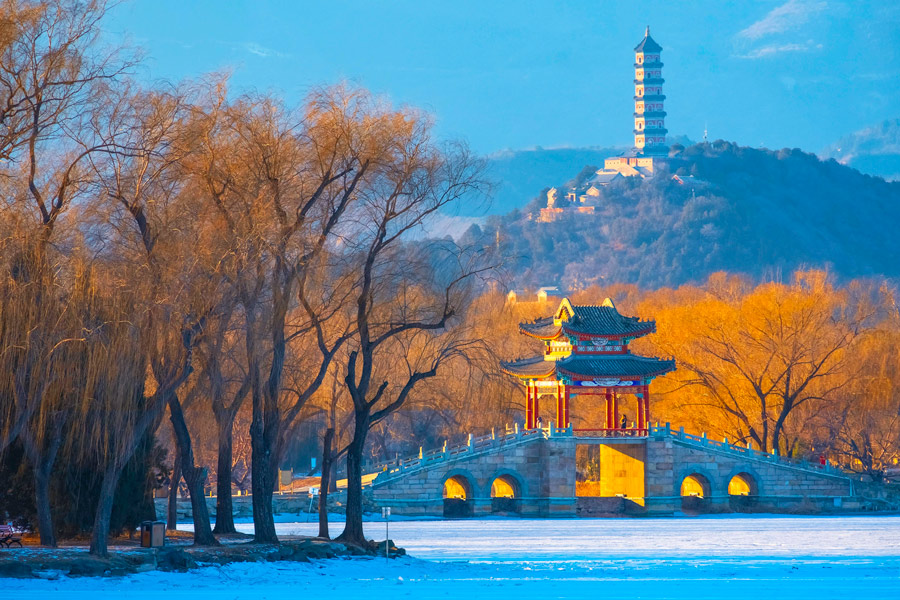
With lakes stretching beneath bridges, hills inlaid with pavilions, peaceful corners tucked into gardens, joyful market streets full of life, and historic halls that have stood for centuries, the Summer Palace has a way of surprising you at every turn.
1. Kunming Lake (昆明湖, Kūnmíng Hú) and its Features
Kunming Lake is the central water feature of the Summer Palace and a defining element of its iconic setting. Its broad expanse, shaped by islands and elegant bridges, creates the balanced relationship between water and architecture that characterises the landscape. Inspired in part by southern Chinese garden traditions, the lake’s reflective surface plays a vital role in the palace’s overall aesthetic design.
Below are key lake-related features to look out for as you explore the Summer Palace:
| Nanhu Island (南湖岛, Nán Hú Dǎo) |
The largest of Kunming Lake’s three islands, situated in the southeastern part of the lake and linked to the eastern shore by the Seventeen-Arch Bridge. Covering about one hectare, it boasts a tranquil setting for short walks among pavilions like the Hanxu Hall (涵虚堂, Hán xūtáng); temples, such as the Dragon King Temple (龙王庙, Lóngwáng miào), and landscaped rockeries, along with broad views across the water towards Longevity Hill and other features of the Summer Palace. |
| Zaojiantang Island (藻鉴堂岛, Zǎojiàn Táng Dǎo) |
It sits between Nanhu and Zhijingge islands in the southern part of Kunming Lake. Known for its traditional pavilions and waterside views, it is a popular spot for photography, with reflections of nearby bridges and Longevity Hill adding to its charisma. |
| Zhijingge Island (知静阁岛, Zhījìnggé Dǎo) |
The island takes its name from the former Zhijing Pavilion, also known as the Tortoise Temple, which was destroyed in 1860, and forms part of Kunming Lake’s classic “three-islands” design. This quieter corner of the lake is ideal for peaceful walks and reflections, with distant views of Longevity Hill and the surrounding gardens. |
| Kunming Lake Embankment (昆明湖堤, Kūnmíng Hú Dī) |
A landscaped embankment or causeway (the West and East dykes) that divides parts of Kunming Lake supports bridges and promenades, helps regulate the lake’s water and structure, and provides elevated, panoramic views across the lake toward Longevity Hill. |
| Seventeen-Arch Bridge (十七孔桥, Shíqī Kǒng Qiáo) |
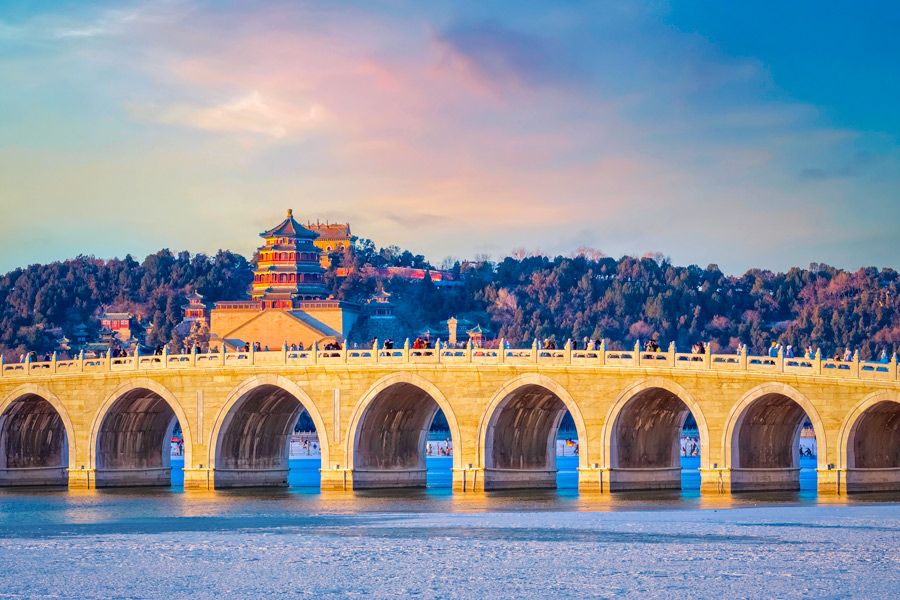
Connecting the eastern shore of Kunming Lake to Nanhu Island, the Seventeen-Arch Bridge is one of the most photographed features of the Summer Palace. It stretches about 150 metres (about 492 feet) and is the longest bridge in any Chinese imperial garden. The bridge has seventeen symmetrical arches and is lined with carved stone lions. |
| Houhu (Back Lake) and Wanzi River (后湖与万字河, Hòu Hú yǔ Wànzì Hé) |
In the northern part of Kunming Lake, Back Lake and the Wanzi River form a quieter, more secluded area. Narrow waterways and smaller bridges establish a peaceful contrast to the broader vistas of the main lake. |
| Marble (or Stone) Boat (石舫, Shí Fǎng) |
This lakeside pavilion is a massive stone hull with a wooden superstructure; the upper parts were repainted to imitate marble during the 1893 restoration. Following late-Qing alterations, it adopts a paddle-steamer appearance. Conceived as an emblem of imperial stability, the pavilion remains one of the Summer Palace’s most distinctive sights. |
| Bronze Ox (or Bull) (铜牛, Tóng Niú) |
The Bronze Ox stands at the foot of Longevity Hill near the Kunming Lake waterworks. Cast during the Qianlong Emperor’s reign in the Qing Dynasty, this mythical creature symbolises protection against flooding and reflects traditional Chinese agricultural culture. The emperor personally inscribed the “Inscriptions on the Golden Ox” in zhuanshu (seal script) on the ox’s back and sides, highlighting its protective purpose. Beyond its symbolic role, the Bronze Ox also functions as a practical water marker. When water reaches the ox’s base, it signals that Kunming Lake is nearing capacity, guiding the management of sluice gates to help prevent flooding in the surrounding areas. |
| West Causeway and East Causeway (also Embankment) (西堤, Xī Dī and 东堤, Dōng Dī) |
The West Causeway and East Causeway are scenic, landscaped embankments that cross parts of Kunming Lake. Lined with willows and punctuated by small stone bridges, they divide sections of the lake, support promenades, and present wide views toward Longevity Hill and the palace pavilions. |
| Suzhou Market Street (苏州街, Sūzhōujiē) |
Suzhou Market Street is a recreated northern Chinese waterside market with historic-style shops lining a narrow canal. Built to evoke the bustling commerce of southern China, it forms a lively contrast to the tranquil expanses of Kunming Lake. Visitors can browse miniature shops, sample snacks, enjoy waterside pavilions, and admire the charming architecture and bridges. |
2. Longevity Hill (万寿山, Wànshòu Shān)
Longevity Hill rises to roughly 60 metres (approximately 197 feet) beside Kunming Lake and forms the central backbone of the Summer Palace. The front (southern) slopes are lined with splendid halls, pavilions, and ceremonial buildings arranged along a north–south axis, while the rear (northern) slopes are quieter, featuring rockeries, trees, and more natural scenery for peaceful walks.
3. Tower of Buddhist Incense (佛香阁, Fóxiānggé)
The Tower of Buddhist Incense is one of the Summer Palace’s most famous landmarks and a focal point on the front slope of Longevity Hill.
The name appears in English in several forms – “Tower of Buddhist Incense” or “Tower of the Fragrance of the Buddha”. Both refer to the same octagonal pavilion and reflect slightly different renderings of the Chinese 佛香阁.
Inside this jewel stands a large gilded bronze statue of Guanyin, often referred to as the Thousand-Hand Guanyin. Usually dated to the Ming period, it rises to roughly five metres (about 16.4 feet) in height and is depicted with multiple heads and many arms, symbolising Guanyin’s boundless compassion and ability to assist countless beings simultaneously.
4. Four Great Regions Tibetan Complex (四大部洲, Sìdàbùzhōu)
The Four Great Regions (Sida Buzhou) form a striking Han–Tibetan-style Buddhist ensemble on the rear slope of Longevity Hill, conceived under Emperor Qianlong to evoke Buddhist cosmology; four principal structures represent the great continents of the Buddhist world. Largely destroyed in 1860, the complex was rebuilt in the late 19th century and has since been restored.
The Temple (Hall) of the Sea of Wisdom (智慧海, Zhìhuìhǎi) crowns the hill as a distinctive, beamless Buddhist hall clad in glazed tiles and decorated with hundreds of small Buddha figures. It forms part of the hill’s broader sacred landscape, which includes Tibetan-style structures, stupas, and pavilions that together create a miniature Buddhist universe on Longevity Hill.
5. The Long Corridor / The Long Gallery (长廊, Chángláng)
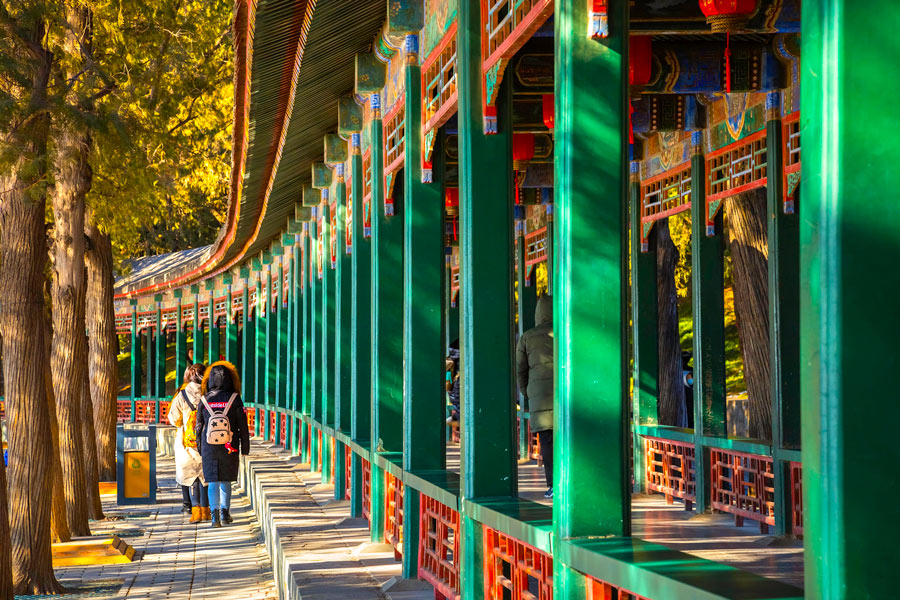
The Long Corridor at the Summer Palace is a covered walkway stretching about 728 metres (approximately 0.5 miles) along the southern foot of Longevity Hill. The corridor is renowned for its rich painted decoration, with more than 14,000 colourful paintings on its beams and ceilings. These depict landscapes, flowers, birds, historical figures, and scenes from Chinese literature and folk tales, framing views of the surrounding scenery and enhancing the garden experience.
6. The Halls at the Summer Palace
| Hall of Benevolence and Longevity (仁寿殿, Rénshòudiàn) |
The Hall of Benevolence and Longevity is the principal building in the administrative area of the Summer Palace. Originally built in 1750 and rebuilt in 1886, it served as the setting where the emperor handled state affairs, received officials and foreign envoys, and presided over important ceremonies. |
| Hall of Jade Ripples (玉澜堂, Yùlántáng) |
Located just west of the Hall of Benevolence and Longevity, the Hall of Jade Ripples formed part of the imperial residential complex. Facing Kunming Lake, it later became closely associated with the living quarters of the Guangxu Emperor and his entourage during the late Qing period. |
| Hall of Fragrant Rue (宜芸馆 / 依云馆, Yíyúnguǎn) |
The Hall of Fragrant Rue was originally built as a library and later incorporated into the emperor’s and empress’s residential quarters. Its name alludes to fragrant herbs and the refined scholarly atmosphere traditionally associated with the space. |
| Hall of Joyful Longevity (乐寿堂, Lèshòutáng) |
Part of the imperial living quarters the Hall of Joyful Longevity is closely linked with Empress Dowager Cixi’s residence during her stays at the Summer Palace. |
| Hall of Dispelling Clouds (排云殿, Páiyúndiàn) |
Despite occasional confusion with similarly named gates, the Hall of Dispelling Clouds is a ceremonial hall located on the central north–south axis of Longevity Hill. Reconstructed in the late Qing period, around 1892, it served as an important venue for court rituals, formal receptions, and imperial birthday celebrations. |
| Hall of Utmost Blessing (景福阁, Jǐngfúgé) |
Sometimes translated as the Pavilion of Radiant Happiness, the Hall of Utmost Blessing is located near the upper reaches of Longevity Hill along the central axis. It had ceremonial functions and forms part of the sequence of halls and pavilions leading toward the Tower of Buddhist Incense and other high-slope structures. |
7. Baoyun Pavilion (宝云阁, Bǎoyúngé)
Baoyun Pavilion, also called the Bronze Pavilion or Pavilion of Precious Clouds, is a rare bronze structure on the western side of Longevity Hill, just west of the Tower of Buddhist Incense. Cast entirely from bronze in 1755, it stands 7.5 metres (approximately 25 feet) tall and weighs around 207 tonnes (456,357 pounds), making it one of the largest surviving Qing-era bronze structures.
8. The Wonderland Scenic Area (画中游, Huàzhōngyóu)
The Wonderland scenic area, literally “Strolling through a Picture”, lies on the south-western slope of Longevity Hill. It is a compact, two-level ensemble of pavilions, including the Clear Radiance Pavilion as the principal structure, together with gates and winding corridors designed to evoke the experience of walking through a painted landscape.
9. Gardens
| Garden of Virtue and Harmony (德和园, Déhéyuán) |
Built on the ruins of the Hall of Pleasant Spring in the 1890s, the Garden of Virtue and Harmony is a compact palace complex north of the Hall of Benevolence and Longevity. It served as the imperial opera and entertainment quarter, its highlight being the Grand Theatre (大戏楼, Dàxìlóu), a three-storey wooden stage and one of the largest and best-preserved traditional theatre stages in China, surrounded by adjoining halls that once hosted Peking opera performances for the imperial court. |
| Garden of Harmonious Interests (谐趣园 / 惠山园, Xiéqùyuán / Huìshān Yuán) | Also called Xiequ Garden or Huishan Garden, this “garden-within-a-garden” sits at the eastern base of Longevity Hill. Modelled on southern Chinese private gardens, it is celebrated for its intimate courtyards, carefully arranged rockeries, meandering paths, small water features, strategically placed pavilions, and framed views that bring the charm of a southern waterside garden into the northern imperial landscape. |
Heritage and Conservation of the Summer Palace
UNESCO inscribed the Summer Palace on the World Heritage List in 1998, establishing a management framework to protect the ensemble.
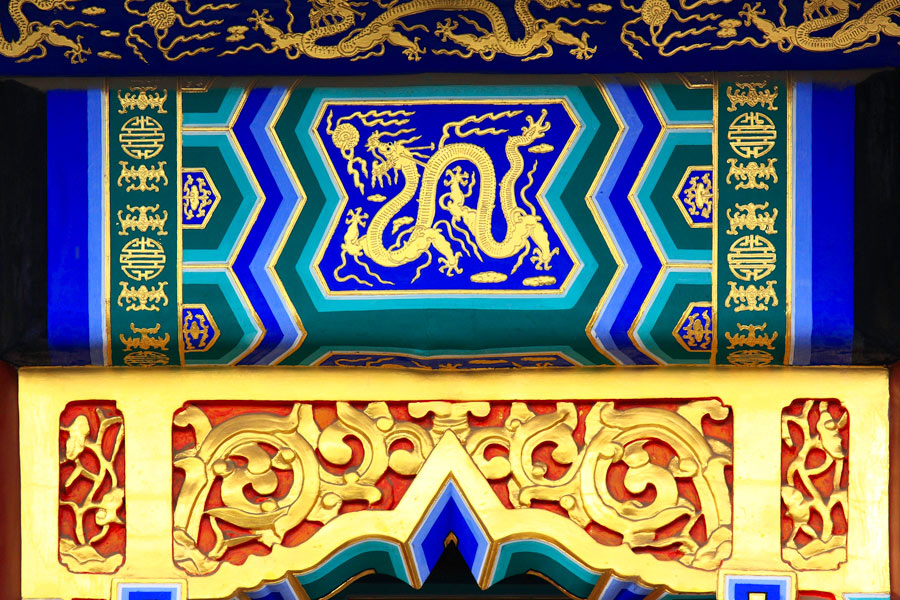
More than a collection of historic buildings, the Summer Palace is widely regarded as a consummate expression of classical Chinese garden art: its natural framework of Longevity Hill and Kunming Lake is combined with pavilions, bridges, painted corridors, inscribed poems, and carved calligraphy to form a harmonious whole. Features such as the Long Corridor – richly decorated with thousands of paintings – and the carefully balanced relationship between hill and lake illustrate how artistic expression and spatial design were central to the site’s conception.
Conservation work at the Summer Palace draws on archival evidence and traditional techniques, combining building restoration, landscape management, ecological monitoring, and community outreach.
How to Get to the Summer Palace?
If you’re wondering how to get to the Summer Palace, Beijing, the most convenient option is the metro.
Take Line 4 to Beigongmen Zhan Station (北宫门站) for the North Palace Gate (北宫门, Běi Gōng Mén).
Take Line 16 to Xiyuan Station (西苑站) for the New Palace Gate (新建宫门, Xīnjiàn Gōng Mén) and East Palace Gate (东宫门, Dōng Gōng Mén).
Both stations are within walking distance of the main entrances, making the palace easily accessible for first-time visitors and locals alike.
Several bus routes also serve the Summer Palace:
| Destination | Bus Number |
| West Palace Gate | 469, 539 |
| East Palace Gate | 332, 346, 584 |
| North Palace Gate | 303, 330, 331, 332, 346, 384, 394, 563, 584, 601, Night Bus 8 |
| New Palace Gate | 74, 374, 437 |
| South Ruyi Gate | 74, 374, 437 |
Additional buses may be available depending on your starting point.
For those driving, parking is available near the East and North Palace Gates, but spaces can be limited on weekends and during peak periods, so public transport is often the best option.
Tips for an Optimal Visitor Experience
The suggestions below offer flexible ways to explore the Summer Palace’s highlights, making the most of your time, whether you have a few hours or a full day.
How to Visit Summer Palace, Beijing
Quick Highlights (2–3 hours)
Enter through North Palace Gate and explore Suzhou Market Street (note: this requires a combined ticket). From there, walk south towards the lakeside and focus on the eastern cluster: stroll along Kunming Lake to Nanhu (South Lake) Island, cross the Seventeen-Arch Bridge, and enjoy classic lakeside views. Finish with a relaxed walk along the nearby shoreline paths.
Ideal if you want to see the palace’s most photogenic sights without rushing or crossing the entire lake.
Waterside and Corridor (half day, 3–4 hours)
Begin near the East Palace Gate and walk westwards along the famous Long Corridor, pausing to admire its painted beams and ever-changing lakeside scenery. From one of the nearby piers, take a boat ride across Kunming Lake (seasonal, extra fee). Disembark at Nanhu Island, explore the island and the Seventeen-Arch Bridge, then return on foot or by boat, finishing via Suzhou Market Street if time permits.
This route highlights tranquil waterside views and the artistic detail of the corridor.
Cultural in Depth (full day, 5–6 hours)
If time permits, set aside a full day for a slower, more immersive visit, exploring the main halls and palace quarters, wandering through the Wonderland scenic area and the quieter paths around the Back Lake, visiting the Four Great Regions, and leaving time for a boat ride on Kunming Lake.
This itinerary allows for the fullest appreciation of the Summer Palace’s cultural landscape.
Boat-Ride Tips
| Where to board | Boat piers and ferry / pleasure-boat pontoons are clustered near the Marble Boat and at several docks along the eastern and western shores. In recent seasons, small shuttle boats have operated between the Marble Boat or eastern piers and island and northwest shore stops. |
| Types of boats and typical fares (may vary) | Ferry / shuttle boats: short, fixed-route crossings between shore areas; fares typically 20–40 CNY (» $2.80–$5.50 / £2.20–£4.30 / €2.60–€5.10) per crossing. Hire / pleasure boats: rowing, pedal or small motorised options; commonly around 60 CNY/RMB (» $8.30 / £6.50 / €7.60) per boat per hour, with higher prices for private or motorised options. Always confirm the fare at the pier. Deposit: small hire boats usually require a refundable deposit, often around 400 CNY/RMB (» $55.20 / £43.20 / €50.80). |
| Operating seasons and hours | Boat services are seasonal, usually running from spring to autumn, and operate daytime only. Typical hours are around 08:30 in the morning to 16:30/17:30 (4:30/5:30 p.m.), with ticket sales closing 30 to 60 minutes earlier. |
| Booking and queues | Tickets are sold at boat piers or nearby kiosks. Expect queues during peak season and holidays; early mornings or late afternoons are generally quieter. For private or group launches, booking in advance through a tour operator is advisable. |
Summer Palace by Cruise
From March to October, step off the beaten track and experience the Summer Palace from the water on Beijing’s Royal Imperial River Cruise. The seasonal service runs from several city-side piers to the palace, with fares depending on your embarkation point – in recent seasons, full fares ranged from 100–120 CNY/RMB (≈ $13.8–$16.5 / £10.8–£12.5 / €12.7–€14.5), with reduced child fares.
Glide past the palace’s ornate pavilions, halls, and islands, taking time to admire the exquisite landscape from the river in comfort, whatever the weather.
May your journey through Beijing spark joy and awe, as unforgettable sights like the Summer Palace unfold before you.