

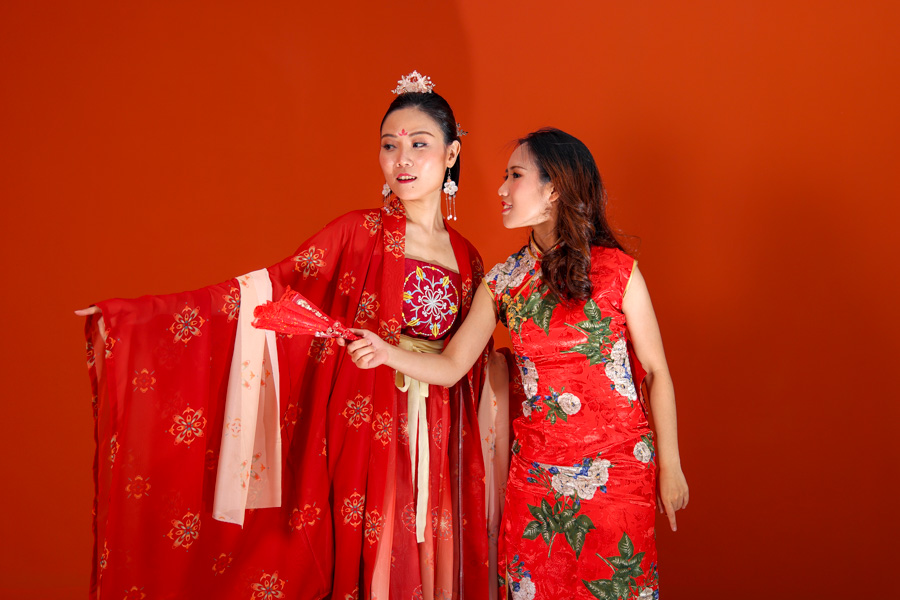
Clothing in China functions as a form of cultural memory, where the aesthetics of court ritual are closely bound to ancient ideas of cosmic harmony. Traditional Chinese costume communicates through colour, pattern, and symbol: red is associated with prosperity, the dragon signifies power, cloud motifs evoke celestial protection, and restrained silhouettes reflect an aspiration towards inner balance. Contemporary fashion has absorbed this inheritance and reinterpreted it within the tempo of the 21st century. Today, designers revisit national dress by blending historical references with current trends and placing renewed emphasis on personal expression.
In this guide, we explore why clothing holds a distinctive place in Chinese culture, how it shapes social interaction, and where travellers can temporarily adopt the refined attire of different imperial dynasties. Entering this world reveals Chinese fashion as a vivid and layered tradition – richly coloured, historically grounded, and attentive to the enduring presence of the past.
Chinese Clothing Across Time
Traditional Chinese clothing emerged at the intersection of courtly regulation, refined craft traditions, and the diverse ways of life of the country’s many ethnic groups. Early garments, recognisable from archaeological discoveries, gradually grew more complex as systems of cut developed: collar constructions, sleeve proportions, draping techniques, and principles of fabric choice all evolved over time. Each historical period introduced its own visual priorities, from the restrained silhouettes of antiquity to the richly decorative attire of the later dynasties. Yet for all this variety in styles, embellishment, and colour, Chinese clothing preserved a consistent logic of form – sometimes modest, sometimes deliberately opulent, but invariably elegant and carefully composed.
Religions and Chinese philosophies have played a crucial role in the evolution of Chinese clothing. Ideas associated with Confucianism, including themes of modesty and virtue discussed in the Lunyu (Analects of Confucius), have been reflected in traditional approaches to clothing fabrics, cuts, and colour preferences, with formal palettes often favouring clear, symbolic tones such as primary colours. Daoist concepts centred on balance and harmony also influenced choices of fabrics and colours in certain religious and ceremonial settings, including the use of yellow in some robes and headdresses, while Buddhism introduced distinctive monastic clothing, typically in subdued tones, in contrast.
Christianity and Islam have contributed to the diversity of dress in China, but their influences are primarily manifested within specific people and communities rather than in a broader national context. This melting pot of influences spread exponentially from north to south and from east to west along the Silk Road, which traversed Central Asia and linked onward trade and cultural networks through West Asia towards the Mediterranean, including connections with regions such as present-day Georgia, Armenia, and Turkey, and extending to Italy.
For a deeper understanding of how Chinese costume developed across centuries, our detailed historical guide examines the key stages, influences, and transformations that shaped clothing in different eras.
Main Chinese Traditional Clothing Styles You Can Wear
The clothing worn by people across China’s vast territories has been influenced by geography, history, and regional aesthetics. From one community to another, silhouettes, materials, and motifs developed in strikingly different ways, reflecting local ideas about identity, beauty, and social structure. Chinese traditional dress encompasses a range of styles, from minimalist cuts to elaborately decorated ensembles, all with their own form logic and symbolic meaning. To gain a better understanding of the evolution of the six dominant clothing styles in the contemporary world and their significance in Chinese society, the following lines serve as a translator of secret codes, allowing you to fully appreciate all aspects of them. During your tour in China, you will be able to wear them with confidence, knowing that you are observing Chinese etiquette.
Hanfu – A Timeless Emblem of Graceful Refinement
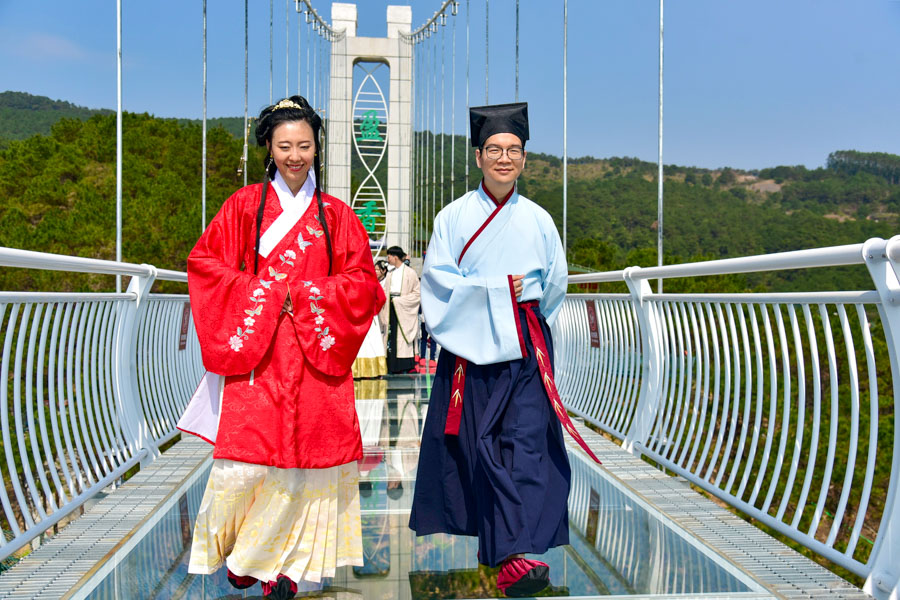
In both daily life and ceremonial contexts, Han Chinese have long worn hanfu (汉服), which means "clothing of the Han people". The history of hanfu is inseparable from that of silk, and it was generally worn by the elites. Its style is defined by a robe named paofu, with a crossed collar (交領, jiāolǐng), broad sleeves, and a flowing silhouette, or the upper garment known as a ru (jacket). The garment is typically fastened from right to left (右衽, yòurèn) with a sash – often ornamented with embroidery or jade pendants. The lower garment is named qun (skirt). Two basic structures are common. Women’s Hanfu often consists of two pieces – a top that crosses over the front and a long skirt – while men's Hanfu may include robes cut from a single piece or wide-legged pants. The most recognisable variants include the ruqun – a two-part outfit combining a short jacket with a long skirt worn by women – and the shenyi – a unified ensemble merging top and bottom in one design worn by anybody regardless of their social status.
When and where to wear hanfu today: at festivals such as the Spring Festival, the Mid-Autumn Festival, and Chinese New Year celebrations; at Hanfu festivals and gatherings; and at selected traditional cultural events, including revival-style weddings and ceremonial occasions.
Qipao to Cheongsam – The Evolution of a Cultural Icon
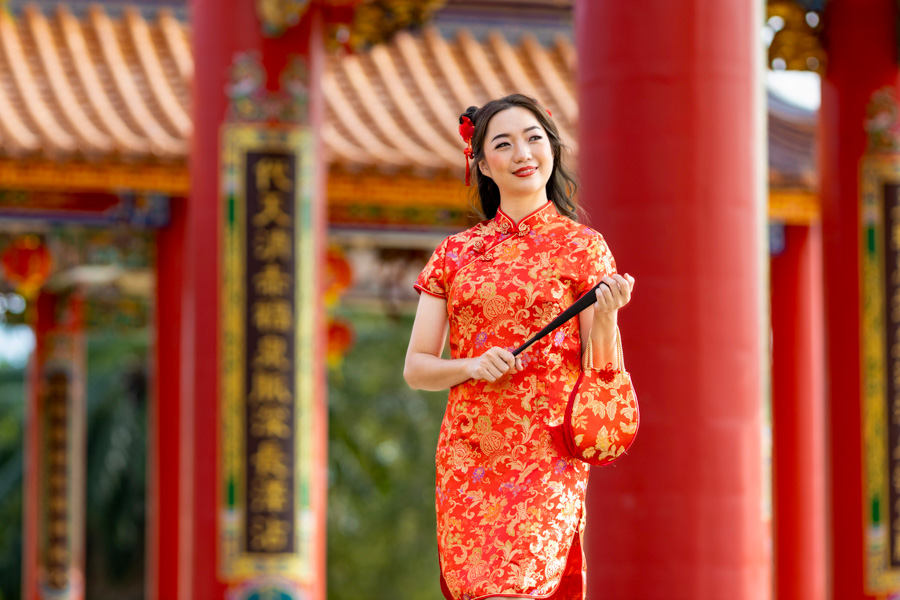
Among the most iconic garments in Chinese fashion history, the qipao (旗袍) – originally a modest, loose-fitting garment – emerged in the early 20th century as a symbol of understated elegance. Characterised by its high mandarin collar, side slits, and wide sleeves, the qipao traces its name to the clothing of the Manchu people, founders of the Qing dynasty. The term “cheongsam” (旗袍), with Cantonese roots, is more common in southern China. It appeared in the 1920s as an elegant, form-fitting dress influenced by Western tailoring techniques. At the time Shanghai became a fashion hub, and the new version of the qipao was worn by women and female cinema stars. While the two share similar features, the qipao may be worn by both men and women, whereas the cheongsam refers specifically to women’s dress.
When and where to wear qipao today: at formal occasions such as engagements, weddings, banquets, and gala events; during cultural celebrations, including festivals and Lunar New Year events; and on special occasions such as visits to the Chinese opera, art exhibitions, and organised photo shoots. Wearing a minimalist modern qipao while shopping or socialising can also be a personal and contemporary way to engage with Chinese culture.
Tangzhuang – Classical Motifs with Practical Tailoring
The tangzhuang (唐装), or Tang suit, is best known for its dignified simplicity. Although its name suggests a connection to the Tang Dynasty, this style is actually inspired by the magua, a style of jacket worn by men during the Qing Dynasty (1644-1911) – inspired by Manchu jackets and adapted to modern fashion. The jacket features a straight mandarin collar, a symbol of dignity, respect and tradition, and fastens at the front with traditional knotted “frog” buttons, made of coiled fabric which symbolise good fortune and harmony. Designed with both heritage and functionality in mind, the tangzhuang is worn by men and women, particularly on public holidays and official cultural occasions.
When and where to wear tangzhuang today: This garment is most commonly worn at festive, cultural, and semi-formal occasions, and modern, simplified versions may also be chosen for casual everyday wear. More refined designs are particularly well suited to weddings and major celebrations such as Chinese New Year.
Zhongshan Suit – Functional Dress as Civic Identity
The Zhongshan suit (中山装), also known as the Mao suit, came to symbolise political modernity, especially during the Cultural Revolution (1911-1949). Worn by officials and Chinese party members, it offered a practical alternative to traditional robes, which it combined with Western modernity, while maintaining a sense of national dress. Though no longer standard daily wear, the Zhongshan suit continues to appear at major state functions, worn by political leaders as a nod to continuity and unity.
Symbols sewn in the Zhongshan suit: Its design, marked by a closed, turn-down collar, has been widely associated with ideals of order, discipline, and modern governance. The four patch pockets are commonly linked to four moral virtues - benevolence, loyalty, probity, and a sense of shame - while the five-button front is frequently read as an allusion to the five branches of government outlined in Sun Yat-sen’s political theory: administration, legislation, jurisdiction, examination, and supervision. The Three People’s Principles - Nationalism, Democracy, and the People’s Livelihood - are often connected with the three small buttons on each sleeve, and the shape of the pocket flaps has been interpreted in later readings as referring to the importance of culture and learning in the development of the state. Taken together, these elements illustrate how the Zhongshan suit came to embody ideals of discipline, equality, and civic purpose in modern Chinese history.
When and where to wear Zhongshan today: This suit is primarily worn on formal and ceremonial occasions, particularly in political or commemorative contexts, including Chinese National Day ceremonies.
Miao Dress – A Vibrant Tapestry of Living Tradition
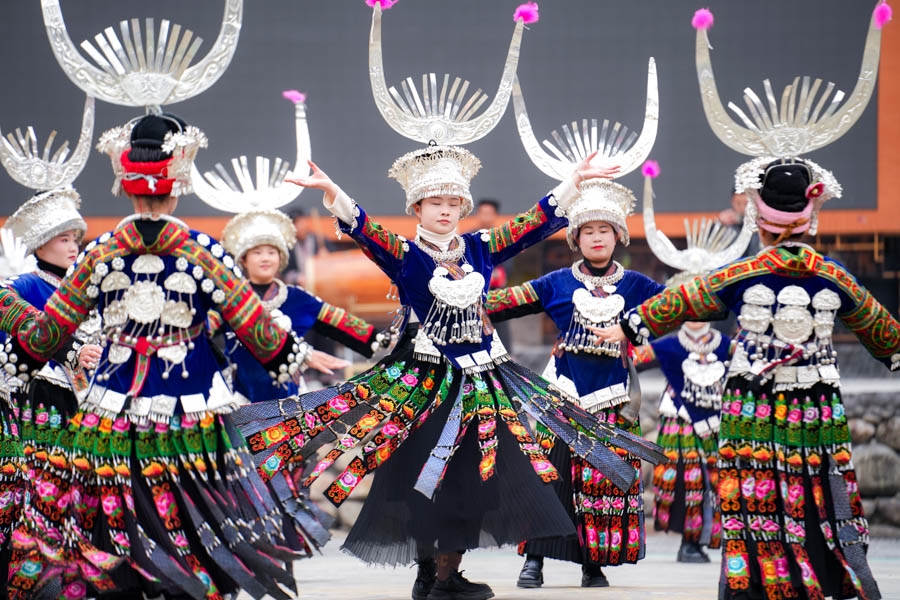
The traditional dress of China’s ethnic minorities is diverse and deeply rooted in regional customs. Among the most striking is the attire of the Miao (or Hmong) people, known as Miao Dress (苗族服饰), which dates back to the Qing Dynasty (3rd century BC). These ensembles are noted for their bold colours, detailed embroidery, and profusion of decorative elements. Outfits vary widely by region, age group, and occasion. They are divided into everyday clothing and festive attire.
Women’s festive attire is especially elaborate, typically consisting of a short, narrow-sleeved blouse and a voluminous pleated skirt. Some Miao skirts are made of thirty or more layers, each richly embroidered and often dyed using the batik method, where molten wax creates intricate plant and animal patterns. Silver jewellery plays a central role – not just as an ornament, but as a symbol of prosperity and a talisman against misfortune. The towering silver headdresses, with their finely wrought details, are among the most remarkable elements of Miao festive dress. This garment, which takes around five years to be handmade and has a price range of between 1000 and 10000 CNY/RMB, can be seen as a work of art.
In comparison, men's garments are simpler, consisting of either symmetrical short robes or long gowns that button on the left side, paired with large trousers. They also wear a black turban.
As the Hmong lacked a written language, they recorded their history, including origin legends and worship practices, on their garments, which are passed down from generation to generation. This is one more reason why their garments are so precious.
When and where to wear Miao festive dress today: primarily on special occasions, most notably during traditional celebrations such as the Miao New Year Festival and the Sisters’ Meals Festival, a well-known courtship festival within Miao culture.
Chuba – A Layered Garment Shaped by Highland Life
In the mountainous north of China and on the Tibetan plateau, clothing reflects the demands of altitude, cold, and mobility. The chuba (藏袍), a long robe, is made from thick fabric, in “pulu” woven wool fabric, sheepskin, lambskin, cotton or silk. And it features wide sleeves and a high collar to retain warmth. While utilitarian in essence, the chuba is often adorned with embroidery or appliqué, reflecting local artistic traditions. The colours used symbolise the five elements of Buddhist philosophy, and the delicate patterns aim to attract prosperity, longevity, and good fortune.
The robe is typically secured with a wide belt, which gathers excess fabric into a kind of built-in pocket, a practical feature for carrying food, money, or even a child. This functionality suits the semi-nomadic lifestyle of pastoral communities, where adaptability is vital. Originally the chuba was worn by noble Tibetan families and militaries. Today, it remains both an everyday garment and a cultural marker – worn with pride at festivals and community gatherings.
When and where to wear the chuba today: primarily in Tibetan regions and cultural contexts, including festivals, religious events, and community gatherings, as well as in everyday life within local settings where it remains part of traditional dress.
Most Used Materials, Patterns, and Colours in China Throughout the Centuries
For millennia, clothing in China has conveyed a universe of symbols encoded in the curve of a sleeve, the line of a collar, or the flow of a robe. Materials reflected geography and climate, while decorative elements embodied philosophical views on nature and the cosmos. Across dynasties, textiles, motifs, and colour palettes shaped traditional dress, signalling social rank and a person's relationship to the wider cultural world.
Materials – the Textures that Shaped Tradition
Long before the widespread use of silk, until the Shang and Zhou Dynasties, Chinese communities processed plant fibres such as linen (亚麻) and ramie (苎麻) – breathable fabrics well-suited to the humid climate of the south. Quick to dry and light on the skin, they were ideal for daily wear. Hemp (麻), more coarse but highly durable, became the standard material for peasant clothing and remained in use across rural areas for centuries.
Building upon these early practices, among the earliest and most prized materials was silk (丝绸), favoured by imperial households for its softness, lustre, and capacity for intricate weaving. Lightweight yet strong, silk absorbed dyes beautifully, making it ideal for both ceremonial and everyday garments – and so valuable that it often functioned as currency along the Silk Road. It formed the foundation of courtly attire such as mianfu (冕服), women’s ruqun (襦裙), and the elegant, unstructured shenyi (深衣) worn in rituals and palace life. Even today, silk remains a marker of refinement and material privilege.
Meanwhile, woollen fabrics were introduced to the central plains by the northeastern regions, along with techniques to work with this noble material. The industry developed successfully during the period of 220 to 589 CE.
Cotton, first cultivated in China during the Tang dynasty, rose to prominence in the 12th and 13th centuries. By this time, it had become central to the clothing traditions of southern and central provinces. Its softness, versatility, and affordability made it the fabric of choice for everyday items such as the changshan (長衫) robe and takou (套裤) leg coverings, which were tied at the waist with narrow braided cords.
Ultimately, fur, which had been used for millennia in the territory, experienced a resurgence of interest at the beginning of the Qing dynasty (1636-1912 AD), as the founder of this last imperial dynasty came from the colder northern part of China.
Patterns – Motifs that Tell a Cultural Tale
Traditional Chinese garments often carried motifs that expressed philosophical, cosmological, or social ideals. Among the most powerful symbols was the dragon (龙纹) – a sign of imperial authority and celestial favour – which adorned official dragon robes such as the longpao (龙袍), chaopao (朝袍), and jifu (吉服).
Equally significant was the fènghuáng (凤凰), linked to female virtue, prosperity, and renewal. This graceful composite bird associated with the phoenix often appeared on the formal dress of court women, either alone or paired with floral imagery. In bridal attire, the fènghuáng reinforced wishes for harmony and happiness. Another auspicious symbol was the butterfly (蝴蝶), long associated with marital bliss and domestic joy.
Botanical imagery held a deep aesthetic and symbolic value. Plum blossoms stood for winter and perseverance, orchid flowers for spring and elegance, lotuses for summer and purity, and chrysanthemums for autumn and longevity. These seasonal emblems were not just decorative; they carried poetic meaning in both visual and literary traditions.
Among the more abstract designs was the cloud-and-thunder motif (云雷纹), a repeating pattern of spirals and curves thought to attract good fortune. Clouds in Chinese iconography were seen as bringers of life-giving rain and, by extension, harvest and abundance. Such motifs appeared not only on robes but also on bronze vessels and other crafted objects.
Colours – the Palette of Meanings
In traditional aesthetics, colour served as a visual language shaped by rituals, social hierarchy and cosmological beliefs. Rooted in the theory of Wuxing (五行), the five primary colours were imbued with specific meanings.
These colours have specific connotations and, when combined with certain textiles and patterns, create a visual code that symbolises a person's role, virtue and status.
To learn more about the symbolism of colours, consult our Guide to Symbolism.
Cultural Traditions Linked to Clothing Across China
Dress in China serves as a form of social expression, illustrating how communities define roles, observe rituals, and adapt to their environments. Clothing traditions act as a living record of identity, evolving over time to reflect local conditions and shared values.
In the north, where winters are harsh and mobility essential, clothing was designed to be multifunctional. The terlig (帖裡), a Mongolian robe, served not only as daytime wear but also as a nighttime blanket – an ideal solution for nomadic groups such as the Mongols and Oirats. Other steppe peoples, including the Daurs, Evenki, and Oroqen, similarly adapted their clothing to withstand the cold and wind. A material found in the wardrobes of the Nanai (Hezhen) people is tanned fish skin, traditionally softened, sewn, and embroidered to create waterproof garments adorned with delicate ornamentation.
In the humid south, clothing reflected different priorities, such as lightness, breathability, and practicality for agricultural life. Distinctive regional textile traditions emerged, shaped by local fibres and dyes. Among the Zhuang, women cultivate cotton, spin the yarn, and produce hand-dyed fabrics using plant-based pigments. Their wide-brimmed hats and embroidered jackets are particularly recognisable. The Dai favour narrow, brightly coloured skirts with fluid lines, ideal for ceremonial dances such as the Peacock Dance performed at festivals. Among the Tujia, festive attire is characterised by bold colour contrasts and detailed embroidery, often accompanied by fènghuáng coronets – elaborate headdresses crafted from metal and beads, renowned for their complexity and rich symbolism.
The traditional textile techniques of the Li people, such as spinning, dyeing, weaving, and embroidery, as well as the exceptional craftsmanship of Nanjing's Yunjin brocade, are recognised for their cultural significance and are now inscribed on UNESCO's list of intangible cultural heritage. These art forms testify to the richness of ancestral knowledge that has contributed to showcasing the beauty and diversity of Chinese clothing.
Must-Visit Museums and Exhibits Dedicated to Chinese Clothing
Explore the material legacy of Chinese clothing through some of the country’s most important museum collections and current exhibitions. From imperial robes to contemporary textiles, these sites and displays offer a direct encounter with the evolution of Chinese dress.
Top Museums to Explore Chinese Clothing
Minority Garments and Decorations Museum, Beijing Institute of Fashion Technology (BIFT, 北京服装学院民族服饰博物馆)
This specialised museum houses over 10,000 items, including imperial garments, ceremonial robes, hanfu, ruqun, ethnic minority attire, jewellery, and decorative fabrics. Galleries are divided into sections on Han and minority costumes, Olympic attire, embroidery, brocade, and batik. A notable collection of photographs taken during the 1920s and 1930s documents regional costume traditions.
Address: 3rd Floor, Building A, Comprehensive Building, Beijing Institute of Fashion Technology, No. 2A Yinghua East Road, Chaoyang District, Beijing (北京市朝阳区樱花东路甲2号北京服装学院综合楼A座3层)
Note: Visits may require advance booking; verify on biftmuseum.com
Shanghai Fangzhi Museum (上海纺织博物馆)
Dedicated to Shanghai’s rich textile heritage, this museum offers a focused look at the history of fabric production and clothing in the region. Highlights include traditional looms, fibre-processing tools, and more than 20,000 artefacts ranging from embroidered silk and brocade to everyday garments and accessories. The collection illustrates both the artistry and technical sophistication of textile making in one of China’s most historically important manufacturing hubs.
Address: located in the original site of the 130-year-old Shenxin Textile Factory No. 9. At No. 128 Aomen Road, Putuo District, Shanghai (上海市普陀区澳门路128号)
China National Silk Museum (CNSM, 中国丝绸博物馆), Hangzhou
One of the world’s leading institutions dedicated to silk, this museum offers galleries on sericulture, weaving, fashion history, and textile conservation. Highlights include traditional silk costumes and the exhibition "An Evolution of Fashion: Chinese Costume from the 1920s to 2010s". The museum shop sells fine silk scarves and accessories.
Address: 73-1 Yuhuangshan Rd, Xihu, Hangzhou, Zhejiang
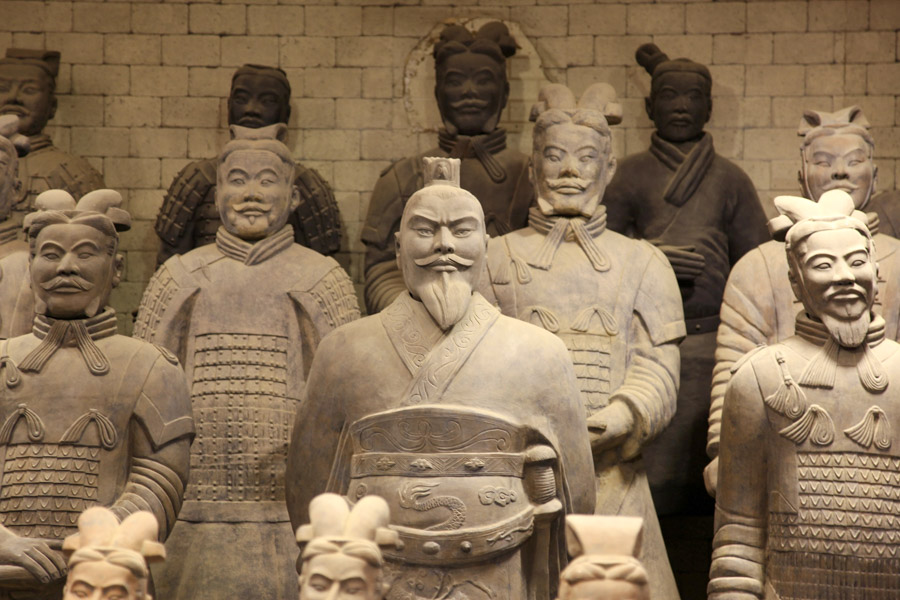
Emperor Qinshihuang's Mausoleum Site Museum (秦始皇帝陵博物院), Xi’an
While primarily an archaeological site, the Terracotta Army offers rich visual evidence of early imperial military dress. Each clay figure includes detailed sculptural representations of uniform tailoring, footwear, armour, and rank distinctions.
Address: Lintong District, Xi'an, Shaanxi (陕西省西安市临潼区)
Where to Rent Traditional Chinese Clothes and Why?
Renting traditional clothing offers a memorable way to step into China’s cultural heritage – whether for a photoshoot amid ancient streets or simply to experience the feel of historical attire in a modern city. Across China’s major destinations, rental services have grown into a vibrant part of local culture, especially in cities with rich historical fabric.
How Costume Rental Services Work
In cities such as Beijing, Shanghai and Xi’an, hanfu and other traditional outfits can be rented from dedicated studios or photography boutiques. Many vendors use WeChat to handle bookings, costume selection, size measurements and service details, making it possible to arrange your outfit before you arrive or on the day of your visit. Rental prices vary with style and duration, and deposits or full payment may be required at the studio when you collect your clothing. In organised experiences, costs often include makeup, hairstyling and accessory rental as part of a package.
Where to Take Photos in Traditional Chinese Clothing
Once dressed, numerous urban settings provide dramatic backdrops for photos:
- In Beijing, the narrow alleyways of the Hutongs and the areas around the Forbidden City and Jingshan Park offer atmospheric historic scenes that complement traditional clothing.
- In Shanghai, the lanes around Yu Garden and the historic precincts along the Bund have become popular spots for hanfu and qipao photography.
- In Xi’an, the precincts of the Drum and Bell Towers, the Muslim Quarter and sections of the ancient city wall create evocative settings for portraits in traditional attire.