

In Hans Christian Andersen’s The Nightingale, the emperor of China hears a small grey bird sing. The song makes the emperor cry, and tears roll down his cheeks. This fictional story lands on something real: in Chinese songbird culture, people listen to birds with sincerity. Within the wider world of Asian bird-keeping practices, China stands out for turning everyday places into shared listening hubs.
This is a living tradition built around sound, routine, and public space. You still see it in city parks at daybreak, when cages are carried out for fresh air and for company.
Chinese bird keeping traditions also have deep historical roots. Early courtly hobbies and everyday practices in modern cities reflect the backbone of Chinese bird culture history today.
Chinese records indicate that pet parrots date back to the Zhou dynasty. Pigeons were domesticated during the Han dynasty, and caged birds, like orioles, became popular in the Tang dynasty. Songbirds were cherished as pet birds throughout the Song, Ming, and Qing dynasties.
Today, many keepers focus on “chirping” birds, judging tone, clarity, and variety. This level of scrutiny resembles how a discerning listener might judge complex Mandarin bird songs or other Chinese bird sounds in nature.
Philosophy and Mythical Birds
Chinese tradition holds that birds include living parables on the proper organisation of the world. Ancient thought linked music, ethics, and good order, with Confucian ideas treating harmony as practical, not abstract. The right behaviour created stability, and the right sounds reflected it. In the same way, auspicious birds were taken as signs that life was aligned with virtue, prosperity, and a well-run society.
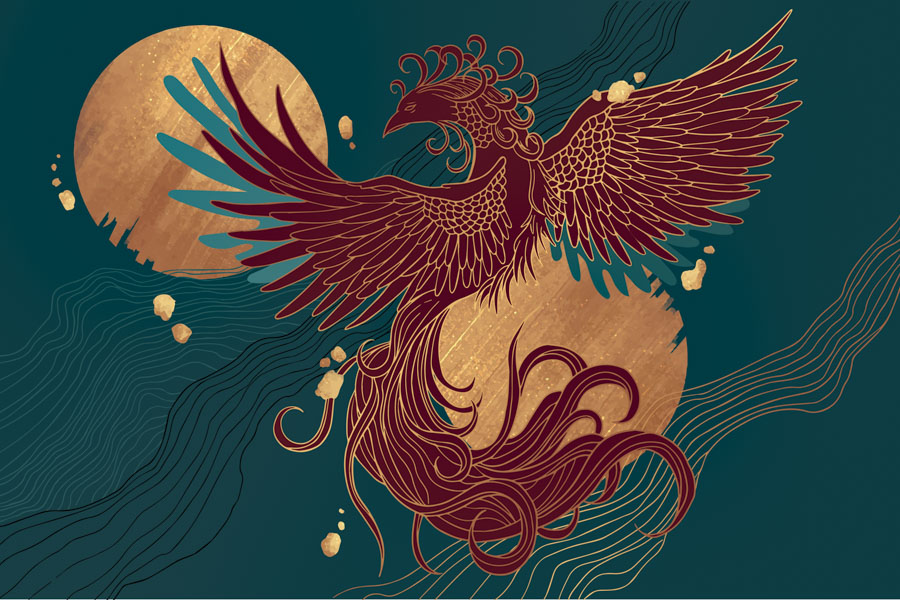
The best known of these is the fenghuang, often called the Chinese phoenix, though it is not the same idea as the Western phoenix. The fenghuang is a composite bird species, described as made from features of several creatures. It stands for virtue and grace, and it appears only in times of peace. Eventually the fenghuang converged with imperial symbolism, paired with the dragon as a comparison for harmony between yin and yang, which is central to Chinese cosmology.
Some birds are tied to the cosmos. The Vermilion Bird, linked with fire, represents the south, while solar myths also feature the three-legged crow, said to live in the sun. One famous story describes the ten suns, each representing the ten sons of the celestial emperor Di Jun, each accompanied by its own crow spirit. When the suns rose together and scorched the earth. The archer Hou Yi shot down nine of them, leaving just one to restore balance.
Other bird legends focus on character. Jingwei, born from the spirit of the emperor Yandy's daughter Nüwa, drowned in the Eastern Sea and keeps dropping twigs and stones into the sea to fill it. It is a blunt symbol of endurance and refusal to yield. The Qingniao serves a as messenger to Xi Wangmu, the Queen Mother of the West, linking birds with divine communication.
Some birds carry warnings. The Bifang, a one-legged bird associated with fire, appears before great blazes, while the Zhen is poisonous. The Chongming bird represents protective images, with double pupils, believed to dispel evil. This bird’s shape resembles a chicken, and it sings like a phoenix. Its legend helps explain later folk customs of placing chicken images at New Year for protection.
Songbird Pets and Their Cages
In China, keeping a small songbird at home has been popular since at least the early Qing dynasty (221–207 BC). Birds bring lively sound into life, and ultimately bird-keeping became a social habit, especially in Beijing and Tianjin. People would often take their caged birds outside in the morning, then carry them to parks and teahouses. There, cages used to hang overhead or be placed on tables so the birds could sing “to” one another.
What are the preferred songbird pets in China?
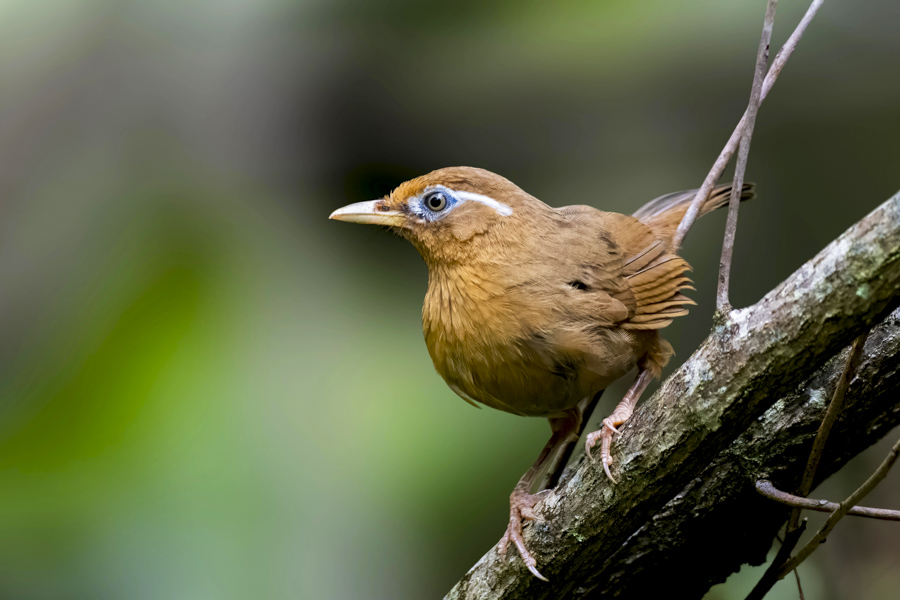
Chinese hwamei (melodious laughingthrush, Garrulax canorus)
This bird is known as “painted eyebrow” in Chinese because of the pale markings around its eyes. Larger than many cage songbirds (21 to 25 cm or 8.3 to 9.8 inches), the hwamei unleashes a loud, clear, varied whistle that can include imitations. In the wild it inhabits scrubland, open woodland, secondary forest, parks and gardens. It can be mostly found in Southeast Asia and central China, with a subspecies on Hainan.
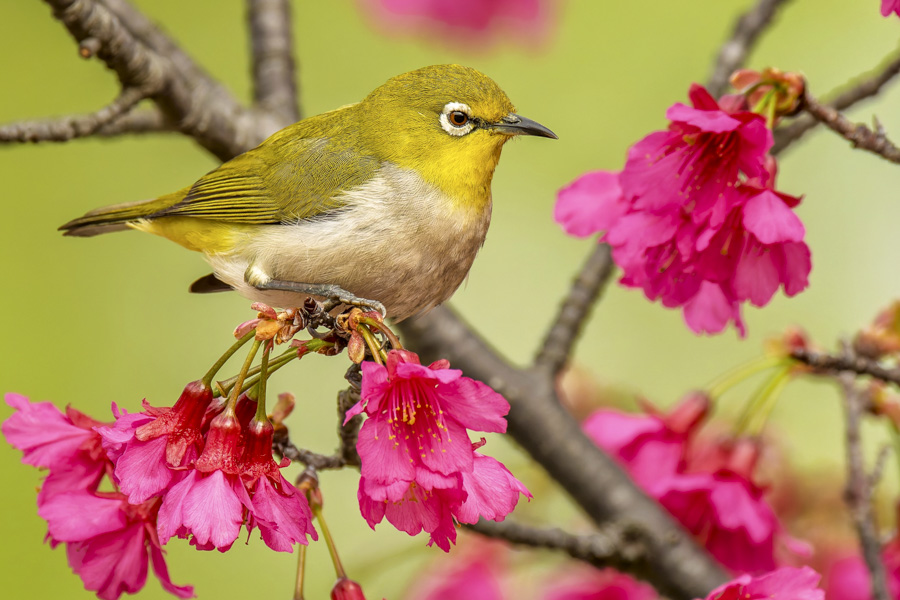
Warbling white eye (Zosterops japonicus)
Small, sociable, and acrobatic, measuring approximately 10 to 11 cm (3.9 to 4.3 inches), the Warbling white-eye is characterised by its distinctive white eye ring. Common across parts of East Asia, it has a long history of being a cage bird in its native range. Warbling white eye species spends time on the ground and is notable for its flocking behaviour and constant movement.
Other birds are sometimes kept or admired
The Chinese blackbird (Turdus mandarinus) is a thrush species that lives throughout China. The light-vented bulbul (Pycnonotus sinensis) is a bird often found in southern China in noisy groups and recognised for its bright songs.
Traditional cages and accessories
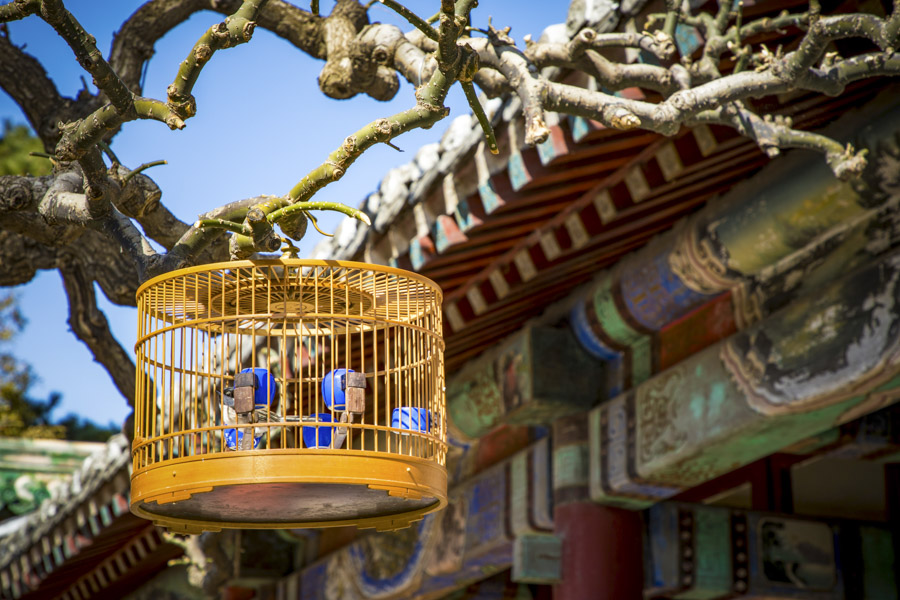
By the late 1800s, birdcages were common household items, with many craftsmen specialising in cage making. Classic styles included small square cages for tiny birds and wider round cages that made the bird easy to view from all sides. Owners also used travel cases to protect the cages during longer journeys. Most keepers still favour traditional Chinese birdcages, usually made from bamboo or wood and crafted to be carried and hung.
Details mattered: porcelain food and water pots, carefully placed perches, and small charms were common. Some cages included jade ring charms for protection and decorative carvings featuring bats, dragons, deities, or other auspicious motifs.
Key Locations to Visit
The best places to see Chinese songbirds fall into two categories: colourful urban markets and expansive wild bird habitats.
Major City Markets and Cultural Stops
Beijing
Beijing remains central to traditional bird keeping. The Guanyuan Flower, Bird, Fish and Insect Market and the Shilihe Bird, Flower, Fish and Insect Market are the most relevant stops. Both attract local bird keepers, especially older residents who still carry cages through parks and streets. Alongside birds and cages, Shilihe also features antiques, calligraphy, paintings, and occasional traditional performances.
Shanghai
One of the most active markets in China, the Bird and Flower Market (Wan Shang Hua Niao Shi Chang), sits on South Xizang Road.
Birds, cages, crickets, plants, and small animals are sold in a dense, noisy setting. The market reflects how urban pet culture survives in modern Shanghai. It is easy to combine with visits to the Shanghai Museum or Yuyuan Garden for classical imagery featuring birds.
Guangzhou
The Huadiwan Flower, Bird, Fish and Insect Market is one of the largest of its kind in southern China. It functions as a wholesale and retail hub, with a strong focus on ornamental birds and cages. Its scale and regional importance make it useful for seeing how bird keeping operates today in South China.
Hangzhou
The Wushan Flower, Bird and Pet Market in Hangzhou is smaller but easier to navigate, with clear sections for birds, plants, fish, and antiques. Its upper floors include crafts and collectables, making it a good place to see decorative cages and related objects. Traditional Chinese medicinal plants can also be purchased at the wholesale section on the third floor.
Xi’an
The Xicang Market, usually active on Thursdays and Sundays, has deep roots going back to the Ming and Qing periods. Locals gather with their birds at dawn, and stalls sell cages, fodder, plants, old books, and curios. It offers one of the clearest links between bird keeping and everyday social life.
Regions for Wild Songbirds
For seeing songbirds outside cages, Yunnan and Sichuan celebrate high species diversity and accessible birding sites. Fujian provides coastal and forest species of birds linked to traditional cage birds such as laughing thrushes. Qinghai provides access to plateau species, while Xinjiang attracts experienced birders seeking birding tours focused on desert and raptor species.
To observe Asian songbirds in the wild, provinces such as Yunnan and Sichuan feature the richest diversity. Collectively, these cities and regions give a broad view of songbirds in Chinese culture, from markets to natural habitats.
Bird Singing Contests, Songbird Art Contests and Festivals
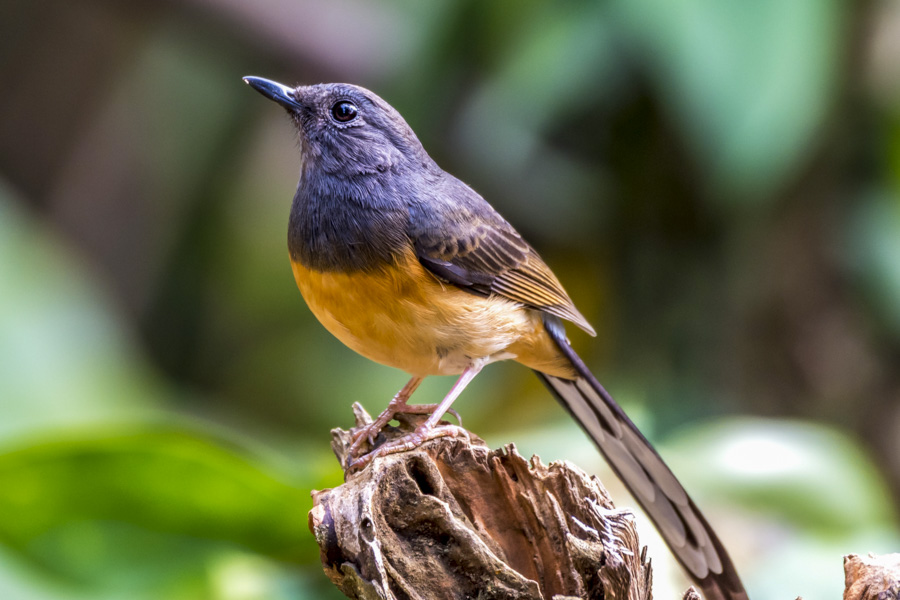
Bird singing contests have long been part of Chinese urban life and remain one of the most visible expressions of songbird culture. These events usually involve caged male birds judged on song quality, volume, rhythm, endurance, and variety. The aim is not speed or aggression, but vocal skill developed through careful training and daily routines.
Chinese bird singing competitions range from casual neighbourhood meet-ups to more organised local contests. In China, contests are informal more often than they are officially organised. They take place in public parks, temple grounds, and open squares, especially in cities such as Beijing, Tianjin, Guangzhou, and Xi’an. Elderly bird-keepers hang cages from tree branches or metal frames so the birds can sing in proximity. However, this practice may vary regionally.
The Chinese hwamei is among the most common contest birds, alongside other traditional bulbuls and thrushes. At these gatherings owners exchange techniques, listening closely and debating whose bird performs best. The White-rumped Shama (Kittacincla malabarica) is often referenced in discussions of competitive singing traditions.
Historically, similar practices existed among elites. Writings and paintings from the Ming and Qing periods show birds displayed at private gatherings in a controlled, refined setting.
While modern contests are less formal, they follow the same principles of patience, listening, and daily care. China doesn't have large national competitions like Indonesia or Thailand, but regional and neighbourhood contests remain culturally significant.
Birds sing loudest in the spring and early summer, which is when temple fairs and seasonal festivals take place.
Visual art connected to songbirds forms a quieter parallel tradition. Classical Chinese painting has long featured caged birds, flowering branches, and garden scenes, reflecting ownership, sound, and stillness. Today, songbirds also appear in contemporary exhibitions, conservation-focused art contests, and museum display. While many modern bird art competitions are international, you'll see Chinese artists and themes represented, focusing on native species.
Songbird Exhibitions in China
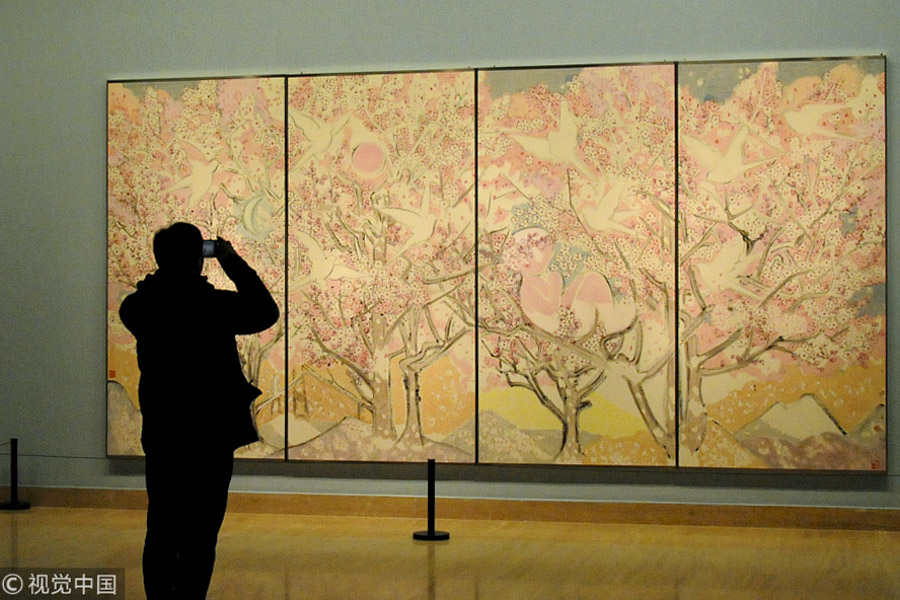
Photo source: www.chinadaily.com
Songbirds appear in Chinese exhibitions mainly through painting, manuscripts, and cultural history rather than live display. Museums and galleries across China use birds, exploring links between art and nature, with a strong emphasis on history.
Hangzhou
In 2024, the Zhejiang Provincial Museum opened the temporary exhibition named: “Nature in Chinese Art: The Birds in Song Dynasty Paintings of the 10th-13th Centuries”. The exhibition brought together original Song dynasty bird-and-flower paintings, later reproductions, and modern photography. Song paintings are central in understanding birds in Chinese visual culture, valued for accuracy, restraint, and close observation. Digital tools, scroll displays, and garden reconstructions showed visitors how artists studied, painted, and appreciated birds a millennium ago.
Beijing
The National Art Museum of China has repeatedly returned to bird-and-flower painting as a core theme. Its large-scale exhibition Blooming Flowers in Flourishing Age presented works from the Song through Qing dynasties. Additionally, modern and contemporary painters showed how birds remained a stable subject across political and stylistic change.
Beijing galleries also host contemporary exhibitions where birds represent cultural symbols rather than natural history subjects, often linked to memory, sound, or urban experience.
Hunan
The Hunan Museum’s focus on Zou Chuan’an highlights the modern evolution of meticulous flower-and-bird painting. Chuan’an donated hundreds of manuscripts for the exhibition The Soul of Flower and Bird. It traced six decades of a practice that fused traditional technique with modern observation. This type of exhibition shows how bird imagery continues to develop within established painting traditions.
Contemporary Galleries
Private galleries in Beijing and Shanghai regularly include birds in contemporary shows. The Taoxichuan Migratory Bird Project Residency Exhibition, held at Taoxichuan Ceramic Art Avenue in Jingdezhen, presents contemporary ceramic and glass work by international artists. In the 2025–2026 residencies, artists produced new pieces shaped by close looking at flowers, material structure, and environmental change, often using reclaimed fragments from Jingdezhen’s older factory sites and its working ceramic landscape.
The Future of Chinese Songbirds
Owners take caged birds outside, and swing the cage gently for exercise. Then hang cages together in parks so birds can call back and forth while people talk nearby. Kept together in public spaces, these songbirds act as social birds, responding to nearby calls.
Andersen ends his tale with a simple idea: a bird’s song can steady a person, even change how they live. In China, the value placed on songbirds of China comes from the same instinct. This represents a belief that sound can soften a city and pull people outdoors. The tradition evolves through Chinese avian enthusiasts and growing demands to protect wild Chinese songbird species.