

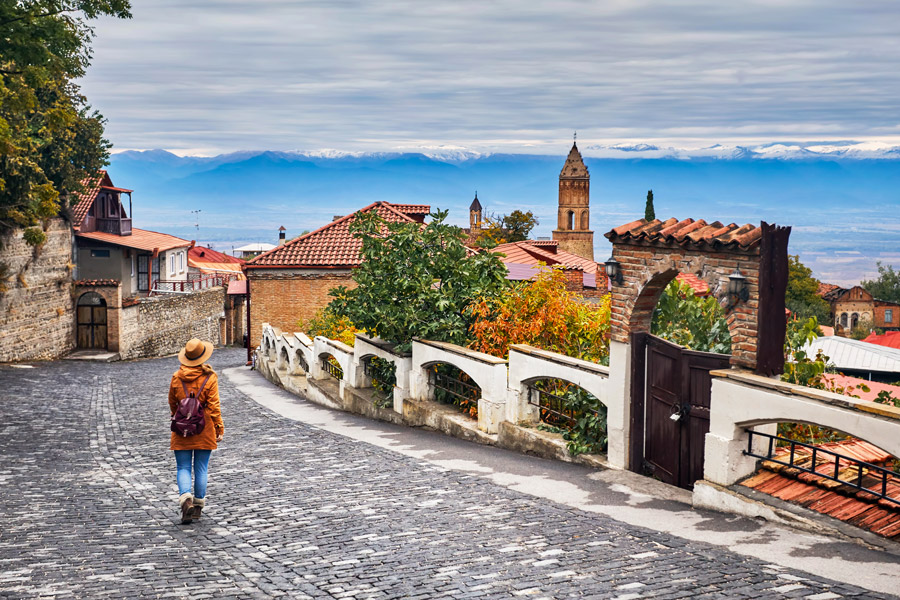
There are many things to do in Georgia, but perhaps the most important is simply to arrive with time to spare. Visitors are welcomed at the door, invited to a table laid with more dishes than any one person can eat, and handed a local glass of wine before they have even asked.
But beyond the hospitality, the top places to visit in Georgia include an extraordinary range in a compact territory. These are the medieval streets of Tbilisi, with its sulphur bathhouses and carved balconies. Then, not far away, there are the UNESCO-recognised historical monuments of Mtskheta. There are also the vine-terraced valleys of the Kakheti wine region, the romantic hilltop town of Sighnaghi, the mineral waters of Borjomi, the coastal energy of Batumi, and the mountainous tower houses in Upper Svaneti.
This guide covers the full breadth of the best attractions: the classic highlights, where to buy souvenirs in Georgia, the hidden gems that reward the curious, the festivals, the museums, the nature, and the family tables with authentic Georgian food experiences.
Since no single trip can hold everything, consider this a starting point. And for everything else, browse the full Georgia travel guide.
Top Things to Do in Georgia
The very top things to do in Georgia for most first-time visitors can actually be narrowed down to two days and two very unlike landscapes.
And while planning a trip, that is, browsing, comparing, and trying to decide which of the best places to visit, you realise there is far more to see than any single visit can allow.
Certainly, a week, two weeks, or the whole month gives visitors real freedom. And we have tours designed for every length of stay.
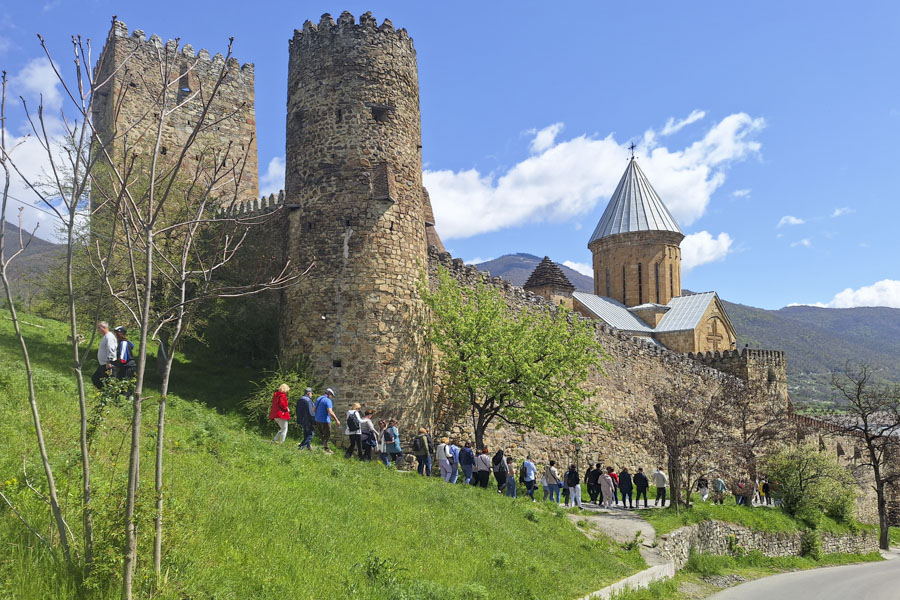
But what if you are short on time? Two days, used well, can still leave a profound mark. Most first-timers spend day one in Tbilisi before heading to Mtskheta, only 20 kilometres (12.43 miles) away, where the 6th-century Jvari Monastery on a hilltop watches over the confluence of two rivers. The second day often includes a day trip from Tbilisi north to Kazbegi, with Ananuri Fortress and the scenic Gudauri viewpoint on the way up.
For a fuller breakdown of the top attractions in Georgia, see our 13 Best Places to Visit in Georgia guide.
Food and Wine Experiences in Georgia

The Georgian food and wine are deeply rooted cultural traditions and, of course, a must-do experience. In fact, one way to understand Georgia’s culinary tradition is to sit at its table.
The Georgian supra (სუფრა) is where that understanding begins. A feast presided over by a toastmaster, it is an extraordinary generosity – authentic Georgian dishes arrive in waves, wine is poured freely, and toasts are raised to life, love, and everything in between. Sometimes your hosts will strike up a moving traditional hymn, making the moment deeply touching.
Visitors can enjoy dinner at selected restaurants in Tbilisi, often accompanied by live Georgian dance performances. A stay at a family guesthouse in the countryside means inevitable hospitality, with a home-cooked table and seasonal dishes prepared from fresh and healthy local produce.
For wine lovers, a Georgian winery tour might lead to Begaso Family Winery, Kbilashvili Winery and Qvevri Workshop or Nebi Winery. Each is a family-run business with its own grape varieties and winemaking traditions.
Unique Things to Do in Georgia
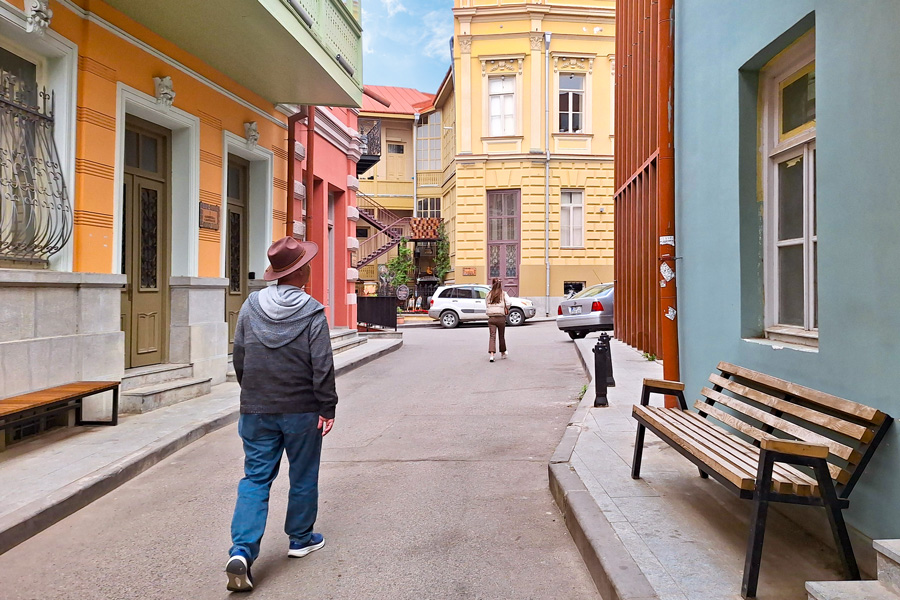
When our clients ask us to show them something apart from the classic activities, we are ready to lead them off the beaten path. These are the hidden gems in Georgia: the places rarely talked about, but waiting to be found.
For example, in Old Tbilisi, the painted house halls of Machabeli and Tabidze streets amaze tourists with the fascinating murals. Just turn onto the side streets of Rustaveli Avenue, and you will see an unofficial attraction – the Italian-style courtyard houses. Today, some of them host nightclubs, hotels, offices, and shops.
Those drawn to industrial history will find Chiatura, a Soviet-era mining town in Western Georgia, famous for its ropeway system.
Tskaltubo, a Georgian Soviet spa town of natural wellness traditions, is only 25 minutes north-west of Kutaisi. And the truly adventurous will appreciate a trip to the remote mountain village of Shatili in the province of Upper Khevsureti.
Historical Places and Cultural Landmarks
Among the most memorable things to do in Georgia is to follow its history backwards. And, in that sense, the country is a treasure trove for history lovers.
At Dmanisi, for instance, archaeologists uncovered 1.8-million-year-old hominin skulls, placing Georgia at the very threshold of human prehistory. Nearby is a megalithic Avranlo Fortress, one of many scattered across the Kvemo (Lower) Kartli region.
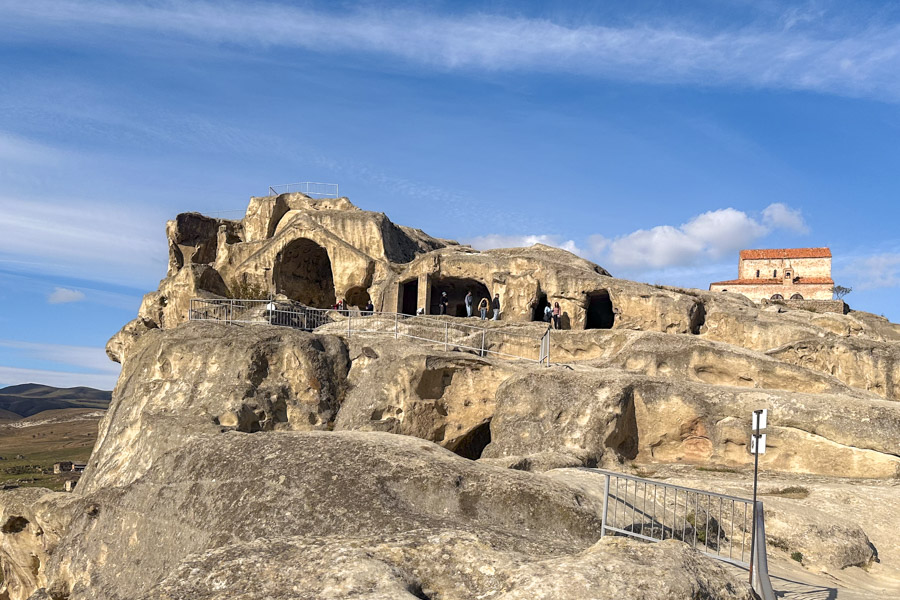
Furthermore, pre-Christian sacred sites reveal the story in more detail. These are the fire temple of Ateshgah in Tbilisi; the archaeological complex of Armaztsikhe-Bagineti; and the ancient Uplistsikhe cave city near Gori. Zoroastrian worship there predates the country's conversion to Christianity by centuries.
Mediaeval Georgia then builds on these foundations: abandoned fortresses, frescoed cave monasteries, and the legacy of Queen Tamar's 12th-century golden age.
And finally, the Soviet era (1921-1991), whose architectural imprint is vivid throughout Georgia’s main towns.
Nature, Mountains, and Outdoor Activities
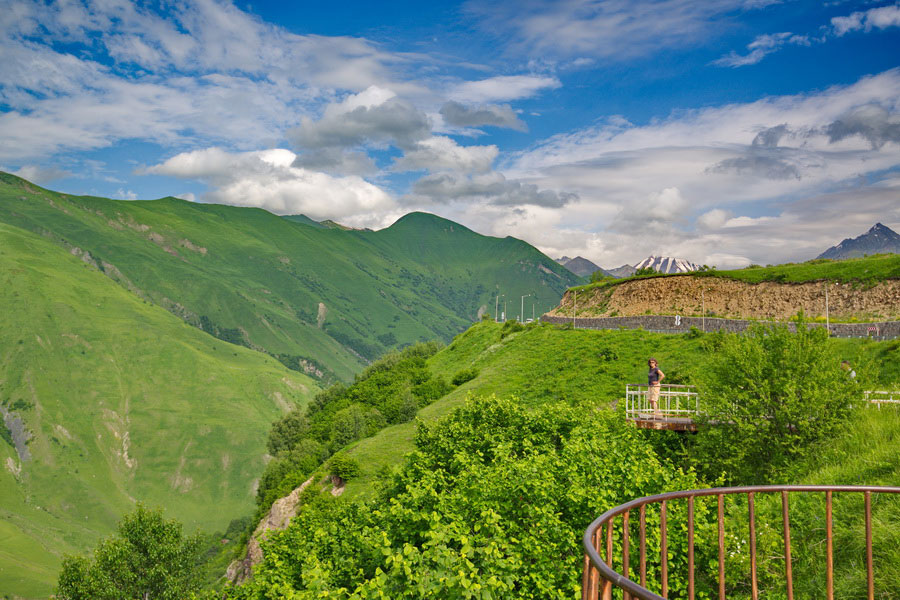
For those whose things to do in Georgia list leans towards the outdoors, the country delivers on every scale. Natural attractions span lakes, waterfalls, rivers, canyons, mountains, and caves across a territory that contains several distinct climate zones.
Drive through Kakheti towards the Lagodekhi National Park in the east, and the Greater Caucasus gradually begins to appear ridge by ridge. In the north, the landscapes around Mount Kazbegi are the most dramatic. The ski resort of Gudauri, just on the slopes of the Greater Caucasus Range, has already won considerable popularity with winter sports enthusiasts.
Then, nature tourism in Georgia finds some of its finest settings in the country's canyons – Martvili in the west and Tsalka in the south. National parks, such as Borjomi-Kharagauli and Mtirala, protect rare ecosystems, making Geogrgia a compelling destination for wildlife tourism.
The alpine villages of Ushguli in Upper Svaneti are the most celebrated; Bakhmaro in the Guria region and Shovi in the Racha-Lechkhumi region are quieter but no less beautiful. Summer hiking through high pastures and mountain passes can be arranged for walkers of all levels.
To the west of Georgia, the Black Sea coast promises a subtropical outdoor adventure, anchored by Batumi, the seaside capital of Adjara.
Multicultural Heritage of Georgia
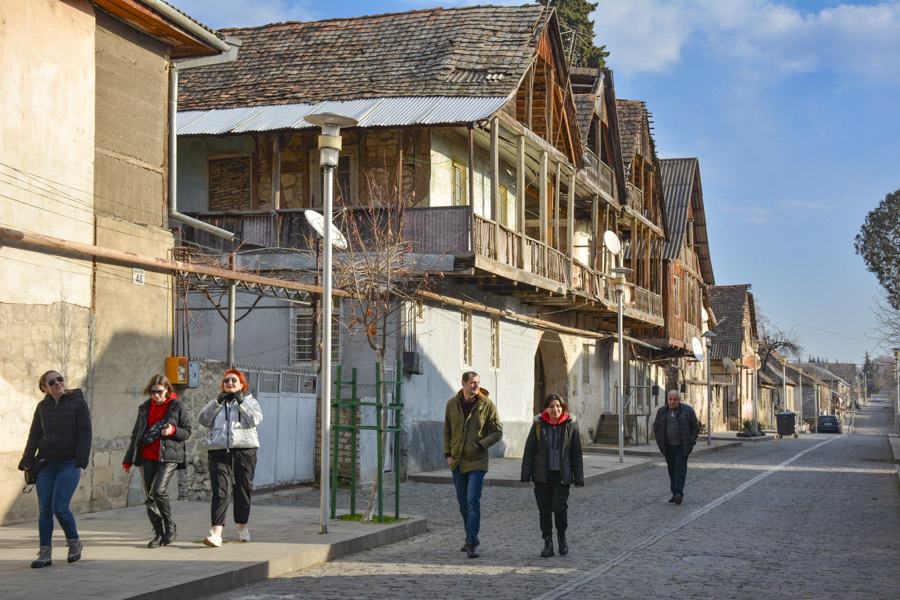
Exploring things to do in Georgia, long a crossroads on the Silk Road, takes on an unexpected side through its historic ethnic settlements – founded by Germans, Greeks, Jews, Russians, and others. Each carries its own architectural character and the traces of a life once lived on its own terms.
Bolnisi and Asureti, an hour or so from Tbilisi, were settled by German immigrants invited by the Russian Empire early in the 19th century. Their Lutheran churches and village layouts are captivating. Further south, the Russian Doukhobor of Gorelovka, a spiritual Christian ethnoreligious community with its charming wooden houses, is a living fragment of a religious settlement. Several families remain to this day.
And historic synagogues in Tbilisi, Kutaisi, and Oni testify to the presence of a Jewish diaspora that has called this country home for centuries.
Festivals, Events, and Local Life
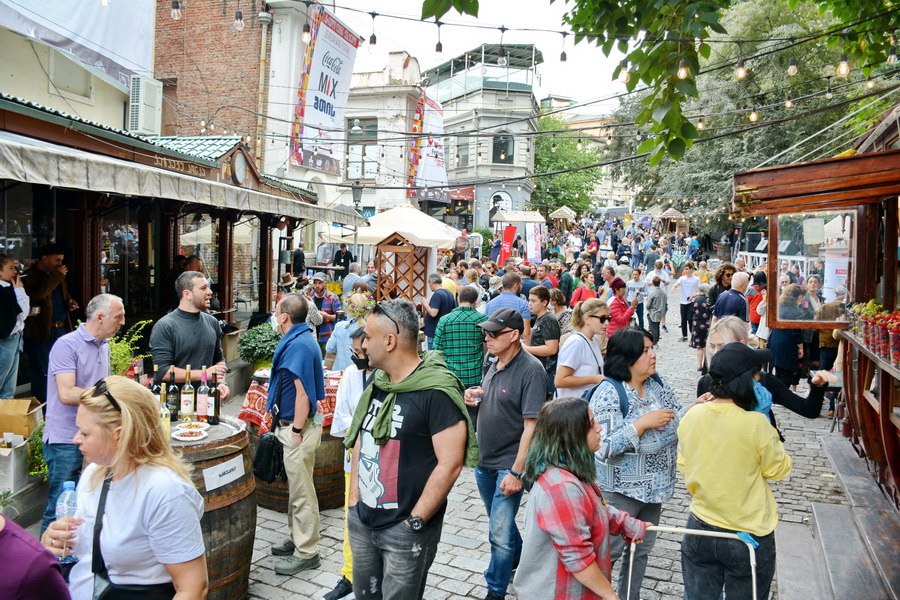
We encourage visitors to include some of the most spirited expressions of local life in their bucket list of things to do in Georgia.
Rtveli, the grape harvest, is among Georgia's greatest autumn attractions, when the country comes alive with feasting, music, and dancing. Our tours even allow visitors to join the grape picking.
If you are in Tbilisi at the right time in October, you can witness Tbilisoba, Tbilisi's annual tribute to its history and culture. The streets fill with food stalls, wine, live concerts, and craft markets.
Jazz enthusiasts should time their arrival for July, when Batumi hosts the Black Sea Jazz Festival on the seafront. A second edition follows in Tbilisi in October, for those who prefer their jazz alongside autumn colours.
The Georgian National Opera and Ballet Theatre, indeed, deserves special attention. Year-round, it stages world-renowned performances. Tickets are available at tkt.ge. While the Sukhishvili National Ballet of Georgia is a dance company that has presented an acrobatic traditional repertoire for more than eight decades.
Museums, Art, and Workshops
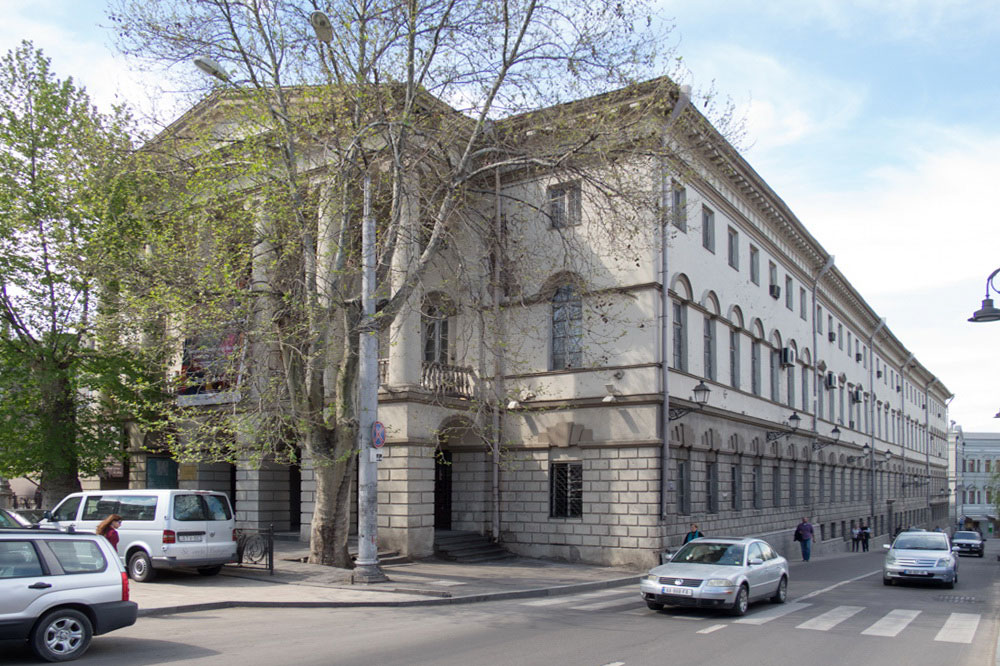
The country's museums, art galleries, and workshops open up an entirely peculiar kind of itinerary.
In Tbilisi, the Georgian National Museum on Rustaveli Avenue boasts one of the largest and most important collections of archaeological, historical and artistic objects in the Caucasus.
Georgia’s regions also offer the best museum sightseeing. In Gori, this is the Joseph Stalin Museum, dedicated to the leader of the Soviet Union, who was of Georgian ethnicity and born in this city. Kutaisi claims the Zakaria Paliashvili Memorial-House Museum, devoted to the composer who founded the Georgian Opera. In Batumi, the ethnographic museum Borjgalo displays the specific character of Adjarian life and tradition.
The most prominent art galleries and museums are in Tbilisi. These are the Georgian National Gallery and the Georgian Museum of Fine Arts. Private spaces, such as Baia Gallery and the Window Project, exhibit the best of contemporary Georgian art.
There are traditional Georgian craft workshops for an immersive cultural experience. As an example, tourists can learn to bake traditional Georgian bread, tonis puri, in a clay oven or spend an afternoon forging their own traditional Georgian knife.
Shopping and Gifts in Georgia
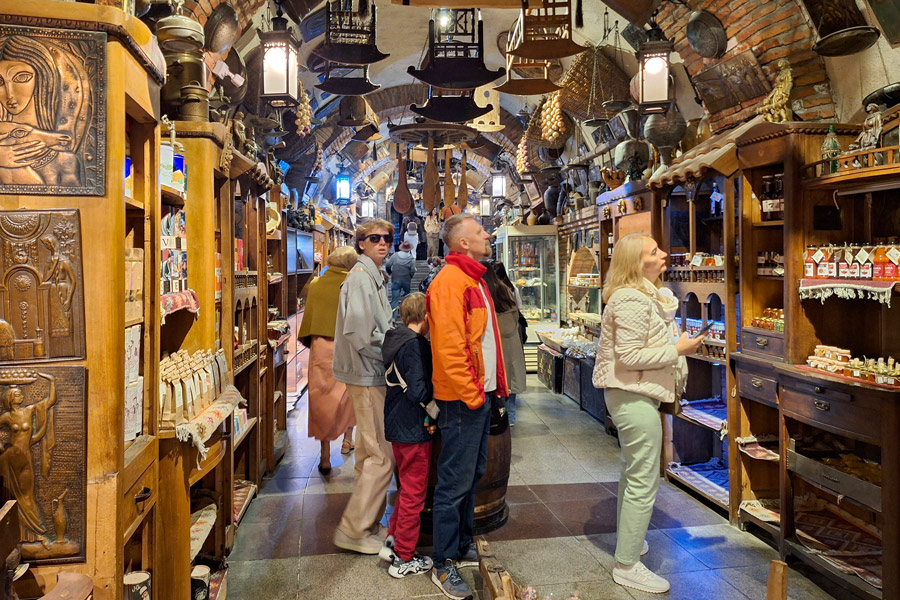
Shopping in Georgia is one of the exciting things to do that is hard to resist. Rustaveli Avenue alone is dotted with boutiques that sell Georgian-themed gifts of every description. The Galleria Tbilisi mall near Freedom Square sits at the bottom of the boulevard; Merani Mall is a little further up.
Tbilisi's beloved flea market, the Dry Bridge Market, is the kind of place where visitors often discover something wonderful.
Dezerter Bazaar is the city's great food market – home to local farmers, spice traders, dried fruits, and the best place in Tbilisi to pick up churchkhela, a sweet made of grape must, nuts, and flour. And apart from being a food market, Meidan Bazaar is a place to shop for antiques and Georgian art.
On tours through eastern or western Georgia, Advantour's guides always know where to stop at a village market for local cheese, honey, and nazuki (the sweet, spiced bread).
In recent years, a new wave of Georgian design boutiques has been worth seeking out. BlueTabla sells clothing, tableware, and accessories. Papanaki specialises in the traditional Georgian dress. At Zarapkhana, visitors can shop for gold jewellery, featuring exclusively Georgian designs.
For traditional Georgian jewellery and original clothing, as well as ready-to-wear or custom-made traditional dance outfits, visit the brand Saukune on Queen Tamar Avenue in Tbilisi, which also houses a traditional dance school.
Something from any of these will travel well and mean something when it arrives.
Tbilisi Nightlife
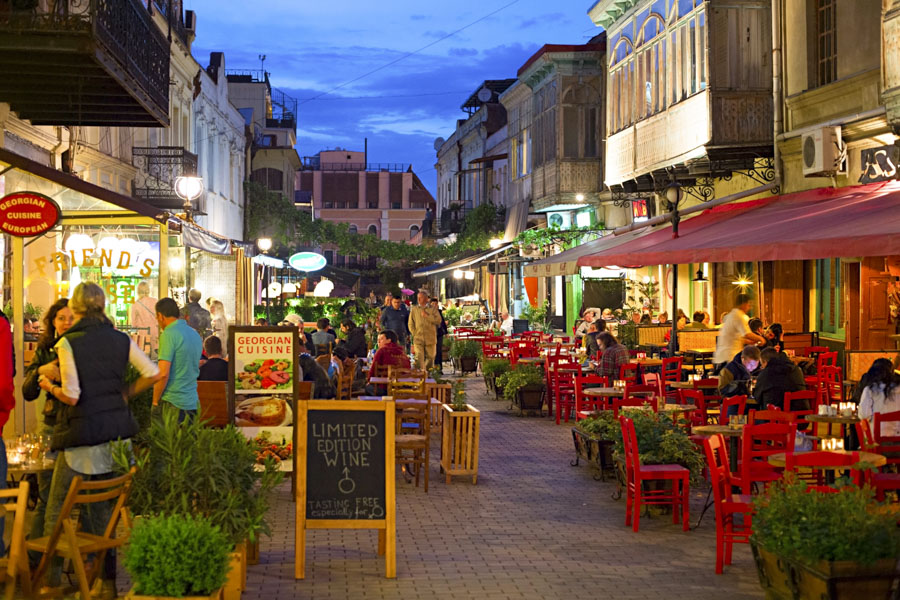
The nightlife of Tbilisi is remarkably varied, especially for travellers who enjoy classical music and atmospheric cultural venues. Many are housed inside historic buildings, where the setting becomes part of the evening experience.
The Georgian National Opera and Ballet Theatre can rightfully be called a true jewel, not only for its repertoire, but also for its architecture and richly decorated interior. Even visitors who do not usually attend operas are impressed the moment they step inside. The stage regularly hosts operas by Puccini, Verdi, Mozart, Wagner, and other celebrated composers, while ballet productions include classics such as Giselle, Romeo and Juliet, Swan Lake, and La Bayadère. Tickets for performances here and for many other classical music events in Tbilisi can usually be purchased through tkt.ge, the country’s main online platform for concerts, theatre productions, and cultural events.
A short walk uphill, on Griboedov Street running parallel to Rustaveli Avenue, is the Tbilisi State Conservatoire. Evening chamber concerts by conservatory students take place regularly in a more intimate setting than the city’s larger concert halls. Creative evenings with free admission are also frequently organised.
Another excellent venue for an evening of classical music is the Jansug Kakhidze Tbilisi Centre for Music & Culture in the Marjanishvili district along Davit Aghmashenebeli Avenue. Performances range from orchestral concerts to appearances by pianists, saxophonists, and opera singers. The building is elegant outside and inside.
For those who enjoy modern hits reimagined through string arrangements, the Silk Factory Studio is the evening venue in the city. The historic building was once a silk factory. Today, it combines a recording studio, a film pavilion, a theatre space, an art studio, and a concert hall. The invited string quartets interpret soundtracks from popular films such as The Lord of the Rings, Bridgerton, and Game of Thrones, as well as well-known rock classics.
For a quieter end to the evening, the Sheraton Grand Tbilisi Metechi Palace and Radisson Blu Iveria Hotel offer piano bar settings where visitors can enjoy a late drink in a luxurious atmosphere overlooking the city lights.
Frequently Asked Questions
What is Georgia best known for?
Georgia is best known for its ancient winemaking tradition, dramatic mountain scenery, delicious cuisine, and strong culture of hospitality. The country is also recognised for its mediaeval churches, polyphonic singing, sulphur baths, and diverse landscapes ranging from alpine villages to subtropical coastline.
How many days do you need for a Georgia itinerary?
A Georgia itinerary of ten days covers the principal regions comfortably – Tbilisi, Mtskheta, Kazbegi, Kakheti, and western Georgia. A week is enough for the highlights; two weeks are ample for Svaneti or the southern cave monasteries as an extension.
What are the top places to visit in Georgia?
First-timers tend to stay in Tbilisi and head outward – east to the wine country of Kakheti, north to the mountain drama of Kazbegi, west to the cave landscapes of Imereti. Those returning for a second trip tend to head for the places that take more effort: Svaneti, Tusheti, the ethnic villages of the south, and the semi-desert monasteries near the Azerbaijan border.
What are the best things to do in Georgia?
Travellers come to Georgia not only for sightseeing, but also for activities tied to local life and tradition. Joining a Georgian supra with wine and toasts; staying at a family guesthouse in the mountains, visiting village wineries during Rtveli; relaxing in Tbilisi’s sulphur baths; shopping at flea markets and farmers markets; or taking part in bread-baking and craft workshops are among the experiences visitors remember most after returning home.
What traditional Georgian food should I try?
Khinkali dumplings are the first thing worth ordering anywhere in the country. In Kakheti, sit down to a proper wine tasting alongside local cheese and mtsvadi. In Batumi, try the boat-shaped khachapuri topped with egg and butter.
What free things are there to do in Georgia?
Many of the country's most significant churches and monasteries charge no entry fee. The State Silk Museum is open free of charge on the first Wednesday of each month. Walking through Tbilisi’s courtyard houses, the Bridge of Peace, parks, and the sulphur bath district are all freely accessible. See our guide to free museums, galleries, and cultural spaces in Georgia.
What are the best mountain destinations in Georgia?
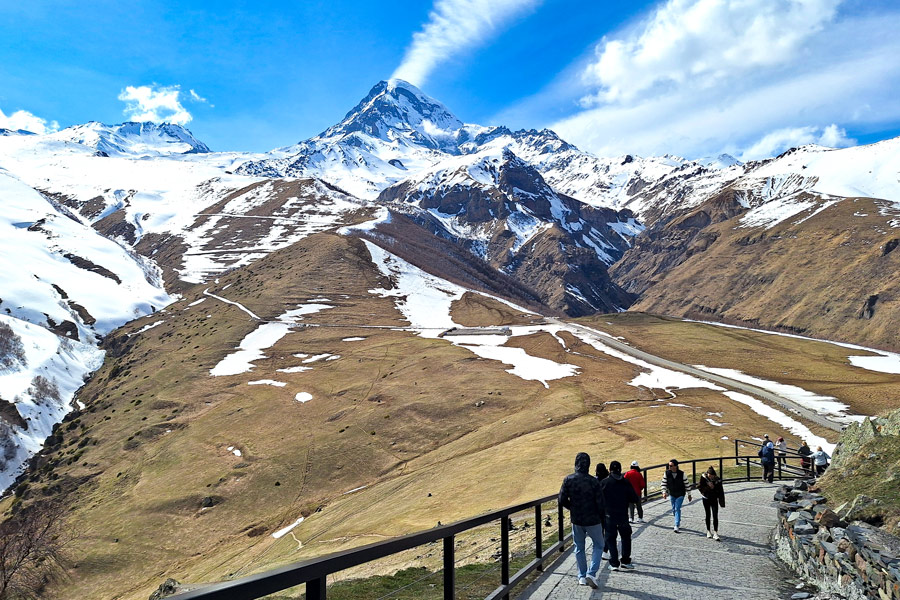
The most popular mountain destinations in Georgia include Kazbegi, Svaneti, Tusheti, and Racha-Lechkhumi. Visitors come for hiking, alpine scenery, traditional villages, horse riding, and road trips through the Caucasus Mountains. Explore the dedicated hiking destinations page for routes, highlights, and seasonal advice.
Are there UNESCO World Heritage Sites in Georgia?
Yes. Georgia has several UNESCO World Heritage Sites, including the historical churches of Mtskheta, Gelati Monastery, the mountain region of Upper Svaneti, and Colchic Rainforests and Wetlands. The Bagrati Cathedral near Kutaisi is inscribed on the List of World Heritage in Danger.
Which festivals are worth attending in Georgia?
The smaller and more regional the festival, the more rewarding it tends to be. Rtveli in Kakheti is the most famous. The harvest atmosphere continues into family vineyards and village celebrations that no programme lists. When planning around a specific date, Tbilisoba in October is the most accessible introduction to Georgian urban culture. The Tushetoba festival in August, on the other hand, presents horse racing and polyphonic singing against a backdrop of mountainous landscapes.
Where can I see a Georgian dance show in Tbilisi?

A live Georgian dance show is one of the most glowing introductions to the country's culture. Several Tbilisi restaurants combine a traditional dinner with a professional performance. Recommended venues and what to expect are covered in the Georgian dance show dinner guide.
What is it like to stay in a Georgian family guesthouse?
Staying in a Georgian family guesthouse means dishes are cooked from whatever the garden and the season provide, and the wine is often the family's own. In Svaneti, guesthouses are typically in the shadow of mediaeval towers; in Kakheti, they sit surrounded by vineyards; in Tusheti, they are among the most remote accommodations in Europe. The welcome, however, is consistent wherever you go. A guide to the best family guesthouses is in our Mountain Guesthouses in Georgia guide.