

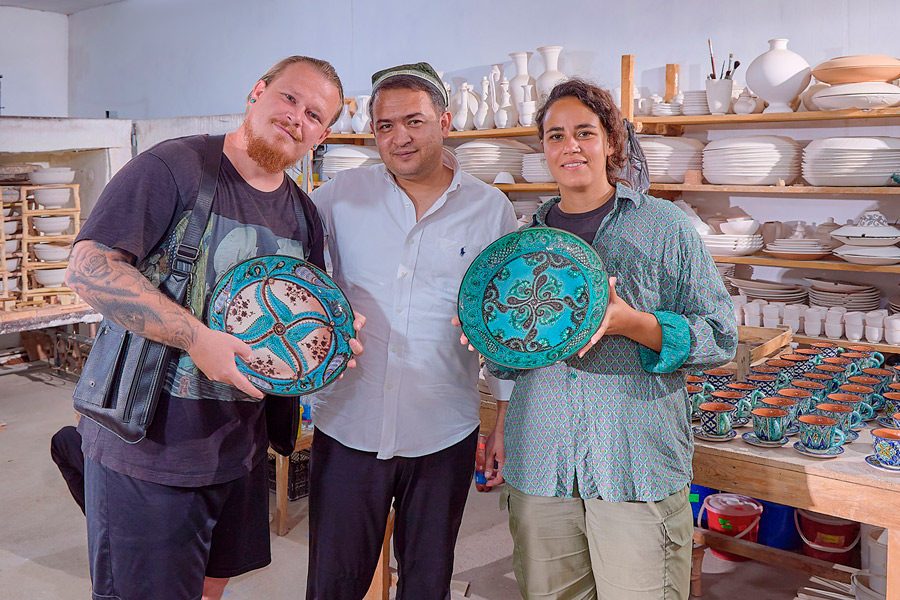
Photos and videos by: www.ferganavalley-ctn.uz
CTN (Community Tourism Network) is an association of artisans from the Fergana Valley, established in 2023 with the support of GIZ (German Society for International Cooperation) and the tourism consulting company Mascontour (Berlin, Germany). One of CTN’s main objectives is to introduce travellers from different countries to the richness of Uzbek culture, which is particularly vividly expressed through folk crafts. These crafts have accompanied everyday life for centuries, absorbing the historical way of life, tastes, and aesthetic sensibilities of several eras.
The Fergana Valley was not chosen for the project by chance. For centuries, it has remained an important centre of trade and cultural exchange. It is here that crafts such as Uzbek ceramics and the traditions of producing national fabrics like atlas and adras, included in the UNESCO list of intangible cultural heritage, have flourished. The traditions of embroidery-suzani, jewellery making, knife making, and leatherworking have also developed here since ancient times.
Fergana Valley Artisans at CTN
The organisation works with a wide network of artisans specialising in different types of crafts. Each craft is rooted in its own ancient traditions, techniques, and materials, as well as in the personal stories of those who safeguard professional knowledge and pass it on to the next generation of artisans.
Ceramics
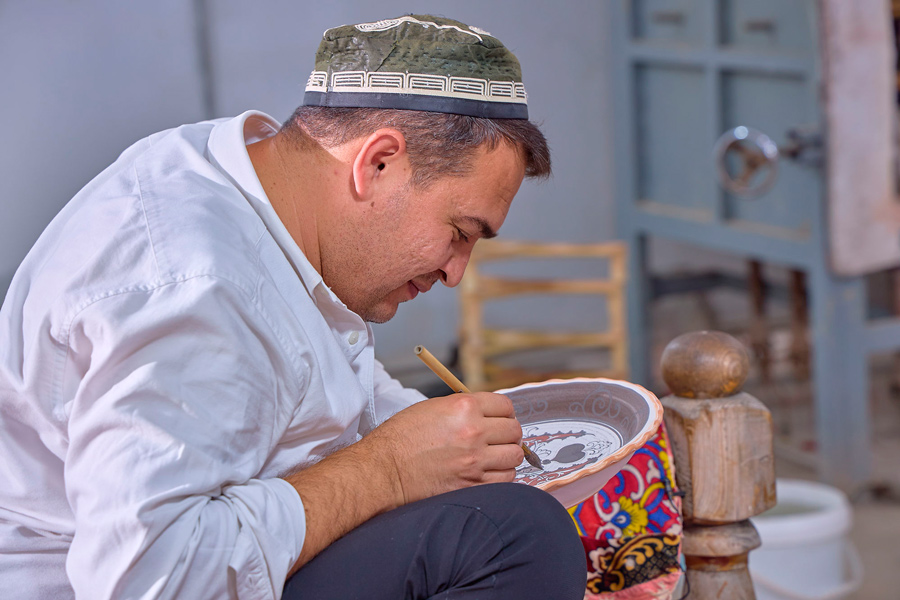
Diyorbek Nazirov (Rishtan) is a master ceramist from a renowned dynasty founded by Alisher Nazirov. Diyorbek trained in Russia and Japan, where he became acquainted with other cultural traditions and ceramic schools. He currently works with his father, Bakhtiyor Nazirov, at the Rishtan International Ceramics Center and regularly takes part in national and international festivals and exhibitions. In his work, Diyorbek Nazirov brings together ancient techniques of the authentic Rishtan style, family traditions, and modern design, preserving the recognisable character of local ceramics while giving it a contemporary expression.
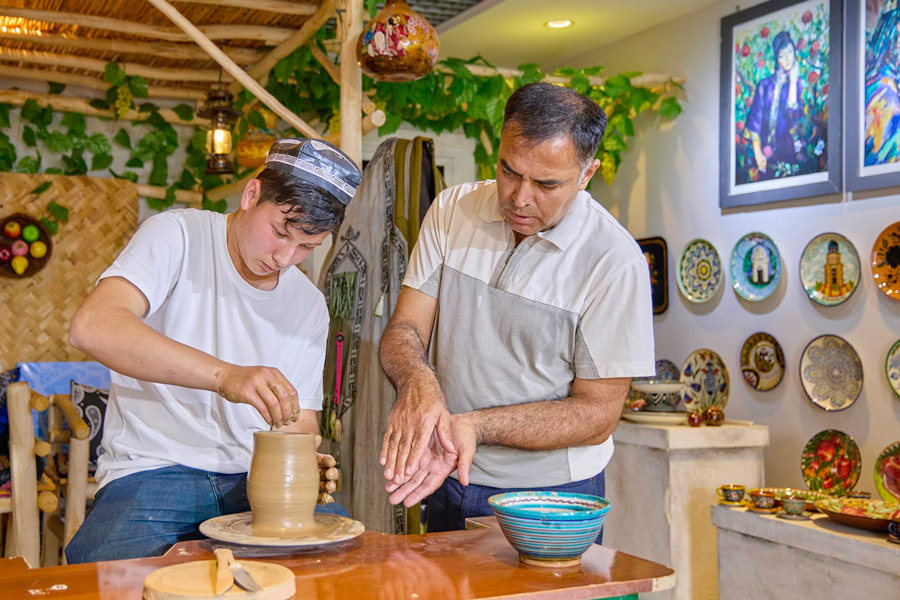
Vakhobjon Buvayev (Gurumsaray) is a recognised master of ceramics working in the original Gurumsaray style, which was on the verge of extinction at the turn of the 20th and 21st centuries. A student of the well-known master Maksudali Turopov, Vakhobjon Buvayev has succeeded in preserving centuries-old traditions. He adheres to an authentic aesthetic defined by ancient colour combinations, archaic ornaments, and forms that refer to the early periods of the region’s history.
Vakhobjon Buvayev works both in his workshop in Gurumsaray and at Namangan University, where he passes on the knowledge and techniques of his craft to the next generation of ceramists.
Nurbek Khatamirzaev (Yangikurgan, Namangan region) is a young Fergana craftsman and ceramist who works at the Usto-Shogird workshop in the village of Yangikurgan. His main focus is the revival of the ceramic tradition of ancient Akhsikent, a historic city that existed from approximately the 3rd century BC to the 17th century AD and was once a major regional centre. Drawing on scientific research and preserved ceramic fragments discovered at the Akhsikent archaeological site, Nurbek Khatamirzaev creates original works in which ancient forms and ornamental motifs are given new life.
Fabric Production, Embroidery, and Design
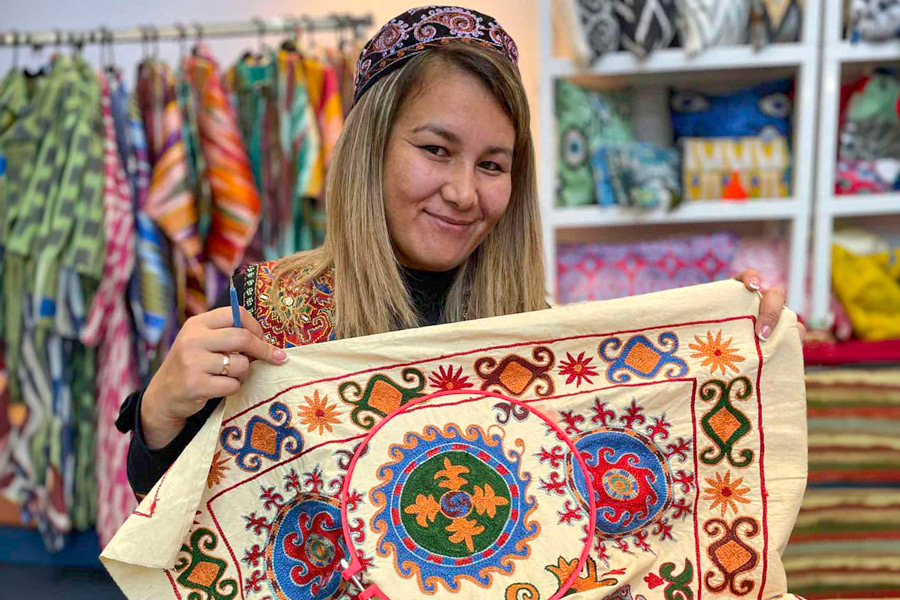
Nargiza Sherkhodzhaeva (Margilan) is a renowned artisan specialising in silk fabrics, carpets, and embroidery. Her work follows the Fergana traditions of refined floral ornamentation, while standing out for its originality and technical complexity.
Nargiza Sherkhodzhaeva owns a gallery in the “Carpet Room” of the Yodgorlik factory, where her own works are displayed alongside silk textiles created by other craftsmen. She also runs the Nargiza&Co factory, which employs several hundred artisans who produce textiles entirely by hand. These works can be seen and purchased at the craft shop in the Kushtepa bazaar in Margilan.
Rasuljon Mirzaahmedov (Margilan) is a hereditary craftsman and the son of the well-known Margilan weaving master Turgunbay Mirzaahmedov. He works at the Margilan City Crafts Center, whose efforts to preserve traditional techniques of producing satin and adras have been recognised by UNESCO and, since 2017, included in the List of Intangible Cultural Heritage from Uzbekistan.
Beyond his craft practice, the master is actively involved in public and cultural life. He heads the Hunarmand Republican Association of Craftsmen and is the author of two books published with the support of UNESCO. The first, Tabiiy bo‘yoqlar siri (Secrets of Natural Dyes, 2007), focuses on dyes used in weaving. The second, Secrets of Uzbek Naboika (2011), explores fabric dyeing through pattern printing.
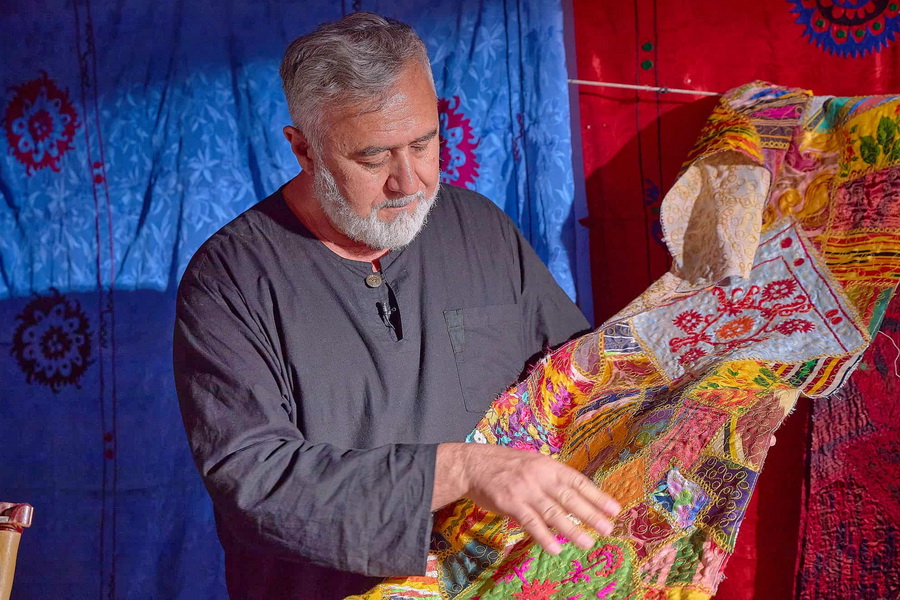
Khayrutdin Zainudinov (Kuvasoy, Fergana Region) is a well-known clothing designer and the founder of the Semurgh Designs studio in the town of Kuvasoy, about 15 kilometres east of Fergana. A master craftsman by heritage, he comes from a family of tailors - according to legend, his grandfather once dressed the Emir of Bukhara himself.
He specialises in long chapan robes, for which clients travel to him from across Uzbekistan. Each garment is made using only natural fabrics, both contemporary and vintage. He often incorporates hand embroidery, combines eclectic stylistic elements, and experiments with colour, giving his designs a distinctive and individual character. His work can be found far beyond the Fergana Valley, including at the Human House gallery in Tashkent, where he occasionally takes part in creative meetings and master classes.
Nargiza Yuldasheva (Fergana) is a designer of national clothing and the founder of the Begoyim company, which employs more than ten artisans. She creates original designs that combine traditional fabrics and ornaments with modern design approaches. Her collections are presented in a workshop and showroom, with selected items available to order online at begoyimcollection.uz.
Abdulbosit Isakjanov (Namangan) is a Fergana artisan from Namangan and the founder of Abdulhakim Suzani Embroidery, which employs around 200 embroiderers producing hand-embroidered suzani panels, as well as clothing and small decorative textile items for interior use.
Abdulbosit Isakjanov regularly takes part in craft events in cities across Uzbekistan and abroad. In November 2024, for example, he participated in an international craft fair in Berlin. His works are distinguished by a strict adherence to fully manual production, the use of natural fabrics and dyes, and a consistent reliance on traditional patterns and compositions.
Knife Making
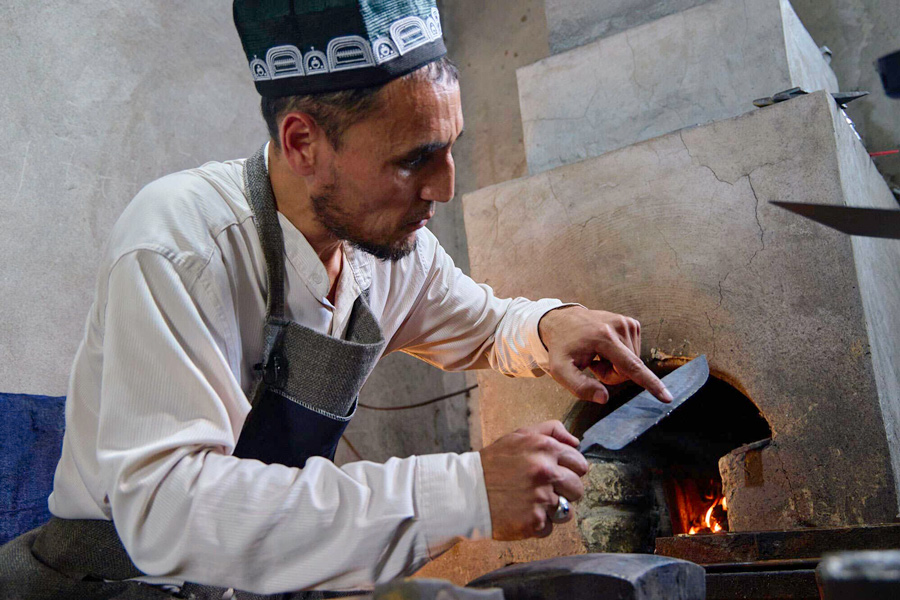
Muzaffar Umarov (Shakhrikhon) is a renowned pichoqchi, or knife maker. He works in Shakhrikhon, a small town about 20 km west of Andijan, widely known for its distinctive knives and the generations of craftsmen who produce them. Muzaffar Umarov’s family has been engaged in blacksmithing and knife making for many years, preserving skills passed down through generations.
Today, Muzaffar Umarov runs his own workshop and shop, Shaxrixon pichoq, where visitors can observe the knife-making process and take part in a master class or a short guided tour.
Leatherwork
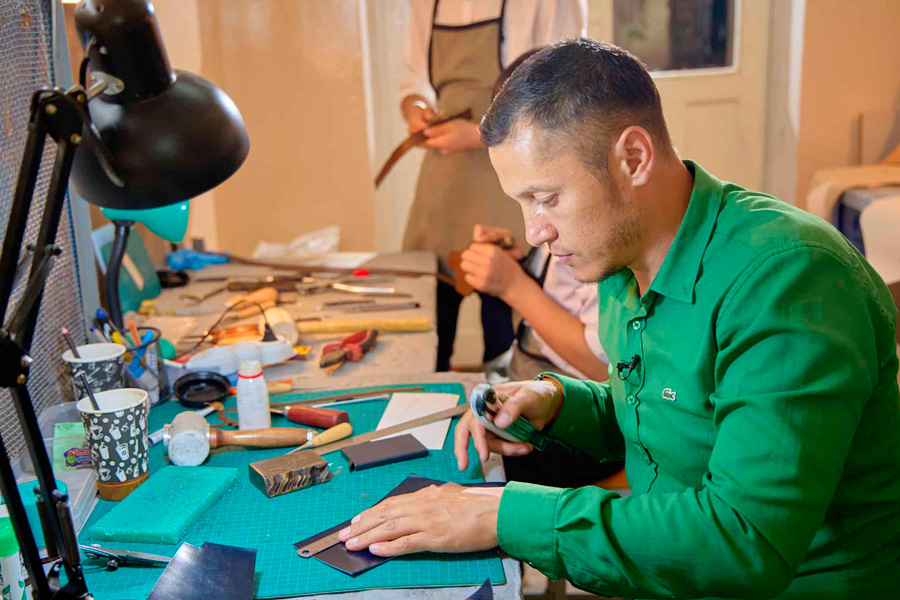
Eldorbek Matmusaev (Fergana) is a renowned craftsman from the Fergana Valley who creates accessories from natural leather. He is the founder of El-Nur Leather, a workshop producing bags, belts, wallets, leather jewellery such as amulets and pendants, and other small accessories. In his work, the craftsman uses only high-quality leather, often combining it with elements of other applied arts, including textiles and embroidery. These combinations, together with the use of traditional ornaments such as floral motifs and pomegranate imagery, give his pieces a distinctive and recognisable character.
Local brand stores
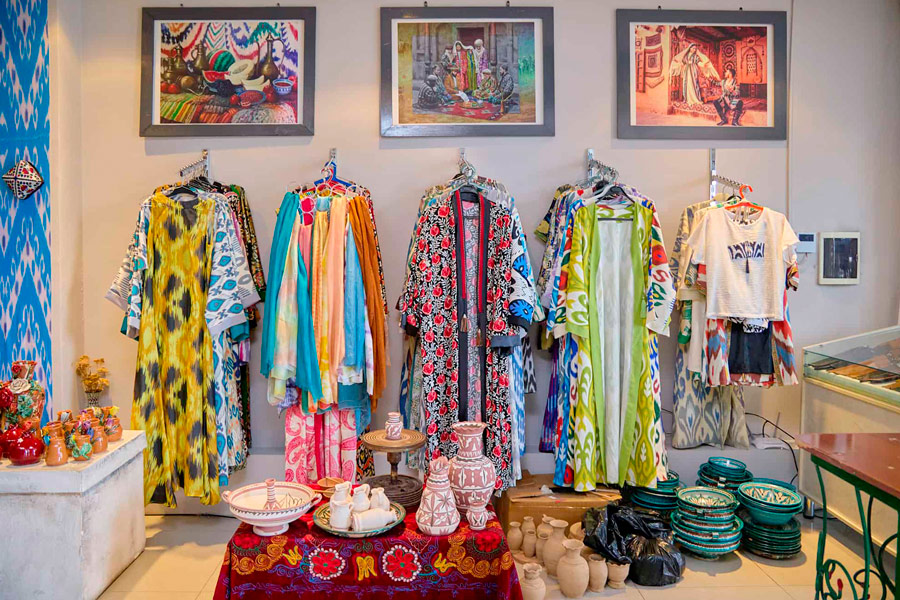
Silk Granat craft store (Namangan) is a boutique located in the heart of the Fergana Valley. It is run by Marina Jabbarova, whose entrepreneurial work was recognised in 2023 with the Active Entrepreneur award. Marina is both the manager and the creative driving force behind the store, which brings together outstanding handicrafts from different cities across the Fergana Valley.
At Silk Granat, visitors can find a wide range of items, from Uzbek ceramics and handmade dolls to carpets and large embroidered panels. All products are distinguished by their high quality and are created by renowned Fergana artisans - true custodians of centuries-old traditions. Many items are also available through the online platform silkgranat.uz, with worldwide delivery.
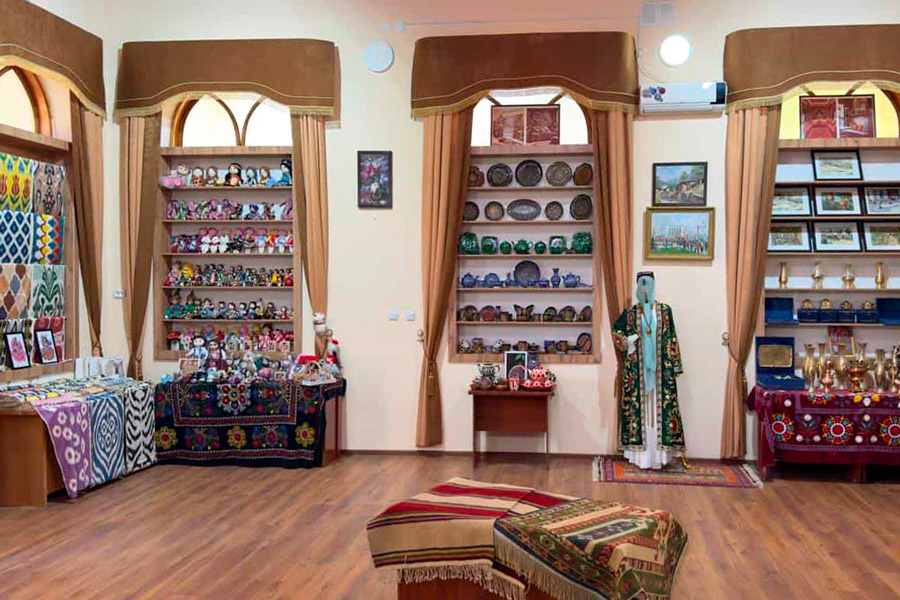
Craft House (Fergana) is a craft store offering an extensive selection of handmade products, combined with a welcoming atmosphere and a photo zone designed in the style of a traditional Uzbek home. The collection stands out for its diversity, with visitors particularly drawn to the rich selection of women’s clothing. These garments are made according to traditional Uzbek techniques and evoke the aesthetic of historical Silk Road attire.
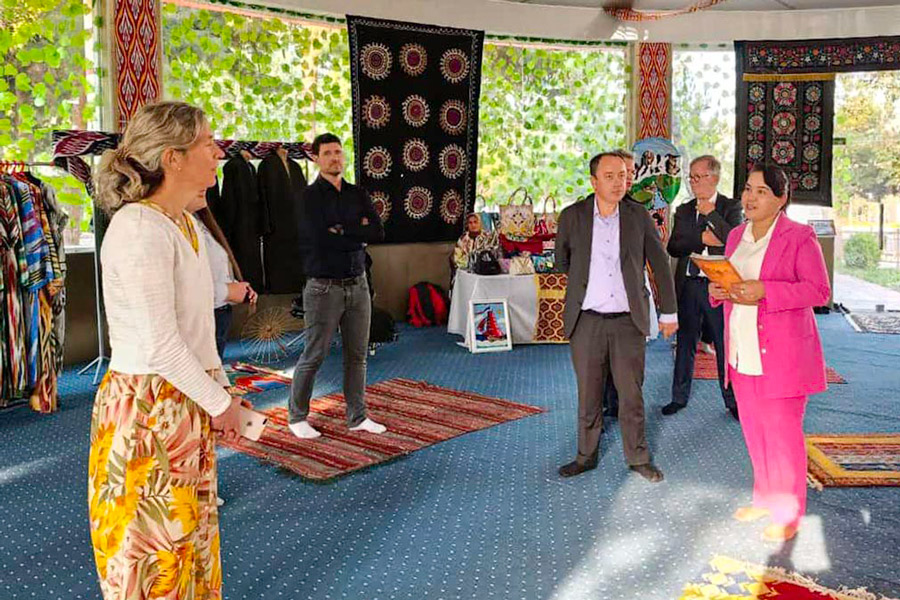
Craft House (Kokand) is a shop and exhibition centre that opened in 2025. The project was created with the support of Kokand University and on the initiative of craftswoman Rano Botaboeva, who specialises in traditional jewellery making. She currently heads the Kokand House of Crafts and also runs her own jewellery enterprise, Aydina Collection, based in the village of Uchkuprik in the Fergana region.
Craft House in Kokand reflects a contemporary approach to craft spaces, combining a relaxed setting with tea and oriental sweets, opportunities to take part in master classes, and photo sessions in traditional Uzbek costumes surrounded by handicrafts. Another advantage is its central location in historic Kokand, close to the well-known Khudoyar Khan Palace.
Art House Sadosh (Shokhimardono-bod, Fergana region) is another notable craft space located near Fergana. Its founder, Sadokat Mirzaeva, is a craftswoman and entrepreneur who also organises three-month training courses for girls and women with disabilities, as well as for those facing difficult family or financial circumstances.
Around 300 aspiring craftswomen from the Fergana Valley have already completed this training programme, with about a third now working at Sadosh. The clothing, home textiles, and handmade dolls they create are exhibited and sold both within Uzbekistan and abroad.