

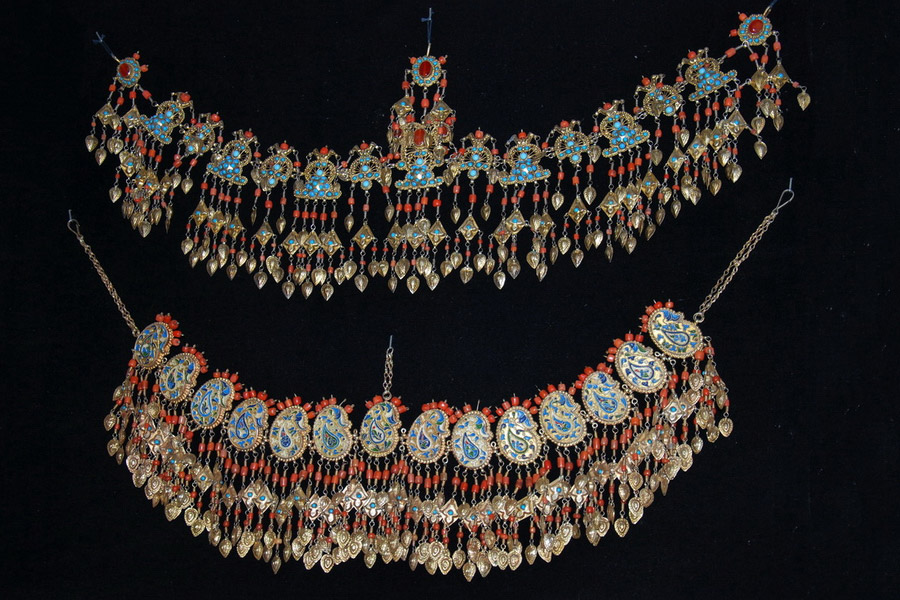
Over many generations, Uzbek craftsmen have passed down the intricacies of jewelry making – metalworking skills, distinctive inlay techniques, and ornamental motifs rich in symbolic meaning. Each handmade piece reflects artistic taste, cultural imagery, religious values, and elements of everyday life. Gold and silver adornments, once celebrated along the Silk Road, still captivate with their filigree craftsmanship, rare gemstones, and refined symbolism. Their forms and details convey protective signs, wishes for prosperity, and enduring beliefs in the sacred properties of metal and stone. This tradition, carefully preserved and adapted to contemporary practice, lives on both in museum collections and in the work of today’s artisans.
The History of Jewelry Art in Uzbekistan
Jewelry art in Uzbekistan dates back thousands of years. Archaeological discoveries confirm this long history: at Sapallitepa (2nd millennium BC), beads made of carnelian, lapis lazuli, agate, and turquoise were found – polished and pierced, they are remarkable for their preservation and contemporary aesthetic. Equally notable is a 6th-century BC gemstone: an orange carnelian engraved with the mythological creature gopatshakh (a bull with a human torso), now housed in the Museum of History of Uzbekistan.
With the rise of the Silk Road, Uzbek jewelry became an integral part of international trade. Its elegance and refinement impressed Europeans, and its high level of craftsmanship is demonstrated by the Amu Darya and Dalverzin treasures. The former contains Bactrian pieces from the 4th–2nd centuries BC, including a gold bracelet with griffins and a miniature chariot, now held by the British Museum. The latter, unearthed in 1972 at Dalverzintepa, comprises more than 100 gold items from the Kushan era and was featured in the Louvre’s Splendeurs des oasis d’Ouzbékistan exhibition (2022–2023).
Jewelry craftsmanship flourished under Amir Timur and the Timurids. Samarkand became a center for the finest artisans of the East. This period is linked to legends of “Timur ruby” (in fact a red spinel, visually similar to ruby) and the famed Koh-i-Noor diamond, which entered the treasury of the Great Mughals – Timur’s descendants – and today forms part of the British Crown Jewels.
In the 18th and 19th centuries, fine jewelry remained widespread at royal courts and among urban elites. Distinct regional styles emerged in Bukhara, Samarkand, Kokand, and Khiva, where master craftsmen developed unique metalworking and ornamental techniques. A rich collection of women’s jewelry featuring pearls, coral, turquoise, and other stones is preserved in Tashkent’s Museum of Applied Arts.
Although the 20th century brought challenges through industrialization and standardization, today Uzbek jewelry art is experiencing a revival. Contemporary artisans are once again creating handmade pieces rooted in long-standing traditions. Tashkent has become an important center for the regional jewelry industry: since 2023, it has hosted the International Jewelry Fair, drawing craftspeople and collectors from around the world. Outstanding works are also displayed at other cultural events, including the Gold Embroidery and Jewelry Festival in Bukhara.
Types of Traditional Uzbek Jewelry
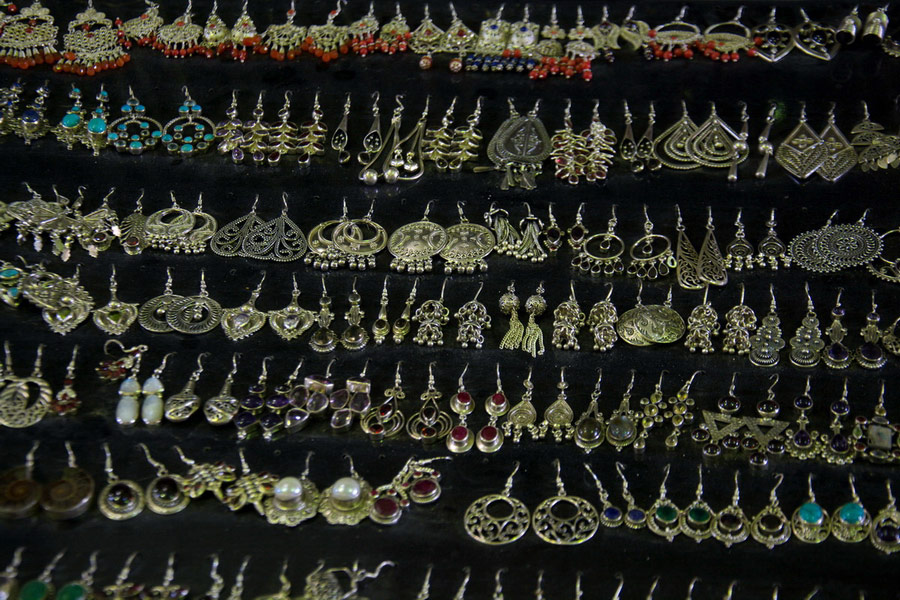
Uzbek jewelry art is easily recognizable: massive forms, delicate ornamentation, rich stone inlay, and distinctive pendants make these pieces truly expressive. The technique of blackening is often used to emphasize patterns on the metal, and the items themselves are generously adorned with precious and semi-precious stones – carnelian, turquoise, coral, and pearls.
In traditional culture, jewelry played a far greater role than simply complementing one’s appearance. A woman’s jewelry set included dozens of pieces that covered her from head to toe and sometimes weighed several kilograms. The head alone was adorned with forehead ornaments, pendants, earrings, and metal hairpins – special decorations for braids. Such sets were worn on special occasions, primarily at weddings, where the quantity and quality of the jewelry symbolized the wealth and social standing of the bride’s family.
Some of the most characteristic elements are tilla-kosh, zebigardon, and tumor.
- Tilla-kosh are tiara-like ornaments set with stones. Their name translates as “golden eyebrows.” Such pieces can still be seen today as part of traditional women’s costumes in several regions of Uzbekistan.
- Zebigardon is a large necklace consisting of multiple rows of chains connected by plates, medallions, and amulets. It is richly adorned with stones and pendants, often becoming the central element of the entire jewelry ensemble.
- Tumor is an amulet box, usually cylindrical or triangular in form. Prayers or protective texts were placed inside it. It was worn on the chest as a talisman, often complemented with stones and metal pendants that reinforced its protective symbolism.
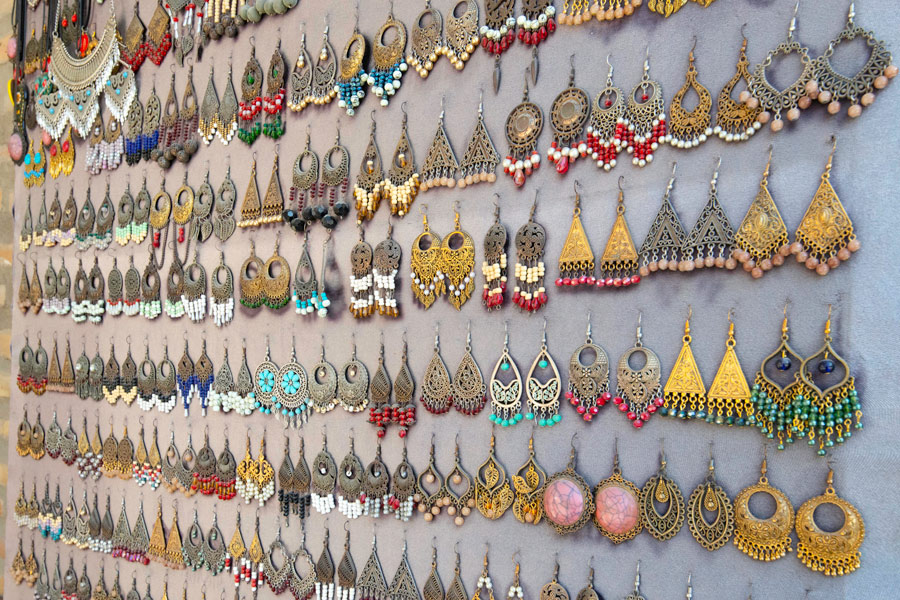
Today, traditional Uzbek jewelry is increasingly perceived not as ritual attributes, but as refined elements of national style. They are worn at holidays, festivals, and family celebrations – as a tribute to heritage and a way to maintain a living connection with the culture of ancestors. Modern amulets, such as kuzmunchok – bright beads and bracelets with an eye that protects against the evil eye – have become popular souvenirs found in bazaars, craft shops, and fairs throughout Uzbekistan.
Materials Used in Uzbek Jewelry
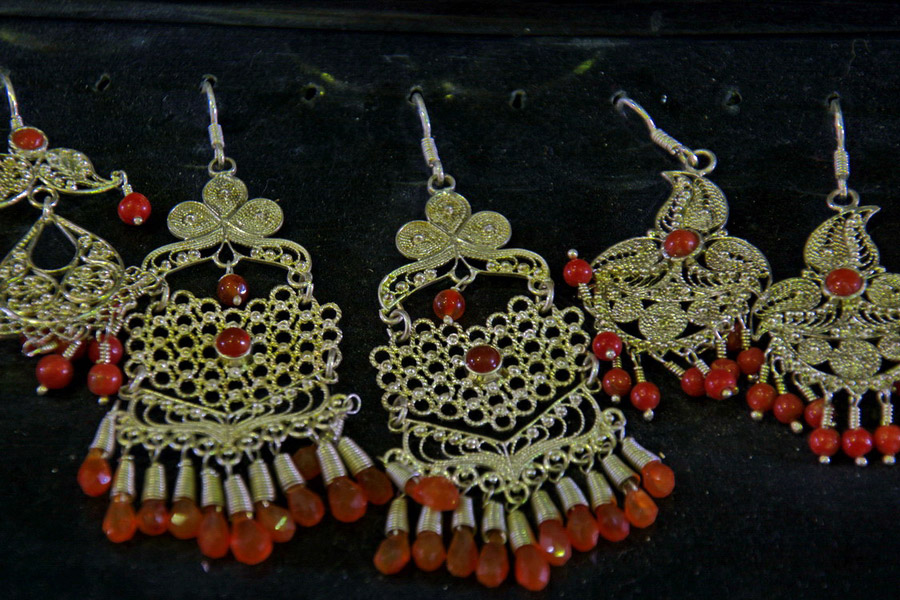
Materials have always been of particular importance in Uzbek jewelry art. Silver, gold, turquoise, carnelian, and other stones were chosen deliberately – craftsmen considered their durability, decorative qualities, as well as their symbolism and perceived protective or healing properties. Through the choice of materials, jewelry became not only a beautiful object, but part of a living cultural tradition.
Silver
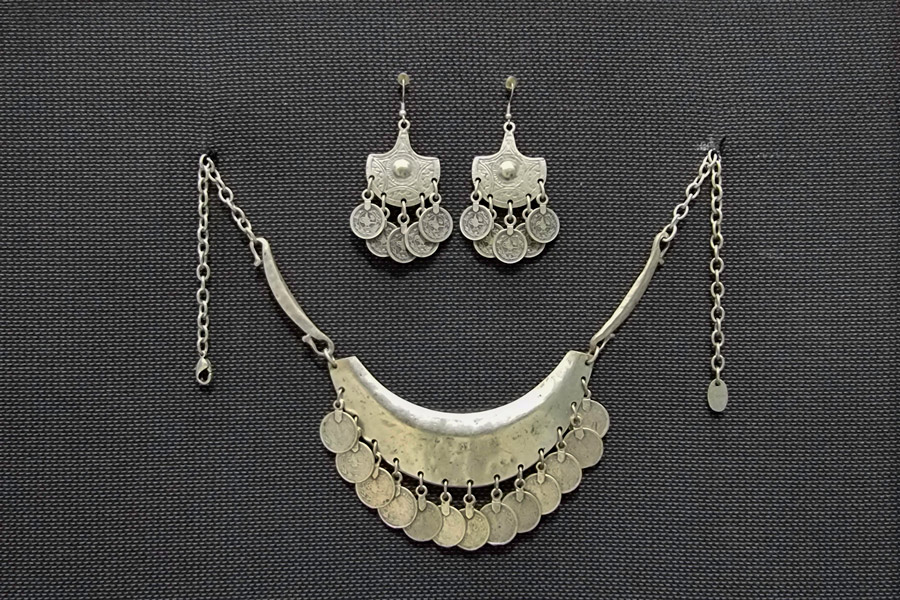
Of all metals, silver became truly iconic for traditional Uzbek jewelry art. Since ancient times, it has been valued for its beauty and symbolic qualities: it was believed to purify the soul and body and to protect against illness and harmful influences.
It was from silver that the most expressive jewelry was created – large, with complex ornaments, using the technique of blackening and often with gilding. The masters of Bukhara were especially renowned for decorating silver with bright enamel, giving the pieces a vivid color palette.
Silver jewelry integrates easily into a modern wardrobe. Uzbek earrings, tumors, or bracelets add an ethnic accent to both traditional outfits and business attire, emphasizing individuality and taste.
Gold
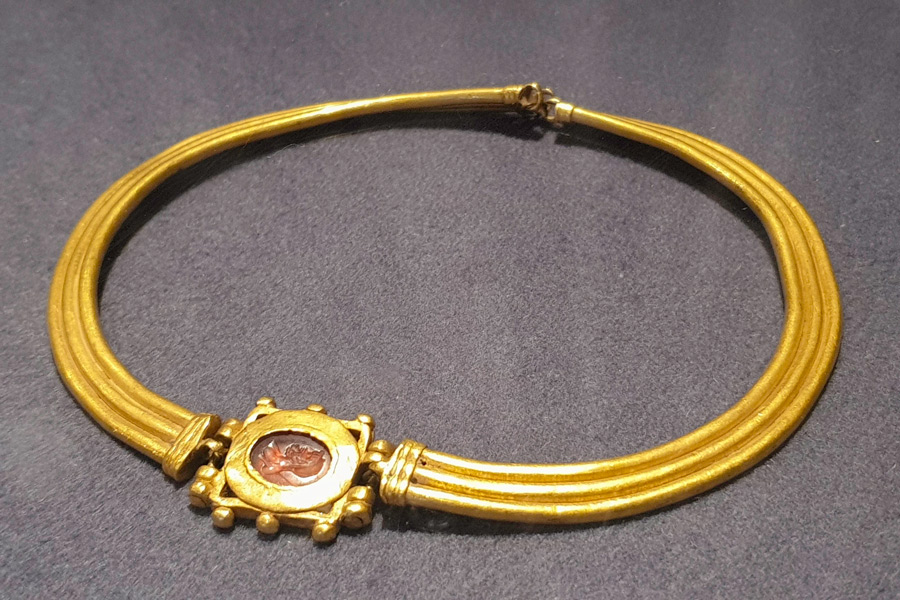
Uzbekistan is one of the world’s top ten gold producers. The country’s largest deposit, Muruntau, is located in the Navoi region, and a significant share of the gold mined there is used in the jewelry industry.
Gold jewelry has long symbolized wealth and social standing. In the past, it was worn mainly by the nobility, while urban residents and artisans chose more affordable materials such as silver, copper, or bronze. After the adoption of Islam in the 8th century, gold became primarily a women’s adornment, a tradition that largely continues today.
Gold is valued for its durability: it does not tarnish or lose its shine and becomes more valuable over time. Handmade pieces are often passed down as family heirlooms or regarded as a reliable investment. Today, thanks to government support and large-scale mining, such jewelry has become more accessible. In Uzbekistan, it is produced by both small workshops and major manufacturers, such as the Tashkent-based Fonon factory, which creates collections in both traditional and contemporary styles.
Precious and Semi-precious Stones
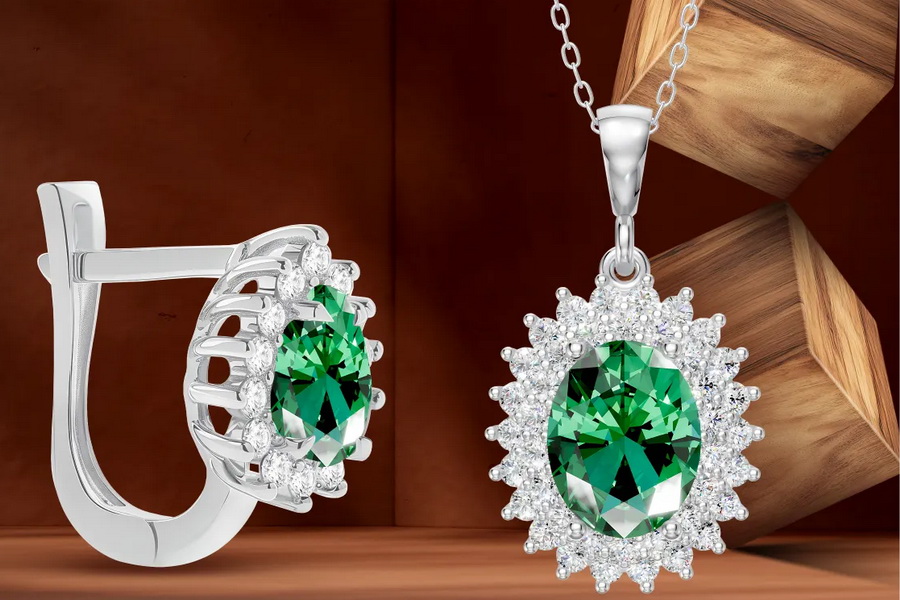
Photo by: www.fonon.uz
Stones have always held special significance in Uzbek jewelry. They enhanced the overall appearance of a piece, indicated the owner’s status, and, according to popular belief, served as protection against illness and negative influences.
The most characteristic stones for the region are turquoise and carnelian (in Uzbekistan, it is called hakik, meaning “truthful”). Turquoise is prized for its sky-blue hue and protective associations: it was thought to strengthen inner resolve and bring good fortune. Carnelian was linked to honesty, inner calm, and the power of speech – it was believed that a person wearing this stone could not lie.
Coral was also widely used – its pink and red tones adorned necklaces and earrings, and the stones themselves were thought to support health and bring emotional balance. Pearls were equally popular, especially in women’s jewelry, where they symbolized purity and delicacy.
Precious stones such as emeralds, rubies, and sapphires also appear in antique jewelry. Today, diamonds have joined this list: they are used both in the works of contemporary artisans and in factory collections. The Fonon factory offers entire lines of diamond jewelry, from classic to Oriental-inspired designs.