


For centuries, Silk Road trade routes crossed many territories, including one that is now Uzbekistan, helping its cities grow into important centres of commerce and exchange. Samarkand, Bukhara, and Khiva wear their history openly: turquoise- and cobalt-blue tiled madrasahs, brick minarets, and covered trading domes anchor cities that once welcomed merchants travelling between Asia and the Mediterranean. Venture a little further, and you'll come across the ruins of Buddhist settlements and ancient fortresses, evidence of a history that long predates the arrival of Islam. Some of your best memories, though, may have nothing to do with monuments at all. They may come from watching a potter shape clay in Rishtan, following the journey of natural silk in Margilan, or hearing the call to prayer drift across an old neighbourhood as yet another day begins to fade.
This guide covers the practical side of travelling in Uzbekistan: where to go, when to visit, how to get around, visas, safety, everyday etiquette, and how many days to set aside. Use it to decide what to prioritise and how far beyond the main cities to go, whether you have a few days, a few weeks, or longer.
Essential Uzbekistan Travel Guide
Contents
Is Uzbekistan Worth Visiting?

Uzbekistan is worth the journey. The Silk Road cities are as impressive as their history suggests. Most first-time visitors to Uzbekistan find it very easy to get around thanks to good infrastructure and the warm welcome of the locals. Uzbek cuisine delights at every turn, spanning a wide variety of flavours and regional specialities that entice food lovers seeking new experiences. And the country has enough to fill a second trip without repeating the first. Here is what to expect:
Good value for money at every level: Local food, public transport, and family-run guesthouses are affordable by most standards, often significantly so for travellers from Western Europe or North America. Boutique hotels, private guides, and tailor-made itineraries provide for levels of service that compare well with some other destinations.
Straightforward to enter: Many nationalities can enter Uzbekistan visa-free for up to 30 days; travellers from a wide range of other countries can apply for an e-visa online.
Easy to get around: Tashkent, Samarkand, Bukhara, and Khiva are connected by rail, with fast trains on the central route making the main cities straightforward to travel between independently. Tickets can be booked online in advance.
The bazaars: Chorsu Bazaar in Tashkent and Siab Bazaar in Samarkand are among the best places to find local specialities such as kurt (small, salty balls of sun-dried fermented milk) and navat (crystallised sugar traditionally served with tea). In summer and early autumn, look out for the watermelons and juicy Tashkent lemons for which the country is particularly well known.
The locals: Uzbeks tend to be genuinely curious about where you came from and where else you have been. Friendly conversations can easily stretch well beyond what either side planned.
History, art, and culture: Uzbekistan's art and architecture are among its greatest draws. Centuries of Persian, Timurid, and Central Asian influence are visible everywhere, from the turquoise-tiled domes of Samarkand's Registan to the carved wooden doors of Khiva's old town. Madrasas glazed in deep blue mosaic, towering mausoleums, and restored caravanserais that now host teahouses and evening music still trace the routes once travelled by Silk Road merchants. Few countries let you walk through so much history in a single afternoon.
Beyond the main travel routes: Outside the main cities, visitor numbers drop. In the Fergana Valley and around Karakalpakstan’s ancient desert fortresses, such as Ayaz-Kala, it is still possible to stand among centuries-old mud-brick walls with the Kyzylkum Desert stretching around you, discoveries waiting in every step, and crowds left far behind.
Experience the Best of Uzbekistan

Our Uzbekistan tours cover a wide range of interests and travel styles, from a short introduction to the cities on the Silk Road to multi-country expeditions, specialist itineraries built around food, archaeology, or adventure, and everything in between. If you don't see quite what you have in mind, drop us a note and we will design something around your plans.




Uzbekistan Visa Matters
Uzbekistan began significantly expanding visa-free access in 2018, and the list of eligible countries has continued to grow. Citizens of Australia, Japan, South Korea, and most European and South American countries can enter without a visa for up to 30 days. Some transit travellers may also qualify for a five-day visa-free stay, subject to nationality and onwards-ticket requirements. Travellers from many other countries can apply for a single-entry e-visa online, valid for up to 30 days.
Entry regulations can change, so it is worth checking the current rules before you book the trip. For a detailed overview by nationality, see our Uzbekistan Visa page. For arrival, accommodation, money, and other practical details, our Uzbekistan trip planner has everything you need alongside the visa information above.
Is Uzbekistan Safe for Travel?

Uzbekistan is a safe and welcoming destination for travellers. Tourist police operate in the main visitor cities, including Samarkand, Bukhara, and Khiva. Visitors can also reach the Call Centre for Safe Tourism on 1173, a 24-hour helpline with operators available in English, Uzbek, and Russian.
Getting to and Around Uzbekistan
Tashkent, the country's capital and main international gateway, is easily reachable. Direct flights connect Tashkent with major regional hubs and several international destinations, including Istanbul, Bangkok, Moscow, and New York, and most major European cities can be reached with one connection.
Once in the country, the main cities are linked by rail, with journey times short enough to make the central route straightforward to manage. Domestic flights cover longer distances, and private car hire is a practical option for reaching destinations the railway does not yet serve.
Best Time to Visit Uzbekistan

Uzbekistan has four distinct seasons, and the weather varies enough between them that timing your visit is worth thinking about. April, May, September, and October are the most popular months, and for good reason: temperatures are comfortable, the landscapes are at their most pleasant, and the main cities are lively.
Spring brings Navruz (also Navroʻz and Nowruz) celebrations and flowering orchards. Summer suits travellers heading into the mountains near Tashkent, where temperatures stay manageable even in the heat of July and August. Autumn brings the harvest and some of the best light of the year for the desert cities. Winter is quiet and cold, with the ancient cities largely to themselves and skiing available at Chimgan and Amirsoy.
For a full breakdown by season, month, and travel goal, see our guide to the best time to visit Uzbekistan.
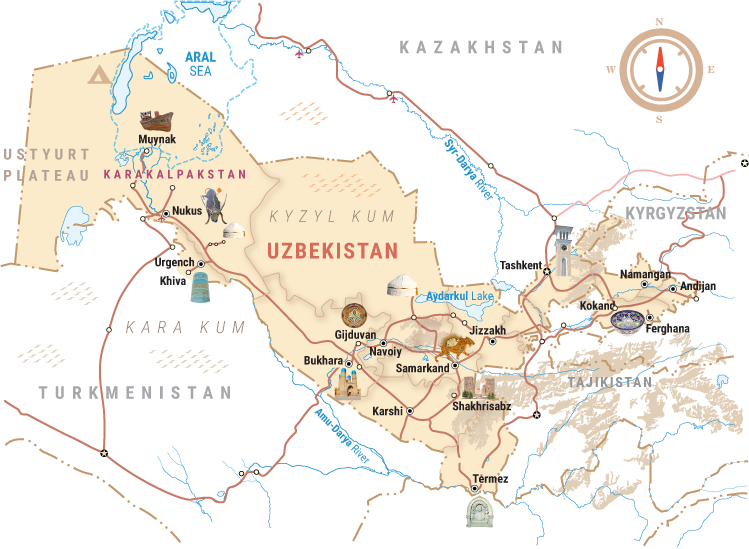
Uzbekistan Travel Map
Use the Uzbekistan Map to locate the country’s main cities and find out what each one has to offer:
How Many Days Do You Need in Uzbekistan?
How long you spend in Uzbekistan will depend on your interests, your schedule, and whether you plan to travel outside the main cities. The suggested itineraries below are based on common travel patterns and should give you a reasonable starting point.
-
Tashkent – The capital of Uzbekistan, with wide tree-lined streets, parks, and historic mahalla neighbourhoods centred around the Old City and the Hazrat Imam (also Hastimom) complex.
How long should I stay? 1-2 days
Major sites: Tashkent Metro, Chorsu Bazaar, Amir Timur Square
Off the beaten path: Explore the Old City streets around Chorsu Bazaar on foot, or seek out Tashkent's Soviet-era Modernist buildings, many of which date from the 1960s to the 1980s. The new National Museum of Uzbekistan, designed by Pritzker Prize-winning architect Tadao Ando, is currently under construction and due to open in 2028. -
Samarkand – Capital of the Timurid Empire and one of the great cities of the Silk Road, with grand madrasahs, mosques, and mausoleums at the heart of its UNESCO-listed historic centre.
How long should I stay? 2 to 3 days, with an extra day if you plan to visit nearby Shakhrisabz city.
Major sites: Registan Square, Gur-Emir Mausoleum, Shah-i-Zinda Necropolis
Off the beaten path: Explore the archaeological site of Afrasiyab, where excavations reveal layers of settlement dating back to the 7th century BC, or visit Hudjum Carpet Factory to watch silk carpets being woven by hand. -
Bukhara – One of Central Asia’s great centres of Islamic culture and learning, associated with the physician and philosopher Ibn Sina (Avicenna), who studied there, and the poet and musician Rudaki, who served at the Samanid court. Its Historic Centre is a UNESCO World Heritage Site.
How long should I stay? 1.5 to 2 days
Major sites: Ark Fortress, Lyabi-Khauz Ensemble, Poi-Kalyan Ensemble
Off the beaten path: Take a day trip to Gijduvan for a ceramics master class at the workshop of the Narzullaev family, whose pottery tradition has been passed down through six generations. Back in Bukhara, seek out oshi sofi (also osh sofi), the city’s distinctive style of plov (osh).
-
Khiva – An oasis city with a history stretching back more than 2,500 years, where the entire walled old town, Itchan Kala, is protected as a UNESCO World Heritage Site.
How long should I stay? 1 to 2 days
Major sites: Kunya-Ark Citadel, Juma Mosque, Kalta-minor Minaret
Off the beaten path: Visit Nurullaboy Palace in the outer city, where traditional Khorezm architecture is combined with European influences, including Art Nouveau details in its richly decorated interiors; or take a day trip to the desert fortresses of Ancient Khorezm. -
Nukus – Capital of Karakalpakstan and gateway to the Aral Sea region.
How long should I stay? 1.5 to 2 days, including a trip to Muynak
Major sites: Savitsky Museum, Mizdakhan Necropolis, Aral Sea region and Muynak Ship Cemetery
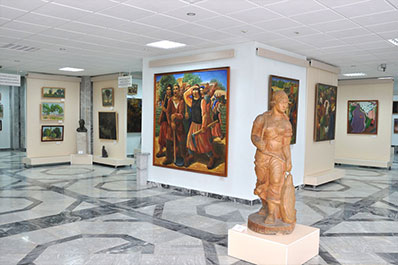
Off the beaten path: Nukus lies well outside Uzbekistan's main tourist circuit, and simply getting there takes you far from the country's better-known Silk Road cities. In town, the Savitsky Museum holds one of the world's largest collections of avant-garde art. Outside the city, the road to Muynak passes Mizdakhan Necropolis before reaching the Ship Cemetery, about a three-hour drive from Nukus. Reaching the Aral Sea's current shoreline takes a further three to four hours by four-wheel-drive. -
Fergana Valley – A fertile, populous valley where some of Uzbekistan's best-known craft traditions are still practised, including Rishtan ceramics and Margilan silk weaving. The region includes the cities of Andijan, Fergana, Margilan, Rishtan, and Kokand.
How long should I stay? 2 to 3 days to cover the main craft and historical centre
Major sites: Ceramics Workshop (Rishtan), Yodgorlik Silk Factory (Margilan), Khudoyar Khan Palace (Kokand)
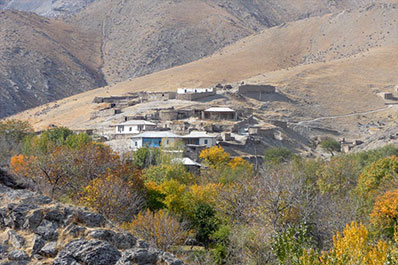
Off the beaten path: Visit the ancient settlement of Kuva, or spend a morning at Kumtepa Bazaar in Margilan, a large traditional market. -
Termez – Southern Uzbekistan’s ancient Silk Road city, known for its early archaeological sites and remarkable Buddhist heritage.
How long should I stay? 1 to 2 days
Major sites: Kara Tepa place of worship, Fayaz-Tepa complex, and Kirk Kiz (also Kyrk-Kyz) Fortress.
Off the beaten path: Visit the Jarkurgan Minaret, around 40 kilometres (about 25 miles) from Termez, a 12th-century tower with distinctive herringbone brickwork, standing in the village of Minor, where the mosque complex it once served has largely disappeared. Closer to the city, Zurmala Stupa is a Kushan-era structure dating to the 1st or 2nd century AD and one of the oldest surviving Buddhist monuments in Uzbekistan.
Holidays and Festivals in Uzbekistan

Uzbekistan's festivals and public holidays are worth building a trip around. Most involve food, music, and public gatherings that give visitors a different view of everyday life in the country. If your dates are flexible, timing your visit around these occasions is worth considering.
Navruz (21 March)
Uzbekistan celebrates the Persian New Year and the arrival of spring with music, traditional games, and seasonal food. Festivities take place across the country, with larger events in the main cities and distinctive local traditions in rural communities.
Best place to celebrate: Boysun, Bukhara, Fergana Valley or Samarkand
Silk and Spices Festival (usually early June)
Bukhara celebrates its Silk Road heritage over several days of folk music, craft demonstrations, and a large handicrafts fair. Dates and programmes vary from year to year, so it is worth checking the current schedule before planning a trip around it.
Best place to celebrate: Bukhara
Sharq Taronalari (usually August, every two years)
An international music festival held at Samarkand's Registan Square, bringing together performers from around 80 countries for concerts celebrating the musical traditions of Central Asia and beyond. Dates and duration vary between editions.
Best place to celebrate: Samarkand
Independence Day (1 September)
Uzbekistan's main national holiday, marked by concerts, official ceremonies, and public events across the country. Tashkent usually hosts the largest celebrations.
Best place to celebrate: Tashkent
New Year Season (mid-December to early January)
Tashkent is decorated with festive lights, while seasonal fairs, outdoor attractions, and family events take place in parks and public spaces across the city.
Best place to celebrate: Tashkent
Curious about Uzbek Cuisine?
Uzbek cuisine is built around dishes prepared with care and portioned for sharing. Our guide to Uzbekistan's national cuisine covers the full picture, including a dedicated section on vegetarian options. Below are the iconic dishes worth learning about:
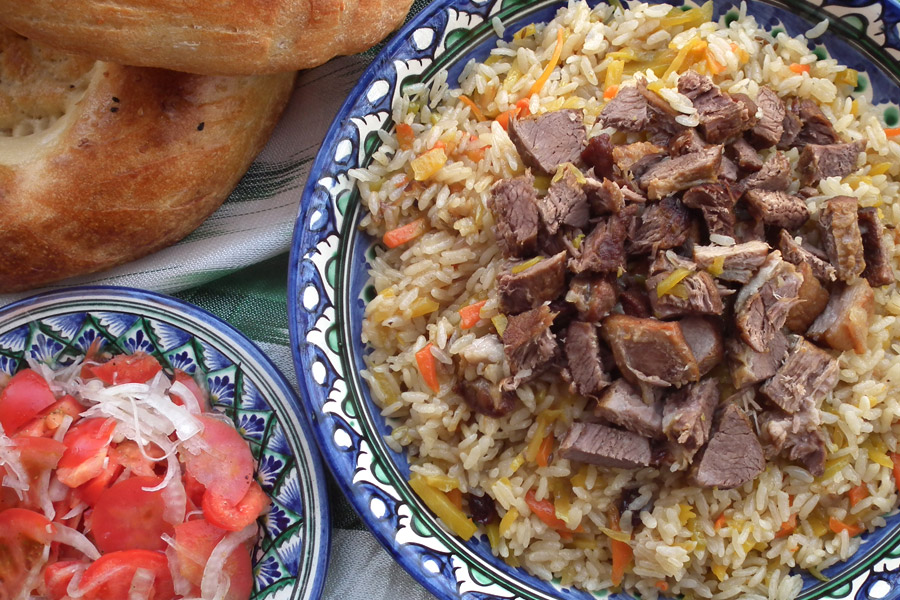
Aromatic, hearty rice cooked with carrots, meat, and raisins, seasoned with cumin and served from a large communal pot.
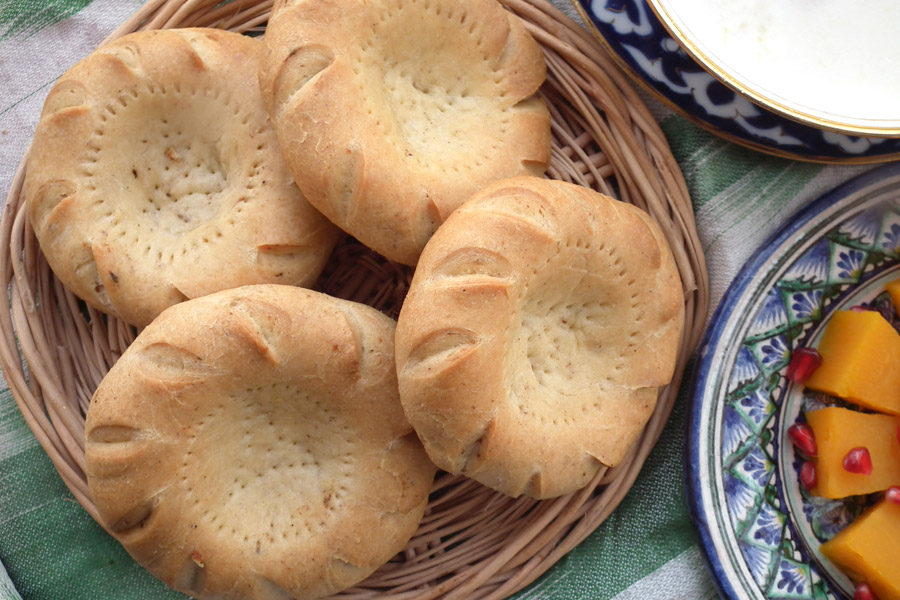
Fresh, artisan flatbread baked in a clay tandoor oven is present at every meal. Each region has its own shape and decorative pattern.
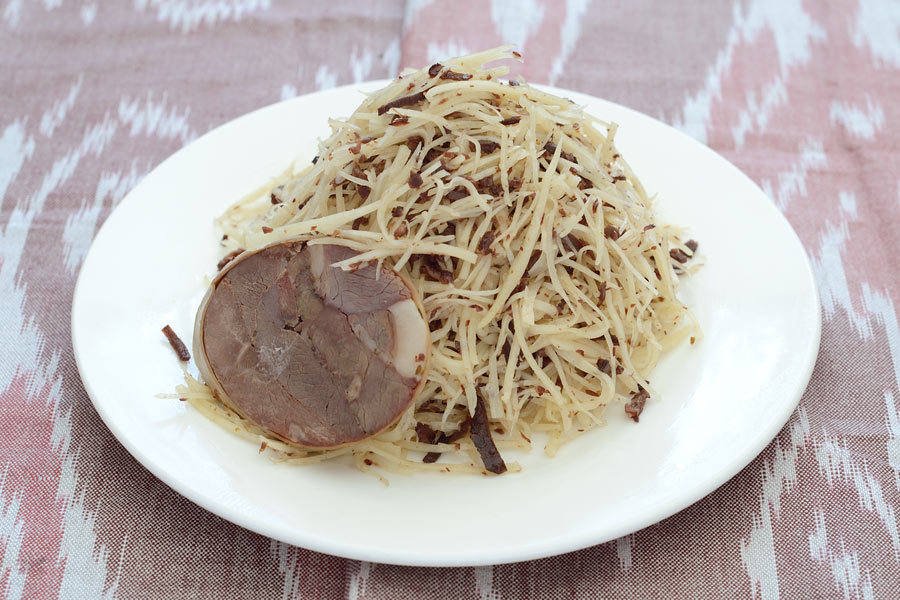
Rich hand-cut noodles and meat served with hot broth, common in the Fergana Valley and Tashkent.
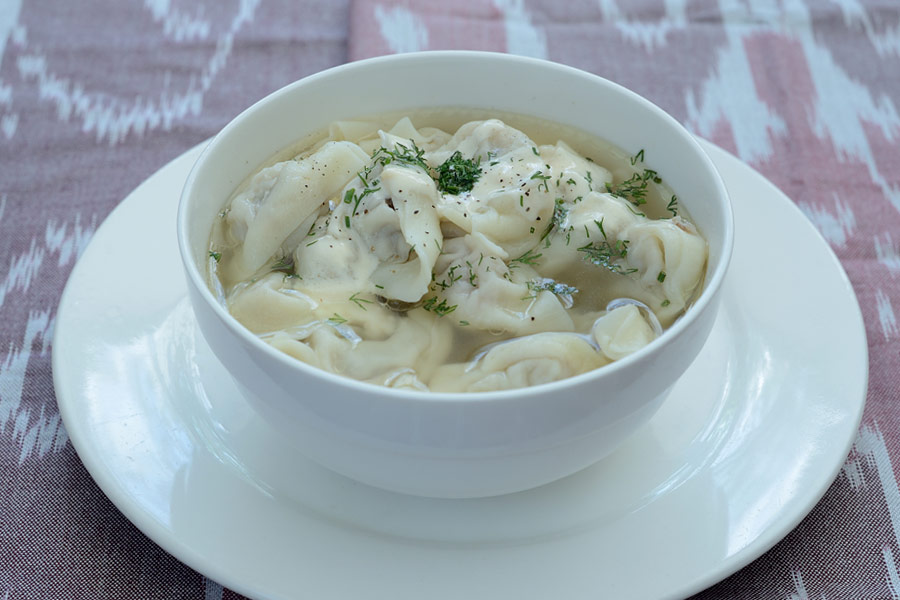
Delicate, silky small dumplings in thin dough, served in broth, often accompanied by a spoonful of cream, sour cream or suzma (strained dairy product).
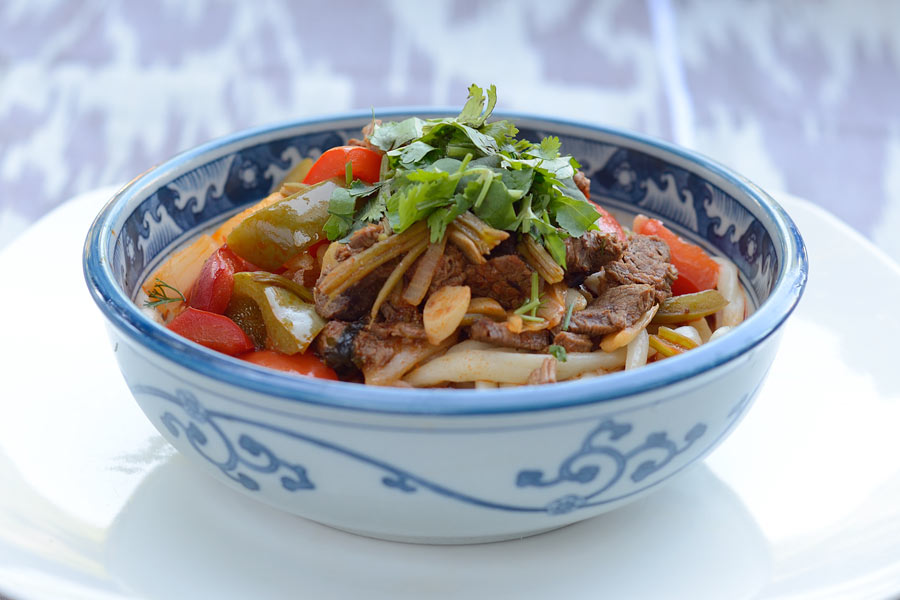
Tender, comforting hand-pulled noodles with a slow-cooked meat and vegetable stew, with roots in Uyghur cuisine.
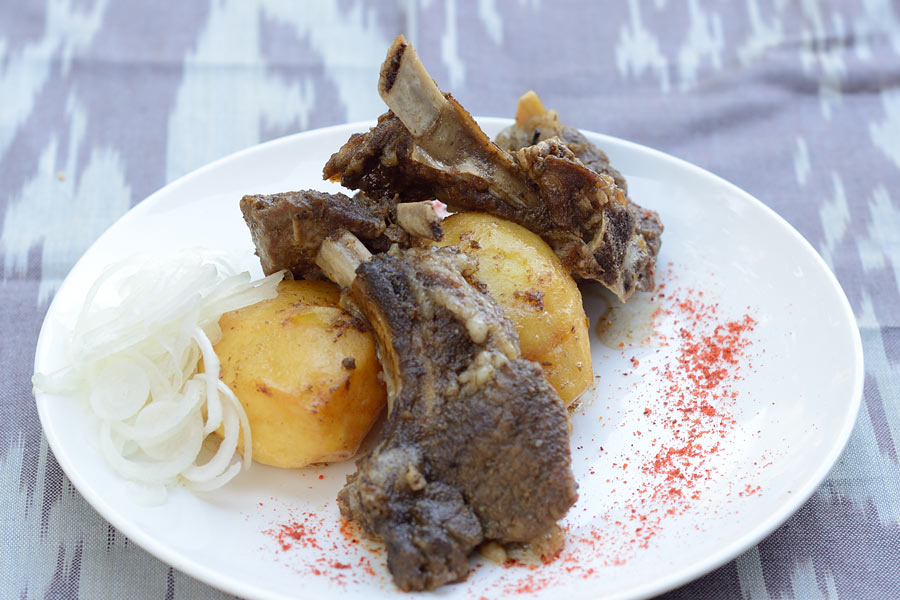
Robust, warming meat and potatoes stewed with special spices in a heavy cast-iron pot.
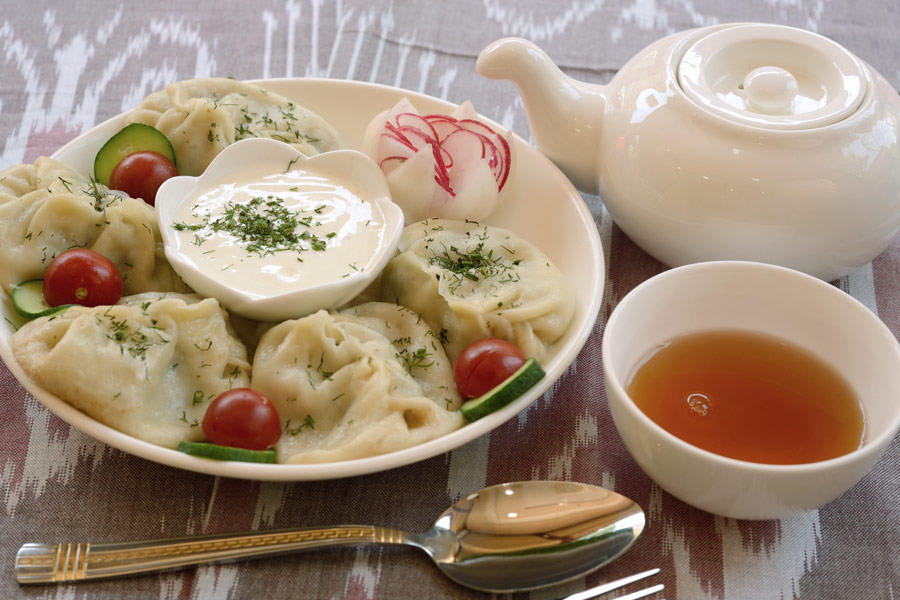
Savoury, juicy steamed dumplings filled with meat and onion, larger than chuchvara and eaten by hand.
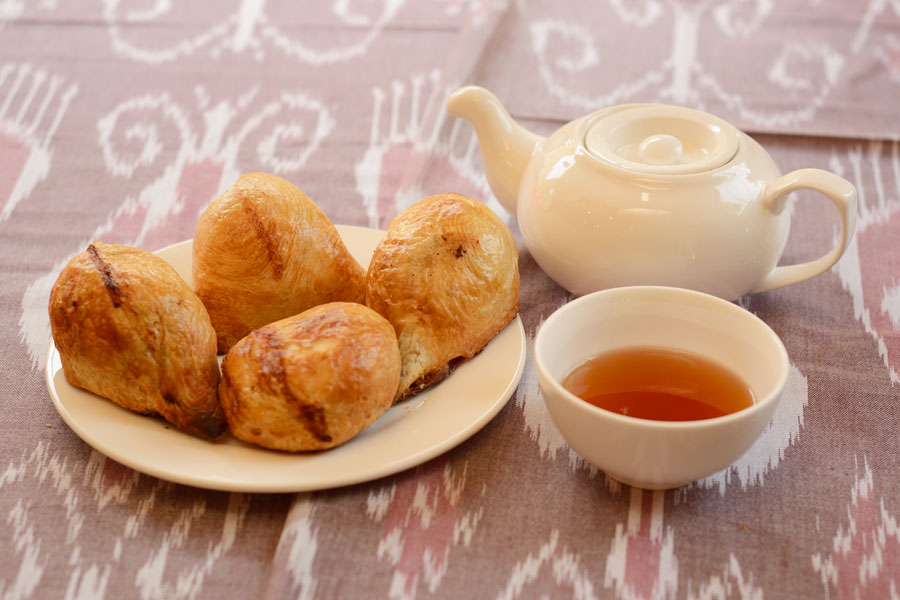
Crisp, flaky pastries baked in tandoors and regular ovens, filled with minced meat, chicken, potato, or pumpkin. There are varieties filled with greens.
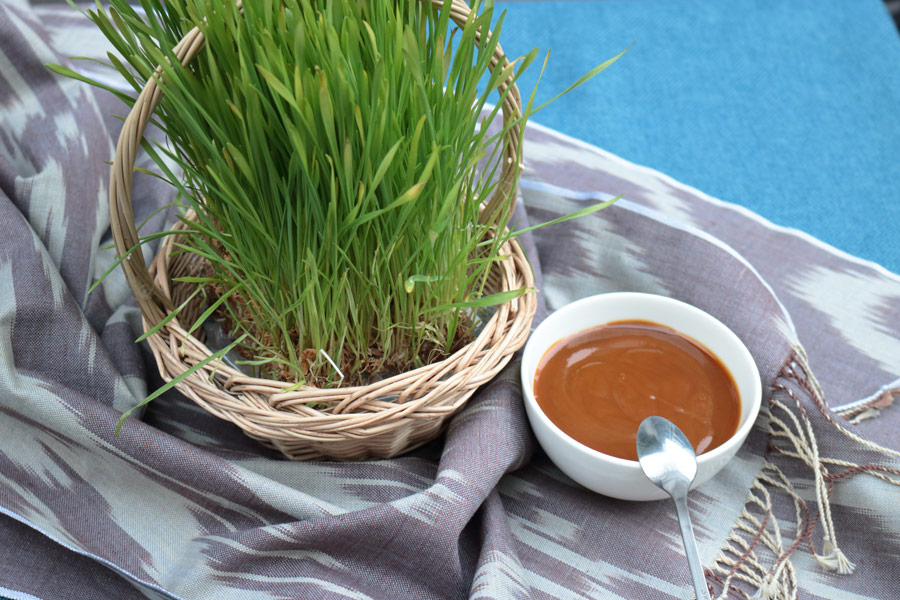
Sweet, slow-cooked thick wheat pudding with a natural caramel flavour with no added sugar, prepared communally over many hours as part of the Navruz celebration.
Dos and Don’ts in Uzbekistan
Hospitality is central to Uzbek culture, and locals tend to be tolerant of visitors who are unfamiliar with local customs. A few things are worth knowing before you arrive:
- Remove your shoes before entering a mosque.
- Show respect to older people, particularly in family and social settings. Offer your seat on public transport when appropriate.
- Agree on the fare before setting off if you are using an unmetered taxi.
- Feel free to ask for help or start a respectful conversation. Many people are willing to assist visitors, although English is not spoken everywhere.
- Blow your nose loudly in public.
- Place Uzbekistan’s traditional bread upside down or leave it on the ground.
- Raise your voice at mosques and other religious sites, where a quieter manner is welcomed.
- Photograph people without asking first, particularly at religious sites or in more traditional communities.
Speak the Language
Uzbek is the official language, and a few words go a long way. Russian is also widely spoken, particularly in Tashkent and among older city dwellers. Most visitors get by without either, but making the effort, even imperfectly, tends to be warmly received. A few phrases worth knowing:
| Phrase | Uzbek | Russian |
| Hello | Assalomy alaykum (Salom for short) | Привет (Privyet) |
| How are you? | Yaxshimisiz? | Как дела? (Kak dela?) |
| Goodbye | Hayr | До свидания (Do svidaniya) |
| Thank You! | Rahmat | Спасибо (Spasibo) |
| Yes/No | Ha / Yoʻq | Да/Нет (Da/Net) |
| Where is the airport? | Aeroport qayerda? | Где аэропорт? (Gde aeroport?) |
| How much is it? | Bu qancha turadi? | Сколько это стоит? (Skolko eto stoit?) |
| My name is [name]. | Ismim [name]. | Меня зовут [name] (Menya zovut [name]). |
| I don’t understand | Tushunmayman | Я не понимаю (Ya ne ponimayu) |
| Excuse me | Kechirasiz | Извините (Izvinite) |
| Nice to meet you | Siz bilan tanishganimdan xursandman | Приятно познакомиться (Priyatno poznakomitsya) |
Did You Know That…

A few things about Uzbekistan that tend to surprise first-time visitors:
- The Mughals, who built the Taj Mahal, were descendants of Amir Timur.
- Ibn Sina (Avicenna), born near Bukhara, wrote the Canon of Medicine, an encyclopaedia of medical knowledge that became one of the most influential medical texts in European and Islamic universities.
- Al-Khwarizmi, from Khwarazm (the historical region around modern-day Khiva), wrote one of the earliest systematic treatises on algebra.
- Uzbekistan is the only country in the world whose every neighbouring country – Kazakhstan, Kyrgyzstan, Tajikistan, Turkmenistan, and Afghanistan – ends with the Persian suffix “-stan”, meaning “land of”.
- Located in the Kyzylkum Desert, the Muruntau open-pit gold mine is one of the largest gold-producing mines in the world and one of the largest open-pit mines ever created.
- Along with Liechtenstein, Uzbekistan is one of only two doubly landlocked countries in the world. To reach the sea, you would need to cross at least two other countries in any direction.
- Recent archaeological research at Afrasiyab and other sites has led Uzbekistan to recognise Samarkand as a 3,000-year-old city, strengthening its place among the world’s oldest historic urban centres.