

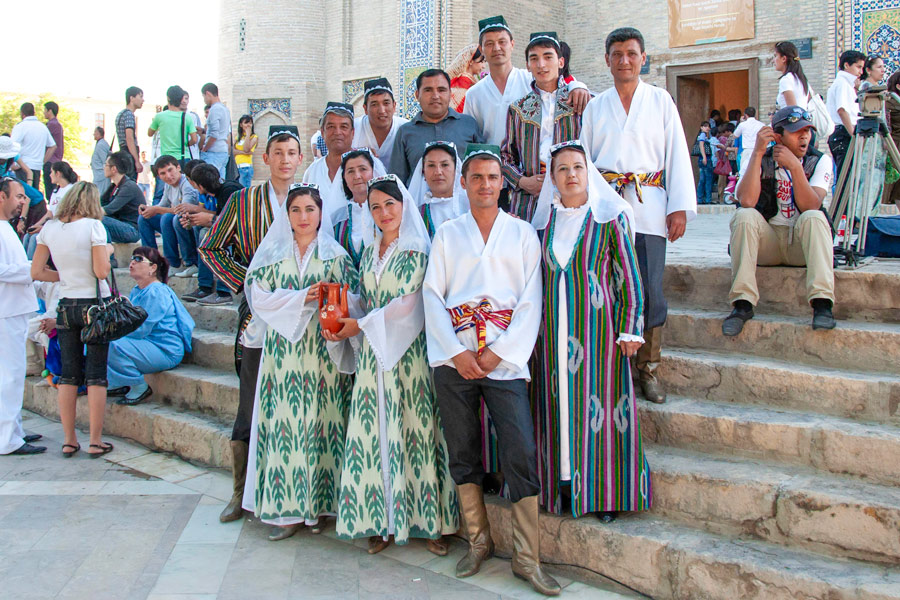
Traditional clothing in Uzbekistan – with its bright striped silks, layered robes, and intricate embroidery – remains one of the most recognisable expressions of the country’s cultural identity. Many of these fabrics and decorative traditions developed over centuries in the oasis cities of Central Asia, where local craftsmanship was shaped by trade, travel, and cultural exchange.
The colours, patterns, and materials used in traditional dress reflect both everyday life and long-standing ideas about beauty, protection, and social status. Even today, the distinctive fabrics and silhouettes of Uzbek clothing remain an important part of cultural celebrations and family traditions.
The History of Uzbek Clothing
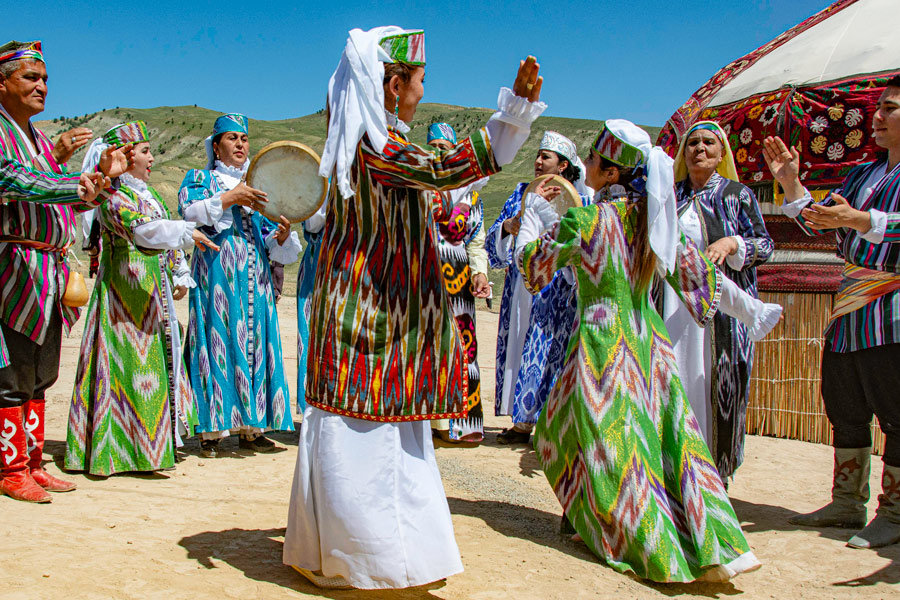
The history of Uzbek clothing stretches back to ancient times and is closely tied to the development of weaving in Central Asia. Techniques for producing cotton, silk, and wool fabrics were already known in the region long before the beginning of the Common Era.
With the rise of the Silk Road (2nd century BC – 15th century AD), the cities of Central Asia became important centres of craftsmanship and trade. Among them, Margilan gained particular fame for its silk fabrics, including satin and adras, distinguished by the characteristic abro pattern – soft streaks of colour resembling drifting clouds or gentle waves.
By the 16th–17th centuries, Uzbek dress had taken on a relatively stable form. Clothing was typically multi-layered, consisting of undergarments, outer robes, and a variety of headdresses and jewellery. Many garments were cut according to the principle known as tugri bichik, meaning a “straight cut”. This method allowed cloth to be used efficiently while creating a loose silhouette well suited to life in a hot climate.
Clothing also reflected social status. Rulers and members of the aristocracy wore multicoloured silk robes embroidered with gold thread. Their wardrobes included garments made from both locally produced textiles and imported fabrics from China, Persia, and Egypt.
The clothing of ordinary people was usually made from locally produced cotton and semi-silk fabrics. Although the materials were simpler, such garments were valued for their durability, comfort, and rich colours.
Colour itself carried symbolic meaning. Bright and multicoloured fabrics were widely favoured, as they were believed to protect the wearer from illness and misfortune.
Preferences could vary by region and social group. In cities, wealthy families often chose fabrics in deep blue and purple shades, while green and red tones were more common in rural areas.
Blue and black were used less frequently and were associated mainly with mourning. In some regions, white also formed part of mourning traditions, although it was widely worn in everyday clothing as a symbol of purity.
In wealthy households, garments were sewn by specialised tailors known as chevar or tikuvchi. In ordinary families, clothing was usually made at home. Adult women were responsible for sewing, teaching their daughters and passing these skills from one generation to the next – a tradition that continued until the early twentieth century.
Traditional Women’s Dress
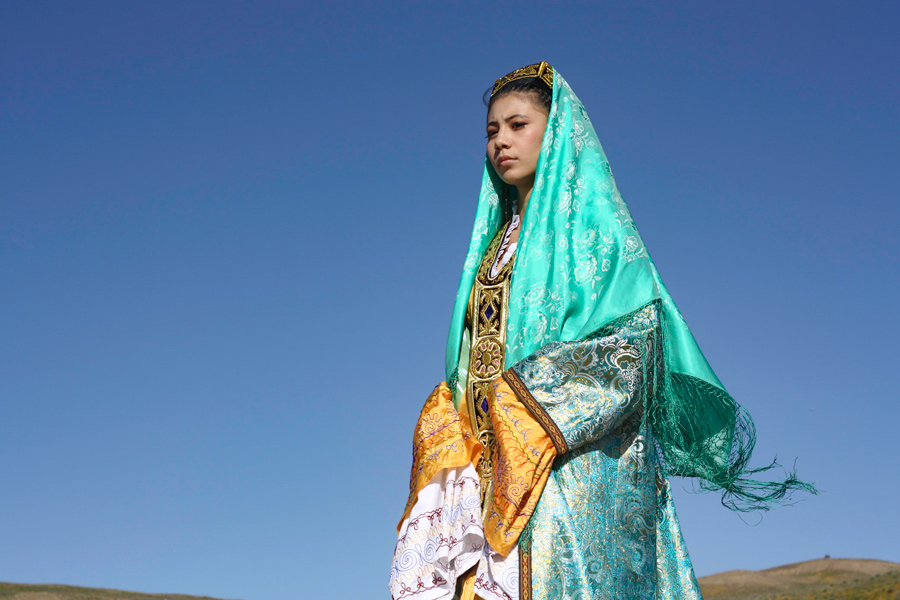
Within this broader historical context, women’s clothing developed into one of the most decorative and expressive parts of Uzbek traditional dress.
The basic undergarment was the kuylak, a long, loose-fitting tunic-style shirt. It was usually made of white cotton, which highlighted the vivid colours of the outer garments and created a striking contrast between the layers.
A dress was worn over the kuylak. On festive occasions, women from wealthy families sometimes wore several dresses at once. Their sleeves varied in length, creating a distinctive layered appearance. The number of layers, the quality of the fabrics, and the richness of the sleeve decoration all reflected the family’s wealth and status.
In the late nineteenth and early twentieth centuries, a new knee-length dress known as kukrak burma appeared – the name literally meaning “gathering at the chest”. It was characterised by a yoke and small pleats across the upper part of the dress. The style quickly became widespread and recognisable. Today, when people speak of Uzbek national dress, they often have in mind the kukrak burma made from brightly coloured khan atlas fabric.
Traditionally, the length of a woman’s dress also reflected her age. Young girls wore shorter dresses, while adult and elderly women usually preferred ankle-length garments.
Another important element of women’s dress was the lozim, a pair of loose trousers. Their lower sections were often made from brightly coloured fabrics and decorated with embroidery. As a woman walked, the patterned edge of the fabric might briefly appear beneath the dress – a small but distinctive detail of the costume.
Various robes and capes formed the outer layer of women’s clothing. The most common was the chapan, a long, loose-fitting traditional robe. Women sometimes wore a mursak as well – an open-front robe that allowed the jewellery and decorative trim of the inner layers to remain visible.
For everyday wear, the practical kaltacha robe was widely used. It was shorter and gathered under the sleeves, making it comfortable for daily activities. From the nineteenth century onward, the nimcha – a sleeveless vest worn over the dress – also became a common element of women’s clothing.
Traditional Men’s Dress
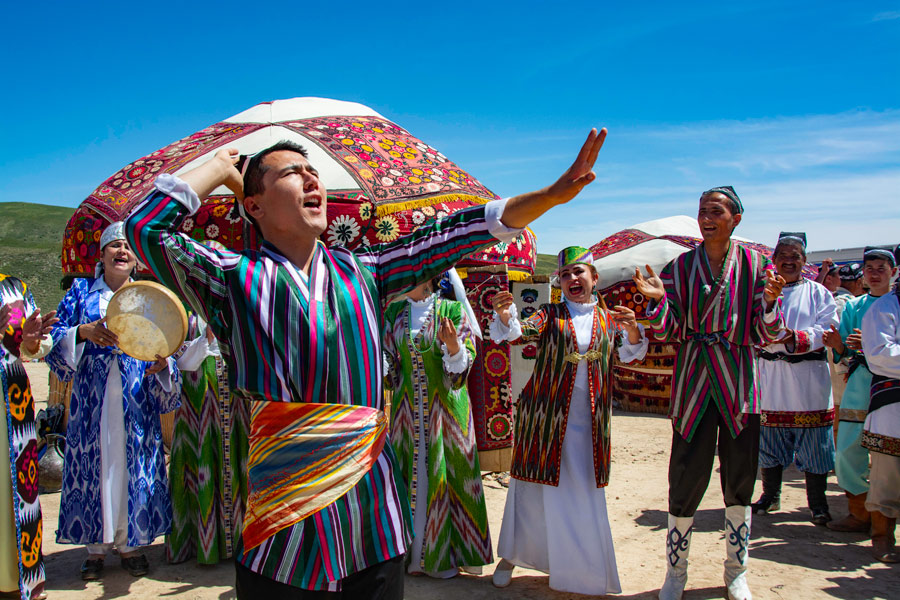
In contrast to the richly decorated garments worn by women, men’s clothing in Uzbekistan was generally more restrained in appearance and often reflected the wearer’s age and social status.
The foundation of the outfit consisted of a straight-cut shirt known as a kuylak and wide trousers called ishton. Over these garments, men typically wore a robe known as a chapan or ton.
The chapan varied depending on the season. Light summer versions, sometimes referred to as yachtak, were made from lighter fabrics, while warmer quilted winter robes were known as chakman.
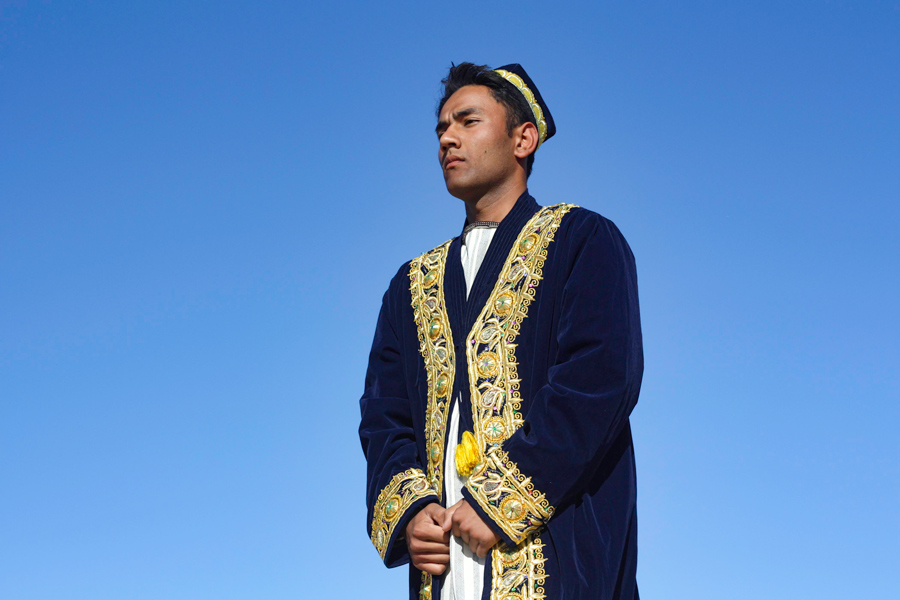
A particularly ceremonial type was the Bukhara zarchapan, often translated as the “golden robe”. These garments were made from velvet and richly decorated with intricate gold embroidery. In the past, they were worn by emirs and members of the aristocracy, and the zarchapan became a symbol of high status and special honour.
During the colder months, men also wore fur coats, most often made from sheepskin. These garments protected against wind and winter cold in the region’s continental climate and could also indicate the wealth of the wearer.
An essential element of men’s dress was the belt, known as the kushak. This was a long sash used to secure the chapan or kuylak. Among wealthier men, belts were sometimes made from velvet or heavy silk and decorated with metal buckles crafted from precious metals.
Tubeteika – Traditional Headdress
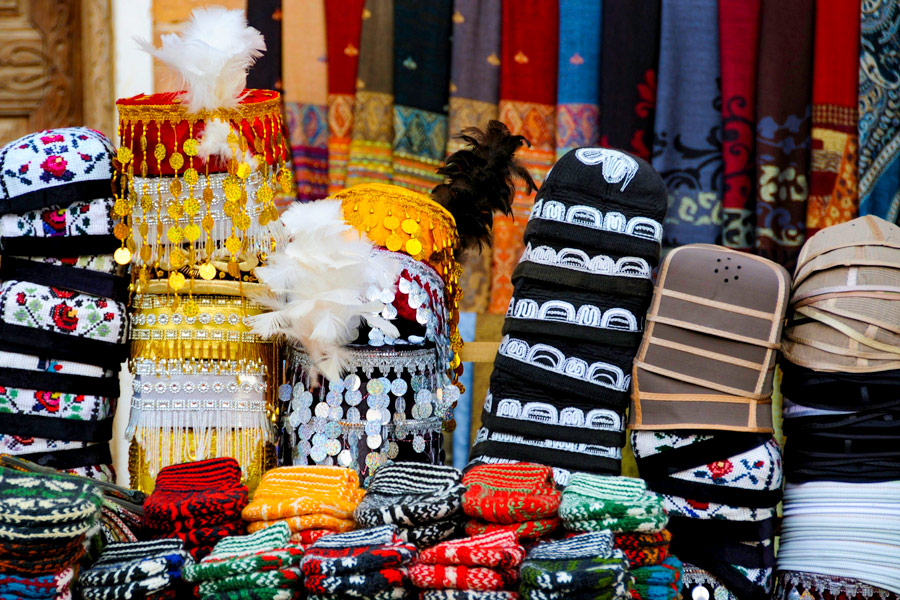
Alongside robes, dresses, and belts, traditional Uzbek clothing also included distinctive forms of headwear. One of the most recognisable is the tubeteika (also known as duppi or doppi), a small embroidered skullcap worn by both men and women. The name derives from a Turkic root referring to the top or crown of the head – the place where the cap sits.
Across Uzbekistan, each region developed its own distinctive styles of tubeteika, varying in shape, height, and decorative patterns. In everyday life, people often wore simpler caps in dark or neutral colours, while festive occasions called for more elaborate versions decorated with bright embroidery or gold thread.
Several regional schools of tubeteika embroidery developed across the country, including those of Fergana, Tashkent, Kashkadarya–Surkhandarya, Samarkand, Bukhara, and Khorezm–Karakalpakstan. Today, one of the best-known examples is the Chust skullcap from the Fergana Valley – square in shape and decorated with four white almond-shaped motifs embroidered on a black background.
Regional Features of Uzbek Clothing
Alongside the shared forms of dress described above, different regions of Uzbekistan developed their own distinctive stylistic traditions. Variations in fabrics, colours, and decorative motifs often made it possible to recognise the regional origin of a garment at a glance.
Bukhara has long been associated with deep shades of velvet (bakhmal) and rich gold embroidery. It was here that the ceremonial zarchapan – the famous “golden robe” linked to the court culture of the Bukhara Emirate – developed.
In the Fergana Valley and Tashkent, garments made from silk and semi-silk fabrics such as khan atlas, adras, and bekasam were especially popular. In these regions, the fabric itself played the main decorative role. Its striped patterns and soft transitions of colour created the distinctive visual character of local dress.
In Kashkadarya and Surkhandarya, clothing tended to feature looser silhouettes and bright ornamental patterns. Shades of red were particularly common, often combined with yellow accents on a light background. Cotton fabrics were widely used here, reflecting the very hot climate of southern Uzbekistan.
The Khorezm tradition developed its own recognisable style, including more fitted quilted robes made from olacha – a striped cotton or silk fabric. A distinctive element of men’s dress was the large woollen hat known as chugurma, which remains one of the best-known symbols of Khorezm clothing.
In Karakalpakstan, cotton and wool fabrics were widely used because they were well suited to the region’s changeable desert climate. Karakalpak garments are often recognisable by their bold geometric patterns and strong red colour palette. Women’s jewellery was typically large and layered, sometimes giving the overall costume an almost armour-like appearance. The traditional wedding headdress, known as saukele, was helmet-shaped – a form also found among several steppe cultures of Central Asia.
Uzbek Traditional Clothing Today
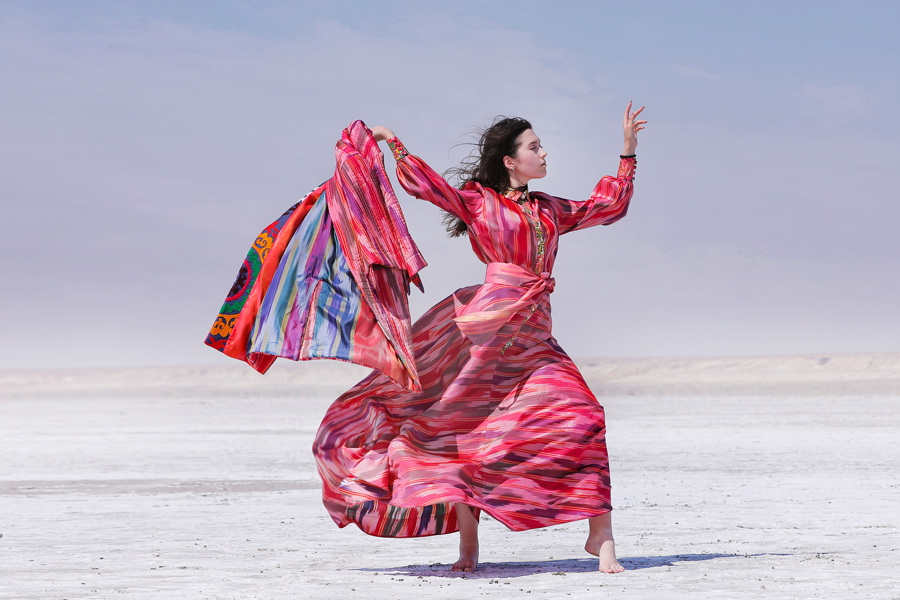
Photo source: www.centrum-air.com
Although traditional Uzbek clothing developed over centuries, its influence remains visible in contemporary culture. Elements of traditional dress continue to appear in modern fashion and often serve as inspiration for both Uzbek and international designers.
Several well-known local brands work with traditional fabrics and techniques. Among them are SAADI, Suzani by Kasymbaeva, and Azukar Moreno in Tashkent. Their collections combine historic textiles and decorative traditions with modern silhouettes, and their work is regularly presented at international fashion events.
Designers and artisans from the Fergana Valley are also widely recognised for their work with traditional fabrics. Khayrutdin Zainudinov of Kuvasoy creates modern interpretations of the chapan, while Nargiza Sherkhodzhaeva of Margilan is known for women’s garments featuring original hand embroidery.
Uzbek textiles have also appeared in the collections of international fashion houses, including Giorgio Armani, Oscar de la Renta, and Fendi, reflecting the enduring appeal of Central Asian patterns and fabrics.
Where to See Traditional Uzbek Clothing
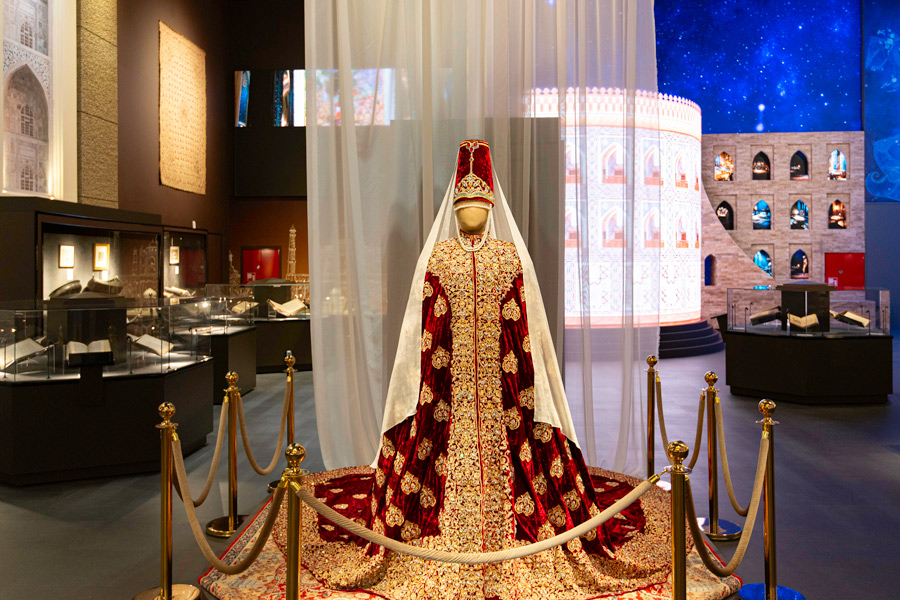
Today, traditional clothing can be explored not only in historical descriptions but also in museum collections across Uzbekistan. Important displays of national dress can be found in Tashkent, Samarkand, Fergana, Bukhara, and Khiva.
In Tashkent, the Museum of Applied Arts, the State Museum of History, and the State Museum of Art preserve extensive collections of garments from different historical periods and regional traditions.
At the Islamic Civilization Center, visitors can see a reconstruction of the famous Bibihanum dress, created on the basis of medieval descriptions from the fourteenth century. This ceremonial garment, weighing more than ten kilograms, offers a visual impression of what court attire from the era of Amir Timur may have looked like. Authentic items of clothing from past centuries are also displayed here, including a chapan dating to the fifteenth century.
Traditional Uzbek clothing is also documented in visual art. Oriental miniature paintings, nineteenth-century canvases, and early photographs provide valuable records of historical dress. Particularly notable are works from Vasily Vereshchagin’s Turkestan series and the colour photographs taken by Sergei Prokudin-Gorsky in the early twentieth century.
Where to Buy Uzbek Clothing
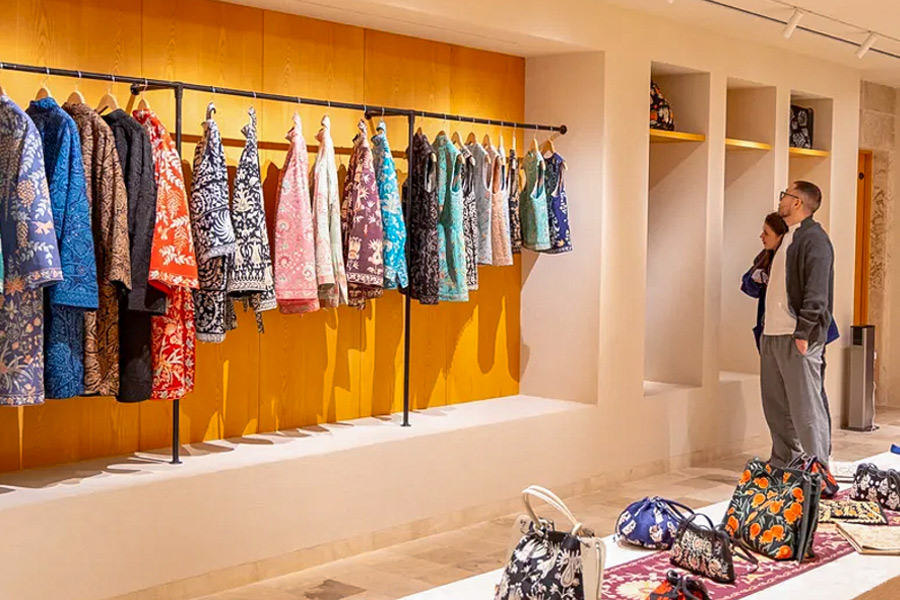
Photo source: www.afisha.uz
Traditional fabrics and clothing are not confined to museums. Across Uzbekistan, workshops and design studios continue to produce garments inspired by historic dress.
In Tashkent, Human House is a well-known destination where visitors can purchase designer chapan coats, silk dresses, and accessories made from traditional fabrics. The Navruz Ethnopark also hosts craft workshops and boutiques, including the national clothing brand Nigora Hashimova.
In Samarkand, the Happy Bird art gallery is known for its collection of vintage garments alongside contemporary designer pieces.
In the Fergana Valley, craft houses in Fergana and Kokand offer traditional textiles and clothing, while the brand Begoyim, founded by designer Nargiza Yuldasheva, presents modern interpretations of national dress. In nearby Margilan, the Yodgorlik silk factory remains one of the best-known places to see traditional weaving and to purchase silk fabrics.
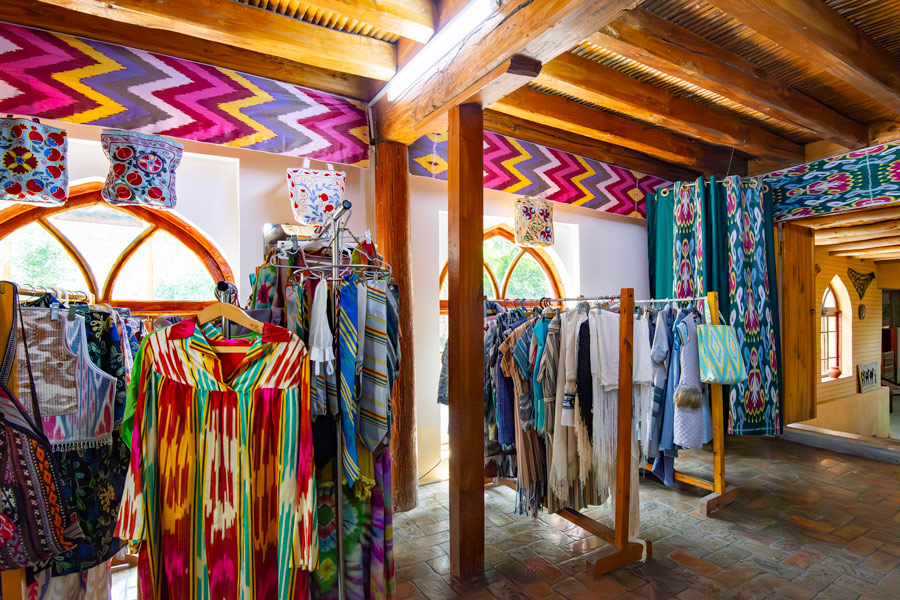
Many historic craft quarters throughout Uzbekistan’s cities still contain small workshops selling chapan robes, embroidered skullcaps, silk scarves, and other elements of traditional clothing. Visitors can also find handmade Uzbek dolls whose miniature costumes carefully reproduce the fabrics, silhouettes, and ornaments of different regional traditions.
Although traditional Uzbek clothing is now often seen in museums, festivals, and fashion collections, it has never entirely disappeared from daily life. Fabrics such as khan atlas and adras, embroidered skullcaps, and the familiar silhouette of the chapan continue to appear in celebrations, family gatherings, and cultural events across the country. In this way, traditional dress remains not only a reminder of the past but also a living element of Uzbekistan’s cultural identity, linking contemporary life with centuries of craftsmanship and artistic tradition.