

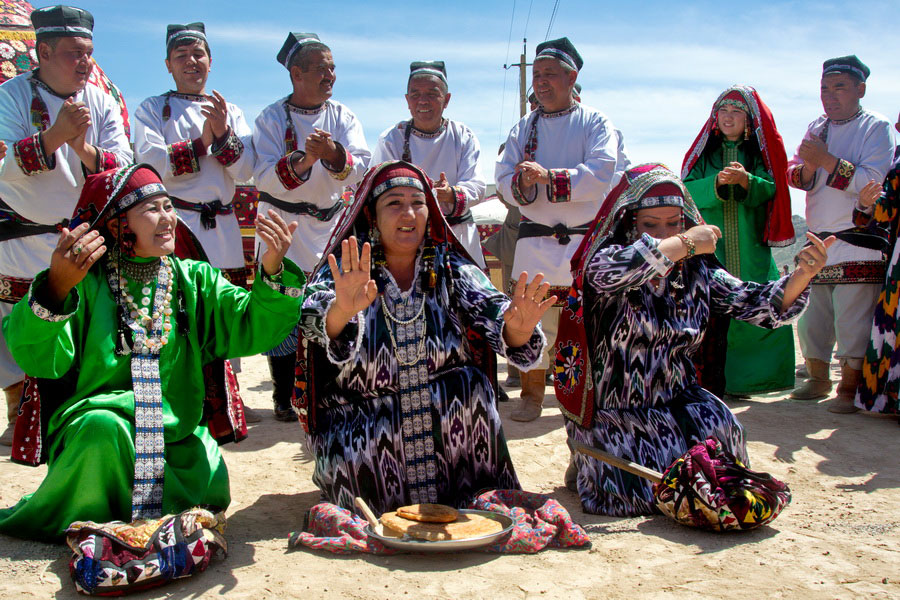
The traditions and customs of Uzbekistan have deep roots, shaped over many centuries. Many of them have survived to the present day and continue to influence everyday social life. These traditions include, among others, life in the mahalla – a distinctive form of neighbourhood community – a strong culture of hospitality, and family rituals marking the most important stages of a person’s life.
Over time, new customs and rituals have entered the cultural life of the region, while long-established traditions have gradually adapted to changing historical circumstances. Together, they form the distinctive way of life of Uzbek society, most clearly reflected in old city quarters, bazaars, mosques, and everyday family practices.
Mahalla: Community Life and Social Traditions in Uzbekistan
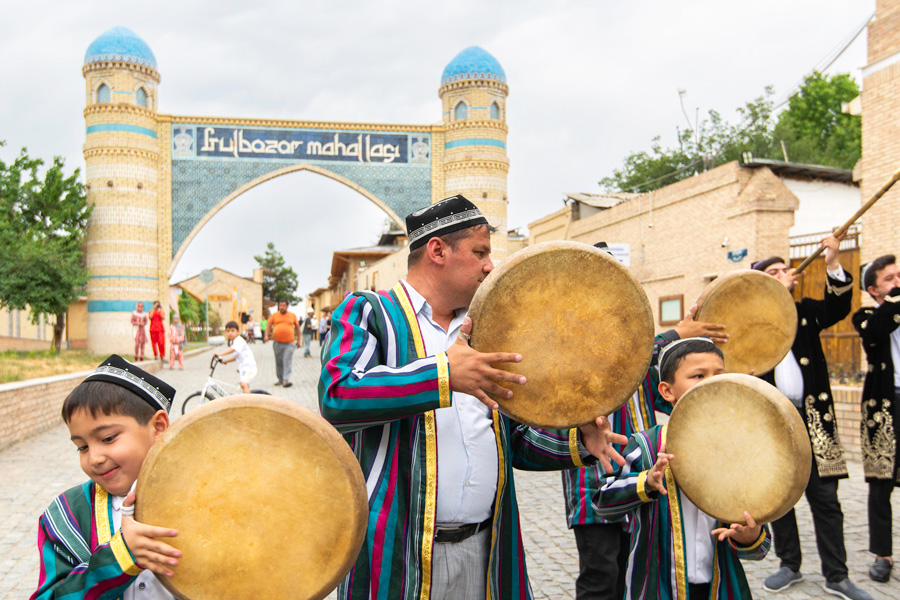
One of the most characteristic traditions in Uzbekistan is life in the mahalla. Mahallas are urban and rural neighbourhood communities in which residents maintain close ties and take an active part in community affairs.
Within these communities, people work collectively, celebrate holidays together, and address everyday matters through shared effort. The mahalla follows an established way of life and a clearly defined social structure, traditionally based on respect for elders and the principle of mutual assistance.
Mahallas are traditionally overseen by elders known as aksakals. The term translates from Uzbek as “white beard” and symbolically refers to advanced age, life experience, and wisdom. Aksakals are associated with respected figures who play an important role in maintaining social harmony within the community.
Hospitality in Uzbekistan: Traditions of Openness and Generosity
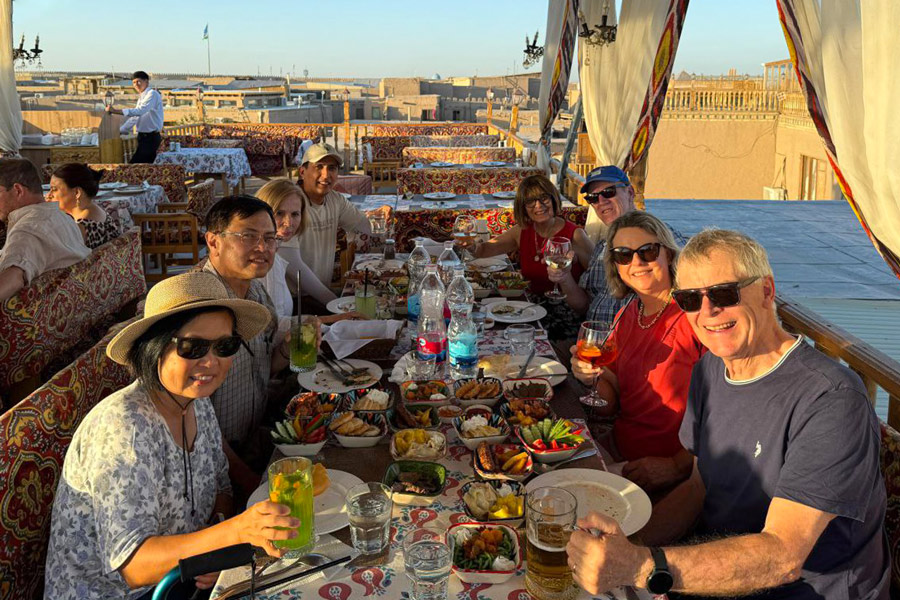
Hospitality in Uzbekistan is regarded as an essential part of social life and national mentality, reflecting long-standing traditions of openness and generosity.
In a traditional home, guests are offered a place of honour. They are welcomed warmly and treated to homemade dishes, tea, and oriental sweets. Declining such hospitality is generally considered impolite, as offering food and attention is seen as an expression of respect and sincere regard for the guest.
The tradition of hospitality has a long history and is frequently mentioned in early literary and historical sources, including the writings of figures such as Alisher Navoi and Babur. For many visitors, hospitality is also the first aspect of Uzbekistan they encounter upon arrival – often leaving a strong impression through the warmth, openness, and good-natured attitude of local people.
Family Traditions in Uzbekistan: Weddings, Rituals, and Everyday Life
Family life in Uzbekistan has traditionally been organised around large, multi-generational households. Several generations often lived together, a structure that helped preserve continuity, pass on life experience, and manage everyday responsibilities collectively. As a result, the family has long occupied a central place in Uzbek society.
Family life follows established norms and roles. Traditionally, after marriage, the youngest son and his wife – known as the kelin – remain in the parental home, assuming responsibilities related to household management and care for older family members. Today, especially in urban settings, this custom is not followed in all families, yet it continues to influence social expectations in many households.
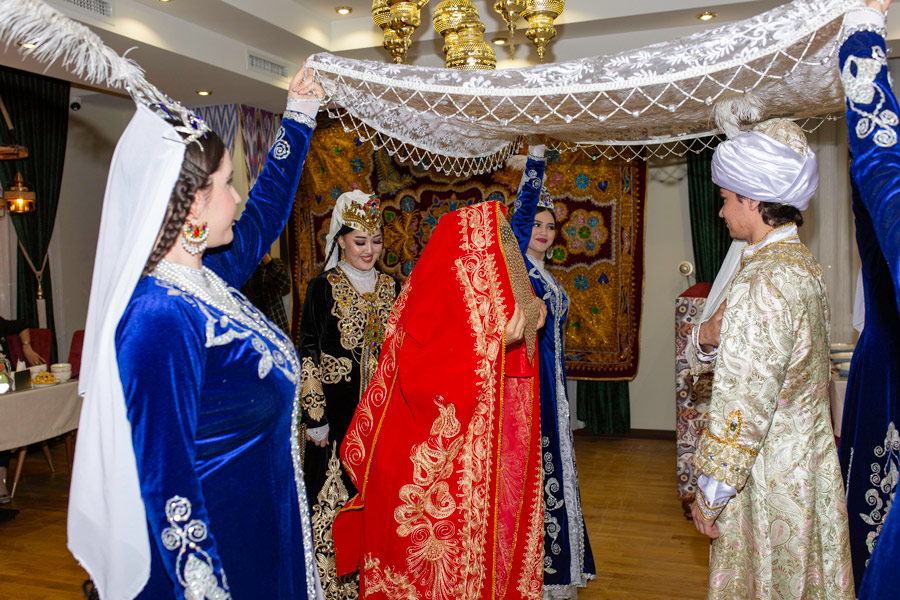
The most significant family tradition is the Uzbek wedding, known as nikoh-tuy. Preparations usually begin well in advance and follow a clearly defined sequence of customs and rituals. The celebration is viewed not only as a personal milestone for the couple, but also as an important event for the extended family and close social circle.
Wedding processions are accompanied by traditional instrumental music, songs, and dances, creating a festive atmosphere that often extends to entire neighbourhoods and surrounding streets.
An engagement ceremony known as fatiha-tui precedes the wedding. Considered an essential part of the wedding cycle, it is conducted according to established rules and involves relatives from both families.
Rituals connected with the birth and upbringing of children also play an important role in family life. On the fortieth day after a child’s birth, a ceremony marking the placing of the baby in a cradle – known as beshik-tuy – is held. As boys grow older, another key rite takes place: circumcision, referred to as sunnat-tui or hatna-kilish.
Markets and Bargaining in Uzbekistan: Social Life Beyond Trade
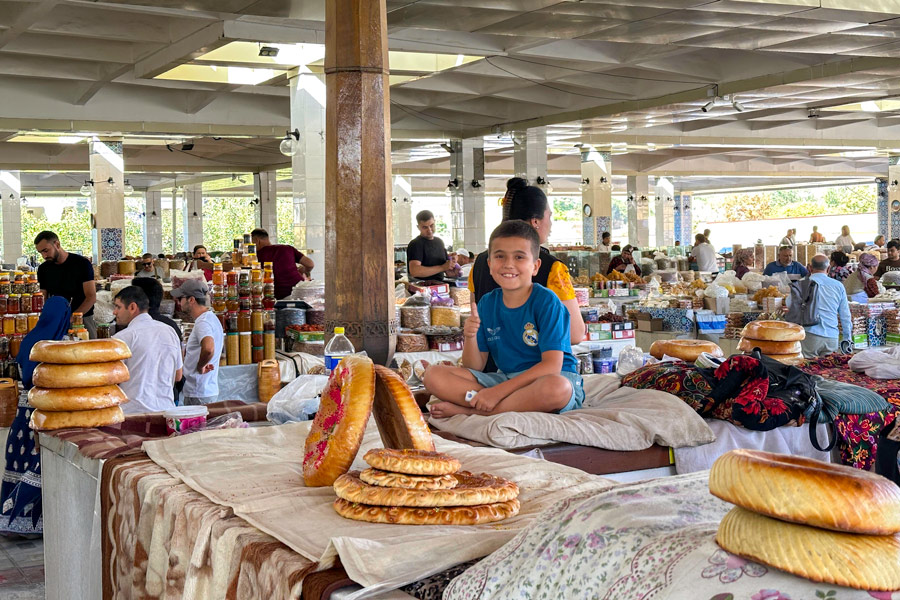
Markets in Uzbekistan occupy a distinctive place in everyday life and have traditionally served several functions at once. Beyond their role as centres of trade, they have long been spaces for meeting, conversation, and the exchange of information. Over time, a number of customs have developed around market life, among which bargaining remains one of the most recognisable.
At Uzbek markets, bargaining is generally considered appropriate and culturally expected. Sellers tend to value politeness, a friendly manner, and open conversation, viewing the process as a form of social interaction rather than simple negotiation. It is often accompanied by light humour and informal exchange, and prices may be adjusted accordingly – particularly when bargaining is conducted calmly, without pressure, and with mutual respect.
Culinary Traditions: Plov, Bread, and Everyday Dishes
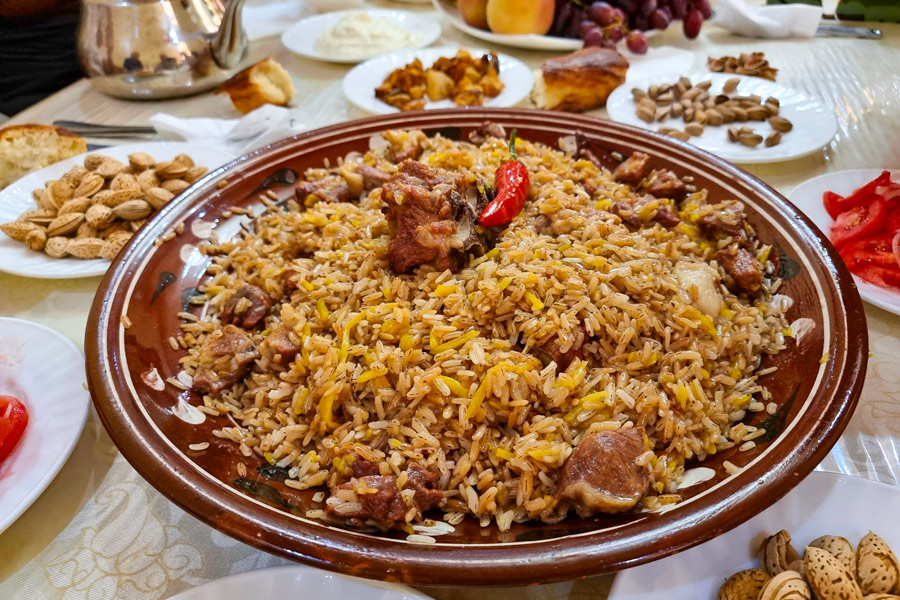
No traditional feast in Uzbekistan is complete without plov, or pilaf, the country’s principal national dish. Although plov is prepared regularly in everyday life, it holds particular significance during family celebrations and major social events. On such occasions, it is often cooked in large quantities, using spacious cauldrons, fresh ingredients, and time-tested recipes.
Plov recipes are passed down from generation to generation, and methods of preparation vary by region. In Tashkent, for example, the well-known wedding pilaf includes a variety of additional ingredients, while in Bukhara a more restrained version known as osh sofi – literally “pure pilaf” – is traditionally prepared without added components. Samarkand, Kokand, Fergana, and other cities each have their own distinctive approaches to the dish.
The culture and traditions associated with preparing Uzbek plov have been included in UNESCO’s Representative List of the Intangible Cultural Heritage of Humanity. One long-established custom is morning pilaf – a communal meal usually held in connection with a wedding or the birth of a child. Guests, traditionally men, gather early in the day to share plov and mark the occasion together.
Alongside plov, Uzbek cuisine includes many other dishes rooted in national culinary traditions. Among the most widely known are samsa, manti, and lagman. Equally important is Uzbek bread – flatbreads baked in large tandoor ovens. Freshly baked flatbreads have become a recognised symbol of hospitality and generosity and occupy a central place on the Uzbek table.
Tea Drinking Traditions in Uzbekistan: Chaykhanas and Social Rituals
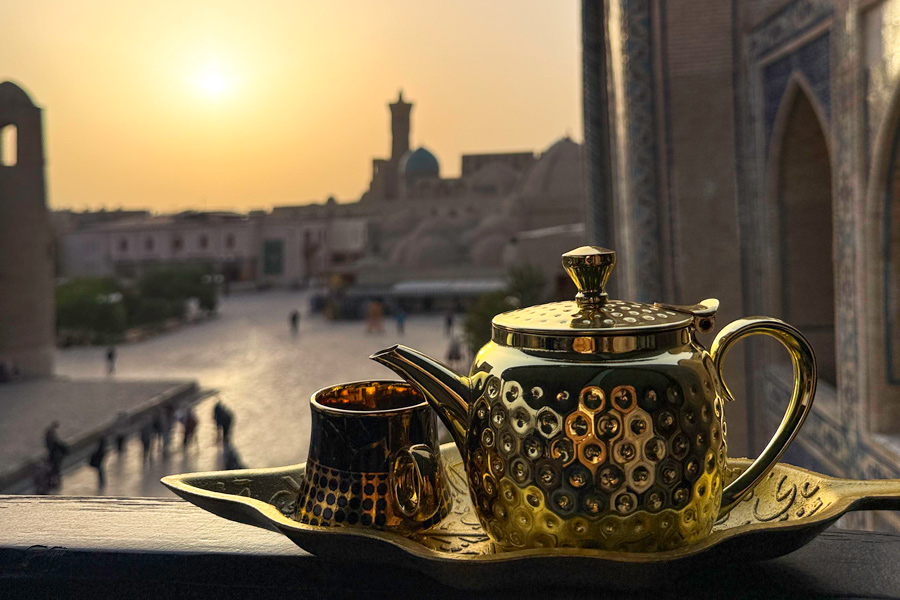
Tea drinking occupies a special place in everyday life in Uzbekistan and is traditionally associated with visits to chaykhanas – establishments whose name literally translates as “tea rooms”. Tea is served in teapots and poured into small traditional bowls known as pialas, an essential element of the tea-drinking ritual.
Green leaf tea is the most commonly consumed type in the country, and several customs are associated with its preparation and serving. One such tradition is known as kaitar – literally “return” – a practice in which tea is poured from the bowl back into the teapot. This action is believed to help the tea brew evenly and also carries a symbolic meaning, preparing it for drinking.
Another well-known custom is to pour tea only into the lower part of the bowl. This gesture is considered a sign of respect, as it allows the host to refill the guest’s bowl frequently and continue the conversation. The tradition remains very much alive today – filling a bowl to the brim is regarded as impolite and may be interpreted as a sign of unwillingness to engage further.
Religious Traditions and Customs of Uzbekistan
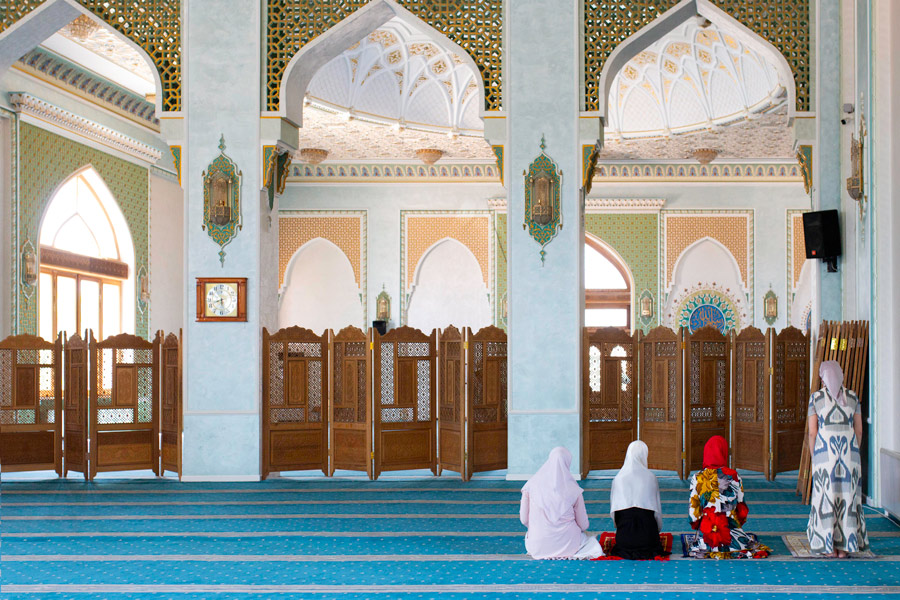
Over the centuries, Islam has played an important role in shaping social norms and customs in Uzbekistan, many of which continue to influence everyday life. At the same time, Uzbekistan is a secular state, and religion forms part of the country’s broader cultural landscape rather than its political framework.
External expressions of religious tradition can be observed in aspects of clothing and behaviour. Values such as kindness, honesty, and tolerance – commonly associated with Islamic ethics – are widely respected in society. Many women choose modest styles of dress, and some wear headscarves, reflecting personal beliefs and family traditions.
Religious practices, including namaz prayer and certain dietary restrictions such as abstaining from pork and alcohol, continue to be observed in cities and towns across the country. These practices are not obligatory for visitors or for people of other faiths and are generally regarded as matters of personal choice.
Religious holidays, including Ramadan and Eid al-Adha, hold an important place in the cultural calendar. They are marked by family gatherings, festive meals, charitable acts, and visits to relatives.
When visiting mosques and other religious sites, it is customary to observe simple rules of respectful behaviour. Visitors are expected to dress modestly, with shoulders and knees covered, and women are asked to cover their heads. These practices are understood as signs of respect for local traditions and religious sensibilities.
Traditional Holidays in Uzbekistan: Navruz and Seasonal Celebrations
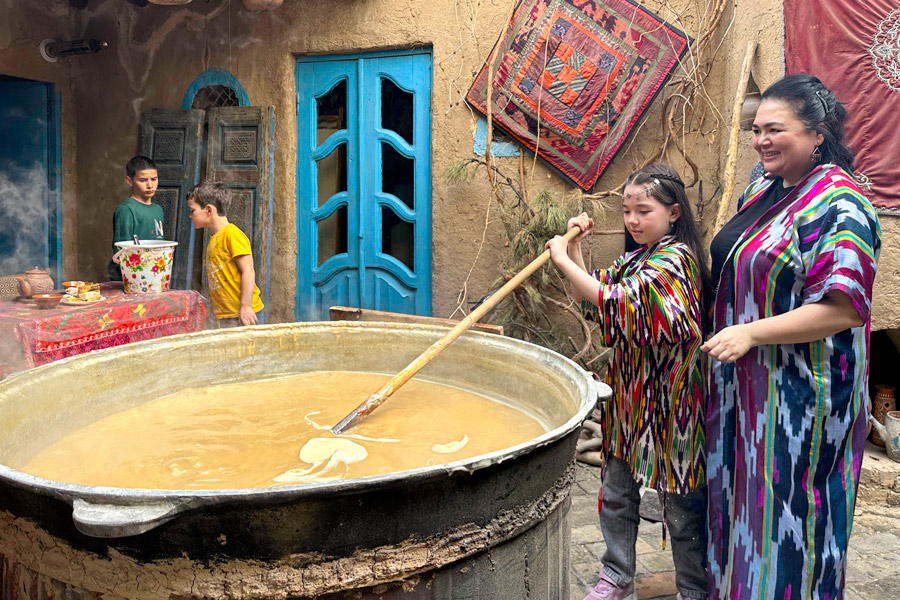
Holidays occupy a prominent place in public life in Uzbekistan. Alongside family ceremonies and religious observances, seasonal and calendar celebrations linked to the natural cycle and the changing seasons are widely observed. Together, these holidays reflect the sociability traditionally associated with Uzbek society.
One of the most significant dates of the year is 21 March, when Navruz is celebrated across the country. This holiday marks the arrival of spring, the renewal of nature, and the beginning of a new annual cycle.
Historically, Navruz dates back to the pre-Islamic period and is associated with Zoroastrian traditions that were widespread in the territory of present-day Uzbekistan until the 8th century. Over time, the celebration became firmly embedded in the cultural life of the region and has retained its importance to this day. Contemporary Navruz celebrations are accompanied by folk festivals and fairs, during which a variety of traditional foods are prepared. Among them, sumalak – a festive dish made from wheat sprouts – occupies a central place.
The traditions of celebrating Navruz in Uzbekistan, along with those of several other countries, have been recognised by UNESCO as part of the intangible cultural heritage of humanity.
Uzbek Crafts and Cultural Heritage: Traditions Recognised by UNESCO
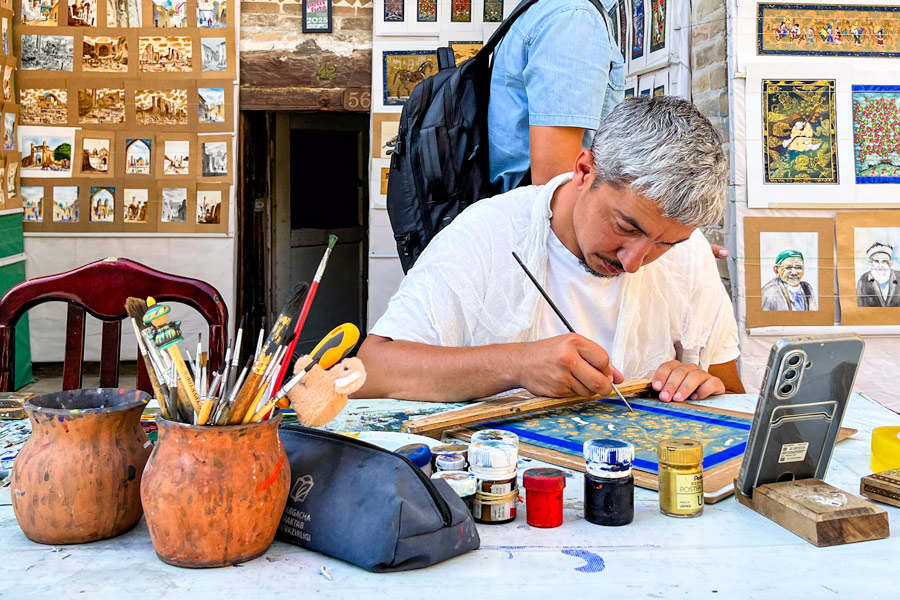
Ancient traditions have played a central role in shaping Uzbekistan’s cultural environment. The principle of continuity is reflected in painting, music, dance, performances by darboz tightrope walkers, and especially in folk crafts, many of which have preserved their original features over centuries. This continuity has made Uzbek culture widely recognisable beyond the region.
A significant number of cultural practices from Uzbekistan have received international recognition and have been included in UNESCO’s Representative List of the Intangible Cultural Heritage of Humanity. These include Uzbek ceramics, the musical traditions of shashmakom and katta ashula, the art of bakhshi and zhirau storytellers, miniature painting, and traditions associated with the production of silk fabrics used in national clothing.
Social customs are also represented on this list, including iftar – the traditional evening meal observed during the month of Ramadan – which carries both religious and social significance.
Traditional values likewise play an important role in sports and competitive activities. They are particularly evident in kurash, the national style of wrestling, as well as in kupkari, a distinctive equestrian competition traditionally held among young men.
Where to Experience Uzbek Traditions: Tourist Villages and Living Heritage
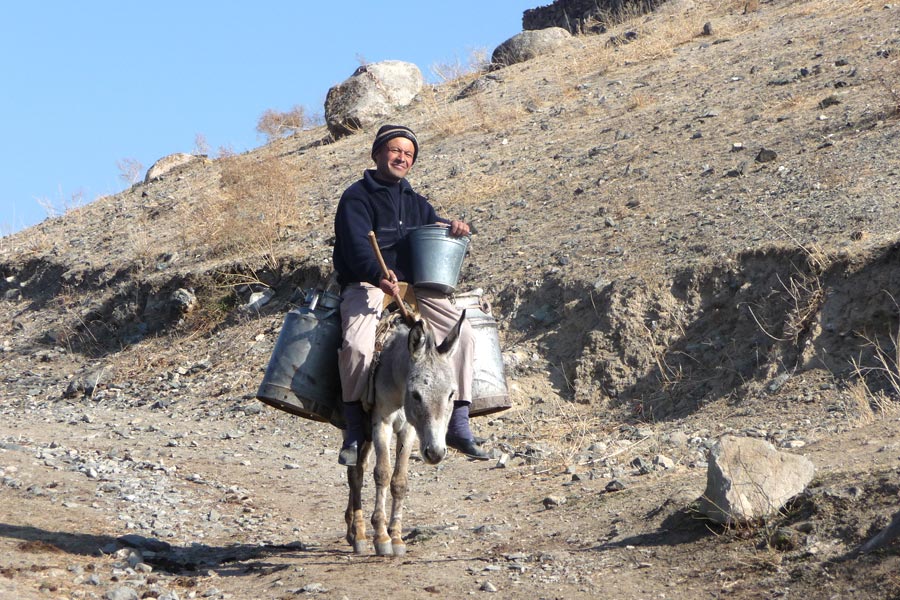
Many Uzbek traditions continue to exist in the daily lives of thousands of families. In streets and markets, mosques and mahallas, craft workshops, and teahouses, elements of hospitality, social customs, and cultural practices remain a visible and natural part of life across the country.
To help visitors become more closely acquainted with this heritage, tourist villages and guest houses have been developed in various regions. These are often long-established settlements where traditional customs and ways of life have been preserved over generations.
The status of a “tourist village” usually implies direct exposure to traditional living conditions – staying in national-style houses, taking part in culinary or craft workshops, and communicating with local residents in their usual environment.
One of the best-known examples is the tourist village of Sentob, located near Nurata. The village is known for its traditional way of life and scenic mountain setting. Residents live in small adobe houses, many of them more than a century old, and continue to practise activities such as embroidery, carpet weaving, and animal husbandry, much as their ancestors did in the past.
Similar villages can be found in other regions of Uzbekistan, often situated away from major tourist routes and preserving long-established local traditions. In the Baysun area, for example, the tourist village of Sayrob offers insight into the region’s cultural environment and distinctive customs.
Other well-known tourist villages include the high-altitude settlement of Gelon in the Kashkadarya region, the village of Kumushkan near Tashkent, and Vuadil in the Fergana Valley.