

In the early 15th century, the Spanish ambassador Ruy González de Clavijo arrived at the court of Amir Timur in Samarkand and travelled through his domains. In his diary, he noted how guests were received in these lands: at court, he and his companions were given the best seats, while even in villages they were served more food than they could possibly eat.
Several centuries later, in the mid-19th century, the Hungarian traveller Arminius Vambery found himself in Khiva and described a similar experience. In his notes, he admitted that receiving six to eight invitations a day became a real ordeal. Refusing a meal while visiting was almost impossible, as hosts could take it as a sign of poor manners.
Both stories capture the spirit of Uzbek hospitality – a tradition preserved over centuries and still capable of impressing travellers more deeply than almost any other custom. Uzbekistan even has a proverb: mehmong otangdan ulug, meaning “a guest is more important than a father”. It reflects the special respect shown to anyone who crosses the threshold of an Uzbek home.
Hospitality in Uzbek Culture
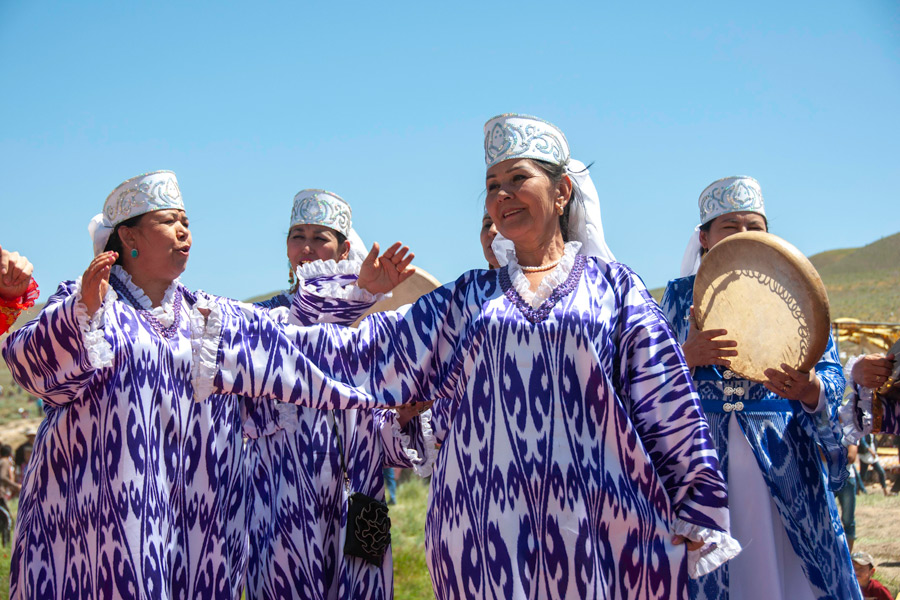
For centuries, Uzbekistan stood at the crossroads of the Silk Road. Merchants, pilgrims, and diplomats passed through these lands – travellers who often depended on the kindness and protection of others. This was the setting in which the tradition of welcoming and caring for guests gradually took root, later enriched by Islamic ethics and the region’s own customs.
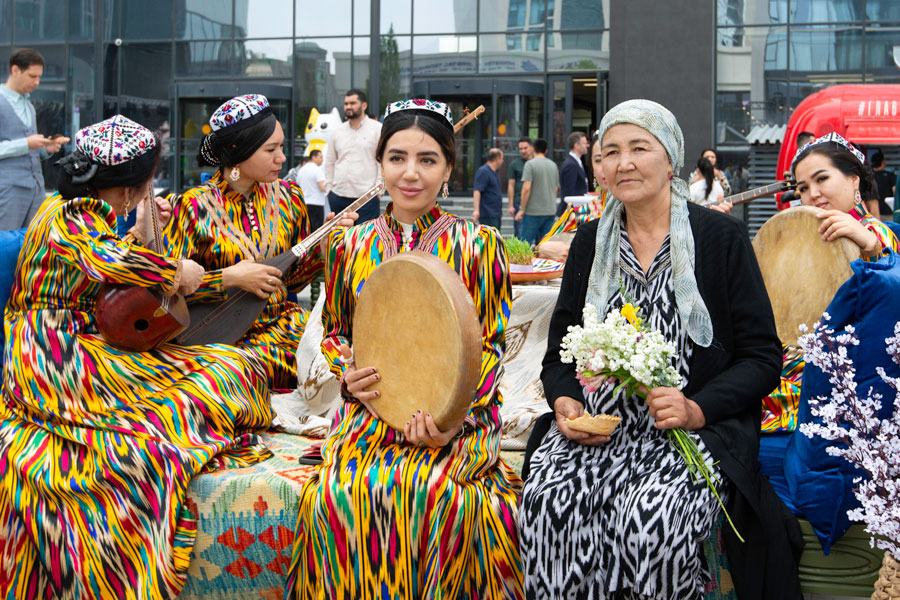
Over time, receiving guests properly became a matter of family honour and dignity, and eventually an essential part of Uzbek culture. These traditions remain alive today, especially in traditional neighbourhoods known as mahallas, where even a brief encounter can easily lead to tea, conversation, and a laid table. Guests may be invited into the home for a special occasion, or for no particular reason at all – simply to talk.
Hospitality in Uzbekistan follows a number of customs, many of them still observed in everyday life. Respected guests are usually met at the gate and greeted individually. Men are welcomed with a handshake and sincere enquiries about their health and affairs. For women, a slight bow is usually enough, accompanied by placing the right hand over the heart.
After the greeting in the courtyard, guests are invited into the house and seated in a place of honour, usually as far from the entrance as possible. The farther a guest sits from the door, the more respect they are shown in that home.
The central element of Uzbek hospitality is the laid table, known as the dastarkhan. In Uzbek homes, you may see a familiar European-style table with chairs, but traditional arrangements are also common. The dastarkhan may be set on a low table or directly on a tablecloth spread across the floor. In this case, guests sit on soft cushions or kurpacha mattresses. Whatever the format, one rule remains constant: the dastarkhan should never be empty.
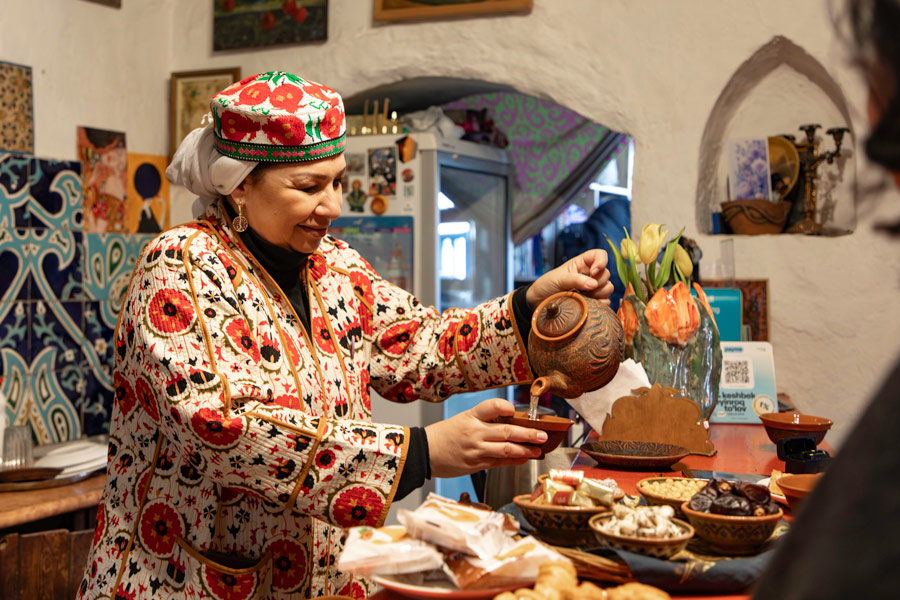
A gathering begins and ends with tea. Tea is usually poured by the host or his wife, and it is done deliberately – a little at a time. The more honoured the guest, the less tea is poured into their bowl. The idea is simple: each refill gives the host another chance to show care and attention.
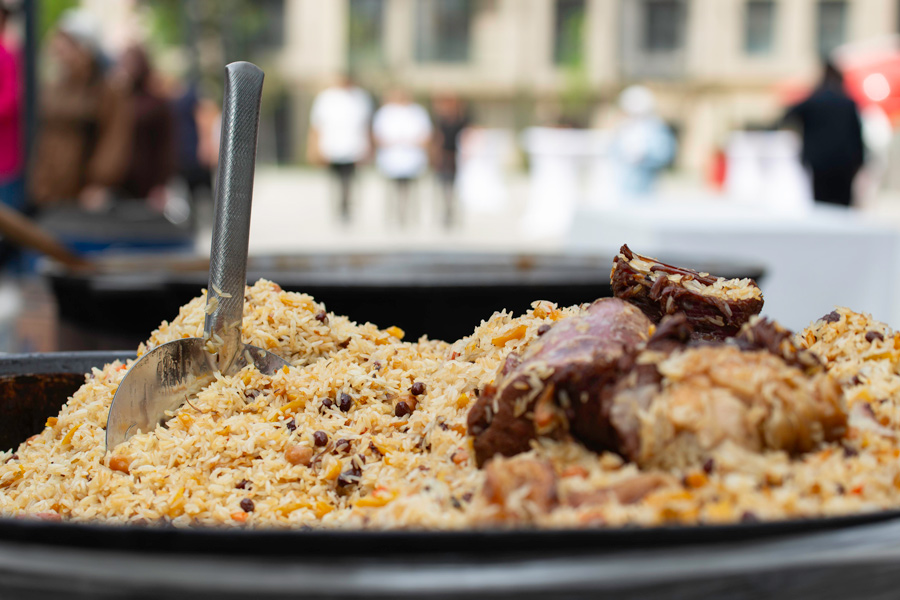
After tea, flatbreads appear on the table, together with sweets, dried fruit, and nuts. A short visit may be limited to these refreshments. If the guest is staying longer, or has arrived at lunch or dinner time, they will almost certainly be offered hot dishes, appetisers, and salads. Most often, the main dish at such a meal is Uzbekistan’s best-known dish – plov (pilaf). It is served on shared lyagans, wide plates intended for two or three people at once. In Uzbekistan, plov is eaten with a spoon, and less often by hand; forks are not traditionally used.
According to an old custom, men and women sit at separate tables, although today this is observed mainly in some rural families.
These rules have been shaped over many centuries. Some principles of hospitality can be found in manuscripts almost a thousand years old. One example is the treatise Qabus-nama, written in 1082–1083 by the Iranian ruler and thinker Kaykavus. It states that a guest should be greeted in person, shown attention, and cared for so that they feel comfortable. The treatise influenced the worldview of many peoples across modern Central Asia, and its wisdom about caring for guests remains fully alive today.
Further on, Kaykavus adds an important caution: excessive insistence can make a guest uncomfortable. Constantly urging someone to “have some more” may put them in an awkward position. Still, be prepared – the generosity of an Uzbek host often proves stronger than any written advice.
Advice for Travellers
If you are invited into an Uzbek home, it is a meaningful gesture of trust and warmth. A few simple points will help you feel more at ease and understand the rhythm of Uzbek hospitality.
Do not rush to accept an invitation immediately. Traditionally, you should be invited more than once. It is customary to accept after the second or third invitation, when it is clear that the host is genuinely insisting.
Take off your shoes at the door. This is a general rule in Uzbek homes.
Try the food you are offered. Even if you are not hungry, eat at least a little. This is one of the unspoken rules of Uzbek hospitality – the very custom that once caused Arminius Vambery such difficulty. A complete refusal of food in Uzbekistan may be understood as a lack of respect for the host.
A small gift is appropriate. When visiting, you may bring sweets, fruit, or flatbreads. This is seen as a kind gesture, though it is not obligatory. In return, be prepared to receive small gifts or souvenirs, which should not be refused.
Follow the hosts’ lead. They will offer you a comfortable seat, pour tea, and set the table. It is not customary for a guest to help with preparations or take part in organising the meal.
Do not be surprised if the visit lasts longer than expected. In Uzbekistan, good food and conversation have their own sense of time.