

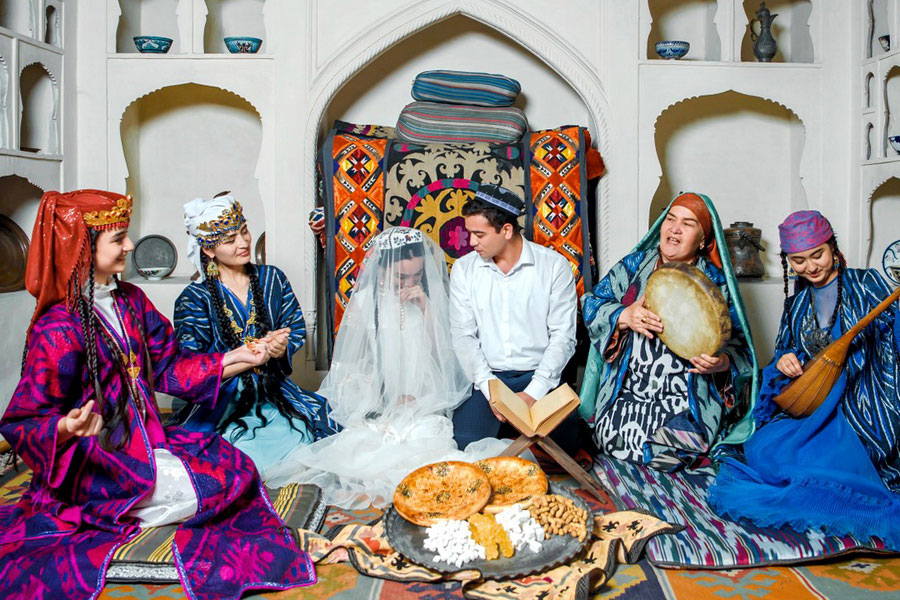
Fatiha-tuy, or fatiha-toi, is a solemn betrothal ceremony that precedes an Uzbek wedding (nikoh-tui). It forms part of the traditional Uzbek wedding cycle, which is marked by continuity of customs and clearly defined rules at each stage. One of the essential prerequisites of the engagement remains the consent of both families.
Like many Uzbek celebrations known as tuy, fatiha-tuy is observed with a festive meal, the presence of relatives and guests, as well as traditional music and dancing. Its main purpose is to bless the young couple and to reach a formal agreement regarding the forthcoming wedding.
Meaning and Origin of the Term Fatiha-Tuy
The name fatiha-tuy can be translated literally as “initial wedding”. In Uzbekistan, the word tuy refers not only to the wedding ceremony itself, but also to other important family traditions, including engagements and celebrations connected with the birth of a child, such as beshik-tuy.
The word fatiha refers to the first surah of the Quran, which is traditionally recited before significant undertakings. During fatiha-tuy, this surah is read by men, often including aksakals of the mahalla – respected elders of the community. In Islamic tradition, the recitation symbolises a blessing and a favourable beginning for the future marriage.
The central ritual of the ceremony is non sindirish – “breaking the flatbread.” According to custom, authoritative representatives of both families break one or two flatbreads placed together. This act symbolises the shared future of the couple and their life at a common table. After the non sindirish ritual, the engagement is considered officially concluded.
Matchmaking Traditions Before Fatiha-Tuy
Fatiha-tuy is preceded by a matchmaking stage that follows its own established traditions in Uzbekistan. Known as sovchilik or kuda tushish, this process involves the search for a suitable match and a series of rituals connected with the marriage proposal. Traditionally, the parents of both the groom and the bride play a central role.
In the past, when a young man reached marriageable age, relatives, neighbours, and acquaintances actively participated in finding a bride. In modern Uzbekistan, young people more often choose their partners independently, yet family involvement remains significant – especially in rural areas.
Once a potential bride is identified, the groom’s aunts, or less often his mother, visit the girl’s home under various pretexts in order to become better acquainted with her and her family. During these visits, they observe her character, upbringing, and reputation, gathering information not only from relatives but also from neighbours within the mahalla.
This aspect of the tradition remains influential today and continues to shape social expectations. From an early age, girls are encouraged to be polite, respectful, modest, and open in their interactions – qualities traditionally regarded as important for future family life.
If the gathered information satisfies the groom’s family, official matchmakers are sent to the girl’s home. These visits may take place several times and are accompanied by gifts and treats. In cases where the young man and woman have not previously met, meetings are arranged in public settings – such as walks or café visits – to allow them to become acquainted.
During one of the later visits, the bride’s family gives its final answer. If the proposal is declined, the refusal is generally accepted without pressure, and the families part on polite terms. If consent is given, a date for the engagement ceremony – fatiha-tuy – is agreed upon.
Gifts and Kalym at the Engagement Ceremony
On the day of the engagement, it is customary for the groom’s family to arrive at the bride’s home bearing gifts. These typically include clothing, jewellery, bread, and sweets. Considerable care is taken in their preparation: pastries may be shaped like swans or hearts, sweets are wrapped decoratively, and all items are presented in ornate boxes or chests.
On this occasion, the bride’s family also receives kalym, a traditional form of bride price. Historically, its amount reflected the groom’s wealth and generosity. Today, kalym is largely symbolic and is offered as a gesture of respect for tradition, often presented in an elaborately decorated container.
The bride’s family, in turn, prepares gifts for the groom. During fatiha-tuy, it is customary to present him with a set of clothing and to offer treats to members of his family.
The Engagement Banquet: From Home Feasts to Restaurants
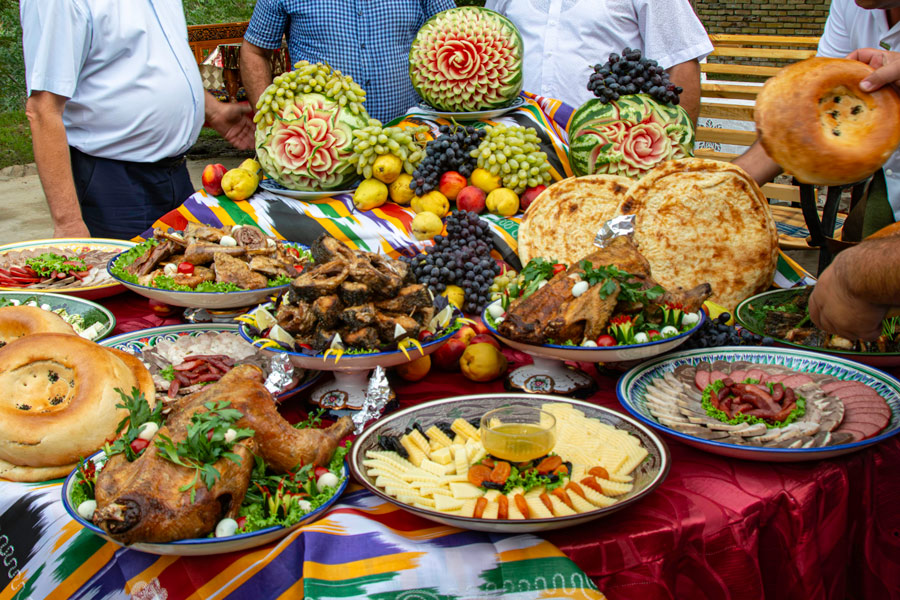
Traditionally, fatiha-tuy takes place at the bride’s home. Tables are generously laid with national food, and bread remains an essential element – one of the key symbols of Uzbek engagement. Flatbreads are baked in large quantities, and after the celebration, some are distributed among neighbours in the mahalla.
Today, engagement ceremonies are often held in restaurants and may involve a large number of guests, along with musicians and dance ensembles. In terms of scale, such celebrations sometimes approach that of a wedding itself. During fatiha-tuy, women typically socialise and dance, while men discuss organisational matters related to the upcoming wedding.
Fatiha-tuy marks an important transition between the decision to marry and the beginning of a new family life. It symbolically unites not only the young couple, but also their families. After the engagement, preparations begin in earnest for the wedding – one of the most significant traditional family celebrations in Uzbekistan.