

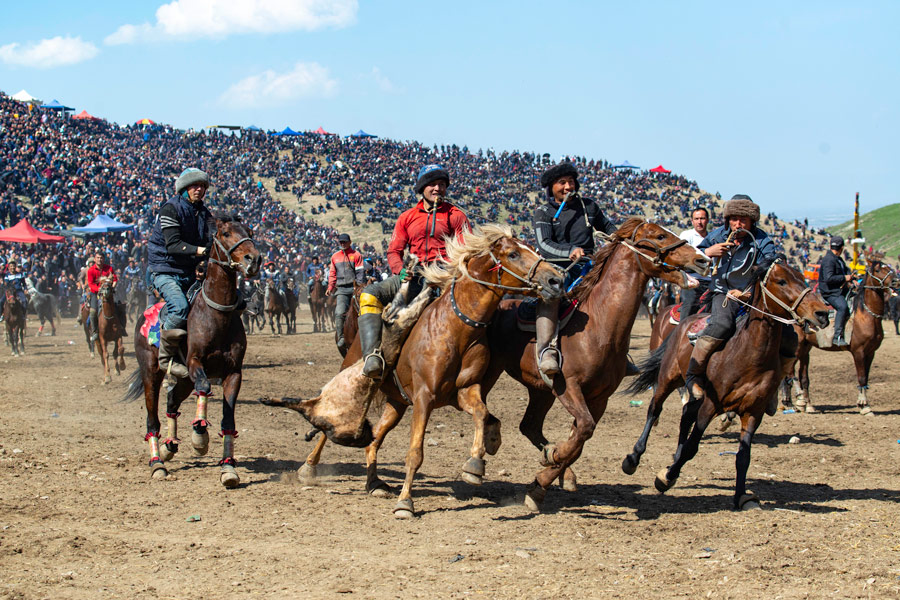
Kupkari, or ulak, is one of the most thrilling events you can witness in Uzbekistan. It has been played across Central Asia for centuries, and today it attracts spectators from around the world.
The game gathers hundreds of riders and thousands of spectators on an open plain, all drawn by the excitement of the competition. Its blend of courage and speed creates an atmosphere comparable to that of Spanish bullfighting or American rodeo.
Kupkari in Uzbekistan is a horseback contest in which riders battle for the carcass of a goat or ram, striving to be the first to carry it to the finish area. To an unprepared spectator, the game may initially seem unusual or even harsh. However, throughout the region, such events are part of the cultural heritage. They reflect the world of nomadic peoples, where horsemanship and hunting skills were closely tied to status, mobility, and survival.
Origins of the Name
The game is known throughout Central Asia. In Uzbekistan, it is called kupkari or ulak (ulok). One widely accepted explanation links the word to the Turkic word kup, meaning "many", and the Persian word kari, meaning "work" or "activity". Thus, kupkari is often interpreted as a "common task" or "the work of many people", which reflects both the nature of the game and the large number of participants involved. The word ulak refers to a goat, as well as to the carcass that serves as the object of the competition.
Elsewhere in the region, it is known as kokpar in Kazakhstan, kok-boru in Kyrgyzstan, and buzkashi in Afghanistan and Tajikistan. Despite differences in terminology and certain rules, these games are considered part of the region's shared equestrian heritage.
Kupkari Competitions: Where and When
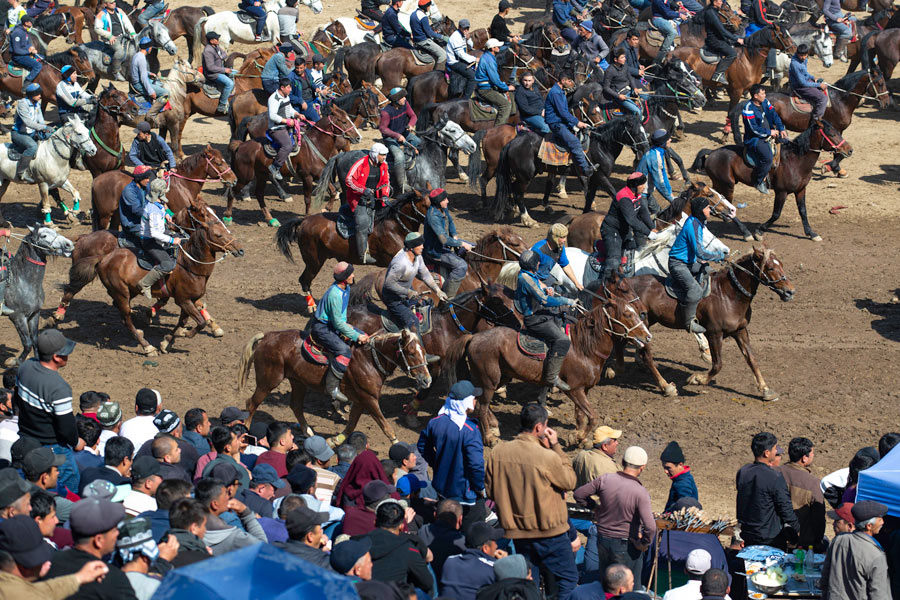
Kupkari in Uzbekistan is most commonly held in spring and autumn, especially during the Navruz holiday celebrations. At this time, the games attract thousands of spectators and, in some rural areas, become the main event of the season. Summer and late spring are generally avoided, as horses tire quickly in hot weather and may overheat.
Some events take place as major international tournaments featuring referees and teams from different parts of Central Asia. More often, however, kupkari remains a local tradition organized on a smaller scale. Such games are arranged by residents of one or several neighboring villages to celebrate a wedding, the birth of a child, or another important family occasion. These community events are generally considered the most authentic.
Well-known locations for kupkari in Uzbekistan include:
- Areas surrounding Tashkent and Samarkand – convenient and easily accessible options for visitors;
- Fergana Valley – one of the historic centers of ulak;
- Baysun in Surkhandarya Region – an area known for preserving more traditional and archaic forms of the game.
Planning Your Trip
There is no fixed calendar for kupkari events. Information about upcoming games and their exact locations can usually be obtained through local tour operators or regional news sources.
Games usually take place on large open fields outside towns and villages. These are often broad plains surrounded by low hills. Comfortable clothing and footwear are recommended, and on sunny days it is advisable to bring a hat and sunscreen.
Spectators are not allowed onto the field and should never attempt to assist participants. The best viewing spots are usually on higher ground at a safe distance from the action.
Kupkari in Uzbekistan: Rules and Traditions
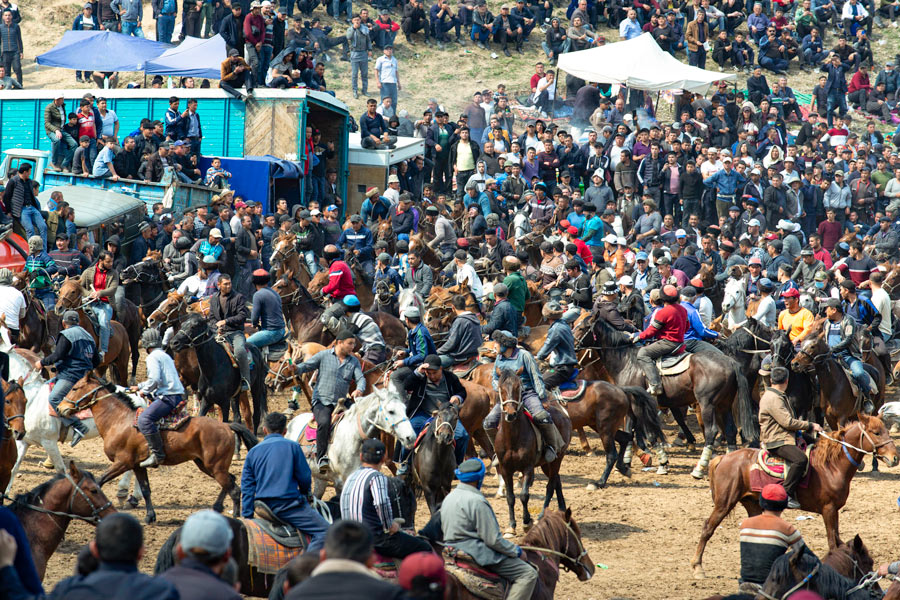
Kupkari often begins as an important community celebration, accompanied by a festive gathering and traditional plov. Before the competition starts, the organizers welcome guests, and local elders offer their blessings to the participants.
The objective of the game is to gain possession of the ulak and carry it to the finish area, a special scoring zone resembling a large cauldron known locally as a kazan.
Historically, kupkari was an individual contest in which the central figure was the palvan – a horseman renowned for his strength and riding skill. In practice, however, victory often depended on the support of fellow riders, relatives, and friends. Today, tournaments are held either as individual competitions or in an official team format.
At the beginning of the game, participants line up and wait while an elder or referee places the ulak in the center of the field. At the signal, the riders rush toward it. The first rider to pick up the ulak from the ground attempts to break free from the tight circle of opponents and make for the finish area. Other riders try to intercept the ulak or block the way. The winner is the rider who successfully throws the ulak into the kazan. In team tournaments, the point is awarded to the rider's team. The game is played in several rounds and typically lasts from three to five hours.
To take part in the competition, a rider must be young, physically strong, and highly skilled on horseback. He must be capable of lifting and holding the ulak, which usually weighs between 30 and 40 kilograms. For this reason, most participants are young men, often in their twenties or thirties.
The horse plays an especially important role. The Karabair breed is most commonly used because of its strength, endurance, and agility. These horses are specially trained for the competition: they must remain calm in crowded conditions, change direction quickly, and respond instantly to their rider's commands. Smaller horses are particularly valued because it is easier for their riders to pick up the ulak from the ground, something that must often be done repeatedly during the game.
During kupkari competitions in Uzbekistan, riders wear protective helmets and quilted cotton robes known as chapans. This equipment protects them from falls and from the heavy physical contact that often occurs during play.
In modern tournaments, referees ensure that the rules are followed. Riders are prohibited from deliberately knocking opponents from their horses, attacking from behind, or injuring other participants or their horses. The action is usually accompanied by lively commentary, and competitors may be disqualified for serious violations.
The games conclude with the presentation of prizes to the winners. In the past, the rewards often included carpets, fabrics, or livestock. Today, winners usually receive cash awards or household appliances, and occasionally even automobiles.
The History of Kupkari: The Legacy of Steppe Horsemen
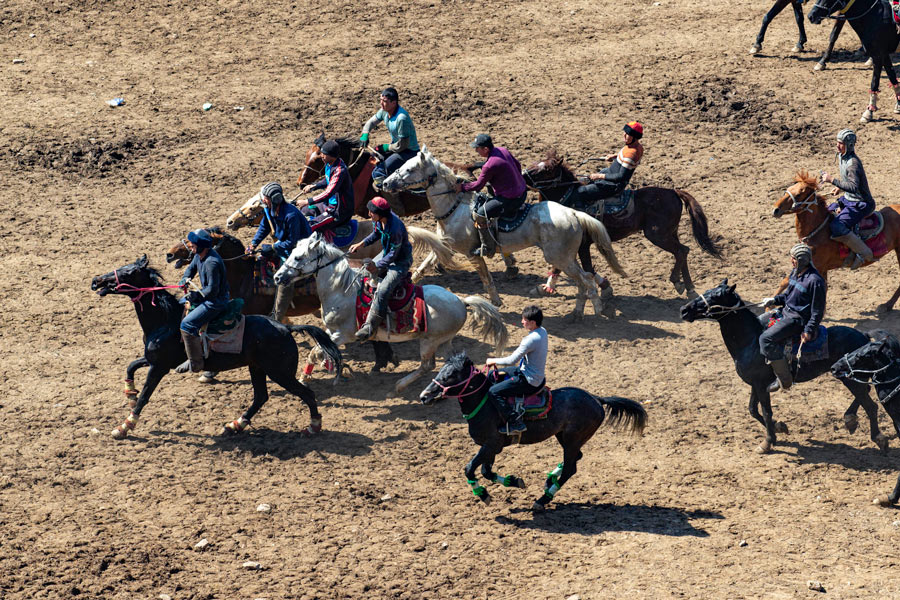
Kupkari originated among the nomadic peoples of Central Asia, for whom horseback riding was an essential part of daily life. The game helped develop the qualities required of a horseman: strength, agility, endurance, and the ability to make quick decisions. Participants had to remain firmly in the saddle, wrest the ulak away from opponents, and hold their ground in a dense scrum. In this way, the game served as a form of preparation for military life.
The exact origins of kupkari in Uzbekistan remain uncertain, but most researchers associate the game with the nomadic cultures of Central Asia. Some historians trace the tradition back to the ancient state of Dawan in the Fergana Valley, which existed in the 2nd and 1st centuries BCE. Dawan was famous for its "heavenly horses", which were recorded in Chinese chronicles.
For centuries, kupkari remained an important part of social life and a way for organizers to demonstrate their generosity and status. Preparations for major competitions traditionally began with a maslahat, a community council during which the venue, prizes, and competition format were discussed.
Kupkari had a significant influence on the development of the Karabair horse, the breed associated with the game. Bred to meet the demands of this challenging competition, Karabair horses are valued for their strength, stability, and ability to remain controlled in crowded conditions. A well-trained horse could participate in tournaments for many years and was considered a valuable asset. Experienced palvans often passed such horses down to the next generation of riders.
During the Soviet period, kupkari increasingly came to be viewed as a relic of the past and was banned in many places. Nevertheless, this important element Uzbek traditions survived, as games continued to be held unofficially in some villages.
Following independence, interest in kupkari in Uzbekistan began to revive. In 2013, the Ulak-Kupkari Federation and the Equestrian Sports Federation were merged into the Federation of Horse Breeding and Equestrian Sports of Uzbekistan. Since 2021, the development and promotion of kupkari have been supported through the activities of the Ethnosports Association of Uzbekistan.