

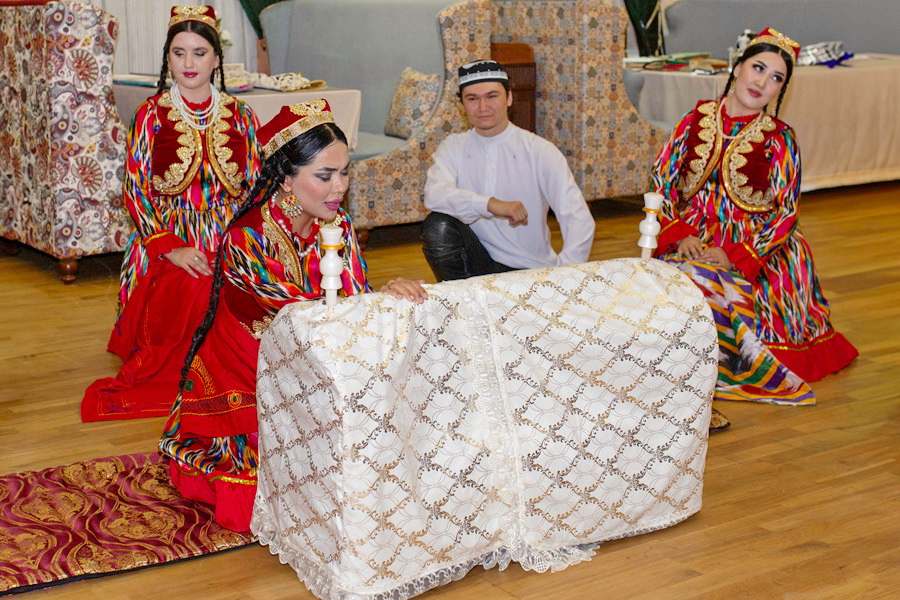
Beshik Tuy, also written as Beshik-tui, is an ancient ritual that marks a baby’s first placement in a traditional cradle. It celebrates the birth of a child while also including protective rites believed to guard the newborn from illness, misfortune, and the evil eye.
This tradition has been part of Uzbek culture since ancient times and remains widely practised today. You can see Beshik Tuy celebrations in both villages and large cities. Preparations involve not only close relatives but also neighbours, family friends, and the entire mahalla (the local neighbourhood community), reflecting the shared responsibility and close social ties behind the celebration.
The Beshik: A Traditional Uzbek Cradle
The beshik is a traditional cradle-cot commonly used in Uzbekistan. Similar cradles exist across Central Asia, including Kazakhstan, Kyrgyzstan, Tajikistan, and Turkmenistan. More than a place for sleep, the beshik is designed to protect the newborn and carries deep symbolic meaning.
The craftsmen who make these cradles are known as beshiksoz or beshikchi. They traditionally work with local woods such as mulberry, apricot, or willow. The rounded legs allow the cradle to rock gently, creating a soothing motion for the baby.
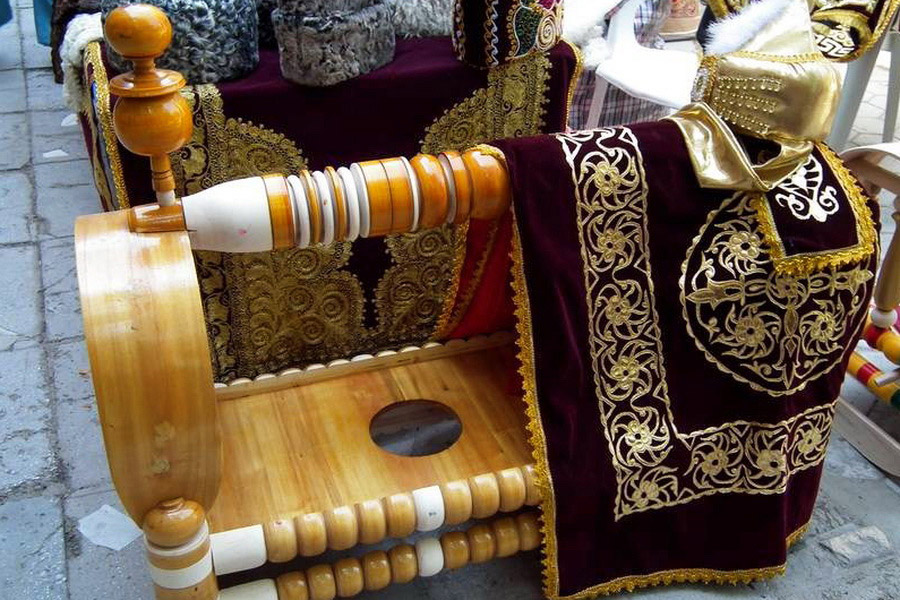
One distinctive feature of the beshik is a small opening in its base. A ceramic pot and a narrow tube are fitted here to keep the child clean and dry. Before modern hygiene products existed, this design made daily care much easier for young mothers.
Design, Decoration, and Symbolism of the Beshik
At the top of the cradle is a crossbar called a dasta. It allows the beshik to be carried and covered with ease. In warm weather, it is draped with light tulle. In colder seasons, it is covered with thicker fabric or a blanket. The dasta is often brightly painted, adding colour and attracting the child’s attention.
Many beshiks are richly decorated. Wood carving, small figurines, and ornamental details turn them into works of decorative art. Families often treasure these cradles and pass them down as heirlooms from one generation to the next.
Textiles also play an important role. Blankets are usually made from natural Uzbek fabrics in bright colours and finished with hand embroidery. Protective amulets are attached to the cradle as well. Most commonly, these are triangular charms called tumors, decorated with beads or stones. They are believed to protect the baby from harmful influences.
Another traditional feature is a set of straps used to secure the baby and limit movement. In the past, this was seen as essential for safety. Today, many families choose not to use the straps and may even prefer European-style cots in everyday life. Even so, most families still acquire a beshik for the ceremony itself and keep it afterwards as a symbol of protection, well-being, and family continuity.
Modern designers are also reinterpreting this tradition. Some create exclusive contemporary beshiks inspired by classic forms. One well-known example is the designer cradle by Tashkent-based designer Lali Fazylova, founder of the Lali brand, along with works by other designers drawing on traditional ideas.
How the Beshik Tuy Ceremony Is Held
Timing and Family Traditions
The Beshik Tuy ceremony is most often held on the fortieth day after a child’s birth. However, parents may choose an earlier date, such as the seventh or ninth day.
By tradition, the cradle is presented by the child’s maternal grandmother. This gift symbolises her love, care, and blessing. In many families, the beshik is first given for the eldest child and then used for younger siblings as well.
Gifts, Processions, and Music
On the day of the celebration, relatives from the mother’s side bring the decorated beshik to the baby’s home. They also bring traditional clothing for the newborn. Boys may receive a festive skullcap or turban and a national costume. Girls are usually dressed in a traditional Uzbek outfit, often with a chapan cape and an ornate skullcap. Guests also bring practical items for the baby.
Flatbread, sweets, and toys are an essential part of the gifts. Everything is carefully wrapped in a decorative tablecloth. In the past, these offerings were carried on horseback in a festive procession. Musicians played karnai and surnai wind instruments, along with the doyra drum. This lively musical welcome remains part of the celebration today.
The Ritual and Its Meaning
Inside the house, generous tables are laid with traditional Uzbek dishes and oriental sweets. While guests drink tea and talk, elderly women gather in a separate room. There, they perform the ritual of the first swaddling and place the baby into the beshik.
The ceremony is meant to protect the child and to wish them a long, happy, and prosperous life. During the ritual, women, including the child’s mother, sing traditional Uzbek lullabies known as alla.
The celebration ends with a viewing. Guests congratulate the family and present the newborn with gifts and warm wishes.
Beshik Tuy in Modern Uzbekistan
Today, Beshik Tuy remains an important part of life in Uzbekistan. It is widely celebrated in both villages and cities. Many families see it as more than a beautiful ritual. For them, it is a symbol of continuity and a link between generations.
Beshik Tuy is also recognised as part of Uzbekistan’s intangible cultural heritage. Government-supported initiatives help preserve and study the tradition through exhibitions, research, and cultural projects. One notable example is the 2019 exhibition Lullaby in the Moonlight at the Tashkent House of Photography, which explored the history of the Uzbek cradle and the role of Beshik Tuy in society.