

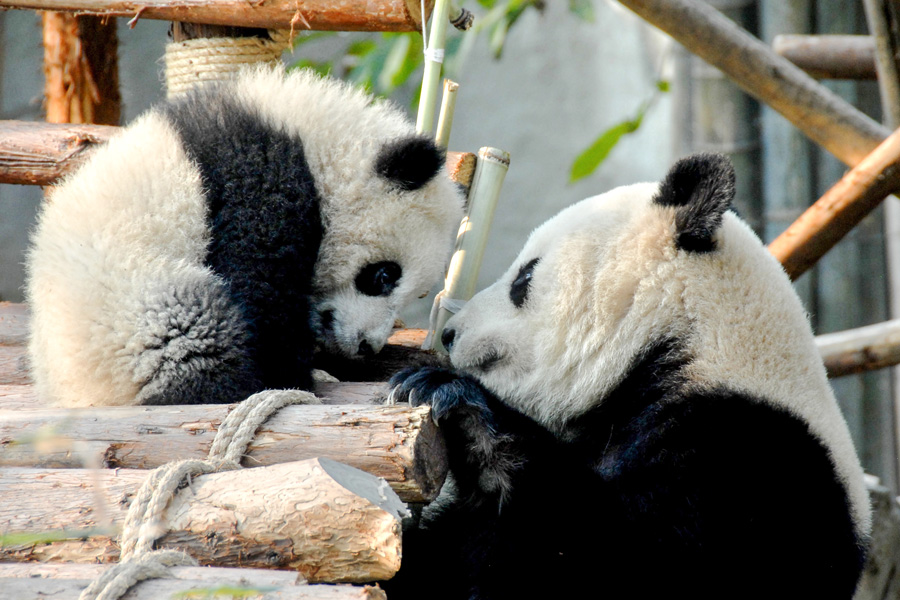
In 1987, six giant pandas were brought out of the Sichuan wilderness, underfed and unwell. They were placed in the care of a newly built facility on the northern edge of Chengdu. Nobody knew then what the place would become.
Today, the Chengdu Research Base of Giant Panda Breeding (成都大熊猫繁育研究基地) is home to over 240 giant pandas. It covers 100 hectares of bamboo groves, open enclosures, and nursery houses in Chenghua District. The base receives millions of visitors every year. It is, by any measure, one of the most important centres for giant panda conservation.
The giant panda has been China's national symbol for decades, a figure carrying diplomatic weight and ecological urgency. The Chengdu panda base is the physical proof of that commitment. The centre is a government-funded research institution that has turned rescued animals into a living, breeding population.
Visiting the Chengdu panda base means watching giant pandas eat bamboo and observing cubs in the Sunshine Nursery House. Additionally, you can walk through enclosures where adult pandas move, rest, and occasionally ignore you with great dignity.
Chengdu Research Base of Giant Panda Breeding Tours
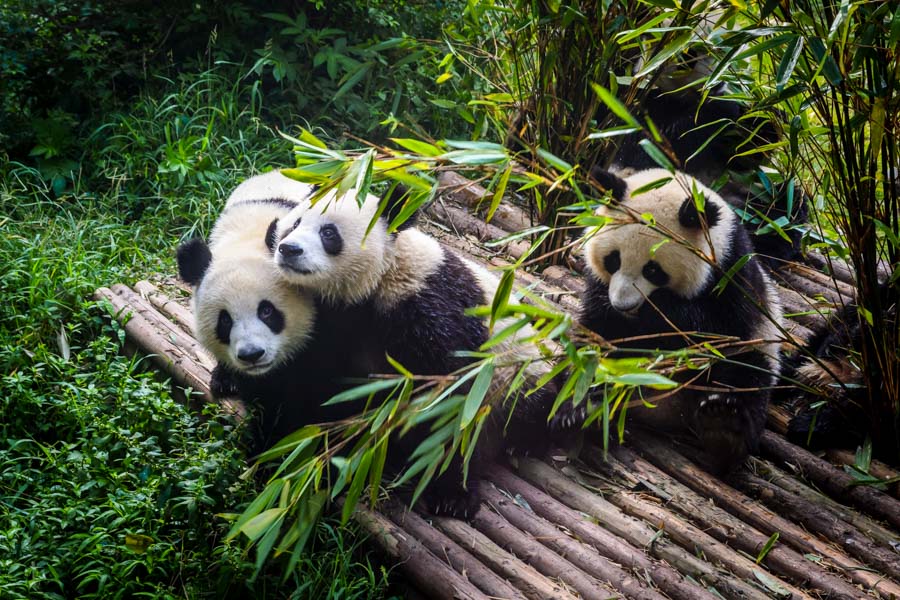
When tourists visit pandas in Chengdu, they usually arrive early. The base sits 10 kilometres (6.21 miles) from the city centre, close enough to combine with almost anything. Chengdu panda tours typically start with hotel pickup around 08:00 to reach the base during the pandas' most active hours.
An English-speaking guide covers panda behaviour, conservation history, and the base's breeding programme as you move between enclosures. Most half-day tours wrap up by midday, leaving the afternoon open for Chengdu's old streets, temples, or teahouses.
We run several multi-city tours that include an early morning visit to the Chengdu Panda Research Base. The 10-day Central China Discovery Tour moves through Beijing, Chengdu, and Shanghai, with the panda base scheduled inside.
The 11-day Central China Cultural Treasures Tour includes Leshan's Giant Buddha alongside the panda experiences in Chengdu. This one is useful for everyone who wants to see Sichuan's two most visited sites in a single trip.
For a different angle, the 13-day China Food Tour pairs the Chengdu panda base with Sichuan cooking classes.
The 16-day Central China Grand Tour adds a Yangtze River cruise and Huangshan to the same route. Here, we will additionally guide you through the Chengdu panda habitat.
Private panda tours in Chengdu can also be arranged independently, with door-to-door transfers and flexible afternoon options.
Best Time to Visit the Chengdu Base of Giant Panda
Timing your visit correctly makes a significant difference to what you actually experience at the Chengdu Panda Breeding Base.
The best time to visit the Chengdu Panda Base is early morning at the opening. After that, head directly to the nursery areas, as it is the best time to see pandas at the Chengdu Panda Base. Cubs are fed between 08:00 and 09:30, and adult pandas are most active from opening until around 10:00.
By late morning most of them are asleep, and they stay that way through the afternoon. A morning visit makes a real difference. Arrive early and you are far more likely to see the pandas eating, climbing and moving about, rather than sleeping through the warmer hours.
For the best combination of weather and panda activity, come in spring or autumn. Temperatures are cooler, the bamboo groves are at their most walkable, and the pandas spend more time outdoors.
Summer brings a humid climate and heat above 35°C, which pushes the pandas into air-conditioned indoor enclosures. They are still visible, but the experience is more limited. Note this if you're visiting July through August specifically.
That said, July to October is the only window to see baby pandas. Panda births peak in July and August, and by October the cubs are a few months old. They are small and visibly alive with movement in the Sunshine Nursery House. If watching a panda cub is the reason you're here, late summer into autumn is the right call despite the heat.
During Golden Week (1–7 October) and Chinese New Year, the base is very crowded. Weekday mornings are consistently quieter than weekends year-round, making it a top thing to do in Chengdu on workdays.
Chengdu Panda Base Opening Hours
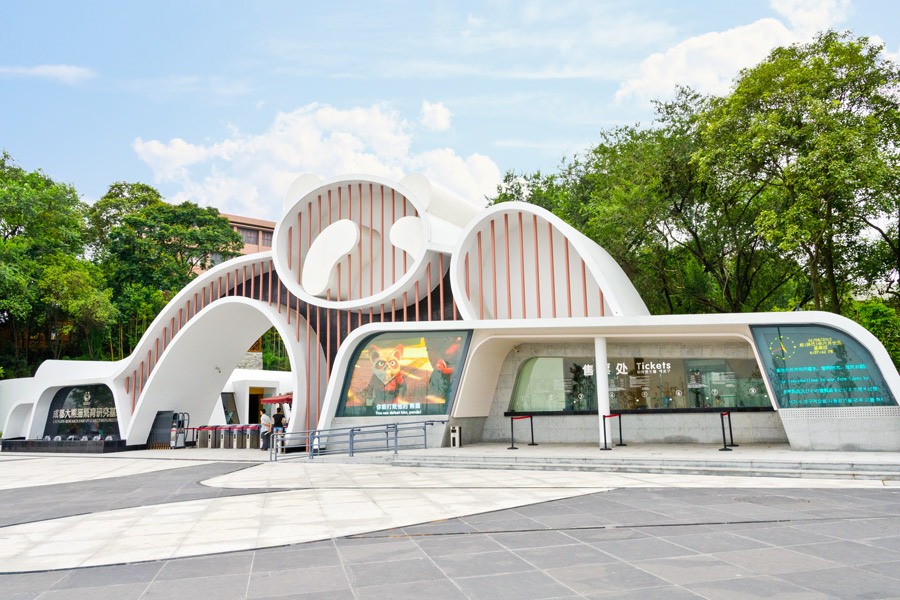
Opening hours change by season.
From November to February, morning admission runs from 08:00 to 12:00. Afternoon admission starts from 12:00 to 16:30, with the base closing at 17:30.
From March to October, morning admission starts earlier, from 07:30 to 12:00. Afternoon admission runs from 12:00 to 17:00, with closing at 18:00.
The Panda Tower is open from 9:00 to 17:00, with last admission at 16:30. It is closed every Tuesday (except for national holidays) and in case of special weather conditions.
Tickets and Entry
The Chengdu Panda Base ticket price for a standard adult admission is CNY/RMB 55* (approximately $8, €7, £6).
How to buy Chengdu Panda Base tickets online?
All tickets require advance online reservation with your name matching your passport for the registration and the same valid ID to be present when you visit the base. You cannot buy tickets at the gate without a prior reservation.
Tickets are available up to 14 days ahead via the WeChat Mini Program, or Meituan.
Children under 1.3 metres and visitors aged 60 and above enter free with valid ID.
An on-site sightseeing bus runs the full route for an additional CNY/RMB 30* (approximately $4.50, €3.70, £3.25) per person.
*Note: Prices are indicative and can change without prior notice.
Evolution of Giant Pandas
Giant pandas have been around for roughly eight million years, yet they have always made survival harder than it needs to be. Eventually, in their evolutionary history, they switched to a bamboo diet, despite having the stomach of a carnivore. Bamboo is low in calories and difficult to digest, so pandas spend up to 16 hours a day eating just to function.
Reproduction is equally challenging. Females are fertile for just 24 to 72 hours per year, while captive males regularly miss that window entirely. When cubs do arrive, they are born weighing around 100 grams, roughly the size of a stick of butter, and need round-the-clock care to survive. In the wild, mothers usually raise only one of a pair of twins; thus, giant pandas became an endangered species.
On top of all this, habitat destruction across the twentieth century pushed the wild population to critically low numbers. By the time the Chengdu panda base opened in 1987, intervention was necessary.
The twin-swapping technique developed here means keepers rotate cubs between their mother and an incubator. This way, both receive proper care, and it has significantly raised survival rates for twin births. The wild population has since recovered to over 1,900 individuals. The captive population at the base alone now stands at 244.
What is the Chengdu Research Base of Giant Panda Breeding?
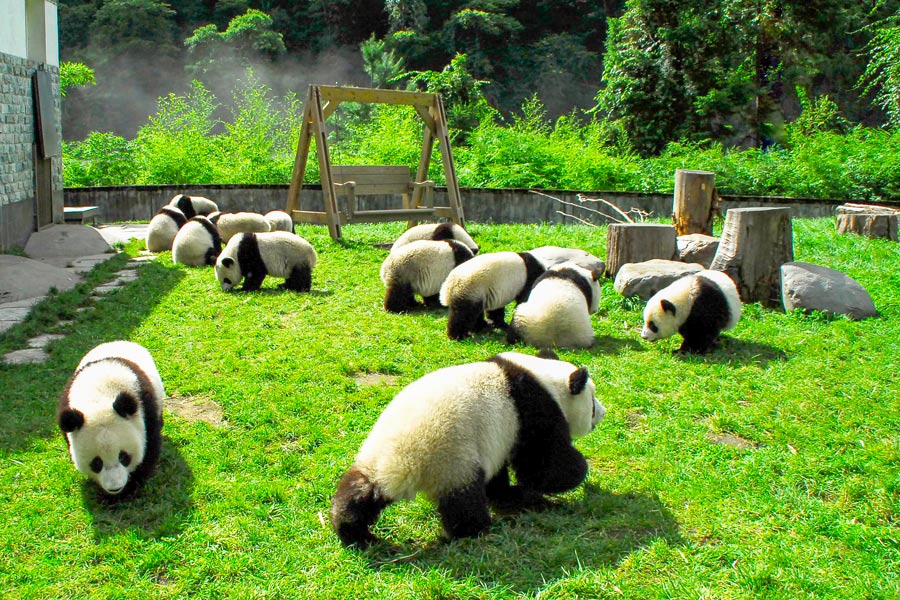
The story starts with a bamboo famine. In the 1980s, Fargesia bamboo across the Qionglai Mountains died, leaving giant pandas without food across Sichuan. Several starving animals were brought to Chengdu Zoo for emergency care.
In 1987, the Chengdu Municipal People's Government decided those animals needed a dedicated facility. The construction began on what would become the world's most important giant panda sanctuary in Chengdu.
The base started with six rescued pandas. By the end of 2024, that number had reached 244 individuals, the largest captive giant panda population on Earth. Spread across 2.38 square kilometres (0.92 square miles) in Chenghua District, the facility operates as a non-profit research and breeding institute.
Its work covers captive breeding, veterinary care, genetic research, and public conservation education. In 1995, the United Nations Environment Programme (UNEP) awarded it a place on the Global 500 Roll of Honour. In 2006, it received China's National AAAA Tourist Attraction rating.
Sichuan is home to the Sichuan Giant Panda Sanctuaries, a UNESCO World Heritage Site covering 9,245 square kilometres (3,570 square miles) in the areas of Wolong, Mont Siguniang and Jiajin Mountains. It shelters over 30 per cent of the world's wild giant pandas alongside red pandas, snow leopards, and plant species. Several giant panda bases are scattered across Sichuan at varying distances from Chengdu: the Dujiangyan Panda Base (70 km / 43 miles), the Wolong Panda Base (110 km / 68 miles), and the Ya'an Panda Base (120 km / 75 miles).
The base in Chengdu simulates the natural giant panda habitat as closely as possible. Bamboo covers most of the site, with enclosures built into hillside terrain. Maternity wards, research centres, and a panda hospital are spread throughout the site.
The Chengdu Research Base of Giant Panda Breeding has established long-term breeding partnerships with zoos in Japan, the United States of America, Germany, France, and Canada. Yang Yang and Lun Lun, two pandas loaned to Zoo Atlanta, produced seven panda cubs between 2006 and 2016.
Celebrity Pandas
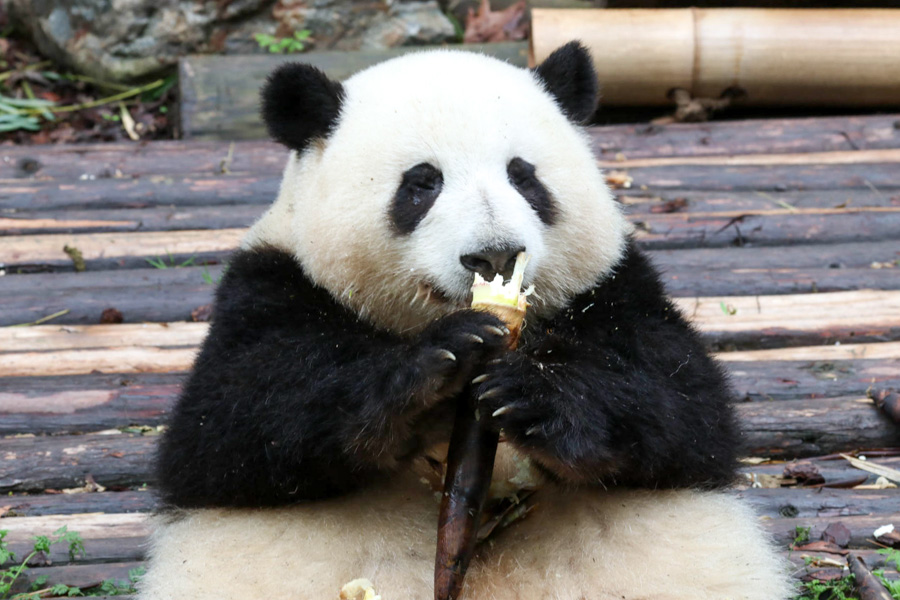
A handful of pandas at the base have developed a reputation that most celebrities would envy.
Hua Hua, born on 4 July 2020, is currently the most famous panda in China and possibly the world. With snow-white fur rather than the standard yellowish coat, she has a seated stance. Chinese internet users have compared it to an onigiri, a triangular Japanese rice ball. These qualities, which in any other context might seem unremarkable, have made her a phenomenon.
Qi Yi, born on 1 July 2016, was the model for all 18 official sports icons of the Chengdu World University Games.
Fu Shun, born on 14 July 2016, fell headfirst off a public stage. The video spread worldwide, and Time magazine included it in their Pictures of the Year. He lives at the base with his twin sister Fu Lai and eats between 40 and 50 kilograms of bamboo daily.
Mei Lan was born in Atlanta in 2006 and was the first cub born through the Chengdu and Zoo Atlanta breeding programme. He returned to China in 2010 and has since fathered 23 cubs, including Hua Hua’s mother.
Panda Ambassadors
At the Chengdu Panda Base, the word “ambassador” refers to a public face for panda conservation. The Pambassadors are people whose names and visibility help carry the work of the base beyond Chengdu. Celebrity Pambassadors are Jackie Chan, Yao Ming, Karen Mok, Song Hye-Gyo, Mabel Yuan, Lee Pace, Sun Nan, Alan Olav Walker and Li Ziqi.
Their value is symbolic, pulling attention towards the base and giant panda conservation. In 2010, the base launched Project Panda: Global Search for a Chengdu Pambassador. Applicants from around the world competed for the chance to spend time at the Chengdu Panda Base and in surrounding reserves. The project aimed to draw attention to threats facing wild pandas and to turn public interest into something helpful for pandas.
What Can You Experience at the Chengdu Base of Giant Pandas?
The base covers 2.38 square kilometres (0.92 square miles), and first-time visitors consistently underestimate the size of it. Plan for at least half a day, though a full day is better.
Two routes run through the site. The South Gate route takes you through the older, more established areas where the most famous residents live. The West Gate route leads into the newer, more expansive sections with noticeably fewer crowds.
Both routes follow the sightseeing bus circuit, which stops at all the main areas for CNY/RMB 30* (approximately $4.50, €3.70, £3.25) per person. Walking the full route takes around three to four hours and covers roughly 7 kilometres (4.35 miles).
Giant Panda Enclosures
The enclosures are the centre of everything. Adult pandas occupy the villa areas, which are open-air habitats built across forested hillside terrain. There, you'll find bamboo groves, wooden climbing frames, and pools. You watch them eat, move, and occasionally ignore each other entirely.
The sub-adult area houses younger pandas in shared enclosures. The interaction between them is often more active than in the adult villas.
The Sunshine Nursery House and Moonlight Nursery House are where the cubs live. During peak season, from July to October, newborns are visible through nursery windows–tiny and pink. At the same time, older cubs a few months on are outside, climbing and falling off things with full commitment.
Daily newborn meet and greet sessions run from 14:00 to 16:00 during panda season.
Red Pandas and Swan Lake
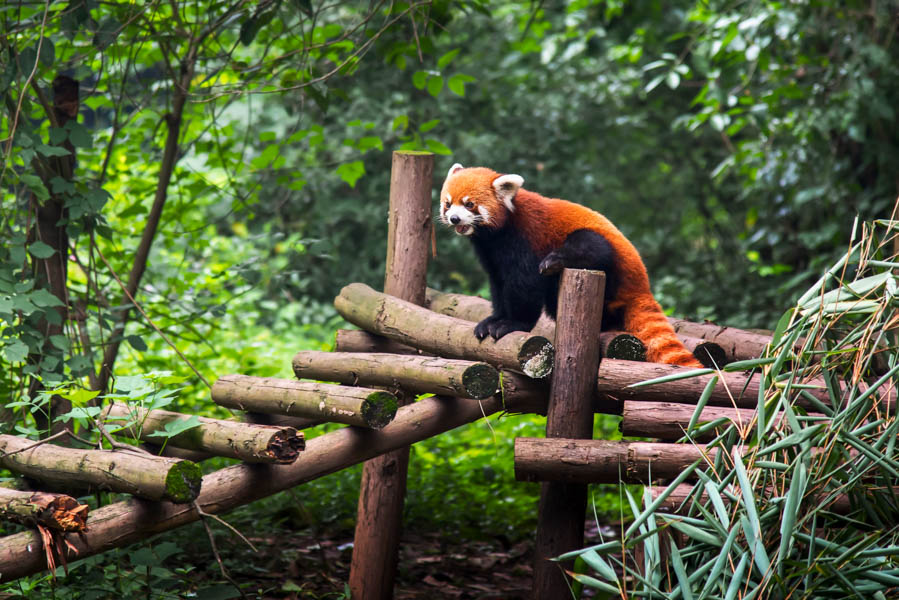
The red panda enclosures sit along the main route and are easy to miss if you are moving quickly. Red pandas are smaller, faster, and considerably more agile than their famous neighbours. Feeding time runs from 14:00 to 15:00 daily.
Swan Lake occupies a quieter stretch of the base, home to black swans, mandarin ducks, and ruddy shelducks. It represents an excellent place to stop and take a rest, especially after the nursery crowds.
The Giant Panda Museum
The Giant Panda Museum in Chengdu is located near the south gate and opens at 09:00. Entry is free with a valid ID and advance reservation through the WeChat account. It runs across seven exhibition zones covering panda prehistory, conservation history, and ecological science, with a VR surgery simulator and a dome theatre inside.
The Panda Tower
The Panda Tower stands 69.8 metres tall at the north end of the base. Designed by Shanghai studio UDG Atelier Alpha, its form is modelled on a bamboo shoot emerging from the ground. The eleven curving floor slabs are based on the hibiscus flower, Chengdu's city symbol.
The viewing platforms are open-sided, with panoramic views across the entire base. The facade opens mechanically on special occasions, including the birth of a new cub. Entry requires a free advance reservation. Closed on Tuesdays.
The Panda Theatre
Focusing on ecology and the panda theme, the Panda Theatre, often referred to as the Panda Charm Theatre, offers immersive performances that integrate intangible cultural heritage, Sichuan Opera, juggling, and hip-hop. The programme changes daily and can be viewed on the ticketing platforms. Ticket prices start at CNY/RMB 152* (approximately $22, €20, £17).
How to Get to the Chengdu Base of Giant Pandas?
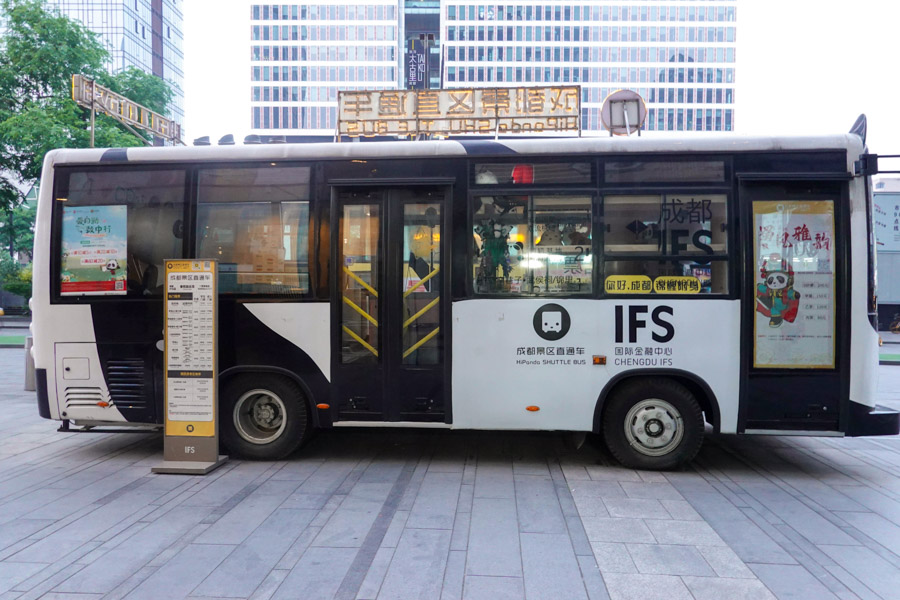
The base sits at No. 1375 Panda Avenue, Chenghua District, about 10 kilometres (6.21 miles) from Chengdu city centre. Getting there is straightforward from anywhere in the city.
By Metro and Bus
Taking the metro to the Chengdu panda base is straightforward. Line 3 goes directly to Panda Avenue Station, from where you can take Exit A. From there, the Shuttle Bus 408 runs directly to the South Gate. The full journey from the city centre takes around 30 minutes and costs under CNY/RMB 10* (approximately $1.45, €1.25, £1) . As of July 2025, international visitors can tap Visa, Mastercard, or American Express cards directly at metro turnstiles.
For the West Gate, take Metro Line 3 to Chengdu Junqu General Hospital Station, from where you can take Exit B, then walk 280 metres to the shuttle bus stop and take bus 409 to the West Gate. The West Gate entrance leads into the newer sections of the base and tends to be quieter in the mornings.
By Taxi or Ride-Hailing
Taxis from Chunxi Road cost around CNY/RMB 40* (approximately $6, €5, £4.50) and take 25 to 35 minutes depending on traffic. From Chengdu East Railway Station the fare is similar, and from Shuangliu International Airport expect around CNY/RMB 100* (approximately $14.50, €13, £11) . Tianfu International Airport is further out at roughly CNY/RMB 200* (approximately $29, €26, £22) and 60 to 70 minutes away. Didi and Amap apps both work well in Chengdu.
Set the destination in Chinese as 成都大熊猫繁育研究基地 for best results.
By Private Car
Private car transfers can be arranged through most hotels and tour operators in Chengdu. It is a practical choice for those who want a direct journey without navigating public transport before 08:00.
By Bicycle
For those who prefer it, shared e-bikes are available through Hellobike, Qingju, and Meituan. The ride from the city centre takes around 80 minutes. Download the app, scan the QR code on the bike, and navigate using the in-app map.
Tips for an Optimal Visit
Wear comfortable walking shoes, as the full route covers around 7 kilometres (4.35 miles), much of it uphill. Pack a refillable water bottle since free dispensers are placed throughout the park. In summer, bring a hat and a light rain jacket, as well as mosquito repellent.
Note that No. 6 Giant Panda Villa closes every Monday for animal welfare rest rotation. The Giant Panda Museum and Panda Art Museum also close on Mondays. The Panda Tower closes on Tuesdays.
Facilities
Both the South Gate and West Gate tourist centres offer free luggage storage, wheelchair and stroller rental, umbrellas, and walking sticks. Nursing rooms with changing facilities and milk warmers are available at both gates. Two clinics operate within the park for medical emergencies.
Food and Dining
The Bamboo Rhyme Restaurant on the southeast side of Swan Lake serves Sichuan dishes across two floors. The Rose Garden Western Restaurant sits on Swan Lake's eastern shore with indoor and outdoor seating. The Panda Time Café next to the Panda Charm Theatre is the best quick stop mid-route. The Qi Yi Café near Swan Lake offers a sense of tranquillity. The Food & Drinks and Panda Milk Tea sell panda-themed snacks and panda milk tea, which, despite its name, is not made from panda milk but is actually a blend of black tea and condensed milk, along with various other options.
Gift Shops
You can contribute to conservation efforts by purchasing gifts at the Panda Base. The Panda Gift Shop is situated in the Moonlight Delivery House, and additional gift shops can be found at the Giant Panda Museum, the Giant Panda Cub Enclosure, the Giant Panda Kingdom Post Office, and the Panda Dudu Cultural & Creative Shop, as well as numerous other shops located throughout the Panda Base.
Photography
No flash photography is permitted anywhere in the base, nor are drones allowed. Commercial photography and live streaming require prior authorisation. Morning light around the villa areas and bamboo groves is the best the base offers photographically.
Educational Programmes
The centre runs one of China's most developed conservation education programmes. The Chengdu Panda Research Base collaborates with Zoo Atlanta, Chester Zoo, the University of Denver, and the University of Queensland. Programmes cover panda biology, breeding research, and biodiversity for all age groups.
Nearby Attractions
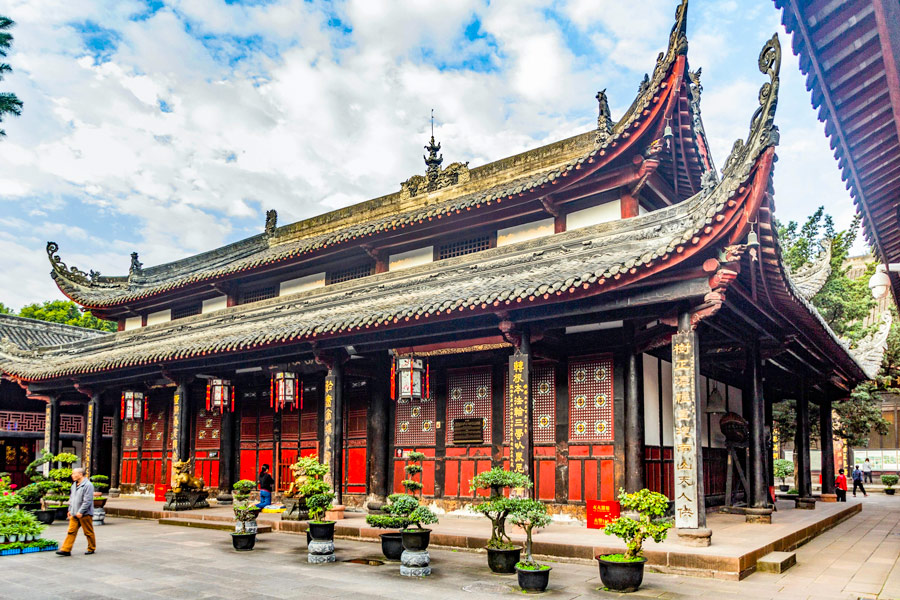
The base sits in the northern suburbs of the city, and most of the things to do in Chengdu are located 25 to 40 minutes away from the city centre. A morning at the base followed by an afternoon in the Old Town is one of the best things to do in Chengdu.
Chengdu Botanical Garden
Six kilometres (3.73 miles) southwest of the base, the Chengdu Botanical Garden covers 42 hectares (104 acres) across Jinniu District. Over 2,000 plant species grow here, organised across themed gardens, including bamboo groves and magnolia, camellia, and plum blossom sections. Spring visits from March to April catch the annual flower show at its best. It is quiet, genuinely green, and a reasonable contrast to the excitement at the panda base.
Chengdu Zoo
A few stops before Panda Avenue Station, Chengdu Zoo makes an easy combined visit for anyone with a full day. It holds a separate population of giant pandas alongside golden snub-nosed monkeys, snow leopards, and other Sichuan wildlife.
Dujiangyan Panda Base
Around 70 kilometres (43 miles) from Chengdu, the Dujiangyan base is part of the same Chengdu Research Base network. This centre sits adjacent to the UNESCO-listed Dujiangyan irrigation system and Mount Qingcheng. It is significantly less visited than the main base and runs the hands-on volunteer programme. Here, participants assist keepers with feeding and enclosure maintenance.
Wenshu Yuan Monastery
Around 15 kilometres (9.32 miles) from the base, Wenshu Yuan is Chengdu's best-preserved Buddhist temple complex. Traditional courtyards, resident monks, and a tea house inside the grounds serve some of the best tea you will find in the city.
Kuanzhai Alley and Jinli Street
Both are around 20 kilometres (12.43 miles) away and represent the most visited historic streetscapes in Chengdu. Kuanzhai Alley is a restored Qing Dynasty (1644-1912) residential complex with teahouses, street food, and craft shops. Jinli Street runs alongside Wuhou Shrine, the memorial site dedicated to the Three Kingdoms period (220 to 280) strategist Zhuge Liang. Either works well as an evening destination or after a morning at the panda base.