

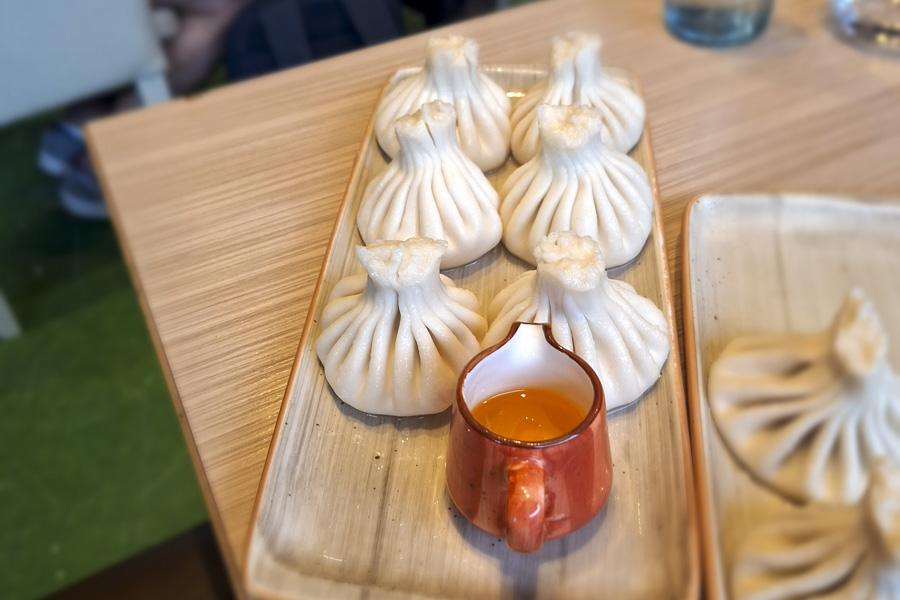
Tender dough, steaming spicy broth and a pleated crust to hold it all: khinkali is one of those dishes that captivate you from the first bite. Enjoyed across Georgia and beyond, these generous dumplings are both a comforting family meal and a true culinary masterpiece: rustic in origin, carefully prepared and perfect for sharing.
This short khinkali guide will take you from the mountain villages where khinkali originated to plates in Tbilisi, explain how to savour them like a local, and point out must-try regional variations and the best places to find the dish.
What Is Khinkali? – A Guide to Georgian Soup Dumplings
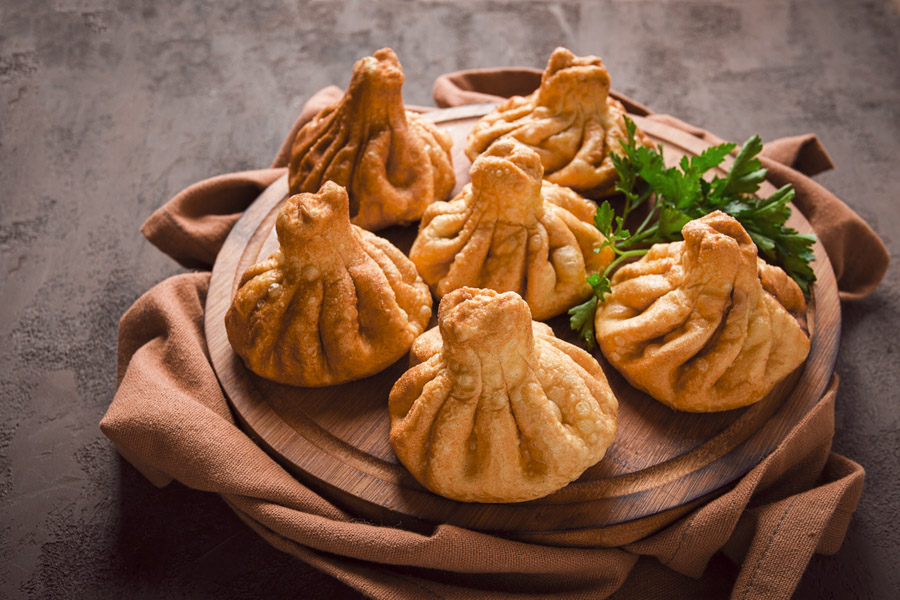
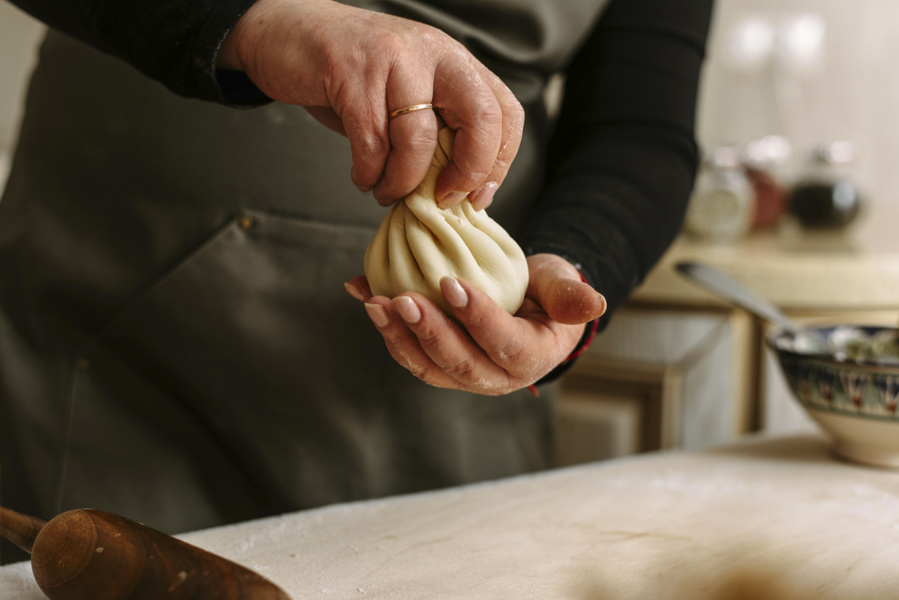
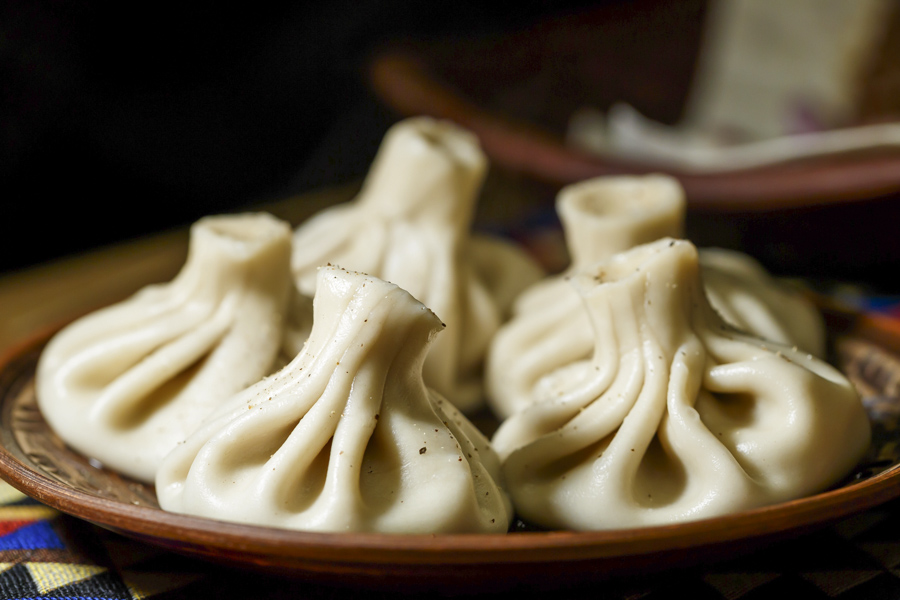
Khinkali are Georgian dumplings: traditionally filled with seasoned meat and sealed with a characteristic twisted pleat at the top. It is often described as a Georgian soup dumpling. As the filling cooks, it releases a hot, savoury broth that is central to the eating experience.
Where Khinkali Comes From
Khinkali took root in the country’s mountainous regions, notably Pshavi, Khevsureti, Tusheti, Mtiuleti, and Khevi – where it was a staple for shepherds, warriors, and families living in a cold climate. From there, it spread down to the plains, evolving with local herbs and finer textures to create a variety of khinkali fillings.
Several legends explain khinkali’s name and ritual role. Its shape forms part of its identity. One local custom holds that skilful makers give each dumpling 28 pleats – a number tied in folklore to the solar cycle and echoing the borjgali, an ancient symbol of the sun and eternity – though the number of folds varies by region. Some locals associate this Georgian dish with celebration and hospitality.
One interpretation even traces its arrival in Georgia to the 13th-century Mongol invasions. This theory links this dish to wider Eurasian dumpling traditions, in which meat wrapped in dough served as practical food for travellers and soldiers.
Georgia's historic position on the Silk Road helped these culinary influences circulate and adapt across the region.
Main Types of Khinkali
Meat Khinkali
Meat khinkali remains the standard version. Beef, pork, lamb, or a blend of meats is mixed with seasonings and water before cooking, producing a hot, seasoned liquid that is the dish’s main comforting feature.
Kalakuri khinkali (literally "city-style") uses minced meat, coriander, onion and black pepper. It is aromatic, juicy, and widely served across Tbilisi restaurants. Mtiuluri khinkali, along with mokhevuri and khevsuruli, are its mountain-style counterparts: simpler in seasoning, with fewer herbs and a greater emphasis on the meat and broth.
Lamb khinkali, when available, has a stronger, richer flavour associated with old traditions, though it is less common in the capital.
Meat khinkali is conventionally eaten with black pepper or vinegar. Heavy sauces aren't necessary, as the juicy filling provides most of the flavour.
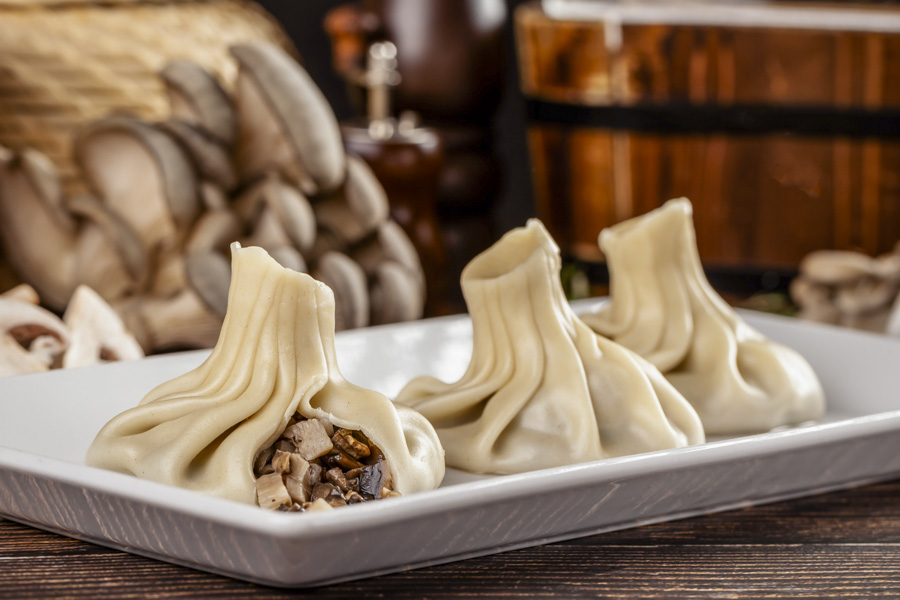
Mushroom Khinkali
Mushroom khinkali is a popular meat-free version. Because mushrooms retain moisture well, they can reproduce some of the original’s core qualities. Seasoned with onion, herbs, and pepper, it is the closest in texture to the meat version.
The following types do not contain broth and are optionally served with butter:
Cheese Khinkali
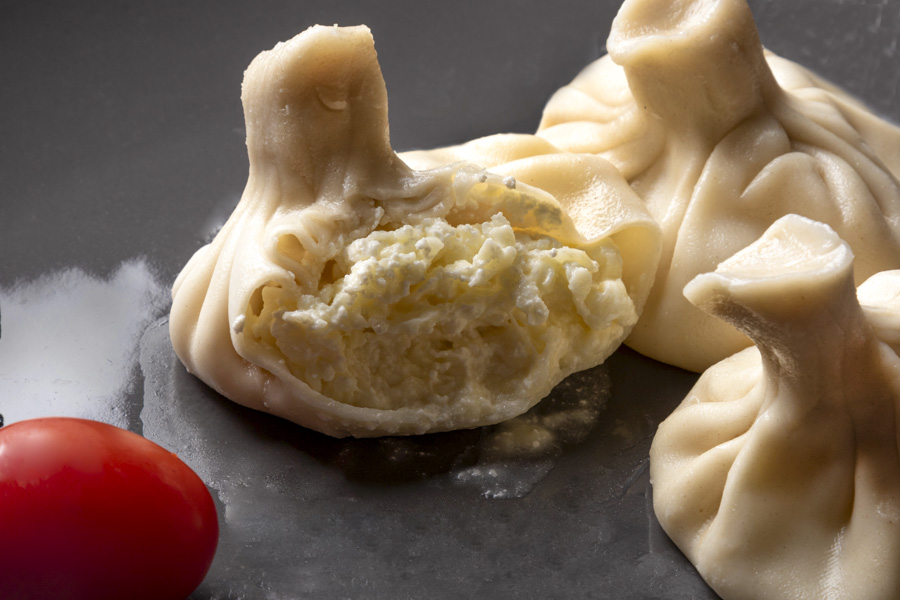
Soft, salty, and sometimes stretchy cheese provides a dense, satisfying filling for cheese khinkali.
Cottage Cheese Khinkali
Cottage cheese khinkali is lighter and milder than the standard cheese version. It is creamy and slightly tangy, leaning towards a fresh dairy filling. Some cooks combine nadughi (a soft Georgian cottage cheese) with Imeretian cheese to achieve the ideal balance.
Potato Khinkali
Smooth mashed potato is combined with finely diced onion, ground black pepper, and other spices to make a simple, mild potato khinkali. Its appeal lies in the soft interior and the chewy exterior. It's a reliable choice for children, being relatively neat, and for anyone wanting something less intense or as a secondary order.
Regional Variations of Khinkali
Several less familiar styles are worth noting:
- Goose apokhti khinkali from Meskheti in southern Georgia uses salted, dried goose, a Meskhetian tradition that yields a markedly distinctive flavour.
- Telavuri khinkali from Kakheti features a cumin-forward spice blend characteristic of eastern Georgia.
- In Khevi, potato-cheese khinkali is a regional variation to look for, shaped more like a half-moon or crescent. The filling combines mashed potato and salty cheese, and it is often served with ghee or butter.
- In the Pankisi Valley, nettle khinkali is a distinctive local speciality. Associated with Kist home cooking, it uses nettles mixed with other herbs, onion and seasoning, creating a green, earthy filling that reflects the valley’s North Caucasian influences.
How to Eat Khinkali – Khinkali Etiquette
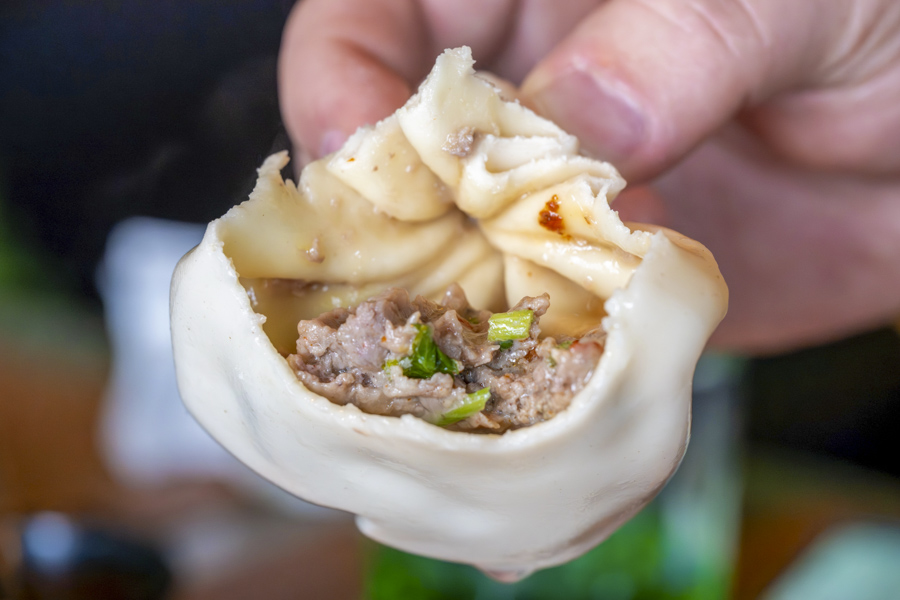
Georgian khinkali etiquette is specific. The dumpling is held by the doughy topknot, known as the kuchi, which serves as a handle. Hold it over the plate, take a small bite from the side to break the seal, and sip the hot broth before eating the rest. The knot is left on the plate when finished; it is denser than the rest of the dough and is rarely eaten. The pile of discarded knots on the table becomes an informal tally of how many each person has eaten, and locals treat that count with a competitive spirit.
Using a knife and fork is not forbidden, but cutting the soup dumpling open releases the broth onto the plate and removes the defining feature of the experience.
Note: Freshly cooked khinkali will be very hot, so take the first bite carefully.
What to Drink with Khinkali
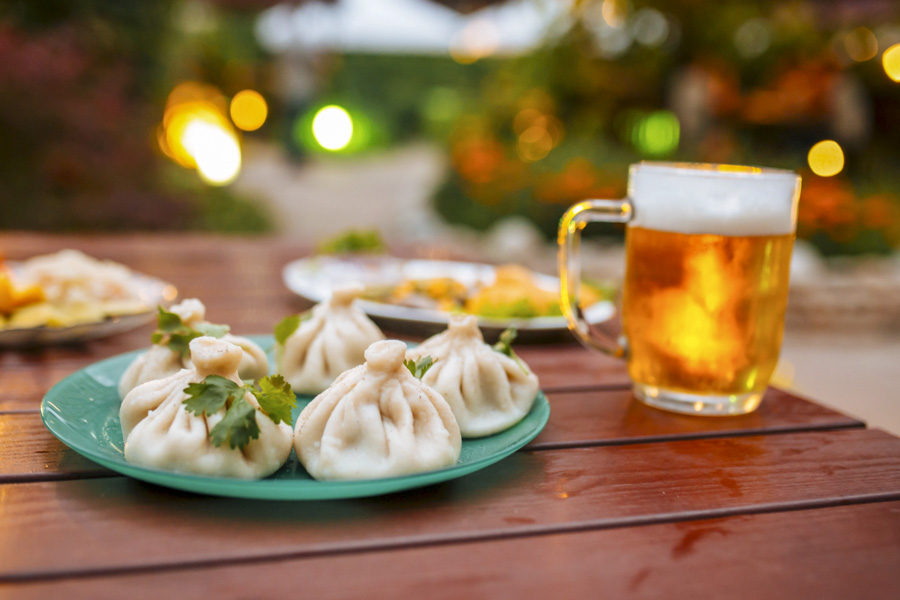
Beer is the classic pairing. Long brewed in the country's highlands, it cuts through heat, fat, and pepper to provide a pleasing balance. Georgian lager (from Natakhtari or Kazbegi) is the standard choice.
Wine is less conventional but is not inappropriate: a medium-bodied red suits meat khinkali, while an amber or dry white complements mushroom or cheese versions.
Local lemonade is a common non-alcoholic palate cleanser.
Where to Try Khinkali in Georgia
Source: www.facebook.com
Khinkali is easy to find on menus, from casual diners to home-style arranged meals. Travellers can book cooking classes, private guided dinners and food-focused tours that include explanations of fillings, folding techniques and regional differences.
In Tbilisi
Leila's Khinkali (10 Taras Shevchenko St) – Opened as a sit-down restaurant in late 2025 after operating as a delivery kitchen. The khinkali are made exclusively with beef from Pankisi, giving them a different flavour profile from the standard pork-and-beef blend. The wider menu includes Kist- and Pankisi-influenced cooking practices.
Asi Khinkali (multiple branches) – The name means "one hundred khinkali", reflecting their focus on the dish. Eight varieties on the menu, including one made with dambalkhaco, an aged Georgian cheese that gives the filling a stronger flavour, and a house special with tarragon. The setting is cosy, with a small terrace at the front.
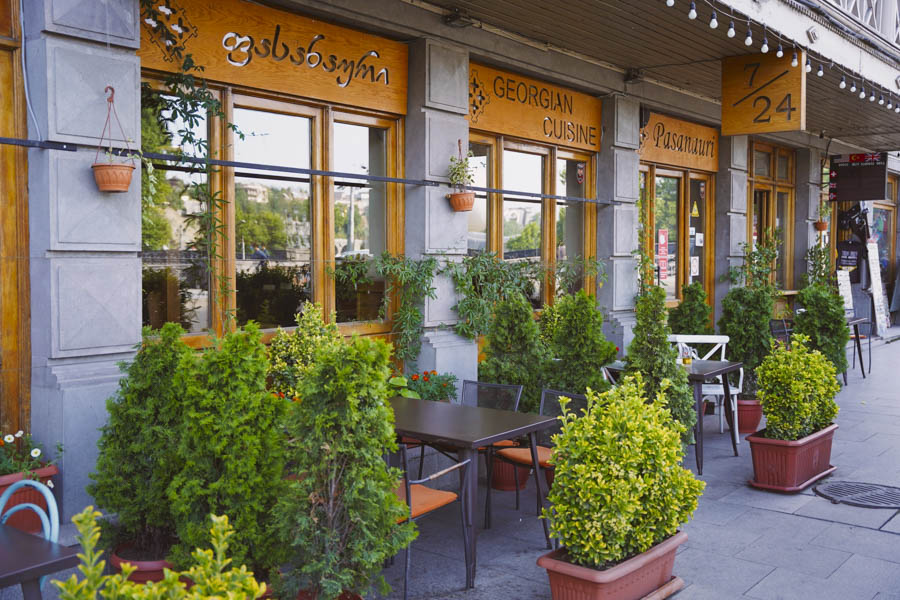
Pasanauri (multiple branches) – A chain named after the village associated with khinkali's origins. Consistent and widely located across the city, convenient when location matters.
Zodiaqo (6 Gia Chanturia St) – Often recommended for Georgian khinkali, including the deep-fried variety.
On the Road: Pasanauri Village
HB Gudauri, on the road toward Gudauri, is a well-established stop among regular drivers on the Military Highway. The khinkali are made to order. For those heading to the ski resort or continuing north to Kazbegi, it is a convenient break on the climb.
The village of Pasanauri, roughly 90 kilometres (55.9 miles) north of Tbilisi, has a cluster of eateries. Korbuda is a modest roadside restaurant known for made-to-order khinkali. Guda is a similar option.
In Kazbegi (Stepantsminda)
Stepantsminda sits under the shadow of Mount Kazbek. Shina and Makato are both popular with residents. The local Mokhevuri-style khinkali are generally simple and hearty, in keeping with the mountain setting. Both are located on the main road, making them easy to visit before or after Gergeti Trinity Church or the Dariali Monastery.
In Pshavi and Khevsureti
Pshauri Balada in Pshavi is a consistently recommended stop for travellers heading to Khevsureti.
Practical Notes for Visitors
Khinkali is inexpensive throughout Georgia. In Tbilisi, individual dumplings typically cost between GEL 1.50 and 3.00, while specialist fillings or newer restaurants may charge more. A full meal for two with drinks usually falls in the range of 30–50 GEL. Guesthouses often include khinkali as part of a set meal.
At a supra, leftovers are pan-fried and served as a second course later in the meal. The exterior crisps and browns, while the interior remains dense and savoury, giving the dumpling a slightly different character. This is when a knife and a fork are acceptable. It is a sensible way to use leftovers that has become a tradition in its own right.
Khinkali is larger than it appears, so for a first-time order, five to seven Georgian dumplings is a reasonable portion.
Frozen khinkali is widely available in supermarkets and convenience shops. However, it should be treated as a practical alternative rather than a substitute for freshly made dumplings.
Vegetarians are generally well served by mushroom and potato options, though it is worth confirming that khinkali fillings are prepared separately. Vegan options are comparatively limited.
Both city and mountain versions of Georgian khinkali are authentic; trying them in several settings helps travellers appreciate how the dough, filling, broth and seasoning vary from place to place.