

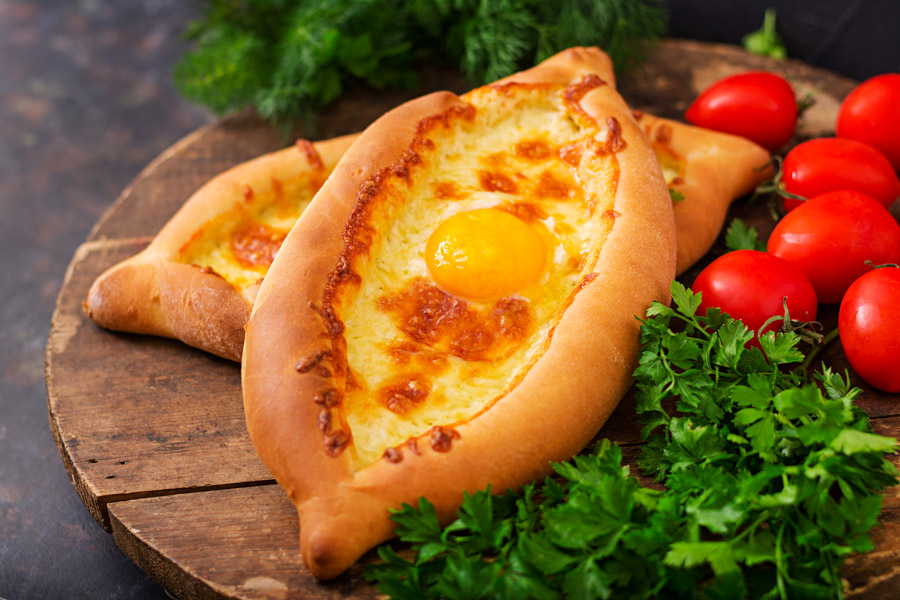
This guide to khachapuri, Georgia’s beloved cheese bread, explores its regional variations, key ingredients and place within Georgian food culture. It also explains how to order and enjoy Khachapuri and highlights Georgia’s rich culinary heritage of savoury-filled breads.
The Famous Georgian Cheese Bread
A steaming khachapuri, crust crackling and cheese bubbling, is your perfect first bite of Georgia. Known internationally as the Georgian cheese bread, it is warm, hearty and deeply comforting. With more than 40 varieties, it reflects the diversity of Georgian culture and hospitality.
The tradition of making khachapuri is listed on Georgia’s national register of Intangible Cultural Heritage Monuments.
What is Khachapuri?
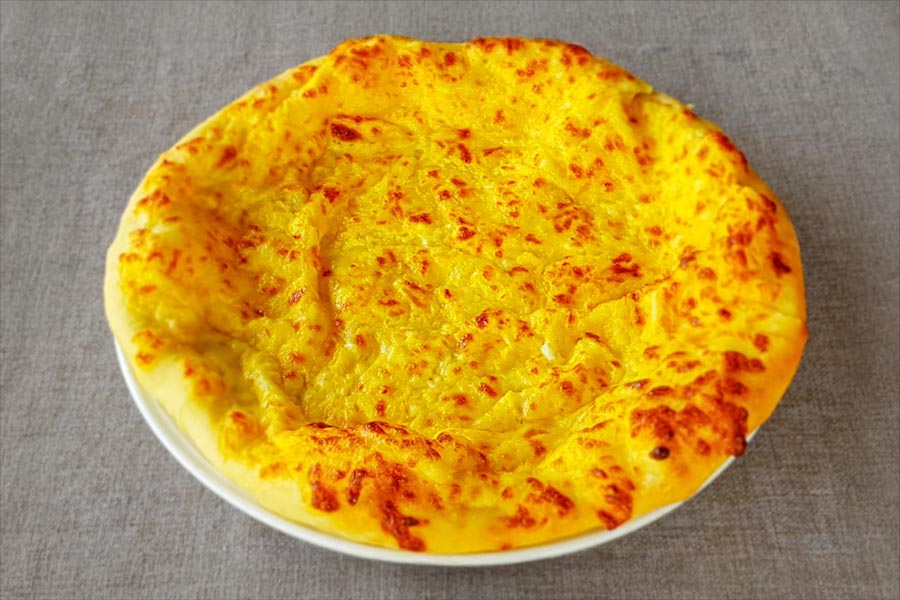
Khachapuri is a Georgian cheese bread made from soft dough, filled with fresh, salty, or slightly tangy cheese, and baked until golden. The name comes from khacho (curd or cottage cheese) and puri (bread). It is pronounced khah-chah-poo-ree.
Cheese-filled breads are mentioned in 17th-century accounts of western Georgia, including Italian missionary Arcangelo Lamberti’s description of Mingrelia. The dish may be older, but its exact origin is uncertain. Some food historians and ethnographers link its development to medieval Georgia, while other theories point to earlier examples of similar dishes across the Black Sea and Caucasus regions.
Why is Khachapuri So Important in Georgia?
Georgian khachapuri is a cornerstone of the country’s cuisine. From everyday meals to ceremonial dining, it can be bought from a neighbourhood shop, ordered in a restaurant, served at a family meal or placed on the table during a supra, the traditional Georgian feast. This range of contexts underlines its role as a staple of Georgian cooking.
Khachapuri gives visitors an easy introduction to local food. It feels warm and irresistible, yet the balance of bread, dairy and regional style makes it distinct.
Georgia celebrates National Khachapuri Day on 27 February.
The Khachapuri Index
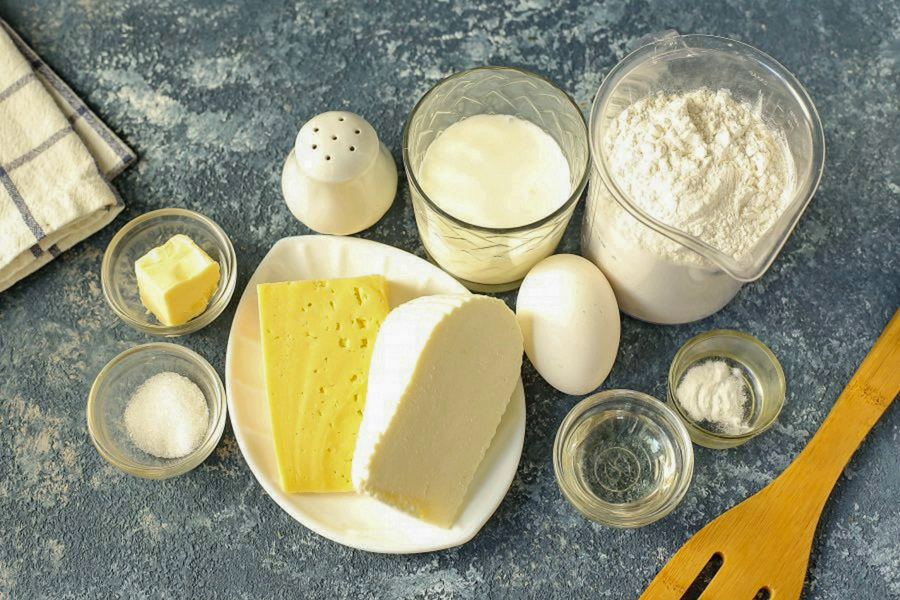
Khachapuri is so central to Georgian life that it has been used as an economic indicator. The idea was inspired by The Economist’s Big Mac Index and adapted for Georgia using one of the country’s most recognisable foods.
Developed by the ISET Policy Institute at Ivane Javakhishvili Tbilisi State University, the Khachapuri Index tracks inflation by measuring the cost of the ingredients used to make a standard Imeruli khachapuri, as well as energy costs.
Changes in the prices of basic components used to make this dish can reflect broader market shifts.
Main Types of Khachapuri
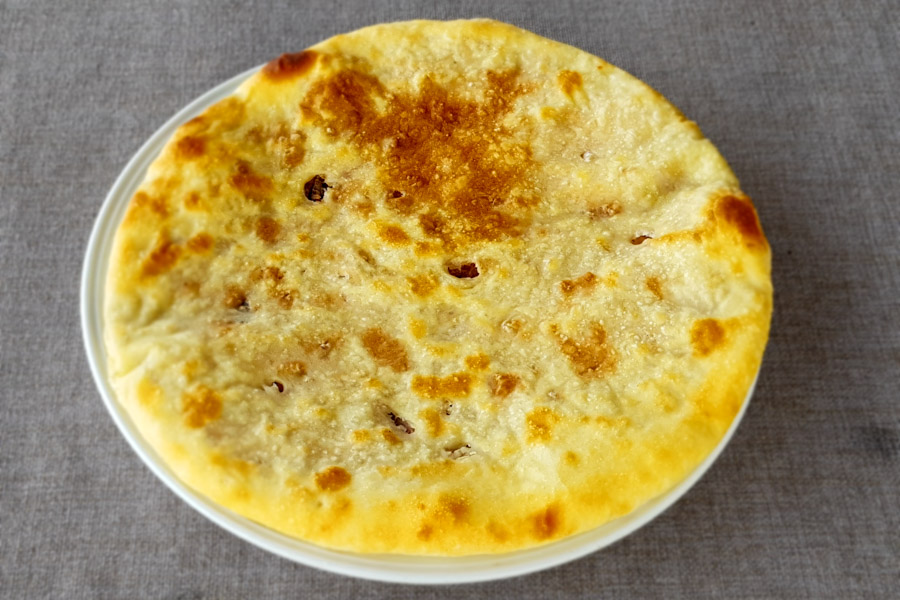
A few khachapuri styles typically appear on menus. Knowing their differences makes it easier to order, share and recognise what makes each one distinct.
Imeretian Khachapuri
Imeretian khachapuri, also called Imeruli khachapuri, is a round variety from Imereti in western Georgia. This region is known for the Gelati Monastery, Kutaisi, and the gorgeous city of Chiatura.
A thin layer of dough seals the cheese inside, and the surface turns lightly golden as the filling softens.
Imeretian khachapuri is a good starting point, showing the dish in its simplest form. It is the most widespread and is often described as the “mother” of khachapuri.
Adjarian Khachapuri
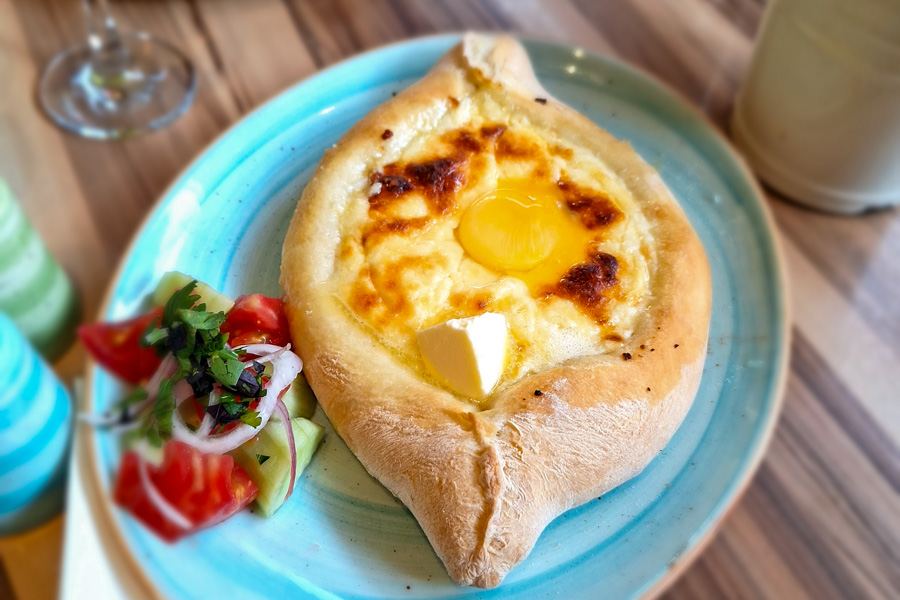
Adjarian khachapuri, also written as Adjaruli or Acharuli khachapuri, is a culinary masterpiece from Adjara on Georgia’s Black Sea coast. International guests might recognise this variant from viral photographs. It’s shaped like a boat, loaded with melted cheese, and finished with butter and an egg yolk. The shape of the boat is perfectly suited to the Adjarian coastline, and the egg yolk is interpreted as the sun above the sea.
Because Adjaruli khachapuri can be richer than other types, some restaurants offer an option with part of the inner dough removed to lighten the dish while keeping its key elements.
How to Eat Adjaruli Khachapuri
The usual way to eat Adjaruli khachapuri is to mix the egg and butter into the hot cheese as soon as it is served. Tear pieces from the bread edges and dip them into the filling.
Start with the pointed ends of the "boat", then work around the sides. You can eat the base last, once it has absorbed some of the cheese mixture. Using a knife and fork is acceptable in a restaurant, but eating it by hand is part of the appeal.
Megrelian Khachapuri
Samegrelo, in western Georgia, is famous for the Megrelian khachapuri, or Megruli khachapuri. The shape is similar to the Imeretian khachapuri, but with one important difference: cheese is added both inside the dough and on top.
The upper layer of cheese gives Megruli khachapuri a richer flavour and a pleasing contrast of textures. Slightly crispy in places on the surface, while molten in the centre. Like other round-filled breads, it’s usually sliced like a pie, so travellers can taste it alongside other dishes without committing to a heavy individual portion.
Penovani Khachapuri
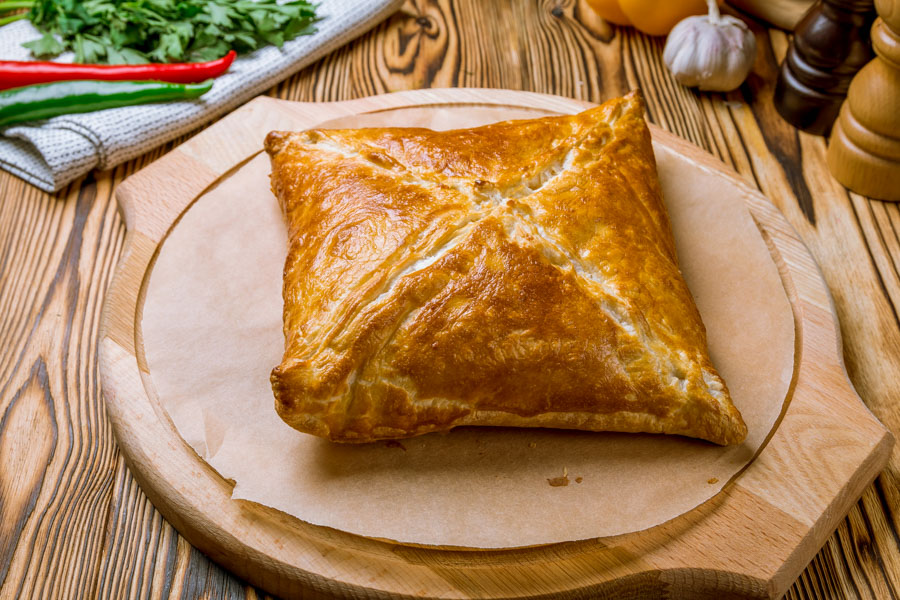
Penovani khachapuri is a flaky, puff-pastry-style Georgian cheese bread. The layered pastry gives it a crisp exterior and a brittle texture, and its small size makes it convenient for a road trip, hike, or picnic. It is budget-friendly and widely sold in bakeries, markets, convenience shops and traditional diners.
Some versions use semi-flaky dough rather than fully laminated puff pastry. This style sits somewhere between classic bread dough and true penovani.
Achma
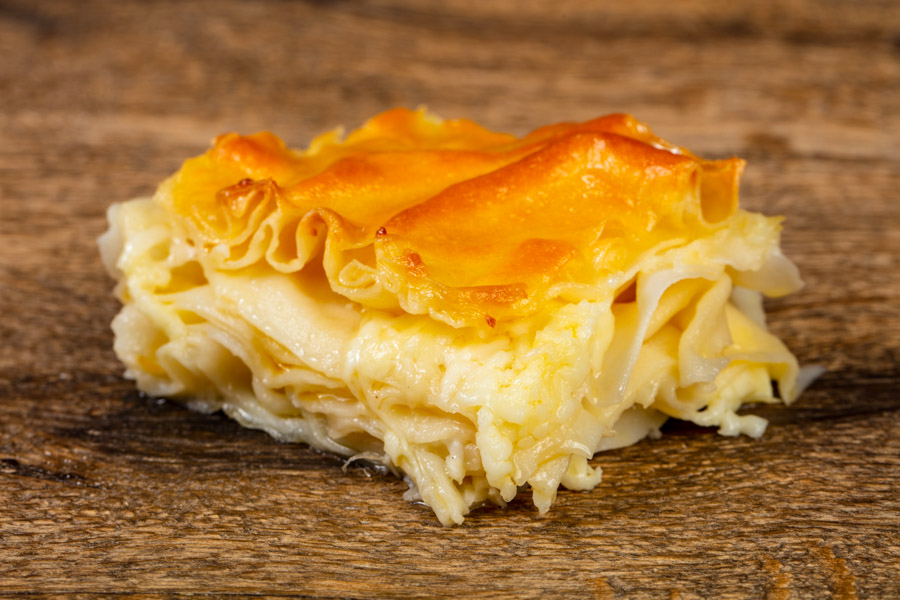
Achma, a layered form of khachapuri, originates in Western Georgia and Black Sea-adjacent communities. Often compared to a lasagne without sauce, it consists of several thin sheets of boiled dough layered with cheese and butter, then baked in a dish until the top turns golden brown and crisp.
Achma is cut into squares and served per portion. It is an appealing choice for anyone who enjoys comforting, hearty food.
Region-Specific Khachapuri Varieties
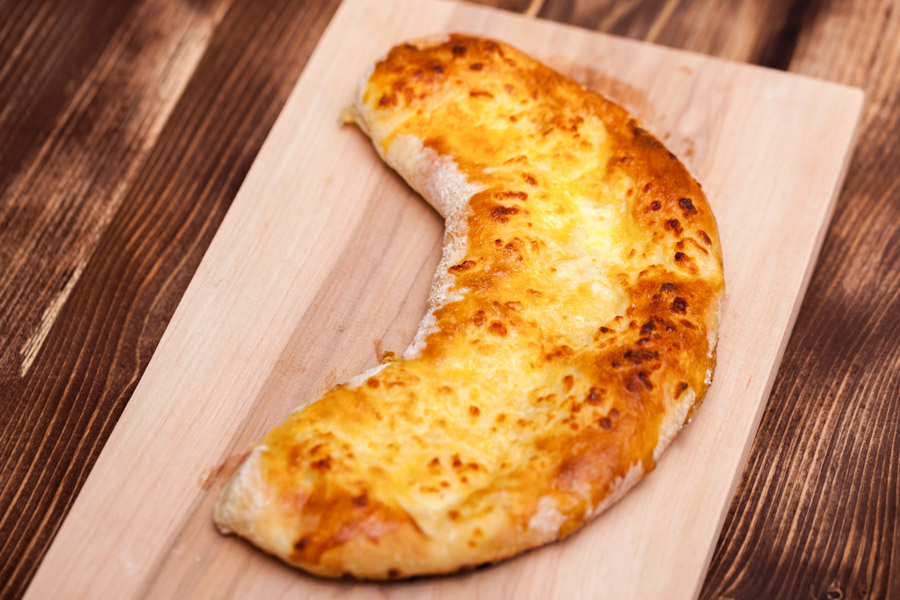
The line between khachapuri and other Georgian filled breads is not always clear, so several related pies are worth knowing about.
Guria has a festive version baked on Orthodox Christmas called Gurian khachapuri, or Guruli ghvezeli, a crescent-shaped pie with cheese and a boiled egg inside.
In Samtskhe-Javakheti, Meskhetian khachapuri, also called chalma khachapuri, is made with animal fat and cheese; the dough is stretched extremely thin on a table and shaped by hand into a turban-like form. The technique is highly specific and difficult among Georgian khachapuri varieties, so the practice has been recognised as an Intangible Cultural Heritage Monument in Georgia.
Samegrelo, in addition to the familiar Megruli khachapuri, has ghandami, a festive version decorated with a twisted-dough lattice.
Racha is known for geometric forms and recipes that use varied cheese combinations. Bachulebi was traditionally made with cheese and egg, with two pieces baked together: one for the old year and one for the new. Ganatekhi, enriched with walnuts, was baked for Saint Mary’s Day, and bokhchuani is a Racha-style square khachapuri.
Petvraali is a Svan khachapuri with cheese and millet, sometimes seasoned with blue fenugreek. Svaneti also has kartoplare (cheese and potatoes), and ltservali is made with cheese and pan-fried flour.
Mountains and borderlands add further diversity. Khabizgina, popular in Shida Kartli, Mtskheta-Mtianeti and Ossetian communities, combines potato with cheese. Pkhlovani, or mkhlovani, made with greens and cheese, is a lighter, herbaceous variant. Kotori, from Tusheti, is a very thin bread filled with the aged curd, kalti.
What Cheese Is Used in Khachapuri?
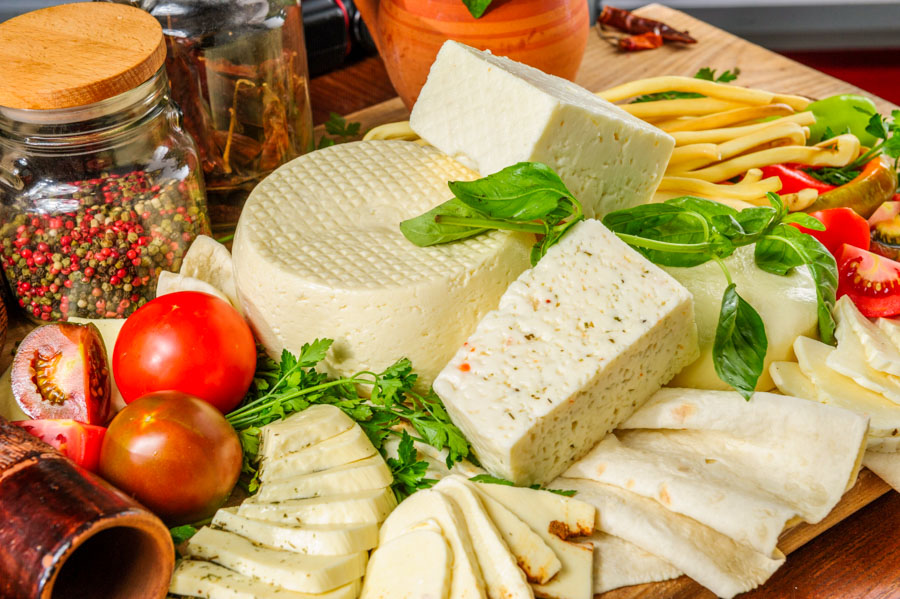
Cheese is central to khachapuri’s flavour and texture. Georgians use natural, regionally available products rather than a single standard variety. Imeretian cheese is common in Imeruli khachapuri, while sulguni, a brined Georgian cheese noted for its elasticity, is used in Adjaruli and Megruli khachapuri. In mountain areas, sheep- or goat-milk cheeses were commonly used.
Outside Georgia, recipes often combine mozzarella, feta, halloumi, ricotta, and other cheeses to approximate the texture and flavour. However, Imeretian cheese and sulguni can be hard to replicate, so tasting khachapuri in Georgia is highly recommended.
Where to Try Khachapuri in Georgia?
Khachapuri is everywhere in Georgia. It is easy to sample many different types in Tbilisi. Restaurants in the Old Town, modern Georgian dining rooms and casual eateries all serve their own renditions. Even international chains such as Dunkin’ have adapted to local tastes and offer khachapuri-style items in Georgia.
For an authentic experience, visiting the birthplace of each variant is especially rewarding. Food festivals and guided hosted meals can also be useful for comparing styles, especially the less common variations not found on standard restaurant menus.
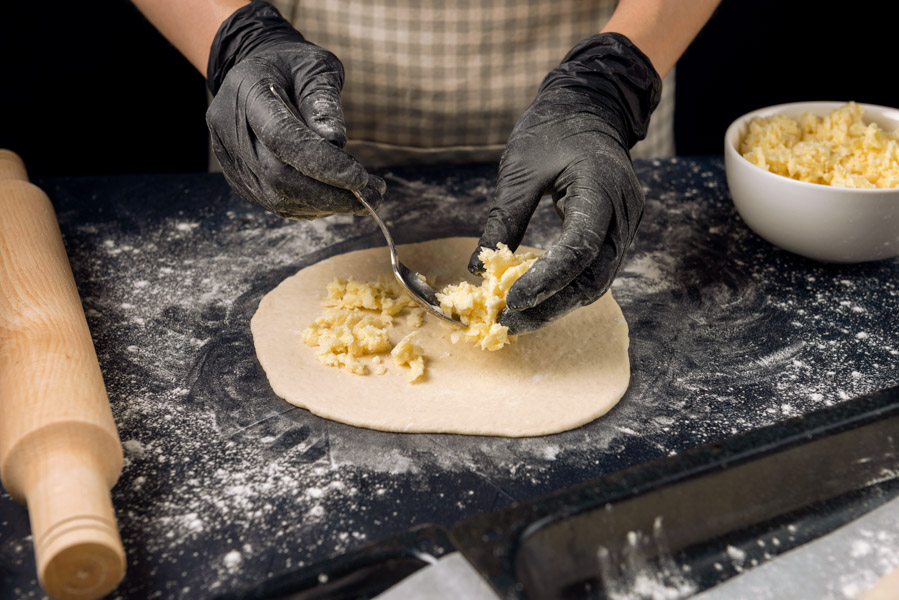
Travellers who want more context can try khachapuri in a cooking class or a family-style curated meal, where the differences in dough, cheese, and baking techniques become easier to notice. Outside Tbilisi, rarer versions showcase regional ingredients and centuries of culinary heritage.