

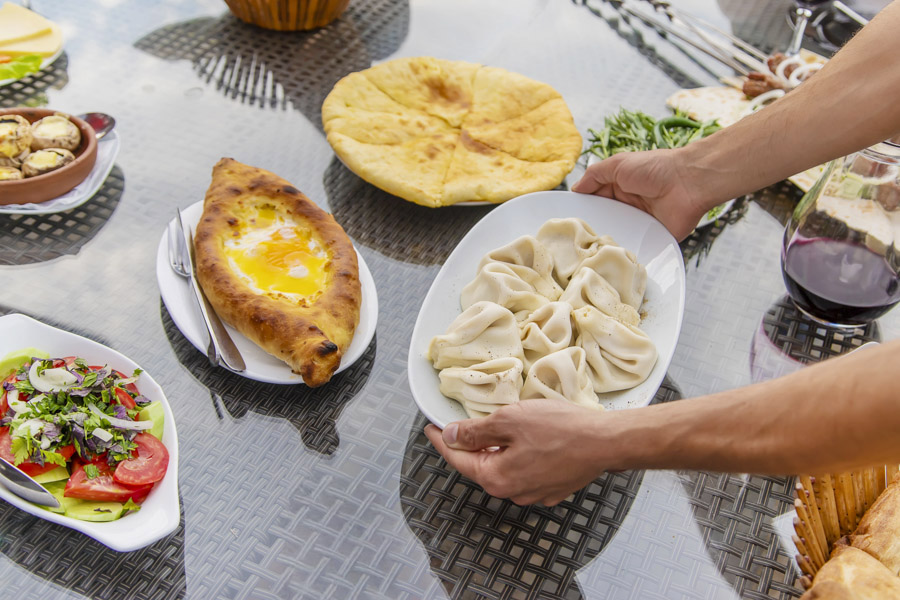
A Georgian meal usually begins before the first bite: with the warmth of the freshly baked bread, the scent of garlic and herbs, the steam rising from khinkali, and the sharp edge of plum sauce beside grilled meat. For travellers deciding what to eat in Georgia on a first trip, these early impressions say more than a long list of dishes. They reveal a cuisine where richness is rarely left unadorned and where nearly every flavour is balanced by fresh, sour, or aromatic ingredients.
How to Balance a First Georgian Meal?
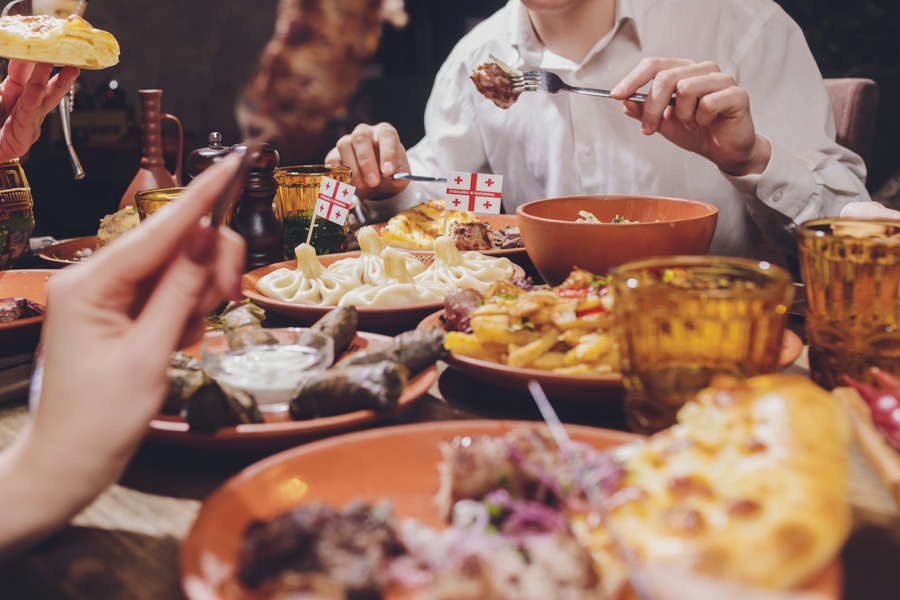
A first Georgian meal does not need to follow the classic starter-main-dessert format. Dishes are usually placed in the middle of the table and shared amongst the diners; the presentation should therefore form a harmonious whole.
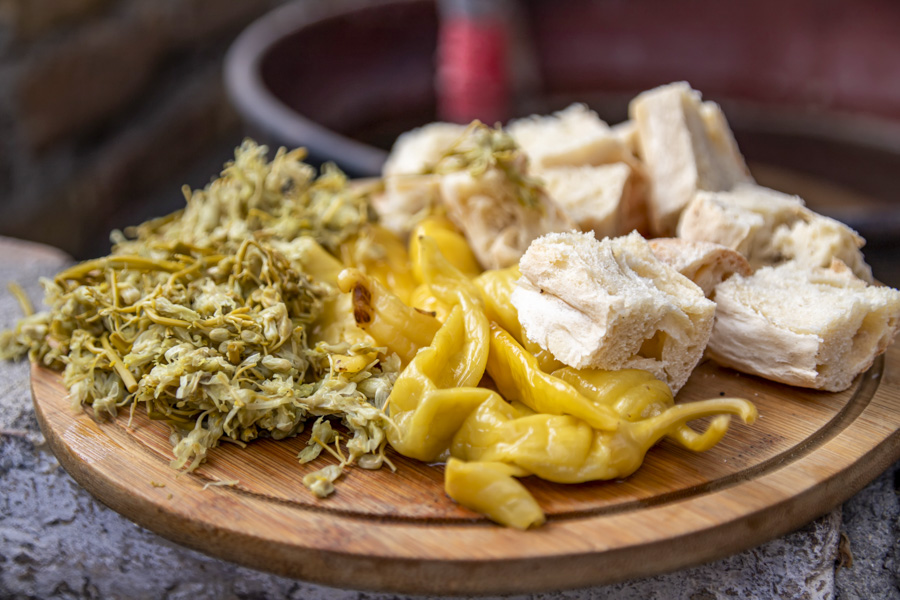
For two people, start with one or two substantial menu items. Then add one or two dishes to lighten the flavour profile, such as a fresh, tangy, and herb-filled salad or pickled vegetables (mzhave). Finally, order a few side dishes along with your preferred drinks.
Portion sizes do matter. It is perfectly normal to ask the staff how large a bread is, how many khinkali come in one portion or whether a meat dish is suitable for sharing. Start by ordering a few dishes, see how generous the portions are, then order more during the meal if you’re still hungry.
What to Order First in Georgia?
To make the most of your first meal in Georgia, it’s best to sample a variety of local dishes without being faced with a long list of heavy specialities. It is the perfect way to discover different facets of this cuisine.
The following Georgian food itinerary is perfectly suited for a group of two to four people:
Imeretian Khachapuri
Start with Imeretian khachapuri. The “mother khachapuri” is round, cheese-filled, and easy to cut into slices, so it brings a warm bread-and-cheese element to the table without taking over everything else.
When you’ve already ordered other dishes, save Adjarian khachapuri for another meal.
Khinkali
Khinkali brings broth, dough and a little eating ritual together. Meat khinkali are the standard choice, while mushroom, potato and cheese versions are common in many Georgian restaurants.
A usual portion comes with five to ten pieces, so order modestly rather than treating them as an unlimited side dish. Their appeal lies in the contrast of soft dough, hot broth and peppery filling, and they quickly make the meal feel more informal.
Pkhali or Badrijani Nigvzit
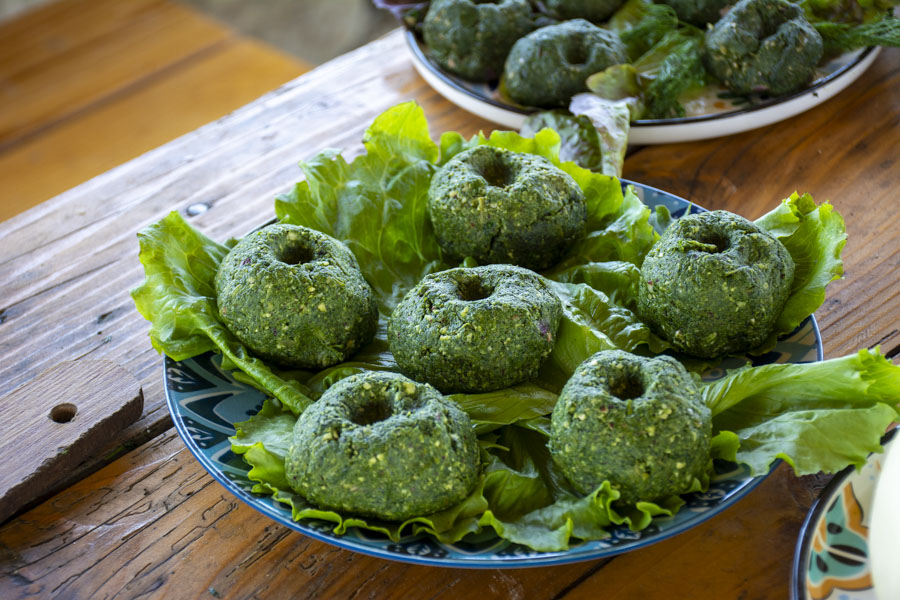
Choose at least one walnut-based starter. Pkhali turns root vegetables and greens into neat, compact portions, while badrijani nigvzit takes aubergine in a richer direction. Both are often finished with a scattering of pomegranate seeds. They bring colour and a sharp, tangy note that cuts through the richness of khachapuri and the heartiness of khinkali or mtsvadi.
This is the part where plant-based food is not plain or just there for show; it is properly seasoned, aromatic and satisfying on its own.
Tomato and Cucumber Salad
A tomato and cucumber salad may sound simple, but in Georgia, it can be one of the most flavourful eating experiences when the produce is at its peak. Ripe tomatoes, crisp cucumbers, red basil and onion make a fresh, seasonal break between warmer or richer dishes.
Try it with Kakhetian sunflower oil or walnut dressing. The salad helps keep the meal from feeling too heavy.
Mtsvadi or Shkmeruli
Mtsvadi brings a proper smoky note from the grill. Pieces of meat are cooked over a fire, then served with onion, sometimes on a bed of flatbread. The best versions let the meat's quality and the cooking do most of the work.
A great alternative is shkmeruli. This warm, comforting chicken dish comes with a rich, garlicky sauce and goes brilliantly with Georgian bread.
Pickles, Bread, and Condiments
Pickles, bread and sauces may not look important on the menu, but small details make the order feel characteristically Georgian.
Tkemali, a plum sauce, and satsebeli, a sauce made from tomatoes, red bell peppers and ajika, work beautifully with mtsvadi. Ajika adds heat to meat or potatoes. Pickled jonjoli, peppers, cabbage and other vegetables bring a tangy, vinegary flavour to the whole spread, and a small assortment of cheese and freshly baked bread is ideal for sharing. For first-time visitors, these extras show just how much flavour can come from the smaller things served alongside the main dishes.
What to Drink with the First Meal
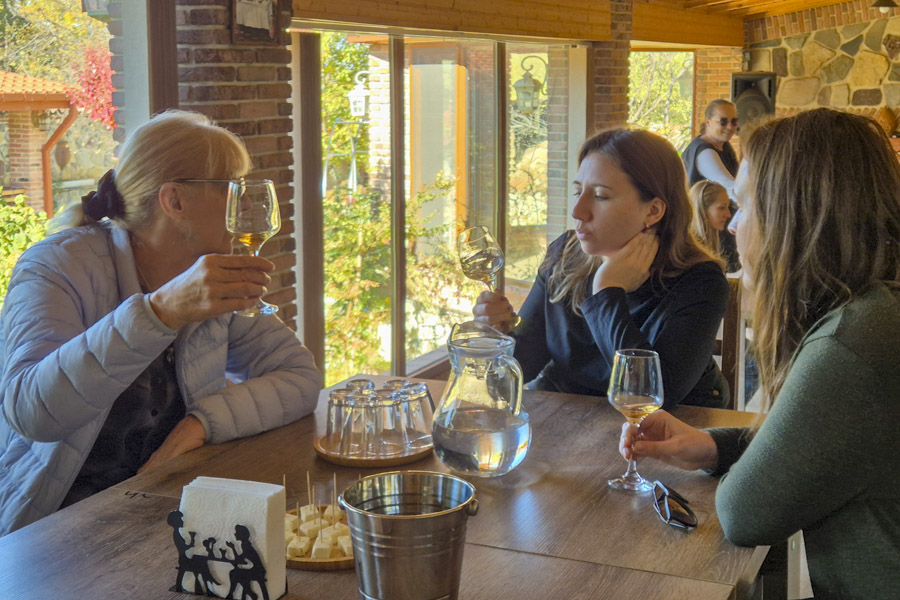
Wines made from the Saperavi grape variety are usually the most reliable Georgian choices for a first meal. This widely available red has enough character for grilled meat, but it can also sit comfortably beside cheese, dumplings and walnut-based starters.
Mineral water – still or sparkling – is just as enjoyable, and Georgian lemonade is a great non-alcoholic choice for a casual lunch or warmer day.
Churchkhela or Georgian Fruit
For something sweet, keep it simple. Churchkhela can be saved for later in the day. It is chewy, nutty and usually less sugary than it looks.
Fruit is an even lighter finish when the season is right. Peaches, apples, strawberries, figs, grapes, persimmons, mandarins or pomegranates can be appealing after a filling plate. Summer and autumn are excellent for market fruit, while western Georgia is associated with citrus in colder months.
First Georgian Meal for Vegetarians
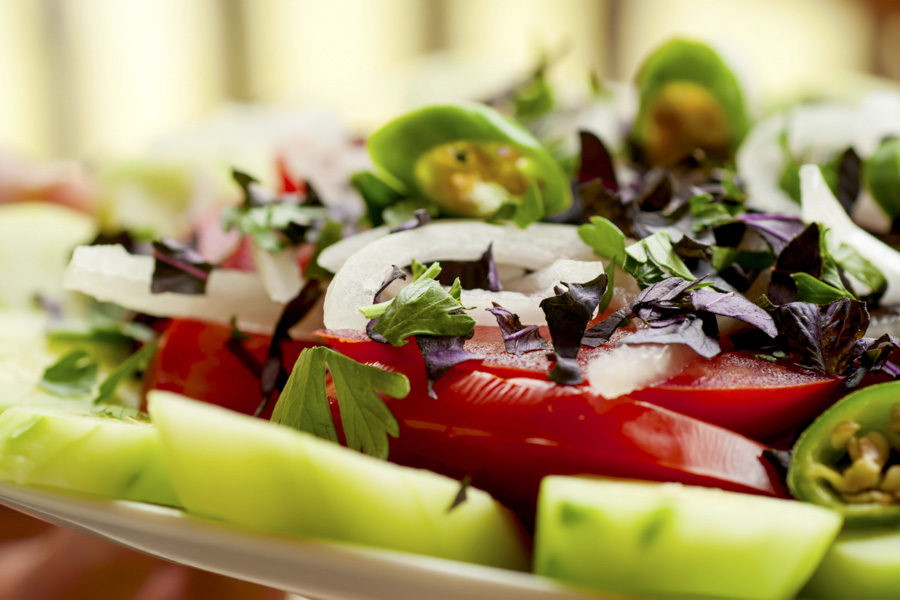
Vegetarian travellers can build a satisfying first meal in Georgia without making meat the centre of the table. Beans, aubergine, mushrooms, cornbread and seasonal vegetables already play a major role in the cuisine, so a vegetarian order can still feel varied and recognisably Georgian.
Mushrooms cooked in a ketsi, sometimes with herbs or sulguni cheese, add a warm, communal feel, and ajapsandali brings a softer, stew-like element.
Vegans have options too, but they do need a bit more care. A dedicated vegetarian Georgian food guide can be useful for understanding which dishes are usually safe, which need checking and how to communicate clearly in restaurants.
What to Try in Georgia by Season?
Many must-try Georgian foods are served year-round, but the assortment can still vary by season. The aim is not to chase rare delicacies, it’s to order in a way that suits the weather and the produce;
Spring
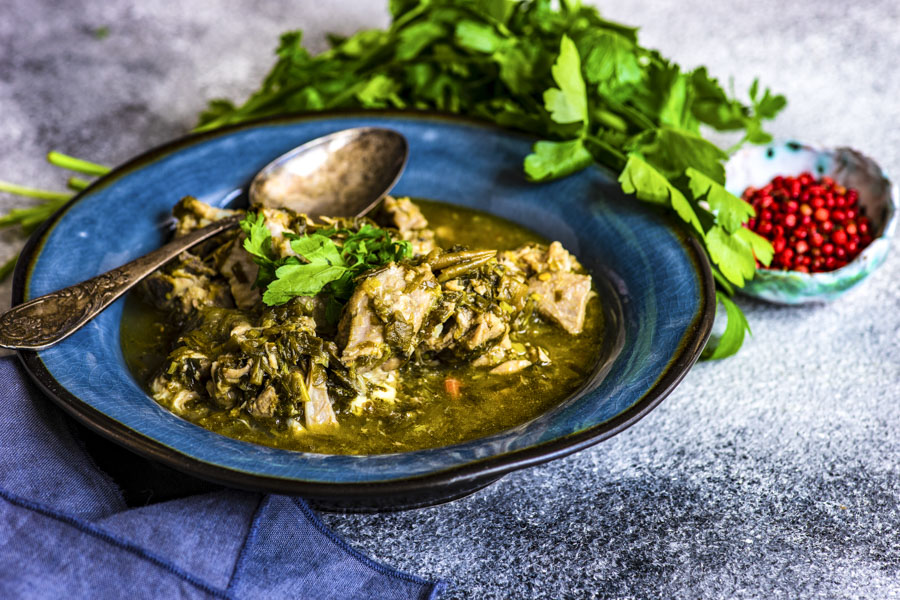
Spring is the time to look for tarragon, coriander, dill and young greens, as flavours begin to shift after winter. Chakapuli, made with lamb or veal, tarragon and sour plums, is closely associated with spring, although availability depends on the restaurant and region.
To give your meal a true spring flavour, start by asking what’s in season on the menu, then build your order around those ingredients.
Summer
Summer is when simple food becomes the most convincing. Tomatoes, cucumbers, berries, stone fruit and cold mineral water matter as much as cooked dishes, especially on hot days when a heavy order can feel unnecessary.
In restaurants, the strongest choices are direct: a good salad, a filled bread, grilled meat if you want it, and something cold to drink. Summer is the season when ripe produce can carry a meal with very little help.
Autumn
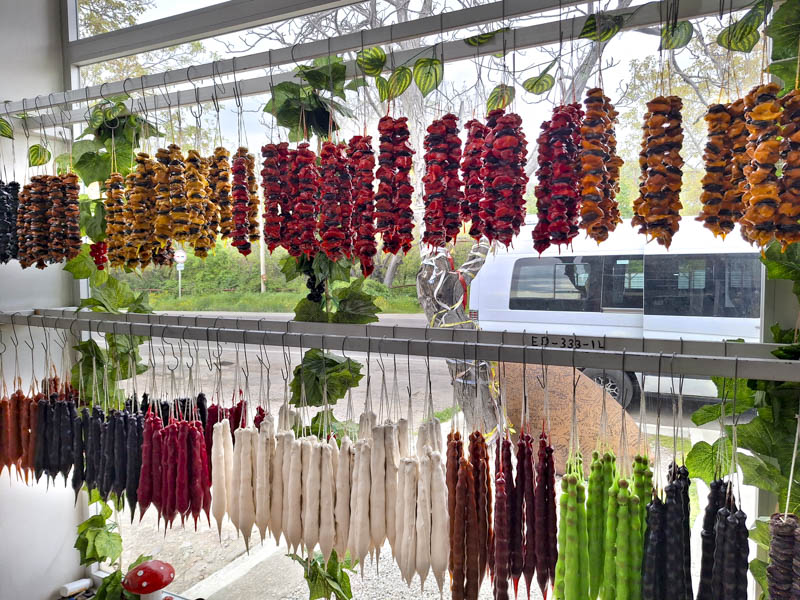
Autumn is all about movement – a market in the morning, a wine cellar later, and perhaps a rural dinner if the route allows. Rtveli, the grape harvest, varies by region and year, but it brings grapes, churchkhela, fruit, walnuts and wine traditions into view.
This is when Georgian food feels truly connected to the countryside. For first-time visitors, autumn is about seeing familiar foods in their harvest setting.
Winter
A winter food day is made for indoors. It suits warm dining rooms, hot bread, steaming dumplings, soups, and stews that feel right in cold weather. The meal does not need to be big; it just needs to be satisfying.
It is also a good time to pick places that cook slowly and steadily. A pot of lobio, a plate of khinkali, or a hot chicken dish can feel memorable. Winter food brings weight, warmth and a reason to stay at the table a little longer.
In Georgian winter resorts and Christmas markets, hot chocolate and mulled wine frequently become part of the seasonal food experience, especially after time outdoors.
Where to Try Georgian Food on a First Trip?
For a first Georgian meal, start in a city restaurant in Tbilisi, Kutaisi or Batumi. These places make it easier to understand portion sizes, dish names and common combinations before travelling into smaller towns or villages. They are also a practical setting for ordering a full shared dinner without needing advanced knowledge of the menu.
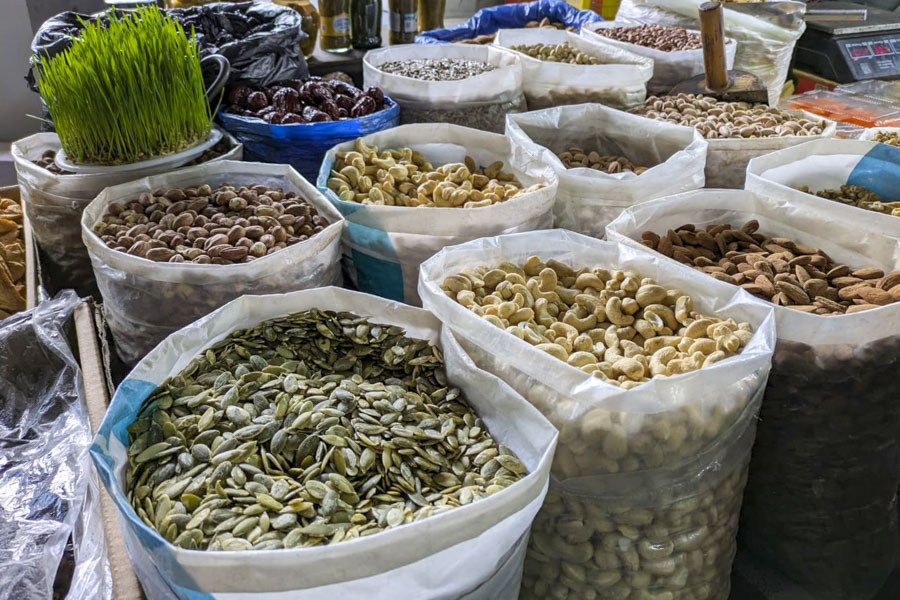
After that, look beyond restaurants. Markets like Dezerter Bazaar or Bazari Orbelianze are useful for churchkhela, spices, cheese, fruit and produce, while the fish market in Batumi offers guests fresh seafood. Bakeries are worth seeking out for tonis puri, lobiani and penovani khachapuri, ideal as a snack or a casual lunch.
Regional taverns and family-run places become increasingly rewarding once visitors know the basics. Ingredients are often local, portions are larger, and explanations are shorter, but the food feels much more rooted in the land. Wineries and wine cellars are a better fit for travellers who want food and wine together rather than as separate activities.
Private dinners, cooking classes, hosted supra-style meals, and wine tastings can also work well on a short trip. Their value is in convenience and context. A private guide can explain what is on the table, when to toast, how much to order and why certain dishes go together.
How much does a meal cost in a restaurant in Georgia?
As a rough estimate, a full meal of traditional dishes in a casual or mid-range Georgian restaurant costs approximately GEL 105-165 ($39.90–$62.70 / €34.65–€54.45 / £29.40–£46.20) for two people, depending on the city, the restaurant, and drinks. For four people, with an additional portion of meat or a substantial sharing platter, the total can reach approximately GEL 175-320 ($66.50–$121.60 / €57.75–€105.60 / £49.00–£89.60). Without alcohol, this generally comes to around GEL 45 to 80 ($17.10–$30.40 / €14.85–€26.40 / £12.60–£22.40) per person. It is important to note that wine can significantly increase the bill.