

In Bukhara, there is a house that opens a door to more than 400 years of history. Here, you can explore preserved antique interiors, carved wooden doors, original inscriptions, and everyday objects that have survived for centuries.
The house stands in the heart of old Bukhara, within the historic Jewish quarter, and is known as the Old Jewish House. Dating back to the 17th–18th centuries, it once belonged to Jewish families of the city. Today, it has been carefully restored and transformed into a cultural complex with a museum, a restaurant, and a hotel. The balance between preserved history and modern comfort makes it a natural addition to any list of things to do in Bukhara focused on the city’s cultural heritage.
History of the Old Jewish House and the Bukhara Jewish Community
For centuries, Bukhara was an important trading and cultural centre of the East. It has long been a multinational city shaped by coexistence and mutual respect. Among its many communities were the Jews, who have lived here for nearly two thousand years. Locally, they were known as Yahudi (from the Hebrew Yehudim יהודים, meaning “Jews”). From the 19th century onwards, the term Bukhara Jews became widely used and remains common today.
Over time, Bukhara became home to the largest Jewish population in Central Asia. By the early 20th century, the community numbered around 30,000 people. For many generations, they lived relatively separately and preserved their own traditions.
This situation changed at the turn of the 20th and 21st centuries, when most Jews left the city. Today, only about 200–500 members of the diaspora remain in Bukhara. They continue to safeguard their customs, religious life, and material heritage.
The Jewish Mahalla of Bukhara
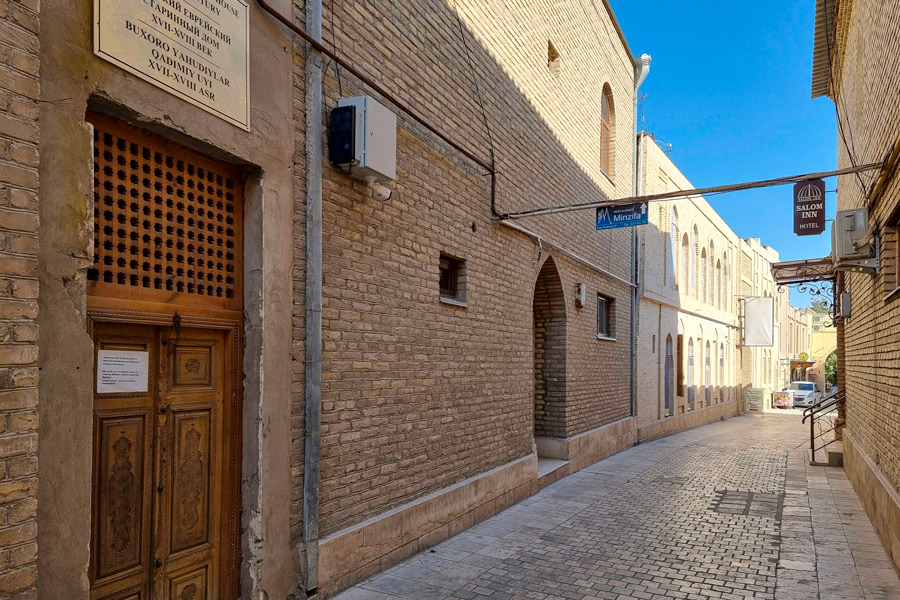
Historically, Jewish life in Bukhara was centred in Kukhna Mahalla, a name that means “old” or “ancient quarter”. It lies just a short walk from well-known landmarks such as the Lyabi-Hauz complex and the Museum of Puppets. Because of this location, the Old Jewish House and other buildings in the area have become popular cultural stops for visitors.
During the time of the Silk Road and in the centuries that followed, Bukhara’s Jews were active traders and skilled craftsmen. Many families prospered, and this wealth is still visible in the houses that have survived. These buildings are notable for their balanced layouts, fine details, solid wooden structures, and decorative arts such as wood carving, ganch stucco, copper embossing, and ceramics.
Today, the Jewish quarter enjoys international recognition. As part of Bukhara’s historic centre, which has largely preserved its medieval layout, it has been listed as a UNESCO World Heritage Site since 1993.
In addition, the historic houses of the Bukhara Jews were included in the World Monuments Fund list in 2020, underlining their cultural value on a global scale.
Architecture and Decorative Arts of the Jewish Quarter
The surviving houses of the Jewish mahalla reflect both prosperity and refined craftsmanship. Their architecture is carefully planned, with a strong focus on comfort, climate adaptation, and decoration.
Massive wooden elements, carved doors, and traditional construction techniques are combined with rich interior ornamentation. Decorative arts play a central role, with examples of wood carving, ganch relief work, engraved copperware, and ceramic objects forming an integral part of domestic interiors.
The Summer Living Room (Mekhmonkhona)
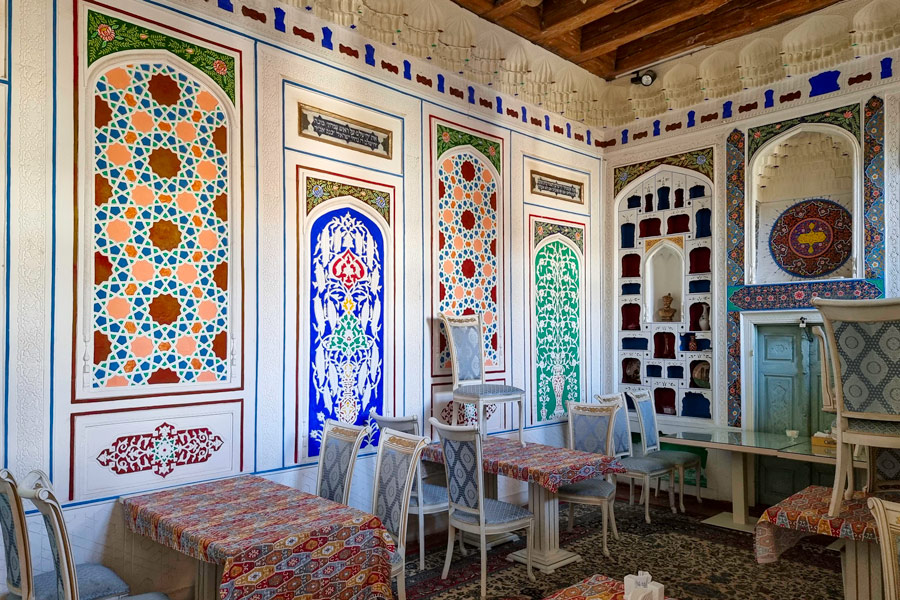
One of the most striking spaces in the Old Jewish House is its summer mekhmonkhona, or guest living room. This room was designed to remain cool during the hottest months.
Design and Traditional Cooling System
The mekhmonkhona faces north and sits slightly above courtyard level, which helps air circulate naturally. The open ivan terrace, with its canopy and columns, softens direct sunlight and draws cooler air into the room. As a result, the space traditionally stayed much cooler than the street outside.
Today, parts of the original ventilation system still function. Modern air conditioning has also been added, ensuring a comfortable temperature even in midsummer.
The living room itself is spacious, with ceilings reaching around five metres in height. Many original features have been preserved, including wooden doors, ceiling structures, stucco decoration, carved grilles, and colourful wall paintings. Built-in niches display antique jugs, lamps, and paintings. Most of these objects are over 200 years old and have survived either intact or with minimal restoration.
Especially noteworthy are the Hebrew inscriptions running along the upper sections of the walls. Taken together, the decorative elements reflect both Islamic artistic traditions and Jewish cultural motifs, forming a distinctive Bukhara-Jewish style.
The Old Jewish House Today
Today, the Old Jewish House functions as a cultural complex with a garden, a hotel, a restaurant, and a museum.
Hotel and Interior Design
The Nodirbek Boutique Hotel occupies the part of the building that has been more extensively renovated. Its interiors blend modern comfort with European design and traditional Uzbek details. You will see embroidered suzani on the walls, while original wooden ceiling beams from the 19th century have been carefully retained.
Restaurant and Traditional Cuisine
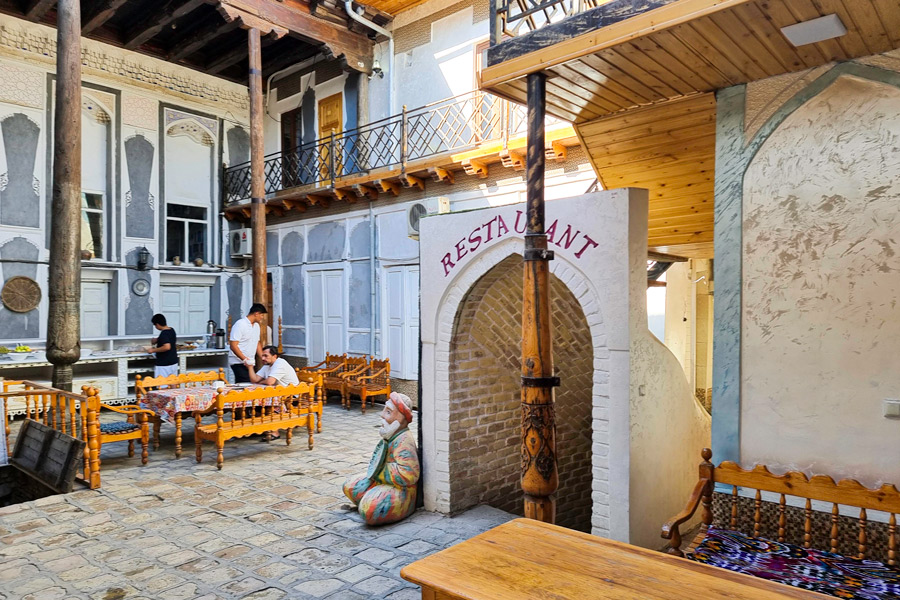
The restaurant, set in the summer lounge and courtyard, serves both European and Uzbek cuisine. Highlights include Bukhara-style pilaf known as sofi osh, along with other traditional dishes, tea, and oriental sweets.
Museum and Exhibition Spaces
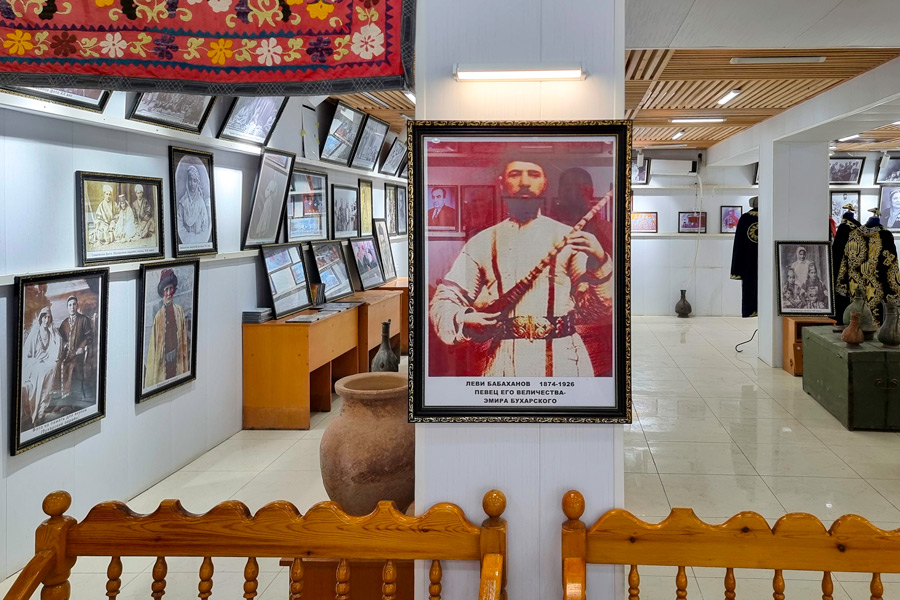
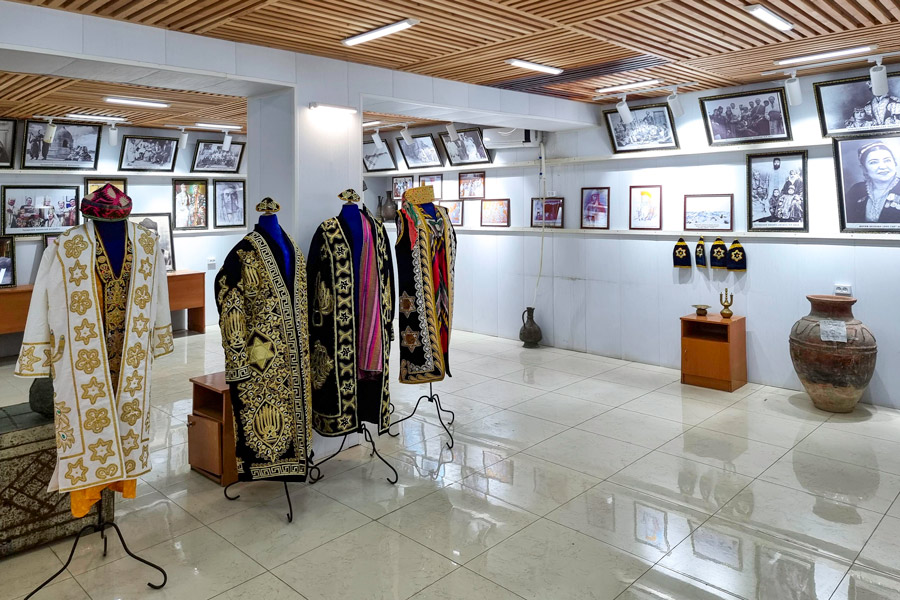
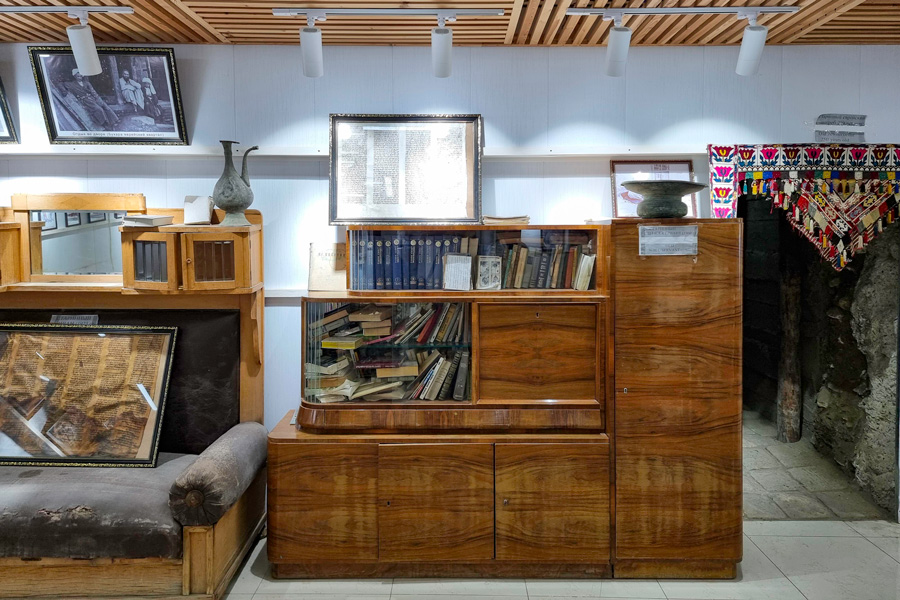
The museum, located in the former basement cellar, is one of the highlights of the complex. Its displays include antique wooden doors and atmospheric photographs from the 19th and 20th centuries, which tell the story of the mahalla and the people who once lived there.
Another section focuses on applied arts. Here, you can see embroidered suzani, gold-embroidered chapan robes, ceramic jugs, and embossed copperware. A separate room presents a collection of traditional Uzbek textiles and vintage clothing.