

City of Magicians is a cultural and leisure complex on the outskirts of Khiva, set between desert expanses and quiet lakes. Removed from the city’s bustle, it evokes the atmosphere of traditional Uzbek life while offering a level of comfort shaped by contemporary design.
The complex includes a yurt-style hotel, restaurants, and a varied programme of activities. Guests can take part in craft and culinary master classes, visit exhibitions, attend folklore performances, and join guided excursions, all within a carefully curated environment.
The Idea Behind City of Magicians
The idea of City of Magicians draws inspiration from the spiritual heritage of Khorezm, a region with a history spanning several millennia. Long before the spread of Islam, Khorezm was one of the centres of Zoroastrianism, an ancient belief system traditionally associated with the prophet Zarathustra (Zoroaster), whose life is usually dated to the 7th century BCE and linked to the Iranian cultural world.
At the heart of Zoroastrian philosophy lies the idea of moral choice – living through good thoughts, words, and deeds. Fire occupies a central place in this worldview, symbolising light, truth, and clarity.
Traces of Zoroastrian heritage can still be seen in Khorezm in surviving monuments and archaeological remains. Beyond the region, elements of this ancient worldview continue to surface in Uzbek cultural traditions, especially in rituals and seasonal celebrations.
The figure of the magician-priest, who once performed rituals and ceremonies, inspired the creators of City of Magicians and is reflected in the name of the complex.
This theme finds visual expression in evening fire performances, torch shows, and ceremonial bonfires, where symbolic rituals for good fortune are accompanied by theatrical elements. In the evenings, guests can attend staged performances dedicated to the natural elements and the supreme deity of Zoroastrianism, Ahura Mazda, combining music, fire, and light to create a distinctive atmosphere.
While Zoroastrian symbolism forms an important foundation, the concept of City of Magicians extends further, embracing the broader cultural heritage of Khiva and other regions of Uzbekistan. Through folklore, music, and crafts, the complex introduces visitors to the diversity of local traditions.
Location and Natural Setting
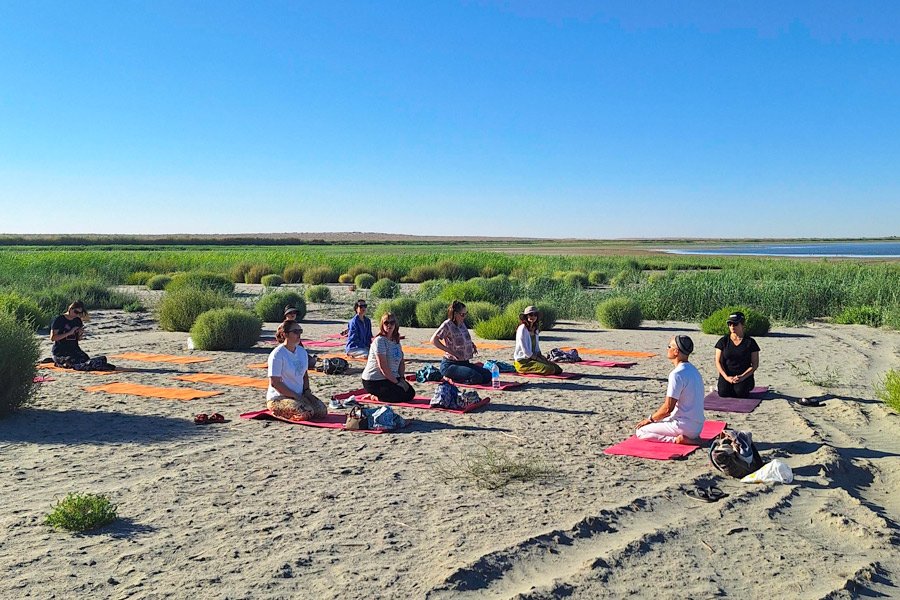
City of Magicians is set in a desert area on the shores of Lake Karakul, approximately one mile from Lake Ishankul. The grounds of the complex are landscaped and green, in contrast to the open desert that begins beyond them.
The setting makes the complex well suited to secluded stays, as well as yoga sessions and retreat programmes that are held here regularly. At the same time, despite its tranquil atmosphere, City of Magicians is located just 6 kilometres from Ichan-Kala, the historic centre of Khiva and a UNESCO World Heritage Site. This allows guests to combine sightseeing with quiet relaxation in a natural setting.
The complex can be reached from Urgench Airport, about 40 km away, or from Khiva railway station, located roughly 6 km from the site. Transfers and free parking are available.
Yurt Accommodation at City of Magicians
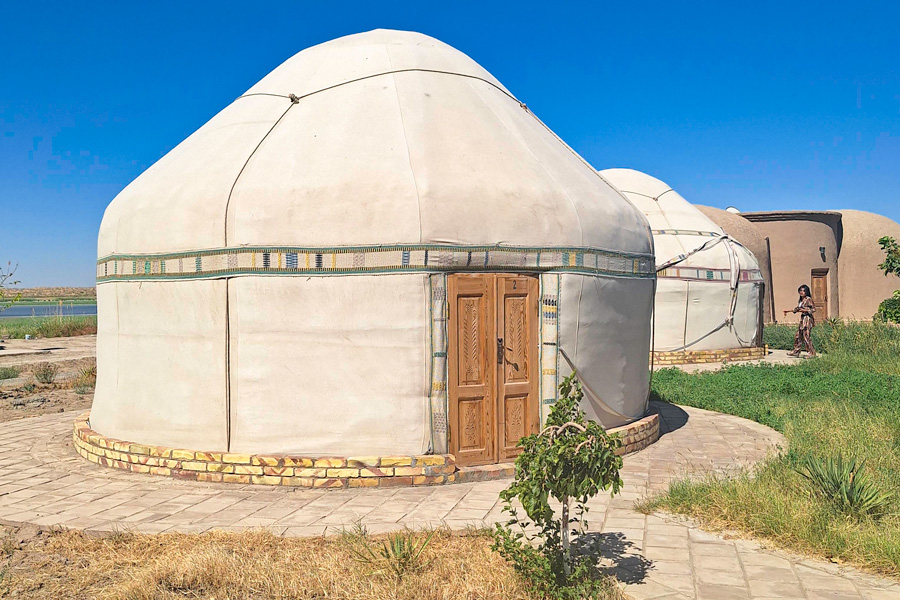
Accommodation at City of Magicians is arranged in the form of traditional yurts, one of the oldest dwelling types of Central Asia. Their circular form and use of natural materials have made yurts a practical and comfortable living space for centuries. Yurt-making traditions are recognised by UNESCO as intangible cultural heritage, making a stay here an important part of cultural immersion.
The complex offers three deluxe felt yurts and sixteen standard stone yurts. Felt yurts are built from natural materials in accordance with traditional techniques, while stone yurts represent a contemporary interpretation of the classic form.
All yurts are decorated in a restrained style, combining Uzbek decorative elements, handcrafted details, and modern conveniences. Each unit includes a private bathroom, heating, and air conditioning.
A family restaurant on site serves traditional Uzbek cuisine, including halal dishes.
MICE and Business Events
For small-scale business gatherings, City of Magicians offers a conference space designed in the form of a stone yurt. This intimate venue is suitable for meetings, team-building activities, corporate events, and creative workshops.
The combination of unusual architecture and natural surroundings creates an atmosphere conducive to focus and reflection, allowing work to be balanced with rest and a change of environment.
Hands-on Experiences and Workshops
Traditional Craft Workshops
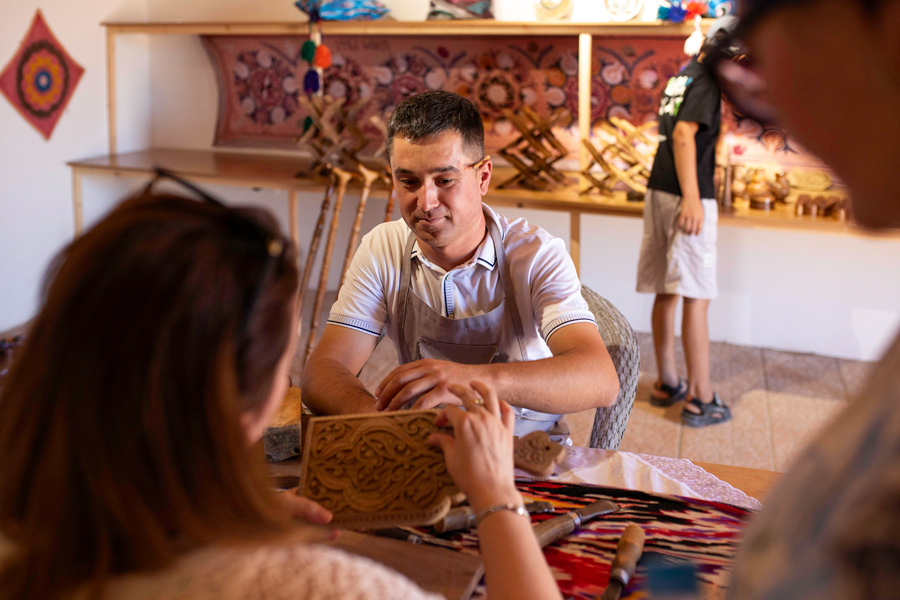
The complex regularly hosts master classes dedicated to traditional Uzbek crafts. Among the most prominent are ceramics and wood carving, both of which have deep historical roots and distinctive local styles in Khiva.
Khiva ceramics are known for their rich colour palette and geometric ornamentation, arranged in balanced and restrained compositions. Wood carving from Khiva is considered one of the most recognisable schools in Uzbekistan, valued for its emphasis on natural texture and material integrity. Historic examples of this tradition can be seen in landmarks such as the Juma Mosque in Khiva.
Additional workshops include the making of handmade Uzbek dolls, as well as metalworking techniques such as embossing and knife making.
Cooking Workshops
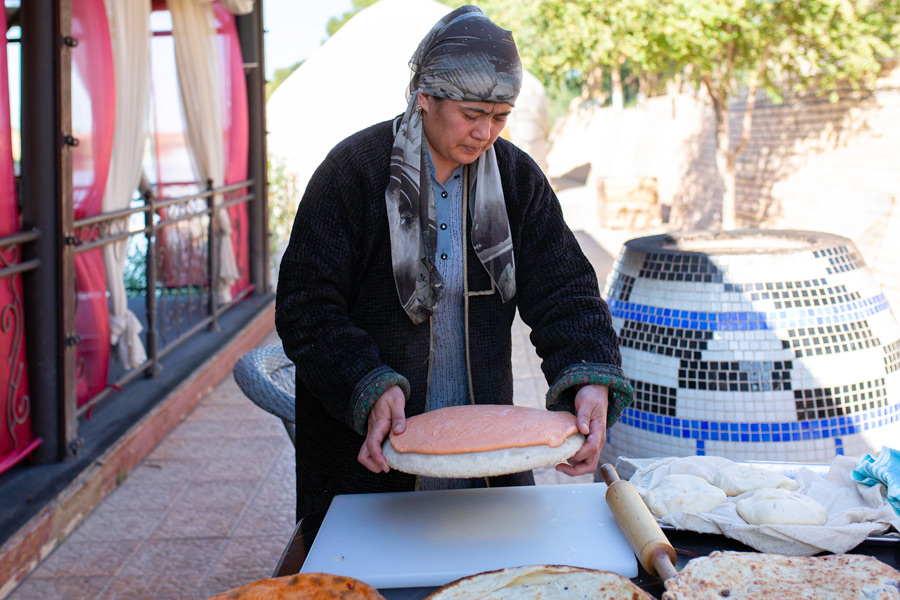
Cooking classes offer an interactive introduction to local cuisine. Guests can prepare traditional Uzbek tea using natural ingredients, bake flatbread, or try dishes specific to Khorezm, including a vegetarian-style local pizza with tomatoes and garlic.
One of the most popular workshops is dedicated to shivit oshi, a regional speciality. Despite its name, which translates as “dill pilaf,” the dish is in fact a type of lagman – handmade noodles served with a meat and vegetable sauce. Its distinctive feature is the vivid green colour of the noodles, achieved by adding dill to the dough.
During the class, a chef demonstrates each stage of preparation and explains the techniques in detail. As the ingredients are readily available, participants can later recreate the dish at home.
Evening Folklore Performances
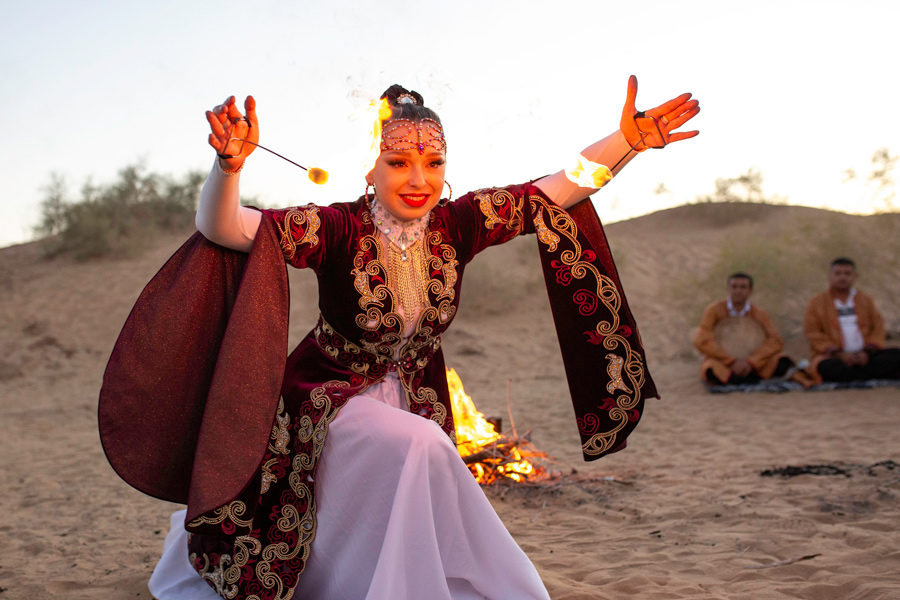
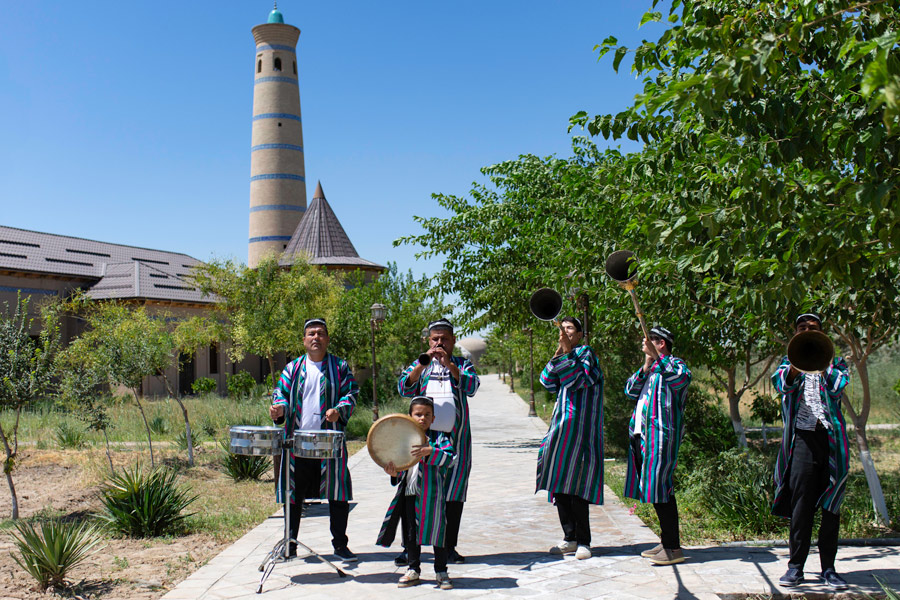
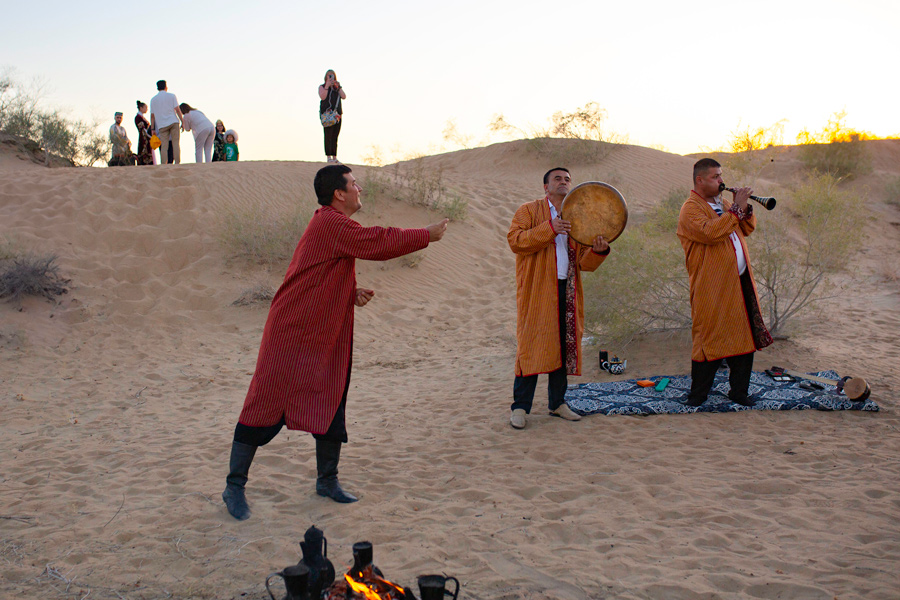
Folklore shows introduce guests to traditional Uzbek music and dance, with particular emphasis on the expressive style of Khorezm. Hotel guests can attend performances free of charge. For outside visitors, evening programmes are available separately, often combining a folklore show with dinner, at an approximate cost of $15 per person.
A central element of the evening programme is the lyazgi dance, which is included in UNESCO’s list of intangible cultural heritage. Group and solo performances often involve audience participation and are known for their energetic rhythm.
Contemporary Art in the Desert Setting
City of Magicians hosts the Khorezm art residence, a project that brings together contemporary artists from Uzbekistan and abroad. Participating artists include Askar Urmonov and Dildora Sapashova from Uzbekistan, Intizor Otaniyozova from Kazakhstan, Tigran Dovlatbekyan from Georgia, and others.
The artworks are created from natural materials and reference both desert philosophy and the Zoroastrian heritage of the region. Installed outdoors near Lake Karakul, they are designed to blend seamlessly into the surrounding landscape.
Desert Walks and Excursions
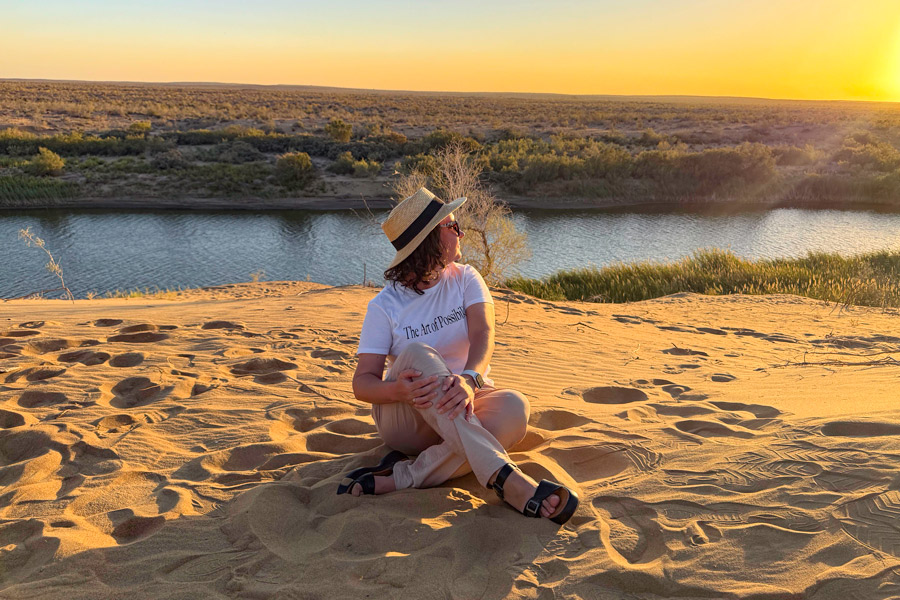
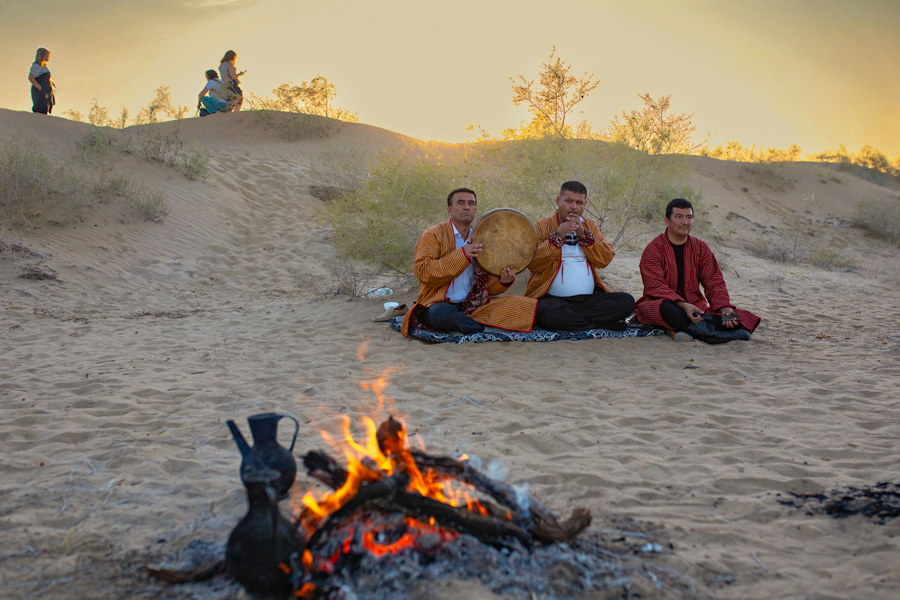
Guests can also take part in excursions to the Karakum Desert, characterised by sand dunes and dramatic temperature contrasts. Trips are typically scheduled for sunrise or sunset, when the light creates especially striking views. These outings often include traditional tea gatherings by a campfire.
While most of the Karakum Desert lies within Turkmenistan, small sections extend into the Khorezm region, making such excursions a relatively rare experience in Uzbekistan. More commonly, travellers encounter the Kyzylkum Desert, which has a milder climate.
Photo Experiences in Khorezm Style
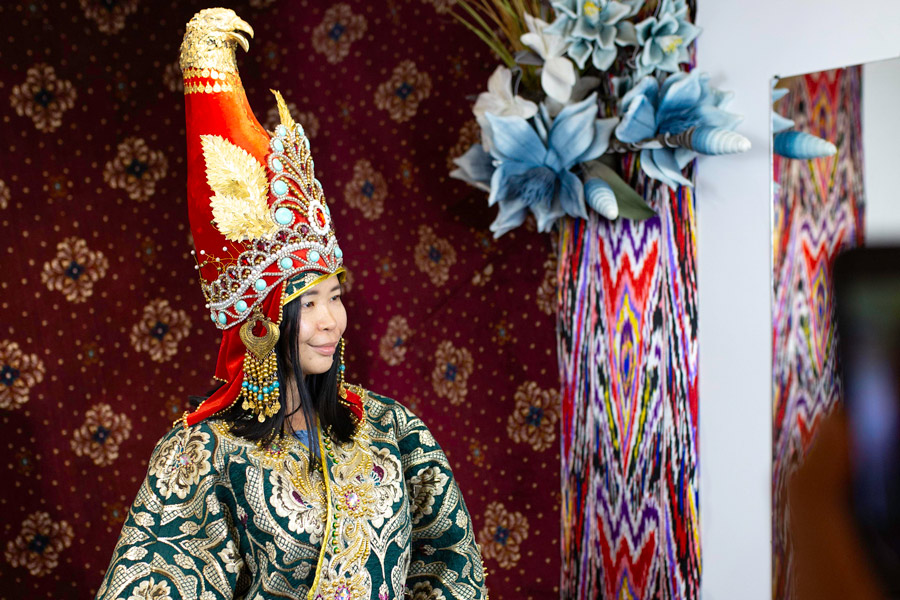
Guests may arrange photo sessions set against the backdrop of yurts, desert landscapes, and lakes, wearing traditional Khorezm costumes. Women’s attire is distinguished by feathered headdresses and round metal ornaments, while men often wear sheep’s wool hats known as chugurma.
These sessions become less about photographs and more about stepping into the visual language of ancient Khorezm.
City of Magicians speaks to travellers drawn to quieter forms of discovery, where comfort, cultural depth, and open landscapes shape the rhythm of the stay. Evenings by the fire, desert sunrises, hands-on workshops, and folklore performances create a layered experience of Khorezm – its landscapes, traditions, and historical depth – leaving lasting impressions of warmth and authenticity.