

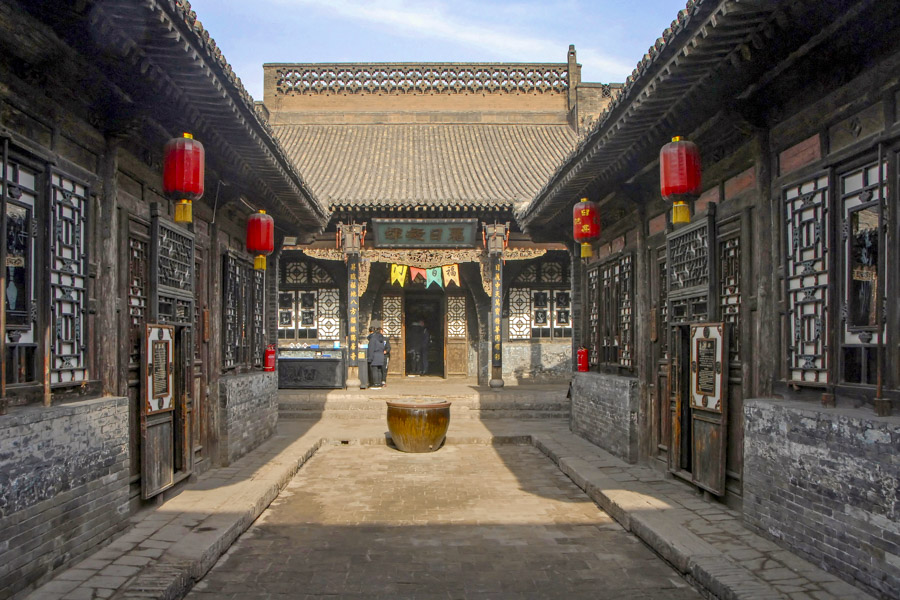
In Pingyao, long known as the Land of Wealth, Rishengchang Draft Bank marks the starting point of organised finance in China. Established in 1823 as Rishengchang Piaohao, it grew from a small dye company into the first bank in China. Merchants soon called it Sunrise Prosperity, a name for a system that moved silver and trust across vast distances.
Visitors walk through the former headquarters of the first draft bank in China, where clerks once calculated. Counters, courtyards, and coded ledgers explain ancient banking in China through real spaces rather than abstract displays. The experience resembles a working office frozen in time, not a ceremonial monument.
Rishengchang bank became the father of the Chinese banking industry by creating drafts that functioned as early paper money. This historic Chinese bank connected Pingyao to cities across China and later to Russia, Mongolia, and Japan. Today, the Rishengchang heritage site preserves China’s historic financial institution as a living record of Chinese banking history.
Rishengchang Draft Bank Tours
Most visits to the Rishengchang ancient bank unfold as part of walking routes through Pingyao’s walled centre. Guides lead travellers along West Street to the Rishengchang exchange shop, once China’s largest draft banking operation. Inside the compound, tours explain how silver deposits turned into bills of exchange usable across the Qing empire (1636/1644–1912).
Several itineraries frame Pingyao Rishengchang within wider journeys between Beijing and Xi’an. On longer Central China routes, travellers explore the Rishengchang Museum alongside city walls and Shuanglin Temple. This structure suits visitors who want context, steady pacing, and minimal logistical distraction.
We offer Rishengchang Draft Bank as a core stop within multi-city journeys linking Beijing, Pingyao, Xi’an, and Shanghai. Time in Pingyao is the best for cultural walking, merchant history, and close reading of an ancient banking institution. For many travellers, Rishengchang becomes the clearest introduction to Chinese banking history within a living urban setting.
Best Time to Visit the Rishengchang Draft Bank
Rishengchang Draft Bank sits on West Street, the former commercial spine of Pingyao Old Town. Its central position makes timing more important than distance, especially during busy daylight hours.
Late morning works best for a focused visit, once tour groups thin out and light fills the courtyards.
Early afternoon suits travellers combining the Rishengchang Museum with other Pingyao banking history sites nearby. A half hour allows enough time to understand the structure and banking functions of this ancient financial institution.
Autumn brings the most balanced conditions for visiting the Rishengchang ancient bank. September and October combine clear skies with steady light, which suits architectural details and interior displays. Winter changes the tone entirely, with quieter streets and a slower pace inside the historic Chinese bank.
Spring and early summer remain practical, though wind in spring and rain in summer affect walking between sites. As an indoor-focused museum, Rishengchang Draft Bank remains readable and accessible across all seasons.
Opening Hours
The site welcomes visitors throughout the year, with seasonal opening hours. From March to August, doors open from 08:00 to 19:30. From September to February, hours shorten to 08:00 to 18:00, with some admissions ending around 17:15.
Practical Additional Information
Tickets and Entrance Fees
Rishengchang Draft Bank does not sell an individual admission ticket. Access comes through the Pingyao Old Town unified ticket system. The combo ticket costs around CNY 125 to 150 (approximately $18, €16, or £14 to $22, €19, or £16).
and covers over twenty historic sites. You can buy tickets at town gates, major temples, and central crossroads in the old town.
Rishengchang Location and Orientation
Rishengchang sits at 38 West Street inside Pingyao Old Town. West Street runs east to west and serves as the main commercial axis. Directional signs mark the Rishengchang Museum clearly from both ends of the street.
Language and Interpretation
Most exhibition panels appear in the Chinese language, with limited English explanations. Basic understanding comes from layout and artefacts rather than text. Guided tours help visitors interested in Chinese banking history and merchant systems.
Accessibility and Facilities
The compound includes stone thresholds, narrow corridors, and stepped courtyards. Wheelchair access remains limited due to preserved Qing dynasty construction. No toilets or cafés operate inside the historic Chinese bank. Public facilities sit nearby along West Street.
History of the Rishengchang Draft Bank
Origins and Foundation
Rishengchang Draft Bank began at Pingyao’s West Street as Xiyucheng, a pigment shop backed by the Li family in the late 18th century. Li Daquan financed the business, while Lei Liutai ran branches in places such as Beijing and Hankou.
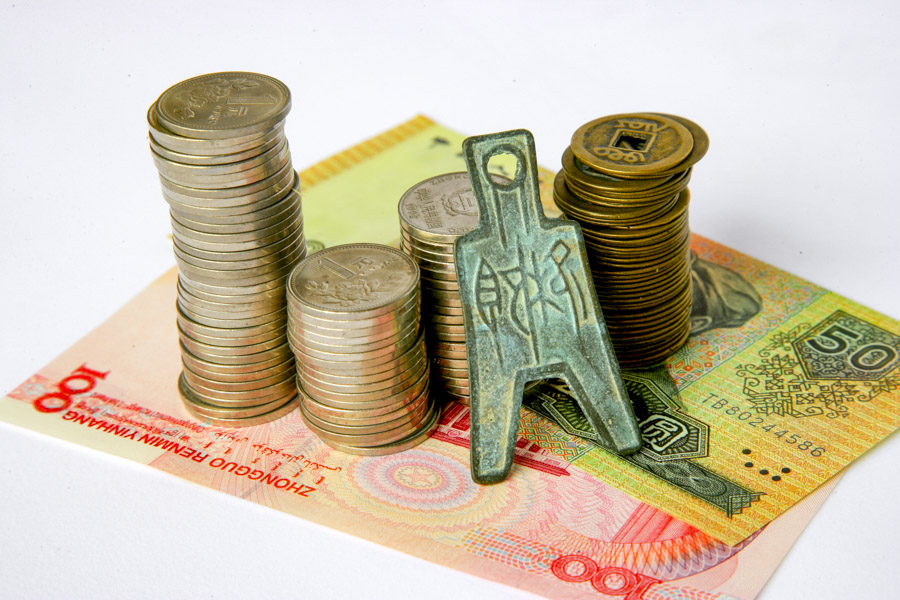
Lei understood the central problem of Qing dynasty trade: merchants moved wealth in silver, then hired guards and still faced theft, loss, and delay. In 1823, during the third year of Daoguang’s reign, Li and Lei committed 300,000 taels of silver and refocused the firm on finance. A tael was a traditional Chinese unit of silver by weight used for large payments and accounting. Locals called it piaohao, and later people called it the father of Chinese banking.
Innovations and Operations
The change mattered because it replaced physical efforts with paperwork. Rishengchang provided essential banking services: accepted deposits, issued loans, and, crucially, handled remittances through drafts. A merchant could deposit silver in one city and collect funds in another branch with a verified paper instrument. That practice reduced the need for escorting silver and tightened the links between distant markets.
Rishengchang soon gained the motto “汇通天下”, translated as “Connecting the World”. In effect, Chinese draft banking became a private infrastructure that stitched together provincial economies under the Qing.
Expansion and Peak Influence
Financial services expanded quickly. In the 1820s–30s, Rishengchang set up a network across cities and kicked off Pingyao's big banking era, with rivals creating the Shanxi guild.
By the late 19th century, these banks operated across dozens of cities, and Rishengchang stood among the most renowned names.
Some accounts place its influence at the level of half the Chinese economy at its peak. Branch activity extended beyond China to Europe, America, and Southeast Asia, alongside documented reach toward Russia, Mongolia, and the United States.
Adaptation and Decline
Rishengchang’s milestones track China’s political shocks. Wars and rebellions after 1840 strained southern routes and raised security costs. Banks adapted by tightening communications and limiting exposure, while continuing to move funds where state transport failed. Later, draft banks handled government finances such as tax transfers and emergencies, tying them closer to the Qing administration.
Decline arrived with modern competition and political rupture. Foreign banks, new national banks, and changing legal frameworks eroded the piaohao model. After the 1911 Revolution, Qing-linked finance lost its protective context.
In September 1914, following the bankruptcy of the Heshengyuan exchange house in Qi County, the authorities closed the bank. However, its creditors negotiated for its reopening, and it ultimately closed in 1932. The former Rishengchang Bank later reopened as the Rishengchang Museum. Previously known as the China Banknote Museum, it preserved the paper trail of Rishengchang’s financial history.
Architecture of the Rishengchang Draft Bank
Rishengchang Draft Bank stands on West Street in Pingyao Old Town, with a street-front entrance that leads into a series of enclosed courtyards. You enter through rooms which once met customers, then move inward through a sequence of courtyards that tighten privacy and control. The plan follows a classic Shanxi “shop in front, residence at the rear” model, where business and domestic life share one compound.
Sources describe a three--courtyard complex, with front, middle, and rear zones that match the bank’s workflow. The front courtyard handled public business, with counter rooms on the sides for face-to-face transactions. The middle section housed the bank’s core operations: the letter room, the account room, and central rooms for meetings and guests. The rear courtyard held living quarters for senior staff, set away from the noise of the street and close to the most sensitive spaces.
The architecture draws on late Qing style: grey brick walls, timber frames, and a simple hierarchy of rooms around open courtyards. Wooden beams and carved details signal status without turning the place into a mansion. Signboards and alignment put the institution in the visitor’s view. They guide you into a world of thresholds, gates, and controlled sightlines.
Rishengchang banking demanded security as much as ceremony. The compound used layered spaces instead of one barrier. This way, anyone moving inside passed through several courts and doorways while staff watched. To stop intruders, the bank installed a metal wire net over the courtyard and hung small bells on it, so movement above triggered sound.
The Secret Vault
One of the most important architectural elements of Rishengchang sits underground. The bank stored silver and gold ingots in a secure “silver cellar” used as reserve capital behind its drafts. The vault lay in the inner part of the compound, near the rear courtyard and the head manager’s quarters.
The vault took the form of a subterranean masonry chamber with thick brick and stone. A heavy, locked stone slab formed an inconspicuous floor entrance, designed for concealment and fire resistance. Procedures strengthened the design: two senior managers held separate keys, and both had to attend to open the chamber.
Today, the Rishengchang museum lets visitors look down into the vault area from above, while locked cells keep it closed.
Banking Innovations During the Qing Dynasty
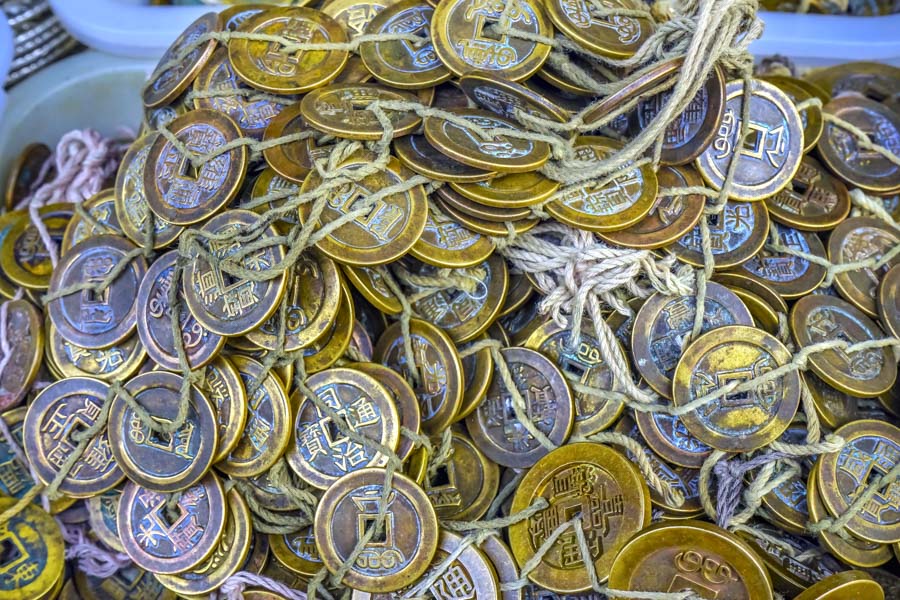
Similar to the Ming Dynasty (1368 to 1644), Qing Dynasty banking followed traditional banking methods like copper coins and silver ingots. Copper cash coins, strung in hundreds, covered small purchases, while larger deals relied on silver ingots and taels measured by weight. Long trips turned money into dead weight, and every exchange raised questions of purity and value.
Rishengchang Draft Bank changed the routine by turning silver into paper credit. A customer deposited silver and received a draft written with brush and ink. Then validated through seals and handwriting records. Staff used watermarked paper and multiple authentication marks, with coded characters that changed regularly to block forgery.
Rishengchang banking ran on a branch network rather than carts of silver. This system reduced the need for armed escorts on the roads and helped scale long-distance trade inside the empire. Sources describe business links extending to Russia and Japan, which made the institution a bigger thing in Pingyao banking history.
Modern banking moves value through regulated electronic settlement, backed by deposit insurance and central bank frameworks. Rishengchang ancient banks also worked as private banks, with strict internal controls and physical records. The draft resembled a bill of exchange, but the system relied on paper, seals, codes, and disciplined staff.
Visit the exhibition rooms today to see the mechanics up close. Account books, correspondence between branches, and remittance paperwork built China’s historic financial institution one transaction at a time.
Security Measures at the Rishengchang Draft Bank
Long-distance deliveries were carried by caravans, river transport, inns, and tax checkpoints. Every stage created a theft risk, and merchants often paid for armed escort services to move silver between cities. The risk of robbery was one of the pressures that made the piaohao model attractive to move value on paper, not on carts.
Even when Rishengchang tried to keep silver off the road, the crisis still produced criminal opportunities. A surviving 1900 management letter from its Beijing branch describes a breakdown in public order. It notes that currency exchange businesses had been robbed and withdrawals were flooding in as people tried to cash out.
Measures Taken to Combat Robberies
Rishengchang’s protection system had two parts: stop theft on the road, and stop fraud at the counter.
1) Replace silver shipments with drafts.
Clients could deposit at one office and withdraw at another with a draft, cutting the risk and cost of transfers.
2) Make drafts hard to fake.
Contemporary accounts describe layered checks: seals, handwriting, watermarks and other printed marks, plus codes that could change over time. These controls were practical because staff could verify them quickly at the desk before paying out.
3) Secure the premises.
Descriptions of the Pingyao headquarters mention security features. A metal wire net covers the compound, and staff attach small bells to warn them if someone tries to enter from above.
The North China First Armed Escort Agency Museum
Pingyao also preserves the story of escort firms (biaoju) in the Tongxinggong Escort Agency Museum. Often introduced as the “North China First Armed Escort Agency Museum”, it presents how escort companies organised routes. Additionally guards and contracts protected merchants’ bullion and goods before draft banks reduced the need for constant silver transport.
Merchants, Martial Artists, and the Long Road
Merchants commonly hired martial arts-trained guards for travel, especially when carrying bullion or moving through bandit-prone stretches. For Shanxi merchants, the high-risk north routes linked to Mongolia and Russia through caravan trade are sometimes discussed under the “Tea Road”. Parts of these corridors overlapped with older Silk Road geographies in North China. Even though late-Qing commerce was not the classical Silk Road trade of earlier centuries.
How to Get to the Rishengchang Draft Bank?
Rishengchang former bank sits on West Street inside Pingyao Ancient City, the main east-to-west commercial spine of the walled town.
On foot inside the walls
Once you are through any city gate, walking is the simplest option. Follow signs for West Street (西大街), then keep to the main street until you reach Rishengchang’s entrance. The museum is commonly listed at No. 38 West Street.
From Pingyao Ancient City Railway Station (high speed, about 10 kilometres, or 6.21 miles away)
Take Bus 108 to the ancient city. The route has two variants that terminate near the South Gate or North-Gate, then you continue on foot to West Street and Rishengchang.
A taxi is quicker to a gate, but cars cannot enter the walled city, so you still walk the final stretch.
From Pingyao Railway Station (regular trains, close to the walls)
This station is near the old town’s western side. Go to the nearest gate, enter the walls, then walk to West Street and continue to Rishengchang.
Low-effort options inside the old town
Battery sightseeing carts and rickshaws run fixed loops that include Rishengchang Former Bank. They are useful if you are short on time or arriving with luggage.
Tips for an Optimal Visitor Experience
You need 30 to 45 minutes to explore the courtyards and rooms without hurry. The site feels like a preserved office from the Qing era, so move slowly to notice details in counters, ledgers, and seals.
Must-see elements include the front courtyard counters where transactions happened. Additionally, you'll see the middle rooms with account books and authentication tools, and the rear living quarters for managers. Look down at the underground vault, once secured by dual keys and thick stone. Mannequins in period clothing bring the daily work to life.
Photography is allowed inside, but no flash is allowed to protect artefacts and keep the natural light. Natural courtyard light works well for shots of timber frames and brick walls. Avoid tripods or blocking paths. On West Street, soft morning or afternoon light suits the facade.
Most signs are in Chinese with limited English, so basic layout and objects carry the story. A guide adds useful context about the draft system and merchant families. If you are going alone, it may be valuable to pair it with the nearby escort agency museum to see how banking cut the risks of moving silver.
Consider wearing comfortable shoes for stone floors and steps and arrive late morning or early afternoon for fewer crowds. Guests are encouraged to keep voices low to respect the quiet atmosphere. The combo ticket covers entry, so plan other stops on the same day. This keeps the experience focused and rewarding.