

Things to Do and Sightseeing Tours in Pingyao Ancient City
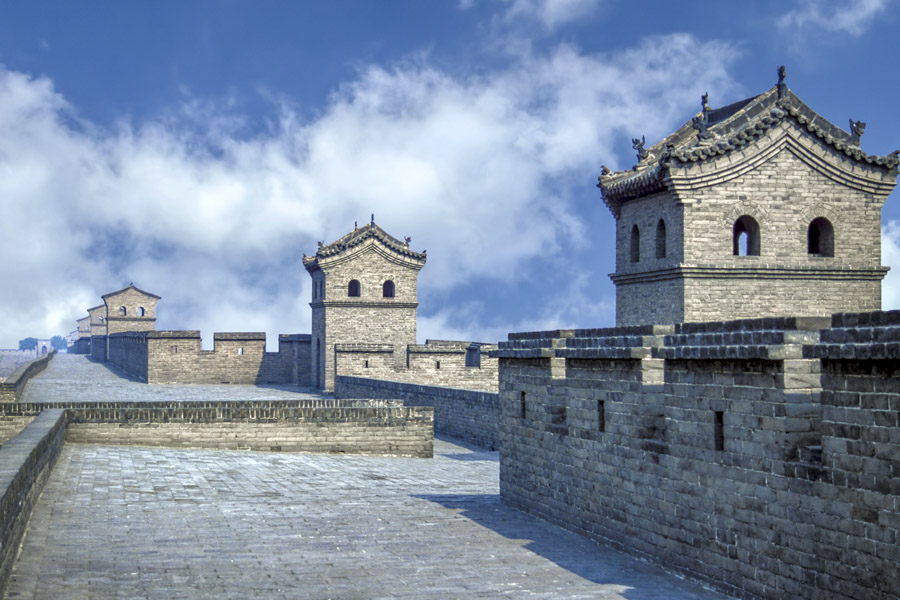
The Great Wall of China isn’t the only ‘fence’ enchanting visitors in China. Encircled by a monumental antique wall, Pingyao remains one of the clearest surviving portraits of Ming-era urban life. The gates represent a magical getaway, as once you enter, the pace changes. Streets get narrow, courtyards unfold quietly behind wooden doors, and the town keeps its original scale.
As a city of UNESCO World Heritage Site status, you feel Pingyao’s cultural heritage in its cobbled lanes. Pingyao tourism focuses on lantern-lit streets, but the story goes deep into history. Once a financial centre of imperial China, here early banking systems developed long before Shanghai rose to prominence. In this town of Shanxi Province, old banks still stand, solid and undecorated, as a part of everyday streets.
To visit Pingyao means to walk through a town that has remained structurally undamaged. Few places in China feel so enclosed, so coherent, and so closely tied to their past.
Ancient City of Pingyao Tours
One of the most rewarding stops between Beijing and Xi'an tours, our Pingyao travel packages embrace history with leisure. In our Central China Essential Tour, we offer a handpicked tour of major capitals and preserved cities.
The itinerary begins in Beijing, continues by high-speed train to Pingyao, and then moves onwards to Xi’an and Shanghai.
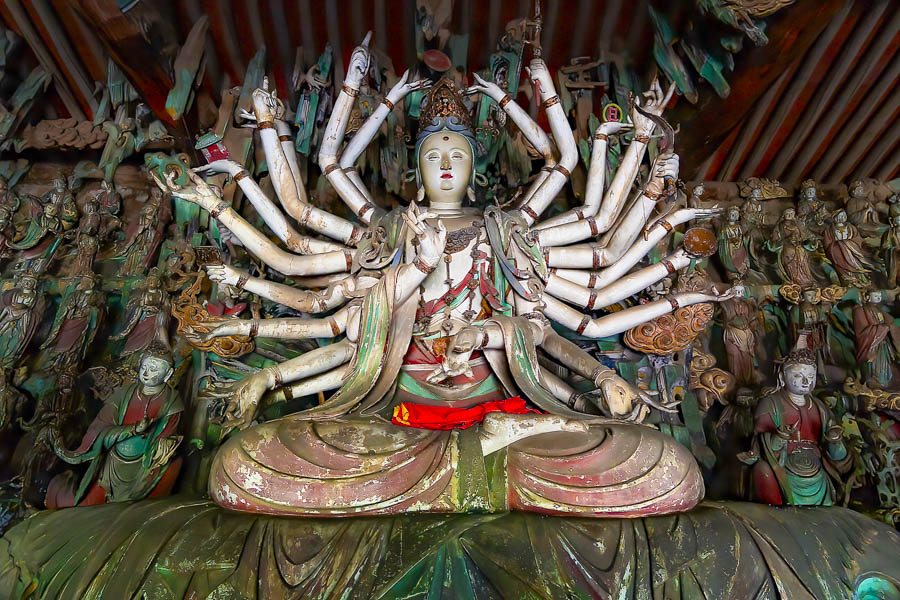
In Pingyao, the programme focuses on the town’s most important heritage sites. Key sites are Shuanglin Temple (双林寺 (平遥)) the ancient Chinese city walls, and Rishengchang Draft Bank (日昇昌票号). This is a practical travel guide to Pingyao, transport arranged in advance and minimal logistical strain.
Tours in Pingyao are best for cultural walks through a city remaining enclosed and coherent. For travellers interested in architecture, merchant history, and UNESCO-listed urban heritage, it is a defining stop.
Best Time to Visit Pingyao Ancient City
The best time to visit Pingyao is spring (March to May) and autumn (September to early November). These months bring mild temperatures, clear skies, and the best conditions for walking the Pingyao Ancient City. Autumn is especially strong for photography, and September often coincides with the Pingyao International Photography Festival.
Spring in Pingyao is calm and green, with songbirds and flowers appearing along the lanes and temple courtyards. If you're looking for Pingyao travel tips, this season is the best for slow sightseeing, as the air remains cool and streets are unhurried.
Summer is hot and humid, particularly in July and August. Mornings are best for walking, while afternoons suit indoor visits to sites such as Rishengchang Draft Bank. Evenings bring the lantern-lit streets back to life.
Autumn is the most comfortable season. The light is crisp, the air is dry, and cultural events often take place in September. The town feels at its sharpest and most defined during this period.
Winter is cold but quieter. Snow occasionally settles on the rooftops, and the ancient city becomes almost empty. For travellers who prefer low crowds, this is the most peaceful time to visit Pingyao.
Brief overview of the climate in Pingyao:
| Season | Months | Average Temperatures (°C) | Average Temperatures (°F) |
| Spring | March to May | 5 to 20°C | 42 to 69°F |
| Summer | June to August | 17 to 30°C | 63 to 86°F |
| Autumn | September to November | 5.5 to 18°C | 41 to 65°F |
| Winter | December to February | -7 to 5°C | 17 to 40°F |
History of Pingyao Ancient City
The best Pingyao travel advice lies in the history of the city, as its story begins long before the brick walls you see today. A settlement existed here by the time of King Xuan of Zhou (9th century BC), when earthen ramparts were raised for defence. In the Spring and Autumn period (c. 770– c. 476 BC), the area belonged to the state of Jin, then to Zhao during the Warring States era (c. 475–c. 221 BC).
Under the Qin (221–207 BC), the town's name was Pingtao and later became the seat of a county administration in the Han period (202 BC – 220 AD). The name Pingyao was adopted much later. The Northern Wei era adjusted the earlier name to avoid the imperial name taboo associated with Tuoba Tao (408-452), known as Emperor Taiwu and a devout Taoist.
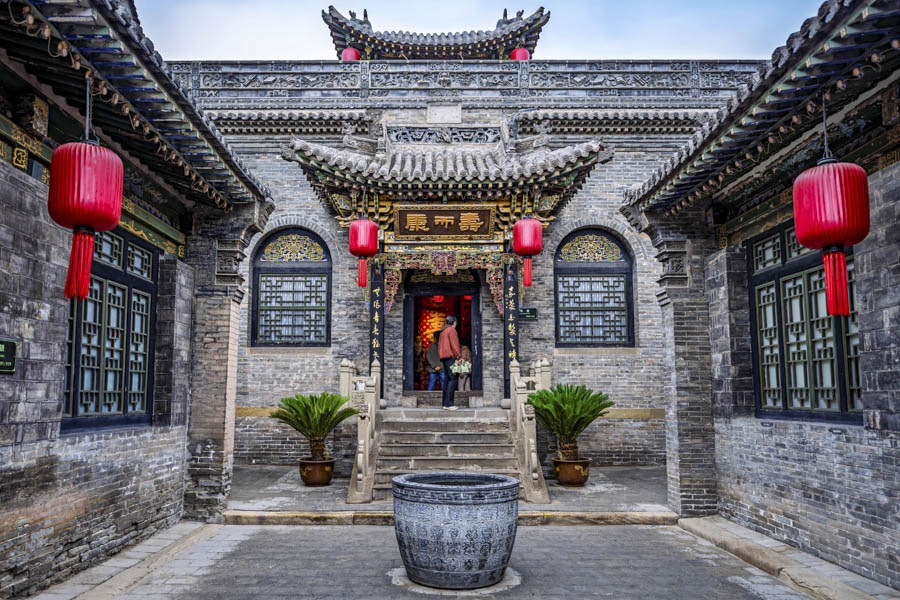
The walls that shape today’s Pingyao Ancient City are largely a Ming dynasty (1368–1644) achievement. In 1370, early Ming authorities rebuilt and expanded the fortifications to their present form. The plan inside the walls stayed stable: a tight grid of streets, courtyard houses, temples, shops, and official buildings. Many of the Pingyao historical sites that visitors see now sit within this intact layout.
From the 16th century, and especially in the 19th century, Pingyao became a financial centre. More than twenty draft banks operated here, with Rishengchang (founded 1823) growing into the most influential. Rishengchang's former bank moved silver across long distances through a nationwide network. The system began to unravel after the fall of the Qing in 1912, and Rishengchang closed in 1914.
Modern conservation started in the late 20th century. Pingyao was named a national Historical and Cultural City in 1986. In 1997 the ancient city of Pingyao, along with Shuanglin and Zhenguo Temples, was inscribed as a UNESCO World Heritage Site.
Today, Pingyao tourism rests on that rare continuity: a walled town still reading as a real city, not a set.
Things to Do in Pingyao Ancient City
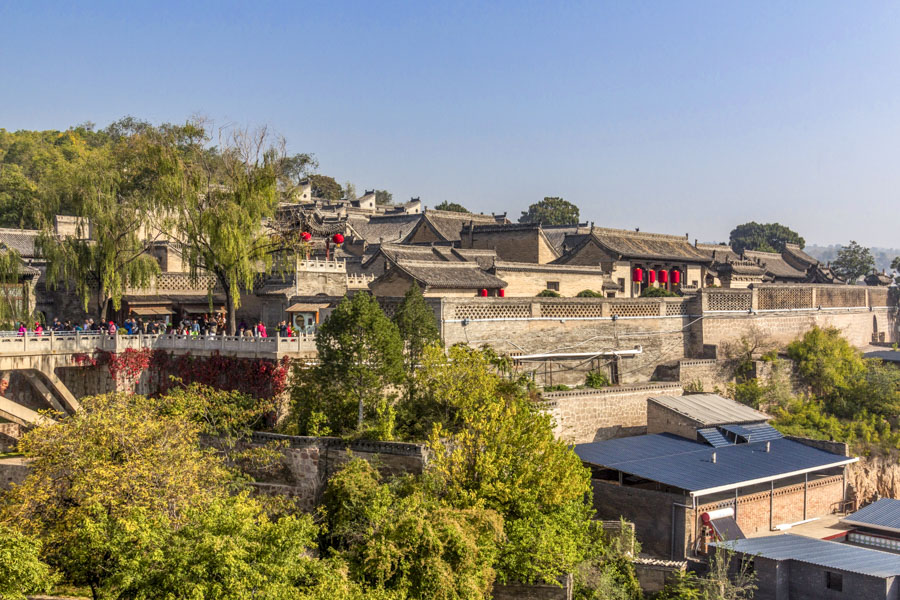
The best places to visit in Pingyao sit close together inside the walls, making sightseeing primarily a walking experience. Start with the Ancient City Walls and Moat (平遥城墙), a 6-kilometre circuit rebuilt in 1370. From there, head to the Ancient Market Building, the three-storey tower linked to the old “three markets a day” routine.
To explore Pingyao, you have to walk to Ming and Qing Street (明清条街), lined with Ming and Qing era shopfronts. Nearby, the City God Temple (平遥城隍庙) is one of the must-see landmarks in Pingyao, a large Taoist complex.
Another popular site to visit during a holiday in Pingyao is the Pingyao County Government Office (衙门), a vast yamen complex. The Confucius Temple (文庙), arranged in five courtyards, is a distinct Pingyao attraction that rewards slow pacing. Walk through the courtyards in order, then spend time with the imperial examination displays.
One more entry in Pingyao travel recommendations is the Rishengchang Draft Bank (日昇昌), founded in 1823. It is the best-known of the draft banks and central to the town’s financial rise. At Armed Escort Company Museum (同兴公镖局) on South Street, founded in 1855, you'll find flags, weapons, and the training yard.
Once you’ve explored Pingyao inside the walls, the strongest day trips sit just outside town. Shuanglin Temple (双林寺) sits six kilometres away and is known for over 2,000 painted clay statues with surviving colour. Zhenguo Temple (镇国寺) is roughly 10 kilometres out, home to the Wanfo Hall built in 963 and a rare 10th-century sculpture.
For grand residences, the Qiao Family Compound (乔家大院) near Qi County, begun in 1756, runs to 300-plus rooms. It includes film locations. The Wang Family Compound (王家大院) is even larger, built over 300 years across lanes and fortress-like sections. The Wang family compound emphasises intricate layout and decoration.
Museums in Pingyao Ancient City
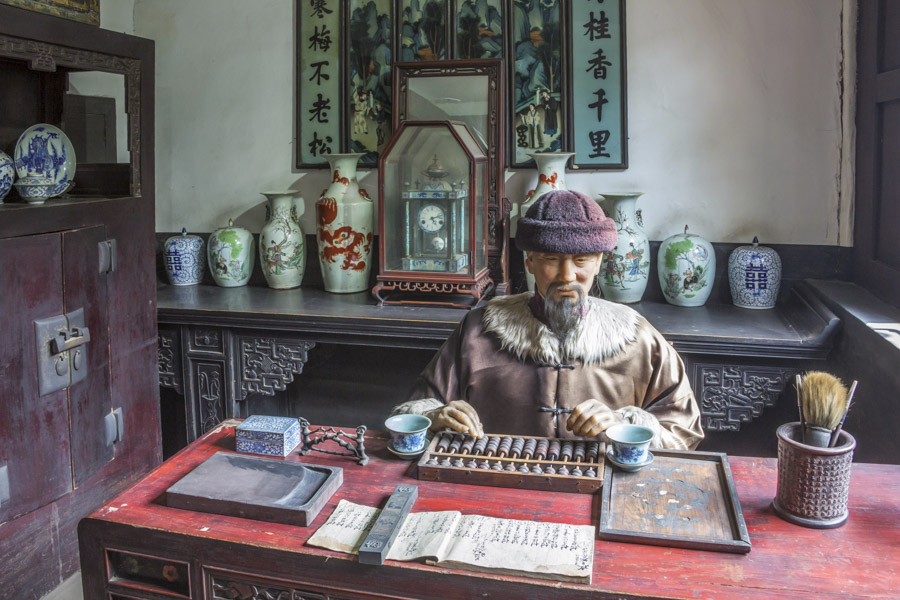
The city museum itself enchants visitors with family courtyards and shopfronts, but Pingyao’s museums offer bigger context.
Pair the Weitaihou Museum with the Xietongqing Ancient Bank Museum for a wider view of the town’s finance culture. Weitaihou, once a major exchange shop after Rishengchang Draft Bank, is laid out across wooden rooms from the late Qing period. Xietongqing, founded in 1856, restores the feel of an “unincorporated bank” where clients could deposit their money in exchange for a receipt, allowing them to withdraw funds at another branch. Visitors can stroll through a sequence of courtyards, which includes the VIP rooms, managers’ offices, and the underground vault built for security.
The China (Pingyao) Supervision Culture Museum sits inside a former Ming-era disciplinary office. The laws, case records, and stories of officials explain how the state monitored its own bureaucracy. Then shifted to the Hanshi Art Museum, opened in 2023, presenting the calligraphy, paintings, and collections of Professor Hanshi.
Ancient City of Pingyao Theatres
The most established venue is Pingyao Grand Theater, located on Chenghuangmiao Street near the Nine-Dragon Wall. It combines traditional northern Chinese performance with banquet culture. The theatre is linked to the historic Pingyao Drama Hall Guest House, built in 1703, which once hosted figures such as Empress Dowager Cixi. Its location near the Confucius Temple places it at the centre of the old city’s ceremonial geography.
Pingyao also preserves a rare architectural form: the temple-theatre stage. Several Taoist temples inside the ancient city still contain performance stages built directly into their courtyards. During the Ming era, Pingyao ancient town shared theatre and worship spaces. These stages are often quiet today, but they remain some of the most striking structures in the old town.
For a modern night performance, Encore Pingyao (Another Glance at Pingyao) is the city’s best-known production. Staged in an unconventional theatre west of the ancient walls, it has no fixed auditorium. The audience walks through the show as scenes unfold around them, combining music and lighting into a portrait of Pingyao’s past.
Entertainment, Parks, and Shopping in Pingyao Ancient City
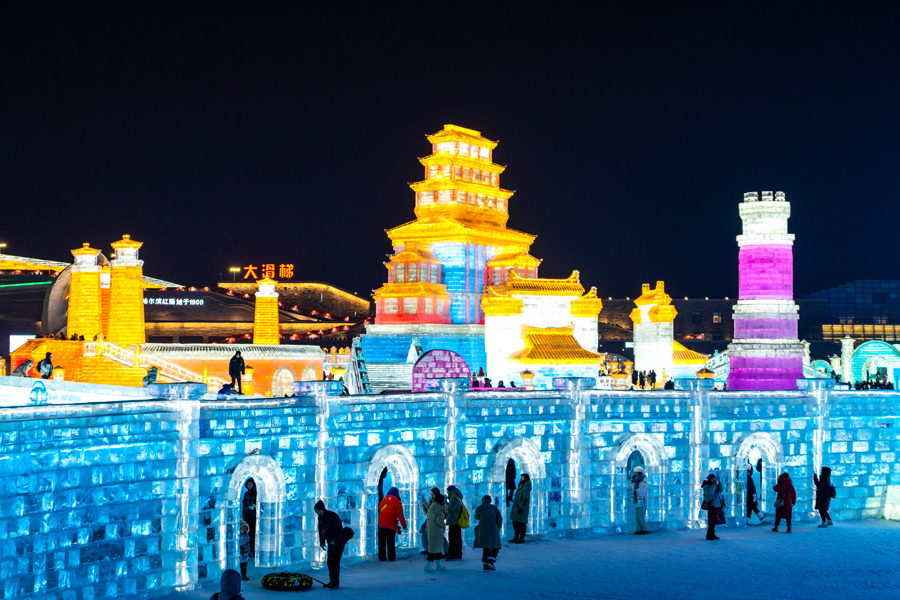
Entertainment in Pingyao is shaped by the old calendar. The city’s strongest events follow seasonal festivals, temple traditions, and performances staged inside the walls.
Entertainment
The largest celebration is Pingyao Chinese New Year, held from the 23rd of the 12th lunar month to the 16th of the first lunar month. Streets fill with red lanterns, dragon dances, opera, and the Shehuo folk parades that continue through the Lantern Festival (元宵节). Winter brings the Pingyao Ice and Snow Tourism Festival in Hongshan Town, located 10 kilometres (6.2 miles) from the ancient city, with skating areas, snow slides, and food stalls.
Spring delights art enthusiasts with the Pingyao Calligraphy & Painting Expo (平遥书画展).
In September, exhibitions and projections appear across the ancient city during Pingyao International Photography Festival (平遥国际摄影大展). The same season includes Mid-Autumn moon celebrations (平遥中秋节), while October often features the Pingyao Beef Culture Festival (平遥牛肉文化节).
Encore Pingyao stages a walking theatre production introducing Shanxi history with dance and acrobatics. The Pingyao Grand Theater near the Nine-Dragon Wall adds opera excerpts and folk shows, sometimes paired with banquet dining. A local play, A Hand of Sour Jujube, focuses on Shanxi merchant culture.
For nightlife, Ming and Qing Street remains the main corridor after dark. Small bars such as Cherry Blossom House and older tavern-style venues use courtyard interiors and paper lanterns.
Parks of Pingyao Ancient City
Pingyao Ancient City was built as a fortress and a financial center. Even within its walls, there are quieter areas filled with greenery, courtyards, and small garden designs. Merchant families and institutions created private gardens to soften the rigid layout of the brick streets. They followed the traditional Chinese garden style found in older cities.
Organised spaces to visit
One of the most striking residential environments is Ma’s Grand Family Compound. It used to be the former home of Ma Zhongxuan, one of Pingyao’s richest merchants. The compound holds nearly two hundred rooms arranged across courtyards, with an interior designed for privacy and controlled space. It reads less like a mansion than a sealed domestic world, built to reflect wealth and lineage.
Outside the ancient walls, modern leisure space appears in the Pingyao Diesel Engine Industrial Park, a repurposed factory zone. Now used for cinema screenings, themed restaurants, and cultural fairs, it also hosts events like photography and film festivals.
The Pingyao International Ice and Snow Amusement Park in Hongshan town introduces skating areas, snow slides, and festival grounds. During the cold season, the park is tied to Chinese New Year celebrations.
For travellers building a Pingyao itinerary, these spaces matter as pauses between historical sites. They show the city’s ability to move between enclosed heritage and contemporary public life without breaking its scale.
Shopping in Pingyao Ancient City
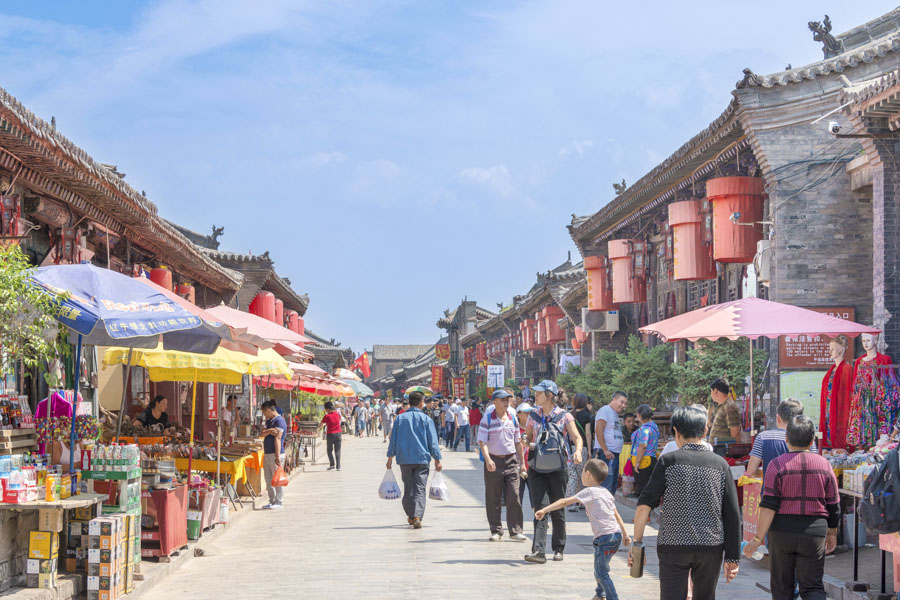
Shopping in Pingyao is best inside the walls, where the main lanes and courtyards are packed with small workshops, family stalls, and museum shops. Focus on handmade pieces that carry local craft traditions rather than factory souvenirs.
What to shop for in Pingyao Ancient City?
Pingyao craftsmen make Tuiguang lacquerware by applying layers of lacquer and polishing them by hand until the surface shines. Small pieces such as jewellery boxes, mirrors, combs, bracelets, plates and lacquer paintings are the easiest to take home. Larger items, including folding screens and furniture, require more careful packing and shipping.
Handmade cloth shoes are another traditional purchase. You may spot women sewing them in doorways and shop fronts. Look for dense stitching, neat embroidery and a firm sole; designs often feature animals and flowers associated with good fortune. The shoes are typically soft and breathable, making them a practical souvenir as well as a decorative one.
Paper cuttings are traditionally made for festivals, weddings and household decorations. Smaller pieces are easy to pack, and some workshops allow visitors to watch the patterns being cut by hand. Silk dolls, meanwhile, depict miniature characters from legends and traditional theatre. Another distinctive local item is the Liuhetai pillow, a cuboid pillow with openings on each side designed to improve ventilation.
The most concentrated stretch of souvenir and craft shops inside the old city is Ming Qing Street (South Street). Good for lacquerware, paper-cuttings, and general browsing. Look for specialist paper cutting studios on Zhengfu Street, including places where you can watch the process before buying. The best purchases often come from stalls where craftsmen work on-site; thus local workshops stand among the best places to shop in Pingyao.
Food in Pingyao Ancient City

Hand-pulled noodles, black vinegar with a sharp finish, and braised beef represent the gastronomic emblem of Pingyao. Inside the city walls you can snack, but the better value and the louder tables are often just outside the gates.
Chinese Cuisine
The signature of Pingyao local cuisine, Pingyao beef (平遥牛肉), is the best to pair with noodles and slice cold. You'll find this local speciality at Tianyankui Bar, with cheaper takeaway stalls often found outside the walled city. Wenmiao Street near the Confucius Temple has the perfect breakfast in town: baskets of baozi and dumplings sold early.
For noodles, go straight to Shunlie’er Sliced Noodles, located between Shuncheng Road and Xiaxiguan Street. Meanwhile, the tiny nameless beef noodle shop with barely a dozen seats and one dish is another top attraction in Pingyao. Guang Ju Yuan on Xiguan Dajie is a serious Shanxi noodle house, built around regional pasta shapes. Zhongdu Binguan, located by the train station, works for a quieter sit-down meal that offer excellent value for money.
Outside the North Gate, Qin Ge Da Guo Zai serves personal hotpots that arrive as full meals.
Vegetarian Restaurants
Pingyao has no strictly vegetarian scene, but eating meat-free here is effortless.
Most old town restaurants serve good vegetable dishes, and many local snacks are naturally vegetarian. Shuijianbao with vegetable filling are flat, pan-fried buns with a crisp skin, and you will find the best ones at small street stalls. Bowl-holder noodles are another Shanxi staple, served cold with aged vinegar, garlic, chilli, and herbs, or stir-fried with greens.
For reliable vegetarian meals, Tianyuankui Kezhan keeps a short list of meat-free dishes, including a strong tofu salad. The Yide Hotel is the most accommodating sit-down option, with a proper vegetarian menu. Here, you'll enjoy traditional specialities made to order.
If you need a break from Chinese food, visit Chummy Coffee. They have corn soup, salads, vegetarian toast, and broccoli-and-cheese pizza. They have an English menu and a calm atmosphere.
Tea Houses, Bakeries, and Patisseries
Historically, tea houses in Pingyao were at the same time theatres, dining halls, and social clubs. Loud places where opera unfolded between mahjong tables and banquet dishes.
For something sweet, look for Pingyao’s handmade mooncakes, filled with sesame, peanuts, or brown sugar under a thin, crisp crust. Taigu cake, a honey-sesame pastry from the Jin merchant tradition, is another local delicacy served with tea. Beef shaobing appears at breakfast stalls near Ming Qing Street. Bubble oil cakes, fried and filled with red bean or jujube paste, are common evening treats.
If you want a fixed address, Liang Xiansen’s Yoghurt Shop on West Street is the best for vinegar yoghurt. For coffee and pastries, small cafés inside the old city provide a quieter pause, though Pingyao remains a town of simple sweets.
For a modern pause, Coffee by Shrew (池池咖啡馆) on Chenghuangmiao Street does the best espresso in the old city.
City Transport in Pingyao Ancient City
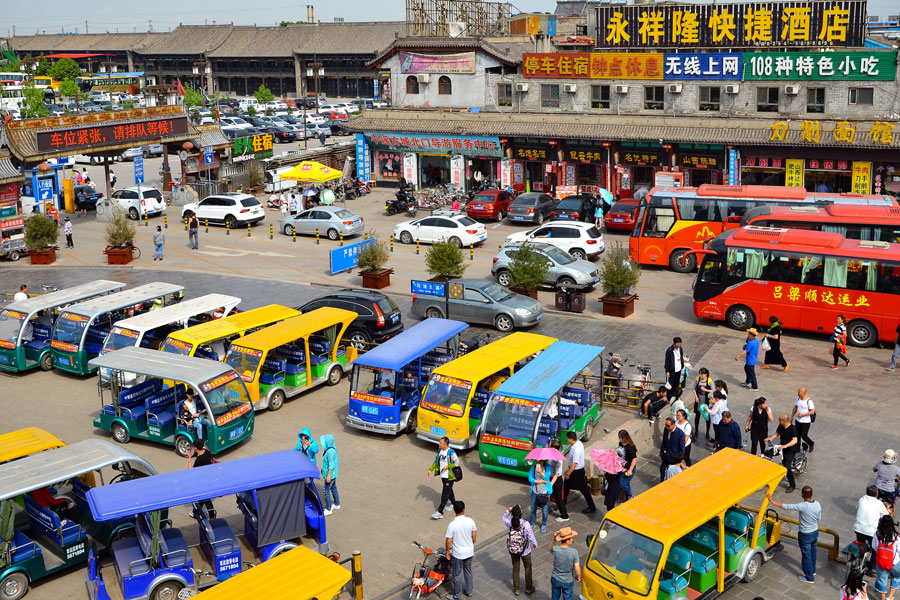
Cars are not allowed inside the walls of Pingyao Ancient City, so once you enter through the gates, movement slows down to walking pace. The lanes are narrow, stone-paved, and designed for the scale of a county town from the Ming and Qing dynasties. The major Pingyao sightseeing attractions sit close together, and the old city is small enough to be crossed on foot with ease.
Public Transport
Buses and Shuttles
Outside the walls, local buses handle the practical connections. The multiple city routes link the railway stations, the long-distance bus station, and the main entrances of the ancient town.
Bus No. 108 is the key one for visitors, running directly from Pingyao Ancient City Railway Station into town. Tickets are very inexpensive, generally between CNY/RMB 1 (approximately $0.15 - €0.12 - £0.10) and 3 ($0.45 - €0.36 - £0.32), and services run from early morning into the evening.
Metro
Pingyao does not have a metro network, as the town is too small to warrant one. Transport here remains straightforward.
Other Transport Options
Taxis
Pingyao has over 100 listed taxis, useful for transfers between stations, hotels, and areas outside the walls. They are not allowed inside the ancient city, so you will always be dropped at a gate. Daytime fares start at around CNY/RMB 6 (approximately $0.85 - €0.73 - £0.64) for the first three kilometres, rising at night. A typical ride from Pingyao Ancient City Railway Station to the South Gate costs about CNY/RMB 30 (approximately $4 - €4 - £3).
Car Rental
Car rental only matters if you plan to leave Pingyao.
Surrounding sites such as the Qiao Family Compound are about an hour away. So, hiring a private car is often the easiest way, with fares around CNY/RMB 100 (approximately $15 - €13 - £11) for that trip.
Inside Pingyao itself, a car has no role once you are within the ancient walls.
Other Modes of Transport
Pingyao’s most characteristic transport is slower and closer to the city’s historic texture.
Battery-powered sightseeing cars operate in the old city, charging about CNY/RMB 75 (approximately $10 - €9 - £8) for a complete circuit. CNY/RMB 30 (approximately $4 - €4 - £3) is for shorter rides. These prices are per person.
Private hire is also possible, around CNY/RMB 120 (approximately $17 - €15 - £13) for an eight-hour day.
Rickshaws remain one of the most recognisable means of transportation. Often driven by locals in costume, their full-day prices usually reach around CNY/RMB 180 (approximately $26 - €22 - £20).
Bicycles are another common option, rented near the North Gate or through hotels. Basic bikes cost as little as CNY/RMB 10 (approximately $1.50 - €1.20 - £1.10) for several hours, though deposits are required.
Human tricycles and small electromobiles also circulate, keeping the old city moving without breaking its quiet rhythm.
How to Get to Pingyao Ancient City
The nearest airport to Pingyao is Taiyuan Wusu Airport (TYN), about 90 to 100 kilometres away from the city. Travellers can choose to take a long-distance bus from Taiyuan’s Jiannan Bus Station. Buses run from morning to evening, and the trip takes about two hours. Alternatively, they can travel by train from Taiyuan Railway Station or Taiyuan South Railway Station.
Bullet trains from Taiyuan South reach Pingyao in roughly 30 to 40 minutes. The older Pingyao Railway Station sits close to the West Gate, around a kilometre from the ancient city. The standard trains run from cities such as Beijing, Xi’an, Chengdu, and Taiyuan.
For high-speed travel, Pingyao Ancient City Railway Station is about 10 kilometres (6.2 miles) from town. It connects directly to Beijing West and Xi’an North.
The fastest option from Beijing is the bullet train, taking around 4 hours. From Shanghai, the quickest route is by high-speed rail with a transfer through a major centre such as Taiyuan or Xi’an. There are no direct flights or airport links from Shanghai to Pingyao itself.
Languages Spoken in Pingyao Ancient City
Even though Mandarin is the official language in Pingyao, many locals speak the Pingyao dialect, part of the Jin Chinese language. For English, most visitors should rely on simple phrases, translation apps, or gestures.
The Pingyao dialect is one of the city’s strongest cultural markers. It is a distinct local form of speech, with its own pronunciation and vocabulary, difficult even for Mandarin speakers. Linguists note that it preserves older phonetic details that have vanished in standard Mandarin, including entering tones and retroflex sounds. In some instances, words may shift completely.
Its origins trace back to the historic Jin region of China, shaped over centuries by geography and local tradition. Despite modern migration and the dominance of Mandarin, the dialect remains widely spoken among locals. Hearing it in Pingyao’s lanes and courtyards is part of what makes the city feel so rooted in its own past.
Security in Pingyao Ancient City
Pingyao is a calm, tourist-friendly city, widely considered safe even for solo travellers, including women. However, it is advisable to keep bags zipped, avoid displaying valuables, and stay on well-lit streets after dark, as is common practice in any tourist city. The old city feels peaceful at night, but narrow alleys can be disorienting if you wander too far from the main lanes.
Local transportation options are safe; battery carts, electric scooters, bicycles, and rickshaws are common. It is best to agree on a fare before setting off if you are not using a metered taxi. It is recommended to drink bottled water rather than tap water. For emergencies, the police number is 110, and the Pingyao tourist hotline is +86 354 5681622.
Pingyao’s sense of security is also part of its history. During the Ming and Qing periods, merchants relied on professional armed escorts known as biaoju. The Ancient Security Guard Company, founded in 1885, is now a museum.
Respectful behaviour is important in this community. When visiting temples, modest dress is appreciated, and maintaining a quiet voice in historic halls contributes to a serene atmosphere. It is also courteous to seek permission before photographing local residents. With basic caution, Pingyao is easy to navigate, and its atmosphere remains welcoming, balanced, and secure for visitors.