

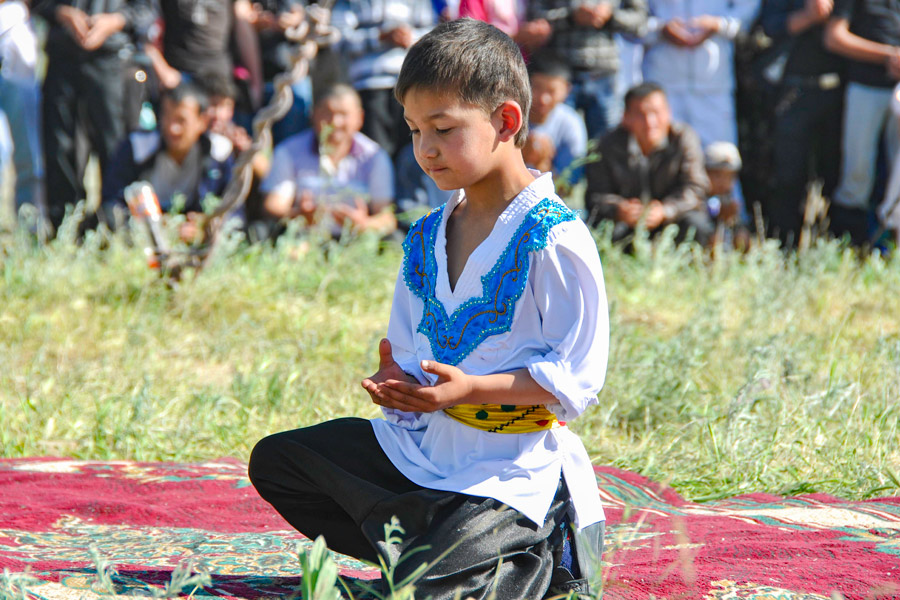
Religion, especially Islam, plays an important role in the lives of most Uzbek families. Over centuries, it has shaped everyday life, rituals, and core social customs. Many Islamic traditions in Uzbekistan emerged in the Middle Ages and have remained largely unchanged to this day.
One of the most respected traditions is the Muslim custom known as Sunnat Tui. This is a family and community celebration held to mark circumcision, known as Khatna-kilish. The ceremony is usually performed for boys aged 3, 5, or 7, and more rarely at the ages of 9 or 11.
Preparations for Sunnat Tui begin long before the event itself, often from the moment a child is born. Parents, relatives, and close friends work together to make the occasion meaningful and memorable. Festive tables are prepared, national costumes are chosen, music is arranged, and traditional games and competitions are planned.
The Meaning of the Khatna-kilish Ceremony
Khatna-kilish is performed for Muslim boys and is seen as an important stage in the life of a future man. The name of the ritual literally means “to perform circumcision” (khatna – from the Arabic “to cut”, qilish – in Uzbek “to do”).
In Islam, this practice belongs to the Sunnah. Sunnah (Arabic السنة) refers to the sacred tradition based on the words and actions of the Prophet Muhammad, which serve as a guide for Muslims.
Circumcision is widely regarded as mandatory in Sunni Islamic tradition, as it forms part of observing fitra (from the Arabic الفطرة), a concept commonly understood as natural physical purity. Fitra is described in the hadiths – religious accounts that convey moral guidance based on the life of the Prophet. References to circumcision appear in the main collections of hadiths, known as Kutub al-Sitta (“Six Books”), as well as in other works, including Adab al-Mufrad (“Selected Rules of Ethics”).
In the past, Khatna-kilish was performed by a barber or traditional practitioner. Today, the tradition has adapted to modern life. The procedure is now carried out in medical institutions by professional surgeons and is performed under anaesthesia.
How Sunnat Tui Is Celebrated
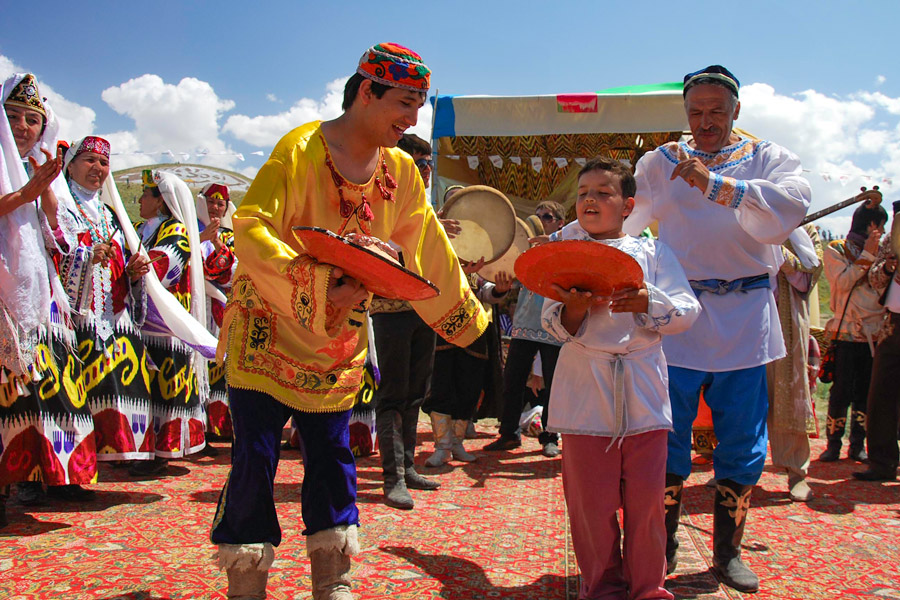
Preparations for Sunnat Tui
Preparation for Sunnat Tui can last several years. One of the earliest stages involves preparing fabrics and sewing national clothing, blankets, bed linen, and festive outfits for the child. On the day before the circumcision, these items are placed in a chest. This women-only ritual is called tahurar. It is accompanied by congratulations, warm wishes, and shared treats.
On the same day, on the eve of Sunnat Tui, a gathering of male elders known as maslahat osh takes place at the local chaykhana (teahouse). During this meeting, Uzbek pilaf is served, the upcoming celebration is discussed, and responsibilities are assigned among members of the mahalla (the local neighbourhood community).
Preparatory rites also include tandir kurdi and sukhim suydi – traditional practices connected with preparing the tandir oven and processing meat for the festive meal, although their names and details may vary by region.
Sunnat Tui Day
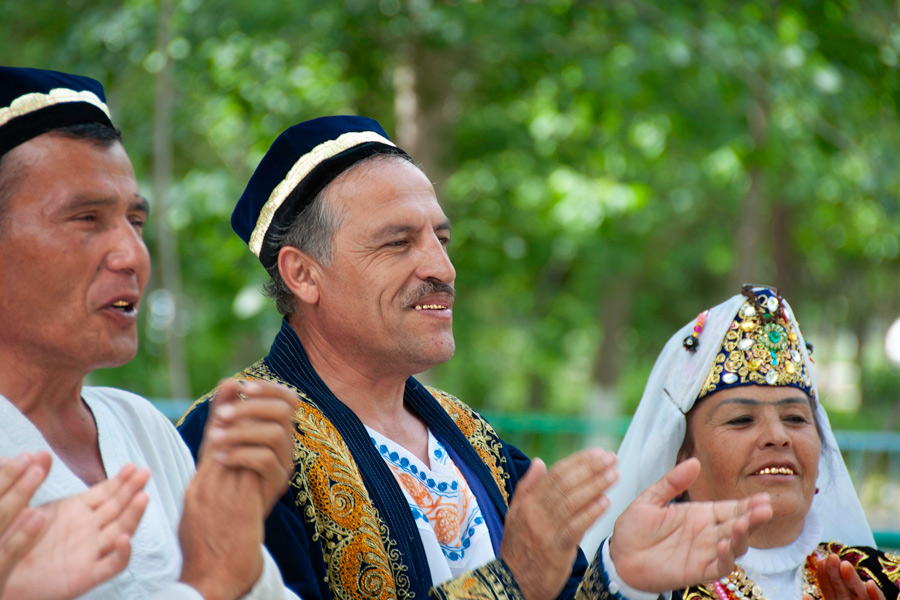
The celebration begins with a gathering of men, including aksakals (respected community elders), imams (spiritual leaders), and close relatives of the family. Verses from the Koran are read, and blessings are offered for the boy as he enters a new stage of life.
Next comes the congratulatory part of the celebration. The child receives gifts from relatives and neighbours. In the past, there was a custom of seating the boy on a foal specially raised for the occasion. In some remote villages of Uzbekistan, this tradition is still practised today.
The ceremony ends with a festive meal, where Uzbek pilaf takes centre stage. One or two large cauldrons (kazan) of pilaf are usually prepared, often exceeding 100 kilograms in total. This quantity is needed to feed all the guests who come to congratulate the boy on this important day.
Throughout the celebration, Uzbek national music, singing, and dancing create a lively atmosphere. On the same day or the following one, traditional games and competitions such as kurash and kupkari are often held.
After the Sunnat Tui Celebration
Once the celebrations are over, a mandatory stage of the tradition begins for the boy and his family. This period is called chilla, also known as Khatna-chillasi. It lasts for about a week and is intended for the child’s physical recovery.
During chilla, the boy is advised to stay in bed, remain close to family members, and avoid going outside. At the same time, the household traditionally refrains from receiving guests.
When the child has recovered, the bed-making ceremony known as joy yigish takes place. This ritual symbolises a return to everyday life.
The Role of Sunnat Tui in Modern Uzbekistan
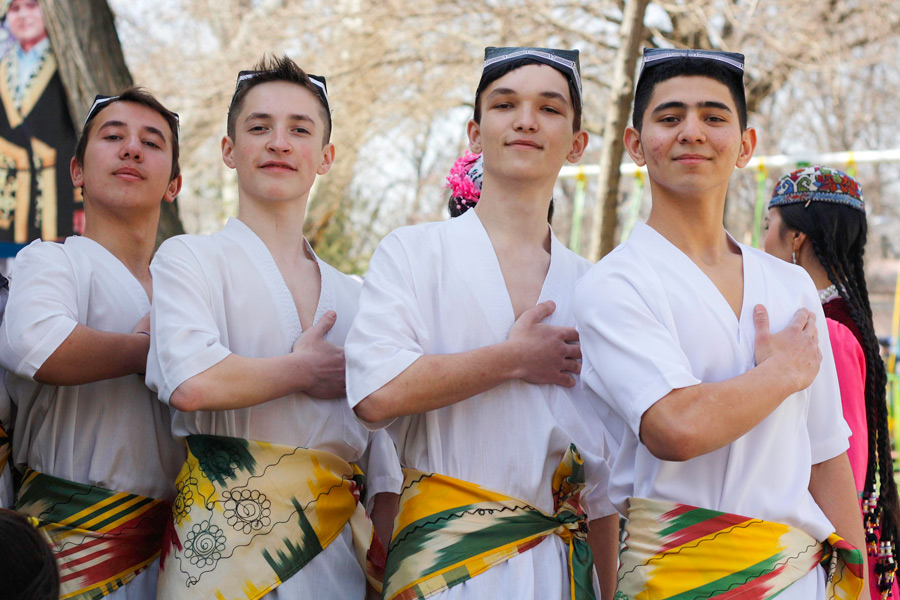
In Uzbekistan, Sunnat Tui remains one of the most socially significant rituals. Its importance in family and community life is difficult to overstate. Both the ritual itself and the celebrations surrounding it are widely seen as an essential part of a boy’s coming of age.
The celebration is usually held on a large scale, especially for firstborn sons. For subsequent sons, Sunnat Tui may be more modest. Since the ritual can be performed at different ages, many families choose to hold one celebration for several children at once.
Relatives and neighbours always attend Sunnat Tui with gifts and money. It is commonly believed that the closer the family relationship, the more valuable the gift should be. Most often, gifts include toys or clothing, although furniture and household appliances may also be given. For families who cannot organise a celebration on their own, as well as for boys from orphanages, charity Sunnat Tui celebrations are often arranged. These events are supported by the mahalla, the state, or private sponsors.