

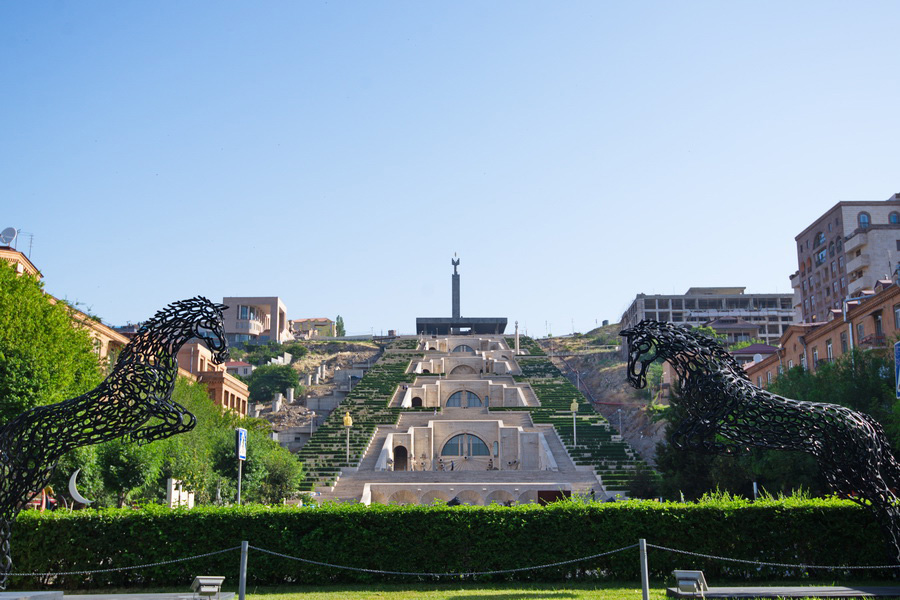
The Great Cascade
There is no similar structure anywhere on the post-Soviet territory. At first sight it is difficult to define its genre: The Cascade is neither a monument nor a building.
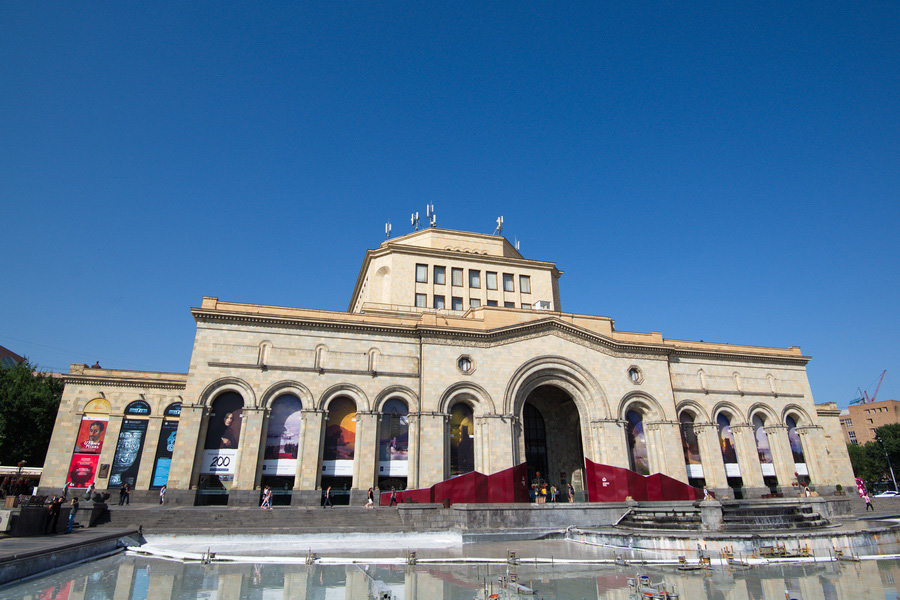
The State Museum of History of Armenia
The State Museum of History of Armenia was founded in 1921 and of the Museum complex on the Republic Square occupying its two ground floors. The Museum collection has about 400,000 exhibits.
The National Gallery of Armenia
The State Picture Gallery of the country is a part of the big Museum complex on the Republic Square. It is one of the largest museums on the territory of the CIS, and the world's largest in the collection of Armenian fine arts.
Museum of History of the City of Yerevan
The oldest museum of Armenia created in 1931 has collected about 80 thousand exhibits which represent various periods of Yerevan existence from the times of the city's beginning to present days.
Republic Square
Republic Square is the central square of the city created under the guidance of architect A.Tamanian in 1926. It had been called Lenin Square until 1991. The square is well-known for its monumental national architecture.
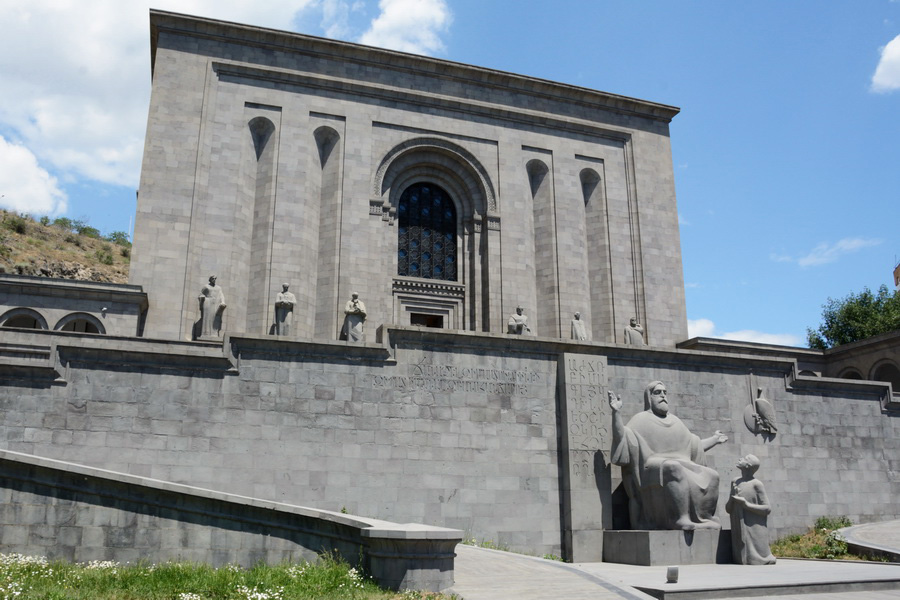
Mesrop Mashtots Matenadaran
“Matenadaran” means a "book-depository" in ancient Armenian. Indeed, Matenadaran is the pride of Armenian culture, the world's largest storage of ancient manuscripts. It towers over Mesrop Mashtots Prospect in the centre of Yerevan.
Alexander Tamanian Museum
The architect Alexander Tamanian is the true father of Yerevan.
Opera and Ballet Theatre
One of the most outstanding Yerevan landmarks is the Opera and Ballet Theatre. Located in the heart of the capital it was designed by the architect Alexander Tamanian who connected two auditoriums in a uniform semicircular building in unusual manner.
Victory Park
On the green space of Norksk height is located the Victory Park or “Akhtanak” Park dedicated to the victory of the USSR in the Second World War. It is one of favorite places Yerevan citizens.
Sergey Paradzhanov Memorial Home
Sergey Paradzhanov, the film director who glorified Armenia , is one of the most outstanding directors of the present time who created the modern language of cinema, the artist, whose art has no analogues in the world's art.
Khachaturian Memorial Home
The greatest composer of the present time, Aram Khachaturian is especially esteemed in his homeland as the genius who presented ancient Armenian folk music to the world in the new light. The immortal glory of the composer brought the pearls of his work - his ballets known all over the world - “Gayane” and “Spartacus”, his music to Lermontov's drama "Masquerade" and many others.
David of Sasun
In the center of the railway station square towers the monument to David of Sasun – the hero of Armenian folk epos who personified the freedom-loving nature of Armenians for centuries.
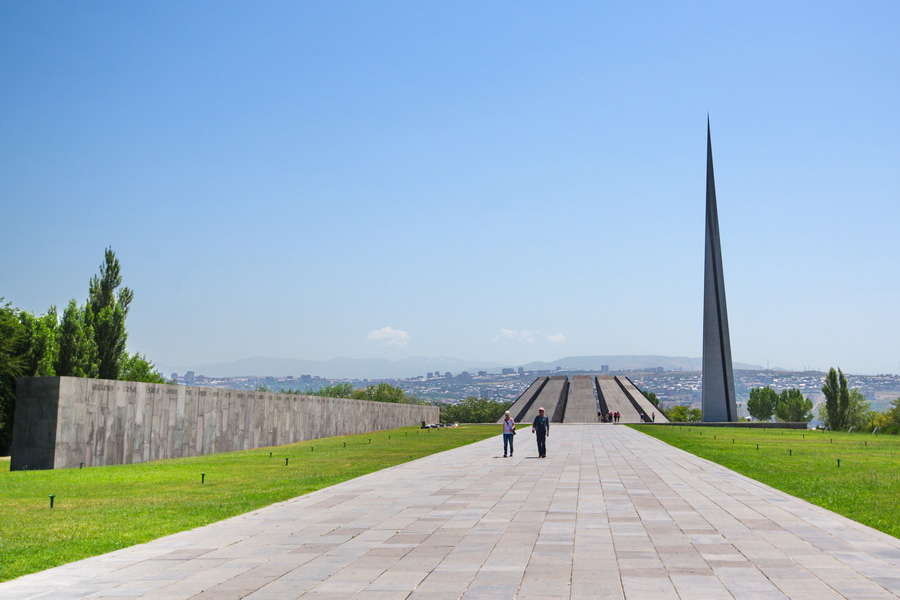
Tsitsernakaberd
This is the monument to the victims of the genocide of 1915. It was erected in 1967 on the hill top on Tsitsernakaberd plateau to the east of the city center.
Museum of Genocide of Armenians
Near the mausoleum there is the Museum of the Genocide of Armenians. It was opened in 1995 when the 80 th anniversary of the genocide of Armenians was marked.
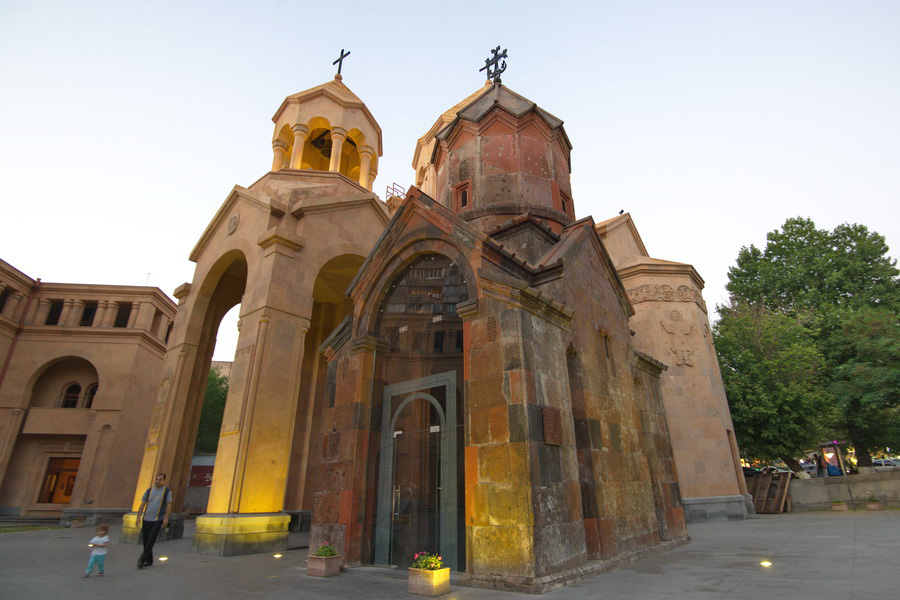
St. Katogike Church
This church in the form of simple basilica without a dome was constructed in 1693-95 and used to be one of the largest churches of Yerevan.
St. Astvatsatsin Church
The ancient St. Astvatsatsin church suffered badly from the destructive earthquake of 1679 and in the end of the 17 th century was restored on the money donated by local residents.
St. Zoravor Church
St. Zoravor church is one of the oldest churches in Yerevan. Originally it was named after Astvatsatsin (the Virgin). The church was erected in Shaar district of old Yerevan.
St. Sargis Church
From the times of early Christianity right across Erebuni fortress there was a monastery which comprised the churches of St. Sargis, St. Gevork, and St. Akop.
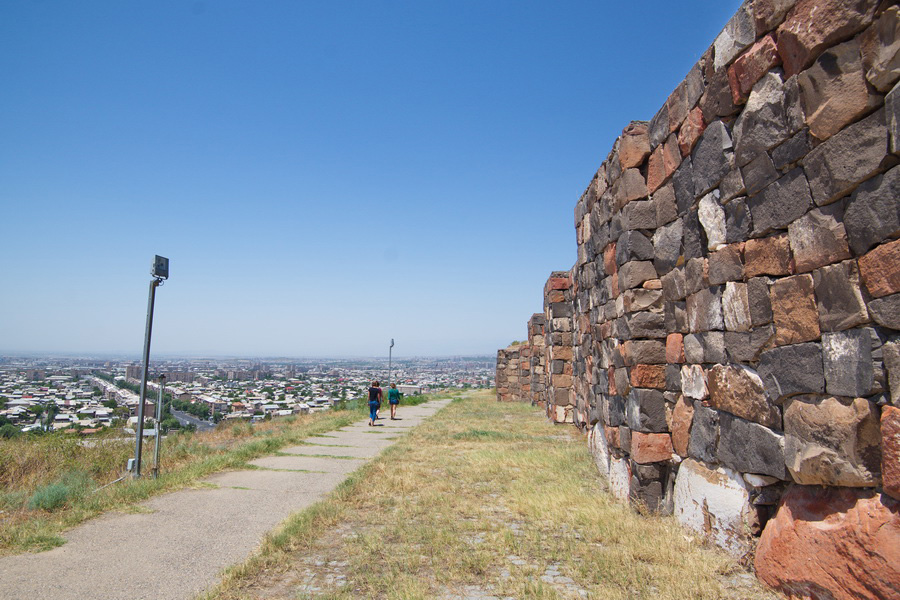
Erebuni Fortress
The history of ancient Yerevan begins with Arin - Berd hill in the southeast part of Yerevan where archeologists restored the ruins of Erebuni, the ancient fortress, which gave city its life. Until the first half of the 20 th century nobody had known about Erebuni.
Erebuni Museum
Erebuni Museum was opened in 1968 in the honor of the city of Erebuni 2,750 th anniversary. It is situated at the foot of Arin-Berd hill; there you will see a number of valuable objects of Urartu culture.