
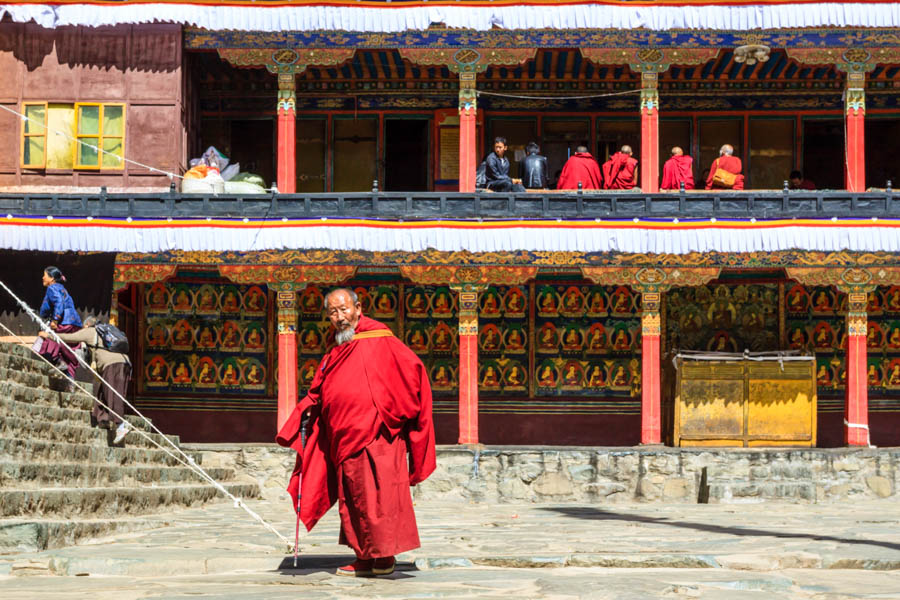
Tibet is one of the most distinctive regions in China and across the wider world. The plateau rises to an average altitude of around 4,800 metres above sea level and borders the Himalayas to the south, home to the planet’s highest peaks. The region is inhabited by an indigenous population with a long-established culture and a form of Buddhism unique to Tibet. Together, these elements shape a landscape where historic monasteries stand against the backdrop of snow-covered mountains.
We offer a range of tours in Tibet, including classic cultural programmes focused on the landmarks of Lhasa, as well as itineraries that involve trekking across high passes to remote monasteries and, for those seeking a greater challenge, routes leading to Everest Base Camp. Explore our Tibet tour programmes to find the format that best matches your interests and travel goals.
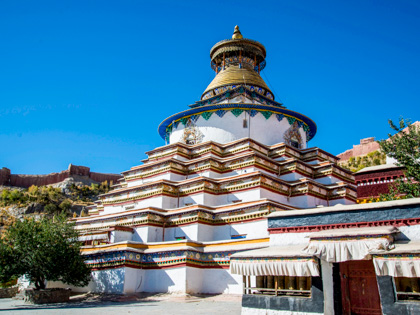
A remarkable journey across the Tibetan Plateau, where ancient palaces of the Dalai Lama, remote Buddhist monasteries, high mountain passes, sacred lakes, and glaciers lead to one of the world’s most breathtaking sights - the view of Mount Everest.
Lhasa Yamdruk Lake Gyangtse Shigatse Tingri Mount Everest View Rongbuk Monastery Lhasa
Details8 Days | Private | All year round from US$ 1,345 per person
All tours to Tibet begin with arrival in Lhasa, the regional capital. The city can be reached by air from major Chinese hubs such as Beijing, Xi’an, and Shanghai. An alternative option is travel by train along the Qinghai–Tibet Railway, the world’s highest railway line, which crosses mountain landscapes and high-altitude lakes on its approach to Lhasa.
Travel to Tibet requires a special permit, which must be arranged in advance and, in some cases, in conjunction with a Chinese visa. Under local regulations, independent travel within Tibet is not permitted. Visits are organised with licensed guides and designated transport, as the region is classified as a border area.
Because of the high elevation, acclimatisation is essential. Lhasa itself lies at an altitude of around 3,650 metres, while many major sites and trekking routes are situated between 4,000 and 5,300 metres above sea level. The climate is generally dry, with significant temperature variations between day and night. For these reasons, the most suitable period for travel to Tibet is from May to October, although conditions for high-altitude trekking are more limited.
These factors place certain constraints on travel, but they are outweighed by the scale and character of the Tibetan landscape. For many visitors, a journey to Tibet remains a lasting and distinctive experience.
