

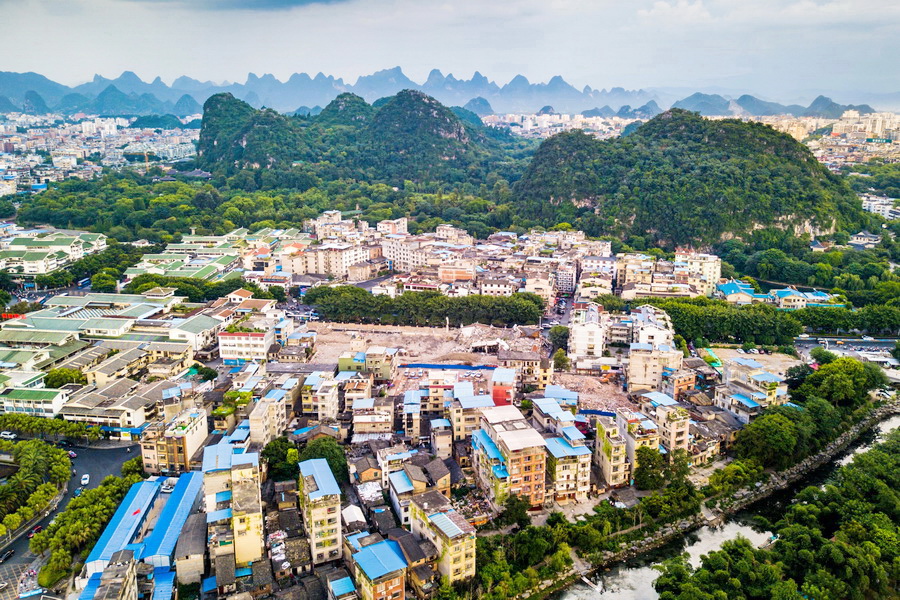
Guilin (桂林) is a city in southern China, in the autonomous region of Guangxi, out of this world. Known for some of the most striking natural scenery in the country. Its name is closely linked to the shapes of karst hills, the curves of the Li River, and the calm waterways that have inspired artists and poets for centuries. Here, green slopes are reflected in still water, while unusual conical rock peaks rising dramatically from lush valleys and crystal-clear waters are shrouded in morning mist.
Over time, the city developed as a regional administrative and cultural centre, shaped by its position along important river routes. The Li River (Li Jiang, 漓江) remains its main natural landmark, and walks along the water allow you to see chains of hills, villages along the banks, and a peaceful rural landscape that has remained largely unchanged for centuries. Whether regarded as a romantic getaway, a place for cultural discovery, or an adventure for hiking, this enchanting destination leaves an indelible mark on visitors' minds.
Guilin Tours

Guilin can be visited as a standalone destination or included as part of a longer journey through China.
The 4-Day Guilin Highlights Tour is a strong option for a first visit to the region. This itinerary focuses on key natural and cultural attractions in Guilin and its surroundings. The programme includes a cruise on the Li River with views of karst hills, walks around the city, and visits to caves and viewpoints, as well as a trip to rural areas with traditional villages. This format makes it possible to gain a clear sense of the region’s landscape and atmosphere in just a few days.
For travellers drawn to the gastronomic side of travel, the 13-day China Food Tour is an excellent choice, as Guilin is included as one of the iconic centres of southern Chinese cuisine. The route combines landscape exploration with tasting local dishes, and each full day ends with a generous dinner prepared from fresh local produce. On this tour, the city is revealed through distinctive flavour combinations and a deeper understanding of the region’s culture.
Best Time to Visit Guilin
The local climate plays a key role in how Guilin’s landscapes are perceived.
Spring brings mild temperatures ranging from 15 to 25°C (59 to 77°F), accompanied by moderate rainfall and stable visibility. This season highlights the breathtaking karst hills and the Li River at their most vibrant, creating ideal conditions for cruises and outdoor explorations. Key holidays include the Qingming Festival (early April) and Labour Day and Golden Week (May 1-7).
Summer, on the other hand, is marked by high humidity and frequent rainfall. Daytime temperatures often reach 28 to 34°C (82 to 93°F), and short showers may disrupt plans. At the same time, this is when the hills appear at their greenest and the river is at its fullest, appealing to travellers drawn to lush scenery. Festivities include the Dragon Boat Festival in June, the Li River Fishing Fire Festival (usually in June) and the Qixi Festival in August.
Autumn features delightful weather and temperatures between 15 and 25°C (59 to 77°F), with moderate rainfall and clear skies. This season is perfect for outdoor activities and sightseeing. The rich colours of fall foliage enhance the landscape's beauty. Major holidays are the San Yue San Festival (March 3, lunar calendar), the Mid-Autumn Festival (late September or early October) and National Day (October 1).
Winter in Guilin is cool but largely frost-free, with daytime temperatures typically ranging from 5 to 12°C (41 to 54°F). Tourist numbers drop noticeably, and rainfall is rare, although overcast skies and bare vegetation give the landscape a more muted appearance. The Chinese New Year (Spring Festival) usually falls in January or February, and the Lantern Festival is celebrated shortly after.
History of Guilin
Guilin’s history encompasses a long and intricate timeline, beginning with early human settlement over 30,000 years ago and continuing through successive stages of cultural and urban development.
Archaeological evidence indicates prehistoric settlements, while later periods, including the Xia (c. 21st–16th century BCE), Shang (c. 16th–11th century BCE), and Zhou (c. 11th century BCE–771 BCE), saw the region shaped by early southern cultures and gradually integrated into the broader historical landscape of China. The construction of the Lingqu Canal in 214 BCE marked a significant turning point, linking Guilin to major river systems and enhancing its role in regional trade and administration.
Over time, the city’s natural setting became a prominent subject in literary, artistic, and scholarly traditions, while imperial-era planning during the Ming (1368–1644) and Qing (1644–1912) dynasties left a lasting imprint on its urban form. In the modern period, Guilin’s historical and natural heritage has become a focus of preservation, including sites recognised as part of the UNESCO World Heritage framework.
Things to Do in Guilin
Guilin offers a variety of ways to experience the city’s natural setting, historical landmarks, and everyday life. We have handpicked some of the most thrilling activities and enchanting places to elevate your adventure in this picturesque city.
Places to Visit in Guilin
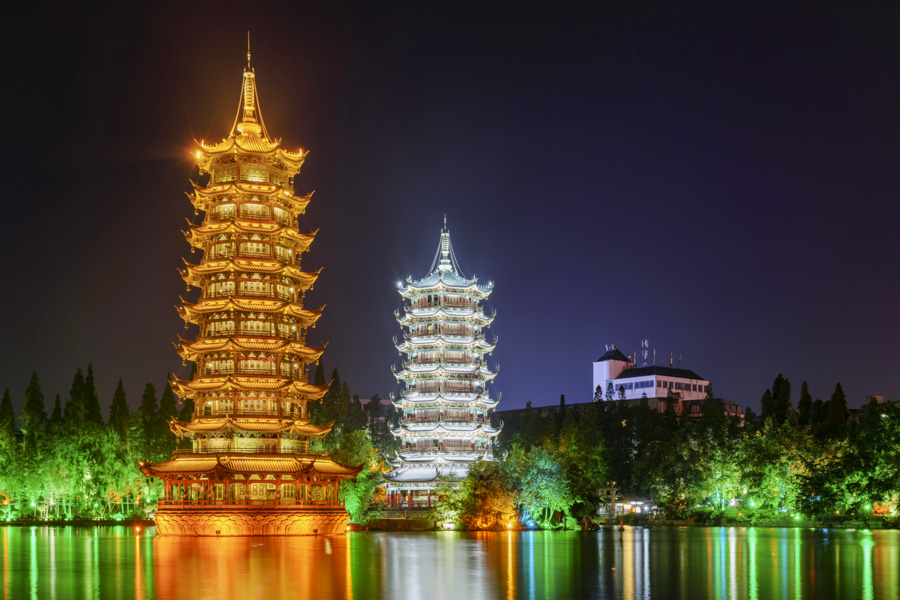
The Sun and Moon Pagodas (日月双塔), a notable Feng Shui site, stand beside the lake in Riyue Shuangta Cultural Park and are among the city’s most recognisable modern landmarks. Their reflections in the still water are especially striking at sunset and after dark. Visitors can climb the stairs to the top floors.
Scenic Area of Guilin
The area's natural landscape features prominent mountains, rivers, karst caves, historical sites, and stone carvings, which are known as the Scenic Area of Guilin.
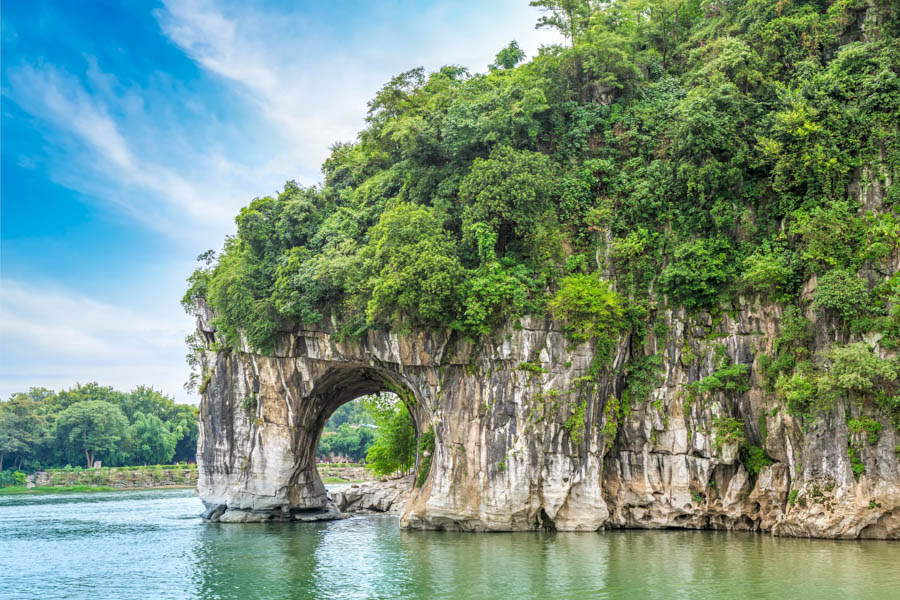
One of Guilin’s best-known symbols is Elephant Trunk Hill (象鼻山), located at the confluence of the Li and Taohua rivers. The hill’s distinctive shape, resembling an elephant drinking from the river, has made it a long-standing emblem of the city.
One of the largest and most popular scenic areas is Seven Star Park (七星公园), located on the east bank of the Li River. The park is named after seven peaks said to resemble the Big Dipper constellation. Within its grounds, visitors can see the historic Flower Bridge, Putuo Mountain, and Camel Hill, as well as the Seven-Star Cave, a karst cave notable for its striking stalactites and stalagmites.
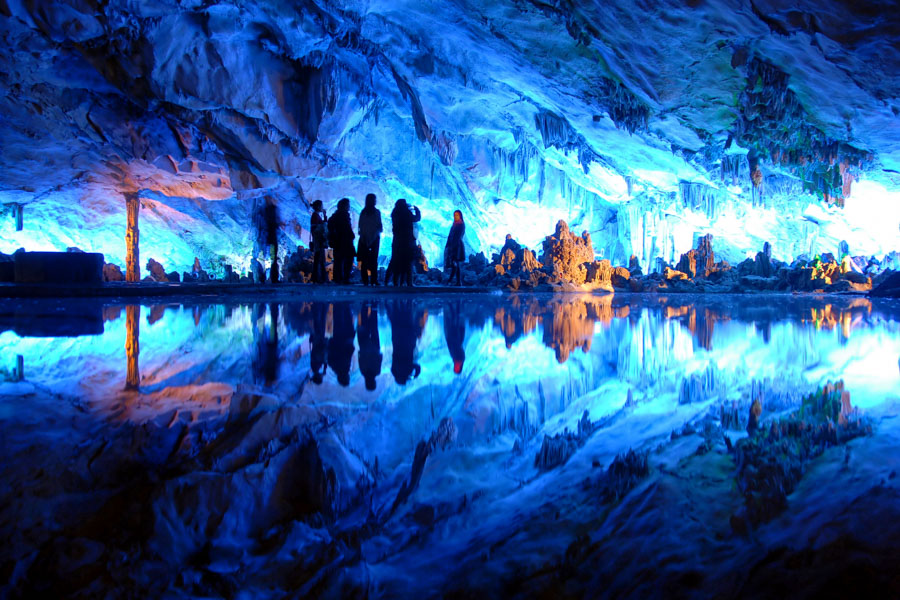
Another highlight is the Reed Flute Cave (芦笛岩), located 5 kilometres from the city centre and one of Guilin’s most remarkable natural attractions. Inside, a well-lit walking pathguides visitors past unusual stalactites and stalagmites, with carefully designed lighting enhancing the shapes and textures of the cave interior.
A serene atmosphere can be found in Fubo Hill Park (伏波山公园), located on the west bank of the Li River. This park is centred around Fubo Hill, which emerges from the water and is surrounded by rocky outcrops and walking paths. Visitors can enjoy expansive views over the river and the city, while the park features stone inscriptions and carved reliefs dating from different historical periods.
Folded Brocade Hill, or Diecai Hill Park (叠彩山公园), is known for its rocky cliffs, observation platforms, and pagodas. From its higher vantage points, sweeping views encompass both the urban areas of the city and the karst hills beyond.
In the western part of Guilin, West Hill Park (西山公园) harmoniously combines natural beauty with historical remnants. The site includes the ruins of the Xi Qingling Temple (西山西庆林寺), and its slopes are dotted with Buddhist images carved directly into the rock.
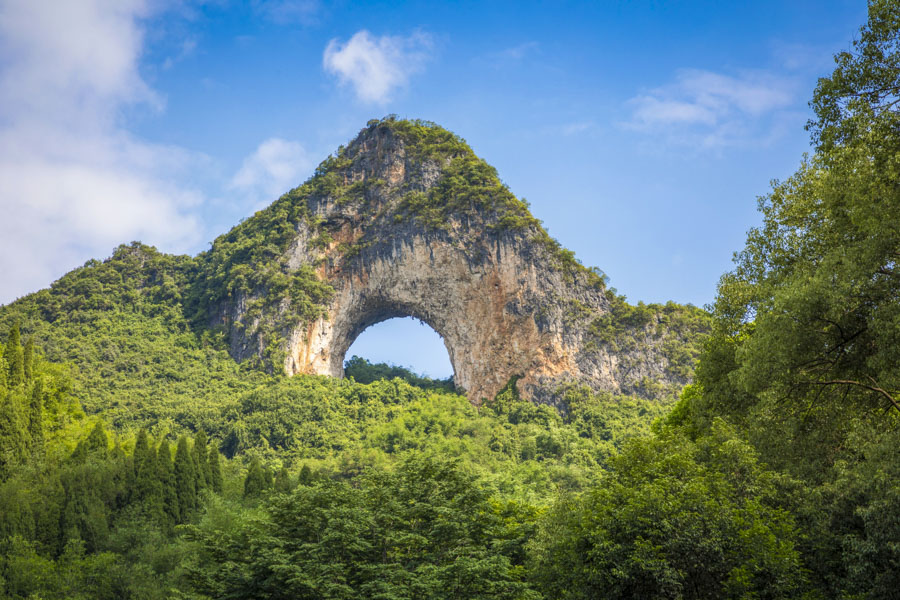
The four other scenic areas to appreciate the mountain karst landscape are located within the city or further away from Guilin city centre: Solitary Beauty Peak (located within the walls of Jingjiang Princes' Palace grounds), Nine Horse Fresco Hill (about 7 kilometres), Xianggong Mountain and Moon Hill (both around 20 kilometres).
Together, these routes and places reveal different facets of Guilin, from natural scenery and historic sites to everyday urban life.
Entertainment, Parks, and Shopping in Guilin

Guilin city offers a wealth of daytime activities, and your only challenge will be deciding which ones to enjoy. As night falls, evening performances, natural settings, and places to explore after dark offer a broader view of how Guilin’s cultural and urban life continues beyond the daytime.
Entertainment
A cruise on the Li River is one of the city’s signature experiences. Travelling along the river offers views of karst hills, green terraces, and rural landscapes that are widely associated with the classic scenery of southern China.
In central Guilin, an extensive network of waterways known as the Two Rivers and Four Lakes (两江四湖) offers a different perspective on the city. This circular route includes the Li River (漓江) and the Taohua River (桃花江), along with Mulong Lake, Gui Lake, Rong Lake, and Shan Lake, which together form a continuous water belt.
Luxury cruise ships rated three, four, and five stars navigate these routes, offering a sought-after way to experience the city from the water, also at night. Standard cruises usually last between 60 and 90 minutes and may cover one or several sections of the network. Tickets are sold at Guilin Fisherman's Wharf, Wenchang Bridge Pier (文昌桥码头) and in the Liberation Bridge area, which encompasses Zhiyintai Pier (知音台码头), Riyue Bay Pier, and Liu Ma Fang Pier (六马坊码头). The boats used for these cruises are designed for sightseeing, with seating and large panoramic windows.
Guilin Zoo is a fantastic destination for both adults and children, featuring a diverse range of animals, including giant pandas and white tigers. Each animal's natural habitat has been recreated for their comfort. With an animal show and some areas where children can feed some of the animals, it offers an engaging experience for the whole family.
If you're looking to experience a moment of relaxation after sightseeing, the Guilin Fifth People's Hospital Foot Reflexology and Traditional Chinese Medicine Centre is a great place to visit. It offers English-speaking services, including Qigong, acupuncture, body and foot massages, and cupping.
Museums in Guilin
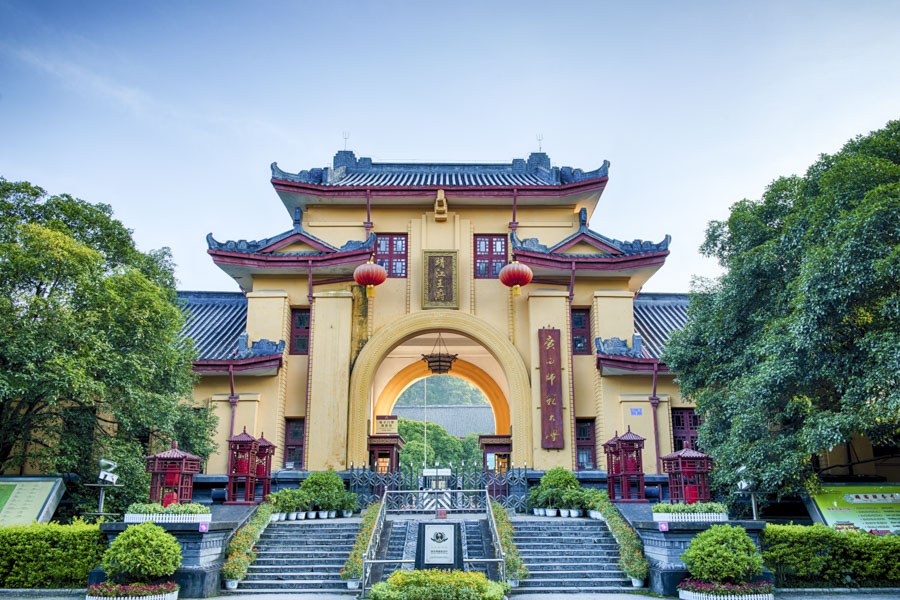
Built between 1372 and 1392 for Zhu Shouqian, the Prince of Jingjiang, during the Ming Dynasty, the Jingjiang Princes' Palace is situated in the heart of Guilin city. This palace covers a total area of 19.78 hectares (0.08 square miles) and was historically an inner-city residence surrounded by walls. Four halls, four pavilions and fourty other buildings surround the main building.Today, it functions as a museum.
The site is truly magnificent, featuring a main building that once hosted the imperial family. The layout reflects a blend of Confucian aesthetics and imperial architecture.
To enhance your understanding of the region’s history, the Guilin Museum (桂林博物馆) presents an overview of local history and culture. Its collections include artefacts from the Ming dynasty, works of painting and calligraphy, and diplomatic gifts presented to the city over time.
Address: No. 4, Xishan Road, Xiufeng District, Guilin City (西桂林市秀峰区西山路4号).
Guilin Theatres
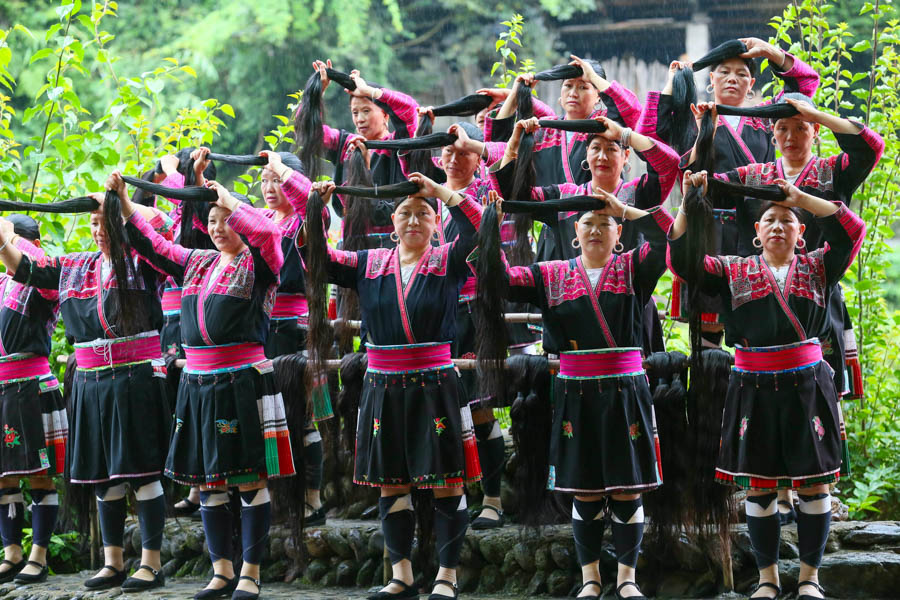
As evening approaches, Guilin gradually transitions from the bustling activity of the day into a quieter ambiance, with the focus shifting to stage performances and evening shows. The karst hills and rivers that define Guilin’s daytime landscape often play a central role in these productions, serving as a natural backdrop for music, movement, and light.
One of the best-known performances is Fantastic Guilin – A Folk Performance Inspired by Guangxi’s Ethnic Heritage, which takes place daily at the Lijiang Theatre (漓江剧院). This show celebrates the traditions of the Dong, Hongyao, Miao, Yao, and Zhuang peoples, bringing together colourful costumes, folk dances, and songs. The inclusion of acrobatics elements adds visual thrill, making the performance an engaging introduction to the region’s rich cultural diversity.
Those interested in dynamic and technically demanding productions may enjoy Dreamlike Lijiang (梦幻漓江). This acrobatic performance blends dance and theatrical elements, with a strong focus on physical expression, balance, and movement. Carefully designed lighting further enhances the visual experience, and the show is easy to follow without knowledge of the language or cultural background.
Surroundings
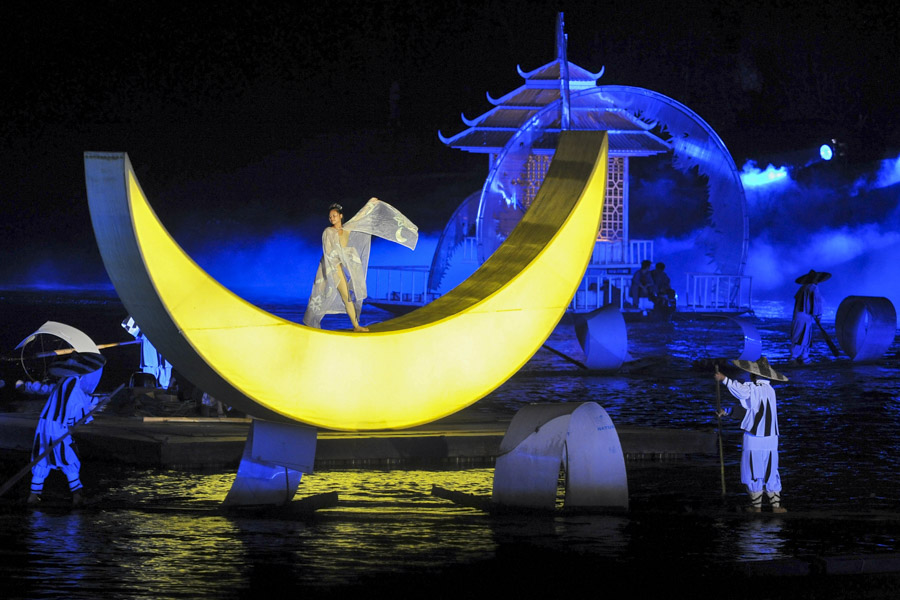
70 kilometres away from Guilin city centre, a distinct place among Guilin province’s evening events is held by Impression Sanjie Liu (印象·刘三姐) near Yangshuo. This show was created by famous cinema director Zhang Yimou.
Each of these performances offers a different way to engage with local traditions, complementing daytime exploration of the region’s landscapes and historic sites.
Parks of Guilin
Guilin is well known for its surrounding landscapes, but the city itself also offers a network of well-maintained parks.
A pleasant area for walking is Chuanshan Park (穿山公园), situated in the southern part of the city. The park features several low hills with caves, small bridges, and waterside picnic areas. Its viewpoints provide stunning vistas of the surrounding karst formations, making it a favourite location for photography.
For a more urban experience, the Two Rivers and Four Lakes, part of the scenic area, form a network of waterways in the city centre, all interconnected by bridges and landscaped embankments. In the evening, the area is softly illuminated, while early mornings are often spent by locals practising taijiquan and qigong along the water. The Sun and Moon pagodas can be seen from this area.
Shopping in Guilin
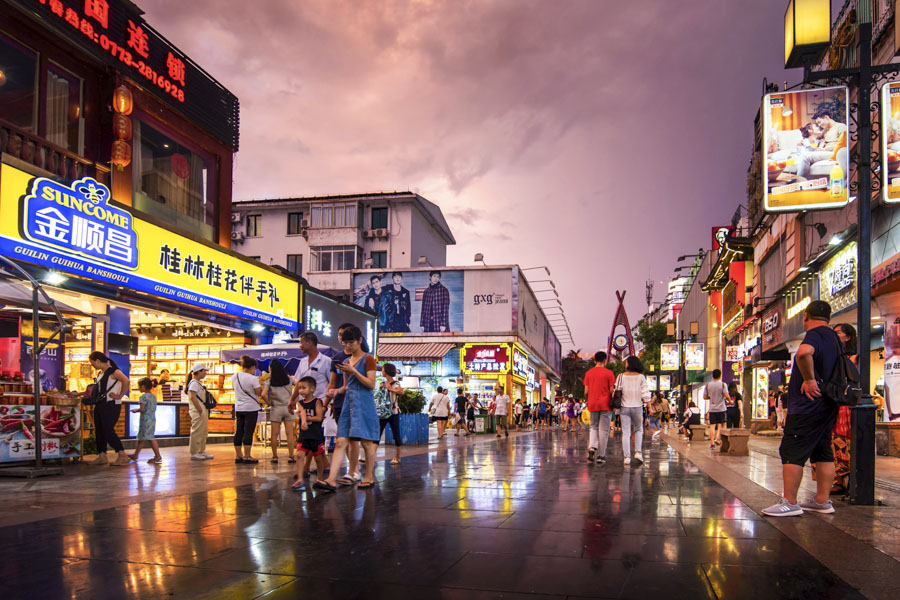
Shopping in Guilin provides insight into everyday routines, local tastes, and the social life of the city.
In the heart of the city, Zhengyang Pedestrian Street (正阳路步行街) is one of Guilin’s busiest shopping areas for clothing shops, accessory boutiques, cafés, and bars. Visitors will find fashion items, jewellery, folk crafts, and local souvenirs, while in the evening the street becomes a popular place for an evening stroll, filled with light and movement.
With a similar atmosphere but fewer crowds, Xicheng Road Pedestrian Street (西城路步行街) comes to life after sunset as a more local shopping hub.
South of the city centre lies Wayao Wholesale Market (桂林国际旅游商品批发城), which offers a wide selection of goods, including silk and textiles, embroidered accessories, jade jewellery, carved stone objects, wooden tea tables, Yixing clay teapots used in traditional Chinese tea ceremonies, and brass and bronze items.
Those interested in international brands will find several modern shopping centres along Zhongshan Middle Road (中山中路), including Wei Xiao Tang Plaza (桂林微笑堂商厦) and Dream Island Department Store (桂林梦之岛百货).
An off-the-beaten-path place to explore is the Bird and Flower Market (桂林花鸟市场), a traditional urban market specialising in plants, flowers, pet supplies, and home accessories. Colourful aquarium fish, songbirds and other small animals are sold here. Even without making a purchase, a visit offers a glimpse into a lively side of city life beyond the usual tourist routes.
Food in Guilin
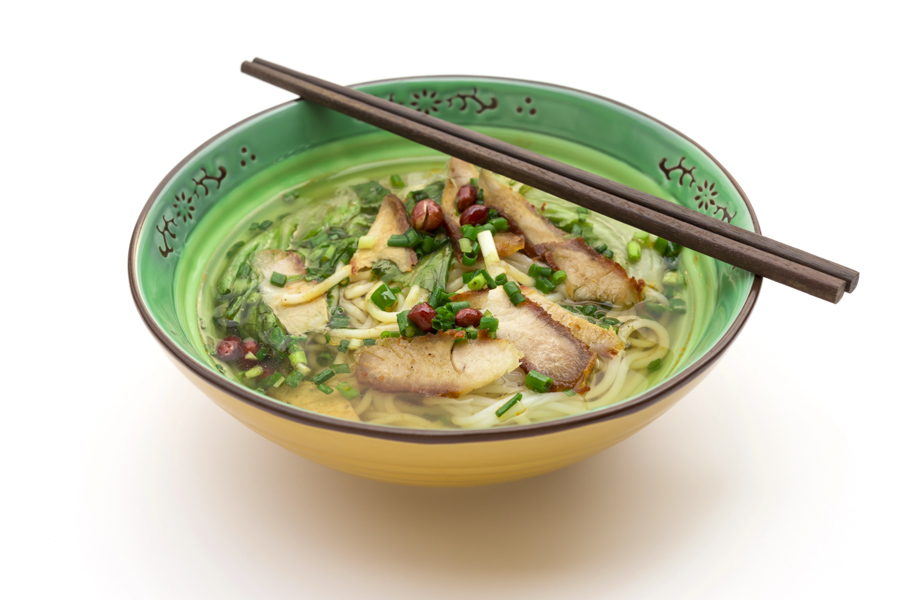
In Guilin, the local cuisine, known as Guangxi cuisine, is a fusion of two of China's culinary greats: Hunan Cuisine (湘菜, Xiāng Cài) with its bold flavours and Cantonese Cuisine (粤菜, Yuè Cài), which adds a lighter touch. Many dishes combine familiar ingredients with distinctive aromas and unexpected pairings.
Chinese Cuisine
An introduction to local food usually begins with Guilin Rice Noodles (Guilin Mifen, 桂林米粉). Served in a fragrant broth with pickled vegetables, meat, peanuts, and herbs, it is widely regarded as the city’s most characteristic dish. For those seeking something more substantial, Yangshuo Beer Fish (阳朔啤酒鱼) is a popular choice, featuring fresh river fish fried until golden and gently simmered with local beer, peppers, and aromatic herbs. Another well-known speciality is Lipu Taro Pork (荔浦芋头扣肉), where tender braised pork belly is paired with taro that absorbs the rich juices of the meat. These are the signature dishes of the city.
Additionally, a distinct group of regional dishes is prepared by cooking ingredients inside hollow bamboo trunks, which infuses a subtle smoky note into the food. This method is used for dishes such as Zhutong Fan (竹筒饭), rice with meat, mushrooms, and spices, as well as Zhutong Ji (竹筒鸡), chicken slowly cooked in its own juices.
A distinctive local drink is Guilin Oil Tea (油茶, yóu chá), a traditional speciality of the Guangxi region that resembles a light soup rather than conventional tea. It is prepared from roasted tea leaves blended with ginger, garlic, and aromatic spices.
Dining in Guilin offers a spectrum of experiences, from traditional local eateries to contemporary restaurants with signature dishes, including venues known for their stunning views of the river and the surrounding karst hills.
Restaurants
To taste the local cuisine, Agan Restaurant offers a wide range of Guilin specialities at an affordable price. You may taste them in a bustling atmosphere with locals.
Address: 2F Guantai Hotel, Zhongshan Zhong Lu, Xiangshan District, Guilin
Another popular option is Mai Xiang Fang / MC Found (麦香坊), a local restaurant chain known for its relaxed atmosphere, comfortable interiors, and filling dishes prepared with fresh ingredients. The menu includes Guilin rice noodles, grilled fish and meat, vegetable and fruit salads, desserts, soft drinks, and the locally produced LiQuan Beer (漓泉啤酒). An English-language menu is available.
Addresses:
- 12 Chuanshan East Road (桂林市穿山东路12号)
- 15 Qixing Road (桂林市七星路15号)
- 20 Fuhe Lane (桂林市伏和巷20号)
- 7 Xinyi Road (桂林市信义路7号)
You may also wish to visit Weidao Zhizhao / Taste Creation (桂林味道制造), a restaurant offering traditional Guangxi dishes. The menu includes roasted suckling pig, Jiao Hua Ji chicken, braised duck, teriyaki beef ribs, stir-fried pork with pickled cabbage, and other local specialties.
Address: 19 Lijiang East Road (桂林市漓江东路19号)
Beyond restaurants, areas such as Zhengyang Pedestrian Street, Xicheng Road Pedestrian Street, East–West Lane (东西巷), and Shangshui Food Street (尚水美食街) are lined with small cafés and food stalls.
Vegetarian Restaurants
Guilin also has several dining options suitable for vegans and vegetarians, reflecting the city’s growing variety of food choices.
Nengren Temple Restaurant (桂林能仁斋馆) is a buffet-style dining hall associated with a Buddhist temple. The selection centres on vegetables, mushrooms, and soy-based dishes, presented in a self-service format that allows visitors to choose freely from a wide range of offerings.
Address: 6 Lijun Road (桂林市丽君路6号).
Tea Houses, Bakeries, and Patisseries
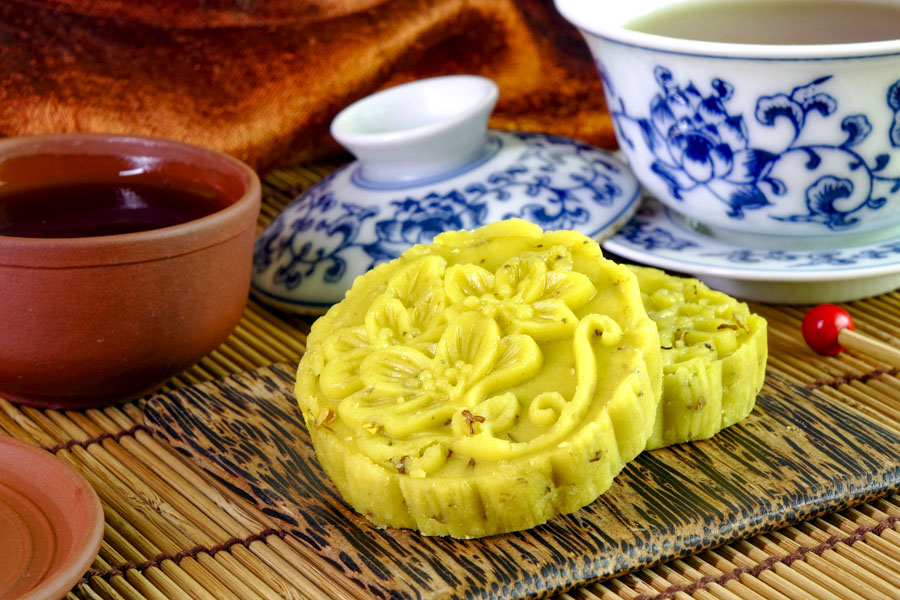
Sweet flavours appear in a small selection of understated desserts. Osmanthus Cake (桂花糕) is known for its dense, slightly chewy texture and floral aroma, while Water Chestnut Cake (马蹄糕) offers a gentle, cooling sweetness that often serves as a delicate finish to a meal. These delightful treats are available in numerous establishments throughout the city.
The Liu Sanjie tea plantation offers an unmissable experience to taste local tea in the very place where it is harvested, in an exceptional setting. It is located about 3 kilometres from the city centre, on the way to Longji Rice Terrace.
City Transport in Guilin
Guilin’s public transport network makes it straightforward to move around both the main urban areas and nearby natural or tourist sites.
Public Transport
Shuttle Buses
Tourist shuttle buses connect the city’s main transport hubs – Guilin Liangjiang Airport (KWL) and Guilin North Railway Station (桂林北站) – with major hotels and key attractions in the city centre. The routes cover a broad section of the urban road network and stop at well-known hotels such as Guilin Shangri-La, Fubo River View Resort, and Guilin Lijiang Cloud Hotel. Services usually run at intervals of around 30 to 60 minutes.
City Buses
Guilin’s city bus system is well developed and suitable for independent travel, connecting to the major sights. Most routes use a self-service fare system, with payment made on board. These routes are identified by numbers beginning with 5. Of particular interest is Sightseeing Line 1, which passes through central districts and commercial areas, stopping at landmarks such as Elephant Trunk Hill, Fubo Hill, and Folded Brocade Hill. Sightseeing buses are accompanied by a guide.
Other Transport Options
Taxis
Taxis are widely available in Guilin and are generally considered safe and affordable. They can be found at official taxi ranks in busy areas or hailed directly on the street. While some drivers have basic English skills, it is useful to ask that the meter be turned on by saying dǎ biǎo (打表).
For travellers who use WeChat or Alipay, the Didi (滴滴) ride-hailing service provides a convenient alternative.
Car Rental in Guilin
Renting a car offers flexibility for those who want to explore at their own pace the scenic areas. Well-known rental providers in Guilin include eHi Car Rental (一嗨租车), Shenzhou Car Rental (神州租车), and Ctrip Car Rental (携程租车). It is important to note that obtaining a Chinese driving licence from the authorities is necessary; therefore, this option is more suitable for travellers who have the time to stay longer to proceed with the formalities.
Bicycle Rental in Guilin
Cycling is one of the most practical ways to explore Guilin, as many natural and historical sites are located relatively close to one another. Pay-per-minute shared bicycles are widely available and can be unlocked using WeChat or Alipay by scanning a QR code. The most common services are OFO and HelloBike.
How to Get to Guilin?
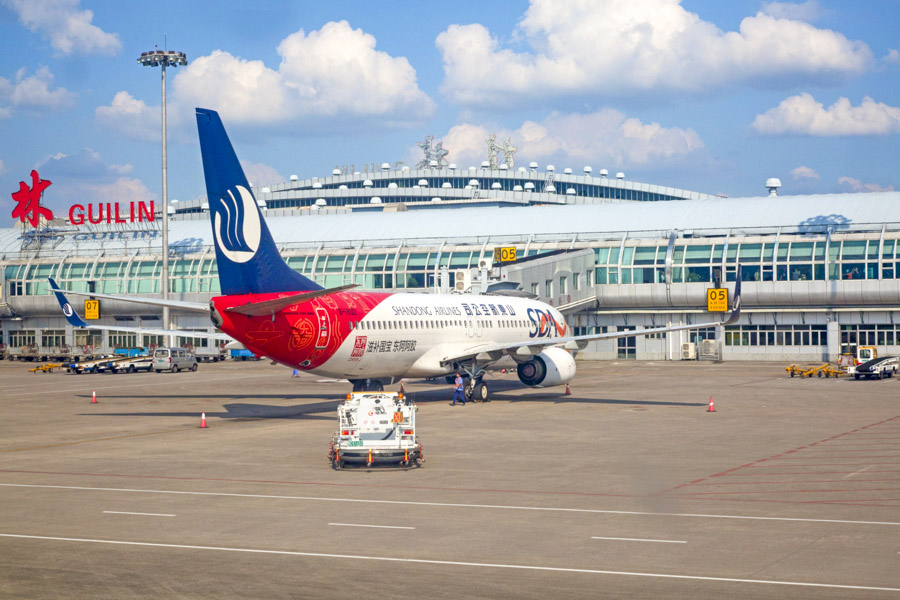
Guilin is well connected by both air and ground transport, making it accessible from major cities across China.
Air travel is served by Guilin Liangjiang International Airport (桂林两江国际机场), which operates regular domestic flights from cities such as Beijing, Shanghai, Guangzhou, Shenzhen, and Chengdu, along with a limited number of international routes.
Rail connections are particularly convenient. High-speed trains link Guilin with key regional and national centres, including Guangzhou, Shenzhen, Changsha, and Guiyang. The city is served by three main stations: Guilin North Railway Station (桂林北站), Guilin Railway Station (桂林站), and Guilin West Railway Station (桂林西站).
For regional travel, an extensive network of intercity buses connects Guilin with destinations across Guangxi and neighbouring provinces. The principal bus terminals are Guilin South Bus Station (桂林汽车客运南站), Qintan Bus Station (琴潭汽车客运站), and Guilin North Bus Station (桂林汽车客运北站).
Languages spoken in Guilin
Alongside Mandarin (Putonghua), which is the official language, many locals speak Guilinhua (桂林话) in daily communication. This regional dialect differs noticeably from standard Chinese in pronunciation, intonation, and vocabulary and can be challenging to follow even for Mandarin speakers from other parts of the country. Outside major tourist areas, English is used only to a limited extent, so mobile translation apps can be helpful for independent travel.
Security in Guilin
Guilin is generally regarded as a safe destination for visitors. Though, as in any well-visited city, basic precautions are advisable, such as keeping an eye on personal belongings and storing valuables securely. When withdrawing cash, using ATMs located inside bank branches is a sensible option.
During warmer and more humid months, it is important to take standard health precautions. Protection from the sun, regular hydration, and care when spending time by the water help reduce discomfort.
For travellers with limited mobility, accessibility in China, including in tourist centres such as Guilin, is gradually improving, although fully barrier-free infrastructure is not yet universal. Planning routes in advance and confirming the availability of facilities such as lifts or step-free access can help make your stay even more enjoyable.