

Address: 3 Sharaf Rashidov Avenue, Tashkent
Phone: (+998 71) 239-10-83, 239-48-39
Opening hours: Monday–Saturday, 10:00–17:00
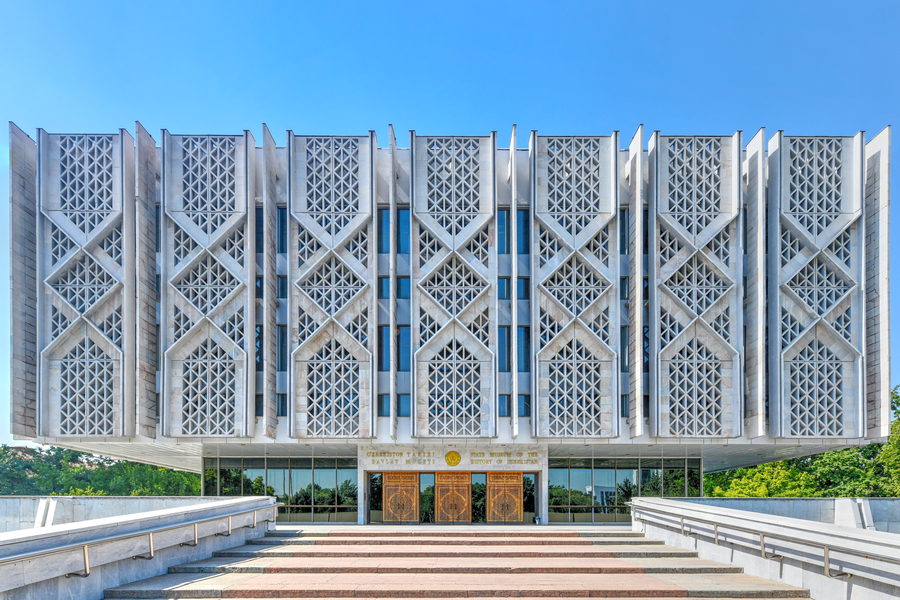
In the very centre of Tashkent, a modernist building from the second half of the 20th century catches the eye: a massive cube that seems to float above the ground. Inscribed on the UNESCO World Heritage List in 2026, it houses the State Museum of History of Uzbekistan.
Inside is a vast collection tracing the history of Uzbekistan from the earliest periods to the present day. Visitors can see prehistoric rock carvings, archaeological finds dating back hundreds of thousands of years and original artefacts from the Silk Road era, learn about the legacy of prominent scholars, and trace how life and culture in the region changed over the centuries.
Although the museum was founded in 1876 and ranks among the oldest museums in Uzbekistan and Central Asia, its presentation has been thoroughly updated. Historic exhibits are complemented by interactive technologies and multimedia displays, while a children’s area and seating make longer visits easier.
Practical Information
- The museum is in central Tashkent, close to Independence Square. Mustaqillik Maydoni Metro Station is roughly 400–500 metres away.
- Admission for foreign visitors costs 100,000 soums (approximately USD 8.50, subject to change). Guided tours are charged separately, and there is an additional fee for photographing or filming the exhibits.
- The Miracle World children’s zone is on the fourth floor.
- Several other well-known Tashkent sights are within walking distance, including the Alisher Navoi Theatre, the Romanov Palace and the Central Exhibition Hall of the Academy of Arts of Uzbekistan. There are plenty of cafés and restaurants nearby, and directly behind the museum stands one of the city’s most popular hotels – Lotte City Hotel Tashkent Palace.
Exhibition Layout at the State Museum of History of Uzbekistan
The museum holds around 370,000 objects, including more than 100,000 numismatic items – primarily coins – and over 70,000 archaeological finds. The collection also includes substantial ethnographic and archival material.
In 2026, the permanent exhibition was renewed and expanded, with the number of thematic sections increasing from 9 to 20. Arranged chronologically, they cover the history of the territory of present-day Uzbekistan from the Stone Age to the present.
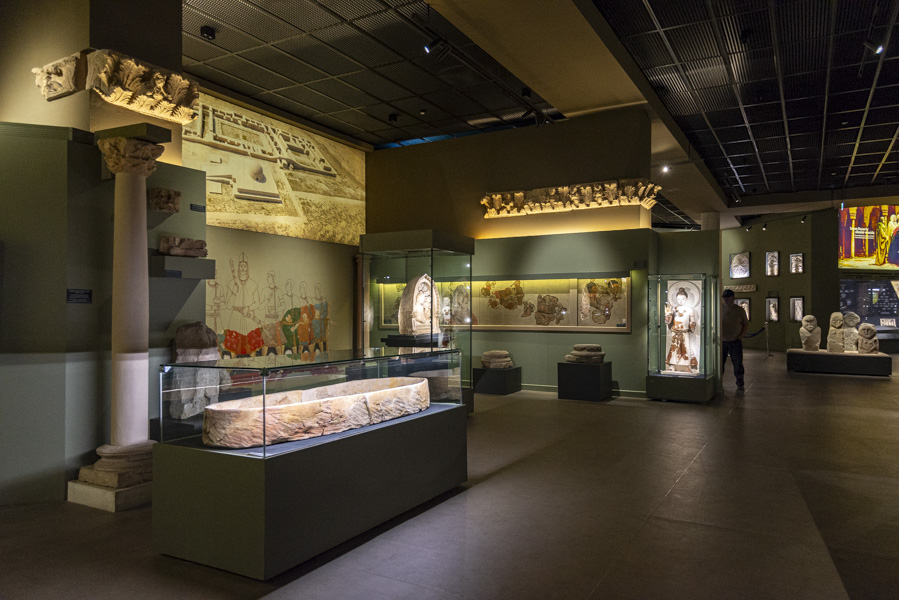
The main permanent exhibition occupies the third and fourth floors. The third floor focuses on ancient and medieval history, beginning with the Stone and Bronze Ages. The exhibition then moves through the emergence of the region’s first states, the Kushan Empire and the spread of Buddhism. Further sections cover early medieval states, the 9th–12th-century period presented by the museum as the First Renaissance, and the Timurid era.
The fourth floor begins with the 16th century. Its sections cover the Uzbek khanates, the period of the Russian Empire, the Jadid reform movement, the Second World War, the Soviet period and independent Uzbekistan.
The second floor contains the entrance hall, ticket office, information desk and an exhibition hall.
Collection Highlights
The museum’s collection is extensive, and it is difficult to see everything in detail in a single visit. If time is limited, focus on a few particularly interesting archaeological and historical exhibits.
Among the earliest finds are fragments of human remains from Selungur Cave, dating from approximately 400,000 to 100,000 years ago, and stone tools from the Obi-Rakhmat Grotto. Together, these finds represent some of the earliest evidence of human settlement in present-day Uzbekistan.
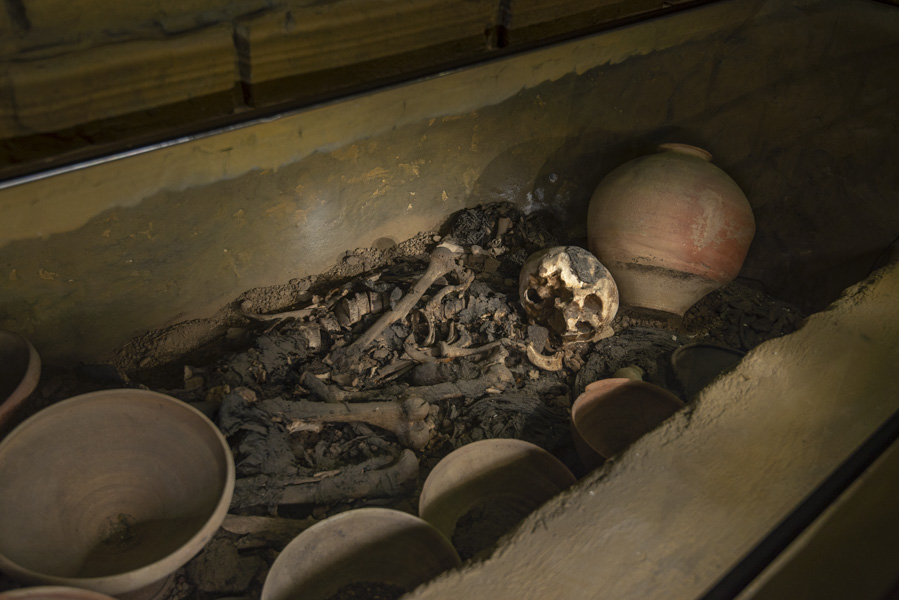
Another notable exhibit is a group of rock carvings of animals from Saimaly-Tash, dating to around the 5th millennium BC. In the Bronze Age section, look for finds from Sapallitepa, including jewellery made from precious and semi-precious stones and metal, as well as a reconstructed female burial from the 17th–15th centuries BC.
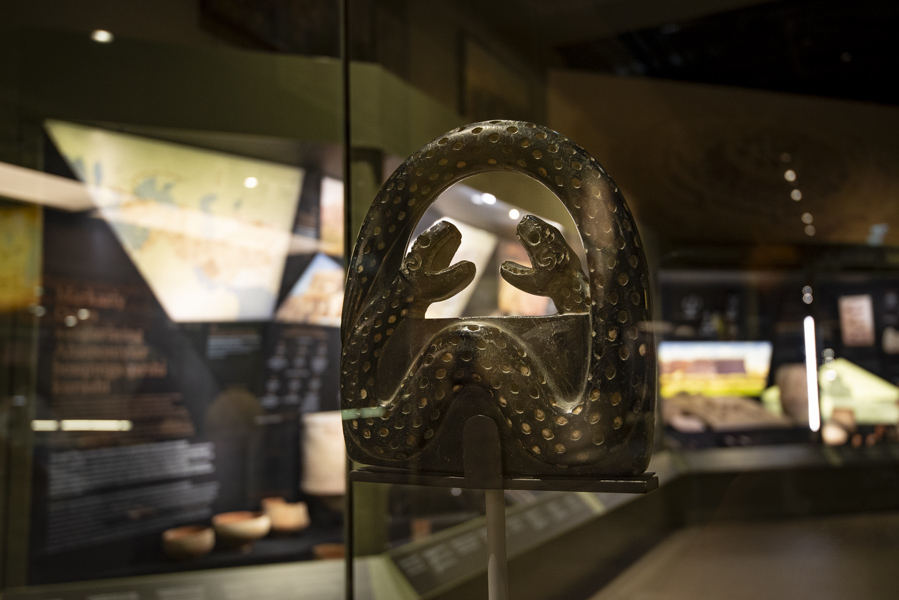
One of the most unusual Bronze Age objects is the Sokh Amulet, dating from the late 2nd millennium BC. Carved from dark chrysotile, it depicts two intertwined snakes forming a horseshoe shape. It is thought to have been used as a protective charm.
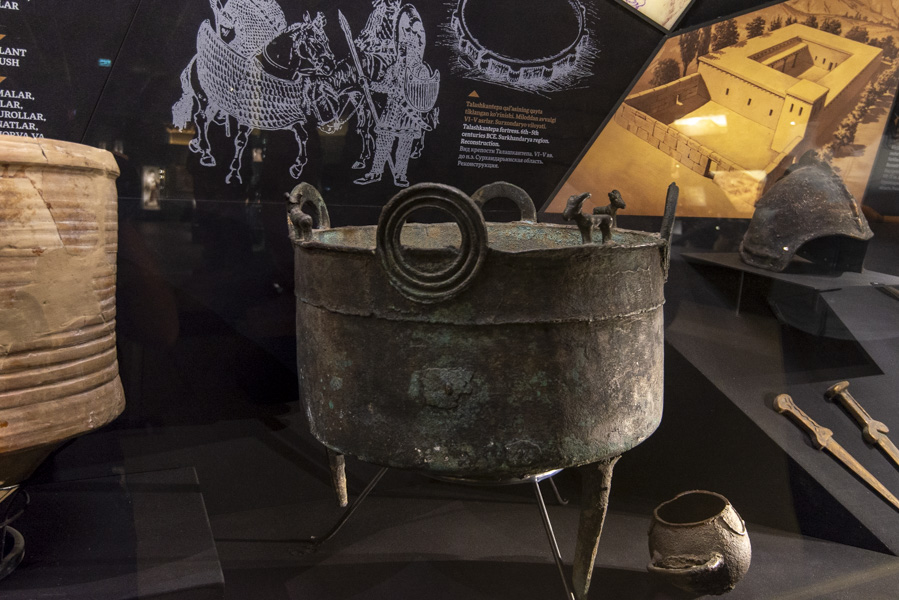
A particularly recognisable ancient exhibit is a Saka bronze cauldron from the 6th–4th centuries BC. Ritual vessels of this kind are associated with the Saka tribes who inhabited Central Asia in antiquity.
Buddhist art from ancient Termez holds a prominent place in the collection. One of the museum’s best-known Buddhist works is Buddha and Monks from Fayaztepa, dating from the 1st–3rd centuries AD. The original is displayed in Tashkent, while a copy can be seen in Termez, near the site where the original was found.
The early medieval collection includes 6th–7th-century stone stelae carved in the form of human figures and associated with the period of the Turkic Khaganate.
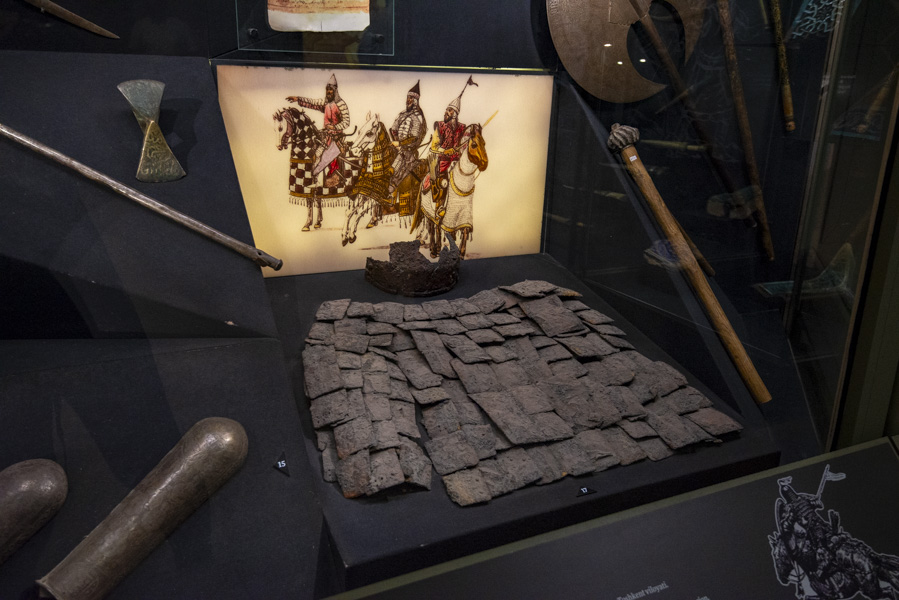
The medieval galleries include several original architectural details. These include fragments of 15th-century glazed architectural tiles from Samarkand. Nearby are examples of weapons from the 15th–17th centuries, along with coins from the time of Amir Timur and his descendants.
A separate section on the fourth floor presents traditional clothing from different regions of Uzbekistan, including costumes, jewellery and several styles of tubeteika (skullcaps). A traditional Uzbek chodir – a fabric tent – has also been recreated to give visitors an idea of domestic life in earlier centuries.
The exhibition also includes objects associated with trade along the Silk Road. Ceramics, copperware, and jewellery were widely exchanged, while their forms and decoration show how artistic traditions and craft techniques spread between regions.
Design and Interactive Features
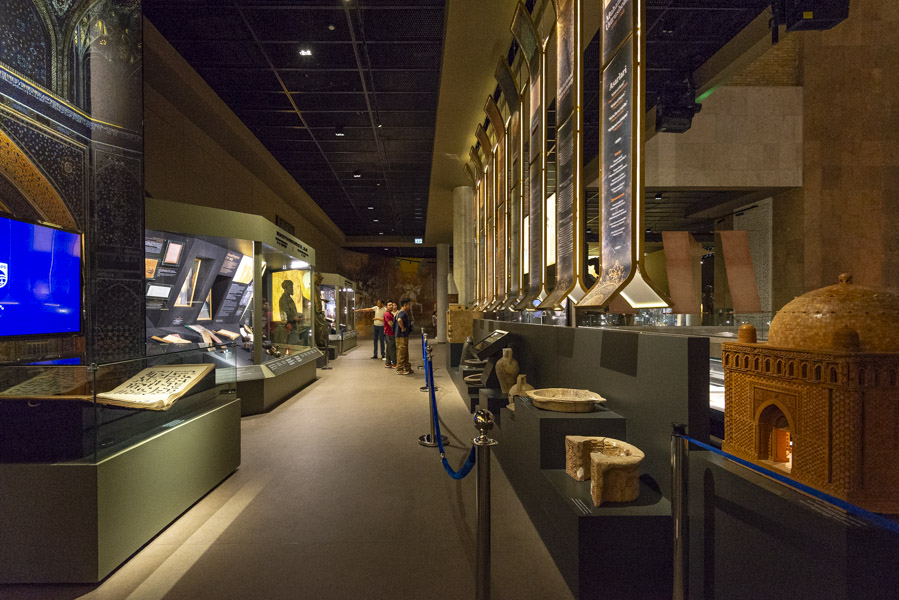
Following the 2024–2026 renovation, interactive panels throughout the museum now show floor plans and provide information about individual sections, alongside traditional labels and explanatory texts.
Original artefacts are displayed alongside architectural models, large sculptures and reconstructed scenes from different periods. Together, these elements make each era easier to understand, including aspects that cannot be shown through surviving artefacts alone.
The exhibition also includes replicas of selected archaeological finds. Among them are objects from the Oxus Treasure, the famous collection of gold and silver artefacts, most of which are now held by the British Museum. Visitors can also see replicas of jewellery and gold ingots from the Dalverzin Treasure, the largest gold hoard found in Uzbekistan. Dating from the 1st century AD, it consists of more than 100 gold objects with a total weight of around 36 kilograms.
In the section devoted to prehistory, a cave scene has been recreated. Nearby stands an animatronic dinosaur with sound and moving parts. In other galleries, the design changes to reflect the period, with motifs from old manuscripts, photographs, lighting effects and three-dimensional reconstructions of everyday life.
The equestrian statue of Amir Timur stands out on the third floor. It is based on the monument in Amir Timur Square in Tashkent. Nearby is a model of the Bibi-Khanym Mosque in Samarkand.
A dedicated section focuses on Ulugbek and the development of science during the Timurid period. It contains a model of his famous observatory in Samarkand, while the ceiling is illuminated to resemble a star-filled sky.
The galleries devoted to the 20th century include a black vehicle of the type used by the Soviet secret police to transport prisoners during the period of political repression. Another display recreates a scene from the life of the Shamakhmudov family, who took in 15 orphaned children of different nationalities during the Second World War.
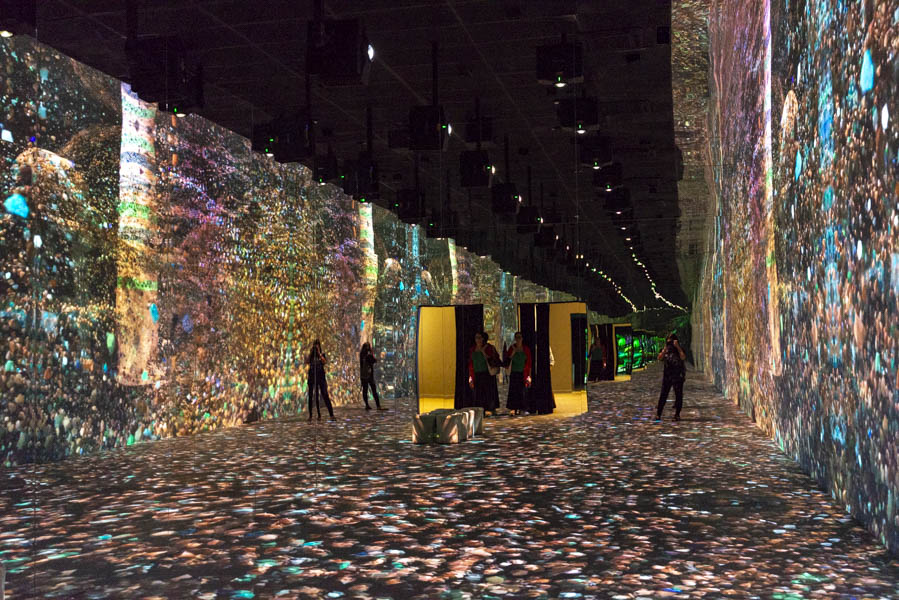
In the section devoted to the 21st century, an immersive room with mirrored walls features video imagery that surrounds visitors with scenes from Uzbekistan’s past and present.
Museum Building
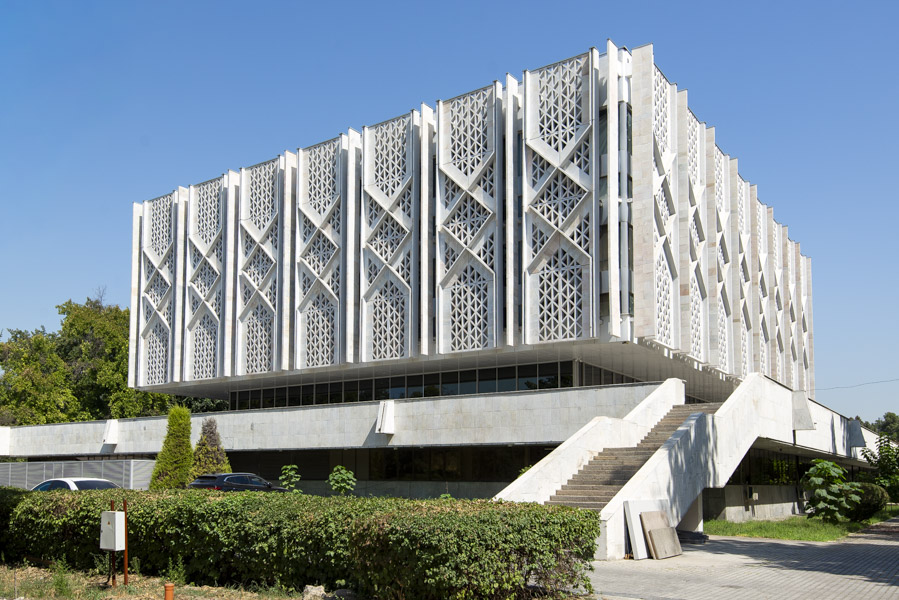
The museum’s current building was completed in 1970 for the Tashkent branch of the Central Lenin Museum and was designed by architects Yevgeny Rozanov and Vsevolod Shestopalov. Its massive upper volume rises above a recessed glass foyer, with almost no visible supports from the outside. Writing about Tashkent modernism in 2025, The Guardian’s architecture critic Oliver Wainwright also noted this effect and the building’s concealed steel frame.
The modernist design also incorporates traditional local elements. The facades are screened by a sun-shading lattice reminiscent of the Central Asian panjara. At the entrance are three monumental carved oak doors by Kokand woodcarver Kadyrjan Khaidarov. Inside, the carved wooden columns on the second floor are also worth noticing. Their traditional decoration contrasts with the building’s modernist architecture.
In July 2026, the museum building was inscribed on the UNESCO World Heritage List as part of the serial property Tashkent Modernist Architecture. Modernity and Tradition in Central Asia.
History of the Museum
The origins of the State Museum of History of Uzbekistan date back to 1876, when the Tashkent Public Museum opened as the first museum in the city. Over the following decades, the institution changed its name several times. From 1919, it was known as the State Museum of Turkestan and later became the Museum of the History of the Peoples of Uzbekistan. After the Academy of Sciences of Uzbekistan was established in 1943, the museum became part of its structure.
The museum’s original holdings came largely from private collections assembled by researchers and local historians. They later grew with the addition of numismatic and ethnographic material.
Archaeological research carried out in different parts of Uzbekistan played a particularly important role in expanding the collection. The museum acquired material from Palaeolithic sites, ancient settlements and Buddhist temples, substantially broadening its archaeological holdings.
Some important exhibits were discovered by chance rather than during archaeological excavations. In 1939, for example, a bronze Saka cauldron was found during construction of the Great Fergana Canal. It became one of the museum’s best-known exhibits and has also been featured in the virtual UNESCO Silk Roads project.
During the 20th century, the museum occupied several buildings in Tashkent. One was the former Treasury Chamber, built in 1901 at the intersection of today’s Istiqbol and Istiqlol streets. The building survives and now stands opposite the Palace of International Forums “Uzbekistan”.
In 1992, the museum received its present name – the State Museum of History of Uzbekistan – and moved into the former Lenin Museum building on Sharaf Rashidov Avenue.
Objects from the museum’s collection have also been shown abroad. In 2003, the Sokh Amulet was included in Art of the First Cities: The Third Millennium B.C. from the Mediterranean to the Indus at The Metropolitan Museum of Art in New York. In 2022–2023, works from Uzbekistan, including objects from the museum’s collection, were shown at the Louvre in The Splendours of Uzbekistan’s Oases, and in 2023–2024 they were presented in Berlin as part of Archaeological Treasures of Uzbekistan: From Alexander the Great to the Kushan Empire.
The museum closed for a major renovation in June 2024 and reopened to visitors on 24 July 2026.