

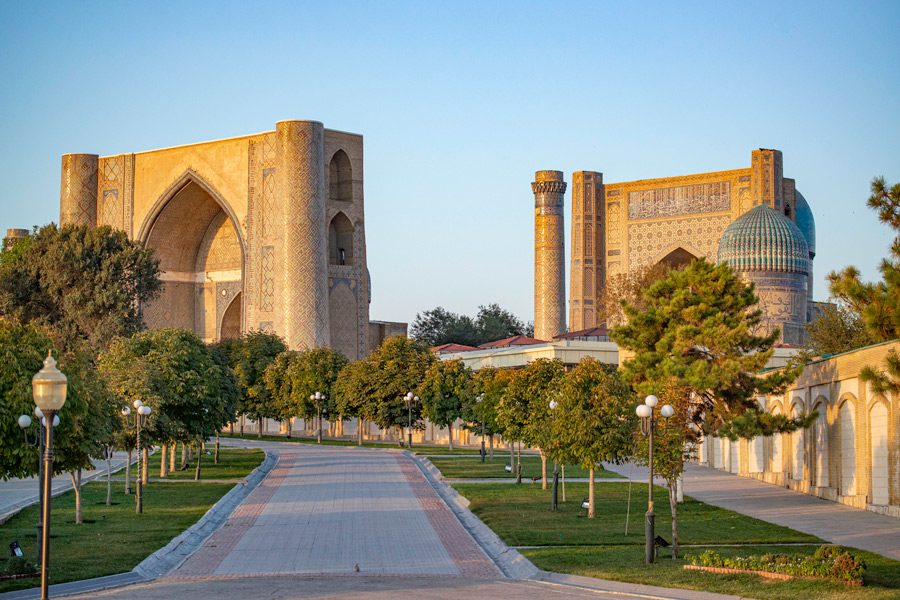
Looking for the best things to do in Samarkand? The city is known above all for Registan, Shah-i-Zinda and Gur-e-Amir, but its character is not defined by monuments alone. Bazaars, craft traditions, pilgrimage sites and everyday settings add context and help the city register as a place rather than a sequence of sights.
This guide covers Samarkand's main attractions, distinctive cultural experiences and practical 1–2-day itineraries. It will help you decide what to see first and how to use your time well.
Top Things to Do in Samarkand at a Glance
5. Siab Bazaar
8. Konigil and local workshops
10. Khovrenko Winery
If you only have time for three places, start with the monuments that define Samarkand most clearly: Registan, Shah-i-Zinda and Gur-e-Amir.
Best Things to Do in Samarkand
These are the places that shape a first visit and establish the city’s historical and visual identity most clearly.
Registan Square
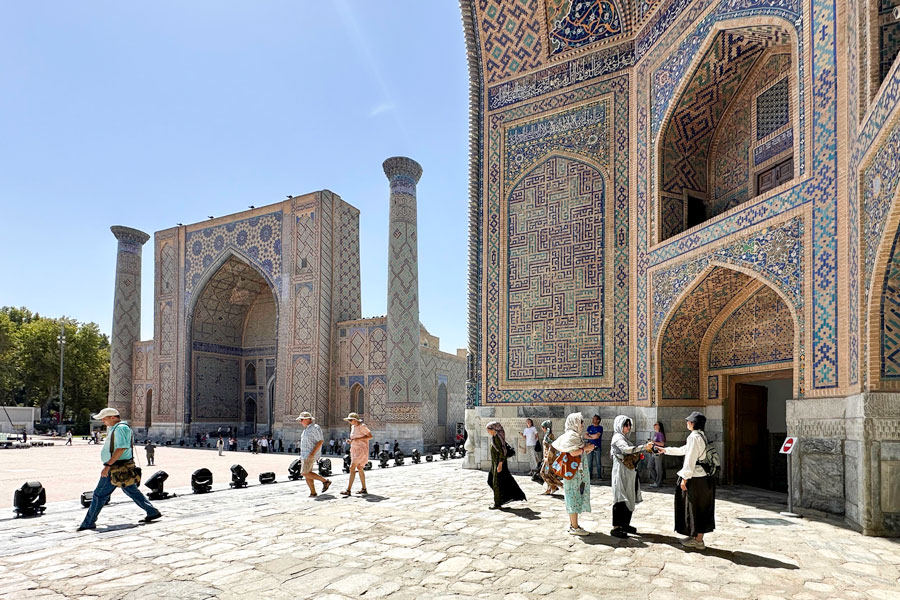
Registan is the architectural centre of gravity in Samarkand — the space around which the city’s historic identity still turns. Framed by the Ulugh Beg, Sher-Dor and Tilya-Kori madrasahs, it was once a place of learning, ceremony and public life, and it retains that sense of scale and authority even now.
For many travellers, this is the point at which Samarkand shifts from image to reality. Photographs prepare you for its beauty, but not for the height of the façades, the precision of the tilework, or the balance of the ensemble as a whole.
Go early if you want a quieter visit and softer light on the façades. Later in the day, the atmosphere shifts and the square becomes busier, louder and more performative. Neither is wrong, but they offer different experiences. If this is your first time in the city, Registan is non-negotiable. Many travellers choose to see it as part of guided Samarkand tours, but it also rewards slow, independent exploration if you are willing to linger.
Shah-i-Zinda Necropolis
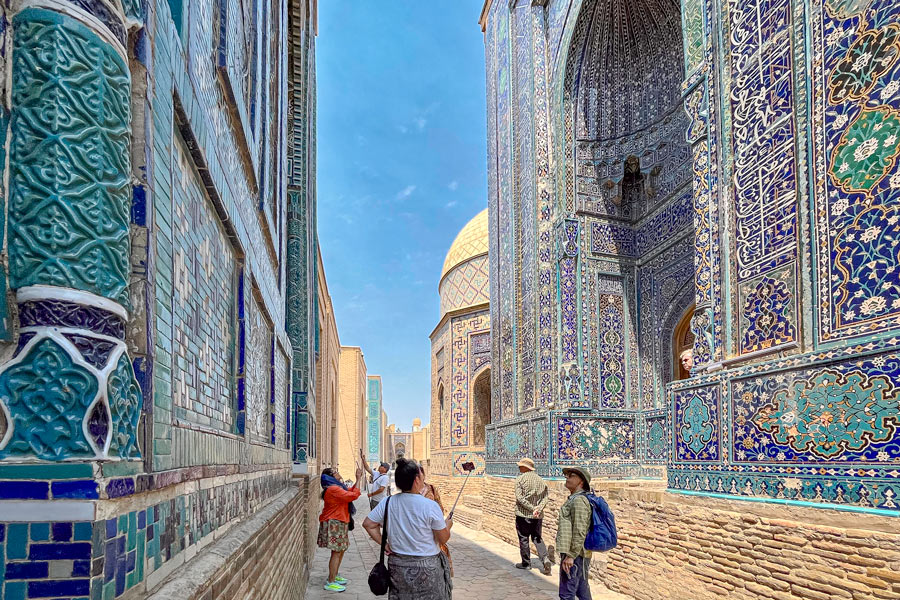
Shah-i-Zinda is one of the most visually striking sites in Samarkand, but its force lies in more than colour alone. A sequence of mausoleums and passageways draws you gradually upward, creating a sense of movement rather than a single fixed viewpoint.
It rewards a slower pace. The changing rhythm of the complex, the concentration of detail and the layering of sacred atmosphere make it one of the most memorable places in Samarkand. It often leaves a stronger emotional impression than more obviously monumental spaces.
If possible, visit with time and attention, ideally when you are not trying to squeeze in several other major stops. Afternoon light often works well here, particularly when the tilework begins to glow more warmly. If your time in Samarkand is limited, Shah-i-Zinda should still remain a priority. It is one of the sites most likely to stay with you.
Gur-e-Amir Mausoleum
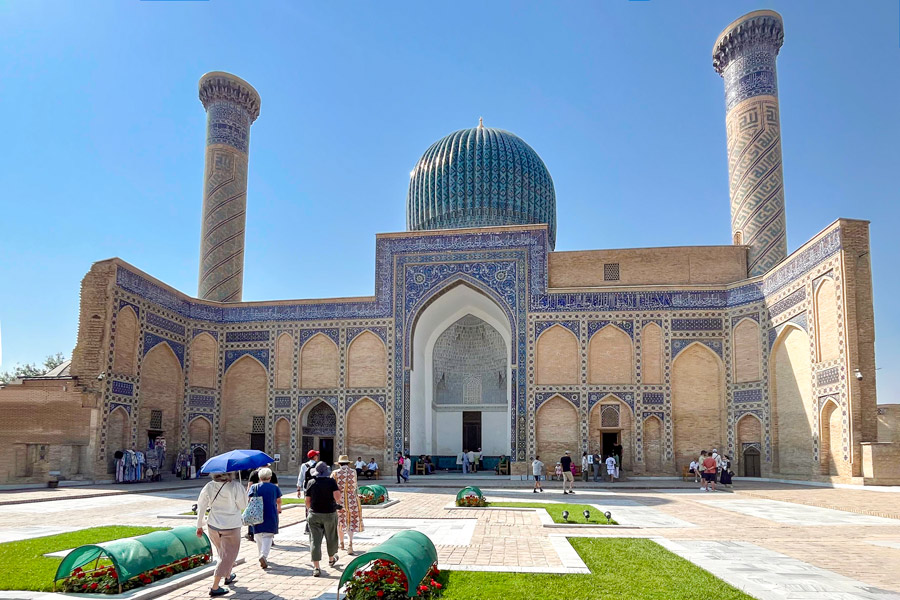
Gur-e-Amir anchors the historical narrative of Samarkand. Closely associated with Amir Timur, it gives essential context to the city’s monumental architecture and imperial self-image. Without it, the rest of Samarkand can feel visually impressive but harder to place historically.
The turquoise dome is one of the city’s defining silhouettes, but the interior carries even more weight. Compared with Registan, it feels more concentrated, more intimate and less ceremonial. The emphasis here is on dynastic memory rather than public display.
It is often visited quickly, treated as a necessary stop between larger complexes, but that approach undersells it. On a first visit to Samarkand, Gur-e-Amir deserves to be near the top of the list.
Bibi-Khanym Mosque
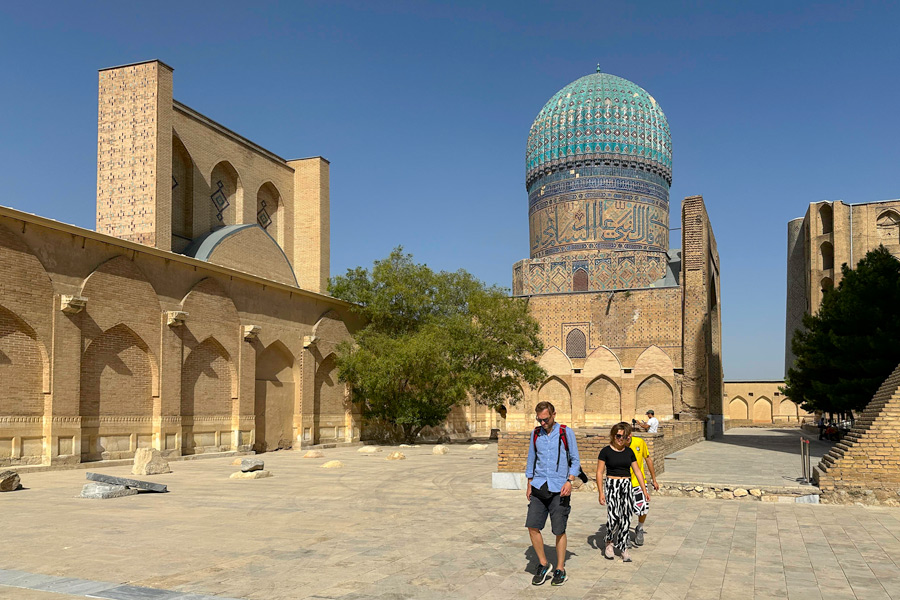
Bibi-Khanym was built to impress, and even in its current state it conveys that ambition. Conceived on an imperial scale, it remains one of the clearest expressions of Timurid monumentality in Samarkand. What survives still carries the force of the original idea: size, symbolism and architectural bravado.
Its location makes it easy to combine with other major landmarks in the historic core, particularly Siab Bazaar. That proximity helps, because Bibi-Khanym works best as part of a broader route rather than in isolation. It rounds out the central route and reinforces the scale of the Timurid city.
If your time is short, it comes slightly behind Registan, Shah-i-Zinda and Gur-e-Amir in terms of priority. But if you have enough time for a fuller first day, it is well worth including. It gives the city’s Timurid layer greater breadth and makes the route feel more coherent.
Siab Bazaar
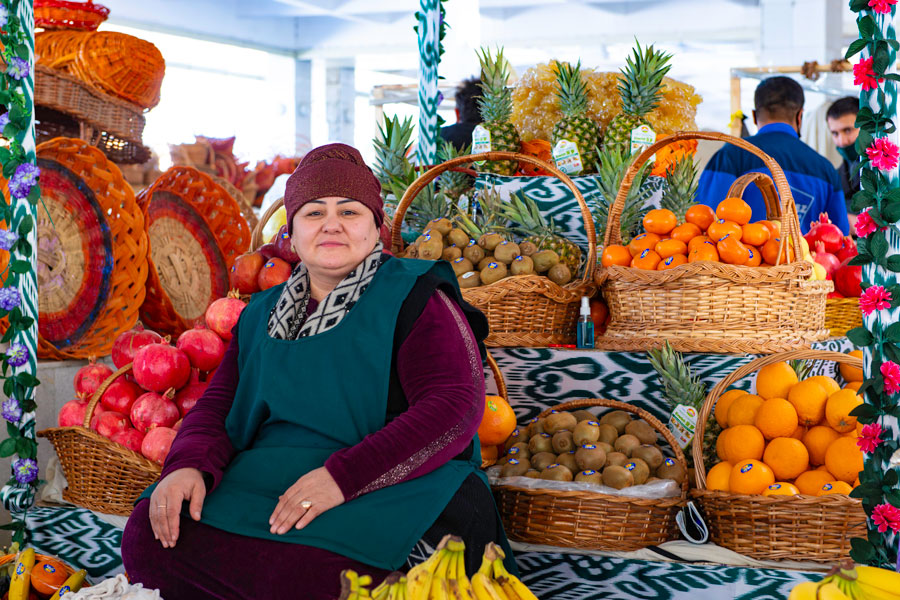
Siab Bazaar shifts the focus away from Samarkand’s monumental core and back towards daily life. After the mausoleums, domes and ceremonial spaces, the market brings in a different rhythm: rounds of Samarkand non stacked high, spices and dried fruit laid out in colour, people greeting, buying, bargaining and moving through routines that feel ordinary rather than arranged for visitors.
Its location near Bibi-Khanym also makes it an easy and worthwhile stop within the historic centre. More than a practical addition to the route, it helps balance the day. If you want to understand Samarkand as a lived-in city rather than simply a collection of major sights, the bazaar should be part of the visit. It also creates a natural pause — a place to slow down over tea, buy warm Samarkand bread, or pick up dried fruit and orient sweets before continuing through the old city.
Unique Things to Do in Samarkand
Samarkand becomes more varied once you move past its main landmarks. The city’s craft traditions, working environments and smaller-scale encounters provide a different kind of experience — slower and more specific. These are the places and activities that keep the day from dissolving into a blur of domes and façades.
Visit the Konigil Paper Mill
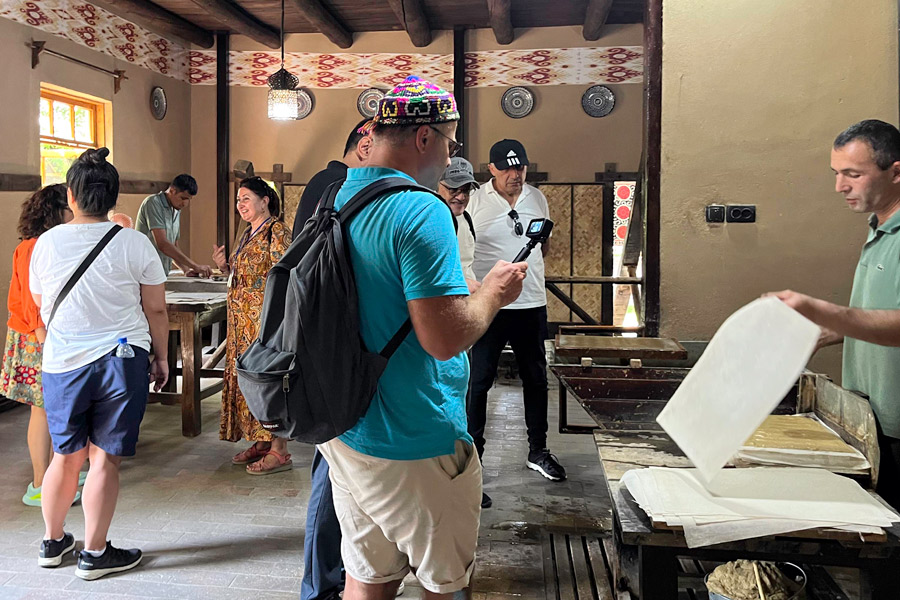
Konigil brings a different rhythm to time in Samarkand. Its main focus is the Meros paper mill, where Samarkand paper is still made by hand from mulberry bark using revived traditional methods, and where visitors can follow the process on site.
The visit extends beyond the workshop itself. Set along the Siab River, the area includes a water wheel, small craft spaces and a teahouse, with shaded paths linking the different parts of the site. What stays with you is the sense of paper as something made step by step — soaked, pulped, pressed and laid out to dry — rather than simply presented as a finished object.
After the city’s major monuments, Konigil offers something quieter and more tactile. It fits best into a longer stay or a second day, when there is time to slow down and pay attention to process rather than scale.
Visit Hudjum Silk Carpet Factory
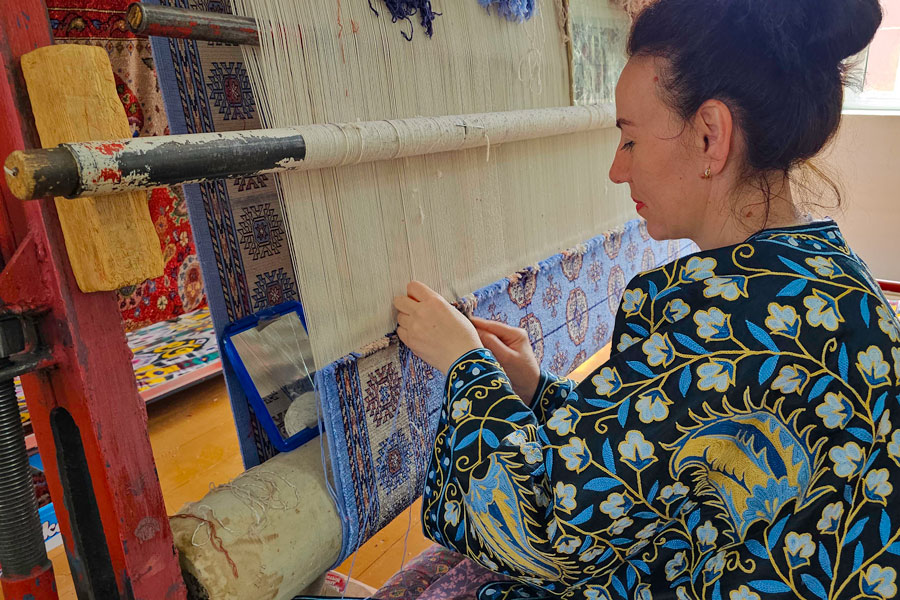
Hudjum Silk Carpet Factory gives a close view of weaving as skilled manual work. Also known as Samarkand Bukhara Silk Carpets, this family-run workshop is known for handwoven silk carpets, natural dyes and a process that visitors can observe on site.
The appeal lies in the work itself: dyed threads, looms, patterns emerging knot by knot, and the steady concentration behind the finished carpet. Compared with Samarkand’s grander landmarks, the experience is smaller in scale, but far more focused.
Hudjum is best left for the point when the main monuments are already behind you. For travellers interested in textiles, decorative arts and traditional craftsmanship, it adds precision and texture to the city.
Visit Ulugh Beg Observatory
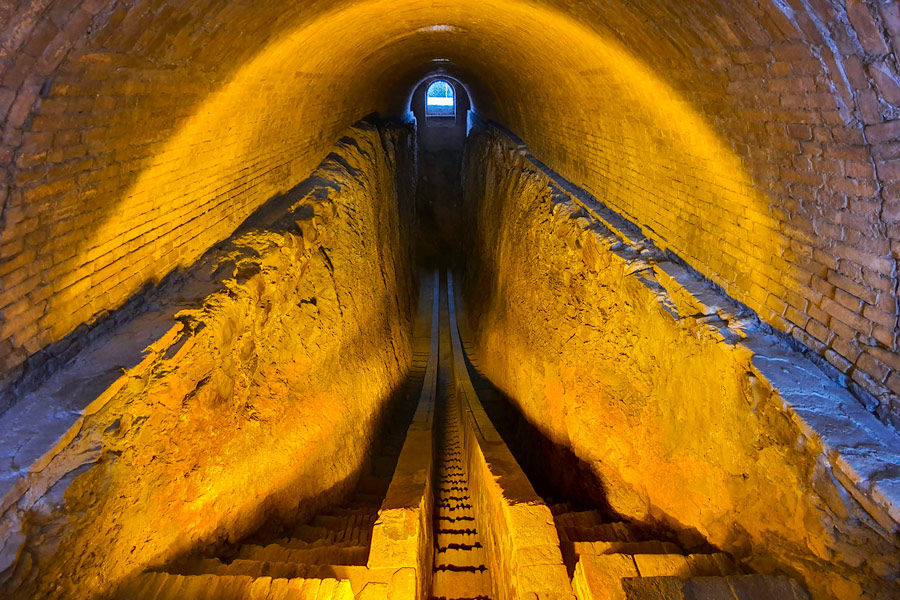
Ulugh Beg Observatory shows another part of Samarkand’s history — one shaped by scientific thought as much as by dynasties and monumental architecture. Built in the 15th century, it belongs to one of the most important periods of astronomical research in the region.
The main feature is the vast meridian arc built into the ground, the key surviving part of the original observatory. This is what gives the site its real interest: not a grand building, but the remains of an instrument once used for precise observation of the sky. A small museum nearby adds context through models and material related to Ulugh Beg’s work.
Set outside the main historic core, the observatory usually makes more sense after the city’s principal monuments. For travellers interested in the intellectual history of Samarkand, it is one of the most worthwhile secondary stops.
Cultural Experiences in Samarkand
Samarkand is shaped as much by daily life as by its monuments. Markets, food, pilgrimage and ordinary routines give the city texture and context. Without them, even a rich itinerary can start to feel like a sequence of impressive sites rather than a place with its own patterns of life.
Explore Local Cuisine and Dining Culture
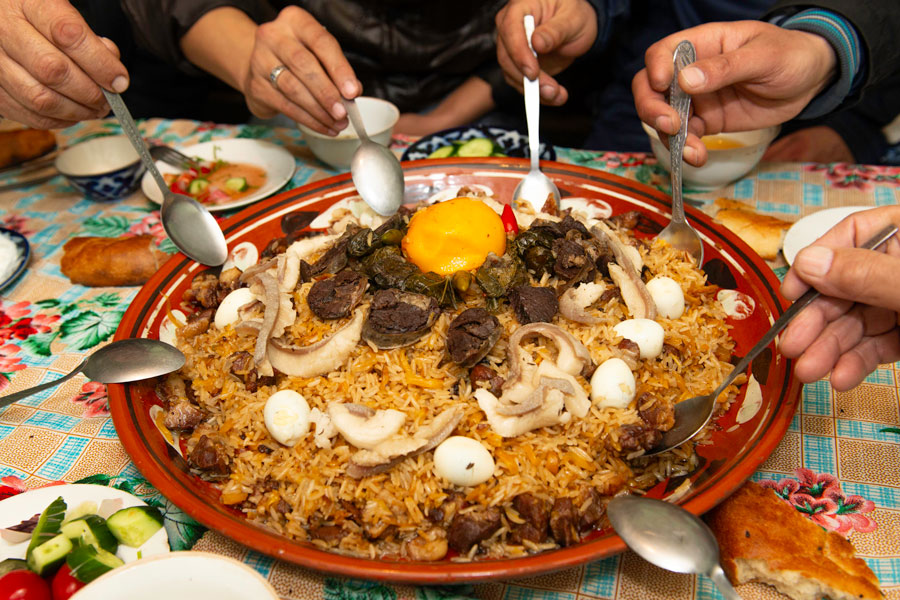
Food in Samarkand is best understood as part of the day rather than as a separate attraction. Samarkand plov is the clearest example: unlike some other regional versions, it is usually cooked in layers instead of being fully mixed, which gives it a lighter, more structured character. Samarkand non is another local point of pride, known for keeping well far longer than ordinary bread. Just as telling are the settings in which these foods are eaten — chaikhanas, market stops and long shared lunches that slow the pace of the day. In Samarkand, food is shaped as much by routine and company as by flavour.
Visit the Tomb of Saint Daniel
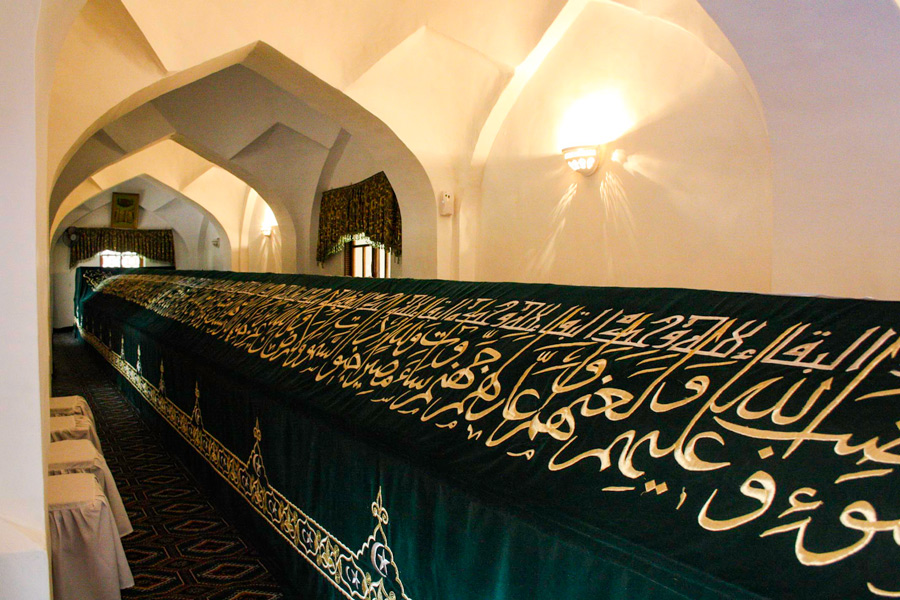
The Tomb of Saint Daniel occupies a different place in Samarkand from the city’s major Timurid monuments. Set near Afrasiab above the Siab River, it feels quieter and slightly apart from the main historic route. Its importance comes largely from the traditions attached to it. The site is revered in Islam, Christianity and Judaism, which gives it a broader religious significance than most of Samarkand’s better-known landmarks. The mausoleum itself also departs from the city’s familiar monumental forms — long, low and marked by a row of domes rather than built around vertical scale or visual drama.
Discover Samarkand Before Timur
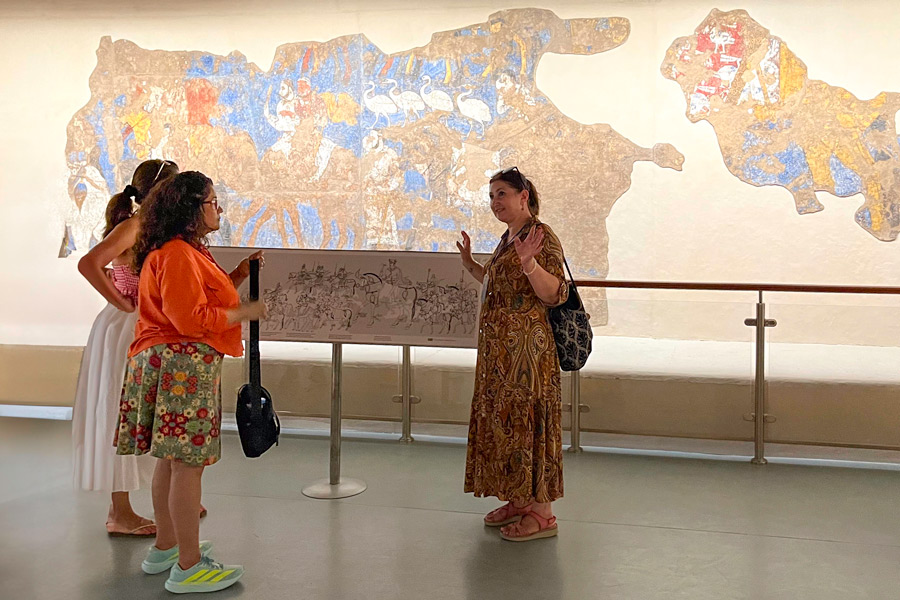
Samarkand is often approached through its Timurid monuments first. Afrasiab Museum helps extend that picture. The museum and surrounding archaeological site bring the city’s earlier layers into view, with more emphasis on settlement, trade and urban life than on monumental form. Seen in that context, the city begins to read less as a series of monuments and more as a place shaped by long urban continuity.
Best Things to Do in Samarkand by Interest
Samarkand can be approached in different ways. Some travellers want the clearest route through the major landmarks; others are drawn more to history, photography, craft or the city’s quieter cultural detail. Looking at Samarkand by interest helps make choices more clearly.
For First-Time Visitors
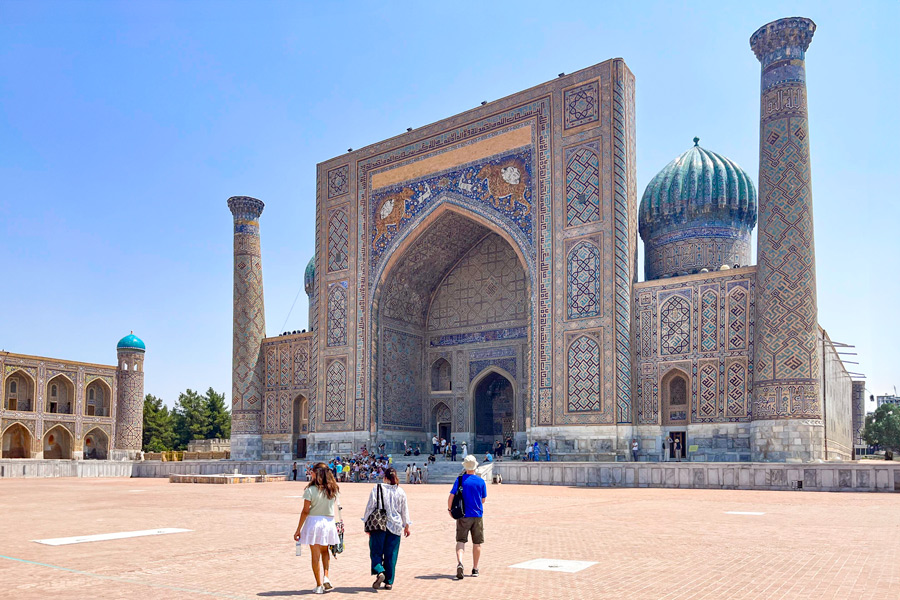
If this is your first visit, start with Registan, Shah-i-Zinda and Gur-e-Amir. These are the sites that define Samarkand most clearly on a first trip. If time allows, add Bibi-Khanym and Siab Bazaar to round out the central route.
A structured Samarkand city tour can be a practical choice here, especially if time is limited and you want the essentials covered efficiently.
For History Lovers
Travellers interested in historical depth should look beyond the main monuments to Ulugh Beg Observatory, the Afrasiab Museum and the Tomb of Saint Daniel.
Together, these sites extend the picture to include scientific history, earlier urban layers and a wider religious context.
For Culture Seekers
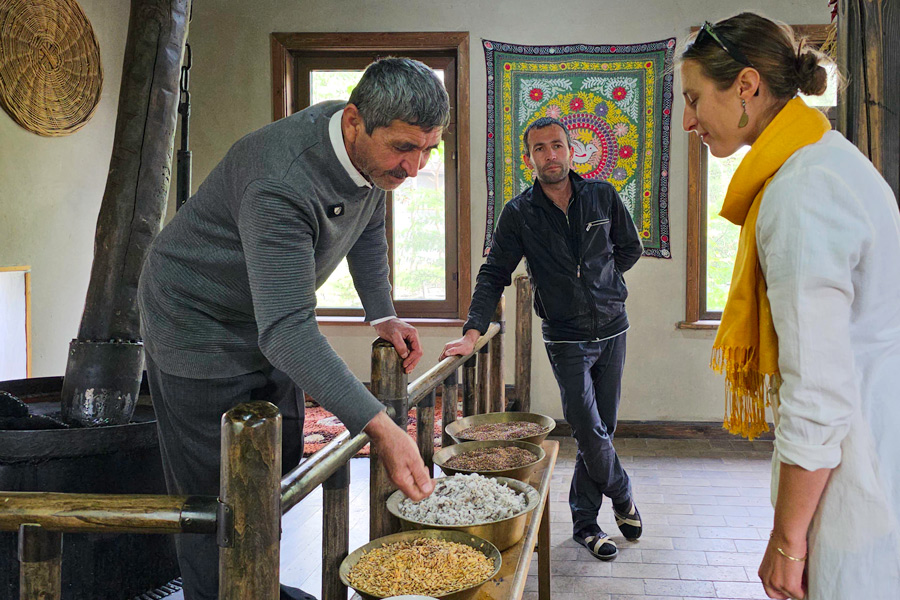
If your interest lies more in craft, food and everyday practices, focus on Konigil, Hudjum, local dining and the quieter streets around Bibi-Khanym and on the approach to Shah-i-Zinda. Traditions Square offers a more contemporary setting for this side of Samarkand, with workshops and demonstrations related to embroidery, decorative arts and Uzbek food.
For Photographers
Samarkand rewards photographers, but timing matters. Registan is best seen early in the day, when the light is softer and the space is less crowded. Shah-i-Zinda often becomes more striking later in the day.
Do not limit your attention to the major monuments. Markets, side streets and quieter neighbourhoods give the city visual range and keep it from collapsing into a sequence of domes and tiles.
For Travellers with Limited Time
Stay within the historic core and do not try to include Konigil or other outlying stops unless you genuinely have the extra hours. A compact plan will usually give more than an overfilled one. Samarkand rewards time and attention far more than speed. If you want a brief change of pace without a full detour, University Boulevard offers a more everyday view of the city.
For Food and Wine Enthusiasts
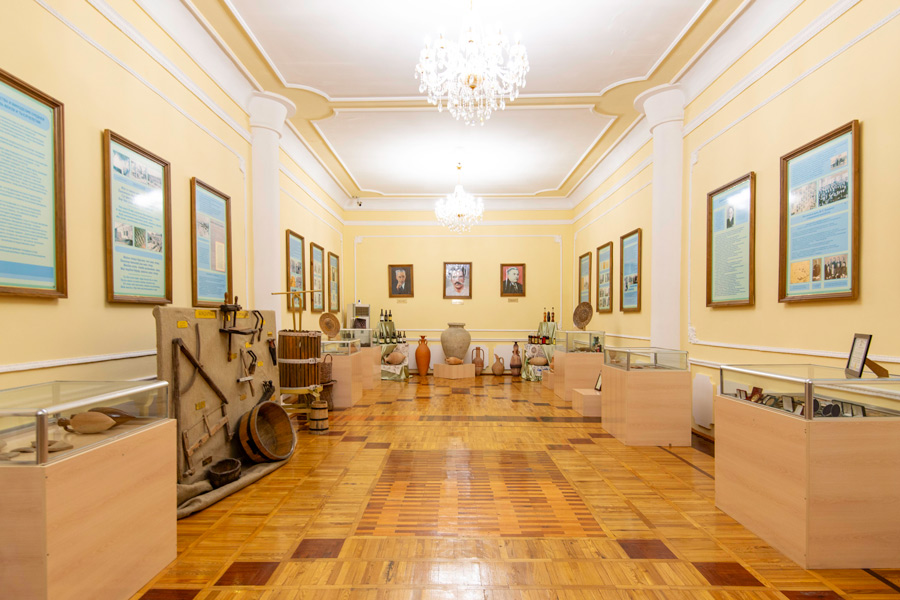
Beyond plov and bread, Samarkand also has a less obvious culinary side. The Khovrenko Winery introduces the city’s winemaking tradition through its museum and tasting rooms, linked to one of the oldest wineries in Uzbekistan. It is not a priority on a first visit, but for travellers interested in regional food culture and craft production, it can be a worthwhile addition, especially on a second day.
What to Do in Samarkand in 1 Day
If you have only one day in Samarkand, keep the plan focused. The main landmarks lie relatively close to one another, but trying to fit in too much can flatten the day. The strongest approach is to stay within the historic core and leave enough time at each stop for the city to register properly.
Morning: Registan and Gur-e-Amir
Begin early at Registan Square, before the crowds build and while the morning light still picks out the architectural detail. Give yourself time here. More than any other site in Samarkand, Registan rewards a slower visit.
From Registan, continue to the Gur-e-Amir Mausoleum. The sequence works both geographically and historically, moving from the ceremonial scale of the square to the dynastic centre of Timur’s legacy.
Midday: Bibi-Khanym Mosque and Siab Bazaar
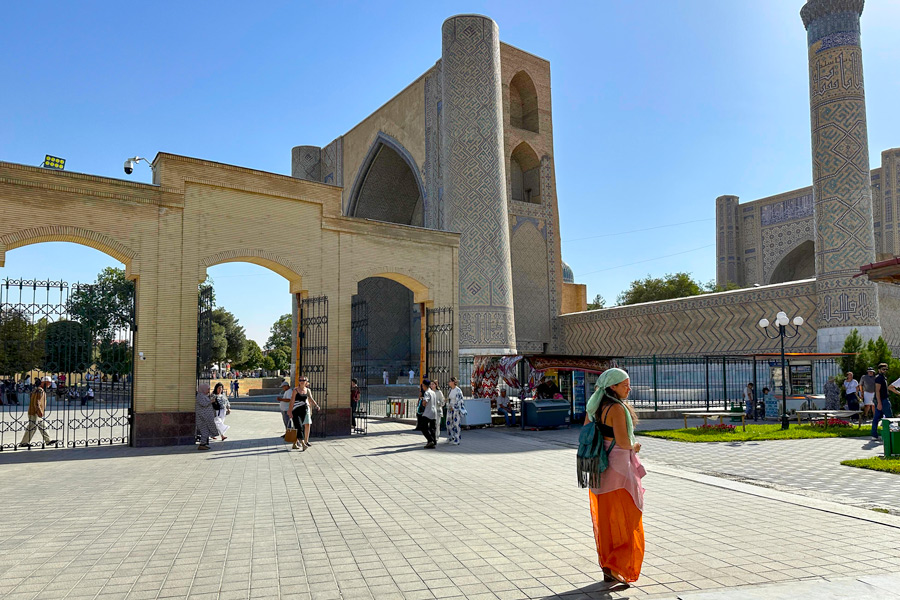
By late morning, head to Bibi-Khanym Mosque. Its scale comes across best in person, even if it is not the most intricate of Samarkand’s major monuments.
From there, continue into Siab Bazaar. This is a good point in the day to pause for tea or pick up warm Samarkand bread before moving on. Together, Bibi-Khanym and the bazaar shift the mood of the route, taking you from monumental space back into the city’s everyday rhythm.
Afternoon: Shah-i-Zinda Necropolis
Leave Shah-i-Zinda for the afternoon and take it slowly. This is one of the few places in Samarkand where frequent pauses genuinely improve the visit. Move through the complex gradually and let the sequence of mausoleums unfold in its own rhythm. If time is tight, this is not the place to rush.
Optional Stop: Ulugh Beg Observatory
Ulugh Beg Observatory lies outside the main route and makes sense only if you still have time and energy. It adds an important scientific dimension to Samarkand’s history, but it is not essential to a first one-day visit.
If you include it, treat it as an extra stop rather than one of the day’s anchors.
Evening: Dinner and a Slower Pace
End the day at one of Samarkand’s restaurants or cafés, then let the pace ease. After a day shaped by major sites, dinner gives the city space to feel less structured and more lived-in.
What to Do in Samarkand in 2 Days
With two days in Samarkand, the city opens out beyond its main landmarks. Alongside the great Timurid monuments, there is time for archaeology, pilgrimage and craft, which makes the visit feel fuller and less compressed.
Day 1: The Essential Sights
The first day is best spent on Samarkand’s principal sights. A typical route includes Gur-e-Amir Mausoleum, Registan Square, Bibi-Khanym Mosque, Shah-i-Zinda Necropolis, Ulugh Beg Observatory and Siab Bazaar. This keeps the focus on the city’s best-known landmarks while staying within a route that is manageable in a full day.
If you are planning the day independently, the exact order can vary, but the logic remains the same: keep the route centred on the major monuments and do not overload it with secondary stops. Registan and Shah-i-Zinda in particular need time. They lose much of their effect when reduced to brief pauses between transfers.
Day 2: Archaeology, Pilgrimage and Craft
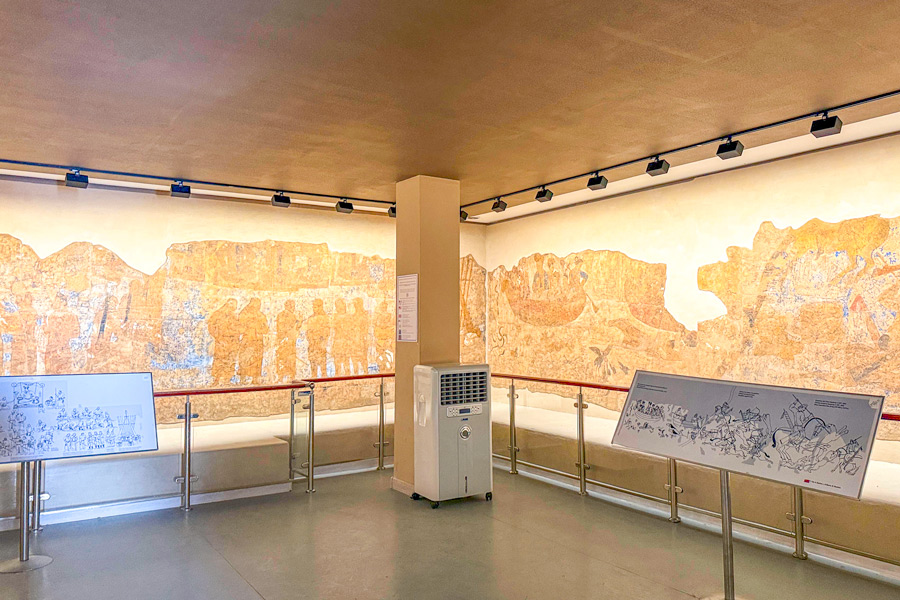
The second day can shift away from the monumental core. A typical continuation includes Afrasiab Museum, the Tomb of Saint Daniel and Konigil village, where visitors can see Samarkand paper made from mulberry bark.
Together, these places extend the historical range of the city. Afrasiab brings in Samarkand’s earlier past, Saint Daniel adds a site revered across religious traditions, and Konigil introduces one of the city’s best-known craft traditions.
FAQ About Visiting Samarkand
Is Samarkand worth visiting?
Yes. Samarkand is one of Central Asia’s most historically significant cities and one of Uzbekistan’s essential destinations.
How many days do you need in Samarkand?
One day is enough for the main monuments, but two days make the city much more rewarding by allowing time for Konigil, Saint Daniel, museums and quieter cultural layers.
What is Samarkand famous for?
Samarkand is famous for its UNESCO-listed heritage, Timurid architecture, Silk Road history and major landmarks such as Registan, Shah-i-Zinda and Gur-e-Amir.
What are the best places to visit in Samarkand?
Registan, Shah-i-Zinda, Gur-e-Amir, Siab Bazaar, Konigil and the Tomb of Saint Daniel are among the most rewarding places to visit in Samarkand.
Is Samarkand safe for tourists?
Samarkand is generally considered safe for travellers. The main historic sites and established visitor areas feel well-managed and are regularly frequented by both locals and visitors.
When is the best time to visit Samarkand?
Spring and autumn usually offer the best balance of weather and walking conditions.