

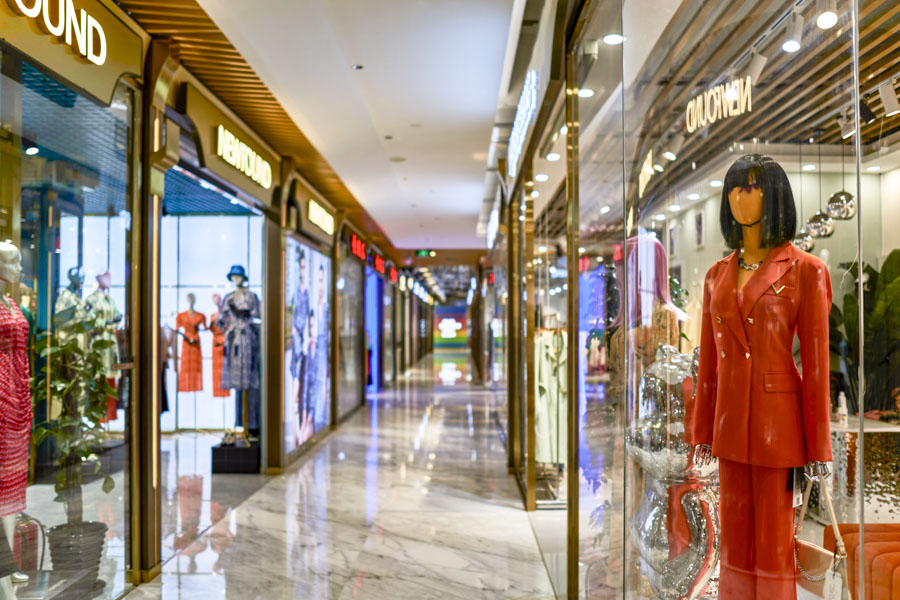
The Silk Market, or Xiushui Street (秀水街, meaning "beautiful Water Street"), also known as Silk Street market, is one of the best places to buy high-quality silk products in Beijing.
Located in the Chaoyang District, the current multi-storey complex opened in March 2005, replacing an older alley-based market that had long occupied the same site. It now accommodates more than 1,700 retail vendors across several floors.
Silk runs through the story of China like a continuous thread, from the ancient Silk Road to the elegant movements of traditional silk dance, where flowing fabrics evoke water, clouds, and the long arc of Chinese courtly life. That legacy is present here too, though the market's range extends well beyond its name, with cashmere, leather goods, antiques, calligraphy, paintings, jewellery, and jade all finding their place alongside shiny embroidered fabrics. A small in-building Silk Culture Museum exhibition area traces the history and craft of silk production in China for those who wish to look a little deeper before or after they browse.
The setting may be contemporary, yet the experience remains personal. Conversations with skilled vendors and the option to have garments made to measure lend the visit a quality that feels closer to craft engagement than conventional shopping. This sense of heritage is quietly confirmed at the reception, where visitors can see photographs of the many presidents and international celebrities who have visited over the years.
Beijing Silk Market Tours
For those exploring China with a guide, the Silk Market in Beijing pairs naturally with the city's other major destinations. Private guides will often combine it with the Temple of Heaven, Tiananmen Square, and the Forbidden City, weaving the market into a fuller portrait of the capital.
For travellers interested in shopping in the Beijing Silk Market, guided visits can be especially helpful, as a knowledgeable guide can assist in identifying high-quality silk products and navigating the different floors.
Best Time to Visit the Silk Market in Beijing
Beijing has four distinct seasons, and the best time to visit the Silk Market depends largely on your personal preference. Spring (March to May) is fresh and pleasant, with temperatures ranging from around 0°C to 27°C (32°F to 81°F), making it a lovely time to explore the city and enjoy a relaxed visit to the Beijing Silk Market.
Summer (June to August) brings a lively atmosphere, with temperatures between 30°C and 34°C (86°F to 93°F). The market’s indoor setting offers a comfortable retreat, while the season’s energy adds to the overall experience.
Autumn (September to November) is widely considered the most comfortable season, with temperatures of roughly 12°C to 26°C (54°F to 79°F) and clear skies, making it ideal for combining shopping at the Silk Street Market in Beijing with sightseeing.
Winter (December to February) brings with it a crisp, quieter charm, with temperatures ranging from about -8°C to 5°C (18°F to 41°F), creating a more relaxed and unhurried browsing experience.
Silk Market Beijing Opening Hours
The Silk Market in Beijing is conveniently open every day of the week, from Monday to Sunday, with operating hours from 09:30 to 21:00.
The market's hours accommodate both the unhurried morning visitor and those arriving after a day of sightseeing. As it stays open until late, it folds easily into an evening in Chaoyang, alongside dinner or a stroll.
Practical Additional Information
Location and access
The Silk Market Beijing address is No. 8 Xiushui Dongjie (East Road) in Chaoyang District.
Time to spend
It is advisable to allow around two to three hours to explore the market at a comfortable pace.
Facilities
When you need a break, there are tea houses, coffee shops, and a range of restaurants on the fifth and sixth floors. Among the notable Chinese establishments, Quanjude restaurant (全聚德), renowned for hosting state banquets, is particularly worth a visit for its celebrated roast Peking duck and classic Beijing cuisine.
Accessibility
The Silk Market in Beijing is set within a modern, multi-level complex with lifts serving all floors and a range of step-free features. Pushchairs are generally welcome, and the layout is convenient for families, with wide main walkways that are easy to navigate for much of the day. Most areas are accessible for wheelchair users, and while some of the smaller stalls can feel busier at peak times, the overall experience remains comfortable and manageable.
Cultural experiences
Beyond shopping, there are opportunities to engage with elements of traditional Chinese culture. Some shops host tea tastings or showcase activities such as traditional Chinese musical instrument guqin playing, calligraphy, and traditional painting.
Services
A variety of specialised services are available to enhance your visit. These may include assistance from fashion consultants, silk customisation within 24 hours, suit tailoring in as little as 18 hours, and international shipping options to have your purchases delivered conveniently to your home.
History of the Silk Market in Beijing
Silk has been central to Chinese culture for thousands of years, with archaeological evidence tracing its use back several millennia. Sericulture, or silk farming, is closely linked to early civilisation and later imperial traditions. According to legend, it was discovered by Empress Leizu when a cocoon unravelled into a fine thread. For centuries, the knowledge was closely guarded, and silk became a symbol of status and refinement, at times even serving as a form of payment or tax.
Silk Street began as a small outdoor market in the late 1970s, earning its name as merchants sold silk garments and handicrafts. By the 1980s, it had become popular with international visitors drawn by the chance to browse and bargain for distinctive goods. In the lead-up to the 2008 Beijing Olympics (2008年夏季奥运会), silk once again played a visible role in presenting Chinese culture to the world. National carriers such as Air China incorporated traditional silk qipao dress into cabin crew uniforms, underscoring the fabric's enduring association with elegance and national identity.
Around 2020, the Silk Market introduced a refreshed concept with greater emphasis on Chinese brands, including design-focused initiatives, themed retail areas, and fashion discussions linked to the growing influence of guochao (national trend culture).
In that sense, the market remains what Xiushui Street always was: a place where silk, in all its meanings, continues to find new expression.
What to buy at Silk Market, Beijing?
The Silk Market is a lively showcase of style and craftsmanship, offering a rich mix of fashion, accessories, and cultural finds. The range reflects China’s long association with silk and trade, echoing the legacy of the Silk Road, while also boasting modern interpretations of traditional Chinese clothing and design.
Below is a practical breakdown of the market by floor, helping you navigate the different sections and make the most of your visit:
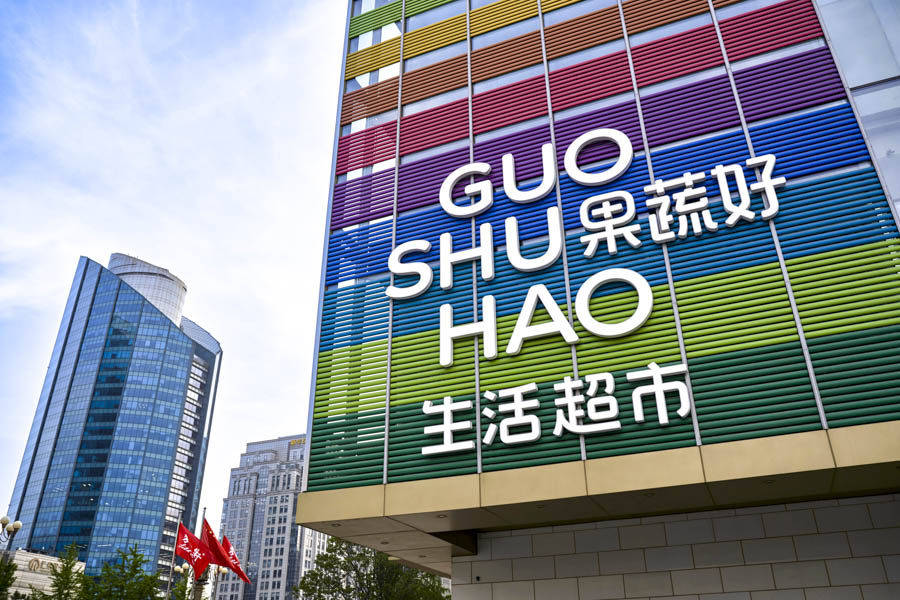
Basement (B2): Local supermarket
This second lower level is home to Guo Shu Hao Supermarket (果蔬好超市), where locals and travellers alike can stock up on fresh produce, groceries, and everyday essentials. This is a very practical and convenient stop, particularly for those staying in self-catering accommodation nearby.
Basement (B1): Practical finds
The lower level features everyday items such as shoes, luggage, hats, and leather goods, along with a small supermarket area. It can be a convenient place to look for travel-related purchases and practical items.
1st Floor and 2nd Floor: Fashion and casual wear
The first and second floors are largely dedicated to womenswear and designer brands. Here visitors will find a wide range of styles, from casual outfits to more fashion-forward pieces to traditional garments such as hanfu and qipao, as well as children’s wear and accessories. With so many options available, it is worth browsing and comparing a few stalls before making a decision.
3rd Floor: Menswear
The third floor is dedicated to menswear, stocking a wide range of styles from tailored suits and smart casualwear to more contemporary pieces. It is also home to the Silk Culture Museum, a worthwhile stop for those curious about the history and craft behind the fabrics on sale throughout the market. As with the floors below, it is worth taking the time to browse and compare a few stalls, particularly if you are considering a made-to-measure suit, where quality and price can vary between vendors.
4th Floor: Gifts, jewellery, and crafts
This floor shifts towards jewellery, watches, bags, and a variety of Chinese arts and crafts. Visitors will also find items such as calligraphy, paintings, tea, and decorative pieces, making this level especially suitable for picking up distinctive gifts.
5th Floor: Silk and tailoring
The fifth floor is the heart of the market for silk and bespoke tailoring. Visitors will find silk boutiques, scarves, embroidered fabrics, and a range of made-to-measure services, including custom suits, ready in as little as 18 hours, and silk garments with a dedicated 24-hour customisation service. It is a particularly rewarding floor for those seeking quality craftsmanship and something genuinely personal to take home.
6th Floor: Restaurants
The sixth floor is set as a dining area, marked on-site as ‘长安八号餐饮区 (Chang’an No. 8 Dining Area)’, where visitors can enjoy a range of restaurants and take a refreshing break from shopping. The line-up of venues changes over time, so it’s all the more reason to go and see what’s on the menu today.
What Shoppers Often Ask
- Are there specific vendors at the Beijing Silk Market known for high quality?
There are no officially recognised “top” vendors at the Silk Market, as it is a large and ever-evolving retail space rather than a curated boutique environment. The fifth floor is known as the main area for silk products and tailoring services, although there is no formal ranking of stalls. In practice, many visitors simply enjoy browsing, comparing quality, and gradually discovering vendors they feel comfortable with, often guided by personal experience and word of mouth over time.
- How to find authentic silk-clothing vendors in the Beijing Silk Market?
Many visitors choose to begin on the fifth floor, where silk products and tailoring services are concentrated. While the market does not designate official “authentic” vendors, shops that present their products clearly and are happy for you to examine fabrics at your own pace often provide a more reassuring experience.
- How to identify genuine Beijing silk from imitations?
Identifying real silk can be challenging without testing, though there are a few widely recognised signs to look for. Genuine silk is usually smooth and soft, with a natural, subtle sheen rather than an overly glossy finish. It drapes lightly and fluidly, giving garments an elegant, refined appearance. When handled, it may feel cool at first but tends to warm quickly against the skin.
If you remain uncertain, a simple burn test can help. Pull a few threads from the fabric and hold them briefly to a flame. Genuine silk, being protein-based, burns slowly and produces a white smoke with a faint smell reminiscent of burnt hair, leaving behind a soft, crushable ash. Synthetic fibres, by contrast, tend to burn more quickly, produce black smoke, and leave a hard, dark residue.
How to get to the Silk Market, Beijing?
Getting around Beijing is relatively straightforward, and the Silk Market is well connected by both taxi and public transport.
How do I get to the Beijing Silk Market using a taxi?
Taking a taxi or ride-hailing service is one of the easiest ways to reach the market. If hailing a traditional taxi, show the driver the name in Chinese, "秀水街" (Xiushui Street).
For ride-hailing, DiDi Chuxing (滴滴出行) is the most widely used platform in Beijing and the most practical option for international visitors. It supports overseas credit and debit cards as well as PayPal, is available in both Chinese and English, displays an estimated fare before the journey begins, and includes a built-in translation function. Those who already use Alipay may find it convenient to access DiDi directly through the Alipay Mini-Programme, which avoids the need to download a separate app.
How do I get to the Beijing Silk Market using public transport?
Metro: The most convenient metro access is Yong’anli Station on Line 1; follow the signs to Exit A1 for Silk Street.
Bus: Several bus routes serve the area.
Yong’anli Intersection North (永安里路口北): 28, 43, 120, 126, 403, 639, 673.
Yong’anli Intersection West (永安里路口西): 1, 9, 43, 99, 120, 126, 205, 666, 668, 673, 728, 729.
Tips for an Optimal Visitor Experience
Finding Fair Prices
At the Silk Market in Beijing, prices are rarely fixed. As a practical rule of thumb, many visitors start at around 30% to 50% of the first asking price and aim to settle somewhere around 60% to 70% of that figure, depending on the item, quality, and the vendor’s response.
Instead of focusing on a single “correct” price, it is helpful to think in terms of general value: materials, the skill of the maker, and finishing all influence what a reasonable range might be. Taking a moment to compare similar items across a few stalls can give you a better sense of what feels fair before you begin negotiating.
Beijing Silk Market Bargaining
Bargaining is a familiar and an expected part of the experience, and a little preparation can make it feel more comfortable. A polite, friendly approach often helps keep the exchange pleasant, while a calm and confident tone often leads to a better outcome. Simple phrases such as “What is your best price?”, “Can you do better?”, or “I’ll check in a few more places” can be useful when talking to vendors. This kind of interaction also reflects broader patterns of social etiquette in China, where respect, patience, and tone of voice often play an important role in everyday exchanges.
Quality Checks
Because many items are available in more than one place, it can be worthwhile to take a closer look at the stitching, finish, fabric feel, and overall workmanship. This is especially true for silk and clothing, where small differences in quality can affect both appearance and value. If something does not feel quite right, it is perfectly reasonable to keep looking or asking a few questions.
While the Silk Market in Beijing is best known for its lively bargaining and modern retail energy, it also sits within a much broader historical continuum of silk trade and cultural exchange. From the vast trading networks of the Silk Road, which linked East Asia with the Middle East and Europe, to historic centres such as Valencia's Silk Exchange and long-established silk traditions in cities like Shanghai and Bursa (Türkiye), silk has long shaped urban life across regions and centuries.
Seen in this wider context, Xiushui Street is not only a shopping destination but also part of an enduring global story of craft, commerce, and cultural connection.