

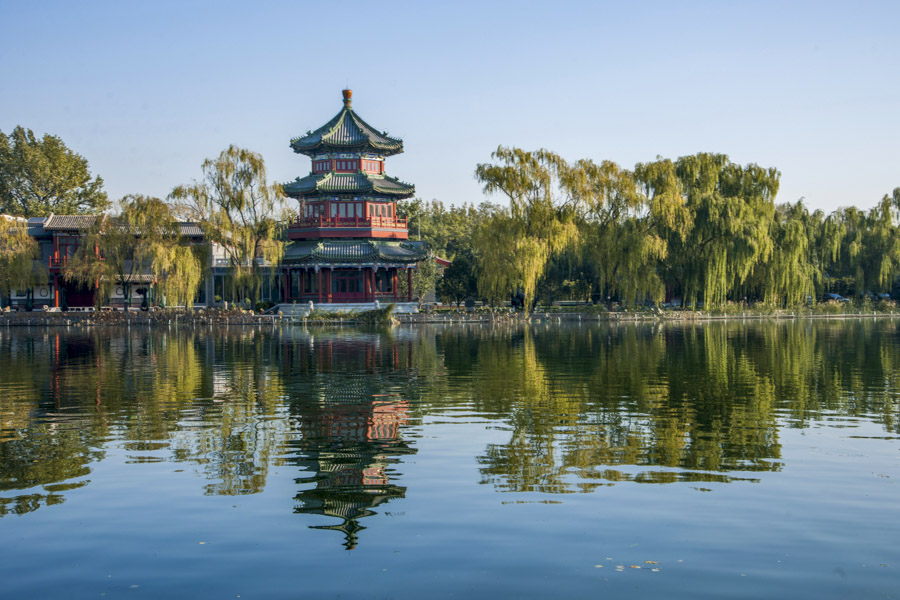
Shichahai (什刹海) is one of Beijing's most atmospheric historic quarters, centred on three connected lakes – Qianhai, Houhai, and Xihai – and the streets that surround them. This guide focuses on the lakeside neighbourhood around these waters, and it is here that most of the area’s landmarks are found.
Recognised as a national AAAA-level tourist site, a rating awarded to major attractions of national importance, Shichahai is officially designated the Shichahai Scenic Area, a historic and cultural district that remains a living neighbourhood.
Picture your time here: willow branches lean over the water and stir in the gentle breeze, fishermen wait patiently on the banks, street musicians play to passing crowds, cafés and restaurants serve local delicacies, and temples invite quiet reflection.
Yet Shichahai reveals something else just beyond the lakeside. Behind the water's edge stretches a dense network of hutongs (胡同), narrow alleyways lined with traditional siheyuan (四合院) courtyard houses, where the rhythms of neighbourhood life continue much as they have for generations. In these quiet lanes, visitors can explore the charm of an old Beijing hutong firsthand. The best way to find them is with a guide who knows which hutong to visit in Beijing.
Hutongs in Shichahai Area Tours
The hutongs of Shichahai do not announce themselves; they reward those who know which corners to turn and which gates to pause at, and a guided Beijing hutong tour transforms what might otherwise be a pleasant wander into a genuinely illuminating experience.
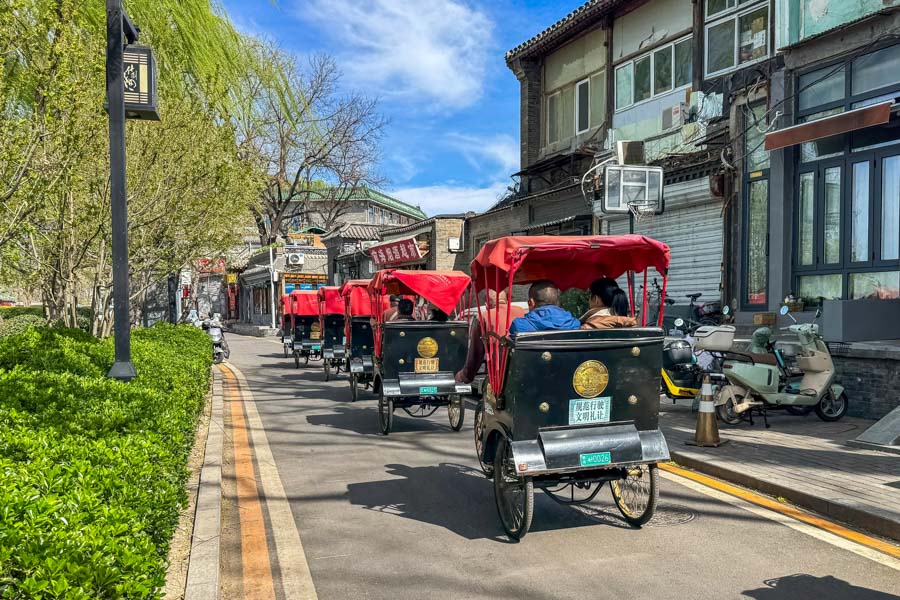
One of the most memorable ways to explore the hutongs is by cycle rickshaw, a mode of transport that has carried passengers through these alleys for many years and remains one of the most characterful ways to move around the area. For those who prefer to set the pace themselves, a Beijing hutong walk allows time to linger over architectural details and observe the rhythms of neighbourhood life.
Several of our Beijing tours include a visit to the Shichahai hutongs. The 4-day Best of Beijing Tour brings you to the Shichahai hutong area by rickshaw, followed by a walk through Houhai, making it an ideal introduction to old Beijing on your final day in the city. For a longer journey, the 14-day Central China Extended Tour includes a Shichahai rickshaw excursion on the second day, presenting an early and unhurried encounter with the city's historic neighbourhoods.
Best Time to Visit the Hutongs in the Shichahai Area
The Shichahai area is worth visiting year-round, with the best time depending on what you would like to experience, as seasonal changes and the passage of the day shape its character and local activities. The overview below highlights what to expect from season to season and from day to night.
Seasons
Spring and autumn are generally the most comfortable seasons for visiting Beijing: mild temperatures, clear skies and low rainfall make walking the lanes pleasant, and the trees lining the Shichahai lakes are particularly photogenic in spring. Summer brings longer days, though heat and humidity can be considerable; in the evenings the lakeside fills with people and the bars and cafés buzz, making the Shichahai Lake scenic area a lively destination.
Winter gives the lakes a distinct character. The Shichahai ice rink, set up on the frozen lakes of Qianhai and Houhai when temperatures are low enough, is a popular seasonal attraction. Ice skating here continues a broader Beijing tradition that dates back to Qing Dynasty ice games.
In recent years, the area has hosted organised winter events and seasonal rinks, including the Shichahai Ice and Snow Carnival or similar programmes. These are typically held in the coldest months (December–February), though exact dates vary from year to year depending on weather conditions and daily safety checks, much as they do at the Summer Palace at the same time of year.
Time of Day
Early morning brings calm: Tai Chi beside the lakes, the gentle ripples on the water, elderly Beijingers on the waterside promenades, and neighbourhood shops opening to welcome a new day. Late afternoon and sunset highlight the historic bridges between Qianhai and Houhai, their reflections shimmering in the warm glow of the sky. In the evening, lakeside restaurants and music bars fill with visitors, lanterns light the waterfront, and the area becomes lively yet relaxed, with strains of music drifting across the water.
History of the Shichahai Area
Shichahai had already become a distinctive feature of Beijing by the Jin Dynasty (1115–1234), with the three connected lakes tracing their origins to that period. The area was known as haizi, a term used in Mongolian contexts to denote a lake or water area, and at that time the lakes were primarily a local feature rather than a major thoroughfare.
It was during the Yuan Dynasty (1271–1368) that Shichahai grew in strategic and commercial importance. The lakes formed the northernmost link of the waterway system connecting Beijing with the Grand Canal, and the area developed into an important hub for the arrival and distribution of goods into the capital.
The narrow lanes now known as Beijing hutongs first appear in the city’s urban layout during the Yuan period. The word “hutong” is widely believed to derive from a Mongolian term meaning “water well”. As wells were central gathering points in early communities, the term came to be associated with residential lanes and neighbourhoods, although the exact origin and development of hutongs remain a subject of discussion.
By the Ming Dynasty (1368–1644), the area’s character began to shift. As sections of the waterway system were reworked and some canal functions redirected, Shichahai gradually assumed a more leisurely role – a place for lakeside promenades, temples, and princely mansions – while remaining a lived-in neighbourhood throughout the Ming and Qing periods.
In 1992, the municipal government of Beijing formally recognised the area’s cultural significance, declaring Shichahai a Historical and Cultural Scenic Area. This protected designation underpins conservation efforts and helps maintain the historic lakeside environment that visitors explore today through hutong walks and tours.
Things to Do in the Shichahai Area
Throughout history, people have been drawn to lakes and rivers for sustenance, transport, and trade, as well as for the sense of calm they bring. In China, early settlers along the Yellow River learned to live with these waters and harness their forces for the common good, and the lakes of Shichahai continue this relationship on a gentler scale.
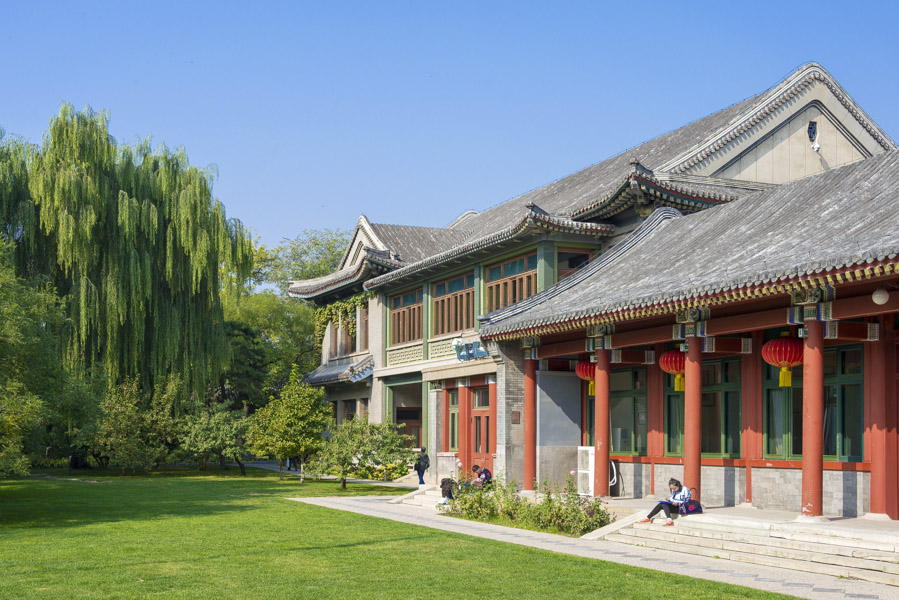
Slender hutongs wind through this landscape, forming the authentic fabric of Beijing, stitched together by the footsteps of generations. Along these lanes, courtyard homes, temples, and small shops stand side by side in a kind of urban harmony.
This section highlights notable sites and experiences around each lake, presented in order from north to south (Xihai → Houhai → Qianhai), so you can follow the area as if reading a map from top to bottom, discovering the lakeside features and nearby attractions in sequence.
Xihai (西海) – north (top of the map)
Landmarks by the water:
- Xihai wetland and waterside promenade, the quiet, wetland-like northern part of Shichahai, edged with willows and seasonal lotus beds. A peaceful lakeside path invites early-morning walks and birdwatching.
- Small piers and seasonal boating points, moorings and boat launches appear in season. The shallow margins attract waterbirds and aquatic plants, presenting good opportunities for photography and tranquil strolls.
Landmarks in the vicinity:
- Deshengmen Arrow Tower (德胜门箭楼), a surviving arrow tower from the former Deshengmen city gate, an important landmark of Beijing’s historic defences.
- Xu Beihong Memorial Hall (徐悲鸿纪念馆), dedicated to the life and work of the celebrated modern Chinese painter Xu Beihong (1895–1953). The site includes a small museum and a statue of the artist, illustrating both his bright artistic vision and the legacy he left in the development of modern Chinese painting.
- Beijing Jishuitan Hospital (积水潭医院), located to the east of Xihai; nearby lies Vairocana Hall (毗卢殿, Pí lú diàn), a small historic Buddhist temple notable for its serene atmosphere and traditional architecture.
- Huguosi Traditional Chinese Medicine Hospital Xinjiekou Clinic (护国寺中医医院新街口门诊), a local Traditional Chinese Medicine clinic, revealing how everyday services coexist with the historic character of the neighbourhood.
- Fayuan Mosque (法源清真寺), also known as Dewai Mosque, is located about a 15-minute walk from Deshengmen. Built in the late Ming or early Qing period, it reflects the presence of Beijing’s historic Sunni Muslim community. This complex uniquely combines Chinese courtyard-style architecture with Islamic religious elements.
Houhai (后海) – centre (middle of the map)
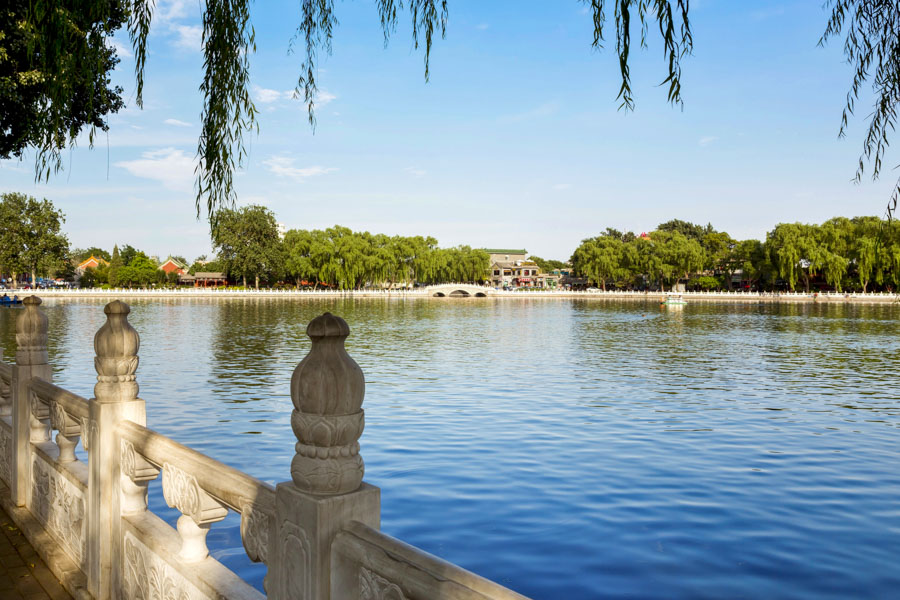
Landmarks by the water:
- Prince Chun’s Mansion (醇亲王府), a historic princely residence on the shores of Houhai. Today, the estate is open to the public, and its restoration is aimed at preserving the original interiors and landscaping. It also hosts exhibitions on the history of the Qing Dynasty and Beijing's architectural heritage.
- Former Residence of Soong Ching-ling (宋庆龄故居), set in well-kept gardens within the former Prince Chun estate. This house museum preserves the home and personal collections of Soong Ching-ling (1893–1981), honorary president of the People’s Republic of China and a widely respected public figure known for her lifelong commitment to social welfare.
The compound was remodelled after 1949, and a two-storey building in a semi-antique style was added in 1961. Soong moved here in April 1963 and lived and worked in the house until her death in 1981. The residence opened as a memorial museum the following year. Today the museum displays personal effects, manuscripts, and photographs that reflect her life and work. - Zhang Boju and Pan Su Former Residence Memorial Hall (张伯驹潘素故居纪念馆), a small house museum dedicated to the renowned collectors Zhang Boju and Pan Su. It provides a discreet cultural stop for visitors interested in modern Chinese art and book collecting.
- Dazang Longhua Temple, South Gate (大藏龙华寺), a modest yet historically rich temple tucked near Houhai. Step through its gates, and you enter quiet courtyards where centuries of incense and ritual linger in the air, a calm interlude that contrasts with the lively rhythm of the lakeside streets.
- Wanghai Lou (望海楼, “Sea View Building”), a traditional pavilion perched above the lake. Historically, such waterside towers offered visitors a place to admire the shimmering water and the gardens beyond.
- Houhai Park (后海公园), despite its name, functions more as a long lakeside promenade than a conventional enclosed park. Locals gather here for walks, boating, street music, and cafés, and the area comes alive in the evenings, when the lakeside fills with light and laughter.
- Nanshufang (楠书房) on the Houhai lakeside is a modern cultural “scholars’ studio” that displays and uses high-grade nanmu (楠木) furniture – a historically prized, fragrant, and durable timber long used for fine furniture, important architecture, and boatbuilding. This location is a place where nearby ducks and other birds are commonly seen.
- Wild Duck Island (野鸭岛), a small islet in Houhai offering ecological interest and a tranquil view across the lakeside. Access may be seasonal or restricted in the efforts to protect the habitat.
Landmarks in the vicinity:
- Yandaixie Street (烟袋斜街), a uniquely slanted hutong in Shichahai, once hosted tobacco-pipe shops and other merchants during the Qing and early Republican periods. Today, its old-style architecture blends with cafés, galleries, and craft shops. Despite the bustle, the street retains its charm, inviting visitors to wander its unusual angle and imagine centuries of daily life and business in this atmospheric lane.
- Ya’er Hutong (鸦儿胡同), a classic narrow lane in the Shichahai area connecting the lakeside with the inner network of hutongs. Its winding path and traditional courtyard homes make it an atmospheric route, ideal for a brief stroll or a scenic detour.
- Guanghua Temple (广化寺), a historic Buddhist temple just off Houhai’s shore in Ya’er hutong. Founded during the Yuan dynasty (1271–1368), it later became an important centre for Buddhist learning and activities in Beijing. Today it remains an active temple, offering a peaceful counterpoint to the lively streets along the lakeside.
- Beijing Drum Tower and Bell Tower (北京鼓楼和钟楼), located east of Houhai and just a short walk from the lakes. The towers boast panoramic views over the surrounding hutongs and occasionally host performances while serving as a helpful landmark for orienting yourself within the historic neighbourhood.
Qianhai (前海) – south, bottom of the map
Landmarks by the water:
- Hehua Market, also known as Lotus Market, and the adjoining Lotus Market Wharf (荷花市场码头) sit at the southern tip of Qianhai beside the lake. The market and its ceremonial paifang arch bearing the inscription 荷花市场 (“Lotus Market”) form a scenic lakeside terminus. The site traces its origins to the late Qing and early Republican periods, when seasonal stalls, performances, and lakeside gatherings took place here among the lotus blooms that gave the area its name.
Today the market forms a lively pedestrian promenade of restored buildings, cafés, creative shops, and cultural venues and is often included in the annual Shichahai Cultural Tourism Festival and other seasonal programmes.
Local curiosity: During the 2024–2025 Chinese New Year season (10 February 2024 to 28 January 2025), a striking illuminated dragon installation stood beside the ceremonial paifang arch, forming a “dragon belly” canopy decorated with xiangyun (祥云, auspicious cloud) motifs over part of the lakeside walkway.
- Wanning Bridge (万宁桥) is the oldest bridge on the northern section of Beijing’s Central Axis, which is inscribed on the UNESCO World Heritage list, and is located near Qianhai. Its structure and location reflect the long evolution of Beijing’s waterways from the Yuan period onwards, and it remains a clear historic landmark along the Qianhai shore.
- Yinding Bridge (银锭桥), also known as Silver Ingot Bridge, is a historic single-arch stone bridge linking Qianhai and Houhai. Its name refers to the curved profile of the arch, said to resemble a “yinding”, the traditional silver ingot used as currency in imperial China. Traditionally dated to the Ming dynasty, the bridge spans the narrow channel between the two lakes and runs roughly north–south.
Historically it served as an important crossing within the Shichahai neighbourhood. In 1918, during the Republic of China period, the bridge was renovated to accommodate modern traffic. The steep arch was lowered, and the deck reshaped to align more gently with the surrounding roads, allowing easier passage for pedestrians and vehicles.
Landmarks in the vicinity:
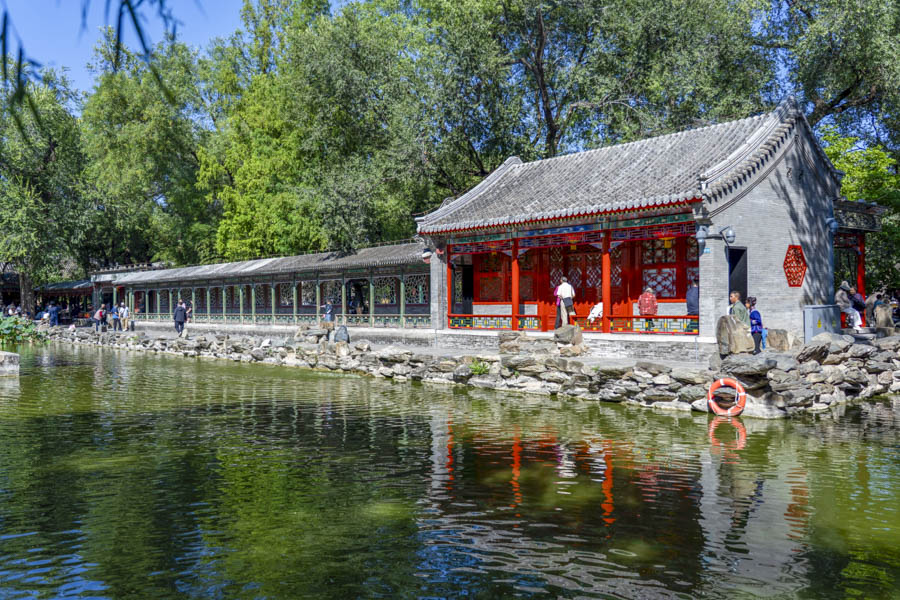
- Prince Gong’s Mansion (恭王府) is a large, well-preserved Qing princely compound whose courtyards, halls (for example, Jiale Hall), and gardens evoke imperial aristocratic life. It contains named interior spaces such as Xijin Studio (锡晋斋) and Yin’an Hall (银安殿); lakeside pavilions such as Huxin Pavilion (湖心亭); and garden highlights including the Bat Hall (蝠厅) and a historic Grand Theatre (大戏楼), which was used for aristocratic performances.
The Prince Gong’s Mansion Museum also runs exhibitions explicitly linking the site to Dream of the Red Chamber, demonstrating how certain interiors and objects have been interpreted through the lens of the novel. - The Former Residence of Mei Lan Fang, also known as Mei Lanfang Memorial Hall (梅兰芳纪念馆), preserves the home of one of China’s most revered Peking Opera masters. The courtyard house, originally part of Prince Qing’s mansion, was renovated after 1949.
Mei Lanfang lived and worked here from the early 1950s until 1961, and its quiet courtyards became the setting for the final decade of his artistic life.
Renowned internationally for his dan roles – graceful portrayals of female characters, particularly the type known as “verdant-robed girls” – Mei is widely regarded as one of the greatest exponents of Peking Opera. Accounts of his life portray a man of discipline and close observation: he famously insisted on rigorous practice, noting that audiences quickly notice a lack of rehearsal.
The museum displays costumes, photographs, calligraphy, manuscripts, and personal artefacts, illustrating both his artistic achievements and aspects of his daily life.
Conservation Efforts
The Shichahai area is formally designated as a municipal “Historical and Cultural Scenic Area” (历史文化风景区), first recognised in 1992 and later included among Beijing’s early groups of historic and cultural protection zones in around 1999. Local regulatory frameworks require a dedicated management office (景区管理处), routine patrols, coordinated law enforcement, and a public complaints and reporting system to help safeguard ecological conditions, cultural heritage, and public order.
Conservation efforts follow the principle of “protection first, rational use, and strengthened management”, combining the careful restoration of traditional siheyuan courtyard houses and temples with the adaptive reuse of major historic compounds, such as the restoration and museum development of Prince Gong’s Mansion, alongside ongoing improvements to public spaces. Together, these measures aim to balance the needs of tourism with the continuity of everyday residential life.
At the same time, the lakes are recognised as part of the Beijing section of the Grand Canal, which was inscribed on the UNESCO World Heritage List in 2014, and this status is reflected in wider conservation and management planning.
Entertainment, Parks, and Shopping in the Shichahai Area
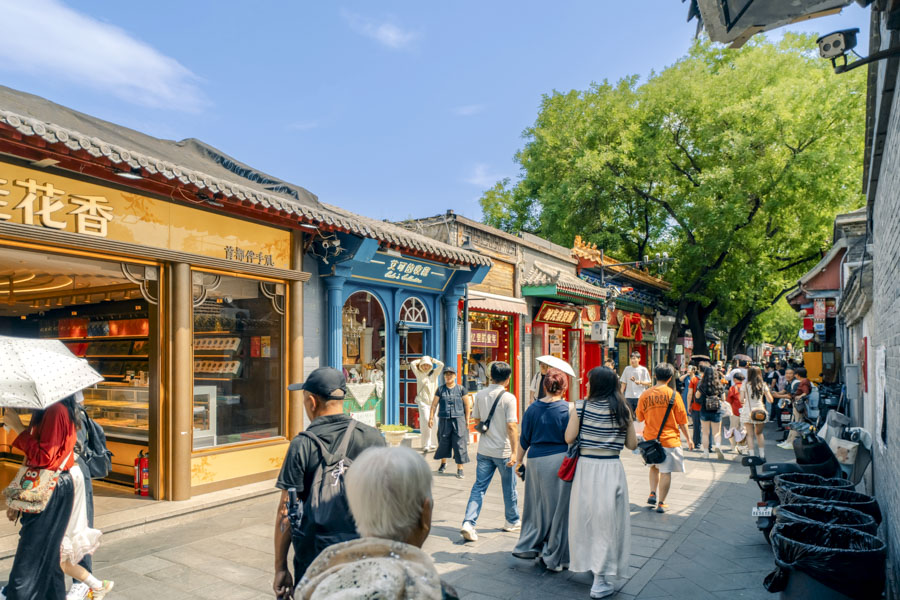
Shichahai is one of the places where travellers can experience the nostalgic atmosphere of Old Beijing, and it is often visited for a relaxed yet culturally rich outing. While the surrounding hutongs preserve centuries of history, visitors can also enjoy lakeside recreation, traditional performances, and evening entertainment, all within easy reach of the water.
Entertainment
Lake Activities
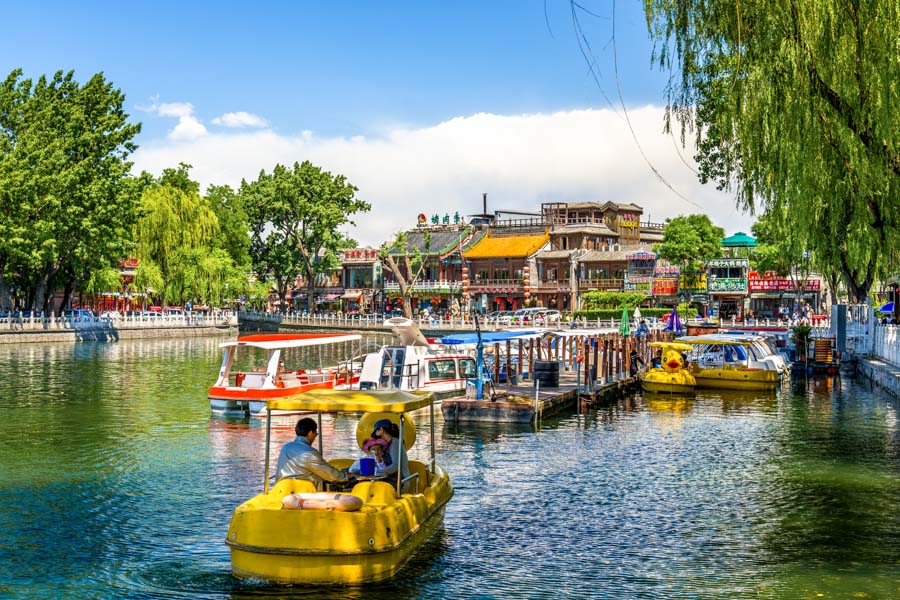
Boating on the lakes is a popular activity during the warmer months. Paddle boats, electric boats and traditional rowing boats depart from several piers around Qianhai and Houhai. Main departure points include Lotus Market Wharf (Hehua Market Pier), Haomeng Jiangnan Wharf and Dibai Wharf on Qianhai, as well as Soong Ching-ling Former Residence Wharf and Wild Duck Island Wharf on Houhai. Tickets are conveniently sold directly at the piers.
Boat services typically operate from spring to mid-autumn. Daytime hours are generally about 09:00 to 18:00, with some evening cruises running later during the summer. Visitors can rent electric boats or pedal boats or join a shared rowing boat operated by a boatman.
At night, lanterns and waterfront lights reflect across the lakes, making short boat rides a different experience from daytime visits.
In winter, when temperatures fall sufficiently, parts of Qianhai and Houhai become seasonal ice-skating areas. When winter deepens and the ice sets firm, Shichahai transforms into a vast natural rink, where visitors can glide across the frozen lake on skates or drift playfully by on ice bikes.
Shows
Shichahai also offers opportunities to experience traditional Chinese performing arts in accessible settings. The Shichahai Theatre (什刹海剧场) stages family-friendly productions that combine martial arts, acrobatics, and theatrical lighting. Its well-known Panda Kung Fu performance tells a lively story largely through movement and visual effects, making it easy to follow without knowledge of Chinese.
The Beijing Shichahai Shadow Art Performance Hotel (北京什刹海皮影文化主题酒店), tucked into a traditional hutong courtyard near Houhai, offers short shadow-puppet performances (皮影), shadow-painting workshops, calligraphy activities and light refreshments. It is a small, contemporary cultural venue that lets visitors experience the craft and storytelling of Chinese shadow puppetry.
Nightlife
As daylight fades, the lakeside areas take on a different character. Houhai becomes the centre of nightlife, where many traditional courtyard houses have been converted into music bars, cafés, and small restaurants overlooking the water. Visitors can enjoy acoustic performances, light jazz, and casual dining.
A well-known venue in the area is Lotus Blue, located on Di’anmen West Street. The bar is known for its relaxed atmosphere, international menu, and live music performances, attracting both visitors and Beijing residents.
While Houhai is lively, Qianhai tends to offer quieter lakeside terraces and restaurants suited to relaxed evening dining, while Xihai remains more tranquil, making it pleasant for a peaceful walk along the waterfront to wrap up the day.
Parks in the Shichahai Area and Nearby
Discover the smaller neighbourhood parks and playgrounds, informal grassy plots and tree-lined squares scattered throughout the hutongs and used by local residents.
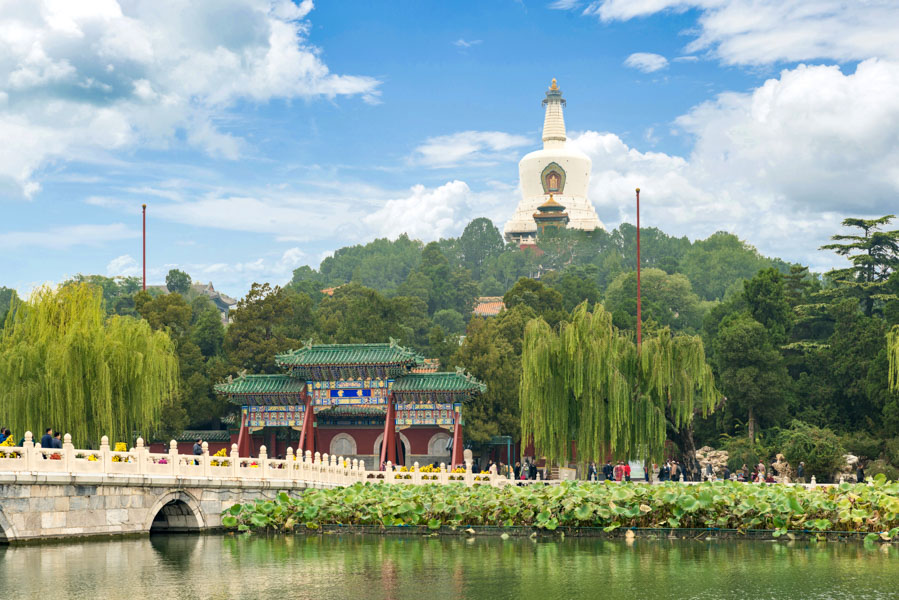
Beihai Park lies just beyond the north-western edge of the Shichahai area, a 5 to 15-minute walk from most hutong lanes around Houhai and Qianhai. This historic imperial park presents an appealing contrast, where winding paths, classical pavilions and lotus-filled lakes create a calm setting alongside the alleyways of the hutongs. The 17th-century White Dagoba (or White Pagoda) remains one of its most recognisable landmarks.
From Beihai Park’s eastern exits, it is about a 10 to 20-minute walk to the northern side of the Forbidden City, or to the Meridian Gate, depending on the route and pace.
Shopping
Shopping in Shichahai captures the traditional character of the surrounding hutongs, combining historic craft shops and local markets, while streets such as Yandaixie Street (Yandaixiejie) and Nanluoguxiang provide lively browsing.
Cultural shops and artisan studios offer a more hands-on experience, where visitors can watch craftspeople at work or join short workshops. Purchasing directly from these studios provides both a memorable souvenir and a deeper level of appreciation for Beijing’s living artistic traditions.
Traditional arts and crafts include cloisonné enamel ornaments (glossy, wire-edged designs in bright colours), hand-painted Peking Opera masks, intricate paper-cut artworks, and colourful clay figurines. One of the most charming of these is the “Lord Rabbit” (兔儿爷, Tu’er Ye), a rabbit-headed, human-bodied statuette traditionally associated with Mid-Autumn moon worship and the moon rabbit of the Moon Goddess Chang’e (嫦娥). Often depicted wearing warrior regalia or riding auspicious animals, it symbolises protection, health, family well-being, and good fortune.
Food in the Shichahai Area
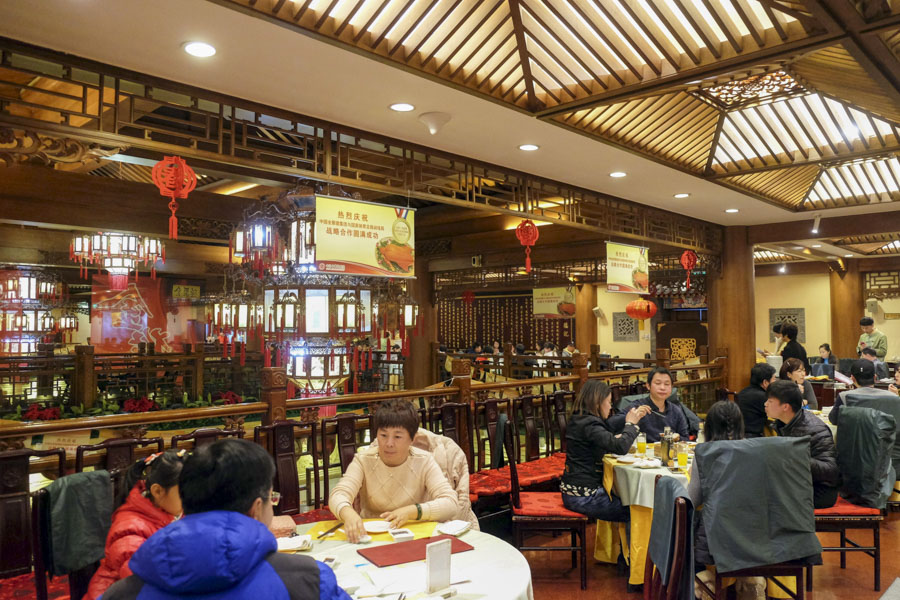
Shichahai’s hutongs and lakeside streets are home to a variety of eateries, from traditional Beijing kitchens to contemporary cafés. Many offer a waterside ambience, making dining a scenic and relaxing highlight of any Beijing hutong food tour.
Chinese Cuisine
Beijing’s traditional cuisine reflects the city’s status as a northern capital and imperial seat. Wheat-based staples such as noodles, pancakes, and dumplings dominate the menu, in contrast to the rice-focused cuisine of southern China. Signature dishes like Peking Duck, with its crisp skin and savoury meat, highlight the ceremonial traditions of historic banquets, while the use of soy, sesame, vinegar, and robust flavours distinguishes the region’s cooking.
Along the Shichahai lakes, many eateries offer both classic and contemporary interpretations of these dishes, often with scenic waterside views. Notable examples include:
| Establishment | Lake proximity | Speciality |
| Shanfu 山釜餐厅 |
Xihai | Korean-inspired dishes |
| Fu Linjiuge 芾林酒阁 |
Houhai | Pan-Asian cuisine with light modern twists |
| Quanjude 全聚德烤鸭店 |
Qianhai | A branch of the original iconic Quanjude Roast Duck Restaurant, established in 1864 on Qianmen Street |
| Old Beijing Noodle 老北京炸酱面 |
Qianhai | Classic zhajiangmian (fried bean sauce noodles) |
| Kaorouji 烤肉季 |
Qianhai | Grilled meats and skewers, popular for casual dining |
Vegetarian Restaurants
Around Hehua Market (Lotus Market), small restaurants and food stalls, including vegetarian-friendly options such as Peach, the Houhai branch, offer wholesome meat-free choices. For those seeking a more specialised or fine-dining experience, a short metro ride opens up access to a wider selection of vegetarian and vegan restaurants across Beijing.
Tea Houses, Bakeries, and Patisseries
Shichahai is home to a number of traditional teahouses, where visitors can enjoy a serene retreat from the lively lakeside streets. These establishments offer the chance to experience authentic Chinese tea ceremonies, sampling a variety of teas such as green, oolong, Pu-erh, and classic jasmine and learning about the history and artistry behind each brew. Many teahouses are set within classical hutong courtyards, allowing guests to savour both the flavours and the atmosphere at once.
A particularly renowned example is Tang Ren Tea House (唐人茶道听茶轩), located close to Qianhai Lake and established in a charming traditional wooden house. Here visitors can join tea-tasting sessions, observe ceremonial brewing techniques, and enjoy light refreshments while taking in the tranquil lakeside setting. Such experiences provide a gentle introduction to the art of Chinese tea if it is your very first time.
How to Get to the Hutongs in the Shichahai Area?
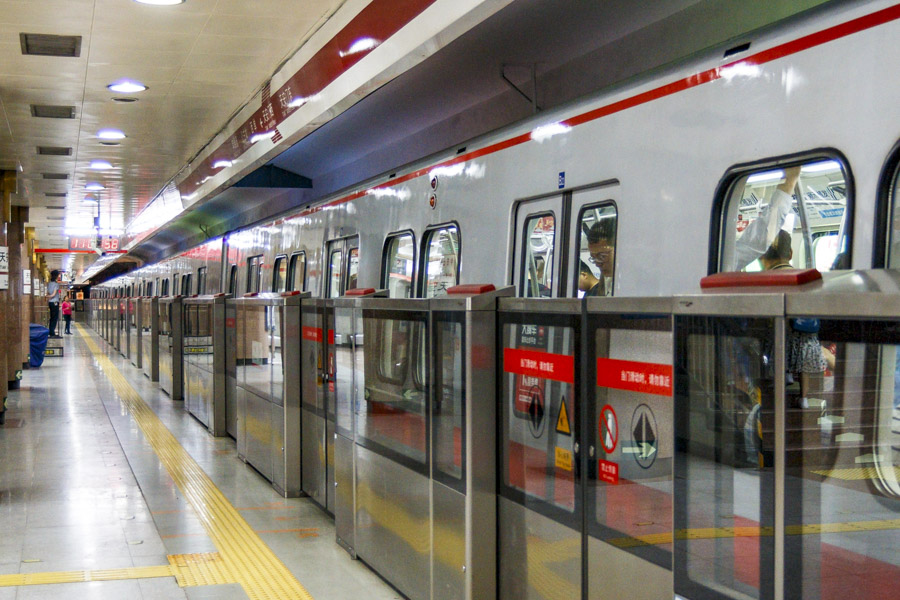
Getting to the Shichahai hutongs is straightforward. The most convenient option is the Beijing metro: Line 8 stops at Shichahai Station, with exits close to the lakes and within easy walking distance of many hutong entrances.
Nanluoguxiang Station, served by Lines 6 and 8, is another useful access point, opening onto the southern end of the shopping street and about a 10 to 15-minute walk from Houhai and the inner hutongs.
Some visitors also arrive via Beihai North or Gulou stations and continue on foot through the surrounding lanes. All of these lines run frequently from early morning until late evening.
Taxis and ride-hailing apps provide a convenient alternative for door-to-door travel, particularly later in the evening.
Travel Tips: Notes for the Curious Traveller
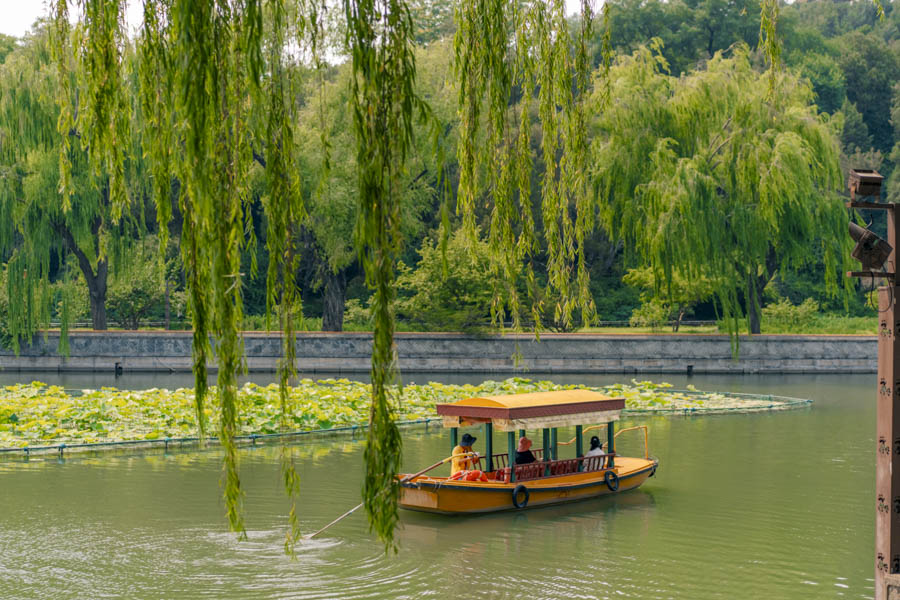
Shichahai is a relaxed and welcoming neighbourhood, and a little preparation goes a long way toward making the most of your visit.
Comfort and Preparation
Comfortable shoes and weather-appropriate clothing are your best companions here, leaving you free to follow whichever alley catches your eye.
Sun and Hydration
Sunscreen, a hat, and sunglasses are good to use in the warmer months, and a refillable water bottle will help you stay refreshed between teahouse stops. If you prefer a slower pace, a boat cruise on the lake offers a pleasant way to rest and take in the scenery.
Local Etiquette
Visitors are encouraged to be mindful of local etiquette when exploring the hutongs. Keeping voices low near courtyard homes, avoiding entry into private courtyards without permission, and asking before photographing people are all appreciated.
When visiting temples or traditional tea houses, it helps to follow local customs, such as removing hats, speaking quietly, or taking off shoes where requested.
A friendly smile is often welcomed, and many residents are happy to share stories, explain the history of their courtyard, or point out lesser-known spots nearby.
Getting Around
Exploring in daylight brings out the neighbourhood’s most atmospheric side. Keeping your phone charged, with a small portable battery pack to hand, ensures that navigation and local recommendations remain within easy reach.
From jasmine-scented mornings in the hutongs to lakeside suppers as lanterns start to glow, spend a slow afternoon in Shichahai. Linger on a bench, listen to a street performer, and let the streets and courtyards tell their stories.