

Chinese culture has developed through a sustained reflection on the meaning of human existence, the individual’s role within society, and the overall structure of the world. In this context, it is especially important to differentiate between religion and philosophy, concepts that are often closely interwoven in Chinese tradition. Religion is generally associated with faith, ritual practices, and collective forms of worship, while philosophy aims to interpret life through systems of ideas, moral principles, and behaviour patterns that are not necessarily rooted in cult or dogma. Though China is officially atheist under the governance of the Chinese Communist Party (CCP), the Chinese government officially recognises five religions: Buddhism (Fojiao 佛教), Taoism (道教), also known as Daoism, Christianity (基督教), which includes separate counts for Catholicism (天主教) and Protestantism (新教), and Islam (伊斯兰教). At the same time, for many people in China, religious and philosophical ideas operate as interconnected elements of everyday culture, ethics, and habitual ways of thinking.
In this context, the significance of teachings in China that extend beyond religion and are perceived primarily as philosophical systems becomes particularly evident. This guide focuses on Buddhism, Taoism, and Confucianism, three traditions that have profoundly influenced the foundations of the Chinese worldview and everyday ethics. Their ideas permeate concepts of duty and harmony, as well as attitudes towards nature, family, and society, providing different yet complementary approaches to understanding life and making moral choices. Even outside of temples and ritual practices, these teachings persist in language, customs, and behavioural patterns, serving as an important point of reference for people living in a changing world.
Roots and Development of Chinese Philosophical Thought
Philosophy in China did not emerge abruptly; it developed in response to significant historical, social, and cultural transformations in ancient society. Its origins are closely linked to the transition from a tribal order to a complex feudal system, where questions of morality, social harmony, and humanity’s role in the world became increasingly important. During the shift from the Shang dynasty (c. 1600–c. 1046 BCE) to the Zhou dynasty (c. 1046–256 BCE), a new mode of thinking began to take shape. In this evolving perspective, human beings were increasingly regarded as conscious actors rather than non-active participants in ancestral and magical rituals. They became aware of their role in life and their responsibility in the organisation and governance of society.
Within this new social reality, rituals gradually evolved from attempts to appease the forces of nature into expressions of reverence for ancestors and for Heaven, a symbol of the highest cosmic order. This transformation reflected a broader shift towards a human-centred perspective that became characteristic of early Chinese philosophical thought.
A pivotal stage in the development of Chinese philosophy was the period known as the Hundred Schools of Thought (c. 6th–3rd century BCE). During this time, numerous intellectual movements emerged across different regions of the Middle Kingdom. Thinkers of this era explored questions of social justice, political order, state governance, the nature of the world, and the essence of human existence. This intellectual current reflected the intense ferment of the Spring and Autumn Period (c. 770–481 BCE) and the Warring States Period (c. 475–221 BCE). Among these currents, three traditions proved especially influential in shaping the Chinese philosophical worldview: Confucianism and Taoism, both deeply rooted in ancient China, and Buddhism, which arrived from India.
Each of these teachings developed in response to specific historical and social challenges. Confucianism proposed an ideal of social harmony grounded in moral self-cultivation and responsibility towards the community. In contrast, Taoism diverged from formalised ethical systems, emphasising alignment with the natural order and fostering inner harmony with the world. Buddhism, for its part, introduced concepts of contemplative practice and liberation from suffering to the Chinese intellectual landscape. These traditions did not exist in isolation; they continually interacted, shaping a rich and dynamic philosophical culture.
In the centuries that followed, philosophical ideas became deeply embedded in China’s institutions and cultural life. Confucianism’s influence evolved significantly, particularly during the Han dynasty (202 BCE–220 CE), when it became the state philosophy. Taoist thought found expression in traditional Chinese medicine, art, and aesthetic theory. While Buddhism did not play as direct a role in state governance compared to Confucianism, it developed its own schools. This included Chan Buddhism, which came to embody ideals of inner freedom and practical wisdom. The interaction of these traditions gave rise to complex cultural syntheses that continue to be reflected in language, literature, ritual practices, and everyday conceptions of humanity and the world.
Influence of the Three Teachings and Legalism in China
Confucianism, Taoism, and Buddhism are commonly referred to as the Three Teachings (三教), a term that underscores their long history of coexistence, mutual influence, and synthesis within Chinese society.
Confucianism originated as an ethical and social doctrine associated with the thinker Confucius (551–479 BCE). Confucianism centres also on the pursuit of societal harmony. Its key concepts include Ren (humaneness), which is often regarded as the highest virtue and signifies benevolence, compassion, and kindness towards others. Li (ritual propriety) encompasses the correct conduct, rituals, and social norms that govern behaviour in society, fostering harmony and mutual respect. Another important concept is Xiao (filial piety), which underscores the importance of respect and duty towards one’s parents and ancestors, forming the foundation of family values and social stability. Zhengming (Rectification of Names) asserts that proper naming and the correct use of language are crucial for maintaining social order and social harmony.
The Junzi, or Gentleman, represents the ideal person in Confucianism, embodying moral integrity, self-discipline, and leadership qualities. A junzi influences others through virtue rather than force.
The formalisation of Confucianism occurred more significantly during the Han dynasty (202 BCE–220 CE), reinforcing the critical notion that personal virtue is inseparable from social stability and orderly governance. Confucian values were instrumental in shaping the civil service examination system, fostering the ideal of the educated official as a custodian of moral authority. Through the interpretation of classical texts and the practice of teaching, the Confucian tradition articulated an ideal in which personal virtue is inseparable from social stability and effective governance.
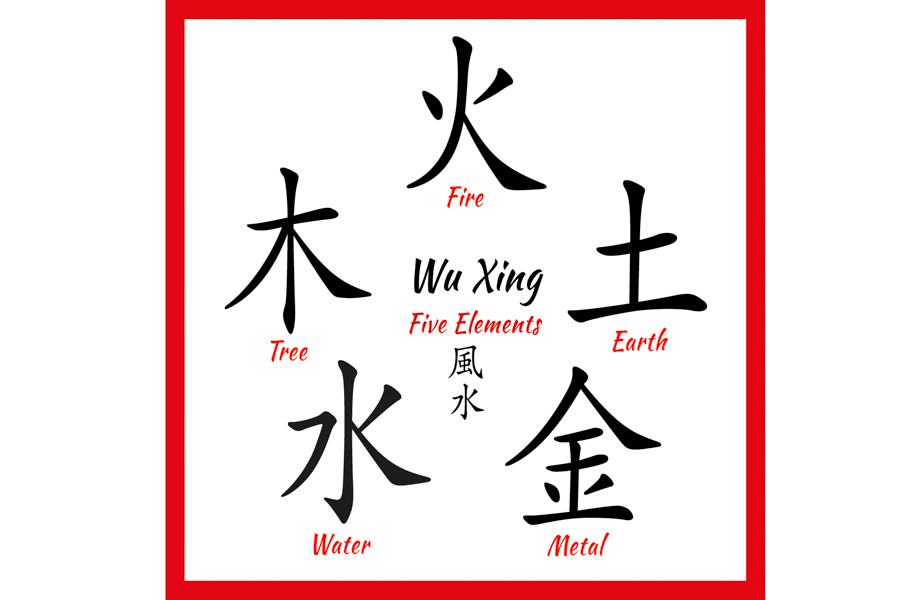
Taoism is traditionally associated with Laozi (6th century BCE), a semi-legendary figure credited with the authorship of the Tao-Te Ching (老子), a foundational Taoist text. Taoist philosophy focuses on inner harmony and the natural order of things, deliberately distancing itself from rigid social norms. At its core lies the concept of Tao (道) – “the Way” – which embodies the organic logic that underpins the structure of the world. These ideas stress the importance of spontaneity, simplicity, and living in accordance with nature. Additionally, concepts such as Yin and Yang illustrate the interplay of opposites, emphasising balance and harmony in both nature and human life. The Wu Xing (Five Elements) theory further explains the dynamic relationships among Wood, Fire, Earth, Metal, and Water, enhancing our understanding of change and interconnectedness. Feng Shui embodies Taoist principles, advocating for spatial harmony and alignment with nature.
Taoism profoundly influenced inner modes of thought, physical practices, and attitudes towards the surrounding world. Its ideas were expressed through poetry, painting, traditional Chinese medicine, and health concepts, fostering an alternative perspective that values naturalness, adaptability, and attentiveness to one’s inner state.
Buddhism emerged through the teachings of Bodhidharma in the 5th or 6th centuries CE, a semi-legendary monk of Indian origin. It is traditionally linked to the development of Chan Buddhism (禅宗), also known as Zen Buddhism, which played an important role in shaping the Chinese Buddhist tradition. It was introduced to China during the Han period (202 BC-220 AD), spreading later along the commercial and cultural networks of the Silk Road. By the 1st century CE, merchants and missionaries travelling from India to Central Asia brought the first texts, images and rituals in China. Buddhist thought introduced concepts of overcoming suffering and attaining liberation through inner practice, relying on translations of key scriptures such as the Lotus Sutra (妙法莲华经), Heart Sutra (般若波羅蜜多心經), and Diamond Sutra (金剛經).
The Four Noble Truths form the foundation of Buddhist teachings, addressing the reality of suffering, its causes – primarily greed – its potential for cessation, and the path that leads to its cessation, known as the Eightfold Path. This path offers a methodology for overcoming suffering and consists of Right understanding, Right values and attitude, Right speech, Right action, Right work, Right effort, Right mindfulness, and Right meditation.
Another essential concept is Anatta, or Non-Self, which teaches that there is no permanent, independent self; rather, what we perceive as the "self" is simply a collection of ever-changing processes. Buddhism also highlights the idea of impermanence (Anicca), which underscores that all things are transient and constantly changing, influencing how we understand life and our attachments.
Additionally, the principle of Karma asserts that actions have consequences, shaping one's experiences both in this life and in future rebirths. Ultimately, the goal of Buddhism is to attain Nirvana, a state of liberation from the cycle of birth and rebirth, marked by the cessation of suffering and desire.
After taking root in China, Buddhism engaged in an ongoing dialogue with indigenous philosophical traditions, gradually developing distinct forms of expression. It influenced meditative practices, artistic canons, and philosophical debates concerning the nature of consciousness, leaving a lasting impact on monastic life, literature, and everyday reflections on suffering and the meaning of existence.
Alongside these three major traditions, other currents in Chinese thought also significantly shaped political culture. One such current was Legalism (法家, Fajia), which emerged primarily as a theory of statecraft and practical governance during the latter half of the Warring States period (453–221 BCE). Legalist thinkers viewed social order as the result of strict laws (fa 法), clearly defined norms, and severe systems of punishment, emphasising the necessity of a strong central authority.
In contrast to Confucianism, Taoism, and Buddhism, Legalism focused not on individual moral cultivation but on the efficiency of governance and the subordination of personal interests to those of the state. Its most notable application occurred during the unification of China under the Qin dynasty (221–206 BCE), when Legalist principles formed the foundation of the administrative and legal system. Although Legalism rarely persisted as an independent philosophical school in later periods, its approaches continued to influence Chinese state practices for centuries.
Interactions and Syncretism in Chinese Philosophy
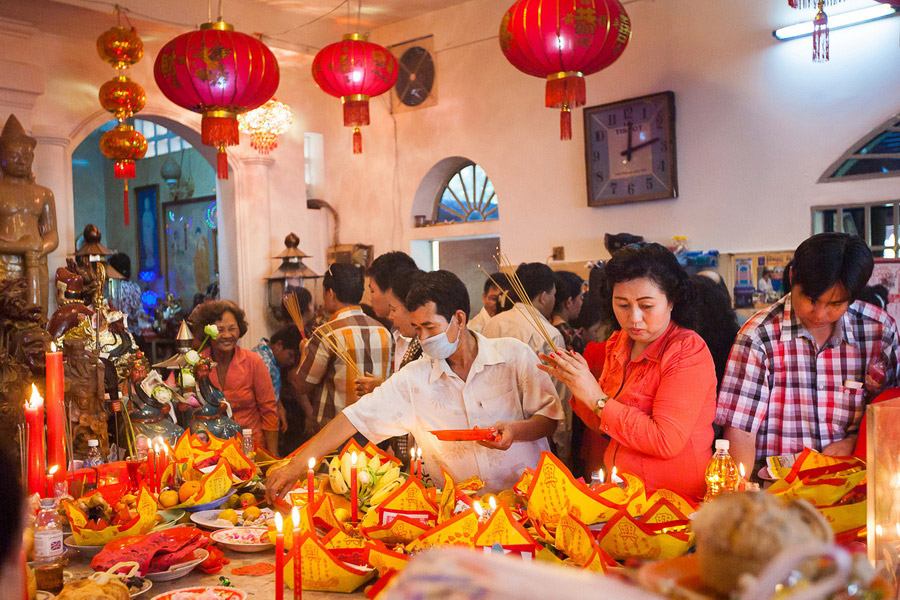
Chinese culture is characterised by a syncretic approach in which philosophical teachings coexist and are applied side by side in everyday life. Consequently, Confucian, Taoist, and Buddhist values are often closely interwoven within social norms, ritual practices, and calendar-based festivals, forming a cohesive and holistic cultural model.
Chinese Calendar and Seasonal Celebrations
Philosophical ideas are particularly visible in seasonal rituals and festivals, which serve to understand and interpret the passage of time and the rhythms of the year. The traditional Chinese lunisolar calendar (阴阳历) evolved as a system that accounts for both the phases of the moon and the movement of the sun. This reflects a profound attentiveness to natural cycles and a desire for harmony with the surrounding world.
Festivals associated with this calendar reflect the logic of the seasons, emphasising the close relationship between human life and nature. The Spring Festival (春节), which marks the beginning of the new lunar year, is seen as a time of renewal, the return of vital energy, and the restoration of family bonds. Its rituals aim to attract prosperity, good fortune, and harmony for the upcoming annual cycle. The Spring Festival also incorporates cultural elements such as the celebration of deities.
Qingming Festival (清明节), observed in early spring, embodies the Confucian ideal of ancestor veneration and moral continuity. The practicet of visiting and caring for graves becomes an established calendar ritual and a cherished family tradition.
Equally significant is the Lantern Festival (元宵节), which marks the first full moon of the lunar new year. This festival signals the end of winter and is associated with symbols of light, wholeness, and social unity. The lighting of lanterns and communal celebrations emphasise the shift in seasonal rhythm and the renewal of active interaction among people.
Similarly, the Mid-Autumn Festival (Zhongqiu Festival / Moon Harvest Festival, 中秋节) embodies the concepts of balance and completeness. The full moon represents fulfilment, family togetherness, and gratitude for the harvest. Collectively, these festivals illustrate how philosophical ideas about time, nature, and harmony are expressed through ritual practices and the annual cycle of celebrations.
Chinese Art and Culture Through the Lens of Philosophy
As in social life, philosophical ideas are closely woven across various forms of art, creating a unified and richly layered cultural fabric.
In theatrical traditions of Peking opera (京剧) and Kun Qu opera (昆曲). both listed on the UNESCO Intangible Cultural Heritage, Characters reflect Confucian values through their actions and choices. These performances embody notionsof duty, honour, and ethical responsibility.
Taoist philosophy significantly influenced the aesthetics of traditional Chinese painting, especially in landscape painting known as “shan shui” (山水画). Artists seek to capture both the physical beauty of nature and its deeper spiritual essence, reflecting a harmonious relationship between humanity and the cosmos. This philosophy also influences classical Chinese poetry, which often celebrates natural beauty and transience, conveying a sense of quiet wisdom.
The Buddhist tradition profoundly impacts Chinese culture, particularly in religious architecture, visual art, and sculpture. Iconography such as bodhisattvas and lotus motifs symbolises purity and spiritual awakening, embodying core Buddhist teachings. The Shaolin Monastery (少林寺), located at the foot of Wuru Peak in the Songshan mountain range, within Dengfeng County, Zhengzhou Prefecture, in Henan Province, exemplifies this legacy. Buddhist monks combine spiritual teachings with the practice of martial arts, illustrating a living connection to these philosophical ideas.
How Chinese Philosophies Shape Daily Life
In everyday life, philosophical ideas manifest as enduring norms and behavioural patterns, guiding individuals in navigating family obligations, social roles, and interpersonal relationships.
Confucian ideals of responsibility, mutual respect, and devotion to family form the foundation of social ethics and conceptions of duty. The principles of xiao (孝, filial piety) and li (礼, etiquette) are deeply embedded in child-rearing and social practices. In education and professional settings, respect for teachers and superiors is actively fostered. Additionally, attentiveness to the elderly, including those outside one’s immediate family, is encouraged. At a broader level, institutions such as the civil service examination system historically assessed both knowledge and moral character, reinforcing the ideal of integrity in public service and the fulfilment of social responsibility.
Taoism emphasises inner harmony and moderation, encouraging the pursuit of balance in everyday life. Central to this perspective is the concept of wu wei (无为, non-action), which promotes an approach to life that avoids coercion or force towards oneself and the surrounding world. These principles are reflected in health-related practices and martial arts such as qigong (气功) and taiji (太极), where balance and mindfulness are central to maintaining well-being.
Buddhism has introduced the values of compassion and tolerance into public consciousness. This is evident through acts of helping those in need, showing mercy to the vulnerable, and supporting charitable initiatives within the community. Additionally, Buddhist reflections on suffering and its alleviation have contributed to the spread of meditative practices that help individuals manage stress and inner unrest.
Chinese Philosophies of Life in Travel
When travelling through China, philosophical concepts reveal themselves in the surrounding cultural landscape, encompassing urban spaces, natural scenery, festivals, and visual imagery.
Philosophical Traditions Reflected in Chinese Festivals
Philosophical ideas are most clearly expressed through established rituals and collective practices observed during national festivals. One such occasion is the Hungry Ghost Festival (中元节), dedicated to the veneration of ancestral spirits and observed on the fifteenth day of the seventh month of the lunar calendar. Ritual offerings and the lighting of fires blend Confucian reverence for family ancestors with Taoist notions surrounding the boundary between the worlds of the living and the dead. At this time, notable places to visit include the mythologic and Buddhist Fengdu Ghost City (丰都鬼城), the Longmen Grottoes (龙门石窟) near Luoyang Ancient City, and Lingyin Temple (灵隐寺) near Hangzhou.
A comparable role is played by the Chongyang Festival (Double Ninth Festival, 重阳节), celebrated on the ninth day of the ninth lunar month. This festival is closely associated with respect for elders and rituals of ancestral remembrance. A key tradition of Chongyang is the mountain climbing tradition, recognised as a municipal intangible cultural heritage. It symbolises transcending misfortune and the pursuit of longevity and good fortune. During this period, many people visit sites such as Daqingshan Mountain (大青山), Wusutu National Forest Park (乌素图国家森林公园), and Panlong Mountain (盘龙山) in Inner Mongolia. This region’s landscape and developed infrastructure make it an ideal setting for seasonal pilgrimage and festive ascents.
Chinese Philosophy in Visual Arts and Calligraphy
Chinese philosophical ideas also find tangible expression in various forms of visual arts. The traditional technique of ink wash painting (水墨画) is characterised by the deliberate use of empty space, which is considered an integral element of the composition. This style employs a restrained use of expressive means and allows for the fluid, continuous movement of the brush. This approach closely resonates with the Taoist concepts of emptiness, non-violent action (wu wei), and the importance of following the natural course of things.
In the genre of figure painting (人物画), the philosophical dimension is expressed differently. Images of historical figures, scholars, and heroes from classical narratives often carry clear moral significance. This visual tradition reflects the Confucian view of art as a means of moral education, aiming to convey ethical ideals and social values. The subject of figure painting was also heavily influenced by Taoism and Buddhism during the Han dynasty.
Calligraphy (书法) holds a distinctive position, regarded both as an independent art form and as a practice of inner cultivation. Here, meaning lies not only in the written text but also in the quality of the line, the rhythm of the brushwork, and the balance of the composition. Each calligraphic gesture reveals the discipline, concentration, and state of mind of the calligrapher.
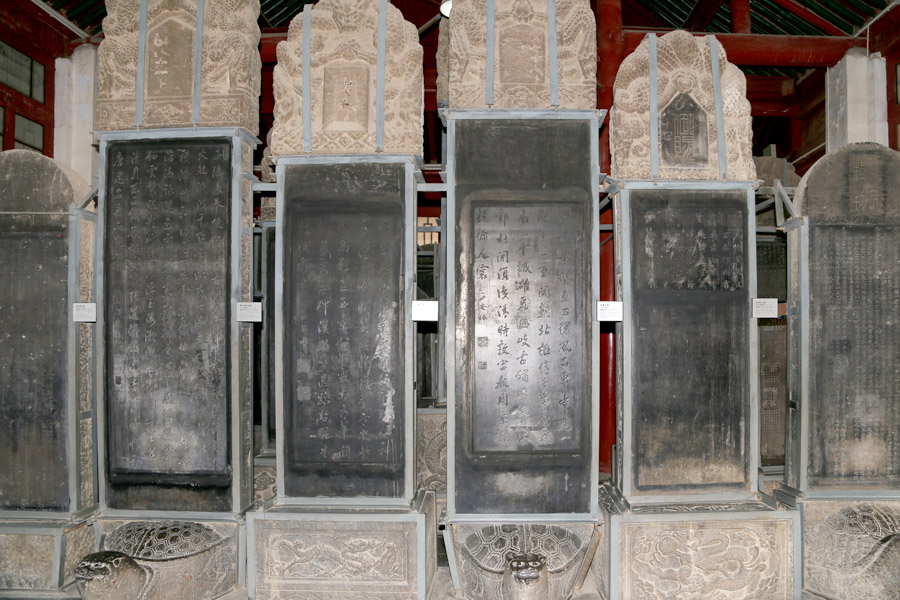
Travellers can experience this philosophical heritage in various cultural settings. In Xi’an, the Stele Forest Museum (Beilin Museum, 西安碑林) is a key site, housing one of the largest collections of stone steles engraved with calligraphy and classical texts. Nearby, the historic Shuyuanmen Ancient Culture Street (书院门) offers an opportunity to observe calligraphers and artists working in their traditional studios.
Philosophical Ideas in Chinese Literature and Poetry
China’s literary heritage provides travellers with yet another way to engage with philosophical perspectives of life. Classical Chinese poetry articulates reflections on time, nature, duty, and inner balance, often blending Confucian ethics with a Taoist contemplative vision of the world. Similarly, traditional prose and novels weave philosophical ideas into narratives about human relationships, social responsibility, and the pursuit of harmony.
Travellers interested in exploring philosophical ideas through literature may turn to the works of canonical authors whose writings have become cultural touchstones. The poetry of Du Fu (杜甫) and Li Bai (李白), for instance, offers nuanced reflections on nature, social responsibility, and the inner state of the individual. Within their verses, Confucian norms intertwine with Daoist imagery and Buddhist motifs of release from worldly concerns. To deepen this literary encounter, visitors can explore places connected with these poets, such as Li Bai Memorial Hall (李白纪念馆) or the Du Fu Thatched Cottage (杜甫草堂), both located in the vicinity of Chengdu in Sichuan province.
Experiencing Philosophy Through Traditional Performing Arts
Philosophical concepts are also reflected in the performing arts. Chinese opera integrates music, movement, and a rich system of symbolic gesture to convey Confucian ideals of loyalty, duty, and moral choice. Traditional dance forms develop themes of balance and spontaneity that align closely with the concepts in Taoism.
Visitors can experience this tradition through performances of Peking Opera, including productions such as The Qing Ding Pearl (打鱼杀家), a play which explores themes of family loyalty, honour, and filial piety central to Confucian ethics. The Tibetan theatrical performance Cham (羌姆), a ritual dance dedicated to expelling negative forces and venerating the Buddha, reveals yet another dimension of this heritage. Together, these forms of performance express philosophical ideas through costume, movement, and the symbolic language of ritual.
Philosophy in Temple Architecture and Sacred Spaces
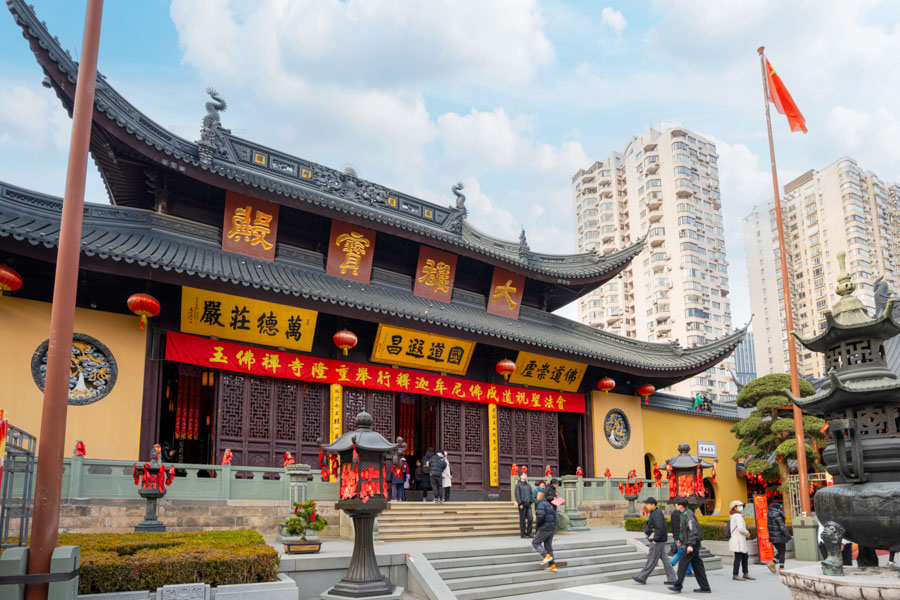
Temple architecture is one of the most vivid ways to engage with philosophies of life. Taoist and Buddhist temples are designed according to principles of symmetry, hierarchy, and harmony with the surrounding landscape. Their spatial organisation reflects ideas about the cosmos, the path of self-cultivation, and the pursuit of inner balance.
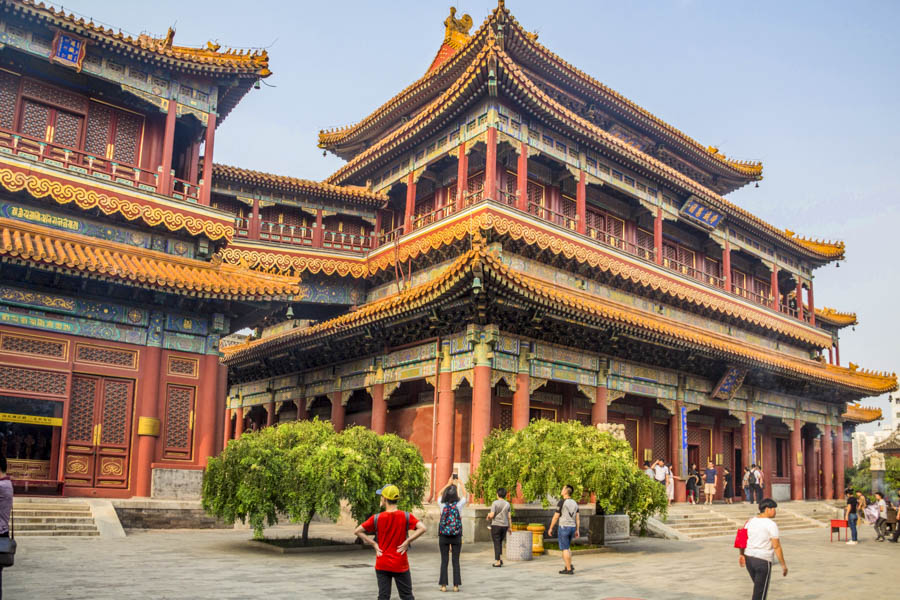
In Beijing, the Yonghe Lama Temple (雍和宫), the city’s largest Buddhist monastery, serves as a striking example. Its architecture combines Chinese and Tibetan elements, while the north-south central axis of the complex reinforces the concept of cosmic order. Another significant site in the capital is the White Cloud Temple (白云观), a major centre of Taoist tradition, where the sequence of halls and shrines embodies the concept of the Way and the harmony of nature.
In Shanghai, the Jade Buddha Temple (玉佛寺) stands out for its jade Buddha statues and the strict symmetry of its halls, translating ideals of spiritual purity and inner calm into architectural form.
In Xi’an, Daxingshan Temple (大兴善寺) is one of the most important religious sites, having played a notable role in the development of Buddhism in China. Its layout reflects traditional notions of ritual order and the spiritual journey.
Classical Chinese Gardens as a Living Expression of Philosophy
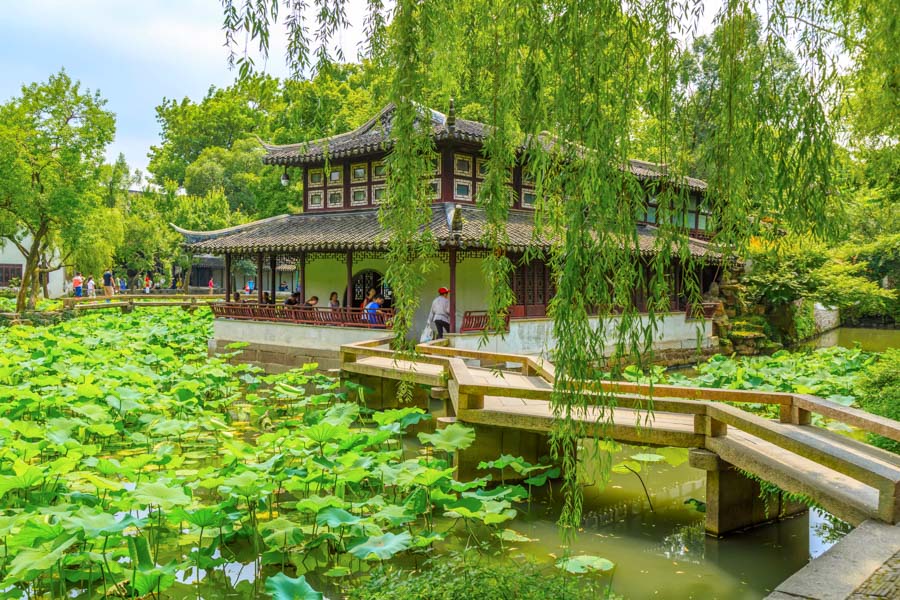
Classic Chinese gardens provide a direct embodiment of philosophical ideas about harmony between humanity and nature. Their composition is characterised not by strict symmetry, but by a carefully considered sense of naturalness. Winding paths, ponds, rock formations, and pavilions create the impression of a shifting landscape that unfolds gradually as one moves through it. Notable examples include the Humble Administrator’s Garden (拙政园) and the Lingering Garden (留园) in Suzhou. In their design, the interplay of water and stone reflects the balance of yin and yang, while architectural elements are subordinated to the rhythm of movement and quiet contemplation. In Beijing, the concept of the garden as a model of the world finds vivid expression in the Summer Palace (颐和园), where an intentionally constructed landscape unites mountains, lakes, and pavilions into a coherent whole that invites reflection and inner equilibrium.
Viewing China through the lens of its philosophical traditions allows for a perception of its culture as a holistic system of values, shaped by centuries of contemplation on harmony, responsibility, and inner balance. Buddhism, Taoism, and Confucianism continue to resonate in temple and garden architecture, in art and festivals, and in everyday habits, subtly guiding attitudes towards both the world and the self. While travelling across the country, an attentive observer will notice that philosophy here is not separate from life. It is expressed in the rhythm of time, in urban and natural spaces, and in the gestures, words, and forms through which China continues to articulate its enduring values.