

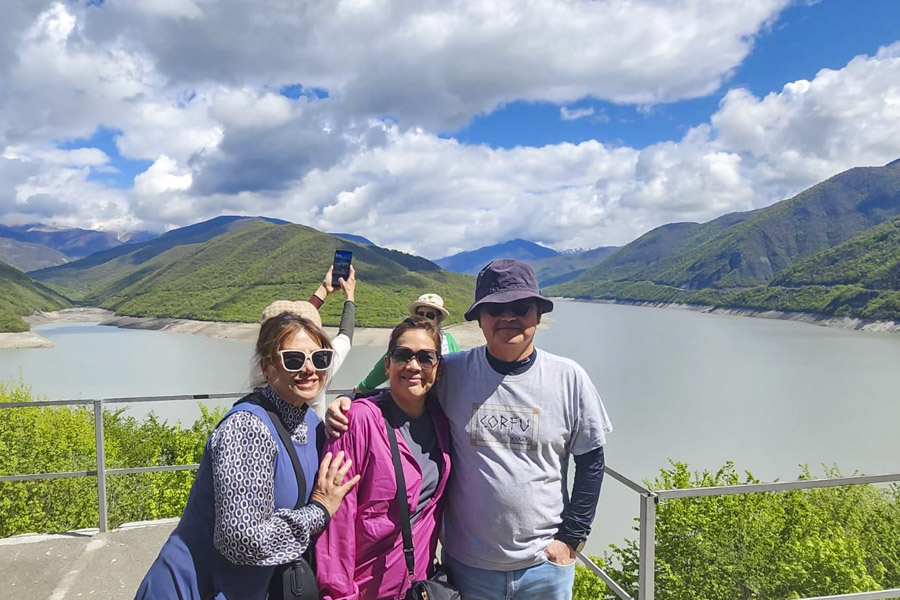
Experienced travellers know that the best way to understand Georgia doesn’t always come with a price tag. The country offers its finest treasures freely to anyone. A mediaeval monastery at dawn, a local festival spilling into the street, a fortress reflected in glacial water, and mountain landscapes are free things to do in Georgia.
This is a guide to exactly those places and moments.
Free Events in Georgia
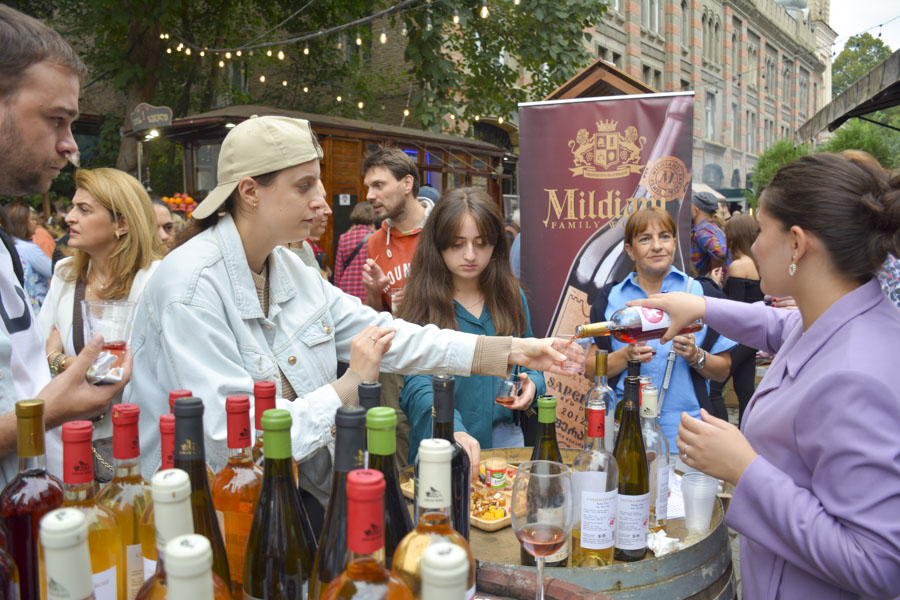
There are a handful of Georgian festivals that can deepen a traveller's sense of the country’s culture. Good food, folklore, and living tradition – some of the free attractions in Georgia are a matter of showing up on the right day.
National Day of Georgia Wine
The country has been producing wine for thousands of years – and since 2026, it finally has a national day to mark the fact. Every 8 May, visitors can taste wines from Georgia's many regions, learn about ancient winemaking traditions, and watch a lively programme of entertainment. If you happen to be in Georgia in early May, this is an adorably free experience.
Tbilisi New Wine Festival
On 9 May, the day after the National Day of Georgian Wine, Mtatsminda Park hosts the Tbilisi New Wine Festival. By 2027, the festival will be in its 18th year. The event is dedicated to Malkhaz Kharbedia, a Georgian writer and cofounder of the Wine Club, whose motto, "Wine for everyone and everyone for wine", still opens every edition.
Each festival begins with polyphonic singing, then continues into an afternoon of qvevri wine tastings, conversations with sommeliers, and live entertainment across the park. It is free to attend and can perfectly combine with the celebrations the day before.
Tbilisi Cheese Festival
Few free things to do in Georgia bring its regions quite as deliciously as the Tbilisi Cheese Festival. Running since 2010, it is an autumn event usually held in Rike Park. Cheeses from nearly every corner of Georgia are on show – from Racha, Tusheti, Svaneti, Samegrelo, and Imereti.
Visitors can learn how each variety is made, taste their way through the regions, and buy whatever they cannot leave behind. This festival in Tbilisi, an absolute joy and deeply Georgian in spirit, is free to enter.
Kolga Tbilisi Photo Week
Kolga means "umbrella" in Georgian, and every year in May, this much-loved festival spreads its canopy over photographers and photography lovers from across the world. On its 25th edition, the festival takes over a rotating selection of museums, galleries, and alternative spaces around Tbilisi, turning the city into an exhibition. Kolga is a distinctive event on Tbilisi's cultural calendar, open to everyone.
Tbilisoba
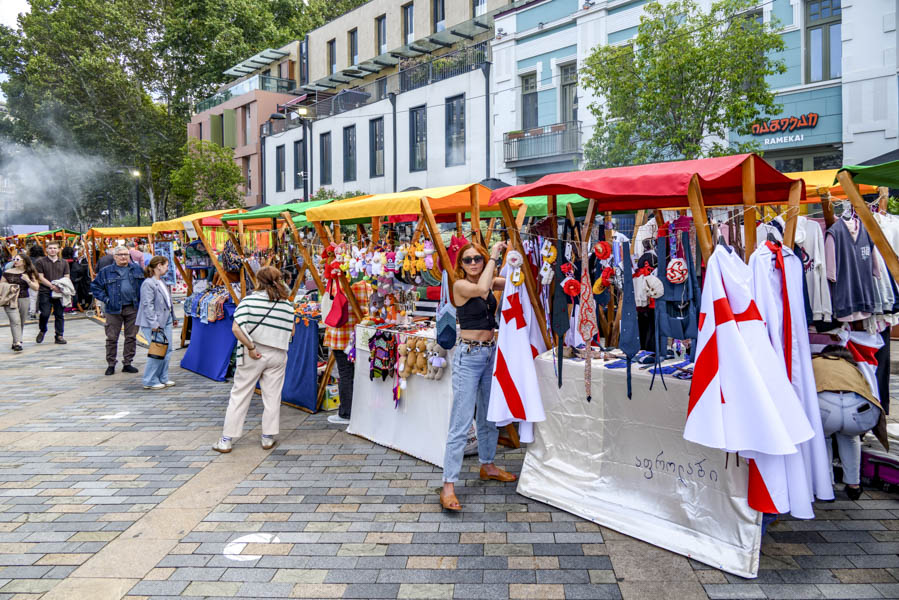
Among autumn festivities, Tbilisoba stands out. The whole city rejoices together – eating, strolling, catching up with friends, and drinking good Kakhetian wine. The only things you will need to open your wallet for are the traditional Georgian food and gifts.
One Caucasus Festival
One Caucasus Festival does not fill internet headlines. That is precisely what makes it worth seeking out. It is held during the second and third weeks of August in Marneuli Municipality, in the Kvemo Kartli region. The festival – organised by the NGO One Caucasus – aims to bring Azerbaijan, Armenia, and Georgia closer together through music, culture, and creative educational programmes.
The Marneuli region is home to a large ethnic Azerbaijani population, alongside smaller Armenian and Georgian communities who have lived side by side for generations. One Caucasus Festival commemorates that coexistence via cultural experiences in the South Caucasus.
Gviriloba in Kutaisi
Gviriloba derives from "gvirila" – the Georgian word for chamomile. The tradition began in Kutaisi in the early 20th century, when schoolgirls picked white chamomile flowers and sold them to raise money for tuberculosis patients. That simple, benevolent act grew into a citywide celebration – Kutaisoba – the day of Kutaisi. It falls every year on 2 May.
Girls in traditional gymnasium uniforms hand chamomile flowers to passers-by, a gesture that links the modern festival to its origins. The day features cultural events of every kind and closes with a gala concert in the central square.
Kutaisi International Short Film Festival
Held each October in ancient Colchis – the mythical land of the Golden Fleece – the Kutaisi International Short Film Festival is a compelling reason to time a visit to western Georgia in autumn. The festival comprises film screenings, contests, and masterclasses. A visit to nearby Gelati Monastery or Bagrati Cathedral turns an already delightful stop on the Georgian itinerary into a special trip.
Kefal Fest, Poti
Poti, Georgia's Black Sea port, celebrates its famous catch with the Kefal Festival. The event is centred on the grey mullet that local fishermen have been pulling from these waters for centuries. Its crown jewel is Argo Quest, an urban adventure game in which teams race through Central Park hunting for 50 hidden keys, the only competition of its kind in Georgia.
Beyond the chase, the day spills across the city with sport-fishing tournaments, a Georgian open-water skiing competition, craft stalls, and a laser show. The festival closes with a flash mob, live music, and Black Sea nightlife.
Rural Tourism Festival Gandagana, Batumi
Late in September or early in November, Europe Square in Batumi transforms into a window onto the mountain villages of Adjara as the Gandagana Rural Tourism Festival brings the highlands down to the city for two days of food, crafts, and living traditions. Costumed processions wind through the square, folklore ensembles fill the air with song, and the culinary space draws together three of western Georgia's diverse regional kitchens – Adjarian, Mingrelian, and Svan.
Visitors can join cooking masterclasses, try their hand at traditional embroidery, and browse an ethnographic space with highland crafts and local products available for sale. Gandagana is one of the most amusing things to do in Georgia for free on the traveller’s agenda.
Free Art Galleries and Museums in Tbilisi
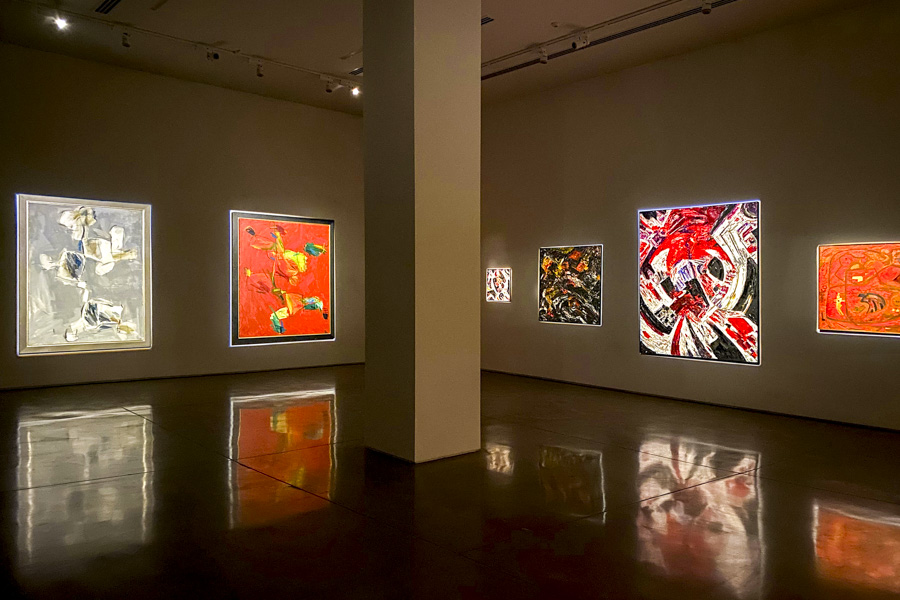
Photo source: www.baiagallery.com
Tbilisi is a hub of cultural events, and lovers of history and art can visit several galleries and museums completely free of charge. Here is the list of Georgia’s free cultural attractions.
Baia Gallery
When you enter Baia Gallery through the courtyard at the rear of 19 Pavle Ingorokva Street in Tbilisi, you find yourself in a small gallery of modern art. It showcases the works of Georgian artists, some of which are on offer for purchase. Visit their shop online. Ask questions – the staff will be eager to discuss art with anyone interested in the field. Please note the gallery is closed on Mondays. The second branch at 68 Andria Razmadze Street has a street-level entrance.
Window Project
This is another gallery of contemporary art in Tbilisi where visitors are welcomed without a ticket. The space is spacious and highlights the works of Georgian artists. Their website, www.windowproject.co, contains interesting information about fairs and other activities.
Tbilisi Photography & Multimedia Museum
This museum sits inside the Stamba Hotel on Merab Kostava Avenue – a vast former Soviet printing house. Its concrete chequered façade is partly draped in climbing plants. The museum's space preserves the character of the original building, and entry is free. The programme spans Georgian and international photography, with temporary displays that change regularly and reward more than one visit. Current exhibitions and opening hours are at www.tpmm.ge.
State Silk Museum
On the first Wednesday of each month, the State Silk Museum on Tsabadze Street opens its doors free of charge. Even outside a free admission day, the entry fee is low (12 GEL).
It was established in 1887 by one of the leading sericulture researchers and biologists, Nikolay Shavrov. His main idea was to demonstrate the richness and potential of silk production in the Caucasus. Georgia, situated on the Silk Road was able to interpret this raw material in its own unique way. And visitors can see that in the artefacts on display. The building itself is an architectural monument. Step inside a museum on a virtual tour on their website www.silkmuseum.ge.
Chronicles of Georgia
This architectural marvel, sculpted by Zurab Tsereteli (1934-2025), is perched atop Tbilisi, approximately 13 kilometres from the centre. You are surrounded by giant sculptured pillars that tell the story of Georgian history and Christianity. Besides, the view over Tbilisi from here is wonderful. Admission to this outdoor cultural site is totally free.
Free Cultural Heritage Sites to See in Georgia
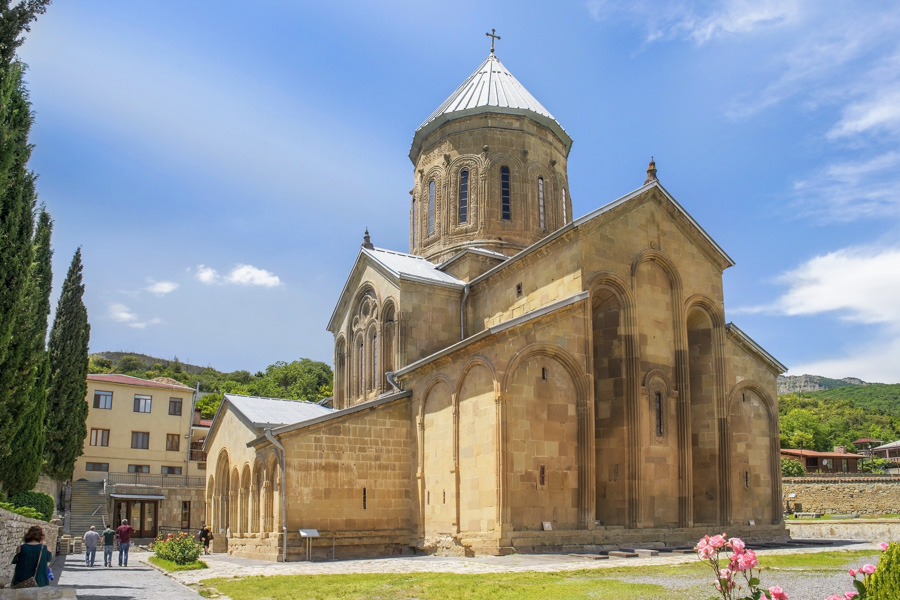
Free activities in Georgia, such as visiting religious sites, do not charge an entry fee.
Mtskheta lies only 20 kilometres northwest of Tbilisi and is part of the UNESCO World Heritage property “The Historical Monuments of Mtskheta”. The site includes Jvari Monastery, the 11th-century Svetitskhoveli Cathedral and Samtavro Monastery.
Near Kutaisi, Gelati Monastery stands on a forested hillside and is named a UNESCO World Heritage Site. The monastery is free to visit and pairs naturally with a stop at Bagrati Cathedral (Cathedral of the Dormition) in the city, which is on the UNESCO List of World Heritage in Danger. All these sites are covered in more depth in the Best Places to Visit in Georgia guide.
Other Free Historical Landmarks in Georgia
Batoni Castle in Telavi
In Kakheti, eastern Georgia, Telavi is overshadowed by Sighnaghi. But it merits a stop of its own. The place is Batonis Tsikhe – a fortified castle complex in the heart of the city. There is the palace of King Erekle II (1720-1798), who was born in Telavi, as well as a museum and a couple of churches. The palace and museum charge an entry fee, but the garden is free to walk through. Every year in early November, locals celebrate Erekleoba (or Telavkalakoba) – a festival dedicated to celebrating the anniversary of the king – filling the city with music, dances, and food.
Giant Plane Tree
Rising opposite the palace is the oldest landmark not only in Telavi but also in all of Georgia – a 900-year-old plane tree, 46 metres (150 feet) tall with a circumference of 12 metres (39.4 feet). It is amazing to realise that this living organism has grown here for generations. The place also has an observation deck that provides gorgeous mountain vistas.
Nadikvari Park
A well-kept and pleasant park is a short walk from the centre of Telavi. Its highlights are vantage points overlooking the Alazani Valley and the Caucasus Mountains. Come in clear weather and take your time.
Alaverdi Monastery
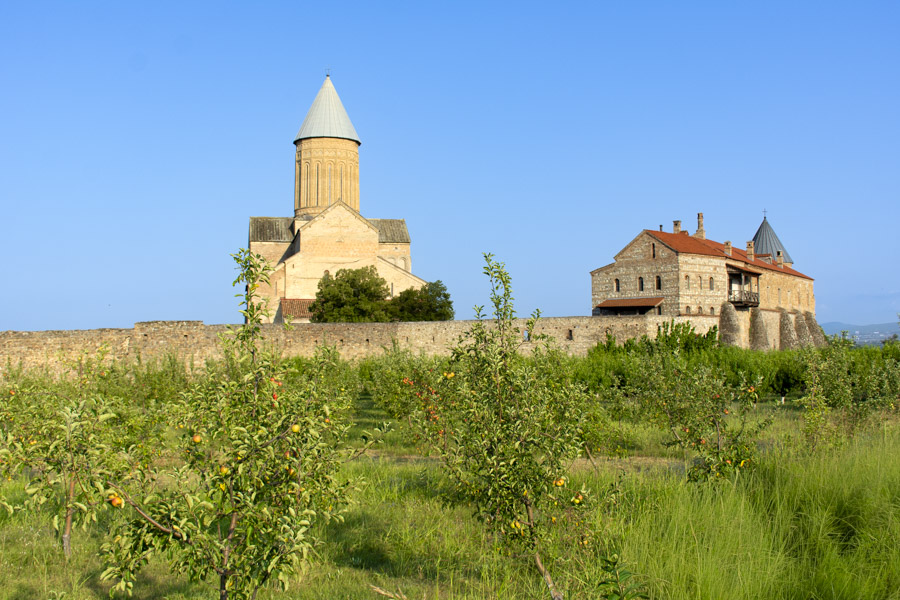
Another monastery complex near Telavi, Alaverdi, was founded in the 6th century by Josef Alaverdi, one of the Thirteen Assyrian Fathers. The cathedral is atmospheric inside and out – enclosed by a protective wall and set directly in the Alazani Valley amid vineyards.
Ikalto Monastery
All churches and monasteries in Georgia cost nothing to visit, and Ikalto Monastery is no exception. Founded by a monk, one of the Thirteen Assyrian Fathers in the 6th century, the complex has a fascinating second chapter: it became a full-fledged academic institution in the 11th and 12th centuries, teaching theology, rhetoric, astronomy, philosophy, geography, geometry, and church singing. It earns a place on your itinerary when you are in Telavi.
Gori Fortress
Gori is best known as the home of the Stalin Museum. But climb the fortress in the city if you want to see more. Entry is free, and the sights over Gori from the top are lovely.
Surami Fortress
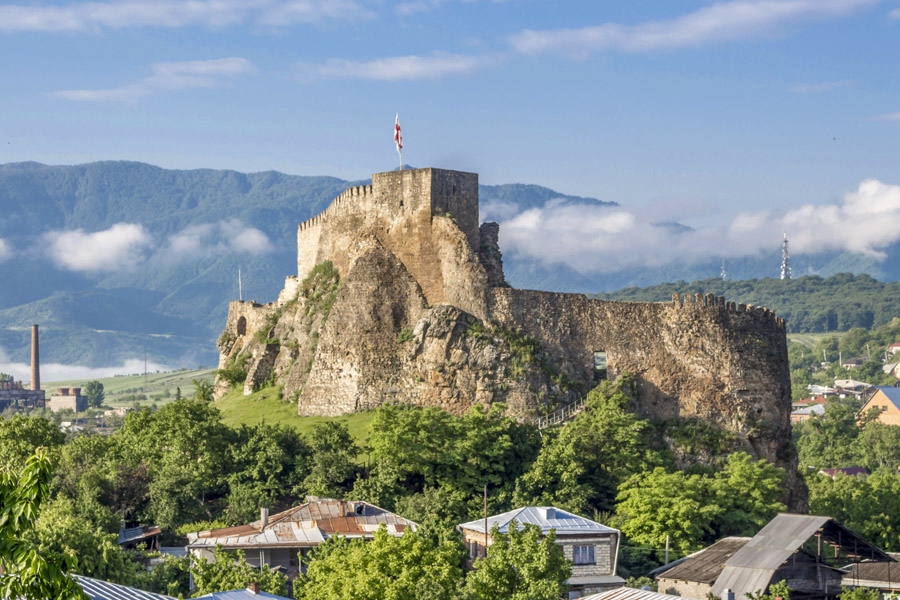
Continuing west from Gori along the E60 highway, the small resort town of Surami is an easy stop. While some find it unremarkable, others see epic historical ruins. Either way, half an hour is enough to photograph the fortress from the base of the cliff and from the top, where panoramas are dazzling.
Katskhi Pillar
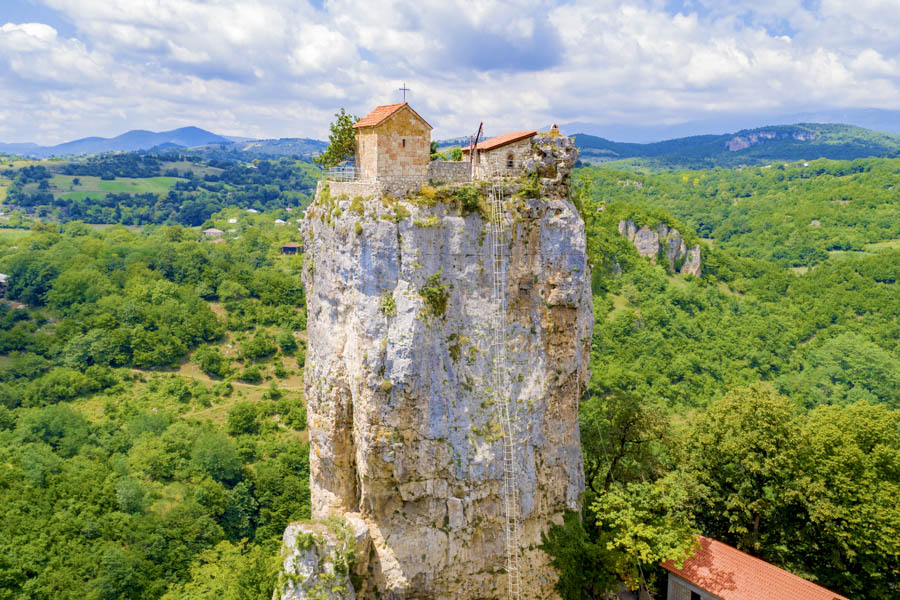
This truly extraordinary natural wonder in western Georgia, near Chiatura, is a 40-metre limestone column. What is even more impressive is how ascetic monks managed to build a church on its summit. You cannot climb to the top of Katskhi Pillar, but be sure to photograph it from a distance before walking to the base. Monks still live up there to this day.
Art Nouveau Buildings in Kutaisi
Not only is Tbilisi known for its Art Nouveau buildings, but so is Kutaisi, the second-largest city after Tbilisi. Walking through Kutaisi streets to explore them will cost nothing. For example, stroll to a building on 57 Tamar Queen Street, locals hailed as “Chinese house”. A good Art Nouveau example in Kutaisi is the Mon Plaisir Arch on Tsminda Nino Street, which once served as the entrance to the former cinema. Also, browse Shota Rustaveli Avenue and Tsereteli Street for the modernist-style abodes.
Kutaisi White Bridge
Visitors walking along the Rioni River will not miss the White Bridge, which takes centre stage in Old Kutaisi. Locals love this crossing for a few reasons: history, the city views, and the Picasso boy statue on the railing. Be sure to stop and appreciate the whiteness of the bridge, which matches the white rocks of the river underneath. And yes, it is completely free.
Kutaisi Synagogue
There are three synagogues in Kutaisi, and this is the largest. It has a lot to tell about the city's Jewish heritage. What makes it even more curious is that it took a full ten years to build before it was inaugurated in 1887. Walk through what was once the Jewish quarter and look out for this “stone Torah”.
Ananuri Fortress and Zhinvali Reservoir
Travellers heading to Gudauri or Stepantsminda (Kazbegi) usually stop at Ananuri Fortress and Zhinvali Reservoir – the mediaeval complex rising above those sapphire waters of the lake. Entry is free. Just a little further up the road, the Friendship Monument is another free stop for the panoramic views of the mountains.
Batumi Boulevard
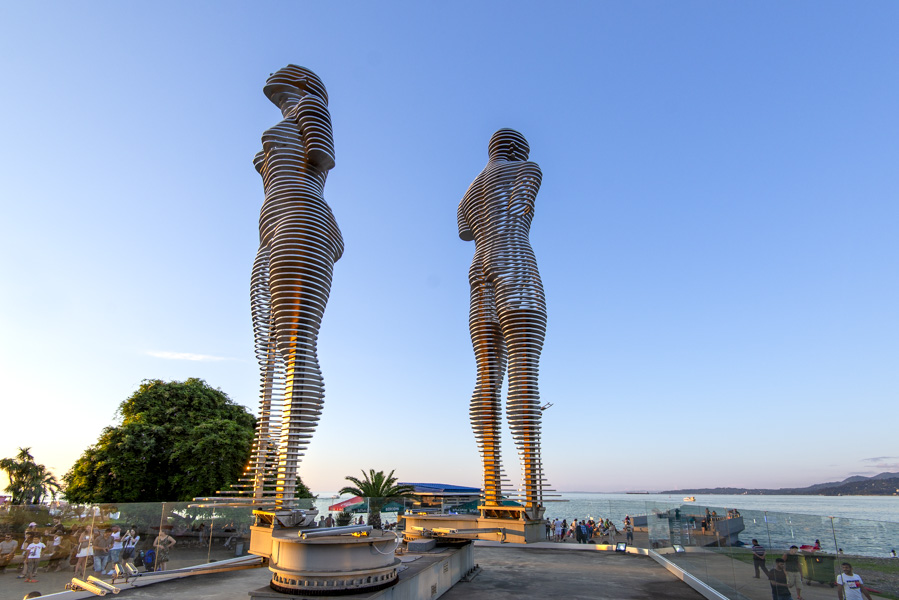
Batumi Boulevard is the soul of the city – a long, leafy promenade along the Black Sea coast, free to walk at any hour and pretty at every time of day. Along the way, keep an eye out for the kinetic Ali and Nino statue by Tamara Kvesitadze, a symbol of eternal love.
Dancing Fountains
Head to the New Boulevard in the evening for a popular free evening show in Batumi. A French dancing fountain installed on Ardagani Lake and a hologram performance add to the spectacle. There's a dedicated area with benches where you can sit and admire the show in comfort.
Colonnades
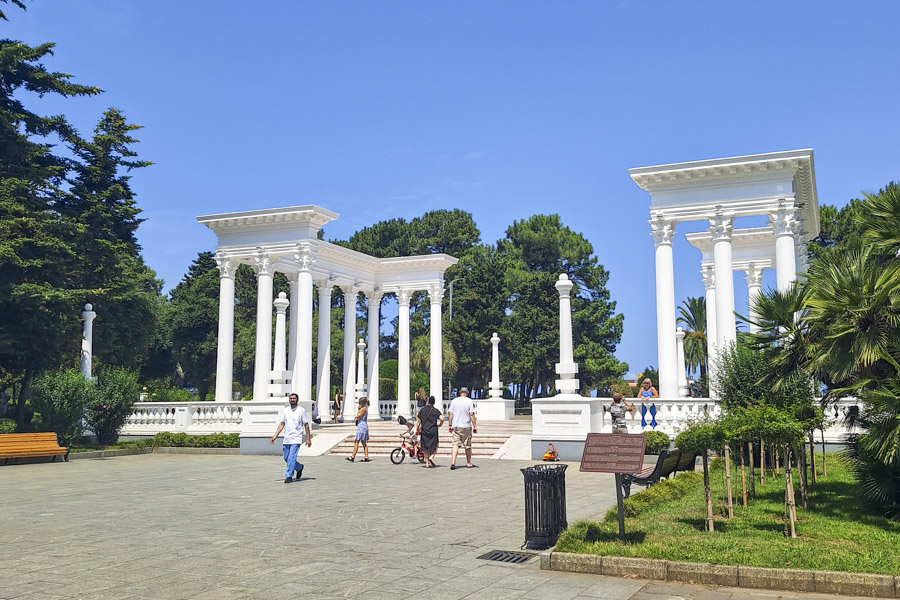
Colonnades deserve separate attention because they are a notable attraction in Batumi, gracing the boulevard for 80 years. This elegant neoclassical structure stands as a humble remnant of a more formal era in European resort architecture.
6 May Park (Central Park)
Batumi's Central Park has been a green refuge for the city since 1881, when a Prussian gardener first broke ground on what would become a beloved public space. Built around Lake Nuri, fed by underground springs, the park was later shaped by a French gardener. His eye for winding paths and varied planting is still visible today. You can find his statue near the Colonnades. Wander through the shaded walkways, rest by the lake, and, if you have children in tow, the zoo and dolphinarium are right on site. Entry to the park is free.
Piazza Square
Piazza Square is a little piece of Italy in Batumi. This photogenic corner, due to its colourful Venetian-style buildings, is entirely free to visit. The neighbourhood is dotted with restaurants and coffee shops. The area is charming in the evening when the buildings are lit up.
Free Outdoor Activities in Georgia
Georgia's landscapes are among the most scenic in the Caucasus, and most of them are free to enter. There are national parks, glacial lakes, and mountain trails above ancient villages. These outdoor activities in Georgia are free to explore.
Borjomi-Kharagauli National Park
Borjomi-Kharagauli is among the largest national parks in Georgia, stretching over six districts and offering twelve well-marked hiking trails, with shelters, picnic spots, and camping areas along the way. The park stays refreshingly quiet even in high season. The St Andrews trail and a visit in early June, when the rhododendrons are in bloom, are highly recommended. Book shelter stays in advance at the Borjomi National Park office and carry enough food and water for longer routes.
Lake Paliastomi
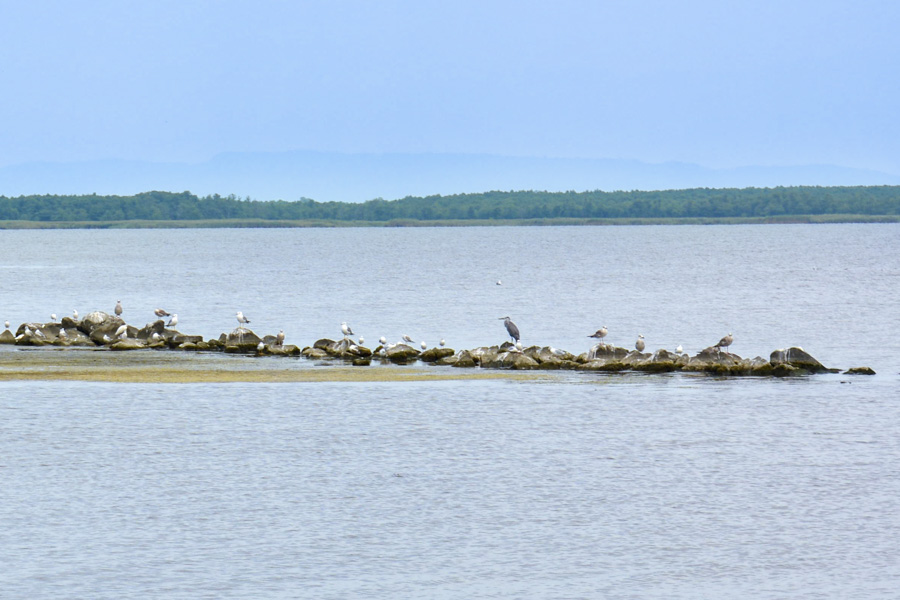
Tucked near Poti in the Colchic Rainforests and Wetlands part of the UNESCO-listed Kolkheti National Park, Lake Paliastomi is western Georgia's natural stop for birdwatchers. The vast reed fields are an important stopping and overwintering site for migratory birds, and the lake is especially good for spotting various tern species during autumn migration. The lake and its surroundings teem with unique flora and fauna.
Mountains and Hiking in Svaneti and Kazbegi
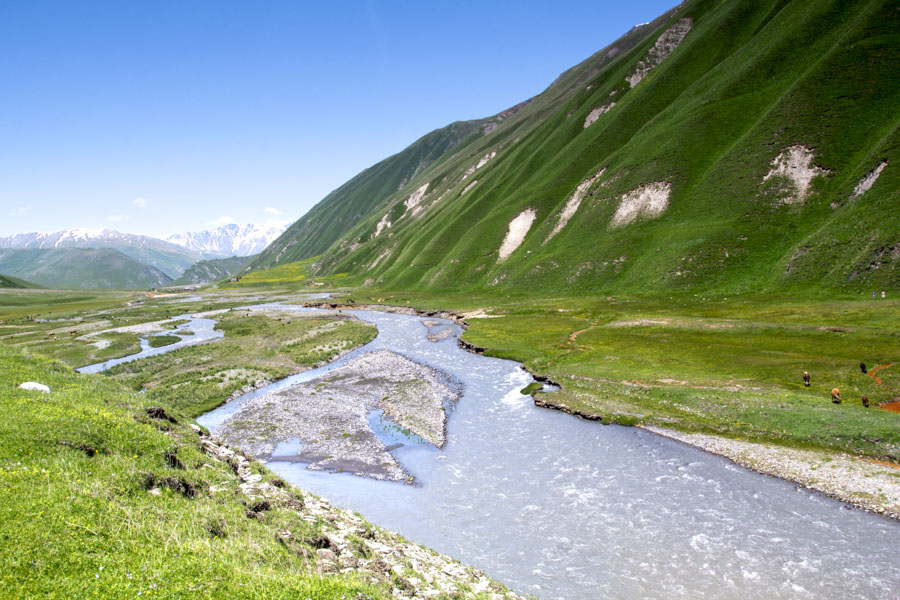
It is hard to imagine Georgia without its magnificent mountains. Every year, thousands of tourists come to hike and enjoy views that are only possible in high-altitude settlements. The most famous routes are the Mestia–Ushguli trail in Upper Svaneti, the Truso Valley in Kazbegi, and the picturesque paths of Borjomi-Kharagauli. What's more, the starting points of these routes can all be reached by public transport – meaning these are car-free hikes.