

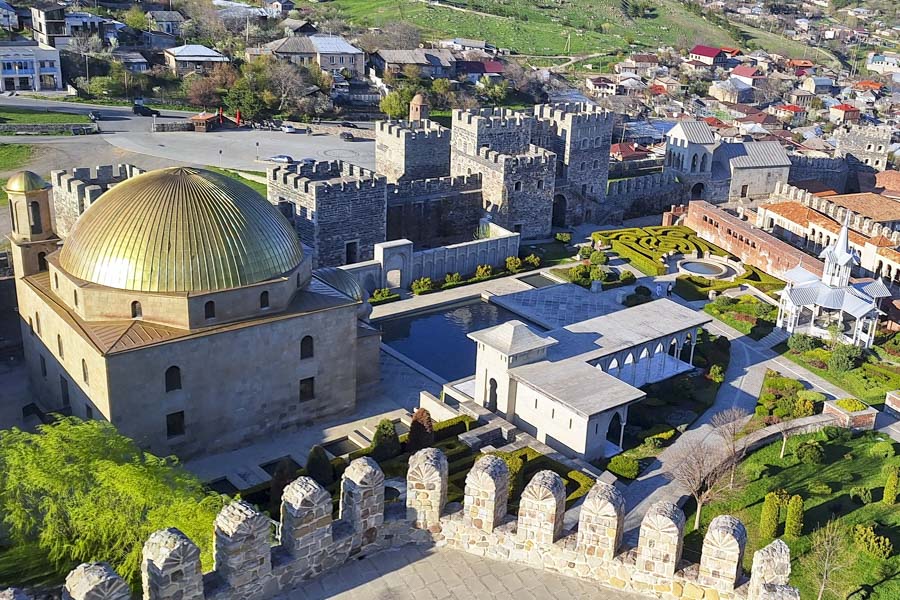
Choosing where to go in Georgia is the hardest part of the trip. The country is small enough to cross in a day yet varied enough that two travellers can visit at the same time and come back with entirely different experiences. One spends a week in the mountains of Svaneti. Another never leaves Tbilisi and Kakheti. And both are happy.
This is a curated list of 13 places that, together, cover the breadth of what Georgia offers: ancient cities, cave monasteries, wine country, a Black Sea coast, and mountain landscapes. Whether you are planning a weekend getaway or a longer vacation in Georgia, these are the top destinations to build your itinerary around.
For more depth on what to see and do across the country, visit our Things to Do in Georgia guide.
Old Tbilisi
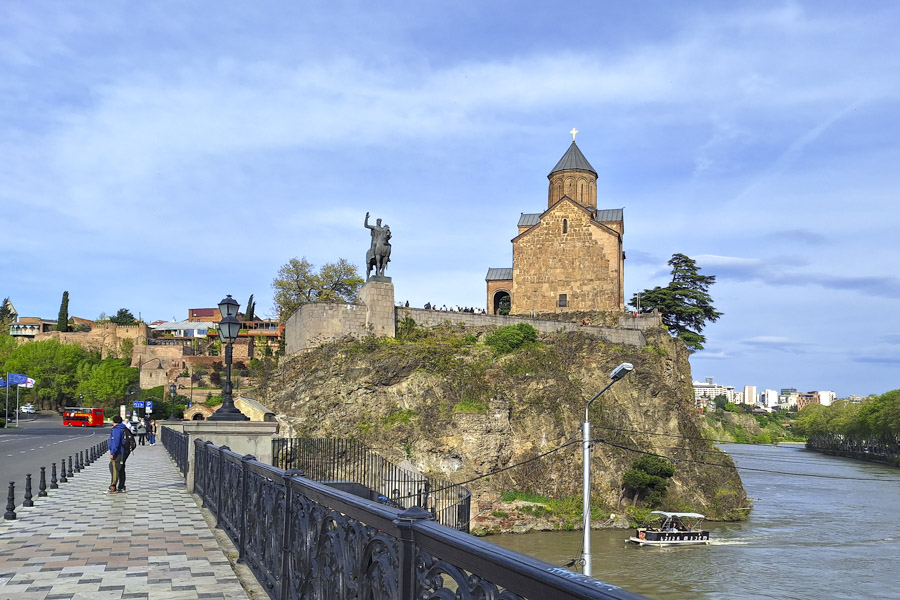
Tbilisi, Georgia's capital, welcomes more international visitors than anywhere else in the country. That is why, in our list of Best Places to Visit in Georgia, it takes the first spot. Especially if you are a same-day visitor with a few hours to spare before your next flight, the airport is around 40 minutes from the centre by bus and even faster by taxi.
Tell the driver to drop you near Freedom Square. Walking up the hilly streets, you will find yourself in the Sololaki district. Even two or three hours is ample to soak up the atmosphere. Find a cosy café and do people-watching. The aromas drifting from restaurant kitchens, music spilling onto the street, bright shops hung with traditional Georgian textiles and strings of churchkhela are all part of the vibrant atmosphere. And somehow, you are already part of the Old Town. And then a Christian Orthodox priest strides past in full vestments, or an Armenian clergyman from the nearby Armenian Apostolic Gregorian church of the Holy Mother of God. Old Tbilisi has always held several worlds at once.
The Bridge of Peace is only a stone's throw away; its glass-and-steel arch connects the two banks of the Mtkvari. Underneath, restaurant terraces stretch out over the water, and small boats carry tourists along the river. And the bold and white seagulls treat the whole thing as their personal domain. But on your way to the bridge, be sure to stroll through Shardeni Street first. Just beside Rike Park, a cable car climbs up to the Arab-built Narikala Fortress. From there, you can appreciate picturesque views over the city rooftops, Metekhi Church, and the statue of Kartlis Deda (Mother of Georgia).
All of this fits comfortably into a few hours. Then open Bolt or Yandex, book a taxi, and head back to the airport. Happy and ready for your return.
Mtskheta and Jvari Monastery
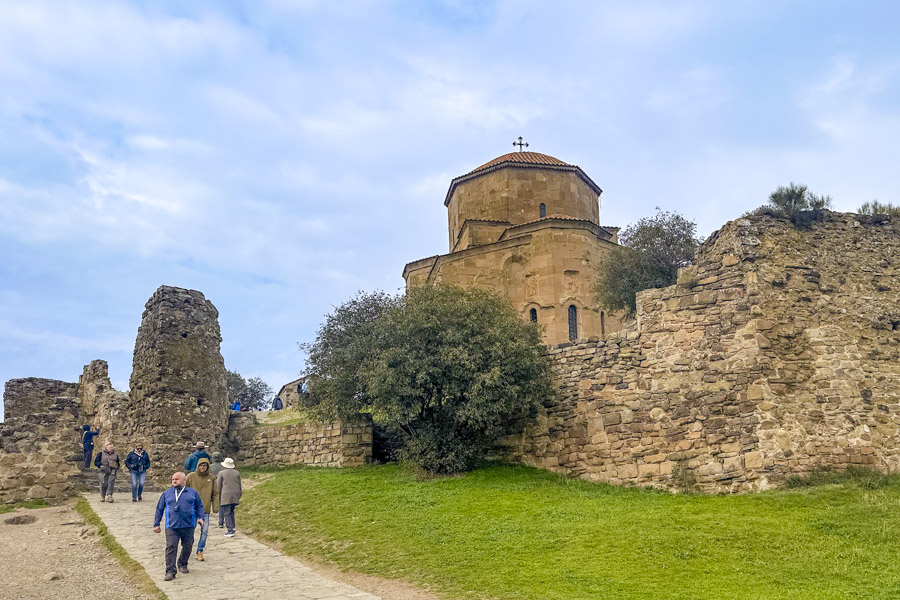
These landmarks are the best places to visit in Georgia. And it is quite understandable why. Because they are stunning and are UNESCO World Heritage sites.
Mtskheta, Georgia's capital before Tbilisi, and the Jvari Church fill visitors, if not with spirituality, then at least with quiet reverence. They sit close enough to Tbilisi to combine with a city visit in a single day. But if your stay in Georgia extends to two days or more, a dedicated day trip is exactly the right way to do it.
Mtskheta charms you immediately with narrow cobblestone streets, colourful balconies, and the unhurried pace of a town. But its centrepiece is Svetitskhoveli, an 11th-century cathedral and a sacred place of Georgian Orthodox Christianity. Cover your head and shoulders before entering. Inside, worshippers pray before icons, holding candles, surrounded by large mediaeval stone walls and columns. The whole space is saturated with silence and something close to sadness. Perhaps it is the weight of everything this place has survived. Or perhaps it is written on the faces of the believers themselves as they pray for hope, forgiveness, or healing. A mystical grandeur amidst it. And if a service is underway, the polyphonic singing may make your eyes water.
“Jvari” means “cross” in Georgian. The church is a few centuries older than Svetitskhoveli, perched on a hilltop just above Mtskheta, on the very spot where St Nino – a woman preacher who brought Christianity to this land called the Kingdom of Iberia at the time – planted a wooden cross. Inside, the same sense of antiquity and weight. Outside, a cool breeze and beautiful vistas across twisted rivers snaked through the valley.
Kakheti Wine Country
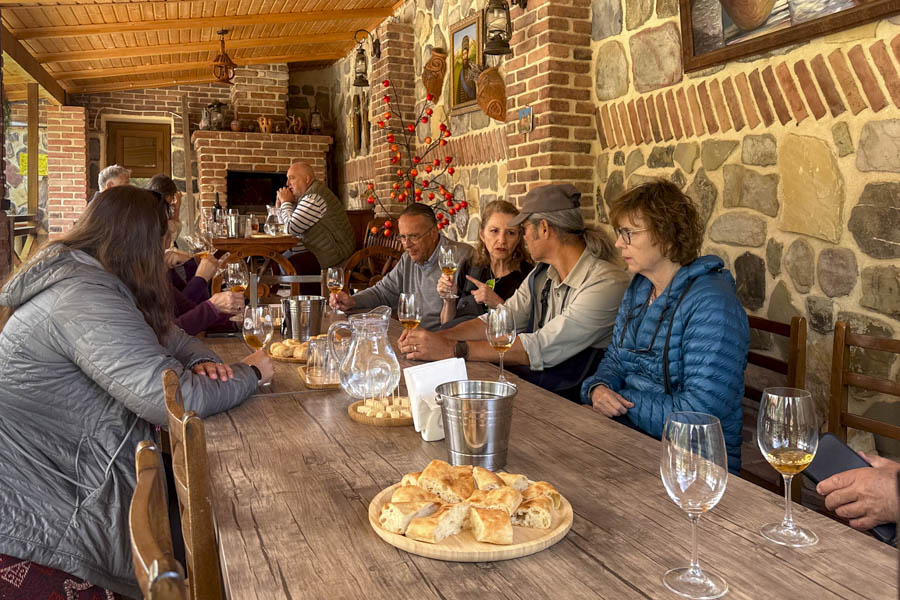
Kakheti wine country is, without question, one of the top attractions in Georgia. Eastern Georgia is home to more wineries and historic marani (traditional wine cellars) than other regions in the country. Winemakers cultivate hundreds of grape varieties here, nurtured by a climate that has been kind to viticulture for thousands of years. The popular destinations are Telavi, Sagarejo, Gurjaani, and Kvareli. And even a single day is enough to leave a lasting impression.
But what does that day actually look like? Arriving at a winery, you are first introduced to its history, the family behind it, the land, and the character of the wines it produces. The highlight for many is learning about the ancient tradition of fermenting and ageing wine in large clay vessels buried underground. The Qvevri method (Kvevri). This practice is now recognised by UNESCO as Intangible Cultural Heritage. Interestingly, the method has an increasingly devoted following among vintners in Italy, France, Spain, and the USA.
A tasting with local snacks follows an introduction to the winery's history. Some winemakers may walk visitors through the vineyards. But others, family-run marani, such as Iago’s Winery, may invite you to a real Georgian feast – a supra, with toasts and traditional songs. And then there are wineries where you can drift above the vine terraces in a hot air balloon, ride horses through the rows, or cycle the back roads between estates. Some even produce Qvevri on site. The cellar master will happily talk you through the entire process from raw clay to finished vessel.
Sighnaghi, the City of Love
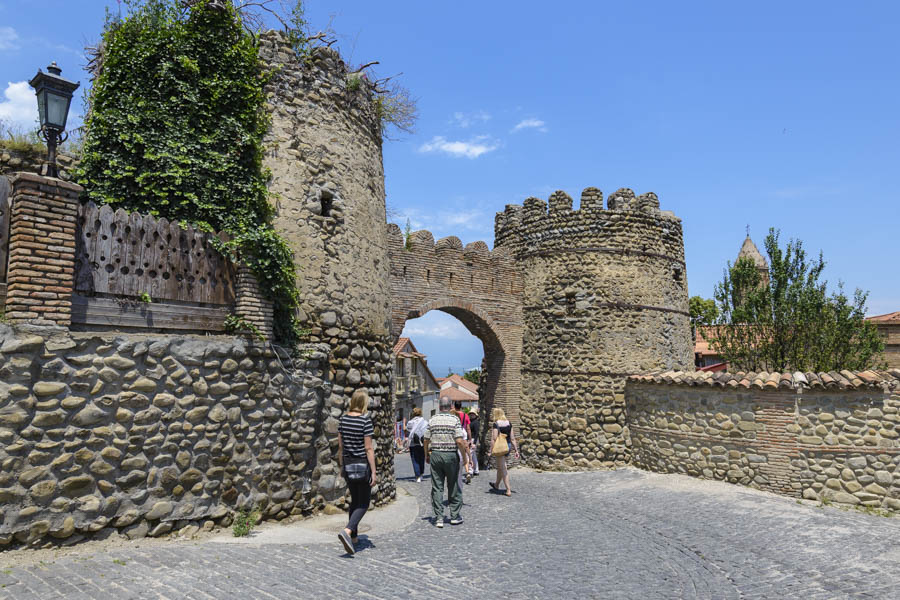
While in Kakheti, visitors will almost certainly find themselves in this small town in eastern Georgia. Because if Telavi is the capital of Kakheti, Sighnaghi (or Signagi) is the City of Love – and not just of Kakheti, but of all Georgia. That is a deliberate piece of destination branding, and it has worked pretty well. The town's charming wedding palace allows even foreign visitors to make it official, issuing a legally recognised international document on the spot.
The town has earned its place on every list of the best places to visit in Georgia – equally suited to a cultural day trip and a romantic evening out. And it is 110 kilometres (68.35 miles) from the capital. An hour and a half by car, and you are there.
Walking its narrow cobblestone streets, Sighnaghi feels laidback, a little like Mtskheta. Look out for the peculiar balconied houses typical of the south-eastern Georgia architectural style, alongside well-preserved 19th and 20th-century townhouses. Several of them carry national heritage status. The finest scenes unfold along Baratashvili, Rustaveli, Chavchavadze, and Gorgasali streets.
But the town's greatest landmark is its historic defensive fortress wall, which provides extraordinary views. Just outside town, the Bodbe Monastery boasts its own beauty – a rose garden, a terraced courtyard, and vistas across the Alazani Valley.
And perhaps a perfect way to end the day is a visit to a small silk farm in the village of Magharo, 25 minutes from Sighnaghi. This is the story of a woman reviving a near-forgotten Georgian craft and the host's dinner during the visit. The BBC even featured the farm in a documentary.
Kazbegi
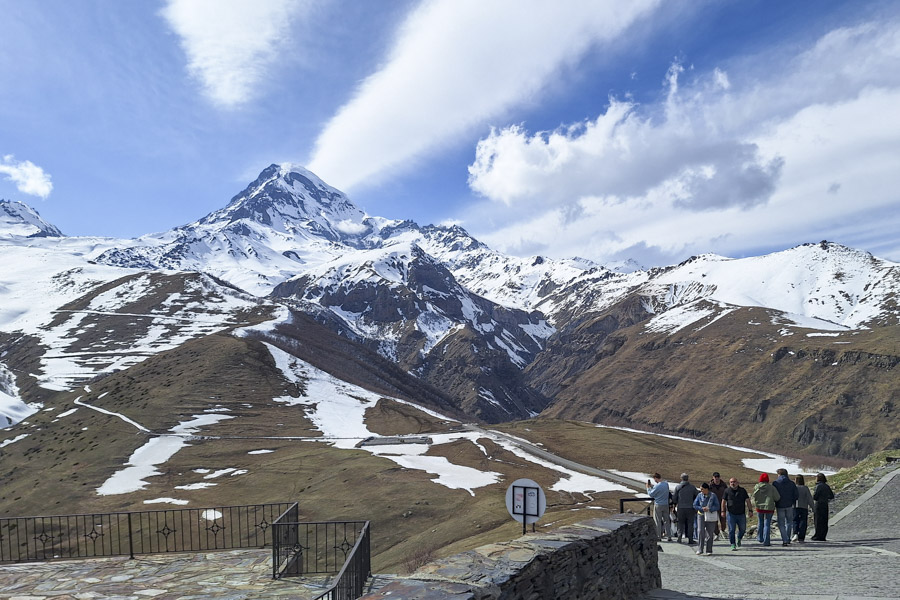
The Kazbegi municipality and Gergeti Trinity Church are places you must see in Georgia. This mountainous district, historically known as Khevi, stuns visitors with the sheer scale of the Caucasian peaks that envelop it.
Several attractions line the route up to this magnificent region. Just before Gudauri, a panoramic viewpoint opens up over the valley below. And further along, if time allows and you are travelling in spring, stop at Arsha Waterfall and the Pansheti Cave Complex (ფანშეტის გამოქვაბულების კომპლექსი).
The peaks grow higher with every kilometre as you approach the small mountain town of Stepantsminda. Formerly known as Kazbegi, this is where visitors base themselves. There are a handful of decent hotels and gorgeous sights nearby.
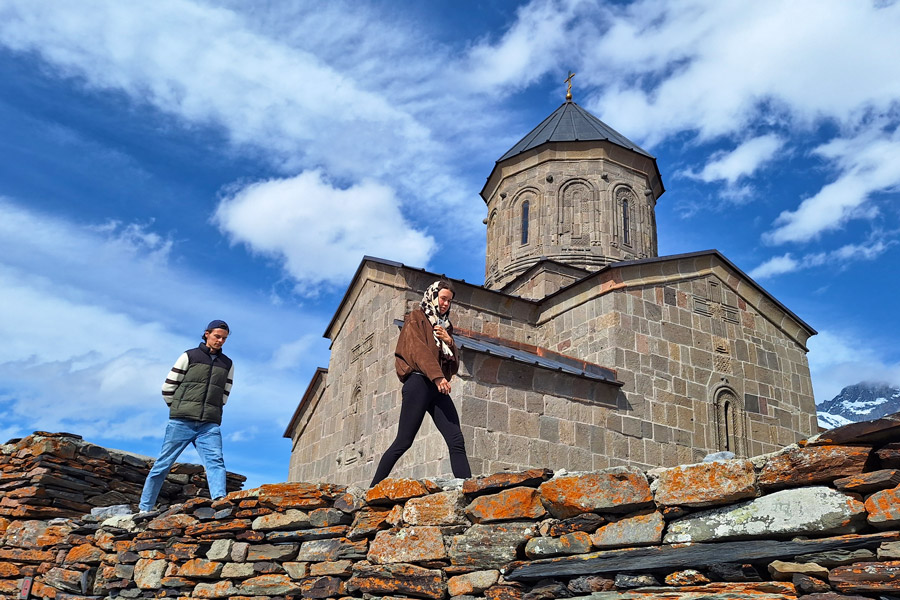
High above the town, the Gergeti Trinity Church crowns a hilltop. On a clear day, the peaks of Mount Kazbek are visible behind it, and the monastery appears to be brushing the clouds. It has climbed that high. You are thrilled and seem so small as you gaze upon it. Gergeti can be reached by car or by a scenic hike from Stepantsminda.
But if you have time, drive further towards the Georgia-Russia border. After Tsdo (ცდო), stop at the Tergi Valley Viewpoint. Continue to Gveleti to visit the mediaeval Gveleti Tower (გველეთის კოშკი) and the waterfalls nearby. And do not turn back before reaching Darial Gorge and the Dariali Monastery Complex (დარიალის სამონასტრო კომპლექსი) just before the border. The gentle purl of the river, the crystalline air, and the stillness will make you gasp.
Batumi and the Adjara Coast
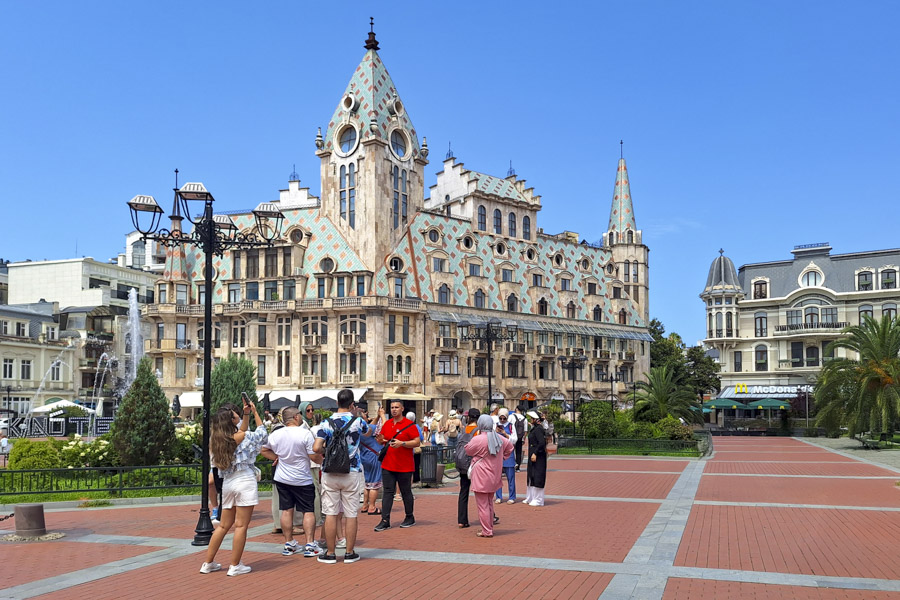
Batumi and the Adjara coast are the best places to visit in Georgia if you are looking for a complete change of scene. And the contrast with everything north of here is part of the appeal. Where Kazbegi gives mountains and cool air, Adjara gives the sea, pebbled shores, water sports, mineral springs, and sunshine. Farther inland, the mountains of Adjara have their own highlights.
The city of Batumi is easy to love. Its botanical garden and the seven-kilometre seaside boulevard are destinations past palm trees and parks, open-air bars and dancing fountains, and restaurants with good food. The Black Sea does the rest.
But Batumi has another side. The old town, with its European-style architecture and Ottoman streets, contrasts with the glittering seafront towers. The covered market is worth an hour of anyone's time. Then, a ride on the Argo Cable Car to enjoy evening views of Batumi is a wonderful way to end the day.
For those who want to unveil more, the mountain villages of upper Adjara offer homestays, waterfalls, and a pace of life away from the coast below. Khulo, Shuakhevi, and the Mtirala National Park are all within reach of Batumi.
Svaneti
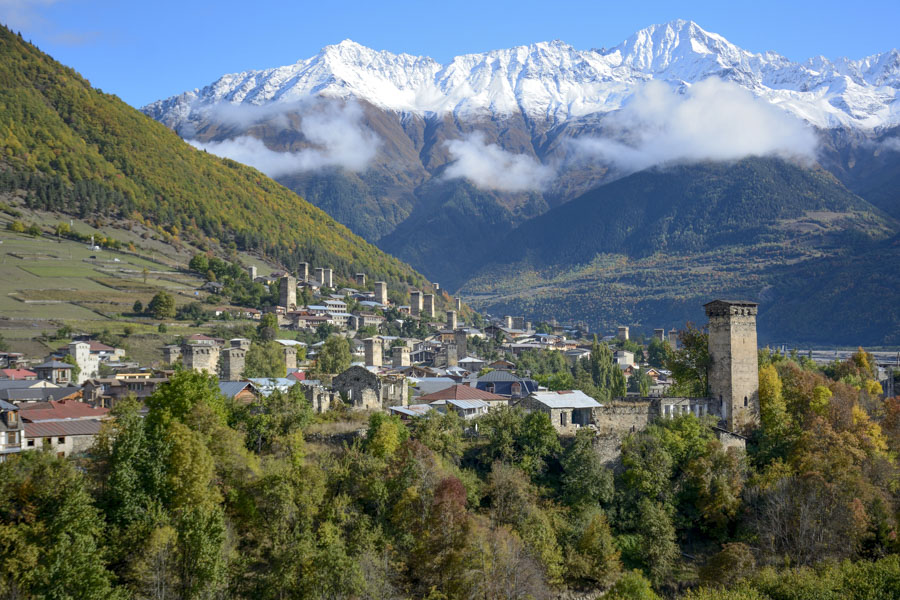
Svaneti is among the most adventurous places to visit in Georgia. The region is unique from the rest of the country, with the Svan people even speaking their own language.
While in Mestia, the main town of Svaneti, climb the mediaeval watchtowers and try kubdari, a rich local meat-filled bread. In summer, Svaneti’s hiking trails leading to Ushguli, a community of five mediaeval villages, open up breathtaking mountain scenery. They include the famous Svan Towers and offer days of trekking opportunities up to Mount Shkhara, Georgia's highest mountain, either on foot or horseback.
The truly magical place of Heshkili (ჰეშკილი) deserves special mention. Green meadows dotted with grazing cows, forests, wooden huts, and swings overlooking the mountains create scenes perfect for photography.
The easiest way to admire the local landscapes is to take the Hatsvali cable car. At Zuruldi Ridge, around 2,400 metres above sea level, visitors can take unforgettable photos with Mount Ushba in the background. There is also a café at the top; be sure to have a meal there while immersed in mountain scenery.
What about visiting Svaneti in winter? As you may already guess, the slopes of Hatsvali and Tetnuldi transform into Georgia’s main skiing resorts.
And what if the weather is too poor for hiking or skiing? In that case, visitors can explore the Svaneti Museum of History and Ethnography or the museum dedicated to a famed Georgian climber, Mikheil Khergiani. Another option is to join a workshop and learn how to prepare kubdari, meat bread, or the traditional Georgian spice mix, Svan salt.
Borjomi
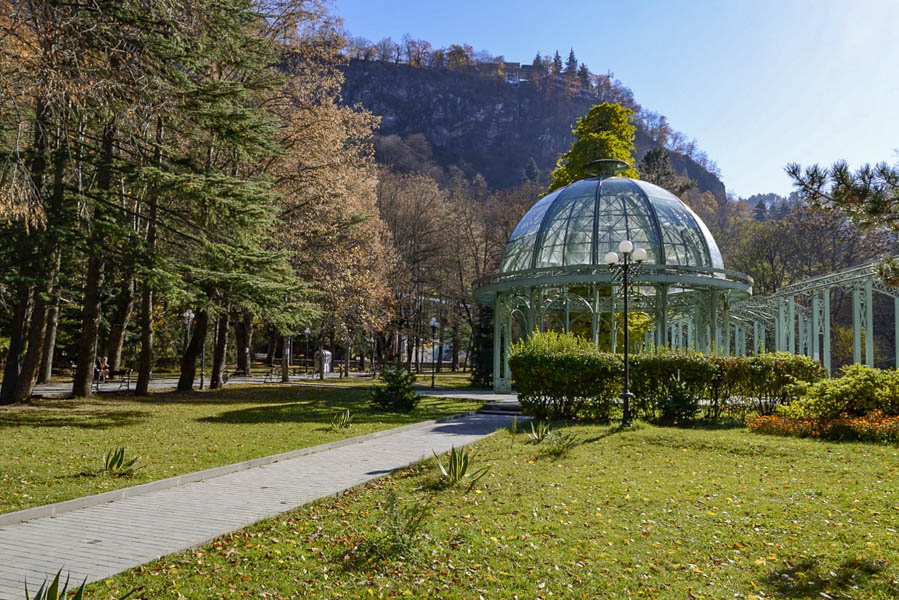
There are things you do in Georgia simply because they are Georgian. And drinking Borjomi straight from the spring is exactly the kind of experience. The water has been flowing here since antiquity. However, Borjomi appeared on the map in the 19th century, after the town became a favoured retreat of the Russian imperial family. That history is still present in the architecture of the Romanov Palace, the Likani Residence, and the former Town Hall.
The spring is located in the heart of Borjomi Central Park. You walk in, find a spring, fill a cup, and drink. See how locals do it. They fill in their empty bottles once it is their turn in the queue. The taste is warm, slightly sulphuric, and mineral-heavy. The locals will assure you it is good for your health. And scientists largely agree.
But Borjomi is more than a spring – it is a top attraction in Georgia. The surrounding Borjomi-Kharagauli National Park has well-marked trekking routes through dense coniferous forest. And the town has the ambience of a place that has been welcoming people in need of rest for a very long time.
Vardzia Cave Monastery
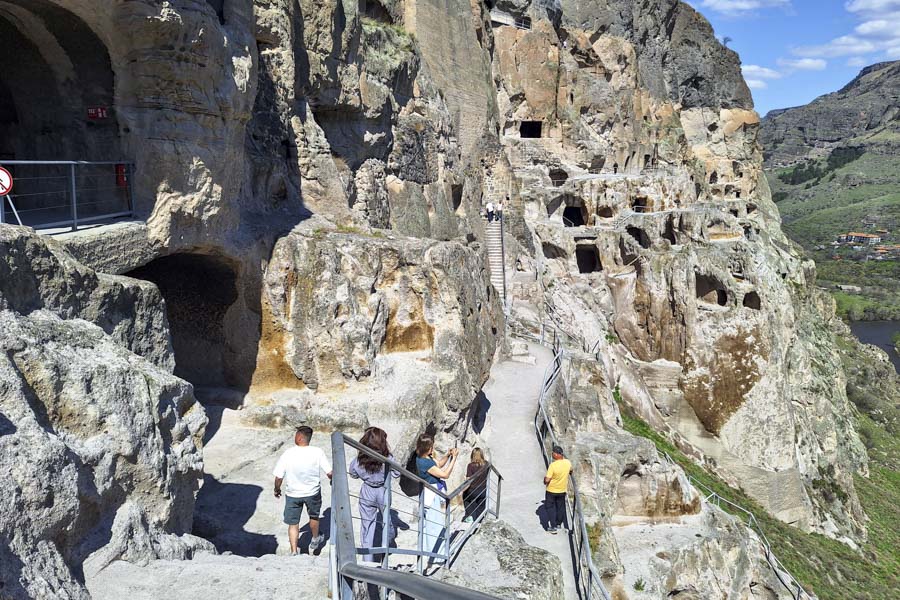
Vardzia is a remarkable cave monastery carved directly into the cliffs during Georgia’s Golden Age, and it is closely associated with the reign of Queen Tamar in the 12th century. Even in a country filled with monasteries and mountain fortresses, Vardzia attracts attention. It is one of the best places to visit in Georgia for anyone with a serious interest in mediaeval history.
The most striking approach comes from the opposite side of the Mtkvari River. From there, the scale of Vardzia is revealed: hundreds of openings cut into the rock face across multiple levels stretching nearly 500 metres along the cliff.
Behind the caves once stood storerooms, living quarters, chapels, wine cellars, refectories, and an intricate network of secret tunnels linking the entire complex. Fifteen churches in total. Twenty-eight wine cellars capable of holding more than two hundred Qvevri vessels. It is another piece of evidence that wine was deeply tied to daily life and monastic tradition in mediaeval Georgia.
The wall paintings inside the 12th-century Church of the Dormition are incredible. Its frescoes show Queen Tamar and her father, King George III, alongside scenes from the life of Christ. The portrait of Tamar is believed to be the earliest surviving depiction of the queen, possibly painted before her marriage.
The drive from Tbilisi to Vardzia takes four hours. Travellers generally combine the journey with a stop at Rabati Castle near Akhaltsikhe. Vardzia is also closely linked with Khertvisi Fortress. Both are inscribed on the UNESCO Tentative World Heritage List. The wider Mtkvari River basin between them contains numerous mediaeval fortresses, cave dwellings, monasteries, and surviving frescoes.
Uplistsikhe Rock City
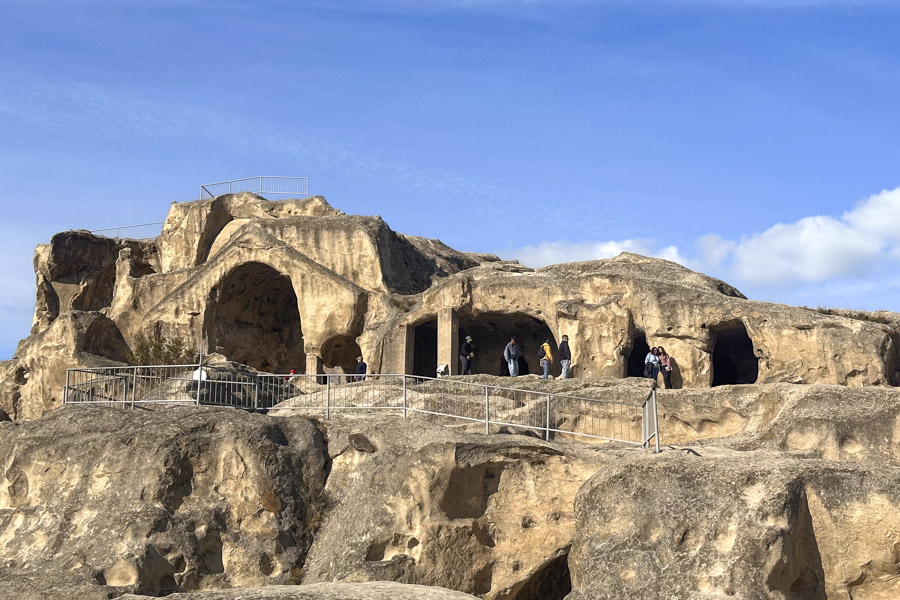
The top attractions in Georgia are not always the most obvious ones. And Uplistsikhe, a stone world emerging from the hillside above the Mtkvari, is proof of that. Unlike the vertical scale of Vardzia, Uplistsikhe spreads outward in a maze of chambers, passageways, terraces, and open spaces formed by centuries of wind and weather.
Visitors can capture rare photographs: smooth grooves, low openings that require bending as you pass through, and sudden panoramic viewpoints at the edge of the plateau. The landscape around it is dry and open, almost steppe-like in summer, different from the greener mountain regions travellers usually associate with Georgia.
The moments near sunset are amazing when the pale stone takes on warmer golden tones. Because Gori lies nearby, Uplistsikhe is often visited as an easy day trip from Tbilisi. It is unusual to wander through spaces that once served as homes, halls, storage areas, and pagan sanctuaries long before much of mediaeval Georgia took shape.
Joseph Stalin Museum
If you are near Uplistsikhe, detour to Gori, where Joseph Stalin (1878-1953) was born. The Joseph Stalin Museum is one of the best places to visit in Georgia, dividing opinions but never failing to provoke thought.
The man who led the Soviet Union with an iron fist, who allied with Churchill and Roosevelt to defeat Nazi Germany, and who also displayed a darker side. He started life here, in a small town in central Georgia, in a humble cottage. That house still stands on the museum grounds under a protective pavilion.
The museum was built during the Soviet era, and the stone reflects that. But that is precisely what makes it interesting. Six halls trace Stalin's life and rise to power, and the exhibition raises questions: how does a cobbler's son from a provincial Georgian town become the ruler of a superpower? What shaped him, and what did he become? You will form your own conclusions.
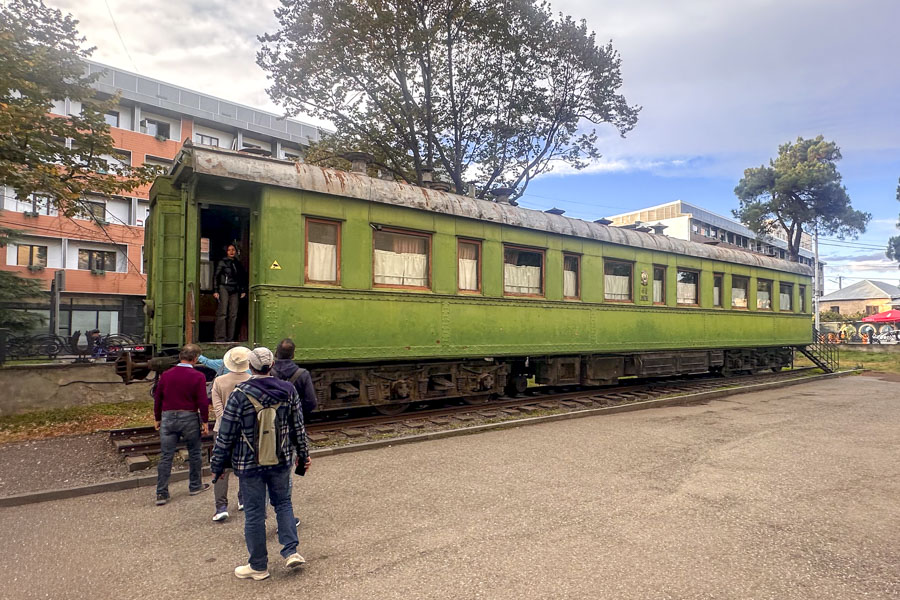
The curious attraction is Stalin's personal railway carriage – the one that carried him to the Tehran, Yalta, and Potsdam conferences, where the post-war world was divided among the victors.
Bagrati Cathedral
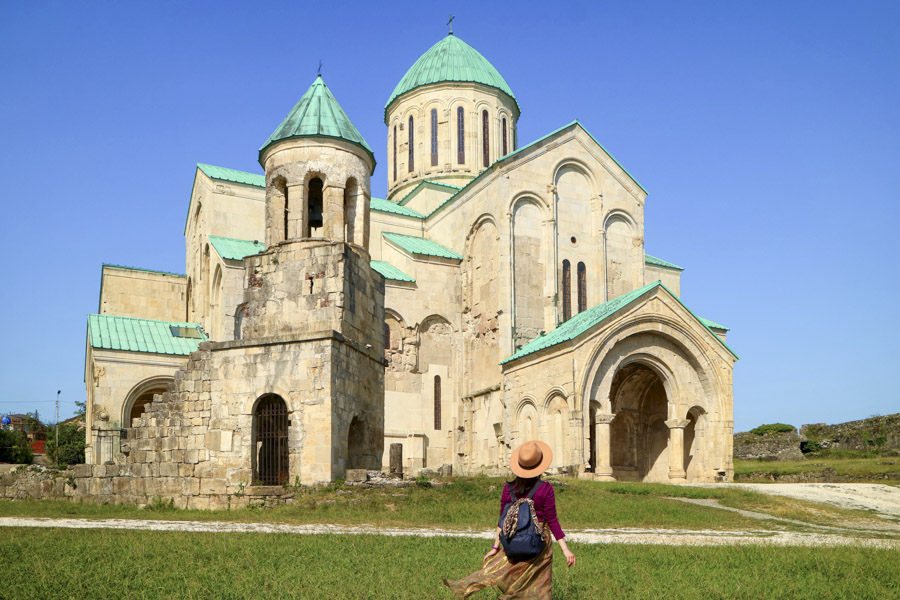
The 11th-century Bagrati Cathedral is situated in Kutaisi, Georgia's second-biggest city after Tbilisi. And the fact that it now appears on the UNESCO List of World Heritage in Danger is a good reason to visit it if you are passing through. There is something particular about seeing a place that the world is still arguing over how to protect.
But it was not always this way. Bagrati once held UNESCO World Heritage status – a recognition it shared with the nearby Gelati Monastery. That status was withdrawn in 2017 after restoration work was deemed to have compromised the cathedral's authenticity.
Officially known as the Cathedral of the Dormition, it remains a living church. Services are held here regularly, and its greatest celebration is Mariamoba – the feast of the Virgin Mary, mother of Christ. Newlyweds come here for photographs. Locals come to pray. And travellers come because it is the true symbol of Kutaisi and Western Georgia.
Gelati Monastery
We close our list of the best places to visit in Georgia with a UNESCO World Heritage Site that many travellers never quite make it to. And it is always a regret.
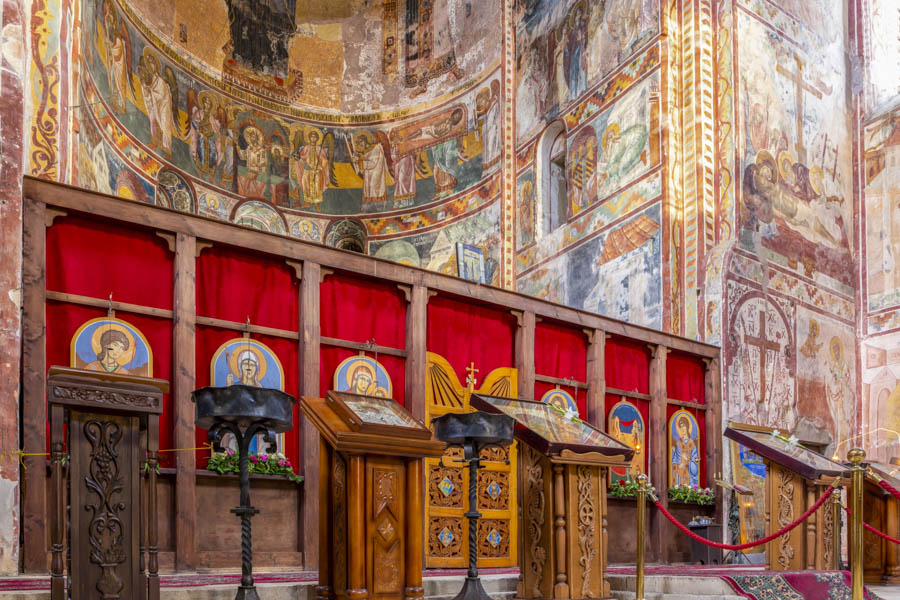
Gelati Monastery is located on a forested hillside just outside Kutaisi. Founded in the 12th century by King David the Builder (1073-1125), it was conceived as a place of worship and an academy of learning. A mediaeval centre of scholarship, science, and philosophy at a time when Georgia was at the height of its cultural and political power. King David the Builder is buried here, at the monastery's south gates.
The mosaics inside the main cathedral’s central apse are the finest surviving examples of mediaeval Georgian art.
Gelati is a short drive from Kutaisi and pairs naturally with a visit to Bagrati Cathedral in the city.