

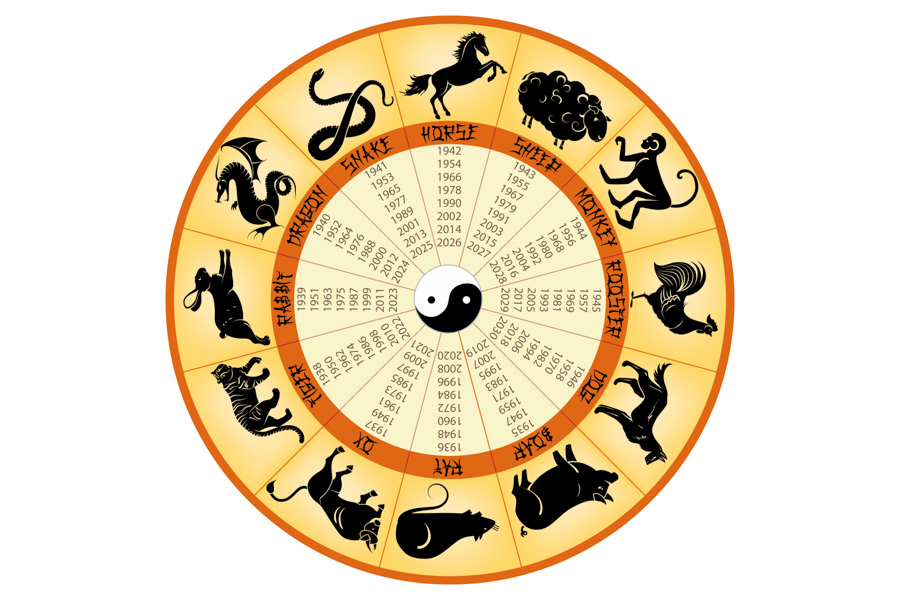
In a world where stars become guides of destiny and time moves in twelve-year cycles, Chinese astrology reveals the deep connection between humans and the universe. Its origins date back to ancient times - to myths about the Jade Emperor and to legends about sages who observed the movement of celestial bodies and transformed signals from the cosmos into signs of destiny. Each animal in the mysterious constellations of the Zodiac is not just a symbol of the year but a reflection of character, energy, and life path. Their combination with the Five Elements creates an endless intertwining of destinies and potentials, and each encounter of these streams gives birth to a unique pattern of fortune. Step into the world of Chinese astrological signs to understand the power of your birth year, how to channel its energy, and find a balance between heavenly design and earthly life.
Understanding Chinese Astrology: Signs, Elements, and Energy Balance
The Chinese Zodiac finds its roots in ancient traditions, intertwined with mythology and agricultural practices. The selection of the twelve animals symbolising the twelve years of the great cycle is attributed to a legend surrounding the Jade Emperor, one of the representations of the primordial god in Chinese culture. According to this legend, the Jade Emperor decided to create a system to measure time and invited all animals to a race. The first twelve to finish would earn the honour of being part of the zodiac, with the Rat securing first place. Each animal's personality and traits reflect its position and performance in this celestial race, creating a cycle that resonates deeply within Chinese culture. In reality, the selection process for the animals varied across regions until it was standardised during the Han Dynasty. This rich mythology and historical significance of these animals lie at the very heart of Chinese astrology, shaping not only personal identity but also societal relations and cultural practices.
According to this philosophy, the year of your birth determines which sign you come under. It is believed that a person shares the qualities of their heavenly patron: perseverance, loyalty, wisdom, or cunning. However, behind these simple images lies a complex philosophy of interactions, revealing an intricate tapestry of personality and relationships.
The concepts of the Five Elements, Wu Xing theory, Yin and Yang, and Bazi are intricately embedded in Chinese culture and are applied in feng shui, traditional chinese medicine, martial arts, and across various facets of life in China, including astrology, environmental design, and personal well-being.
The Twelve Chinese Zodiac Signs
In the astrological circle, twelve creatures alternate, each of which has a distinct character and power:
Rat (鼠) – observant, inventive, and able to seize opportunities.
Ox (牛) – hard-working, patient, and reliable.
Tiger (虎) – brave, decisive, and inclined towards independence.
Rabbit (兔) – gentle, cautious, and values harmony.
Dragon (龙) – charismatic, energetic, and endowed with inner strength.
Snake (蛇) – perceptive, refined, and prone to reflection.
Horse (马) – freedom-loving, active, and quick to make decisions.
Goat (羊) – creative, compassionate, and striving for beauty and balance.
Monkey (猴) – witty, flexible, and able to find a way out of difficult situations.
Rooster (鸡) – straightforward, observant, and fond of order.
Dog (狗) – loyal, fair, and guided by a sense of duty.
Pig (猪) – generous, reliable, and striving for peace and comfort.
In Chinese tradition, these images reflect both personal traits and a person's place among others: within the family and in society. In interpersonal relationships, the compatibility of signs is viewed as the key to harmony and mutual understanding, as some reinforce each other while others are naturally opposed. For example, the Rat finds the greatest mutual understanding with the Dragon, Monkey, or Ox, while those born in the year of the Snake usually struggle to get along with people born under the sign of the Pig or Tiger.
Here is the Chinese Zodiac best compatibility chart:
- The Rat: Dragon, Monkey, and Ox
- The Ox: Snake, Rooster, and Rat
- The Tiger: Horse, Rabbit, and Pig
- The Rabbit: Goat and Pig
- The Dragon: Dragon, Monkey, and Rooster
- The Snake: Ox, Rooster, and Monkey
- The Horse: Tiger and Dog
- The Goat: Rabbit and Pig
- The Monkey: Dragon, Rat, and Snake
- The Rooster: Dragon, Snake, and Ox
- The Dog: Tiger and Horse
- The Pig: Rabbit, Goat, and Tiger
Elements and Relationships
Chinese astrology is based not only on your year of birth and animal sign, but also on the force with which you enter the world. This concept is expressed in the teaching of Wu Xing (五行) – the Five Elements Theory: Wood, Fire, Earth, Metal, and Water. These elements symbolise natural phenomena, functioning as living processes that shape the structure of personality. Their combination and balance help attune the harmonious flow of Qi energy, which, according to the principles of Feng Shui, permeates all existence. Since your sign is linked with one of the elements, it gains a quality that appears in your character, preferences, and life values.
The natural elements in Chinese philosophy are associated with symbolic colours:
- Wood is green.
- Fire is red.
- Earth is yellow.
- Metal is white.
- Water is black.
Each of the five elements “rules” for two consecutive years. For example, 2024 was the year of the Green Wood Dragon, and 2025 became the year of the Green Wood Snake. Next, the energy of Fire comes into play, and 2026 is the year of the Red Fire Horse, while 2027 is the year of the Red Fire Goat. Thus, each animal in the Chinese Lunar Calendar encounters each of the energies once every 60 years, which is the length of a full cycle in the Chinese astrological system.
By merging with a particular energy, the Chinese zodiac sign takes on distinctive qualities. For example, if the Horse is combined with the energy of Metal, it is believed that a person characterised by freedom and independence due to their year of birth also gains qualities such as rationality, discipline, charisma, ambition, and a systematic approach thanks to the influence of the element. Another striking example is the combination of the Goat sign with the element of Water. In this combination, the softness and intuitiveness of the personality gain particular depth: emotional sensitivity becomes inner wisdom, and a tendency towards contemplation becomes a source of creativity.
The Yin and Yang Influence
Furthermore, the basis of Chinese astrology, as well as the entire philosophy of ancient China, is the dualism of Yin (阴) and Yang (阳). These principles symbolise two complementary forces present in both nature and human character. Yin embodies softness, receptivity, inner energy, and tranquillity. Yang is linked with activity, light, movement, and the expression of power. Together, they form a dynamic balance that fosters growth and prosperity in all areas of life.
Each sign of the Chinese zodiac corresponds to one of these energies. Thus, the Rat, Tiger, Dragon, Horse, Monkey, and Dog belong to the Yang principle, while the Ox, Rabbit, Snake, Goat, Rooster, and Pig belong to the Yin principle. In years governed by Yang energy, impulsiveness and movement prevail; in Yin years, contemplation and internal transformation come to the fore. But in true astrology, neither principle is considered better or stronger – only their balance creates a complete picture of destiny.
Just as the interaction of the elements shapes individual traits, the balance of Yin and Yang determines how a person expresses their energy: outwardly or inwardly, acting or waiting, displaying strength or flexibility. It is in this movement between the two principles that a personal story unfolds, reflecting a person's character, habits, and preferences.
The Four Pillars of Destiny in Chinese Astrology
There is another important concept that complements those mentioned previously: the Four Pillars of Destiny, or Ba Zi (八字). They form a framework through which a person's personality, potential, and life rhythms are revealed. Each of the four pillars – year, month, day, and hour of birth – consists of two symbols: the Heavenly Stem, which carries pure elemental energy, and the Earthly Branch, which shows how this energy manifests in life.
The ten Heavenly Stems are an ordinal system originating in China, linked to a ten-day week derived from a myth in which ten suns appeared in the sky. It is believed that the Heavenly Stems represent the names of these ten suns, forming a ten-day cycle (旬; xún).
The Earthly Branches are a traditional Chinese system that represents a cyclic grouping of twelve elements, often associated with the twelve animals of the zodiac. Each branch corresponds to a specific animal and is linked to various aspects of time, space, and personality traits, forming a foundational part of Chinese astrology and culture.
Here are their key features:
- The Year Pillar sets the general background: it reflects the personality traits shared by everyone born in the same year.
- The Month Pillar reveals the inner qualities – archetypes that emerge later, in maturity – and determines a more stable foundation of character.
- The Day Pillar is considered central: it shows the type of personality, the version of oneself that a person presents to the world and with which other people interact.
- The Hour Pillar reflects the deep, often unconscious part – the aspect that appears in moments of crisis, rest, or creativity, the nature concealed behind the everyday image.
The combination of these four pillars creates a unique personal map, a tool for understanding a person's individual characteristics and their destiny. This is not a fixed scenario in which everything that will happen is predetermined, but a diagram of potentials that reflects a person's inner resources, strengths and weaknesses, behavioural tendencies, and natural predispositions.
By understanding how the Four Pillars structure works, you can read your character traits and see which energies support you and which require attention and transformation. This helps you not simply “be under the sign”, but walk with support, clarity, and a sense of your own rhythm in the flow of time.
Calculate Your Chinese Zodiac Sign
Your zodiac animal sign is determined by your year of birth in the lunar cycle, in which the boundary of the year shifts by several weeks from the 1 January, the date traditionally considered the first day of the year in countries that use the Gregorian calendar. While it is the standard for business and international affairs worldwide, diverse cultures, including those that follow the Chinese Zodiac, employ their traditional calendars for significant events, such as the Lunar New Year. To find your Chinese sign, follow a simple principle: Keeping in mind your year of birth according to the Gregorian calendar, check when Chinese New Year fell in that year (usually between 21 January and 20 February). If your date of birth is before the start of Chinese New Year, your sign will be the animal of the previous cycle.
For example, if you were born on 15 January 1984, then, although it is already 1984 according to the calendar, from the perspective of Chinese astrology, your sign is not the Rat but the Pig, because the Lunar New Year did not begin until 2 February. Conversely, if your birthday was 5 February 1984, you were born in the year of the Wood Rat. That is why it is important to know not only the year but also the exact date of birth when determining your sign.
For quick reference, to know your animal and the one of your loved ones, as well as coming years, please see the table below:
| Sign | Years |
| Rat | 24 Jan 1936 – 10 Feb 1937; 10 Feb 1948 – 28 Jan 1949; 2 Feb 1960 – 20 Jan 1961; 15 Feb 1972 – 2 Feb 1973; 2 Feb 1984 – 19 Feb 1985; 19 Feb 1996 – 6 Feb 1997; 7 Feb 2008 – 25 Jan 2009; 25 Jan 2020 – 11 Feb 2021 11 Feb 2032 – 30 Jan 2033 |
| Ox | 11 Feb 1937 – 30 Jan 1938; 29 Jan 1949 – 16 Feb 1950; 21 Jan 1961 – 4 Feb 1962; 3 Feb 1973 – 22 Jan 1974; 20 Feb 1985 – 8 Feb 1986; 7 Feb 1997 – 27 Jan 1998; 26 Jan 2009 – 13 Feb 2010; 12 Feb 2021 – 31 Jan 2022; 31 Jan 2033 – 18 Feb 2034 |
| Tiger |
31 Jan 1938 – 18 Feb 1939; 17 Feb 1950 – 5 Feb 1951; 5 Feb 1962 – 24 Jan 1963; |
| Rabbit |
19 Feb 1939 – 7 Feb 1940; 6 Feb 1951 – 26 Jan 1952; 25 Jan 1963 – 12 Feb 1964; |
| Dragon |
8 Feb 1940 – 26 Jan 1941; 27 Jan 1952 – 13 Feb 1953; 13 Feb 1964 – 1 Feb 1965; |
| Snake |
27 Jan 1941 – 14 Feb 1942; 14 Feb 1953 – 2 Feb 1954; 2 Feb 1965 – 20 Jan 1966; |
| Horse |
15 Feb 1942 – 4 Feb 1943; 3 Feb 1954 – 23 Jan 1955; 21 Jan 1966 – 8 Feb 1967; |
| Goat / Sheep |
5 Feb 1943 – 24 Jan 1944; 24 Jan 1955 – 11 Feb 1956; 9 Feb 1967 – 29 Jan 1968; |
| Monkey |
25 Jan 1944 – 12 Feb 1945; 12 Feb 1956 – 30 Jan 1957; 30 Jan 1968 – 16 Feb 1969; |
| Rooster |
13 Feb 1945 – 1 Feb 1946; 31 Jan 1957 – 17 Feb 1958; 17 Feb 1969 – 5 Feb 1970; |
| Dog |
2 Feb 1946 – 21 Jan 1947; 18 Feb 1958 – 7 Feb 1959; 6 Feb 1970 – 26 Jan 1971; |
| Pig |
22 Jan 1947 – 9 Feb 1948; 8 Feb 1959 – 27 Jan 1960; 27 Jan 1971 – 14 Feb 1972; |
It is worth noting that the animal is only a starting point. To gain the full picture, you also need to consider the element and the exact time of birth, down to the hour, because these details add nuances of individuality. Using this method, you will gain a clear understanding of the patronage you were born under and the path you can take in life.
How to Read Your Chinese Zodiac Chart
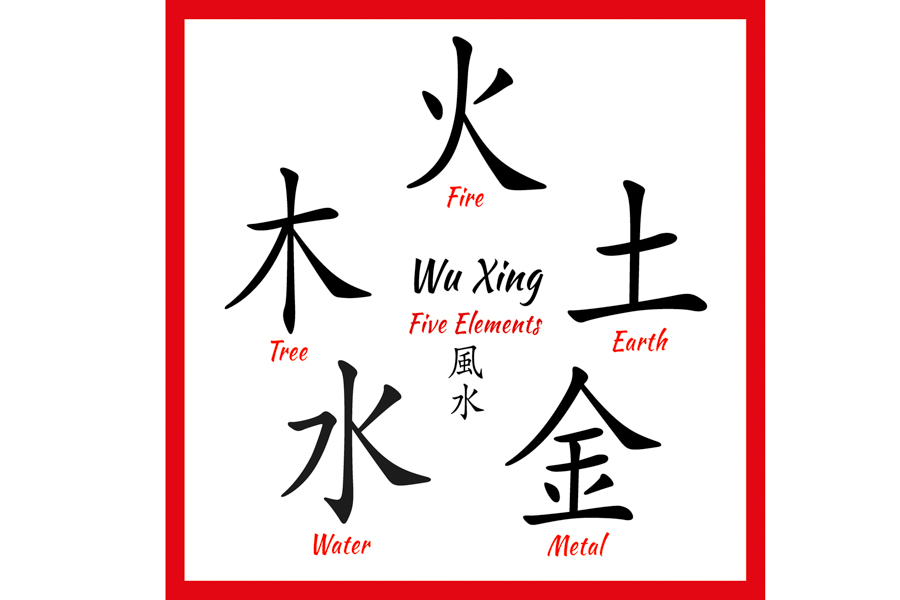
In the Chinese zodiac system, each person is viewed as a complex structure of interacting energies, and the interpretation of an individual chart is based on finding a balance between the Four Pillars of Destiny and the Five Elements of Nature.
It is important to determine which of the five elements predominate in your chart and which are weakened. Harmony between them symbolises stability, while imbalance indicates internal or external challenges. For example, the predominance of the Fire element may suggest initiative and strength, while a lack of Water may indicate impulsiveness and limited flexibility.
It is also necessary to consider the relationships between the elements. In the Wu Xing system, each element can support or restrain another:
Generating Sheng Cycle (生)
Wood fuels Fire.
Fire creates Earth (ash).
Earth generates Metal (minerals).
Metal condenses Water.
Water nourishes Wood.
Controlling Ko Cycle (克)
Wood controls Earth.
Earth controls Water.
Water controls Fire.
Fire controls Metal.
Metal controls Wood.
By analysing the combinations of animals and elements in all four pillars, you can see how energies influence one another and how you can harmonise your life through your choice of environment, profession, habits, or even the timing of your decisions.
To calculate this, you can use the Online Bazi Calculator, where you need to specify the exact time and place of your birth.
If you are looking for ways to understand your Chinese zodiac chart without relying on an internet program, you can take the following steps:
1.Identify Your Zodiac Animal:
The twelve zodiac animals correspond to the year of birth, one for each year in a twelve-year cycle. Find which animal corresponds to your birth year.
2. Determine Your Element:
In addition to the animal, each year is associated with one of the five elements (Wood, Fire, Earth, Metal, Water). The element changes every two years within the same animal cycle.
3. Understand the Four Pillars:
Calculate your "Four Pillars" (Year, Month, Day, Hour) based on your birth date and time.
4. Consult Reference Materials:
Use books and Chinese literature or internet resources on Bazi (Four Pillars) and the Five Elements to determine the characteristics associated with your specific animal and element combinations.
5. Analyse Interactions:
Reflect on how your primary element interacts with others. Are there elements that control or generate your main element? This requires basic knowledge of the Sheng Cycle (Generating) and Ko Cycle (Controlling).
6. Personal Reflection:
Consider your life experiences and how they resonate with the traits associated with your zodiac animal and the balance of elements in your chart.
Chinese Zodiac Horoscope 2026: What the Year of the Red Fire Horse Brings
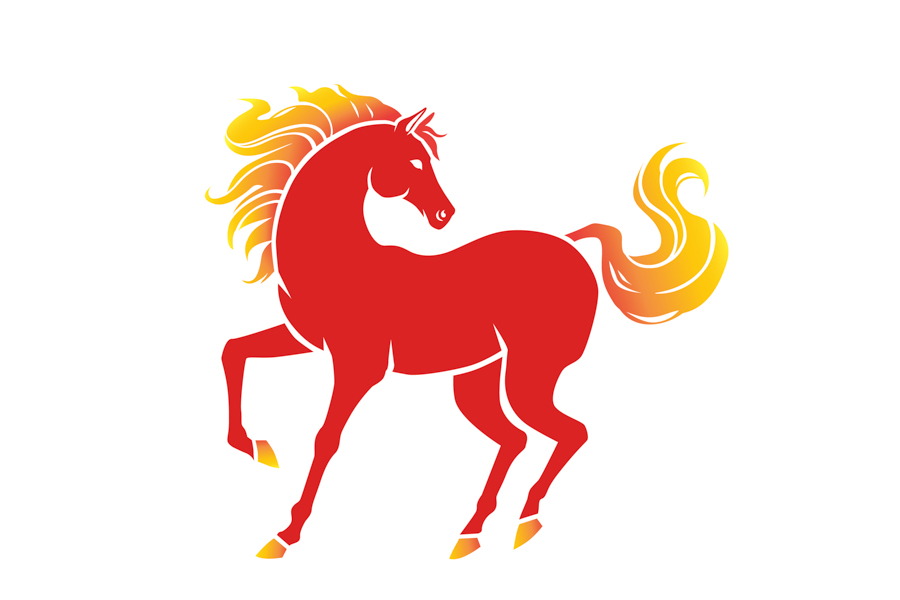
From 17 February 2026 to 5 February 2027, the world of Chinese zodiac astrology will be shaped by the symbolism of the Red Fire Horse, which carries the desire for freedom, awakening, and change. The image of this animal is linked with energetic movement and determination, and when combined with the energy of Fire, the Horse sign promises a year of vivid emotions and decisive action. The Year of the Fire Horse encourages renewal, finding your own path, and realising long-cherished ideas. This is a time when reason and passion come together, giving rise to forward movement.
Career and Finance
In 2026, the prevailing energy of the year creates a backdrop conducive to new beginnings and ambitious goals. Bold ideas and initiatives gain momentum, especially when accompanied by planning and risk assessment. However, the rapid pace and heightened Fire element require balance: without careful calculation, you may face overload, hasty decisions, and income instability.
Love and Relationships
Passion and dynamism are key features of 2026, and they are reflected in social and personal relationships. Relationships can reach an unusually active phase: new contacts, changes in status, and increased communication. But at the same time, there is a heightened risk of impulsiveness, conflict, or a desire for overly rapid development, which calls for conscious control and open dialogue.
Health and Well-being
The strong sense of movement in the year increases productivity levels around the world, but this is precisely why challenges intensify: fatigue, stress, and the need for quality recovery. 2026 reminds us that the balance between movement and rest is no less important than the impulse to act. Attention to routine, sleep, emotional stability, and restorative pauses should become a strategy for preserving resources.
Discover the Chinese Zodiac Where It Began
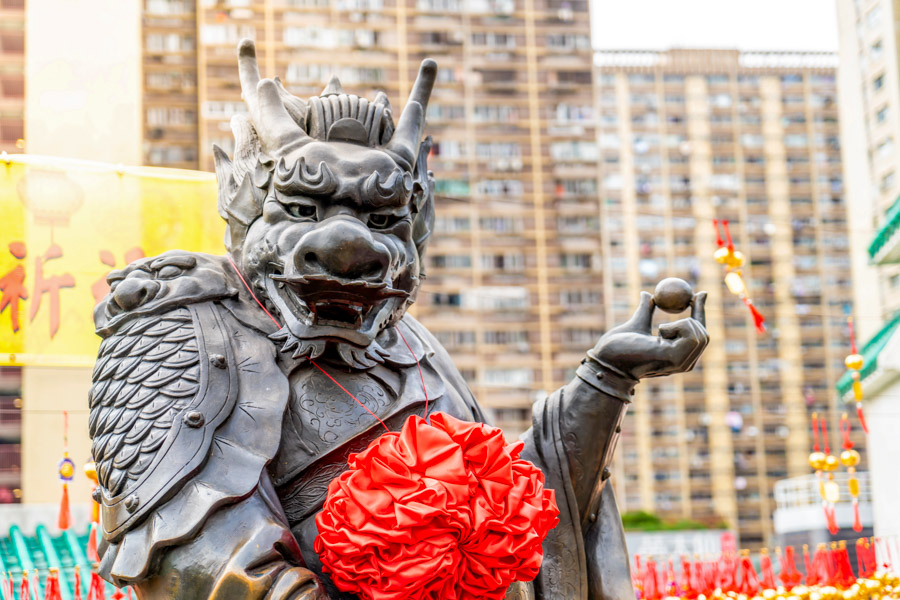
Discover the symbolism of your zodiac sign on a fascinating journey through China! Here, market stalls and souvenir shops are filled with decorative figurines, amulets, clothing, and accessories featuring images of fire-breathing dragons, agile monkeys, and graceful horses. Craftsmen’s creations and exquisite works of art are displayed in art galleries, while in temples and palace complexes, images of astrological creatures continue to guard the entrances to the emperors’ reception rooms.
Follow the Zodiac Across Country
Turn your stroll through the atmospheric neighbourhoods of Beijing or Shanghai into an engaging search for recognisable images in architecture, stone bas-reliefs or wooden figures on carved cornices. Admire the elegance of the painted reliefs of the Nine Dragon Wall in Beijing’s Forbidden City, or appreciate the whimsical sculptures of the 12 zodiac signs at Wong Tai Sin Temple in Hong Kong, rendered in anthropomorphic form as ministers and military commanders.
Find Chinese zodiac signs in museum halls and art centres. For example, bronze heads of zodiac animals from the Old Summer Palace are now kept in the National Museum of China and the Poly Art Museum in Beijing, while the Historical Museum of Shaanxi Province in Xi’an houses an ancient collection of terracotta figurines – an exquisite set of twelve symbols of the Chinese zodiac.
When Food Meets the Zodiac
The zodiac also has a place in Chinese cuisine. In home cooking, a personal dish can be selected for each sign. For example, for those born in the Year of the Monkey, sweet rice balls with sesame seeds are traditionally recommended, symbolising lightness and playfulness. And for those whose sign is the Rooster, a festive dinner with Peking duck is offered, reflecting the persistence and observant nature of this animal. During the Mid-Autumn Festival, the Chinese traditionally eat delicious mooncakes, whose designs often feature images of astrological creatures. And in Shandong Province in eastern China, huamo (huabobo) steamed buns are traditionally prepared during the holidays, most often in the shape of zodiac signs, and become the main decoration of the table. A food tour in China will allow you to explore the fascinating aspects of Chinese ancestral culture.
Take the Zodiac Home
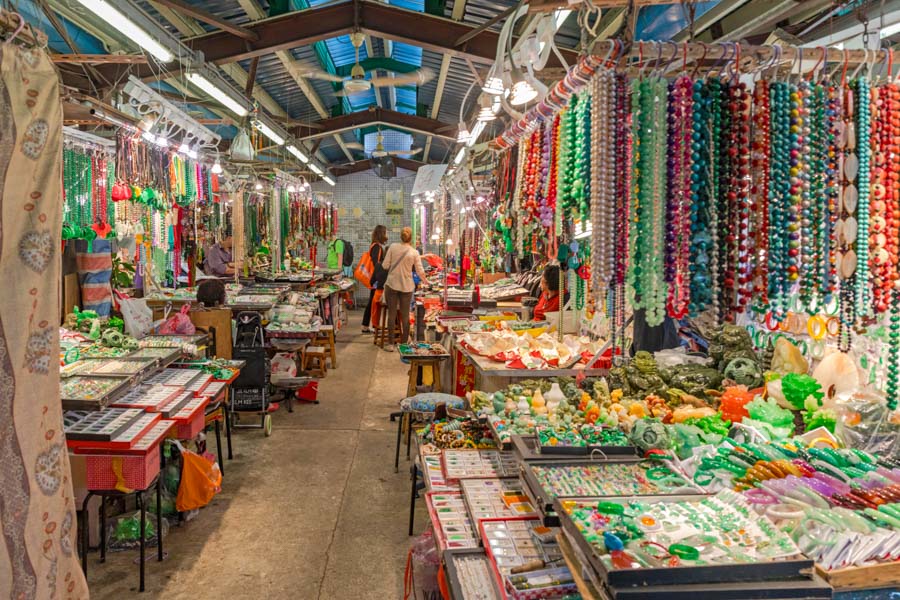
You can bring your personal astrological sign home as a reminder of your trip to China. For example, images of the 12 animals often appear in the form of paper cut-outs, decorative fans, or traditional Chinese lanterns. Visit Jade Hawker Bazaar in Hong Kong for jade items and pearls, or Yuyuan Old Street in Shanghai to explore traditional symbols and choose an authentic souvenir to remember your trip. A colourful gift could be a calligraphic scroll made by hand. To find such an item, head to the Shu Yuan Men (Ancient Culture Street) area in Xi’an, where local craftsmen will create a unique manuscript with the name of your sign on request.
World-renowned corporations and local Chinese brands never miss the chance to offer original gifts in honour of the approaching Lunar New Year. Companies producing clothing, accessories, jewellery, cosmetics, and even premium alcohol replenish their winter collections annually with limited editions, often featuring the symbol of the coming year. Therefore, when visiting China during the Spring Festival, be sure to visit boutiques and brand stores to find exclusive items that will never appear on the market again.
Searching for alluring astrological signs while on a tour in China will reveal the enduring unity of traditions, symbolism, and art. The signs of the zodiac, embodied in carvings, paintings, and festive rituals, remind us of the inseparable connection between generations and the deep meaning that ancient customs hold in today’s world.
A journey through the world of the Chinese zodiac is not only an introduction to a millennia-old framework of celestial influences and elements but also a way to experience the rhythm of life around you in a new way. Let zodiac symbols accompany you on your journey. Allow your personal heavenly sign to guide you in choosing routes, communicating with people, and observing how ancient meanings continue to live on in modern China.