

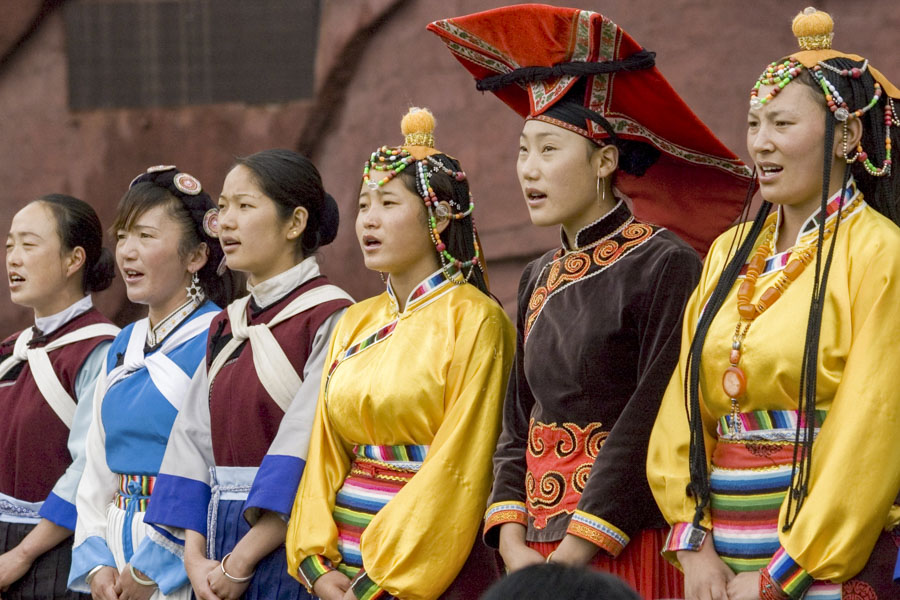
Why do Chinese song lyrics often feel more poetic and layered than lyrics in many other languages?
The answer sits at the intersection of language structure, poetic tradition, and how singing has functioned in Chinese society. Mandarin and other Chinese languages compress meaning into single characters and fixed expressions. Four-character idioms alone can encode entire stories or moral positions, making them ideal building blocks for songs.
This linguistic efficiency shaped the way singing developed across China, as they wrote lyrics for the recollection and interpretation. Folk songs recorded social life and labour. Opera librettos followed strict tonal and rhythmic systems, and oral epics preserved history in various communities. Even with the altered tones of the melody, native listeners reconstruct meaning through context, sound patterns, and shared cultural knowledge.
From regional folk traditions to modern Chinese popular music, singing remained closely tied to language, memory, and identity. This guide explores how lyrics work and how Chinese singing traditions evolved across regions and ethnic groups. Additionally, vocal music remains one of the most direct ways to understand Chinese culture beyond translation.
Historical and Cultural Influences of Chinese Lyrics and Singing
Chinese lyric history developed alongside the earliest forms of poetry and music. In early Chinese thought, they understood words and sound as a single expressive act. Classical texts already describe poetry as spoken emotion and song as its natural extension. This idea shaped the entire history of Chinese vocal music, where lyrics are the core meaning of the music.
The earliest foundation lies in The Book of Songs (Shi-jing), compiled over 2,500 years ago with 305 poems in it. It is said that Confucius edited this book or has commented on it. These songs are accompanied by instruments, often paired with dance. Ritual odes and folk songs established a model in which Chinese lyrics carried social observation and moral reflection. It continued in the Songs of the Chu (Chuci), a book attributed to Qu Yuan and Song Yu from the Warring States period (c. 475 – c. 221 BC). This brought regional dialects and expressive singing from southern folk culture.
During the Han dynasty (202 BCE – 220 CE), lyrics became closely tied to storytelling and lived experience through Yuefu poems composed in ballad style. These songs, collected from across the empire, often narrated love, separation, war, or labour. Famous examples such as Peacock Flying Southeast (孔雀东南飞) remain reference points for later Chinese folk songs and narrative singing. Here, folklore directly shaped lyric content, embedding everyday voices into China’s musical heritage. From the second century BCE, Chinese caravanners on the Silk Road significantly contributed to sharing verses of their songs across Central Asia.
The Tang dynasty (618–907) marked a high point in the relationship between ancient Chinese songs and poetry. Poets such as Li Bai, Du Fu, Wang Wei, and Bai Juyi wrote verses that were routinely set to music and widely sung. They were central figures in shaping the lyrical legacy that still influences music today. Sad pieces like Yangguan Sandie, based on Wang Wei’s farewell poem, continue to influence Chinese vocal music today. Yangguan (Yang Pass) was the last halt for Chinese travellers leaving China for Western countries on the Silk Road. Tang poetry’s structural clarity, tonal balance, and emotional restraint still inform modern approaches to famous Chinese song lyrics.
In the Song dynasty (960–1279), lyrics evolved into ci, a form of verses written specifically to fit existing melodies. This shift placed musical structure at the centre of lyric composition and allowed greater emotional flexibility. Poets such as Su Shi (蘇軾) and Jiang Kui (姜夔) wrote lyrics that were both literary and performative. Many modern art songs still draw directly from their texts, including settings of Su Shi’s The Great River Flows East.
Later forms, such as “qu” during the Yuan dynasty (1271–1368) and “Qin’an xiaoqu” during the Ming dynasty (1368–1644), brought spoken language, folk humour and rhythms into singing. Across these periods, Chinese lyrics absorbed mythology and legend. Stories like Jingwei filling the sea and the phoenix (fenghuang) symbolising harmony appear repeatedly in traditional Chinese lyrics and surface in contemporary songwriting.
Songs and lyrics during the Qing dynasty (1644-1912) often included traditional folk songs. These songs used instruments like the guzheng, pipa, and erhu. The beloved themes’ lyrics were romantic longing, nature, and imperial reverence.
The Republic of China period (1912–1949) saw Western influence and many styles as time brought Shanghai jazz (Shidaiqu) with romantic songs like “Rose, Rose, I Love You.” It also included patriotic anthems from wartime.
During the Chinese Cultural Revolution decade (1966-1976), all cultural elements considered as part of the “Four Olds” (四旧) – ideas, culture, customs, and habits of mind – were not considered central to the culture anymore. At the time, a new era of revolutionary and patriotic songs such as “The Long March” (长征) surged, shaping the society towards collectivism.
The post-Cultural Revolution era brought new forms of lyrics and songs, bringing back to life, slowly, the ancient philosophies of life and blending them to get new forms of expressions and complex new genres. Sentimental and romantic ballads re-emerged, as well as nostalgic folk and pop songs. The overall musical landscape shifted to new forms of songs blending a reflection on ancient traditional lyrics and the Cultural Revolution era.
Traditional Singing Styles
Folk singing (regional styles and everyday life)
Labour chants, antiphonal courtship songs, and seasonal pieces linked to farming, fishing, herding, and local customs. The earliest written record sits in the Shi-Jing (Book of Songs), which gathered ballads and ritual songs from many regions. Folk styles remained strongly local because language, landscape, and livelihoods shape melody and delivery. In the north of China, songs often sound bold and rhythm-driven, while in the south, lines tend to be smoother and more lyrical.
Narrative singing (storytelling through song)
Narrative singing customs runs from early folk ballads to Yuefu traditions collected by the Han dynasty Music Bureau. A key feature is the alternation of spoken narration and sung verse, which keeps the plot clear, allowing emotion to land in the sung lines.
Long narrative songs, valued for memory and social commentary, helped pass down local history, romance, and satire in folklore.
Ritual and ceremonial songs (festivals, rites, and belief)
Singing has long had a formal role in Chinese rites, from court and ancestral ceremonies to Taoist temple life. The Shi Jing also preserves sacrificial and ceremonial pieces, showing how song supported governance and ritual order.
The emperor, known as the “Son of Heaven”, used to perform the sacrificial rites at the Temple of Heaven in Beijing during the winter solstice. Ceremonial chants, hymns, and prayers were often performed in ancient poetic forms during this significant event.
Later, Buddhism introduced chant-based practices synthesising with Chinese language and aesthetics. Additionally, Islam also contributed religious musical forms in some regions. Festival singing and drum-led performances anchor Lunar New Year, Dragon Boat Festival, and temple fair celebrations.
Other key traditions to know
From the Song dynasty onwards, urban entertainment strengthened professional vocal arts in theatres and teahouses, including zaju (杂剧), a form of Chinese opera, and nanxi (南戲), a foundational form of Chinese theatre. Specific forms of lyric poetry such as “ci” and later “qu” grew from popular tunes, linking poetry directly to singing. Opera became the most influential vocal form in the Ming and Qing eras, with many regional styles shaping vocal technique.
In the modern period, Western bel canto entered conservatories and gradually combined with established Chinese vocal habits. This influenced training while leaving folk and operatic traditions culturally central.
Major Lyric Themes and Symbolism
Chinese lyrics sit on the border between poetry and song. For centuries, writers shaped words to fit melody, not the other way round. That is why Chinese song lyrics often feel compressed and suggestive. They use familiar images and allusions but leave space for the listener to finish the meaning.
Common themes in traditional and modern lyrics
Love and longing
Romance is one of the oldest and most persistent themes in Chinese lyrical tradition, especially in ci poetry. Many lyrics focus on separation, waiting, regret, and the fragility of happiness. A well-known modern example is Jackie Chan, mostly recognised as a martial arts actor, who is also a prolific singer. His interpretation of “Everyday Full Moon” with Chen Si Si keeps emotion simple while relying on a single stable symbol.
Nature and seasons
Nature is rarely only scenery, as it signals time, mood, and change. Autumn often implies decline or distance; spring suggests desire or renewal, and moonlight carries solitude as much as beauty. In Khalil Fong’s “Red Bean” (红豆), red beans represent a cultural symbol of love, linking a modern song to older poetry.
History, identity, and place
Additionally, lyrics carry collective identity. “The Song of Yangtze River” settles this identity by naming this river itself. The rivers are not decoration, as they stand for origin, continuity, and shared history across distance.
Dreams, memory, and inner life
Dream imagery is among the common tools in Chinese vocal music because it can hold desire and philosophy simultaneously. Su Shi’s ci “Riverside Town” (江城子) uses a dream meeting with a deceased wife to show love enduring beyond time. In “The Moon over the West River” (西江月), Su Shi frames life as “a great dream”, shifting personal grief into reflection.
Metaphors and symbolism in Chinese lyrics
Chinese lyrics often speak indirectly, using symbols that carry cultural meaning. Three patterns appear again and again.
Objects that stand in for emotion
Moon for constancy, red beans for fidelity, catkins for clingy sorrow. A classic example is “The Butterfly Loves the Flowers” (蝶恋花), where spring sorrow links to clinging. The language stays light, but the feeling is heavy.
Allusions that carry whole stories
Cloud and rain on Mount Wushan (巫山雲雨) suggest in a discreet manner the intimate relation of a couple. Zhuangzi’s butterfly dream (庄周梦蝶) is used to blur reality and illusion or to express a wish for freedom.
Sound shaping meaning
In ci lyrics, tone patterns and line length are part of the message. It allowed for more personal and introspective themes compared to earlier form. Later, lyricists from the Song dynasty made tonal rules stricter and sometimes bent them to create a sense of agitation or distress. In other words, feeling is built into the sound of the Chinese lyrics, not only the vocabulary.
Chinese Opera and Its Lyrics
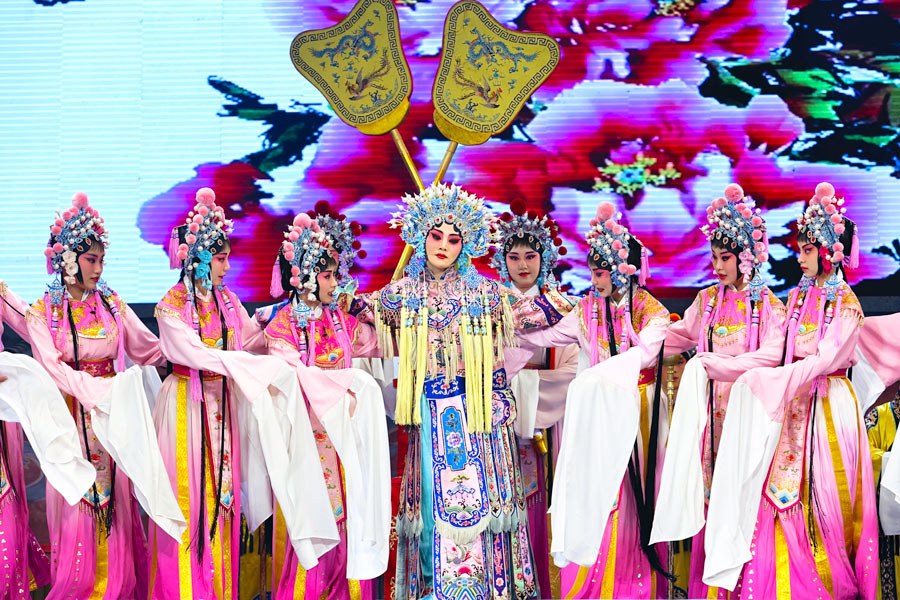
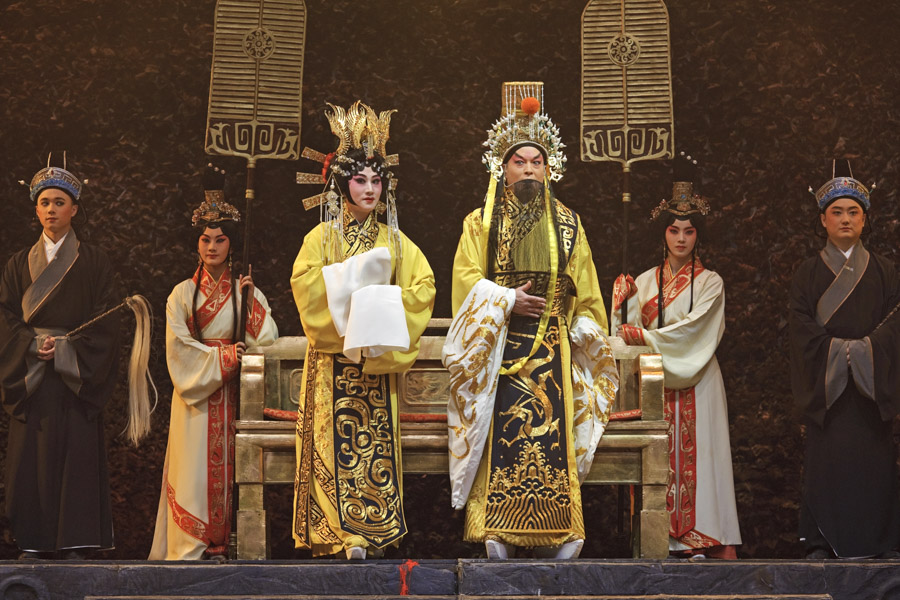
Chinese opera lyrics sit at the centre of performance. They are not decorative text but the engine of storytelling, emotion, and moral meaning. Operatic lyrics use classical or semi-classical Chinese and draw directly from poetry, historical prose, and older dramatic forms. This makes Chinese opera a key bridge between Chinese lyrical tradition, vocal music, and literary heritage.
Across different regional operas, the language of lyrics tends to be condensed and symbolic. A single line may carry emotional weight, social status, and narrative direction at once. Because Chinese writing avoids repetition, singers use parallel phrasing and subtle shifts to keep rhythm without redundancy. This is one reason opera lyrics can be challenging even for fluent speakers.
Vocal technique plays a decisive role in how lyrics are understood. Stylised pronunciation, elongated vowels, falsetto registers, and strong nasal resonance often reshape spoken language into something closer to musical calligraphy.
In Peking Opera, lyrics are closely tied to role types, with different vocal colours used for age, gender, and temperament. In Cantonese Opera, the lyrics show local speech patterns. They are often found in printed lyric books, like mu yu shu (木魚書). These texts combine fixed poetic structures with performance notes, showing how words and music are inseparable.
Lyrics also function as moral commentary, as many operas use historical or fictional settings to address loyalty, sacrifice, injustice, and national survival. Yuan dynasty (1271-1368) playwright Guan Hanqing remains a defining figure here. His work The Injustice to Dou E is still in use for its sharp language and emotional clarity. The survival of these librettos highlights how traditional Chinese music heritage often endures through text as much as sound.
Modern compositions inspired by opera continue this approach. In this song, the opera performer sings of sorrow, duty, and self-sacrifice while performing for occupying forces. Lines such as “emotions arise without knowing the reason, deepening as they go” echo classical lyric thinking. Additionally, the stage imagery, like water sleeves, gongs, and makeup, anchors the song firmly in operatic tradition.
Chinese opera lyrics demand attentive listening and cultural context, but they reward it. They show how singing in China has always been about more than melody. It is about language shaped by history, emotion carried by voice, and stories preserved through sound.
Contemporary Trends in Chinese Lyrics and Singing
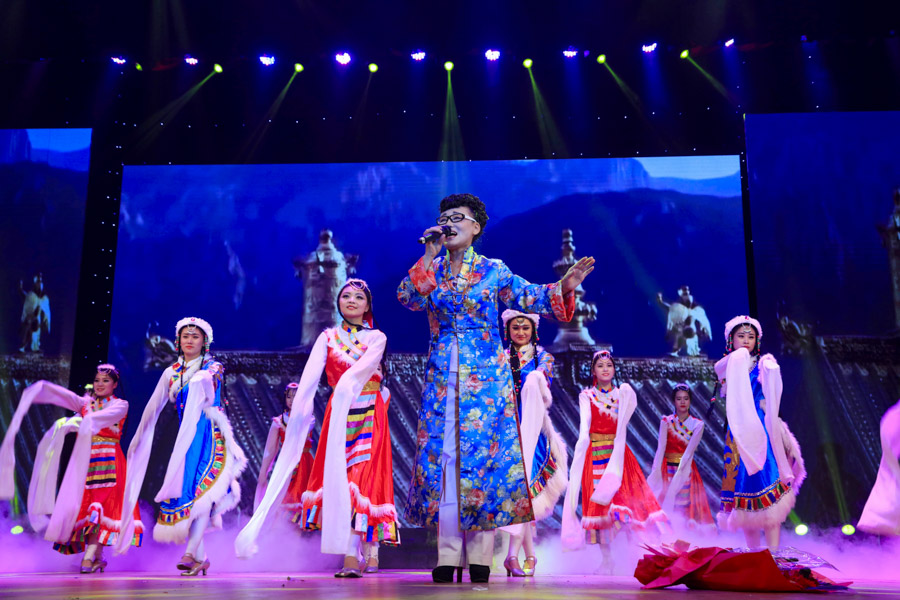
Modern Chinese lyrics sit on top of a long Chinese lyrical tradition, but the sound, language, and platforms have changed fast. You can still hear older habits in today’s Chinese song lyrics, such as dense imagery and short “scene-setting” lines. At the same time, singing in China has moved from local communities to a national and global industry shaped by radio, film, TV, karaoke, streaming, and short-video apps.
Transition from traditional to modern lyricism
A key shift is linguistics, as traditional songs favour classical phrasing, fixed patterns, and literary allusion. Modern lyrics shift towards everyday Mandarin and regionally marked styles such as Cantonese and Minnan. Many writers use “classical” techniques like parallel lines, symbolic objects, and compressed emotion. At the same time, they place these songs inside pop structures such as verse, pre-chorus, and chorus.
You can see the status of modern Chinese vocal music in major publishing projects. A four-volume anthology published in Beijing gathers 1,537 songs by 838 songwriters from 1902 to 2013. It presents Chinese lyrics as a record of social change, tracing them back to yuefu, an early song form written for music and dance.
Influence of global music trends on Chinese lyrics
Western influence has long shaped Chinese lyrics and grew stronger in the 20th century through recordings and the internet. Popular music in the Chinese-speaking world absorbed jazz, ballroom, rock, R&B, hip-hop, EDM, and K-pop-style production. This often included more direct "I" statements, catchy hooks, and repeated choruses. It also introduced new themes like youth identity, city life, consumer culture, and social pressure.
At the same time, global success has encouraged a “local signature” in writing. One clear trend is the return of heritage markers, as modern tracks now reference calligraphy, porcelain, and landscapes. They use dynastic imagery and older poetry, making them sound unique while being easy for a mainstream audience to enjoy. This is where Chinese poetry and lyrics continue to meet, even inside commercial pop.
Important trends to note
- Cross-regional scenes: Mainland Mandopop, Hong Kong Cantopop, and Taiwan’s songwriting cultures keep exchanging styles and vocabulary, shaping today’s “shared” China singing culture.
- Revival and fusion: Traditional instruments, opera timbres, and folk-style refrains are increasingly used as colour inside modern production, helping artists signal Chinese music heritage without leaving pop formats.
- Data-driven writing: streaming metrics push shorter intros, earlier choruses, and highly quotable lines, which changes how traditional Chinese lyrics techniques are used in practice.
Chinese Lyrics and Singing on the UNESCO Intangible Cultural Heritage List
China’s place on the UNESCO Intangible Cultural Heritage list highlights lyrics and singing lying deep in its cultural history. Many of the listed elements represent living systems of language, poetry, and vocal expression. They preserve Chinese music heritage through performance rather than written records.
Several Chinese opera traditions on the list place lyrics at the centre of storytelling. Peking opera and Yueju opera rely on carefully structured librettos that follow strict rules of rhyme, tone, and rhythm. Their lyrics convey history, social values, and emotional conflict through stylised singing that guides character development and narrative flow. Tibetan opera, shaped by Buddhism, uses chant, song, and narration to pass on moral lessons and shared memory.
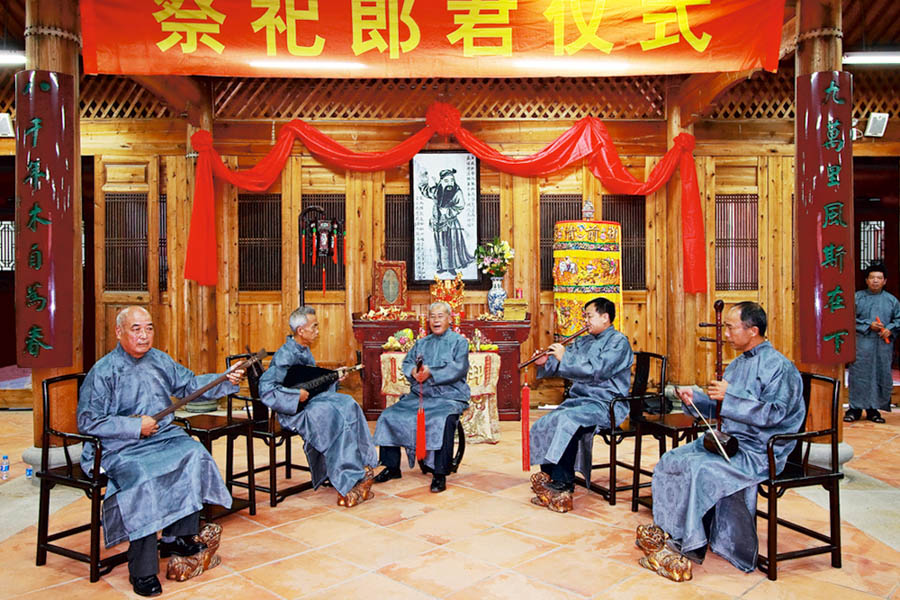
Folk and regional vocal traditions form another major group. Nanyin, in southern Fujian, preserves ancient poems and ballads sung in local dialects, giving rare insight into early Chinese lyrical tradition. Hua’er music uses improvised lyrics in fixed syllable patterns to voice love, work, and social change. It can be heard in Gansu and Qinghai Provinces and throughout north-central China.
Epic and narrative singing traditions are especially important for understanding the history of lyrics in China. The Gesar epic tradition shared by the ethnic Tibetan, Mongolian and Tu communities in western and northern China, and Manas, the Kirgiz ethnic minority in China, are vast oral epics performed through alternating sung verse and spoken narration. It functions as a living archive of history, belief, and moral teaching. Similarly, Hezhen Yimakan storytelling – belonging to the Hezhen people living mainly in northern China – preserves language, mythology, and values entirely through sung narrative, playing a vital role in safeguarding endangered linguistic and cultural knowledge.
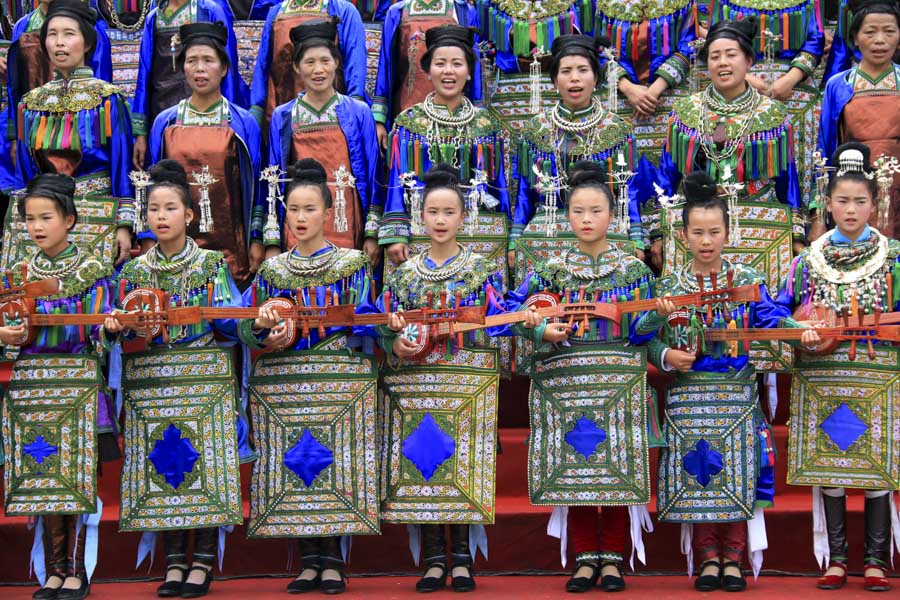
The Grand Song of the Dong people, in Guizhou Province, and Mongolian Khoomei, sung in the Inner Mongolia Autonomous Region, rely entirely on the human voice, without instrumental support. Through group singing and specialised vocal techniques, they pass down poetry, social values, and ethnic identity across generations.
Experiencing Chinese Lyrics and Singing in China
Live performances are the most direct way to experience Chinese lyrics and singing in their natural setting. In major cities, national institutions regularly present folk and vocal programmes rooted in regional traditions. The China National Opera and Dance Drama Theater performs Spring Festival Overture (春节序曲).
The concert presents Lunar New Year songs from different provinces and ethnic groups. These short concerts combine singing, traditional instruments and dance, making them accessible for visitors with limited time.
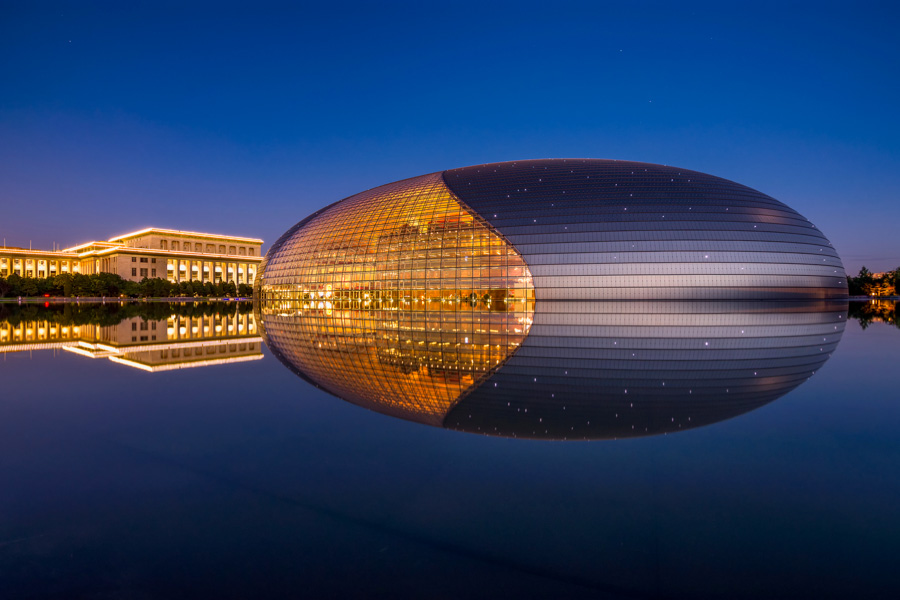
Beijing’s National Centre for the Performing Arts is a key venue for traditional vocal music. Choir concerts and folk-themed programmes present regional songs from Dong, Xinjiang, and Yunnan traditions. The August Chorus Festival mixes Chinese folk singing with international choirs, and this modern concert hall hosts Chinese traditional music and lyrics.
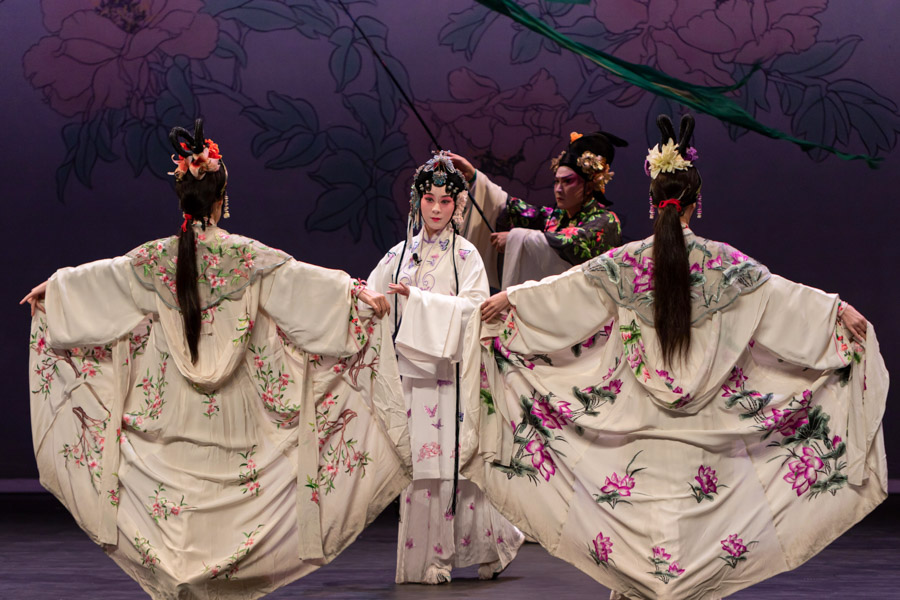
For opera, Beijing remains the easiest entry point. Historic theatres such as Liyuan Theatre and Huguang Guild Hall present daily or weekly Peking Opera excerpts. These shows focus on famous arias and scenes, so audiences hear classical lyrics without watching a full opera. Smaller venues also run experimental seasons. The ephemeral Kunqu Opera, The Peony Pavilion, directed by Academy Award winner and cinema soundtrack composer Tan Dun, is occasionally performed at Kezhi Garden in Zhujiajiao Water Town.
They update staging and presentation but keep traditional singing styles unchanged. Outside major cities, folk singing remains part of daily life. In Dong villages in Liping County, Guizhou, singers perform the Grand Song as multi-part choral music during festivals.
Visitors during the Spring Festival can hear dozens of village groups singing without instruments or conductors. Local cooperatives now stage regular shows for visitors, offering direct access to community singing traditions. Singers in the villages of the Yao and Zhuang minorities frequently perform their ancestral songs during agricultural events.
The China International Folk Arts Festival (CIFAF) takes place every three years in multiple cities. It presents vocal traditions alongside dance and instrumental music, often in public spaces and schools. In Hong Kong, the annual Chinese Opera Festival features Cantonese, Kunqu, Yue, and Peking opera. Performances, talks, and workshops help audiences understand lyrics and vocal technique.
For learning and context, cultural centres and schools play an important role. The Xiqu Centre in Hong Kong combines performances with exhibitions, talks, and short opera excerpts for non-specialist audiences. In mainland China, conservatories and universities run lecture-concerts, introducing folk songs before performance.
From Folk Songs to Opera: Understanding Chinese Lyrics
Chinese musicians show how lyrics work as condensed literature. Tonal language, flexible syntax, and a poetic tradition stretching back more than two thousand years shape this approach.
This tradition sets high expectations for lyric writing among both singers and listeners, even as styles and platforms change. Today, in village festivals, opera houses, concert halls, and digital media, Chinese vocal music still follows the same idea. Here, singing is about how language carries memory and meaning in Chinese society.