

The world of Chinese cinema is broad, diverse, and deeply connected to the visual nature of their written language. Chinese characters communicate ideas through compact symbols, and many filmmakers use a similar approach in their storytelling. They rely on careful composition, clear imagery, and a sense of visual meaning. This has shaped both classic Chinese movies and modern Chinese cinema.
Understanding what we call Chinese cinema is not always straightforward. Film production developed in several major centres across Mandarin cultures, including Mainland China, Hong Kong, and Taiwan. Each location created its own style and its own film culture.
Scholars sometimes treat these areas as separate traditions. Film professionals have moved between these regions since the early 20th century, creating shared influences in style and theme. Because of this long exchange, we cannot reduce Chinese film history to a single place or a single industry.
Early productions in Shanghai formed a strong base for the new medium, later inspiring Hong Kong and Taiwan studios. Over the decades, the Chinese film industry expanded from silent films and martial arts productions to major historical drama. These artistic works gained international attention, and commercial hits attracted large audiences across Asia. This history helps to understand why certain cities and regions remain important for film tourism in China.
The History of Chinese Cinema
The Beginnings of Chinese Film from 1895 to 1930
China was one of the earliest countries exposed to film. Screenings reached Shanghai in 1896 through foreign exhibitors, and local audiences quickly became familiar with this new medium. In 1905 the first Chinese film, Dingjun Mountain, recorded a Peking opera performance featuring Yan Shanshan.
By the nineteen twenties Shanghai had become the main centre of the growing Chinese film scene. Burning of Red Lotus Temple (1928) became an influential work of the time, establishing the popularity of martial arts themes.
Technological and Artistic Innovations from 1931 to 1949
In 1931 the first Chinese sound film, Sing-Song Girl Red Peony, introduced recorded dialogue and music to Chinese screens. The arrival of sound encouraged producers to create musicals, city stories, and more ambitious family dramas.
Studios developed new working methods, and directors experimented with fresh subjects reflecting cultural shifts taking place across the country.
Chinese Cinema from 1949 to 1980
After 1949, film production expanded across several major studios. Many works focused on everyday life, history, and community themes. War films, historical dramas, and opera films became important genres. Animation also advanced with works inspired by traditional painting and folk storytelling.
The Hundred Flowers Award, founded in 1962, became a major national prize. The ceremony continues to recognise excellence in the Chinese cinema industry.
During the same decades, Hong Kong developed a strong commercial industry producing influential Kung fu films. The global impact of Li Xiaolong, known internationally as Bruce Lee, helped bring wider attention to Chinese action cinema.
Cinematic Diversity from 1980 to 1990
Reform and opening in the late nineteen seventies encouraged new ideas in filmmaking. Audiences grew quickly, and cinemas became a popular form of entertainment. A younger group of directors known as Fifth Generation Filmmakers introduced new visual thinking. They explored rural settings and historical memory.
In 1987 The Last Emperor received 9 prizes at Academy Awards including the best picture. This international success confirmed the rising influence of contemporary filmmaking in China.
Internationalisation from 1990 to Today
Since the 1990s the Chinese film industry has become more market-driven. Modern cinemas, co-productions, and larger budgets changed production methods and expanded audience reach.
Hong Kong cinema continued to influence style and casting across the region. While the local industry experienced changes in the two thousands, its creative talent contributed widely to new mainland productions.
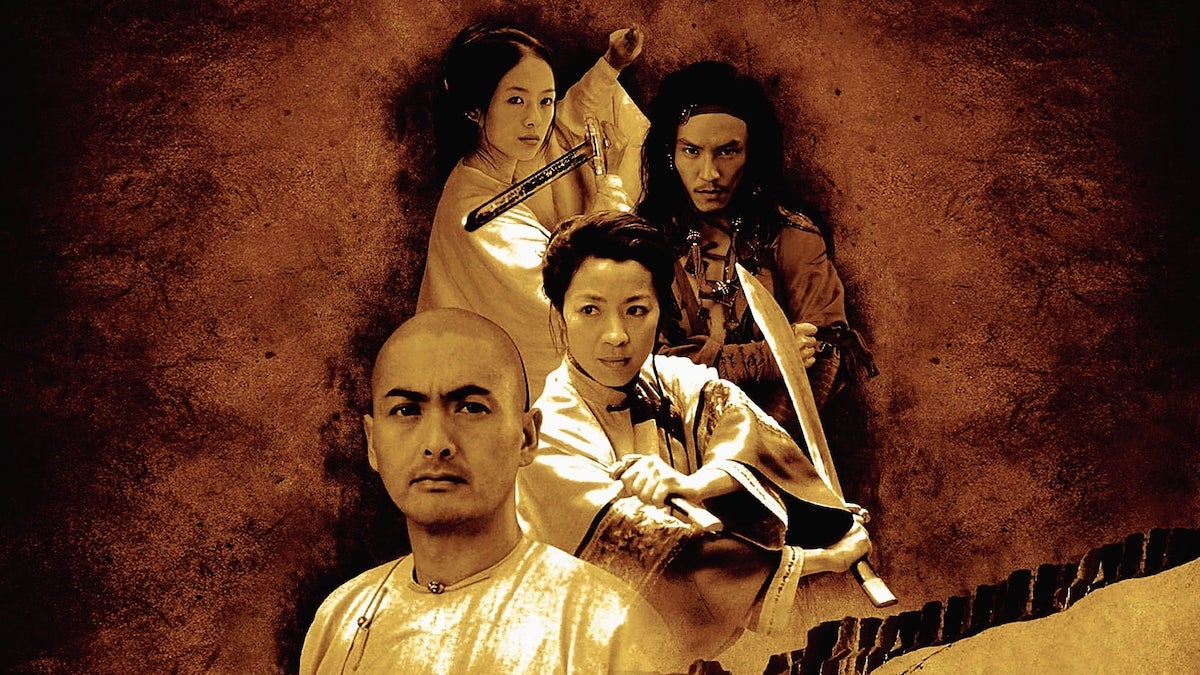
International successes such as Crouching Tiger, Hidden Dragon (2000; dir. Ang Lee) strengthened global interest in Chinese martial arts movies and period epics. At the same time, urban stories, family dramas, and youth films added diversity to the ongoing Chinese cinema evolution.
Top 8 Chinese Filmmakers of All time
Chinese directors form the most diverse group in world cinema. Their work ranges from historical epics and Chinese martial arts movies to intimate family stories and highly experimental films. Important filmmakers come from Mainland China, Hong Kong and Taiwan, and many have worked across these regions.
The Fifth Generation of Chinese filmmakers is a group of directors. They graduated from the Beijing Film Academy after the Cultural Revolution, starting in the 1980s.
1. Zhang Shichuan (born circa 1890 – died in 1954)
One of the founding fathers of Chinese cinema is Zhang Shichuan, born in Ningbo. He helped establish the Mingxing Film Company (1922-1937) and directed classics including the Laborer's Love. His contributions were essential to the development of narrative film and genre traditions in Chinese cinema history.
2. King Hu (born in 1932 – died in 1997)
Born in Beijing, King Hu was a pioneer of the modern wuxia film. He combined refined visual style with action in works such as Come Drink with Me, Dragon Inn and A Touch of Zen. His films helped define Chinese martial arts movies and influenced both Asian and global action films.
3. John Woo (born in 1946)
Guangzhouese director John Woo is a central figure in Hong Kong action cinema and a pioneer of stylised heroic action. His films, such as A Better Tomorrow and Hard Boiled, shaped the image of Chinese action movies worldwide. His influence extends across the Chinese film industry and Hollywood.
4. Zhang Yimou (born in 1950)
Originally from Xi’an, Yimou Zhang is among the best Chinese directors and a central figure in the Fifth Generation of Chinese cinema. Starting as a cinematographer, he moved into directing with films such as Hero and Article 20. Some of this films became international reference points for classic Chinese movies. His work bridges art house cinema and large-scale productions within the modern Chinese cinema Industry.
5. Chen Kaige (born in 1952)
Chen Kaige is another major Fifth Generation and Beijing director. The auteur remains the first Chinese filmmaker to win the Palme d'Or. His work often deals with history, culture and personal destiny, mixing intimate stories with large scale images. Chen has contributed greatly to the global recognition of Chinese movies.
6. Wong Kar-wai (born in 1958)
Originally from Shanghai, Wong Kar-wai is a key voice of Hong Kong cinema, known for his distinctive style in films such as In the Mood for Love. His work focuses on memory and urban life and is often cited in Chinese film reviews worldwide. He is famous as one of the best Chinese directors working with themes of time and romance.
7. Wang Xiaoshuai (born in 1966)
Famous for precise portraits of youth and family life, Xiaoshuai’s Shanghai Dreams and In Love We Trust examine rapid urban change and its impact on ordinary people. His work is important for understanding modern Chinese cinema from a social angle.
8. Jia Zhangke (born in 1970)
A leading figure of the so-called Sixth Generation of Chinese cinema, Zhangke’s films, such as The World, Still Life and Ash is the Purest White, explore social change, migration and everyday life. Zhangke is a regular guest at major Chinese film festivals and international festivals alike.
The Best 6 Popular Chinese Actors Acclaimed Worldwide
1. Bruce Lee (born in 1940 – died in 1973)
Born in San Francisco (USA) and grown up in Hong Kong, Bruce Lee remains a cultural icon whose impact on Chinese action cinema is unmatched. His films, including The Big Boss, Fist of Fury and Enter the Dragon, changed global perceptions of martial arts on screen. He was a student of the legendary Ip Man, learning Wing Chun before going on to develop his own martial arts philosophy known as Jeet Kune Do. Lee’s precise choreography and onscreen presence helped establish Chinese cinema within international popular culture and influenced generations of actors and directors.
2. Jackie Chan (born in 1954)
Hongkonger Jackie Chan is one of the most recognised figures in Chinese martial arts movies and global action cinema. Known for combining acrobatics, stunt work and comedy, he gained international fame with Drunken Master and Police Story. His career introduced Chinese movies to mainstream audiences worldwide and shaped the modern image of Hong Kong action cinema.
3. Chow Yun-fat (Born 1955)
A major star of the Hong Kong scene, for heroic crime films like A Better Tomorrow and Hard Boiled, his work with director John Woo shaped a new direction in Chinese action cinema. He also appeared in international productions.
4. Tony Leung Chiu-wai (born in 1962)
One of the most acclaimed actors in Hong Kong and Asian cinema, Chiu-wai’s roles in Hero, and In the Mood for Love made him popular. His performances, marked by quiet emotional depth, have made him a central figure in modern Chinese cinema.
5. Gong Li (born in 1965)
Gong Li, originally from Shenyang, Liaoning Province where, jade can be found, is among the most influential actresses in Chinese cinema history. She is often associated with major Fifth Generation directors. Her roles in various films including the Curse of the Golden Flower brought worldwide attention to Chinese movies. Her strong dramatic roles highlight cultural and historical themes.
6. Zhang Ziyi (born in 1979)
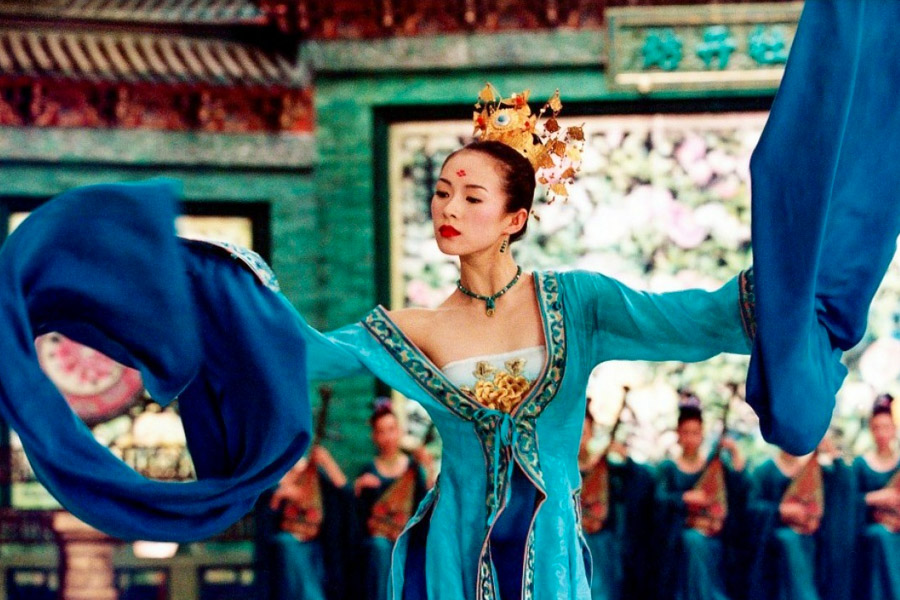
Beijinger Zhang Ziyi became internationally known through films such as Crouching Tiger, Hidden Dragon, Hero and House of Flying Daggers. A key figure in early 21st-century Chinese cinema, she has worked across drama, romance and martial arts genres. Her roles often appear in Chinese film reviews as examples of strong visual storytelling and modern stardom.
Top 5 Chinese Movies
These films are handpicked to help viewers understand Chinese cinema across different periods, regions and styles. Most of the titles come from the early decades of Chinese filmmaking, while others represent modern milestones in Chinese film culture. Each film shows a different layer of Chinese life, artistic tradition or social experience. If you want to know what to watch before visiting China, these films are perfect picks for learning about the culture.
1. Shaolin Temple (1982)
Few Chinese movies have had such a direct cultural impact. Shaolin Temple introduced martial arts cinema to a mass domestic audience and revived global interest in Shaolin kung fu. Shot at the real Shaolin Monastery, the film blends physical discipline, Buddhist values, and traditional storytelling in a clear, accessible form. It also launched Jet Li’s career and helped define Chinese martial arts movies as a key export of the Chinese film industry. More than entertainment, it reflects how physical training, ethics, and history intersect in Chinese culture.
2. The Road Home (1999)
Quiet, intimate, and deeply rooted in rural life, The Road Home focuses on memory, family, and emotional continuity. The story unfolds through simple gestures rather than dramatic conflict, making it one of the most approachable classic Chinese movies for first-time viewers. Its portrayal of village customs, education, and devotion offers a grounded view of everyday China. The film is often cited in Chinese film culture as an example of how restraint and clarity can carry emotional weight without spectacle.
3. Hero (2002)
Hero stands at the crossroads of art cinema and blockbuster filmmaking. Known for its colour-coded structure and large-scale action, the film presents Chinese historical storytelling through visual precision and choreography. It played a major role in shaping modern Chinese cinema on the global stage and demonstrated how Chinese action cinema could merge philosophy, history, and spectacle. Frequently studied for its cinematic art, Hero also reflects long-standing ideas about unity, sacrifice, and collective identity.
4. Big Fish & Begonia (2016)
This animated feature draws from classical Chinese Taoist mythology and aesthetics, offering a rare example of large-scale original animation within the China movie industry. Its visual style is inspired by traditional painting, folklore, and architecture, making it especially relevant for younger audiences and travellers interested in symbolic storytelling. The film highlights how Chinese filmmaking continues to evolve beyond live-action drama while remaining rooted in cultural memory and myth.
5. So Long, My Son (2019)
This modern epic examines family life, grief and the impact of rapid social change from the 1980s to the present. Wang Xiaoshuai structures the film through shifting timelines, inviting viewers to follow decades of transformation in urban China. Its emotional depth offers insight into migration, reform-era pressures and everyday resilience. As a contemporary story, it plays an important role in defining modern Chinese cinema.
Must-Visit Cinema Studios in China
Do you want to know where Chinese movies are filmed? China has built one of the most active studio networks in Asia. Many of these sites are open to visitors and play a major role in the Chinese movie industry. They also appear in some of the most famous Chinese blockbuster films. The studios below are the most important for film tourism and give a clear view of how the Chinese film industry works today. These studios are an excellent starting point for a tailor-made tour based on your personal tastes. Some offer the chance to spend the night in luxurious hotels set in breathtaking locations after attending various daytime activities and spectacular sound and light shows. Moreover, certain venues provide those seeking a location for conferences, exhibitions, and events with a space equipped with all the latest technology. Services for health preservation and recovery are also available. It's a fascinating world waiting for you to discover.
1. Hengdian World Studios, Zhejiang
Hengdian is the world’s largest film studio and the most famous place connected to Chinese film tourism. Covering 330 hectares, the site contains full-scale reconstructions of the Sun Palace, the Forbidden City and old Shanghai. In two-thirds of all period productions in China each year, you'll see Hengdian.
Major films shot here include Hero and Crouching Tiger, Hidden Dragon. The studio also appears in international films. All sets are open to visitors, and large crowds come to walk through working film sets, watch productions and explore themed areas.
2. Suzhou Film Studios, Jiangsu
Built in 1987 near Taihu Lake, Suzhou Film Studios is famous for large outdoor sets. Here, they recreate ancient streets, temples and palaces from the Han, Tang, Song and Ming dynasties. Many filmmakers shoot Chinese historical films and major TV dramas here. The studio welcomes tourists and is surrounded by natural scenery that is typical of the Jiangnan region.
3. Nanhai Film Studios, Guangzhou
Nanhai covers more than five million square metres and is known for its classical architecture beside lakes and mountains. Producers have used it for major television adaptations of Romance of the Three Kingdoms and other well-known works. Once limited to CCTV productions, it is now open to more film crews and tourists.
4. Mount Elephant Film Studios, Ningbo
Opened in 2005, this site recreates ancient squares, markets and palace streets from the Han and Tang periods. Its large outdoor sets make it a popular place for costume dramas. It also operates as a national tourist attraction due to its natural landscape and preserved Jiangnan style.
5. Chedun Film Studios, Shanghai
This is Shanghai’s main studio complex with full reconstructions of 1930s streets, tram lines and old neighbourhoods. Republican-era films and series are usually set in the studio. Visitors can walk through old Shanghai film sets and see active productions.
Other Notable Studios in China
| Studio | Location | Founded | Notes |
| Zhaocheng Film Studios | Beijing | 1990s | Known for Journey to the West sets and Beijing landmark replicas |
| Dongli Film Studios | Suzhou | early 2000s | Popular for canal towns and historical dramas |
| TVB Studios | Hong Kong | 2003 | Period street sets from imperial China to the Republic era |
| Dunhuang Film Studios | Gansu Province | 2000s | Large outdoor sets based on western China history |
| Xiangshan Global Studios and TV City | Zhejiang Province | 2005 | Used for Nirvana in Fire and historical epics |
| Shanghai Film Park | Shanghai | late 1990s | Replica of 1930s Nanjing Road used for Kung Fu Hustle |
Important Film Locations for Visitors
Besides studios, several outdoor filming sites are open to visitors. These places appear in well-known Chinese and international films and form key parts of Chinese film culture.
- Forbidden City in Beijing. Used for The Last Emperor. This will link to the separate Forbidden City guide.
- Hongcun Village, a UNESCO World Heritage Site, in Anhui Province. Featured in Crouching Tiger, Hidden Dragon.
- Zhangjiajie National Forest Park in Hunan Province.
- Jiuzhaigou Valley in Sichuan Province. Featured in Hero.
- Wulong Karst in Chongqing Municipality, Sichuan Province, another UNESCO World Heritage site. Used in Transformers: Age of Extinction.
- Xitang Water Town in Zhejiang and Shanghai. Featured in Mission Impossible III.
- Kashgar Old Town in Xinjiang. Used in The Flowers of Kashgar.
- Fujian Tulou. Inspiration for the Big Fish & Begonia animated film.
These locations help travellers understand why China remains one of the major destinations for film tourism.
Festivals and Film Events in China
China hosts a wide network of film festivals, supporting new talent, international collaboration and the country’s screen culture. These festivals also attract visitors who want to explore the links between cinema, travel and culture. You can elevate your adventure by booking a tour to China and extending your stay to fully experience the vibrant atmosphere of these cities during the film festivals.
Shanghai International Film Festival
China’s only A-class festival accredited by the International Federation of Film Producers Associations, the festival operates since 1993 and has developed into a major platform for the global industry.
Each June the festival hosts international premieres, industry forums and the Golden Goblet Awards for Best Feature Film. It also runs a film market and training programmes that support new directors. This event has helped make Shanghai one of the most active screening hubs in the region.
Beijing International Film Festival (BJIFF)
Launched in 2011, the BJIFF became a major event supported by the national film administration and the municipal government. Each April it presents screenings across the city and awards the Tiantan Prize. The festival focuses on international cooperation and industry exchange, bringing leading directors and actors to the capital each year.
Silk Road International Film Festival (SRIFF)
Held annually in Xi’an and Fuzhou, the film festival plays an important role along the Belt and Road Routes. Founded in 2014, the festival screens films from more than sixty countries across Asia, Europe and the Middle East. It also runs a film market, forums and activities for young professionals. Xi’an is now one of the key cities for this festival and continues to grow as a centre for international screenings.
Hong Kong International Film Festival
Founded in 1976, the Hong Kong International Film Festival is one of the oldest in Asia. It screens more than three hundred films each year and brings well-known filmmakers, actors and industry guests to the city. The festival remains an important showcase for new talent, promoting Asian cinema to an international audience.
International Student Film and Video Festival, Beijing
Organised by the Beijing Film Academy since 2001, this event focuses on student work and international film education. UNESCO and the CILECT (Centre international de liaison des écoles de cinéma et de télévision) founded in Cannes, France, in 1955 is the International Association of Film and Television Schools. They both support the festival, and it has become a respected platform for emerging directors. The festival includes screenings, workshops and exchange programmes that connect film schools around the world.
Changchun Film Festival
Founded in 1992 in Jilin Province, the Changchun Film Festival is organised with support from national and provincial institutions. The festival presents Golden Deer awards across major acting and filmmaking categories and highlights new work from China and Asia. It remains one of the longest-running film events in Northeast China.
FIRST International Film Festival
Held each July in Xining, Qinghai Province, this festival is known, since 2006, for discovering new directors. FIRST supports early feature films, workshops and project development and has helped launch several well-known careers. Its focus on young talent makes it one of the most important professional gatherings in western China.
Pingyao International Film Festival (PYIFF)
Founded by Jia Zhangke in 2017, the Pingyao festival takes place in the UNESCO-listed ancient city of Pingyao, in Shanxi Province. It screens a curated selection of films from China, Asia and other regions, giving strong attention to independent work. Its location and programming have helped it gain international recognition.
Other Regional Film Events
Some regions linked to Silk Road history also host smaller cultural film weeks and city screening programmes. Kashgar and Urumqi host occasional seasonal film exhibitions, often connected to regional cultural centres and travelling screening projects. These events promote local film culture and support community access to cinema.
Final Cut
Chinese cinema is a way of seeing the country before you arrive, a way of learning its rhythm, its colours and the quiet details. Top Chinese films show the courtyards of old Shanghai, the northern plains shaped by history, and the waterways of Jiangnan. Together they form a moving archive of life across the Chinese mainland and its wider cultural world.
For travellers, this journey begins long before the plane lands. A selection of classic and modern films delivers a clear sense of how people speak, how they move and how they respond to family, duty and change.
This is what makes Chinese cinema such a powerful companion for cultural travel. It is rich, layered and open to many interpretations. It draws from literature, performance, painting and lived experience. It can be intimate, revealing something essential about the country that deeply completes a guidebook.
As you prepare for your trip, treat these films as your first steps into China. Let them guide you through the major periods of the history of film in China. Let them show you the places where stories begin and the people who shaped them. When you finally walk through the streets, temples, and landscapes you once saw on screen, the connection becomes immediate.
Chinese cinema is a world of its own, but it is also an invitation. The more you watch, the more the country opens up, scene by scene, in ways that stay with you long after the journey ends.