

Things to Do and Sightseeing Tours in Yichang
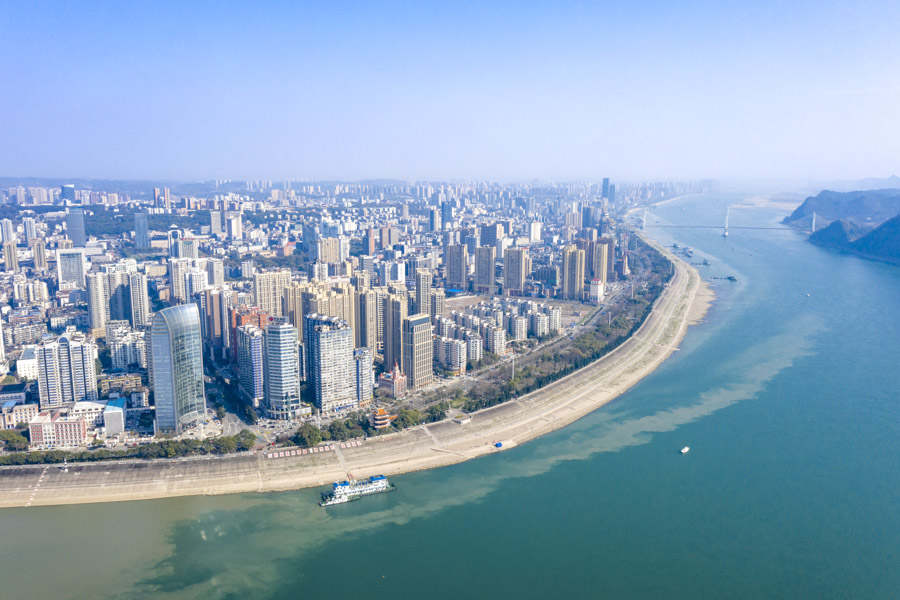
Yichang (宜昌) is a major upstream gateway for Yangtze River (长江) cruises and the main gateway to the Three Gorges Dam (三峡大坝), which is located in Sandouping (三斗坪). Sitting at the crossroads of western Hubei and eastern Sichuan, this remarkable city represents the world’s hydropower capital. Yichang has always been a vital artery through which empires, trade routes, and entire civilisations have flowed.
Our Yichang travel guide presents this cruise stop destination with a rich and long-standing historical record. With around 8,000 years of history, Yichang is one of the oldest continuously inhabited regions in China. Known as the "lands of Jingzhou" during the Xia and Shang dynasties, it later became the western frontier fortress of the powerful Chu State. That earned the city the ancient name "Xiling" (西陵), still carried today by the astonishing Xiling Gorge (西陵峡) right on its doorstep.
Positioned as Gorgeous Yichang because of the Three Gorges, what makes this city extraordinary is the scale of what it guards. Visitors will also find temples, historic sites and viewpoints that make up some of the most notable Yichang attractions.
The city boasts a colossal water-powered lift raising tens of thousands of tonnes of vessels over the dam. Yichang bridges the fertile eastern plains and the mountainous west, getting millions of visitors every single year. In this Yichang city guide we cover everything from the Yangtze River cruise to the city's layered ancient culture. Travel to Yichang and discover a city where ancient civilisation meets modern wonders.
Yichang Tours
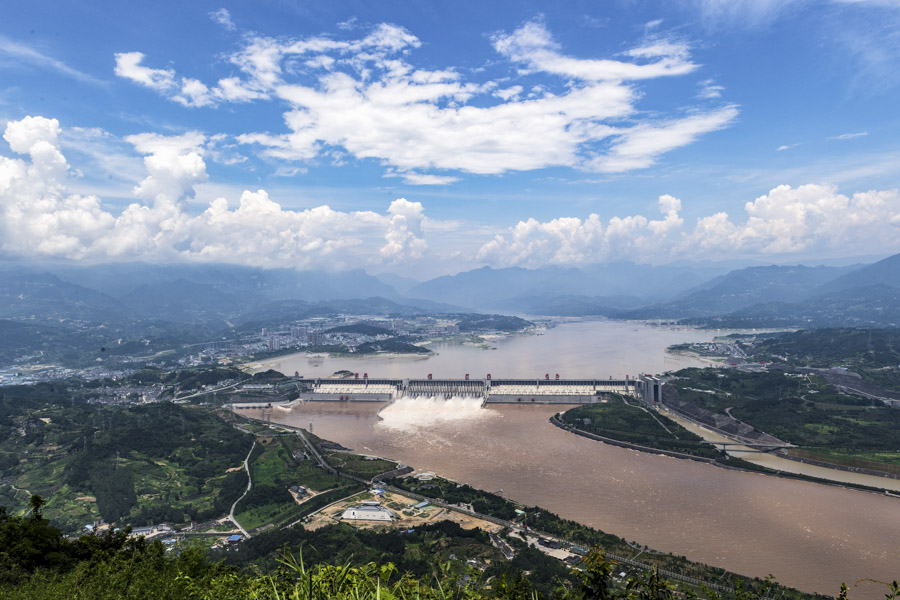
Imagine following the river upstream or downstream and passing from busy port areas to quieter stretches of gorge scenery. The Three Gorges Dam tour from Yichang is the most popular option. Yichang tours usually combine a short look at daily life with key stops such as squares, museums, caves and riverfront viewpoints. The wider Yichang area opens onto cruise lines, engineering landmarks and excursions into the Three Gorges landscape.
A Yangtze River cruise from Yichang is one of the great travel experiences in Asia. It carries passengers through the dramatic scenery of the Three Gorges. The classic route takes travellers on a Yangtze River cruise from Yichang to Chongqing. Another route leads downstream from a Chongqing to Yichang cruise.
If you seek a broader China experience, we have two handpicked Yichang tour packages.
Our Grand Tour of Central China, lasting 16 days, is an immersive private adventure. It covers Beijing, Chongqing, and Chengdu, with Yichang serving as the unforgettable centrepiece.
Best time to visit Yichang
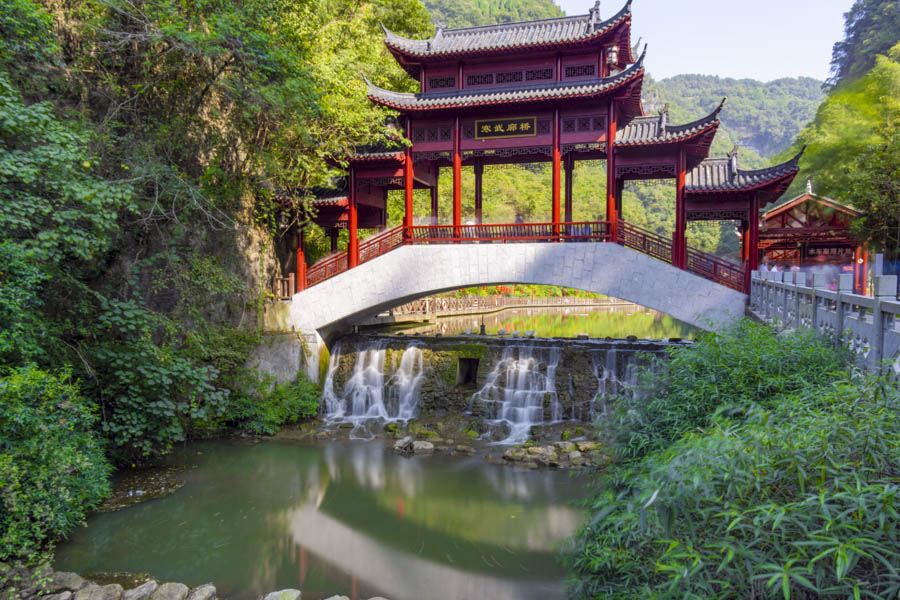
The best time to visit Yichang is autumn, especially from September to early November. However, the city wears four very different faces depending on the season, and each season has its appeal.
| Season | Average Temperature | Typical Conditions | Rainfall Pattern |
| Spring |
12°C to 23°C |
Green landscapes, light rain, and comfortable walks (cooler in March, pleasant in April). | Rain increases through the season. |
| Summer |
27°C to 35°C |
Hot and very humid; thunderstorms in the afternoon. | Wettest season, especially June and July. |
| Autumn |
24°C to 12°C |
Lower humidity and clear skies are best for sightseeing and cruises. | Drier than summer, with rain easing steadily. |
| Winter |
7°C to 5°C |
Cold but not severe, with clearer skies than in summer | The driest part of the year |
Spring (March to May) is the sweet spot for most travellers, with mild and gradually warmer weather. Temperatures sit comfortably around 25°C; the Yangtze runs clear around the Three Gorges Dam in vivid yellow. April in particular carries some of the most pleasant Yichang weather for travellers of the entire year. One thing to keep in mind: the Labour Day holiday in early May brings a stream of domestic tourists, so booking ahead matters.
Summer (June to August) is intense. Highs regularly hit 32°C to 35°C, and July is the wettest month, averaging over 200mm of rainfall. On the upside, this is the only window to witness the rare, breathtaking spectacle of flood discharge at the Three Gorges Dam, which happens occasionally. If you visit in summer, go early in the morning, embrace the shade, and keep expectations flexible.
Again, Autumn (September to November) is the best season to visit Yichang. September stays warm, but by October the weather turns drier, calmer and clearer. The forests along the Yangtze turn gold, orange, and crimson by November. September and October deliver ideal conditions for cruising and sightseeing.
Winter (December to February) is quiet, cold, and grey but not severe because of its subtropical monsoon climate. Temperatures hover around 4 to 11°C, some cruise ships suspend operations, and the river scenery loses much of its colour. Unless you enjoy solitude and low prices, winter is best left to the locals.
History of Yichang
Yichang history stretches back to prehistory between 100,000 and 200,000 years ago in the Qingjiang River Basin. This makes Yichang one of the oldest inhabited corners of China, though the recorded history begins under Yiling. Long before it became a cruise gateway, Yichang stood at a strategic point on the Yangtze. The traffic moving between central China and the Sichuan Basin had to pass.
In the Spring and Autumn and Warring States periods, this was the western stronghold of the Chu State. In 278 BC, general Bai Qi swept through the region, captured the city then known as Yiling and burnt it to the ground. The area remained strategically important in later centuries. In 222 AD, the famous Battle of Yiling took place during the Three Kingdoms (220-280 AD), confirming the city’s role between regions. Shu Han’s army under Liu Bei was inflicted with a defeat by Wu troops, which secured their dominance on the Yangtze gorges.
Centuries later, in 305 AD during the Jin Dynasty, Yiling County was reorganised into a new province. The name “Yichang” appeared for the very first time, meaning "prosperous and flourishing". The city changed hands and names repeatedly over the following centuries, known variously as Yiling Zhou and Xia Zhou. Officially, it became Yichang under the Qing dynasty (1644-1912) and remained a frontier town for centuries.
In 1877, following the Chefoo Convention signed with Great Britain, Yichang opened as an international treaty port. Foreign consulates, trading firms and warehouses appeared along the Yangtze embankment. A European quarter grew up alongside the ancient walled city, bringing new architectural styles and accelerated commerce. By the early 20th century, Yichang became a transportation centre, with early railway plans in central China.
The 20th century brought turbulence. During the Second Sino-Japanese War (1937-1945), Yichang served as a critical supply point for the defending Chinese army. In 1940, following the Battle of Zaoyang-Yichang, the city fell to Japanese forces and marked the farthest point of their upstream advance.
After 1949, the city entered a new phase of industrial growth. It was perhaps the most dramatic transformation in the history of Yichang. The construction of the Gezhouba Dam in the 1970s and 1980s signalled the beginning of a new era.
The Three Gorges project, completed in the 2000s, fixed Yichang’s identity as the hydropower heart of China. By 2009, with a fully functional hydroelectric station, the city had cemented its identity as the global capital of hydropower.
Things To Do in Yichang
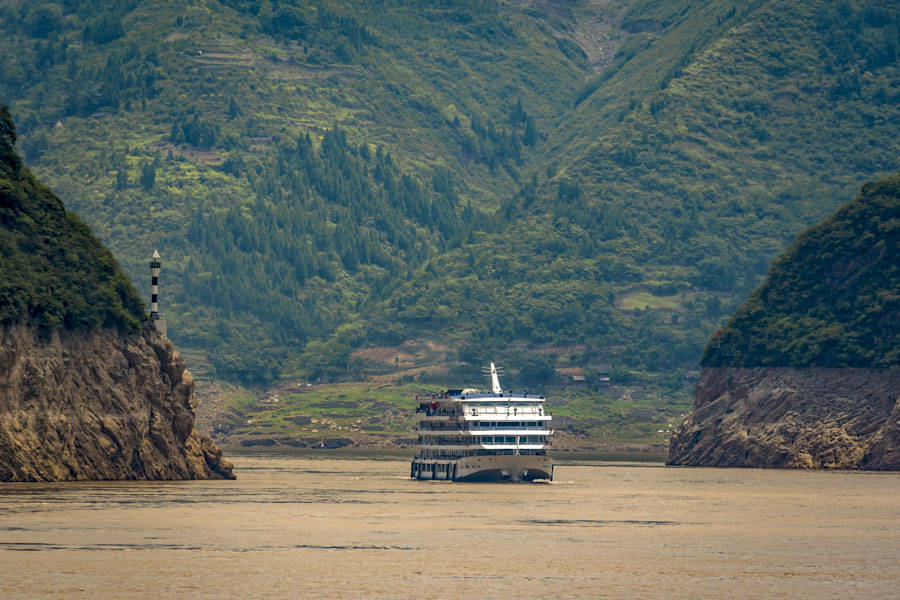
Among the many things to do in Yichang, water is the city’s main line of movement to understand its character. The city boasts four national 5A-level tourist attractions*; below are the experiences that belong on every Yichang itinerary.
*Note: A "National AAAAA Tourist Attraction" (Chinese: 国家5A级旅游景区) is the highest official tourist rating in China, indicating a site of exceptional quality in management, safety, cultural or natural importance, and visitor services.
Yichang Yangtze River Cruise
A Yichang Yangtze River cruise uncovers the city from port traffic and bridges to dam engineering and the first stretch of the Three Gorges. From multi-day voyages to the atmospheric evening night cruise, the Yichang cruise experience comes in many different forms. The night cruise glides past illuminated landmarks, including Zhenjiang Pavilion and Moji Mountain.
The key moment is the passage through the Gezhouba ship lock, where the rising water level becomes part of the journey. Some boats also include dining and live music, but the authentic Yichang attraction is the river itself after dark.
Three Gorges Dam Cruises
Longer river cruises connect the city with the Three Gorges and Chongqing, which is one of the best things to do in Yichang. Seeing the world's largest hydroelectric structure from the water gives you a sense of its size no other view on land can. From Yichang, travellers can continue upstream through Xiling Gorge Scenic Area and onwards into the classic gorge route.
Jiu Wan Stream Rafting
For those who prefer the water with more adrenaline, Jiu Wan Stream Rafting gives a different reading of the landscape. Located near Xiling Gorge, it runs through a 6.4-kilometre course with fast sections, deep pools and a drop of more than 100 metres. With a prestigious 4A level designation, it is one of the strongest outdoor activities in Yichang, putting you directly into the force of the water.
Places to Visit in Yichang
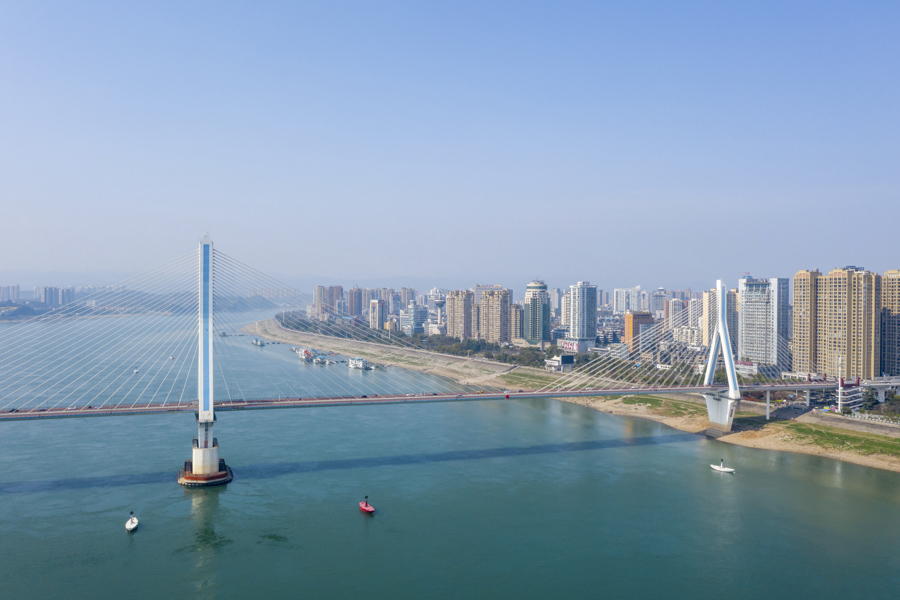
For Yichang tourism, the city’s strongest stops sit in squares, on the riverbank, and in long-standing religious sites. These places are smoothly approached geographically, since a number of them can be covered in a single day.
Yiling Square (宜陵广场)
The green heart of Yichang city, Yiling Square is a vast 55,000 square metre public space that locals have made. Come in the morning and you will find elders doing tai chi chuan, children chasing white pigeons, and food stalls lining the surrounding streets. Open all day and completely free, it is the perfect place to feel the pulse of everyday Yichang life.
Zhenjiang Pavilion (镇江阁)
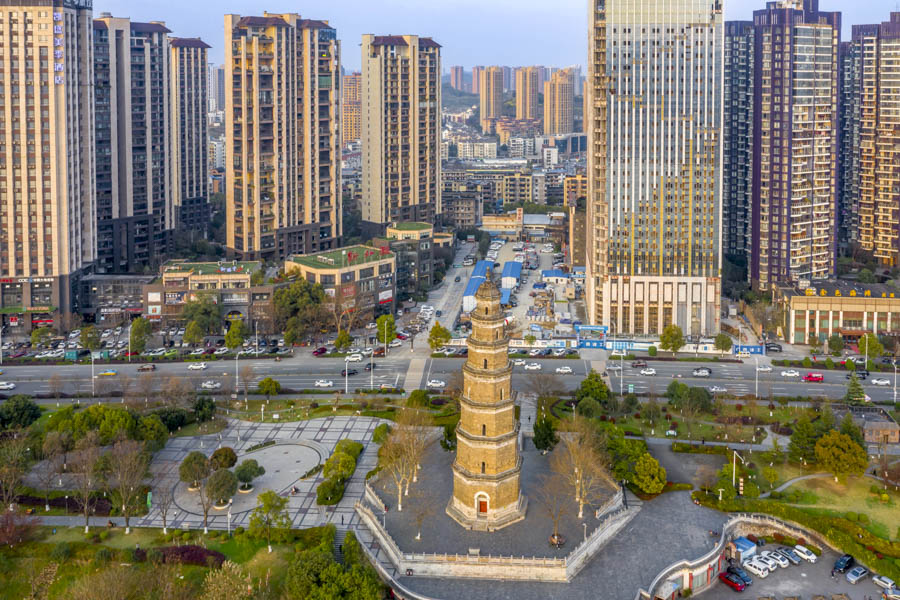
If you want to visit Yichang beyond cruise terminals, this is where the riverside setting comes fully into view. Standing on the bank of the Yangtze River since the Qing Dynasty (1644–1912), Zhenjiang Pavilion is one of the best landmarks in Yichang. The three-storey structure, adorned with golden tiles, silver ridges and 34 dragon-carved pillars, was built to pray for protection against floods.
Roman Catholic Diocese of Yichang (天主教宜昌教区) and Christian Churches
The Roman Catholic Diocese of Yichang traces its history back to 1870, established as an apostolic vicariate in Hubei. Its main church is the Cathedral of St Francis (圣方济各主教座堂) on Zili Road, a major Catholic site rebuilt in 1931. Within the pilgrimage sites, Yichang churches reveal how Yichang developed through contact with the outside world.
Yuquan Temple (玉泉寺(古佛寺))(Ancient Buddha Temple)
One of the four most celebrated Buddhist temples in all of China, along with Guoqing Temple in Zhejiang Province, Lingyan Temple in Shandong Province, and Xiaxi Temple in Jiangsu Province, Yuquan Temple sits at the foot of Yuquan Mountain. It is known for its role in Chinese Buddhist thought, its famous iron tower, and its long line of monks, teachers and literary visitors. With the history tied to the Eastern Han, Sui and Tang periods, back to 219 AD, it became the birthplace of the Tiantai Sect.
The star attraction is the extraordinary iron pagoda that stands in front of Yuquan Temple, built in 1061. It is the tallest and heaviest of its kind in China. 2,373 miniature Buddha statues adorn the pagoda and still stand without a single weld.
Scenic views in Yichang
Three Gorges riverfront view near Zhenjiang Pavilion (宜昌三峡旅游区)
From the riverside around Zhenjiang Pavilion and Binjiang Park, the city opens in layers. The area is tied to the Yichang Three Gorges Tourist Resort at 142 Yanjiang Avenue and the sightseeing route. Here, Yichang stops looking like a river city and starts looking like a gorge gateway.
Gezhouba Ship Lock (葛洲坝船闸)
Gezhouba was the first large-scale dam erected on the Yangtze, and today it still reads as a working piece of river infrastructure. The dam is about 2,595 metres long and 47 metres high. Its three ship locks measure 280 metres by 34 metres by 5 metres, allowing 10,000-tonne passenger or cargo vessels to pass. Passengers usually get about eight minutes to watch the water level rise inside the chamber. It has a capacity of 2,715 million kilowatts of electricity generation.
Pipa-shaped bridge (或琵琶形桥) over the Xiangxi River
The Xiangxi River Bridge (湘西河大桥), in Xingshan County, sits at the mouth of the gorge and links Xiakou Town with the Leping area of Zigui. The tower is what makes it stand out: official reports say it is a single-tower cable-stayed bridge shaped like a pipa, a traditional Chinese musical instrument. It is said to be the first bridge in China to be built in this shape.
Landmarks and scenic views to visit in the surroundings of Yichang
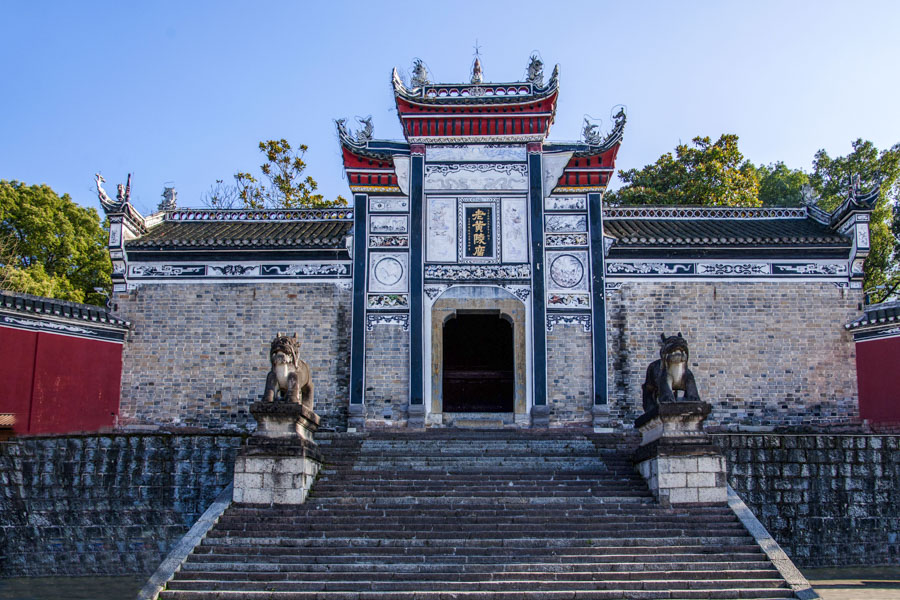
Huangling Temple (Laohuanglingmiao) (皇陵寺)
Set in the Xiling Gorge area, Huangling Temple is one of the oldest major temple sites in the Three Gorges region. Originally built during the Spring and Autumn period (770–476 BC) to honour the legendary flood-tamer Da Yu the Great. Later they reconstructed Laohuanglingmiao under the orders of the renowned strategist Zhuge Liang during the Three Kingdoms era (circa 220–280).
Qu Yuan Temple (屈原祠)
First built in 820 AD during the Tang dynasty to honour the poet and statesman of the Warring States Period (475 BC-221 BC), Qu Yuan. It was later relocated because of rising water levels of the Gezhouba project and the Three Gorges Dam works. One of the major cultural stops in the Yichang travel itinerary, the complex combines halls, steles, and a cenotaph.
Scenic areas
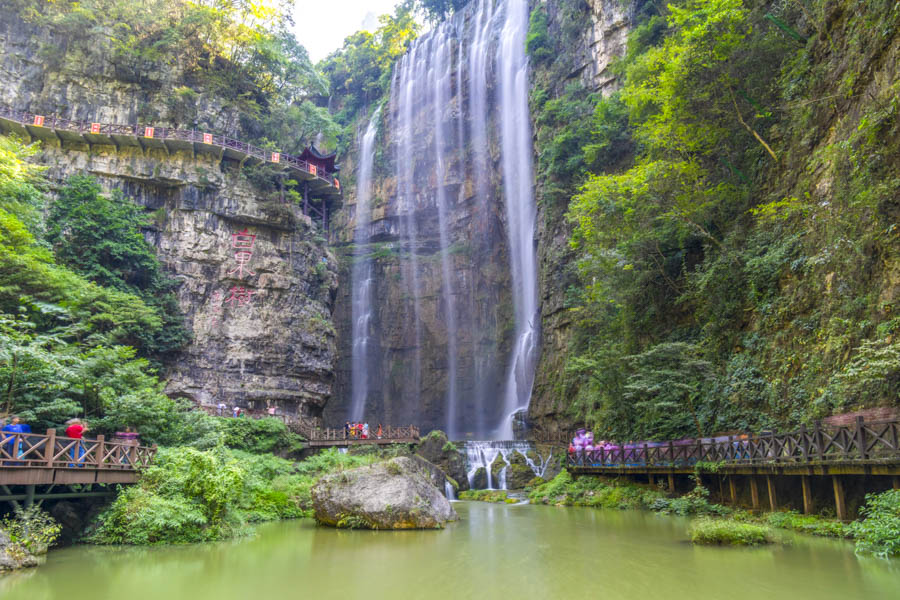
Yichang opens out into dams, gorges, grasslands and ethnic-minority-culture landscapes catering to things to do near the Three Gorges Dam.
- Three Gorges Dam (三峡大坝)
About 50 kilometres from the centre, this is one of the defining Yichang day trips. The experience is about viewpoints, reservoir panoramas, navigation works and the logic of a project for shipping and hydropower.
- Tribe of the Three Gorges (三峡部落)
Roughly 30 km west of Yichang, this is one of the most staggering scenic stops for landscape and local culture together. Set between Gezhouba and the main dam, it combines clear water, stilt houses and lively Tujia ethnic cultural displays.
- Three Gorges Waterfall (三峡瀑布)
About 34 km from Yichang, the area is famous for a long stream valley with many smaller falls and one major waterfall. So the visit feels like a walk through wet rock, forest and spray and belongs to one of the vital Yichang travel tips.
- Bailihuang Scenic Area (白鹭荒)
About 50 km from the urban area, Bailihuang is where the Yichang itinerary shifts from river scenery to high grassland. At roughly 1,200 metres above sea level, open meadows, wind turbines and summer temperatures define the site.
- Three Gorges Bamboo Sea Ecological Scenic Spot (三峡竹海生态风景区)
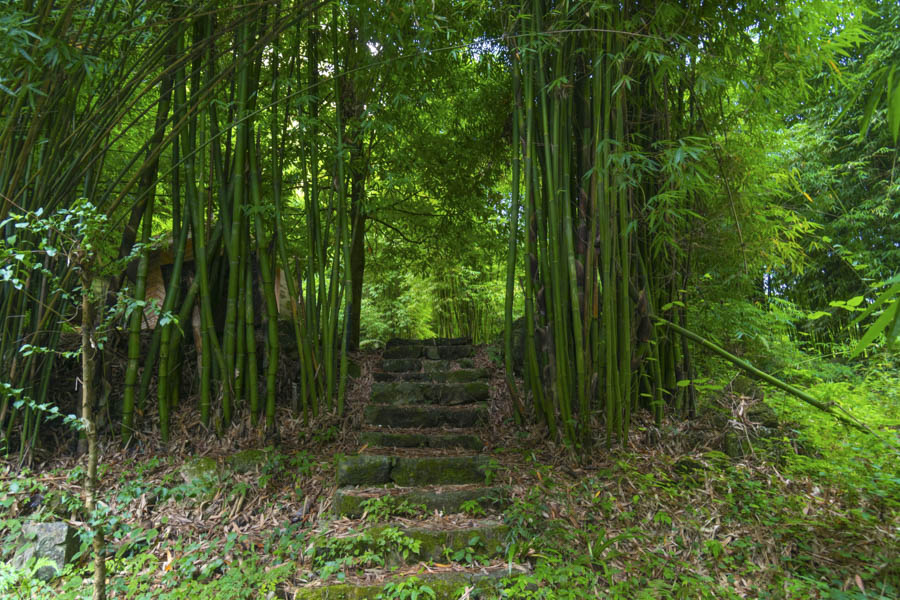
Nestled in Zigui County, here you’ll find dense bamboo, streams and a greener atmosphere than busier river corridors.
- Happy Valley of Xiling Gorge (西陵峡欢乐谷)
Just a few kilometres from Yichang, Happy Valley sits directly across the bridge from Sanyou Cave. Located at the entrance to the Three Gorges on the bank of Xiling Gorge, it is best known for its 61-metre canyon bungee jump.
- Qingjiang Fangshan Scenic Area (清江方山风景区)
In Changyang, about 1 hour by car from Yichang and 25 km from the Changyang county seat, Fangshan is a trail-based option. This 60-square-kilometre area features cascading waterfalls, canyon cliffs, ancient vines, and suspended plank pathways. Dubbed the "Zhangjiajie of Hubei" and the "Jiuzhaigou of the Three Gorges", it includes a spectacular glass walkway.
- Qing River Gallery Scenic Area (清江画廊风景区)
About 1.5 hours from the city, Qingjiang Gallery Area is one of the leading day trips in the municipality. The homeland of the Ba people and the cradle of the Tujia ethnic group, here visitors cruise emerald-green waters. The landmarks contain the Qingjiang Grand Buddha and Wuluo Zhongli Mountain. The old Chinese saying remarks: "The 800-li Qingjiang River is as beautiful as a painting".
- Mingfeng Mountain Scenic Area (鸣凤山风景区)
In Yuan’an County, the Mingfeng Mountain Scenic Area, a national 4A-level tourist attraction, rewards travellers with mountain stops and a religious edge. Mingfeng is known for Danxia landforms, steep approaches and Taoist associations, essential for Yichang travel.
- Sanyou Cave (三游洞)
Sitting at the mouth of Xiling Gorge, Sanyou Cave is only about 10 kilometres (6 miles) northwest of Yihang. The site combines cave chambers, a cliffside setting and river views.
- Yuquan Mountain Scenic Area (玉泉山风景区)
Reached via Dangyang, roughly 1 hour from Yichang, Yuquan Mountain represents a temple-and-forest outing. Its draw is the combination of wooded slopes, Buddhist history and the long presence of Yuquan Temple. It is a national 4A-level tourist attraction.
- Gaolan Scenic Spot (或高岚风景区)
Located in Xingshan County, the Gaolan Scenic Area covers over 20 square kilometres and includes the Gaolan River and Xiayang River. At its centre is a striking 7.5-kilometre ravine, with oddly shaped, forested peaks and a clear brook running through it.
Museums in Yichang
Some of Yichang’s museums sit within the city itself, while others are better treated as half-day or day-trip additions. It only depends on whether you want archaeology, river ecology, resettlement history, or folk culture.
Yichang Museum (宜昌博物馆)
Covering 43,080 square metres with nearly 60,000 pieces in its collection, Yichang Museum includes 2,555 precious cultural relics. Its nine exhibition themes cover ancient Ba and Chu civilisations and the geological wonders of the Three Gorges. Additionally, the museum features modern hydropower history and a dedicated digital exhibition hall.
Working days: Tuesday to Sunday – Closed on Mondays, except for national holidays.**
Opening hours: 09:00 to 17:00 (Last entry at 16:00).**
Admission: Free.
Address: Bailinhe Road, Wujiagang District, Yichang.
Chinese Sturgeon Museum (中华鲟园)
This is the most distinctive museum in Yichang, built around a single species in Yangtze history. The Chinese sturgeon is a creature roaming the earth for 140 million years and is nicknamed the "giant panda of the water". It is the first national 3A-level scenic spot in China themed around a single species. It covers 20,000 square metres of aquaculture facilities.
Part of the Chinese Sturgeon Research Center, the museum introduces the sturgeon as a migratory fish”. Visitors can observe live sturgeons up to 5 metres long, alongside crocodiles, and dozens of other Yangtze River species. The species was classified as Critically Endangered by the International Union for Conservation of Nature (IUCN) in 2010. Each year on March 28, China’s Chinese Sturgeon Protection Day,
Working days: All day.**
Opening hours: 08:00 to 18:00.**
Address: No. 7, Jijin Road, Xiaoxita, Yiling District, Yichang City 宜昌市夷陵区晓溪塔集锦路7号.
Three Gorges Immigration Museum (三峡移民博物馆)
With free admission, this museum, also known as the Three Gorges Resettlement Museum, tells the story of the 1.3 million people displaced, over a period of 17 years, because of the construction of the Three Gorges Dam. Large-scale restorations, a three-dimensional flowing water screen, and recreated underwater environments bring extraordinary human stories to life. Since the opening in 2024, it has welcomed approximately 500,000 visitors, with peak daily attendance exceeding 9,600 people.
Working days: All day.**
Opening hours: 09:00 to 17:00 with the last entry at 16:30.**
Address: Binhu Avenue, Maoping Town, Zigui County, Yichang.
Chexi Folk Custom Scenic Area (车溪民俗风情区)
The living cultural experience, the Chexi Folk Custom Scenic Area, sits 18 kilometres from the city centre. The first Waterwheel Museum and the first Farmhouse Museum in China are also the country's largest ancient workshop exhibition areas. Here, visitors can try traditional papermaking, tofu making and weaving alongside real demonstrations of Ba and Chu folk crafts. The 20-square-kilometre site also includes a spectacular karst cave, gorges lined with wintersweet, and ancient earthen-tiled houses.
Working days: Daily.**
Opening hours: 08:30 to 17:00, and ticket sales end at 15:30.**
Address: Tucheng Township, Dianjun District, Yichang.
**Note: Timetable and opening days may change without prior notice.
Yichang Theatres
Split between traditional venues, newer performance projects and scenic-area shows, Yichang's theatre scene mixes culture with tourism. The city’s main established indoor stage is the Yichang May Day Theatre, located on the east side of May Day Plaza, Dongmen. The Wuyi Theatre (五一大剧院), on the other hand, sits in Wujiagang District and is well served by public transport. With outstanding reviews, for visitors, this is the clearest place to look for a conventional theatre experience in the city.
The Yichang Grand Theatre (宜昌大剧院), planned on Pinghu Peninsula in Xiling District, was conceived as a major landmark. It features a 1,600-seat grand theatre, a 1,200-seat concert hall, and two 400-seat smaller theatres. The design draws on water, clouds, trees and night skies, which suits a city so closely shaped by the Yangtze.
For larger touring performances and concerts, the Yichang Olympic Sports Centre (宜昌奥林匹克体育中心) matters almost as much as a theatre. Its comprehensive gymnasium, with nearly 8,000 seats, is designed not only for sport but also for entertainment performances. In other words, if a production is too large for a traditional stage, this is the kind of venue likely to be used.
Beyond formal auditoriums, Yichang also treats performance as part of the travel experience. At Tribe of the Three Gorges, another national 5A-level tourist attraction, visitors encounter Tujia song, dance and costume performances in a landscape setting.
In nearby Yidu, the half-day Three Gorges Eternal Love programme, an intangible cultural heritage performance, turns theatre into a destination in itself. So in Yichang, the theatre stretches from civic halls to sports arenas and scenic performance parks.
Entertainment, Parks, and Shopping in Yichang
Entertainment in Yichang is less about nightlife and more about river culture, festival life and large outdoor cultural venues. Evening hours are the best in places where scenery, performance and local tradition come together.
Entertainment in Yichang
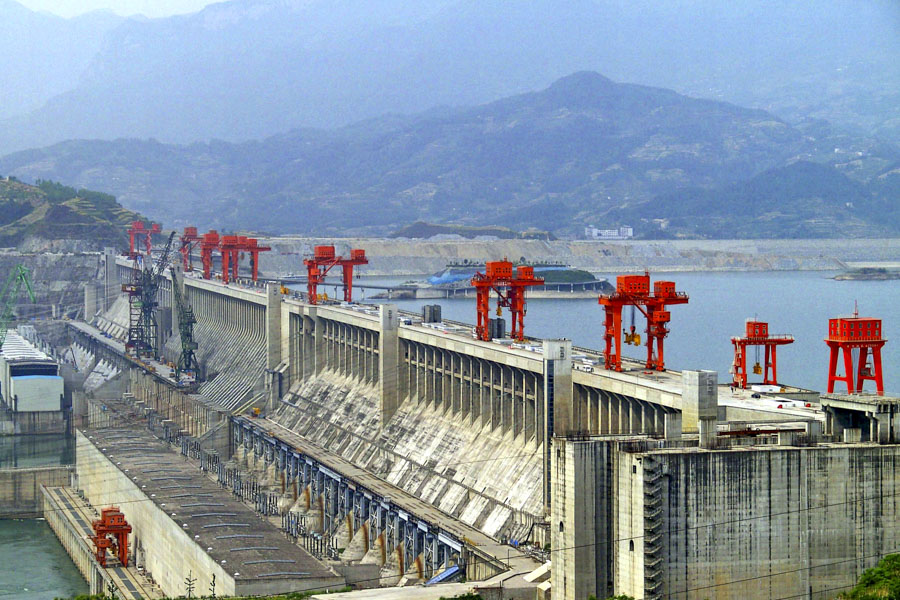
Yichang entertainment again revolves around Three Gorges Dam (三峡大坝) and Qu Yuan’s Hometown Cultural Tourism Area in Zigui. By day, visitors can move through the Qu Yuan Memorial Hall, ancient relocated buildings and riverside viewing trails. By night, the area shifts into lantern displays, performances, barbecues and broad views over the Yangtze and the dam.
Yichang’s festive calendar also gives the city much of its entertainment character. The Dragon Boat Festival customs, held in the hometown of the romantic poet Qu Yuan, are inscribed on the Representative List of the Intangible Cultural Heritage of Humanity. The festival brings together worship ceremonies, dragon boat races, and zongzi, traditional Chinese sticky-rice dumplings, making it across dates in the fifth lunar month. Additionally, there are evening community celebrations.
Yichang also hosts public events like the Yangtze River Cultural and Artistic Season and the Yangtze River Piano Music Festival. These are water-screen shows and themed street activities like those in Jiuge Alley. These events provide the city with a public, seasonal, and closely linked Yangtze entertainment programme.
Yichang Parks
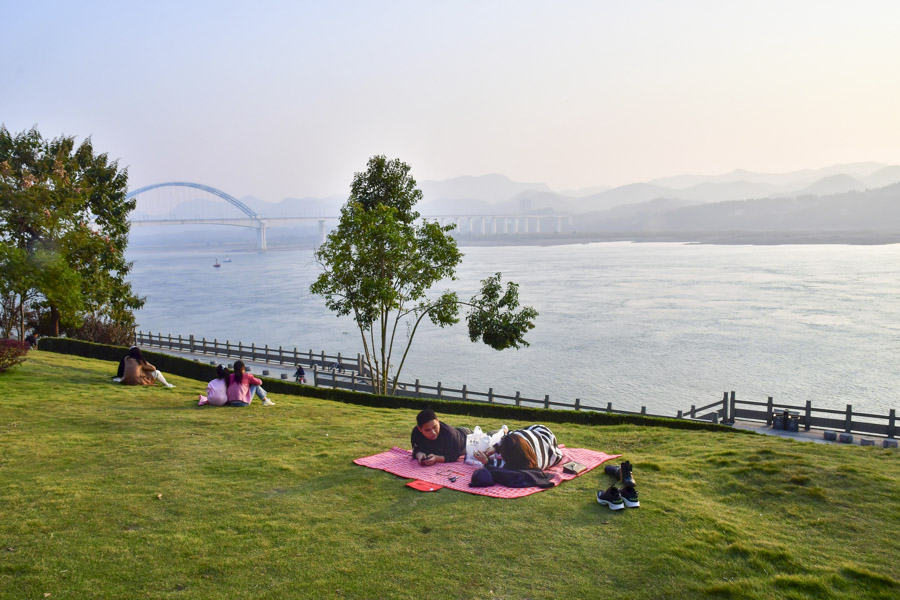
Parks are usually at their best in spring and autumn, when the river breeze and longer walks feel easier. In Yichang, parks are part promenade, part viewpoint, part local routine.
Binjiang Park (滨江公园) is the city’s essential riverside walk, running for 11.3 kilometres along the Yangtze in Wujiagang District. It is open, linear and easy to enter from the street, which makes it feel less like a fenced park.
The main draws are Zhenjiang Pavilion (镇江阁), Double Pavilion Square (双阁广场), the Qu Yuan statue (屈原雕像) and Nanxie Bonsai Garden (南斜盆景园). It is open 24 hours and free, so it works just as well for an early stroll as for an evening walk.
For families, Rainbow Island Parent-Child Paradise (彩虹岛亲子乐园) is the lighter option. This outdoor play park is famous for its bright rainbow slide, climbing areas and booth games, with indoor play and raincoat rental. Yichang Canal Park (运河公园), on the other hand, is quieter, with the flat bridge giving the whole area a floating rhythm. Another calmer stop, World Peace Park (世界和平公园), is open all day on Yanjiang Avenue.
Shopping in Yichang
Yichang shopping areas can be categorised into two different levels: local products and everyday city retail.
For local flavour, the best buys are citrus, especially Yichang mandarins and navel oranges. Tea with Wufeng tea, Yihong Kungfu tea, Chunmei, Jasmine Chunjian and cactus tea are additional regional standouts. For gifts, look for Three Gorges Velvet Crisp, Xiling painted pottery, rock mineral handicrafts and grass-weaving products.
The main Yichang shopping areas are still the most practical. One commercial cluster sits around Yiling Square and Dongshan Road. Guomao Mansion (国茂大厦), Yichang Bazaar, and Jiuzhou Shopping Plaza make it easy to browse in one go. The other is Jiefang Road, where Shi Dai Shopping Plaza is; it is best to combine shopping with snacks and street life.
Wonder Stone Street, near Yiling Square, is the place for Sanxia stones, paintings and small antiques. Shui Jing Chang, a tourist shopping centre (桃花村水晶商贸城) in Taohua Village, focuses more on crystal products and gifts. For practical daily shopping, Yasi Shopping Plaza (雅思购物广场) is a useful local chain rather than a sightseeing stop. In short, if you're looking for tea, fruit, crafts, or just a typical city mall, Yichang is the place to go.
Food in Yichang
Yichang cuisine sits at a delicious crossroads between the bold spice of Sichuan and the fresh, river-driven flavours of Hubei. Yichang local cuisine is defined by salt, freshness, and a confident hand with chilli and prickly ash. Yangtze River supplies the city's kitchens with fish and ingredients that you will not find anywhere else in China.
Chinese Cuisine
The most defining Yichang food is the Basha Fat Fish (白刹肥鱼), a long-nosed catfish pulled from the stretch of the Yangtze. Its meat is rich, tender, and almost boneless, steamed simply to let the flavour speak for itself.
Equally celebrated is the Three Gorges Pearl Soup (三峡明珠汤), one of the three most famous dishes in all of Hubei Province. This Yichang dish uses egg white shaped into peaks, with three-coloured fish balls placed in the broth between them.
The Sanyou Deity Chicken (三游神仙鸡) is said to be named after the Song Dynasty poets Su Xun, Su Shi and Su Zhe. The poets were so enchanted by the scenery of the Three Gorges; locals named this slow-braised, crystal-sugar-glazed chicken in their honour. The Old Nine Bowls Feast (老九碗宴) is a traditional spread of nine generous dishes, including fish balls, bamboo shoots, lotus seeds and spring rolls.
Dumplings Stuffed with Radish (萝卜饺子), a winter-only snack, represent an ultimate Yichang street food pattern. Cold Shrimp, despite the name, contains no shrimp at all but is instead a refreshing summer drink of rice milk and brown sugar. It looks uncannily like tiny shrimp swimming in a glass.
Baren Street near Renshou Road is the home of Douhua Fish and Sichuan-style cooking. Xiaomian Streets off Huancheng North Road provides a noodle breakfast of bone broth, pig intestines and chilli oil.
Tea Houses, Bakeries and Patisseries
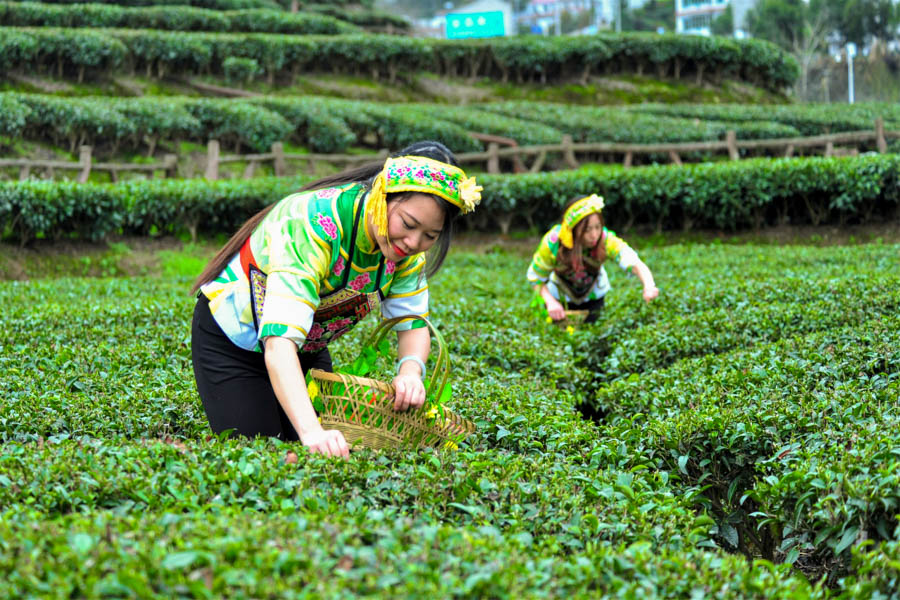
Tea in Yichang represents a local industry, with the city's 67,000 hectares of tea plantations producing 120,000 tonnes annually. Yichang Tea Group alone reported nearly one billion yuan in revenue last year. Its new-style tea beverage business grows by 116% in a single year.
The Changshengchuan Teahouse has become a favourite among younger visitors. The spot mixes locally grown Yichang tea with milk, fruit, flowers and coffee in creative fusion drinks.
The "Yichang Tea" teahouse chain offers freshly brewed jasmine milk teas made from a specially developed green tea base.
As for Yichang bakeries and patisseries, the city focuses more on tea than on named pastry shops. Local tea now feeds directly into bread, cakes, biscuits and mooncakes through matcha powder, instant tea and tea concentrates.
Vegetarian Restaurants
Vegetarian eateries in Yichang do exist but in a limited number. Dishes lean toward Buddhist vegetarian cooking with no onion or garlic, though some preparations are boldly spiced. Temple kitchens, particularly at Guofushi Temple (国福寺), also deliver simple vegetarian meals for those interested in a more contemplative dining experience.
City Transport in Yichang
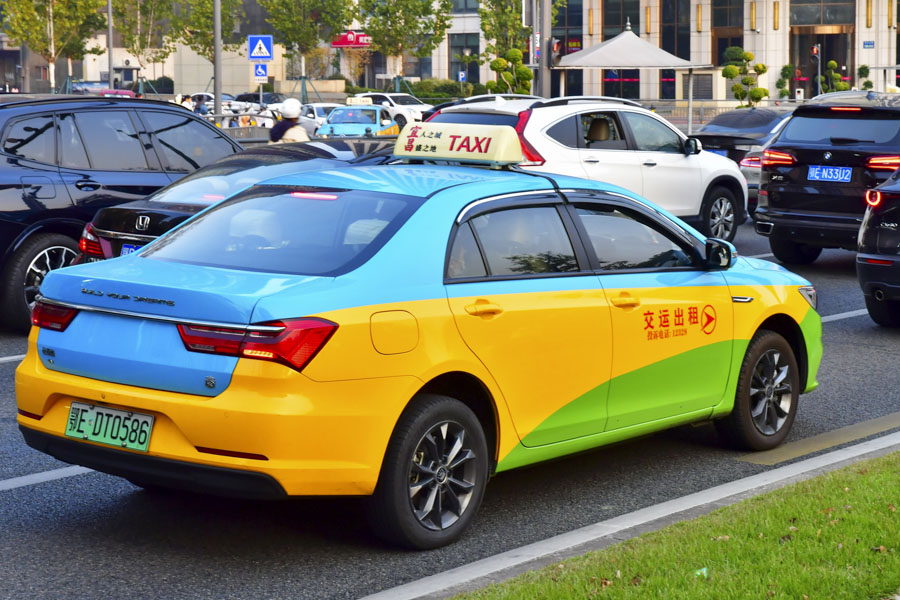
Getting around Yichang is fairly straightforward once you know which transport does what. For most visitors, city buses and shuttles do the work; taxis fill the gaps; and longer transfers are easiest by private car with a driver. Keep in mind that Yichang’s transport network is built for county trips, the airport, the train station and the cruise ports.
Buses and Shuttles
Public buses reach most parts of the city and many suburban areas, with a network of more than 200 lines, including long-distance lines.
For visitors, Bus No. 10 is especially practical because it links the Yangtze Market Clothing City with Sanyou Caves. The bus passes Yiling Square, Shrimp Valley, Luozu Temple and White Horse Caves on the way. Bus No. 8 is another useful sightseeing line, running toward Gezhouba Hydropower Station. Bus No. 2 is the Tourist line running from Yiling Square to Sanyou caves.
For trips beyond the city, Yichang has a well-developed intercity bus system. From Yichang Long Distance Bus Station and Yichang Bus Passenger Transport Central Station, travellers can reach Yidu, Zhijiang, Dangyang, Yuan’an, Zigui, Changyang, Wufeng and Xingshan on numbered intercity routes.
Airport buses also run from major stations, with departures timed to the day’s flights. They generally leave 2 hours and 30 minutes before the first or last flight.
Over the last decade, the city developed a bus rapid transit network (BRT), cycling infrastructure and improved pedestrian space. This 23-kilometre corridor links downtown, the high-speed rail station and nearby neighbourhoods. The BRT carries around 240,000 passenger trips a day and is the city’s major sustainable transport achievement. In plain terms, this means Yichang is a city that has made buses, bicycles and walking work together more intelligently.
Metro
Yichang does not have a metro but a long-term subway plan with three lines, 1, 2 and 3, mapped out and a future 4th line. The proposed system would link places such as Yiling Square, East Railway Station, Sanxia Airport and Yidu.
Taxis
Yichang taxis run 24 hours, and the standard fare begins at CNY/RMB 6 to 8 for the first 2 km. After that, daytime rates are CNY 1.4 per km from 2 to 8 km and CNY 2.1 per km beyond 8 km. The night rates from 23:00 to 05:00 rise to CNY 2 per km and then CNY 3 per km beyond 8 km.
The first 5 minutes of waiting time are free. The airport to downtown is around CNY 60 ($9 / €8 / £7); New Century Port to downtown is around CNY 20 ($3 / €2.50 / £2.20).
Please note the prices are changing all the time and may vary in different situations.
Car Rental
Car rentals in Yichang are geared to practical routes such as downtown to the airport, cruise port to airport, or cruise port to railway station. Air-conditioned vehicles are standard, and some operators also have English-speaking guides or interpreters as add-ons. For travellers arriving by cruise or leaving early for the airport, this is often the least stressful option.
How to Get to Yichang?
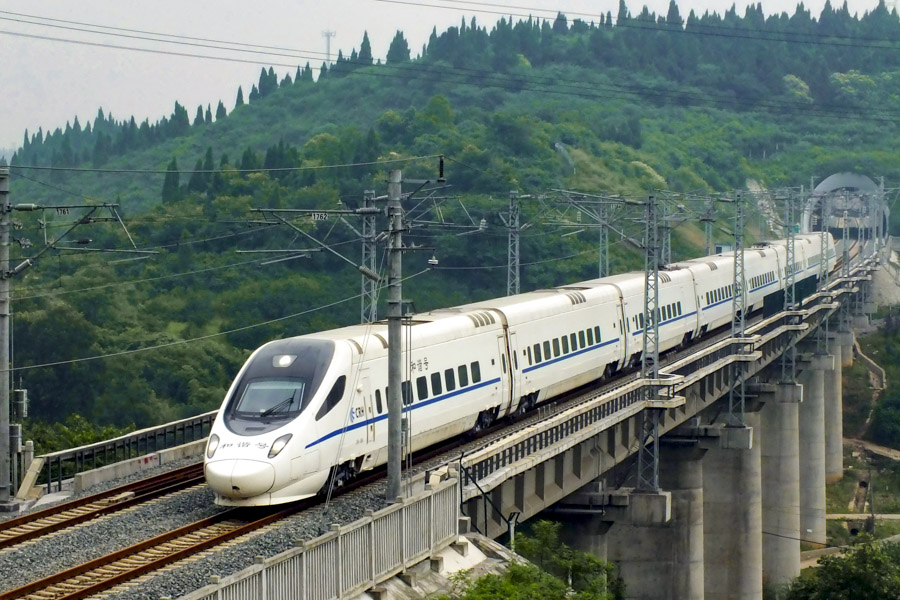
Getting to Yichang, China, is practical and simple whether you fly in, arrive by train, or come by ship. If you are boarding a cruise, the key is reaching the correct Yangtze River cruise port and timing your transfer properly.
By Air
Yichang Sanxia International Airport (YIH) sits about 26 kilometres from the city centre, roughly a 40-minute drive. It operates flights to and from around 40 destinations, including Beijing (approximately 2 h 30 min), Shanghai (1 h 30 min), Guangzhou (2 hours), Shenzhen (2 hours), Xi'an (1 h 30 min), Chengdu (2 hours), Hong Kong (2 h 30 min), Lhasa in Tibet (2 h 45 min) and Kunming (2 h 30 min).
A taxi from the airport to downtown costs around CNY/RMB 90 ($13 / €11 / £10), and airport buses run into the city in coordination with the daily flight schedule.
By Train
Yichang East Railway Station is the city's main railway, handling the vast majority of services, including high-speed trains. It sits about 7 kilometres from the city centre and connects Yichang with most major cities across China.
Train travel from Wuhan to Yichang is the key journey taking around 2 hours. Chongqing takes approximately 5 hours, Beijing needs around 7 h 30 min to cover, and Shanghai requires around 8 to 9 hours. You can arrive to Yichang from Guangzhou in 7 hours and from Chengdu in 6 h 30 min to 7 h 30 min. For Zhangjiajie, a direct K train takes around 4 h 30 min and runs once daily.
By River
As a major gateway for Yangtze River cruise ports, arriving at Yichang by water is one of the most atmospheric journeys. Luxury cruises operate between Yichang and Chongqing, taking three nights downstream and four nights upstream. These gorge cruises pass through the Three Gorges and stop at the Three Gorges Dam. Note that since 2018, most cruise ships no longer pass through the dam locks and instead use Maoping Port.
Languages Spoken in Yichang
Mandarin Chinese, known officially as Putonghua, is the language of daily life, education, business and government in Yichang. Visitors who speak even basic Mandarin will find getting around considerably easier. English is not widespread outside of larger tourist facilities, so a translation app is a genuinely useful travel companion.
What makes Yichang linguistically interesting goes beyond standard Mandarin. The distinct local dialect is known simply as the Yichang dialect, which belongs to the Southwest Mandarin group. This places it closer to the speech of Chengdu and Chongqing than to the dialects of eastern Hubei. The dialect is characterised by relatively straightforward pronunciation compared to other Chinese language varieties.
In the rural counties, the Tujia and Miao ethnic minorities have preserved their own languages for centuries. The Tujia language, classified within the Tibeto-Burman branch of the Sino-Tibetan family, locally known as “pitsisa”, is a rare linguistic gem with no written form of its own. Today fewer than 70,000 people across China can speak it fluently, making encounters with native speakers a genuinely rare experience.
Security in Yichang
Yichang is a safe and tourist-friendly city to visit, and for most travellers the practical concerns are ordinary. In day-to-day terms, that means watching your belongings at stations, ports, scenic areas and night markets. The more important point in Yichang, as elsewhere in China, is to stay organised. Carry your passport, keep your visa situation clear, and remember that hotels handle registration for guests.