

Things to Do and Sightseeing Tours in Samarkand
Samarkand is one of Uzbekistan’s most celebrated historical cities and a major destination on the ancient Silk Road. Located in eastern Uzbekistan, between Tashkent and Bukhara, Samarkand is an important stop on journeys through the country.
Lying in the Zeravshan Valley (Zarafshon vodiysi), Samarkand has long stood at the crossroads of Persian, Turkic, Chinese, and other cultures and trade routes. Its history stretches from ancient Marakanda, the capital of Sogdiana (an ancient Iranian civilisation of Central Asia), through the conquests of Alexander the Great and Genghis Khan to the Timurid era, when Samarkand became the capital of Amir Timur’s vast empire.




Samarkand is known for its monumental architecture, including colossal madrasahs and mosques, royal mausoleums decorated in shades of blue, and a necropolis whose buildings span several centuries. Standing among these immense structures, it is difficult not to notice the scale and endurance of the city’s architectural heritage. Samarkand also has bazaars, traditional Uzbek food, crafts, museums, and traces of its Russian and Soviet past. For travellers planning a trip to Samarkand, these later historical layers add another dimension to the city alongside its medieval architecture and long Silk Road history.
Samarkand Tours
Tours in Samarkand can be arranged around the city’s main historic areas or combined with excursions into the surrounding region. A city tour is suitable for travellers who want to focus on Samarkand, whereas longer itineraries allow more time for museums, archaeological sites, traditional crafts, and places beyond the main sightseeing route.
Tashkent to Samarkand day trips are a practical option for travellers with limited time; on longer itineraries, Samarkand can be included as part of a wider journey through Uzbekistan. Excursions to places such as Urgut can also extend a Samarkand itinerary beyond the city itself. Browse our Samarkand tours to find an itinerary that matches the time you have, the places you would like to visit, and the way you prefer to travel.
History of Samarkand
Ancient Samarkand grew into the centre of Sogdiana and an important trading city in Central Asia. Samarkand’s position on the Silk Road made it a major centre of trade connecting Central Asia with China, Persia, India, and the Mediterranean. Merchants exchanged textiles, paper, metals, spices, and other valuable goods, and the city became a meeting point for trade, scholarship, religion, and cultural exchange.
Islam became established in Samarkand in the early 8th century, and the city flourished under the Samanids and Karakhanids as a centre of trade, crafts, and learning. In 1220, Samarkand came under the control of Genghis Khan and the Mongol armies, and the city was largely destroyed during the conquest. Urban life subsequently shifted south from the ancient Afrasiab settlement, contributing to the development of the later city of Samarkand.
Amir Timur chose Samarkand as the capital of his empire in 1370 and undertook a large-scale programme of rebuilding and development. Craftsmen, architects, and artists from different parts of his empire contributed to the transformation of the city. His grandson Ulugh Beg (1394–1449) continued this development, helping establish Samarkand as a centre of education and astronomy. After the Timurids, political power shifted towards Bukhara, and Samarkand gradually lost some of its former prominence for a time.
Russian forces took control of Samarkand in 1868, and the city subsequently developed under Russian administration, with new areas emerging alongside its older quarters. Following the Russian Revolution and the reorganisation of Central Asia under Soviet rule, Samarkand became the capital of the Uzbek Soviet Socialist Republic from 1925 to 1930, before the capital moved to Tashkent.
In recent decades, Samarkand has hosted major international gatherings, including the Shanghai Cooperation Organisation summit in 2022 and the Organization of Turkic States summit later that year. In 2025, Samarkand hosted the 43rd session of UNESCO’s General Conference, which was held outside Paris for the first time in more than forty years. These events have added a contemporary chapter to the city’s long history of international connections.
Things to Do in Samarkand
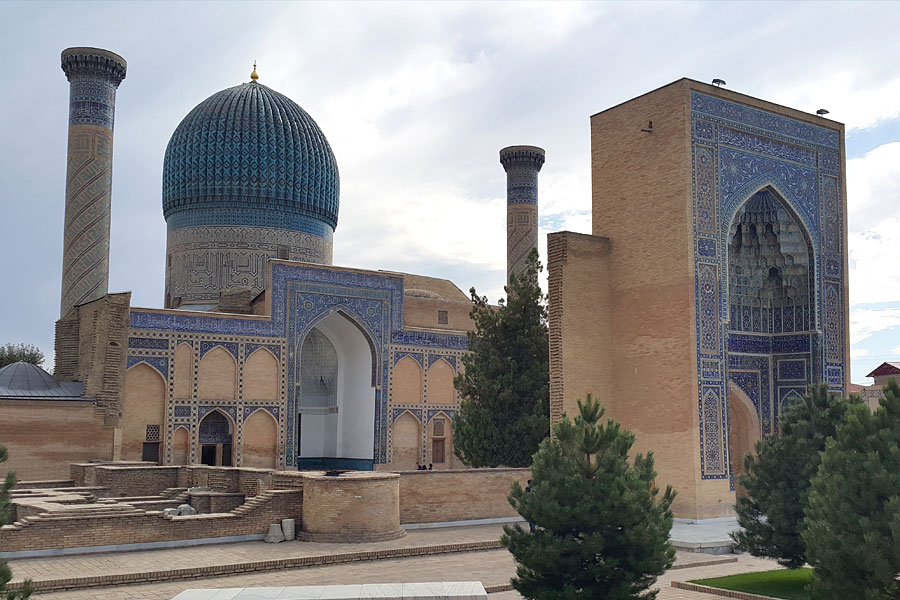
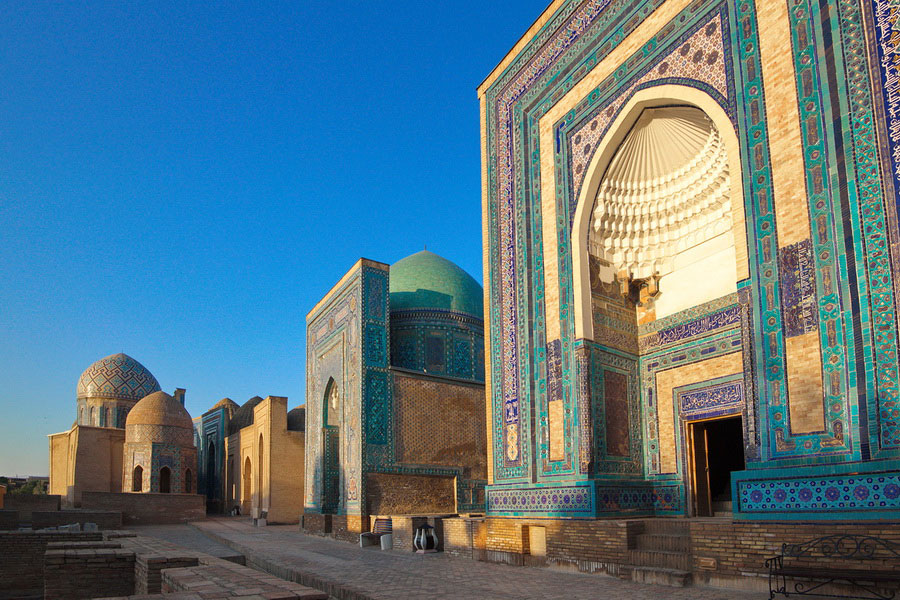
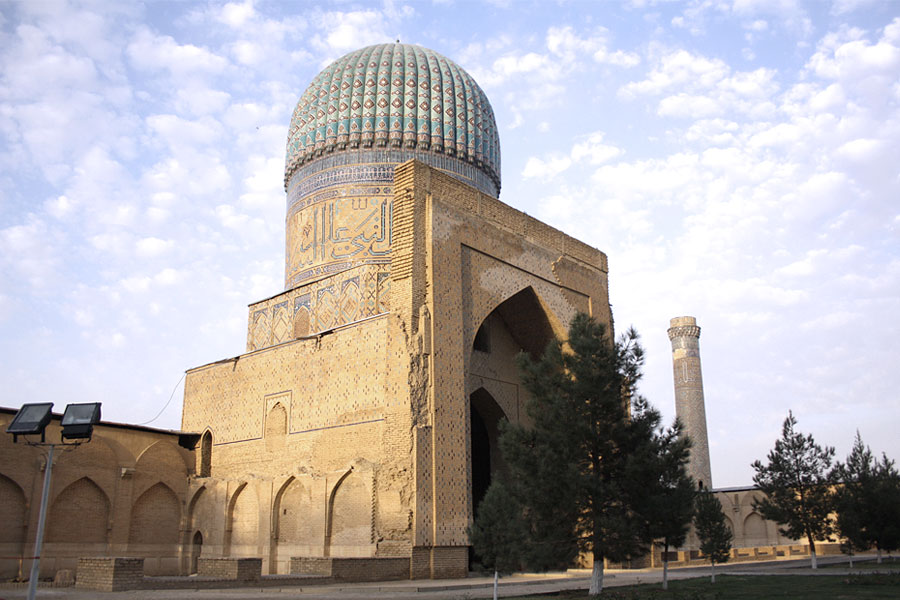
The best way to explore Samarkand is to start in the historic centre, where many of the city’s most important sights can be visited. Begin at the Registan and take time to enter its three monumental madrasahs: Ulugh Beg Madrasah, Sher-Dor Madrasah, and Tilla-Kori Madrasah. From the Registan, continue towards the Gur-Emir Mausoleum, the burial place of Amir Timur and several members of the Timurid dynasty, then make your way towards the Bibi-Khanym Mosque and nearby Siab Bazaar. Here, the character of the city shifts from monumental architecture to everyday life, with stalls selling bread, dried fruit, nuts, spices, and other local produce. From Siab Bazaar, continue to the Shahi Zinda necropolis and walk through its narrow passage of mausoleums, where richly decorated façades and domes line the hillside. The complex brings together funerary monuments from several centuries and remains an important pilgrimage destination.
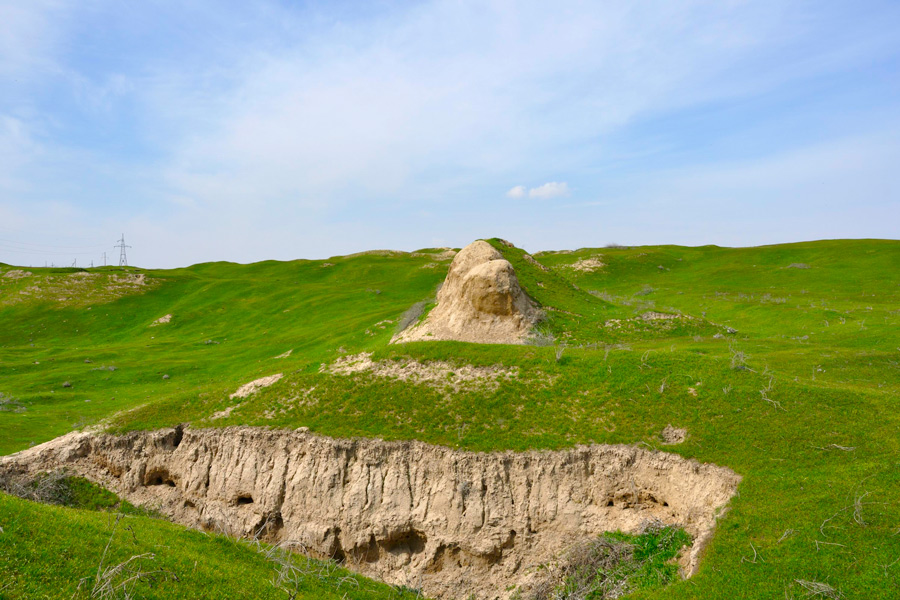
For a deeper look at Samarkand’s earlier history, set aside time for the Afrasiab archaeological site and its museum, which preserve the remains and finds of the ancient city that preceded medieval Samarkand. Nearby, the Ulugh Beg Observatory recalls Samarkand’s importance in the study of astronomy.
Samarkand’s religious heritage can be explored beyond its most famous Timurid monuments. The Hazrat Khizr (Hyzr) Mosque stands above the old city, and the Rukhabad Mausoleum is close to Gur-Emir. The Mausoleum of St Daniel, also known as the Mausoleum of Khoja Daniyar, is a pilgrimage site associated with Islam, Christianity, and Judaism. According to local tradition, the site is linked to the biblical prophet Daniel, while another tradition identifies the tomb with Khoja Daniyar, an associate of a relative of the Prophet Muhammad. The mausoleum continues to attract pilgrims from all three faiths, making it a distinctive example of Samarkand’s interfaith heritage. Those interested in the city’s later history can look beyond the medieval centre to buildings from the Russian period, including the Cathedral of St Alexis of Moscow and the Holy Protection Cathedral.
Craft traditions remain an important part of Samarkand’s cultural life. At the Samarkand-Bukhara Silk Carpets Factory, also known as Hudjum, visitors can see carpets being woven by hand, while the Meros Paper Factory in Konigil demonstrates traditional papermaking techniques. For a wider selection of monuments, museums, historic sites, crafts, and other experiences, see our things to do in Samarkand page and the individual attraction pages.
Entertainment, Parks, and Shopping in Samarkand
Entertainment of Samarkand
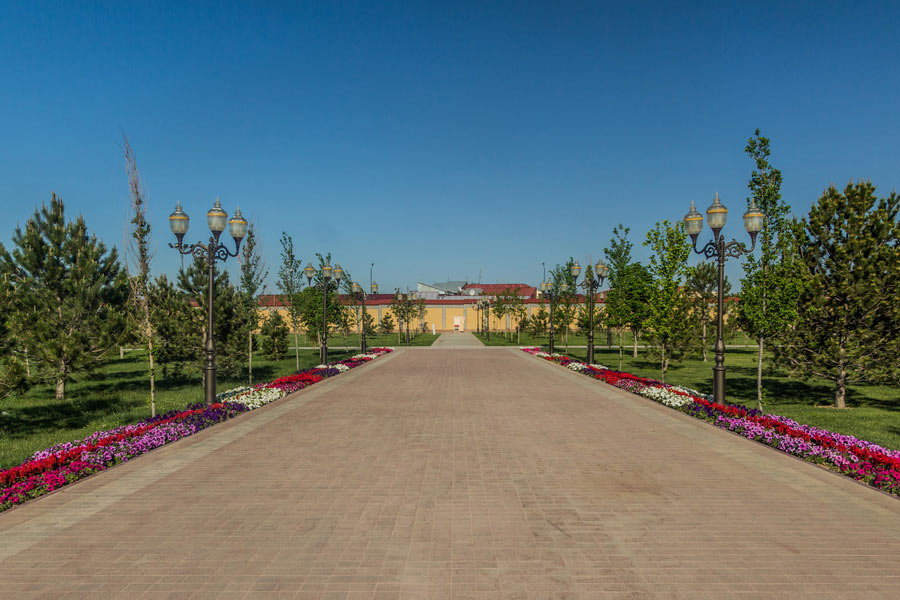
At the Silk Road Samarkand Tourist Complex, visitors can take boat rides along the Rowing Canal and the Eternal City Canal, offering views of the resort complex from the water.
The Eternal City at the Silk Road Samarkand Tourist Complex is a more recent addition. Its public spaces include streets, workshops, galleries, restaurants, and cultural performances inspired by the traditions of different regions of Uzbekistan.
For family entertainment, Family Park combines an ice rink, go-karting, bowling, and a cinema with shops and restaurants. It is a convenient option when you want a break from sightseeing or are travelling with children.
Samarkand Museums
Samarkand’s museums cover different periods and aspects of the city’s long and varied past. One of them is the State Museum of Cultural History of Uzbekistan, which dates back to 1896. Its collections cover archaeology, history, ethnography, numismatics, and fine art, providing a broad overview of Uzbekistan’s cultural heritage.
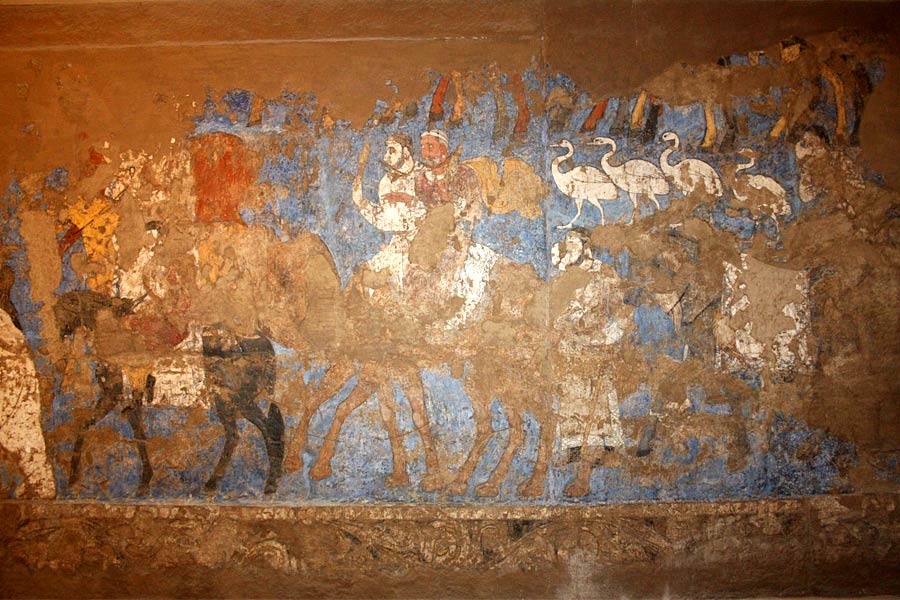
The Afrasiab Museum, located beside the ancient settlement of the same name, focuses on the early history of Samarkand and its surrounding area. Among its most notable exhibits are archaeological finds from Afrasiab, including fragments of the 7th-century murals showing foreign delegations at the court of the Sogdian ruler Varkhuman.
The Memorial Museum of Mirzo Ulugbek, near the remains of the Ulugh Beg Observatory, covers the development of astronomy and scientific thought in medieval Central Asia. It can be visited along with the observatory and places Ulugh Beg’s work within the wider intellectual history of the Timurid period.
Samarkand is also home to museums and galleries devoted to local history, art, crafts, and other aspects of the city’s cultural life. The Museum of Winemaking at Khovrenko Winery presents the history of winemaking in Samarkand in a historic late-19th-century building associated with the city’s early wine industry. The museum is part of the winery named after M. A. Khovrenko.
Samarkand Theatres
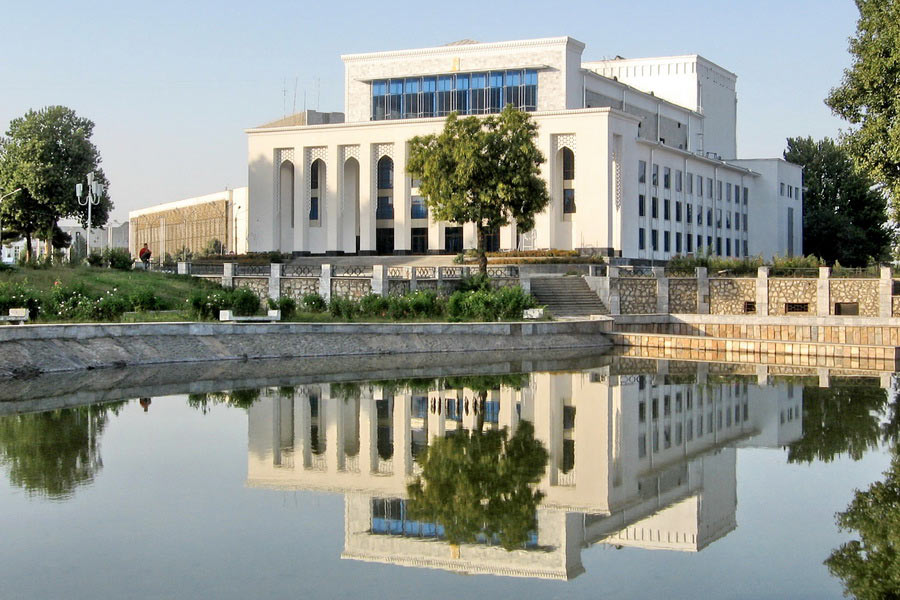
Samarkand has several theatres with programmes ranging from drama to music and puppetry. The Samarkand Regional Music and Drama Theatre Named After Hamid Alimjan (also Olimjon) is one of Uzbekistan’s oldest theatres, with a history dating back to 1914. The repertoire includes classical and contemporary productions in Uzbek.
The Samarkand Russian Drama Theatre named after A.P. Chekhov stages classical and contemporary works in Russian. The theatre traces its origins to 1876, when theatrical performances began in the city, and became a state institution in 1918.
The El Merosi Historical Costume Theatre takes a different approach, presenting Uzbekistan’s history and traditions through reconstructed historical costumes and staged performances. Established in 2006, its programmes focus on traditional dress and aspects of the country’s cultural heritage.
For younger audiences, the Samarkand Regional Puppet Theatre presents puppet performances based on folk tales and contemporary stories.
Parks of Samarkand
Samarkand has many green spaces across the city, including parks, shaded boulevards, and landscaped areas. These spaces provide places to walk, sit, and take a break between the city’s busier streets and historic areas.
The Central Park named after Alisher Navoi is one of Samarkand’s best-known green spaces. Located in the centre of the city, it has mature trees, walking paths, benches, and leisure areas. A monument to Alisher Navoi stands here, along with a monument to the Tajik poet Abdurahman Jami.
University Boulevard is another popular place for a walk. The tree-lined avenue runs through the central part of Samarkand, providing shade during the warmer months.
Smaller parks and landscaped spaces can also be found around the historic centre, including green areas between Registan Square and the Gur-Emir Mausoleum.
Shopping in Samarkand

For everyday shopping and a taste of local market life, Siab Bazaar and Yangi Bazaar are two of the best-known markets in Samarkand. Siab Bazaar is particularly well known for its dried fruits, nuts, sweets, traditional bread, and other local produce.
For Uzbek handicrafts and souvenirs, look around the Traditional Handicrafts Market, Samarkand Textile, Happy Bird Art Gallery, and the shops along Tashkent Street. For a larger traditional market, consider a trip to Urgut Bazaar, about 40 km (25 miles) from Samarkand. For more shopping options, Makon Mall, Al Madina, Atlas, and Nurafshon have a range of clothing shops, food outlets, and other everyday stores, making them convenient places to shop, eat, or simply spend some time in the city.
Food in Samarkand
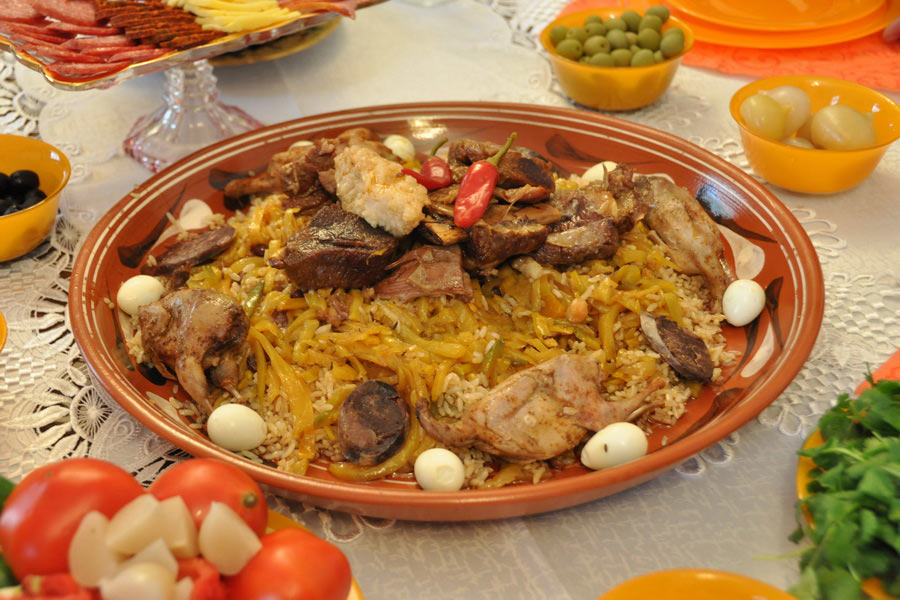
Uzbek Cuisine
Samarkand restaurants serve plov, the traditional Uzbek rice dish, with Samarkand known for its distinctive regional style. Samarkand-style plov is served in layers, with the rice, carrots, and meat kept separate rather than mixed together. Fresh vegetable salads are often served alongside this rich main dish.
The city is also known for its Samarkand non, a distinctive round bread baked in a clay tandir oven. It is a familiar sight in local bakeries and markets and is one of the regional foods worth trying during a visit. Other Uzbek favourites commonly found in Samarkand include shashlik (grilled skewered meat), manti (large steamed dumplings), samsa (filled baked pastries), and a variety of fresh salads and seasonal produce. For a wider introduction to Uzbek dishes and culinary traditions, see our dedicated Uzbek cuisine page.
Vegetarian Options
Vegetarian food is available in Samarkand, although traditional Uzbek cuisine is generally centred on meat. Restaurants serving European and other international cuisines tend to offer more meat-free choices, while some local restaurants can prepare familiar Uzbek dishes without meat when requested.
Vegetarian options can include vegetable shashlik made of mushrooms, tomatoes, and aubergines, various salads, vegetable and legume soups, pasta, grilled vegetables, and, in some restaurants, meat-free versions of dishes such as manti or samsa stuffed with potato or pumpkin. Travellers with a strict vegetarian diet should check ingredients when ordering, as meat or meat stock may be used in otherwise vegetable-based dishes. See our Vegetarian food in Samarkand page for specific restaurants and their offerings.
Coffeehouses and Bakeries
Samarkand has cafés and bakeries serving coffee, tea, cakes, fresh pastries, and light meals. Coffee-House El-Merosi is a café in the centre of the city, and Mone Bakery sells cakes, coffee, tea, breakfast, and other light meals. Other options include Il Café Alkemico, Bon!, and 5-Element Specialty Coffee.
City Transport in Samarkand
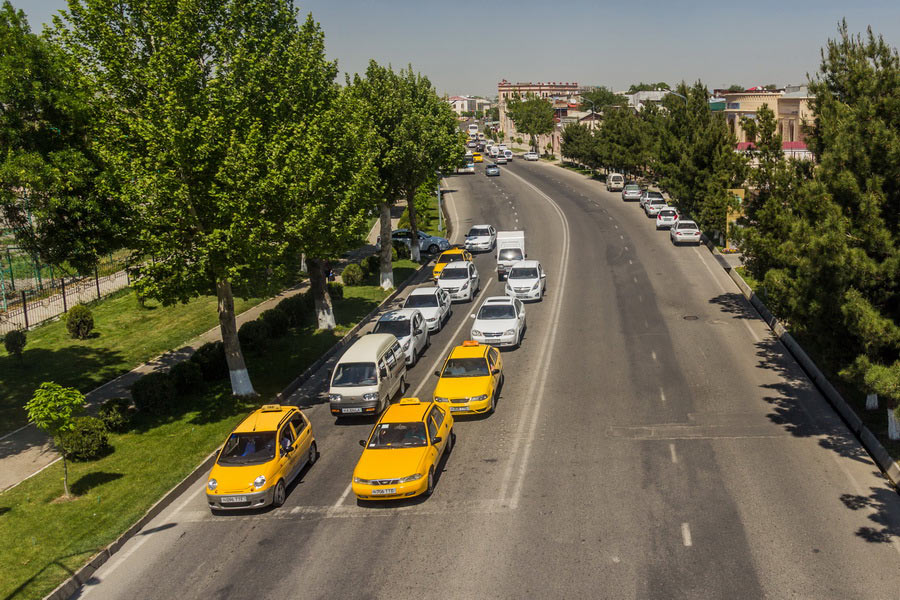
Samarkand has a practical public transport network covering the city and its surrounding districts. Buses and trams are the main forms of public transport, and taxis are widely used for shorter journeys and places that are less convenient to reach by public transport.
Public Transport in Samarkand
Buses
Buses operate on routes throughout Samarkand and connect the city centre with residential districts and other parts of the city. There are around 65 bus routes, with most services running from around 06:00 until around 21:00 or 22:00, although operating hours and service intervals vary by route.
Trams
Tram service was introduced in Samarkand in 2017 and connects several parts of the city with the railway station and other important areas. Trams generally run from around 06:00 until around 23:00, although service times and intervals can vary. Trams can be a convenient option for reaching destinations along the existing lines.
Other Modes of Transport
Taxis
Taxis are an easy way to get around Samarkand, particularly when travelling between sights or reaching places outside the main historic centre. App-based services such as Yandex Go are available in the city, and visitors can also use local taxi companies. Booking through an app can make it easier to see the fare and journey details before travelling.
Car Rental
Car rental is available in Samarkand for visitors who prefer to travel independently or plan excursions beyond the city. For a convenient option, book through our trusted partner, Hertz.
Scooter Rentals
Electric scooters can be rented in Samarkand through local sharing services, including Silk Road Sharing, with rental points in key parts of the city and across the Silk Road Samarkand Tourist Centre. These can be useful for shorter journeys and for exploring parts of the city at your own pace.
How to Get to Samarkand
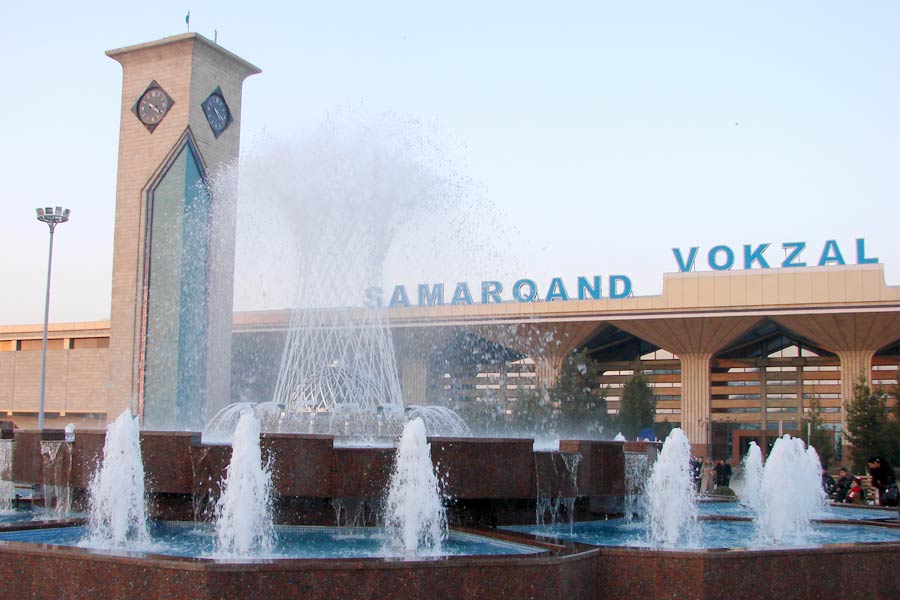
Samarkand can be reached by air or by train, with regular connections to other major cities in Uzbekistan and a growing number of international destinations.
Samarkand International Airport (SKD) is located in the northern part of the city and serves as its main air gateway. The airport’s new passenger terminal opened in March 2022 following a major construction project. Its distinctive open-book design was inspired by the astronomical work of the Samarkand ruler and scientist Mirzo Ulugh Beg, with elements reflecting his studies of the stars. The roof incorporates a representation of the starry sky, with illuminated constellations that can be seen from the air, particularly when arriving at night.
Travellers can also reach Samarkand by train from several cities in Uzbekistan. High-speed Afrosiyob trains connect Tashkent and Bukhara with Samarkand, making rail one of the easiest ways to combine the three cities. For airport and train station transfers, see our dedicated page.
Languages Spoken in Samarkand
Uzbek is the official language of Uzbekistan and the most widely spoken language in Samarkand. Tajik, a variety of Persian, has a long history in the city and is still widely spoken by parts of the local population. Russian is also used, particularly in everyday communication. English is most commonly encountered in hotels, restaurants, tour services, and other places that regularly work with international travellers.
Safety in Samarkand
Samarkand is generally considered a safe and peaceful city for travellers, and visitors can comfortably explore the city’s main sights during the day and in the evening. As in any busy destination, it is sensible to keep an eye on personal belongings in crowded places such as bazaars, transport hubs, and busy streets.