

Things to Do and Sightseeing Tours in Tashkent
Tashkent, the City of Stones, has been a Silk Road waypoint for centuries, remade again and again by conquest, Soviet-era rebuilding, and more recent development. Traces of each period still show: wide boulevards and apartment blocks stand high beside mahalla neighbourhoods that predate them by generations, as the domes of the Hazrat Imam (also Hastimom) complex rise above a skyline increasingly filled with modern glass towers.


The 1966 earthquake changed the city’s course dramatically, accelerating a vast rebuilding programme that gave Tashkent much of its distinctive modernist character. In July 2026, UNESCO inscribed ten buildings and urban complexes as the serial property “Tashkent Modernist Architecture. Modernity and Tradition in Central Asia”. It was Uzbekistan’s first national inscription on the World Heritage List in 25 years.
Is Tashkent worth visiting? Yes. It’s also a generally safe and welcoming place for solo travellers, including solo women travellers, as well as families and large groups. Most visitors spend one to two days here, enough to ride the ornate Tashkent Metro, wander Tashkent’s Old City, and sample the food scene before continuing on to Samarkand, Bukhara, or Khiva. Tashkent is Uzbekistan’s main gateway, with air, rail, and road connections reaching the country’s major cities.
For a first taste of Uzbekistan, Tashkent brings together many of the country’s contrasts in one place. Historic courtyards stand beside massive Soviet mosaics; bazaars sit a few streets from French-style pastry shops; plov shares the table with the Korean and Russian dishes that arrived with the city’s newcomers. These contrasts are not a prelude to Uzbekistan; they are part of its story. In Tashkent, that story has already begun.
Tashkent Tours
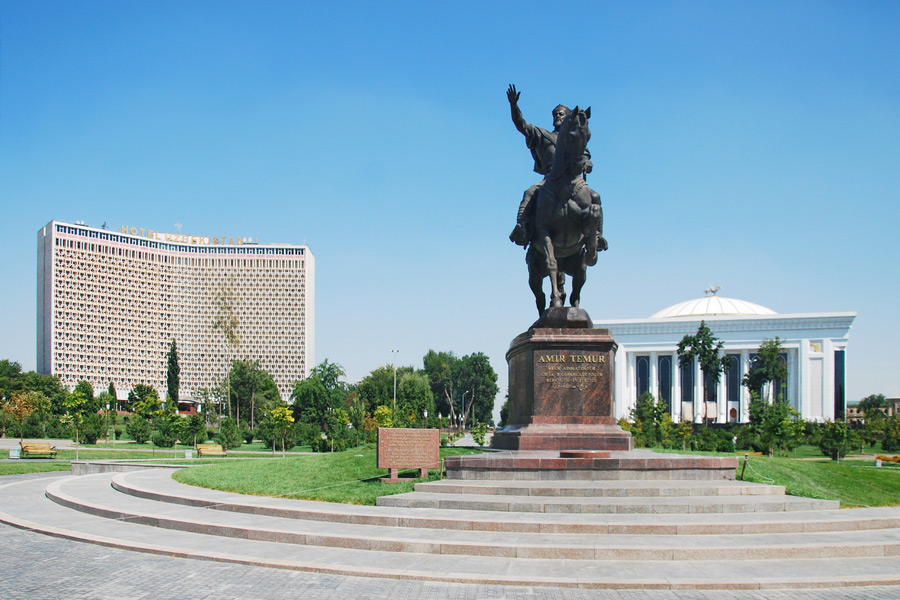
Tashkent tours usually turn the layers described above into a single day’s route: the Palace of Peoples’ Friendship or the State Circus for the city’s modernist side, then Amir Temur Square (Tamerlane Square) and the Old City around Hazrat Imam Complex and Chorsu Bazaar for the centuries before it. Add-on options go further still, from Tashkent’s theatres, including the State Academic Bolshoi Theatre of Uzbekistan named after Alisher Navoi, to the Sun Heliocomplex, a working solar furnace about 45 kilometres (28 miles) outside the city that’s part of the same UNESCO listing as the sites downtown.
If you visit Tashkent for only one day, you can comfortably combine the city’s modernist landmarks with the Old City, getting a glimpse of its many different faces. With more time, choose the area that interests you most and explore it at a more leisurely pace and in greater detail.
History of Tashkent
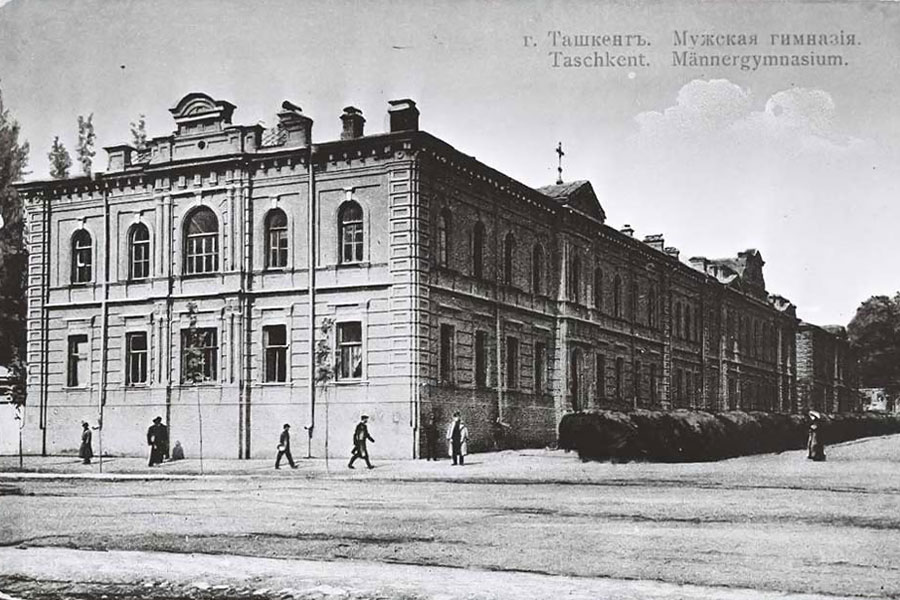
How old is Tashkent? Tashkent is more than two millennia old. Written sources place the city’s history as far back as the 2nd century BC, and Chinese chronicles from around the end of the 2nd or beginning of the 1st century BC mention Yuni, a place that scholars associate with the ancient settlement of the Tashkent oasis. Over time, the city and oasis were known as Chach and Shash before the name “Tashkent” came into use. Its position at the crossroads of Central Asia brought Tashkent under different rulers and into contact with a variety of cultures and traditions. It was part of the Timurid realm in the 14th and 15th centuries and came under Shaybanid rule in the 16th. In 1865, troops of the Russian Empire under Major General Mikhail Chernyayev captured the city, after which it became the administrative centre of Russian Turkestan. Following the establishment of the Uzbek Soviet Socialist Republic, Samarkand served as its capital from 1925 until 1930.
In 1930, the capital moved to Tashkent. The Soviet era brought new public and residential buildings, as well as an influx of people from across the Soviet Union. The Russian-born artist Alexander Nikolayev, who later adopted the name Usto Mumin, moved to Tashkent in 1925 and, after periods away and imprisonment, returned in 1942, remaining there until his death in 1957. His paintings combined the influence of Central Asian miniature, folk ornament, Russian icon painting, and Italian Renaissance art, often depicting people in carefully balanced compositions with delicate lines and restrained colours.
The Second World War brought another wave of arrivals. More than 1.5 million people, including about 250,000 children, were evacuated to Uzbekistan, many arriving in Tashkent. Dina Rubina, born in the city in 1953, grew up in a family shaped by that movement: both her parents came from Ukraine, with her mother arriving in Tashkent as an evacuee during the war. In her book On the Sunny Side of the Street, Rubina revisits the Tashkent of her childhood through its streets, quiet courtyards, markets, and inhabitants of all kinds.
Tashkent continues to attract people from beyond Uzbekistan, who in turn add new threads to its cultural fabric. Spanish designer Marivi Bombarelli, who lived in the country for many years, drew inspiration from suzani and other Uzbek textiles, incorporating traditional ornaments into contemporary furniture.
In 1991, Uzbekistan declared independence, marking a new chapter in Tashkent’s history as the country’s capital.
Things to Do in Tashkent
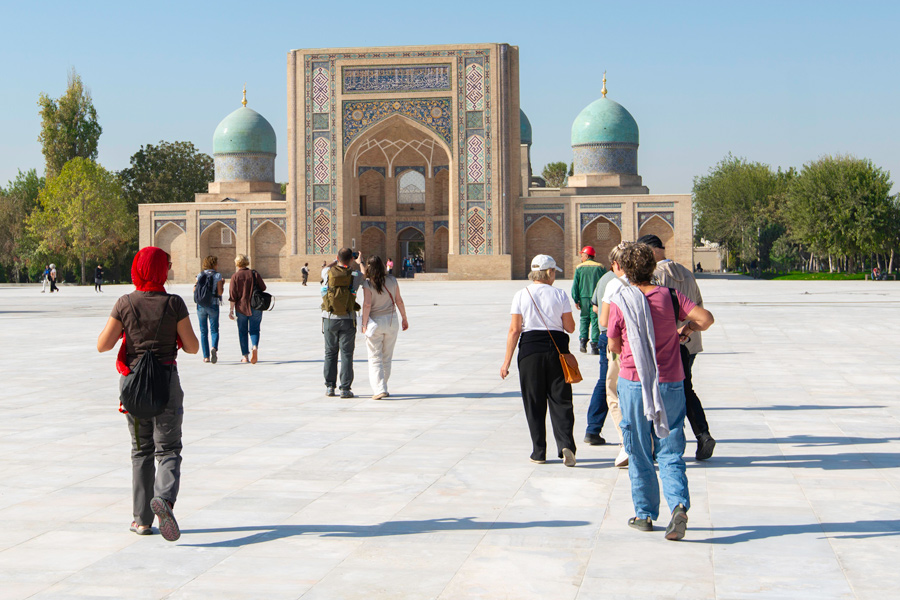
There is plenty to see and do in Tashkent. Museums, theatres, markets, and public spaces let visitors explore both the city’s history and its contemporary culture. But part of the pleasure of getting to know a new city is also seeing how its spaces are used daily. In Tashkent, locals and visitors move through the same areas for different reasons, yet constantly cross paths.
Landmarks and Attractions in Tashkent
Many of Tashkent’s landmarks and attractions are concentrated in the Old City, where traditional neighbourhoods and older streets still retain something of the character of the city’s past. A sense of old Tashkent can be found here, in the lively Chorsu Bazaar and its rows of food stalls, beneath the serene blue domes of the Hazrat Imam complex, and in the warm welcome of locals who invite visitors to step inside and see how things are made. The Old City is also home to artisans, teahouses, and bakeries.
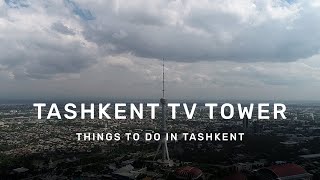
Other Tashkent attractions worth visiting include the Tashkent TV Tower, the German Evangelical Lutheran Church, the Roman Catholic Cathedral, Amir Temur Square with the famous Tashkent Chimes, Independence Square, and the former residence of Grand Duke Nikolai Konstantinovich Romanov, designed by architects Alexey Benois and Wilhelm Heinzelmann.
Tashkent is also home to the first metro network in Central Asia. It is a way to move around the city and one of its architectural and artistic attractions. Each station has its own distinctive character, from Kosmonavtlar, with its space-themed design, to Alisher Navoi, decorated with blue-green reliefs inspired by the life and creations of the great Uzbek poet.
Tashkent Museums
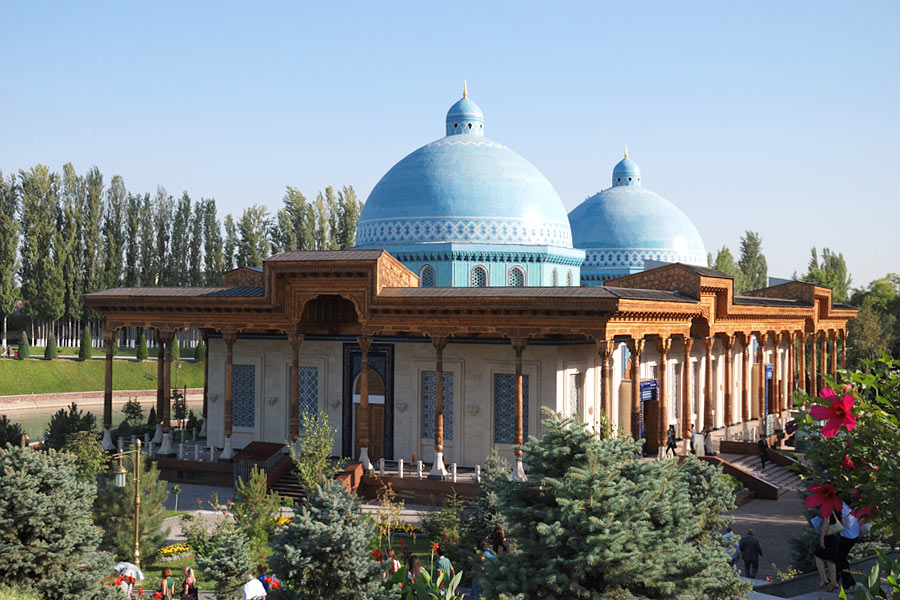
As Uzbekistan’s capital, Tashkent is also one of the country’s main cultural centres, with museums, galleries, art hubs, creative clusters, and exhibition spaces covering everything from archaeology and history to fine and applied arts.
The State Museum of History of Uzbekistan, which traces the country’s history from the Stone Age to the present day, reopened in July 2026 after two years of restoration, with a renewed exhibition and modernised visitor experience. The newly opened Islamic Civilization Center explores the history and heritage of the Islamic world in Central Asia through museum displays, a library, and educational facilities. The State Museum of Applied Arts of Uzbekistan houses more than 7,000 examples of Uzbek applied art, including carpets, ceramics, textiles, jewellery, embroidery, and metalwork. The Museum of Geology presents Uzbekistan’s geological wealth through collections of minerals, rocks, fossils, and archaeological finds, with more than 50,000 specimens in its holdings.
The State Museum of Arts of Uzbekistan houses permanent exhibitions of Uzbek painting, graphics, and sculpture, alongside works from Russian and Western European collections. The Amir Timur Museum focuses on the Timurid period and houses more than 3,000 exhibits. The Tashkent Railway Museum displays locomotives, carriages, and other railway equipment in an open-air setting, and the Tashkent Polytechnic Museum combines displays on automotive history with an interactive floor of science and technology exhibits.
Tashkent’s museum landscape also includes smaller house museums. The Ural Tansykbaev House Museum occupies the artist’s former home, built in 1968, and preserves original interior details alongside paintings, photographs, and archival materials. It reopened after restoration in 2025. The Memorial House Museum of Tamara Khanum is located in the home where the celebrated singer and dancer spent the final years of her life, and displays her costumes, photographs, manuscripts, and personal belongings.
Tashkent Theatres
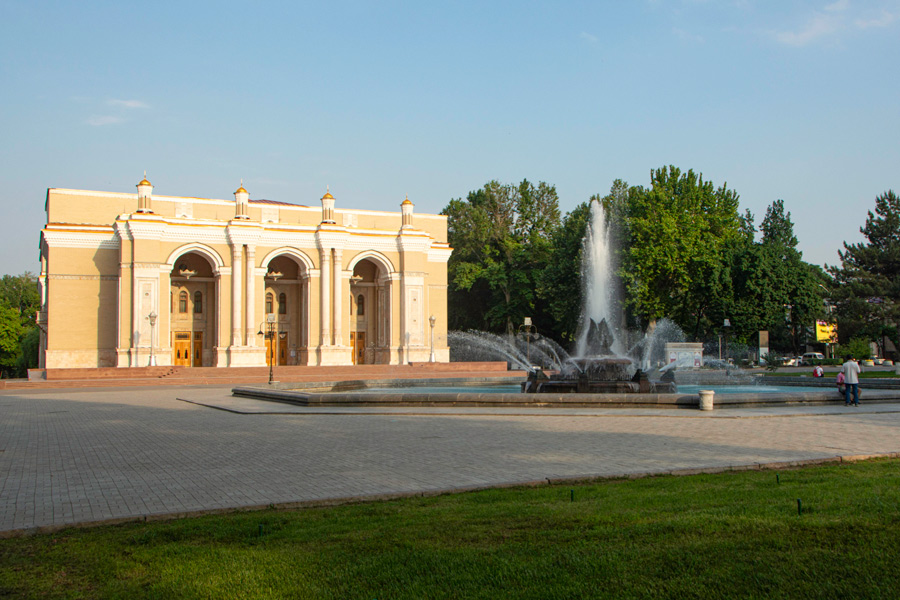
Tashkent has a varied theatre scene, with stages devoted to drama, opera, ballet, and puppetry. Several have distinctive histories of their own, making a visit to the theatre an interesting way to lift the curtain on the city’s cultural life.
The State Academic Bolshoi Theatre of Uzbekistan, named after Alisher Navoi, is the city’s principal opera and ballet venue. Its programme includes both international classics and contemporary productions; the building itself is also worth seeing, with six side foyers, each decorated in the architectural and artistic traditions of a different region of Uzbekistan. The Academic Russian Drama Theatre of Uzbekistan, founded in 1934, stages drama in Russian, including Russian and international classics.
Tashkent’s independent theatre scene has its own distinct character. The Ilkhom Theatre, founded by Mark Weil in 1976, is known for experimental productions and contemporary approaches to classical works.
The Diydor Youth Experimental Theatre Studio combines classical and contemporary drama in Uzbek, with recent productions including Triangle and The Unhappy Bridegroom. Shams i Qamar, which grew out of an art history and directing group in the late 2000s, also works mainly in Uzbek and is known for stage adaptations of literary works such as Hemingway’s The Old Man and the Sea and Hesse’s Siddhartha, alongside contemporary Uzbek drama.
Tashkent also has a longstanding puppet-theatre tradition. The Uzbek National Puppet Theatre, established in 1939, presents productions based on fairy tales, folk stories, and children’s literature. Its late-1970s building, designed in the form of a fairy-tale castle, has recently undergone the first phase of reconstruction, with performances continuing as the theatre’s historic decorative features are restored. The Silk Route Marionettes presents a smaller-scale alternative, incorporating Uzbek textiles and decorative crafts into its performances and costumes.
Entertainment, Parks, and Shopping in Tashkent
Tashkent’s leisure scene is closely tied to the way people use the city after work and at weekends. Parks fill with walkers and families, seasonal events bring people together, and shopping ranges from modern malls to the busy stalls of the city’s bazaars. All of these everyday activities are an important part of tourism in Tashkent, giving visitors a chance to see how the city is enjoyed by local people as well as travellers.
Entertainment
Entertainment in Tashkent also includes a changing calendar of music and cultural events, opening up different ways to engage with Tashkent culture in addition to its museums and historic sights.
Festivals take place throughout the year, ranging from large public programmes to more specialised events such as the International Jazz Festival, which brings Uzbek and international musicians to the city.
For something more hands-on, look out for creative workshops and master classes. Human House, a gallery and cultural space, regularly hosts activities such as pottery workshops, where participants can make their own ceramic pieces. Programmes vary with the season, so checking local event listings before your visit is worthwhile.
Parks of Tashkent
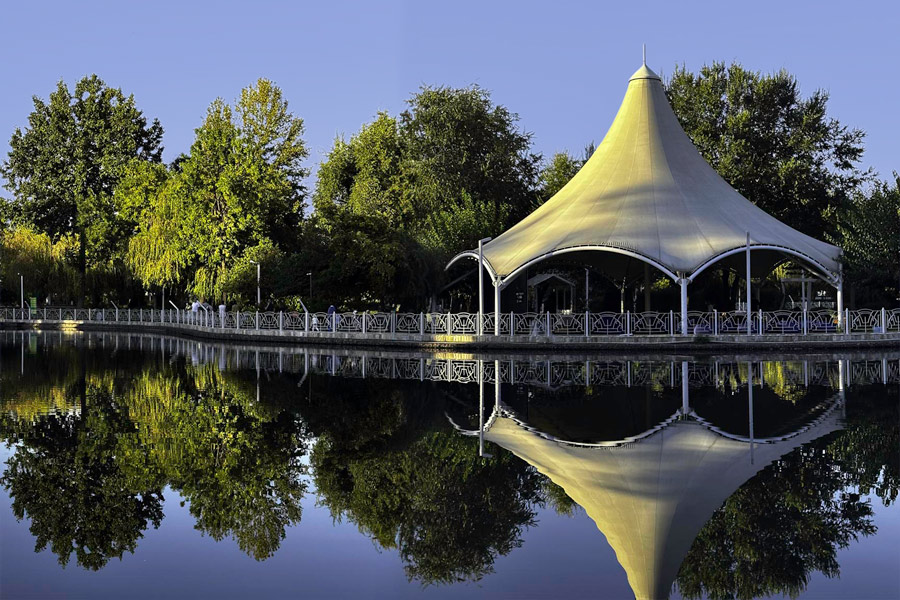
Tashkent’s parks take many forms, from quiet green spaces for walking and relaxing to large recreation parks built around rides and family entertainment. They are among the more varied attractions in Tashkent, particularly for families and anyone looking to spend time outdoors.
Ecopark is the calmer option, with tree-lined paths, lawns, sports facilities, and an artificial lake. Its layout was designed to provide a quieter atmosphere, without noisy amusement rides. For something atmospheric, visit the Japanese Garden, created in 2001 as a symbol of friendship between Uzbekistan and Japan. Its landscaped grounds include a lake, wooden bridges, waterfalls, stone lanterns, and traditional-style pavilions. Central Park, formerly Telman Park, combines mature trees and shady walking areas with European-made attractions. Its best-known feature is a French carousel, and the park also hosts cultural and family events. Along the Anhor Canal, Anhor Lokomotiv Park is the choice for bigger thrills, with amusement rides, karting, miniature versions of famous Uzbek monuments, and a giant observation wheel with views across the city.
Shopping in Tashkent
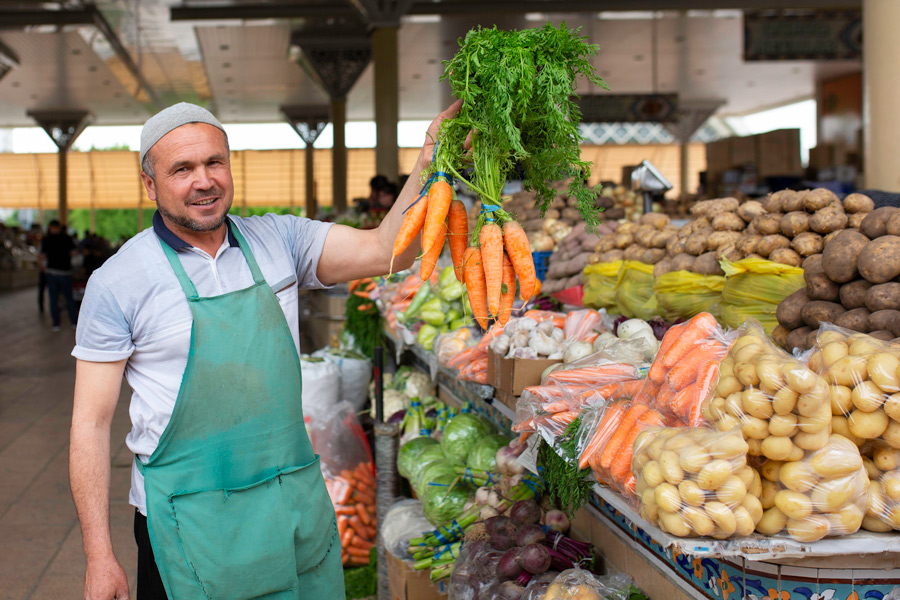
Tashkent’s shopping includes large malls, open-air bazaars, and boutiques of local designers. Tashkent City Mall is one of the city’s largest, with shops, restaurants, cinemas, and family attractions. Other established malls include Samarkand Darvoza, Mega Planet, Next, and Compass.
Chorsu Bazaar is the best known of the city’s markets, with stalls selling fresh produce, spices, dried fruit, bread, ceramics, textiles, and other everyday goods beneath its distinctive blue dome. Alay Bazaar (also Oloy Bazaar) specialises more in food, dried fruits and nuts, and jewellery.
Tashkent has a growing scene of independent designers and makers. Teplo Store brings together more than 100 designers and artisans, with clothing, jewellery, ceramics, homeware, and other locally made goods and curiosities. Its occasional Teplo Market fairs bring many of these makers together at a larger event. For many travellers interested in contemporary Uzbek design, Kanishka is another name that comes up quickly.
The brand’s clothing, bags, accessories, and other pieces reinterpret Uzbek motifs and craft traditions in a distinctly modern way. Handmade leather toys and accessories made from recycled materials are among the more unusual things to take home.
Food in Tashkent
Tashkent’s food is varied and shaped by the people who have made the city their home. In neighbourhood bakeries and tandir clay ovens, fresh, puffy non bread comes out warm and fragrant; by lunchtime, wide qazan (also kazan) cauldrons fill with plov, the rice glossy with oil and stained gold by slow-cooked carrot.
At the city’s markets and cafés, you might find morkovcha, the spiced carrot salad developed by Koryo-saram communities in Central Asia, alongside crisp-edged samsa and hand-pulled lagman noodles reflecting the culinary traditions of Tashkent’s Uyghur and Dungan communities.
Beyond these familiar local favourites, the city’s restaurants serve Russian, Indian, Chinese, Georgian, Armenian, Azerbaijani, and Turkish food, reflecting the many communities and culinary traditions that have found a place – and an audience – in Tashkent.
Uzbek Cuisine
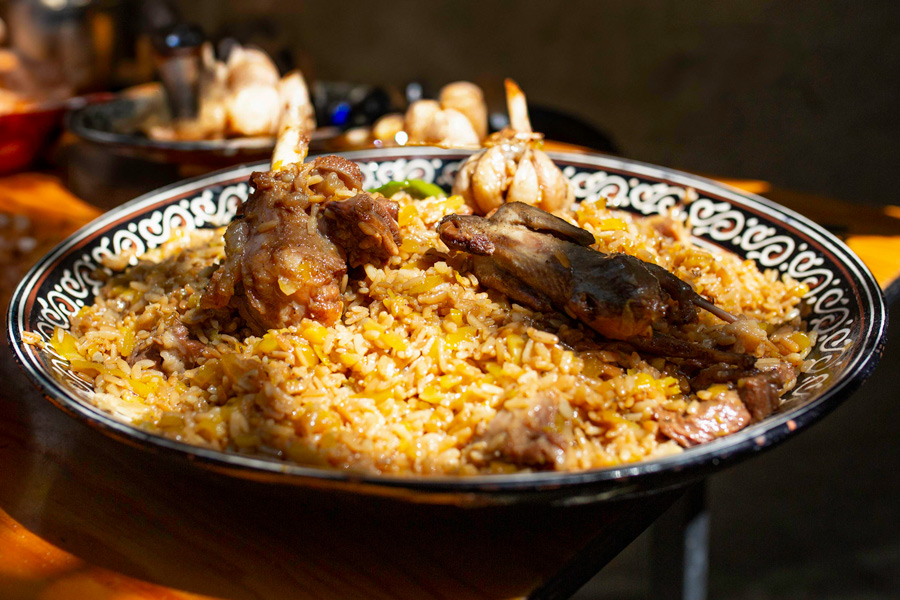
Tashkent food is deeply rooted in Uzbek cuisine, but there is no single way to taste it: its flavours run through neighbourhood cafés, local bakeries, bazaars, and polished restaurants alike.
For travellers looking to try Uzbek food, milliy taomlar (“national dishes”) cafés offer an informal introduction to traditional favourites, while established restaurants provide a more elevated setting for the same rich culinary traditions.
For everyday Uzbek food, Anjir, Bek Osiyo, and Kamolon Osh are worth considering. Kamolon Osh specialises in several regional styles of plov, with Bek Osiyo known especially for Uzbek national dishes and shashlik (grilled skewered meat).
For plov, Besh Qozon (Central Asian Plov Centre) is the city’s best-known large-scale osh centre, whereas the Plov Museum showcases regional varieties alongside norin, manti, and samsa.
For a more polished restaurant setting, Afsona, Lali, and Tandiriy present contemporary takes on Uzbek cuisine, alongside Caravan, which has been serving Uzbek national dishes in Tashkent since 1999.
For a different take on Tashkent’s contemporary dining scene, Fillet Restaurant, led by chef Shukhrat Ishankulov, specialises in steaks and other dishes made with local ingredients, including Bukhara beef.
Vegetarian Restaurants
Vegetarian food in Tashkent is easier to find than it once was, although dedicated vegetarian restaurants remain relatively limited. Many restaurants serve meat-free dishes, including vegetarian versions of Uzbek favourites as well as Indian, Georgian, Middle Eastern, and European options.
For Uzbek food, vegetarians can find meat-free versions of familiar dishes such as pumpkin, potato, or spinach samsa, pumpkin manti, vegetable khanum, vegetable shashlik, and even tofu lagman. Availability can vary by restaurant and season, so it is worth asking what is being prepared that day and confirming that dishes are cooked without meat or meat stock.
For international food, Sunrise Indian Kitchen specialises in vegetarian Indian dishes such as uttapam and rajma. Gruzinskiy Dvorik is another good choice, with Georgian vegetarian dishes including lobio, pkhali, and ajapsandali. Cafés such as Bon! also offer a selection of vegetarian salads, pastries, and other meat-free options.
Coffee Houses, Bakeries, and Patisseries
Tashkent’s coffee scene has grown rapidly, with cafés, speciality coffee shops, and bakeries now well established across the city.
For speciality coffee and freshly roasted beans, Shavi and Coffee Nation are two of the city’s roasteries. Socials, Breadly, and Giotto take a broader café approach, with coffee alongside a wider selection of food and drinks. Bon! and Paul are known for bread, pastries, and European-style baking, and Safia and Cake Lab are popular for cakes and other sweets, with branches in several parts of the city.
City Transport in Tashkent
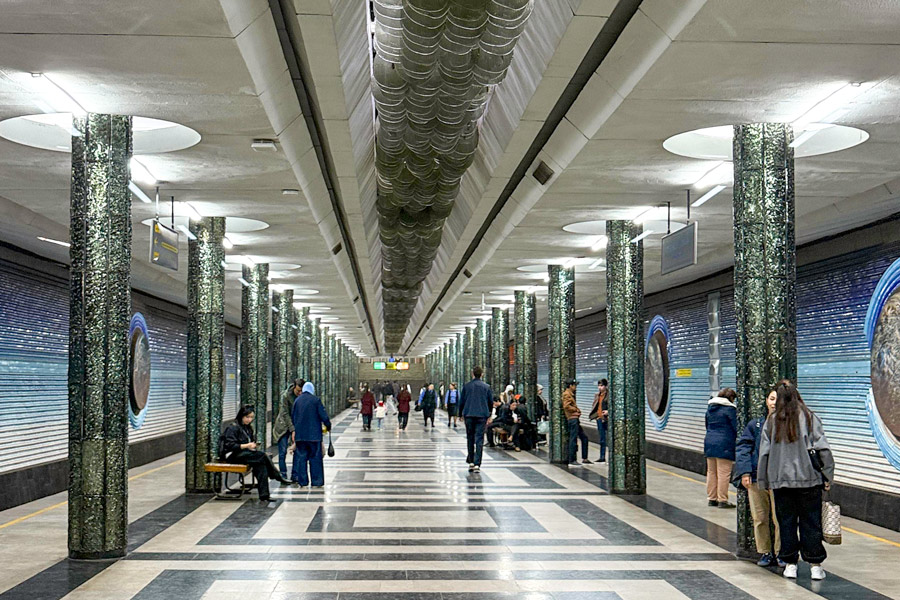
Tashkent's public transport network includes buses and the metro, making it practical to get around the city without always relying on a car.
Public transport fares can be paid electronically using an ATTO transport card, a virtual ATTO card in the app, a contactless bank card, or supported mobile payment methods. International Visa, Mastercard, and UnionPay cards are accepted. The standard electronic fare is currently 1,700 UZS (about $0.14 / €0.12 / £0.11). Please note: cash is not accepted on public transport.
Public Transport
Buses and Minibuses
Buses and minibuses serve routes across Tashkent and are useful for reaching parts of the city beyond the metro network. The Yandex Maps app shows bus and minibus routes, stops, and estimated arrival times, making it easier to plan journeys and see when the next vehicle is due in real time.
Metro
Tashkent Metro is one of the easiest ways to get around the capital, with four lines and 50 stations reaching well beyond the city centre. Trains run roughly every 2 to 4 minutes during weekday peak hours, becoming less frequent in the evening and at weekends. The network operates from about 05:00 to midnight.
Other Modes of Transport
Taxis
Taxis fill in where the metro and buses don’t reach in Tashkent. Ride-hailing apps including Yandex Go and MyTaxi operate in the city, and both allow passengers to link a bank card for cashless payment, including international Visa and Mastercard cards. For electric vehicles, Yandex Go offers an Electro tariff, and MyTaxi has an Eko tariff.
Car Rental
Car rental is available in Tashkent for travellers who prefer to drive themselves or want a car for longer trips around Uzbekistan. Several companies rent out cars for self-drive, with vehicles ranging from compact city cars to larger SUVs and premium models.
Hertz Uzbekistan has rental locations in central Tashkent and at Tashkent International Airport, and cars can be booked online, by phone or by email. A valid passport, driving licence, and bank card are required, and drivers must be at least 21 years old with a minimum of two years’ driving experience. Hertz also provides chauffeur-driven cars, including English- and Russian-speaking drivers.
Scooter and Bicycle Rentals
Cycling infrastructure in Tashkent is being developed, so routes and riding conditions vary across the city, while cyclists can be seen on streets throughout. The municipality plans to add 20 kilometres (12.4 miles) of new bike lanes to expand the network.
Bicycles can be rented in Tashkent, although shared electric scooters are a more visible option for short trips around the city. Yandex Go, IZZY, and JET all run electric-scooter rental services in Tashkent, with users locating and unlocking scooters through their respective apps. For visitors, scooters can be convenient for covering shorter distances between sights, parks, cafés, and metro stations.
How to Get to Tashkent
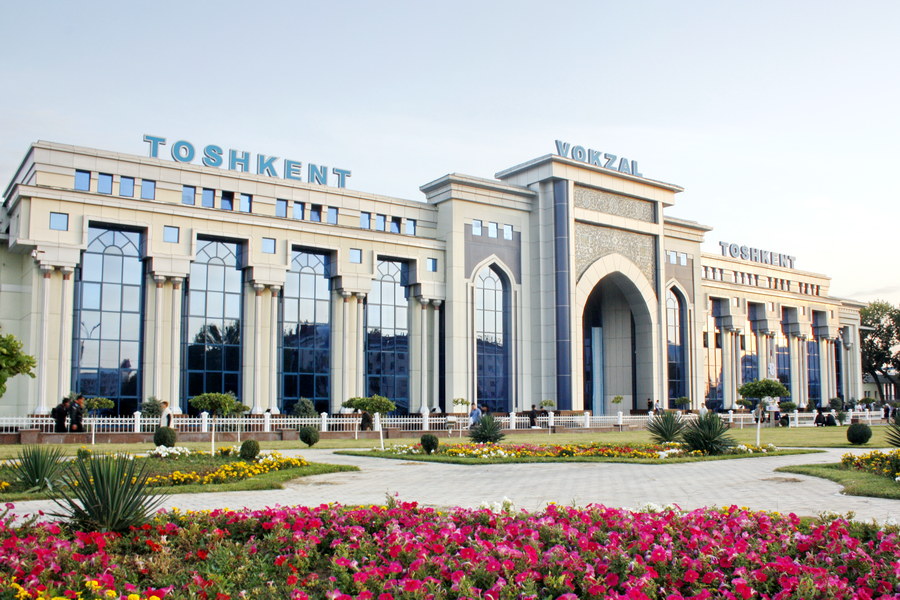
For most international travellers, flying is the easiest way to reach Tashkent. Tashkent International Airport (TAS) has direct connections across Europe, Asia, and the Middle East. Uzbekistan Airways, the country’s national carrier, serves more than 100 destinations across its international and domestic network, with foreign airlines such as Turkish Airlines, flydubai, Air Astana, Asiana Airlines, and China Southern Airlines also connecting Tashkent with major regional and international hubs.
Tashkent can also be reached by train from neighbouring countries and Russia. The current Uzbekistan Railways timetable includes a daily service to Almaty, as well as international trains to Moscow, Kazan, Volgograd, and Dushanbe on selected days.
For travel within Uzbekistan, Tashkent is the country’s main rail hub. Regular trains connect the capital with Samarkand, Bukhara, Khiva, Karshi, Andijan, Termez, and other cities, making rail travel a practical option for visitors combining Tashkent with other destinations.
Languages Spoken in Tashkent
Uzbek is the main language spoken in Tashkent, and it is the country’s official language. Russian is also widely used in the city. English is increasingly encountered in hotels, restaurants, tour services, and other places that regularly receive international visitors.
Visitors may encounter all three during a stay, but in different contexts. Official street signs and public information are predominantly presented in Uzbek using the Latin alphabet. Other languages can be heard too, including Korean and Tajik.
Security in Tashkent
Tashkent is generally considered a peaceful and safe city for all types of travellers. Nevertheless, visitors should take standard security precautions and avoid leaving personal belongings unattended. In busy public places, including metro stations, parks, shopping centres, and bazaars, visitors will notice a visible presence of law enforcement officers.
Police may occasionally conduct random identity checks and ask to see a passport or other registration documents. Although these checks are less frequent than they used to be, they are generally part of maintaining public safety and contribute to the capital’s peaceful atmosphere. Travellers should therefore carry the required identification documents when travelling around the city.
With the usual awareness and care expected when travelling, there is every reason to feel comfortable exploring sunny Tashkent.